



Parbendazole
Based on 8 publication(s) in Google Scholar
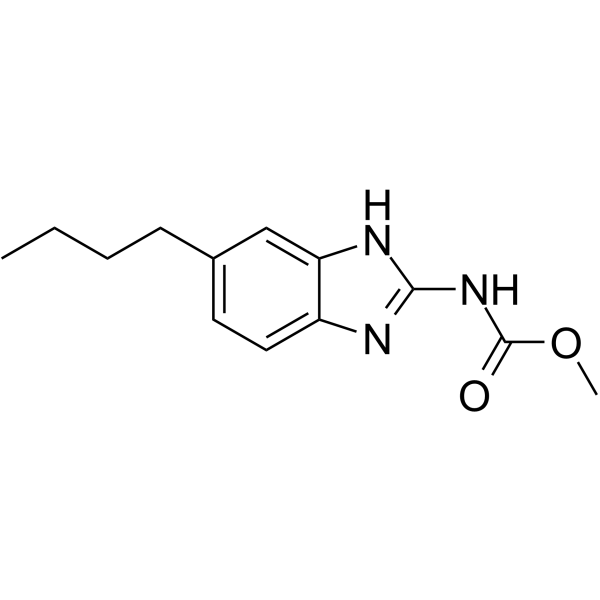
Parbendazole (SKF‑29044) is an orally active benzimidazole carbamate compound with multiple biological activities. Parbendazole binds to free tubulin and inhibits microtubule polymerization; it also activates the JNK/c‑Jun signaling axis and upregulates the expression of the downstream axonal repulsion factor Sema3A. Parbendazole upregulates KAL-1 mRNA expression, reduces nerve growth factor levels, and promotes the terminal differentiation of normal human epidermal keratinocytes. Parbendazole induces apoptosis in differentiated acute myeloid leukemia monocytes and exerts antileukemic activity in a mouse xenograft model of acute myeloid leukemia. Parbendazole exhibits broad-spectrum anthelmintic activity against various animal nematodes. Parbendazole is used in research related to acute myeloid leukemia and parasitic infections.
Para uso exclusivo en investigación. No vendemos a pacientes.
- Pureza : 99.92%
- No. CAS: 14255-87-9
- Fòrmula: C13H17N3O2
- Peso molecular:247.29
-
Almacenamiento:Powder -20°C, 3 years , 4°C, 2 years ; In solvent -80°C, 2 years , -20°C, 1 year

To place orders, for customer services and technical support, please contact: MedChemExpress USA
Tel: 609-228-6898 E-mail: [email protected] [email protected]


-
 Actividad biológica
-
Chemical Information
-
Solvente y solubilidad
- Protocolo
- Pureza y Documentación
- Referencias
-
 Help & FAQs


-
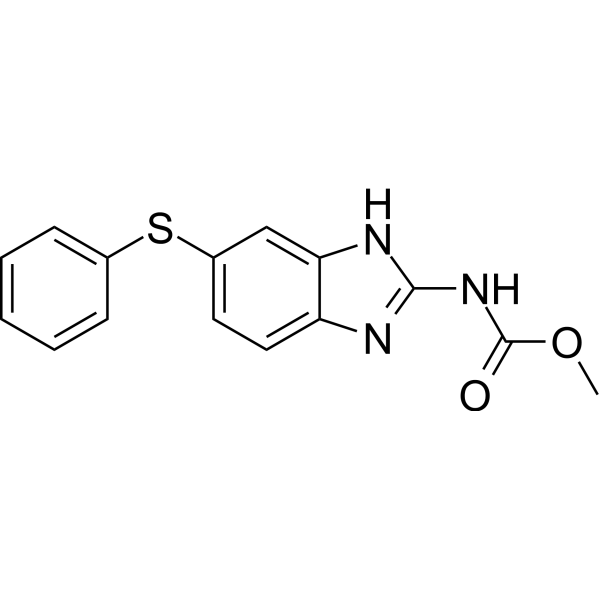
HY-B0413
FenbendazoleAntibiotic -
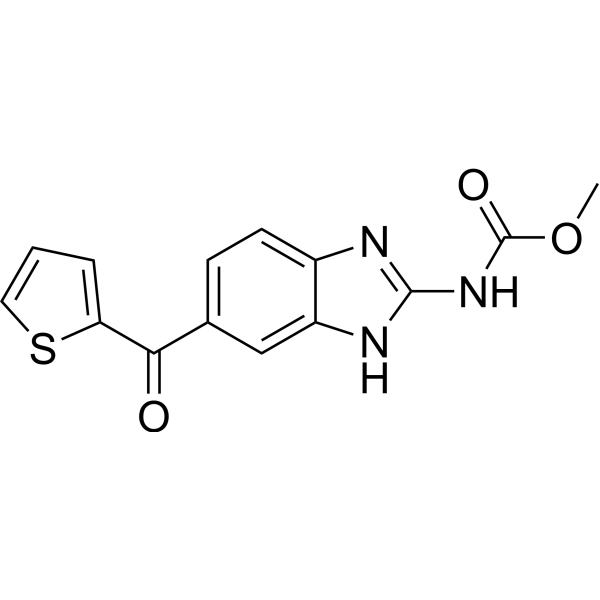
HY-13520
NocodazoleMicrotubule Inhibitor -
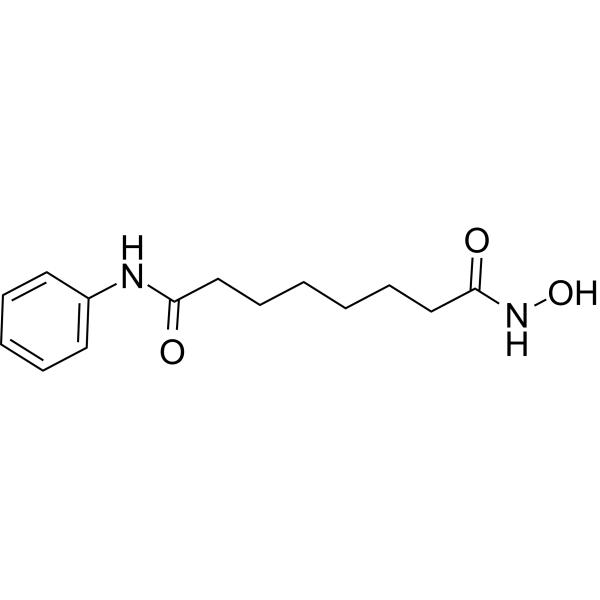
HY-10221
VorinostatHDAC Inhibitor -
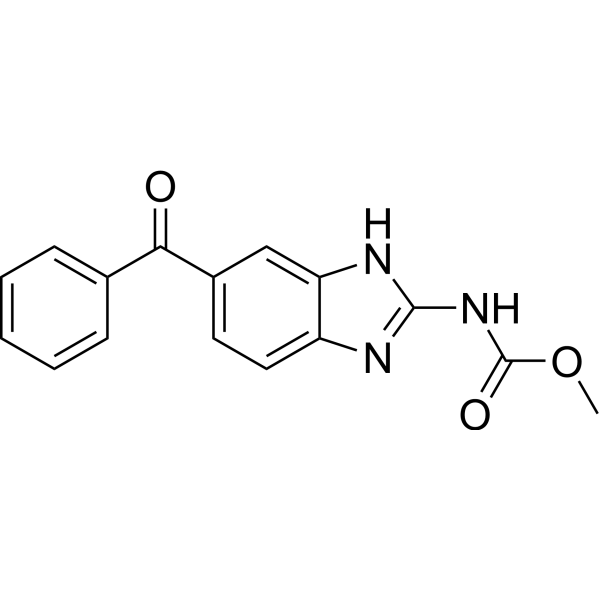
HY-17595
MebendazoleApoptosis Inducer -
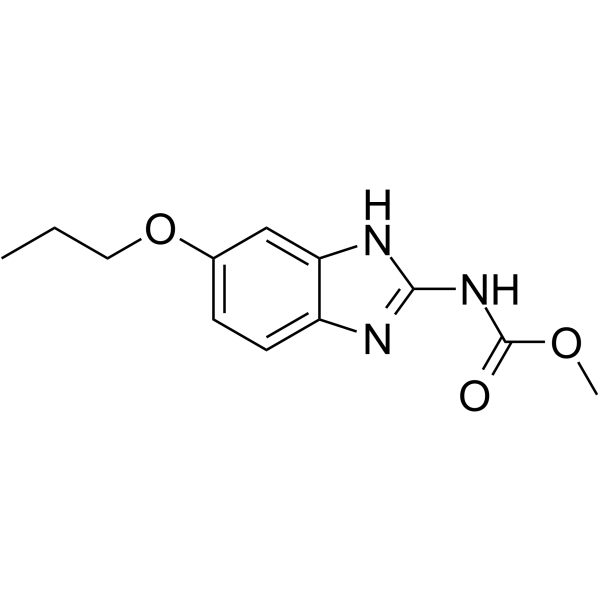
HY-B0299
OxibendazolePolymerase Inhibitor -
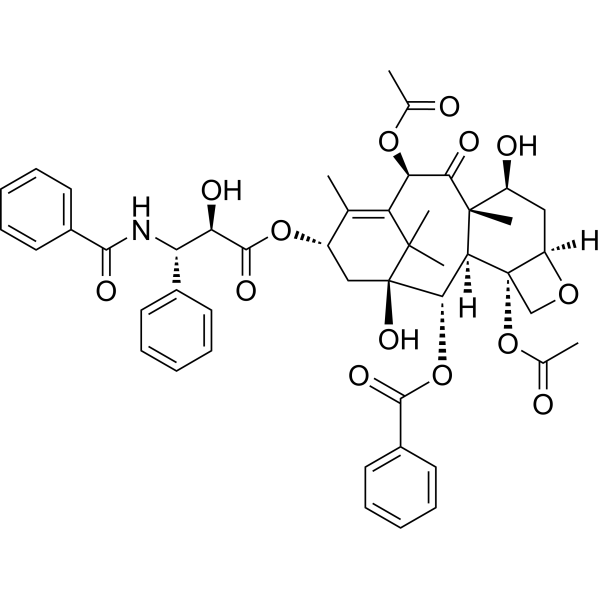
HY-B0015
PaclitaxelAntitumor Agent -
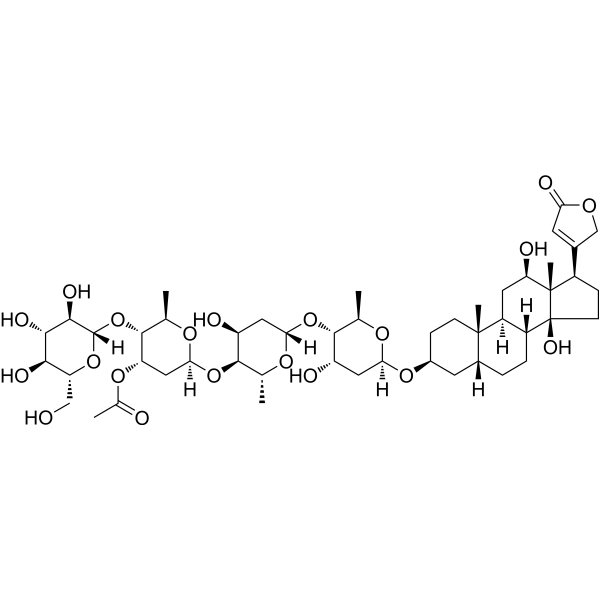
HY-B1030
Lanatoside CCardiac Glycoside -
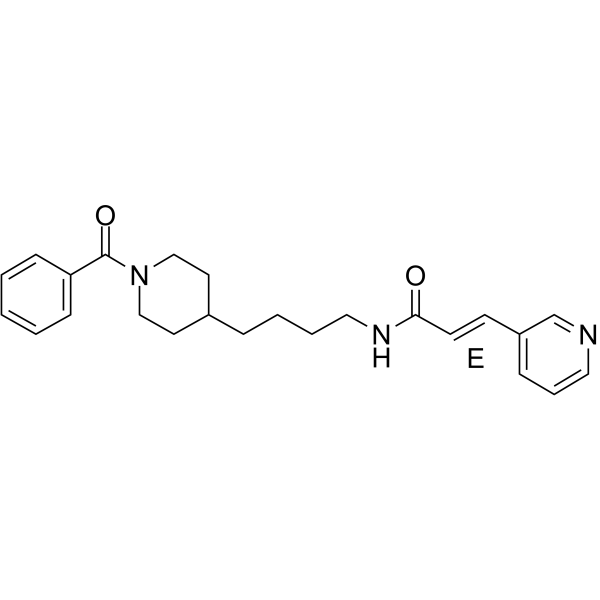
HY-50876
DaporinadNMPRT Inhibitor -
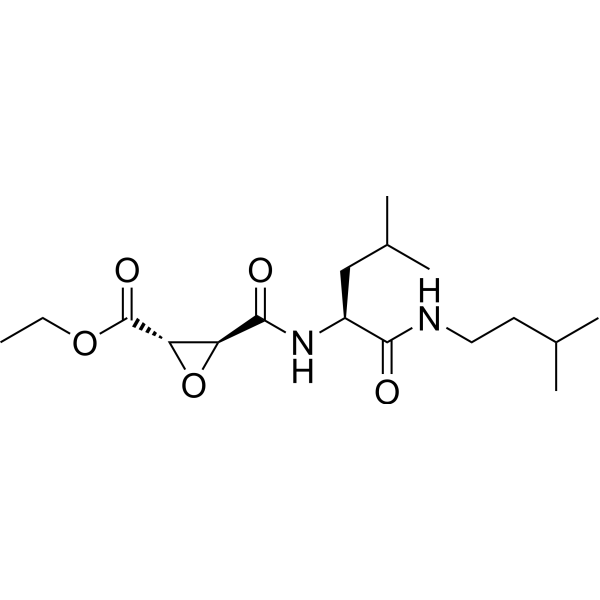
HY-100229
AloxistatinCysteine Protease Inhibitor -
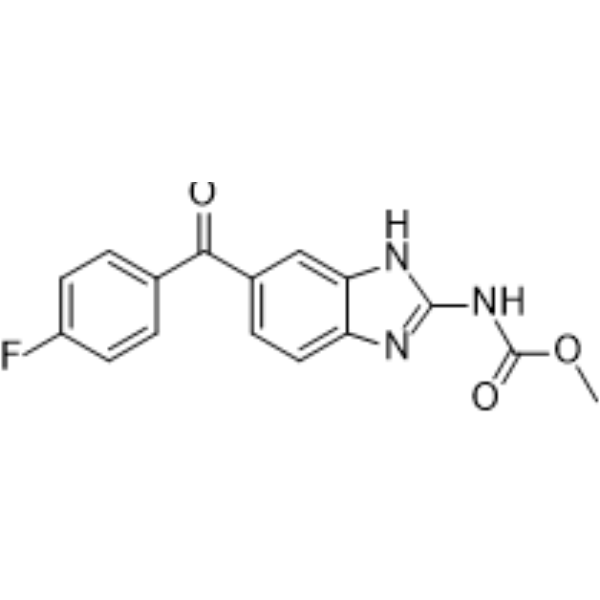
HY-B0294
FlubendazoleTubulin Polymerization Inhibitor -
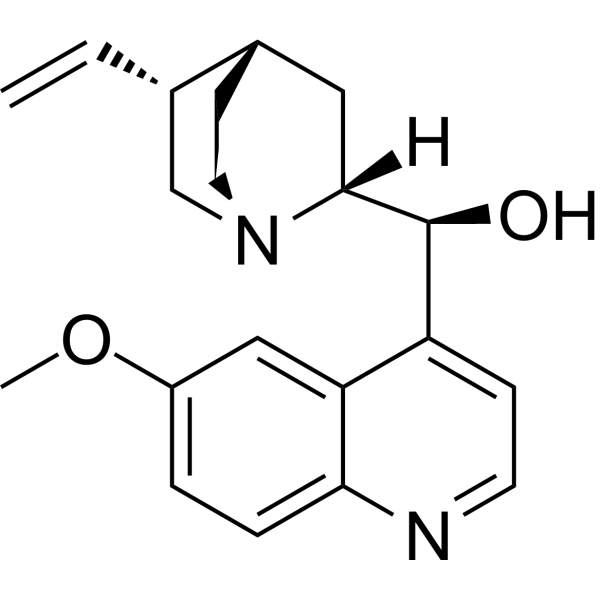
HY-B1751
Quinidine (15% dihydroquinidine)Anti-arrythmic Agent -

HY-B0413R
Fenbendazole (Standard)Antibiotic
Publications Citing Use of MedChemExpress (MCE) Parbendazole
More- EBioMedicine. 2021 Mar:65:103276. [Abstract]
- RSC Adv. 2021 May 25;11(31):18938-18944. [Abstract]
- Commun Biol. 2024 Jan 24;7(1):123. [Abstract]
- Int J Mol Sci. 2023 Jun 30;24(13):10972. [Abstract]
- Molecules. 2026 Mar 5;31(5):864. [Abstract]
- Cancers (Basel). 2022 Nov 28;14(23):5854. [Abstract]
- Indian J Ophthalmol. 2026 Feb 1;74(2):250-258. [Abstract]
- Heinrich-Heine-Universität Düsseldorf. April 2021.
Ver todos los productos específicos de isoformas Parasite
More

Actividad biológica
Descripciòn
|
JNK |
β-Tubulin |
Cellular Effect
|
Cell Line

|
Type | Value | Description | References |
|---|---|---|---|---|
| CAL-27 | IC50 |
173 nM
Compound: Parbendazole
|
Antiproliferative activity against human CAL-27 cells assessed as cell growth inhibition incubated for 72 hrs by CCK-8 assay
Antiproliferative activity against human CAL-27 cells assessed as cell growth inhibition incubated for 72 hrs by CCK-8 assay
|
[PMID: 35576703] |
| FaDu | IC50 |
160 nM
Compound: Parbendazole
|
Antiproliferative activity against human FaDu cells assessed as cell growth inhibition incubated for 72 hrs by CCK-8 assay
Antiproliferative activity against human FaDu cells assessed as cell growth inhibition incubated for 72 hrs by CCK-8 assay
|
[PMID: 35576703] |
| HFF-1 | IC50 |
>20 μM
Compound: Parbendazole
|
Cytotoxicity against human HFF-1 clls assessed as reduction in cell viability incubated for 72 hrs by CCK-8 assay
Cytotoxicity against human HFF-1 clls assessed as reduction in cell viability incubated for 72 hrs by CCK-8 assay
|
[PMID: 35576703] |
| HN-6 | IC50 |
102 nM
Compound: Parbendazole
|
Antiproliferative activity against human HN-6 cells assessed as cell growth inhibition incubated for 72 hrs by CCK-8 assay
Antiproliferative activity against human HN-6 cells assessed as cell growth inhibition incubated for 72 hrs by CCK-8 assay
|
[PMID: 35576703] |
In Vitro
Parbendazole (1 μM; 48 h) downregulates NGF mRNA expression and upregulates KAL‑1 mRNA expression in normal human epidermal keratinocytes (NHEKs)[2].
Parbendazole (1 μM; 24 h) promotes the phosphorylation of JNK and c‑Jun in normal human epidermal keratinocytes (NHEKs)[2].
Parbendazole (1-10 μM; 24 h) increases the mRNA and protein expression levels of Sema3A in an in vitro reconstructed human epidermis (RHE) model[2].
Parbendazole hydrochloride: Wild-type Physarum polycephalum CLd-AXE tubulin completely inhibits in vitro microtubule assembly at 2-5 μM, whereas mutant BEN210-AXE tubulin retains full microtubule assembly capacity even at concentrations as high as 50 μM[3].
Parbendazole inhibits the growth of wild-type Physarum polycephalum CLd‑AXE myxamoebae and the in vitro assembly of their tubulin.
Parbendazole exhibits significant pH-dependent ultraviolet absorption characteristics, and shows a pronounced red shift in alkaline methanol medium compared to neutral and acidic methanol conditions[4].
MedChemExpress (MCE) has not independently confirmed the accuracy of these methods. They are for reference only.
-
Cell Line:Normal human epidermal keratinocytes (NHEKs)
-
Concentration:0.01 μM, 0.1 μM, 1 μM
-
Incubation Time:48 h
-
Result:Dose‑dependently increases Sema3A mRNA levels.
-
Cell Line:Normal human epidermal keratinocytes (NHEKs)
-
Concentration:0.01 μM, 0.1 μM, 1 μM
-
Incubation Time:48 h
-
Result:Dose‑dependently increases secreted Sema3A protein levels.
-
Cell Line:Normal human epidermal keratinocytes (NHEKs)
-
Concentration:0.01 μM, 0.1 μM, 1 μM
-
Incubation Time:48 h
-
Result:Reduces cell viability at 1 μM; decreased mitochondrial dehydrogenase activity partially attributes to keratinocyte differentiation rather than simple cytotoxicity.
-
Cell Line:Normal human epidermal keratinocytes (NHEKs)
-
Concentration:1 μM
-
Incubation Time:48 h
-
Result:Down‑regulates NGF mRNA expression and up‑regulates KAL‑1 mRNA expression.
-
Cell Line:Normal human epidermal keratinocytes (NHEKs)
-
Concentration:1 μM
-
Incubation Time:24 h
-
Result:Promotes phosphorylation of JNK and c‑Jun.
-
Cell Line:Normal human epidermal keratinocytes (NHEKs)
-
Concentration:1 μM
-
Incubation Time:24 h
-
Result:Fails to induce Sema3A up‑regulation when JNK or c‑Jun is inhibited.
In Vivo
Parbendazole (5 mg/kg; i.v.; single injection) exhibits rapid distribution, a long elimination half-life of 720.0 min, and very low total excretion via urine and feces over 5 days in healthy goats[4].
MedChemExpress (MCE) has not independently confirmed the accuracy of these methods. They are for reference only.
-
Animal Model:C57BL/6 J mice (female, 14 weeks old)[1]
-
Dosage:10 mg/kg; 50 mg/kg; 100 mg/kg
-
Administration:p.o.; daily; 28 days
-
Result:Showed no significant alterations in peripheral blood cell counts across the 28-day observation period.
Showed no significant alterations in individual body weight across the 28-day observation period at all tested doses up to 100 mg/kg.
-
Animal Model:NOD/Shi-scid, IL-2RγKO (NOG) mice (male, 28 weeks old, acute myeloid leukemia PDX model induced by intravenous injection of 1.0 × 10⁶ KMT2A-rearranged AML-PDX cells)[1]
-
Dosage:100 mg/kg
-
Administration:p.o.; daily; 28 consecutive days
-
Result:Significantly reduced bone marrow AML cell chimerism percentage.
Induced partial monocytic differentiation of residual PDX leukemic cells evidenced by elevated CD11b and CD14 monocyte marker expression and characteristic monocyte morphological changes.
Extended overall survival of treated mice.
- RT-PCR
- RNA extraction experimental
- Detection of Apoptosis
- TUNEL staining for apoptotic DNA fragmentation
- Annexin V plus membrane-impermeant dye apoptosis staining
- Patient-Derived Xenograft (PDX)
- Apoptosis Solutions
- Splenic/Portal-Vein Liver Metastasis Xenograft
- Subcutaneous Cell-Line-Derived Xenograft
- Real Time qPCR (Q-PCR)
- Orthotopic Cell-Line Xenograft
- Intraperitoneal/Peritoneal Dissemination Xenograft


Chemical Information
-
No. CAS 14255-87-9
-
Appearance Solid
-
Peso molecular 247.29
-
Fòrmula C13H17N3O2
-
Color White to light yellow
-
SMILES
O=C(OC)NC1=NC2=CC=C(CCCC)C=C2N1
-
Synonyms
SKF 29044
-
Envío
Room temperature in continental US; may vary elsewhere.
-
Almacenamiento
Powder -20°C 3 years 4°C 2 years In solvent -80°C 2 years -20°C 1 year


Publications (8)
-
Journal Impact Factor
-
Most Recent
-
EBioMedicine
Identification of novel myelin repair drugs by modulation of oligodendroglial differentiation competence. [Abstract]2021 Mar:65:103276. PMID: 33714029 -
RSC Adv
Structural insights into targeting of the colchicine binding site by ELR510444 and parbendazole to achieve rational drug design. [Abstract]2021 May 25;11(31):18938-18944. PMID: 35478655 -
Commun Biol
Parbendazole as a promising drug for inducing differentiation of acute myeloid leukemia cells with various subtypes. [Abstract]2024 Jan 24;7(1):123. PMID: 38267545 -
Int J Mol Sci
A Novel Ex Vivo Model to Study Therapeutic Treatments for Myelin Repair following Ischemic Damage. [Abstract]2023 Jun 30;24(13):10972. PMID: 37446147 -
Molecules
2026 Mar 5;31(5):864. PMID: 41828851 -
Cancers (Basel)
Drug Repurposing Applications to Overcome Male Predominance via Targeting G2/M Checkpoint in Human Esophageal Squamous Cell Carcinoma. [Abstract]2022 Nov 28;14(23):5854. PMID: 36497337 -
Indian J Ophthalmol
Ranitidine protects Müller cells against ferroptosis in diabetic retinopathy by regulating the AKT1/GSK3β pathway. [Abstract]2026 Feb 1;74(2):250-258. PMID: 41581041 -


Solvente y solubilidad
In Vitro:
DMSO : 4 mg/mL (16.18 mM; Need ultrasonic; Hygroscopic DMSO has a significant impact on the solubility of product, please use newly opened DMSO)
Please refer to the solubility information to select the appropriate solvent. Once prepared, please aliquot and store the solution to prevent product inactivation from repeated freeze-thaw cycles.
Storage method and period of stock solution: -80°C, 2 years; -20°C, 1 year. When stored at -80°C, please use it within 2 years. When stored at -20°C, please use it within 1 year.
Please refer to the solubility information to select the appropriate solvent. Once prepared, please aliquot and store the solution to prevent product inactivation from repeated freeze-thaw cycles.
Storage method and period of stock solution: -80°C, 2 years; -20°C, 1 year. When stored at -80°C, please use it within 2 years. When stored at -20°C, please use it within 1 year.
Concentration (start) × Volume (start) = Concentration (final) × Volume (final)
In Vivo:
Select the appropriate dissolution method based on your experimental animal and administration route.
- For the following dissolution methods, please ensure to first prepare a clear stock solution using an In Vitro approach and then sequentially add co-solvents:
- To ensure reliable experimental results, the clarified stock solution can be appropriately stored based on storage conditions. As for the working solution for In Vivo experiments, it is recommended to prepare freshly and use it on the same day.
- The percentages shown for the solvents indicate their volumetric ratio in the final prepared solution. If precipitation or phase separation occurs during preparation, heat and/or sonication can be used to aid dissolution.
Add each solvent one by one: 10% DMSO 40% PEG300 5% Tween-80 45% Saline
Solubility: 0.4 mg/mL (1.62 mM); Suspended solution; Need ultrasonic
This protocol yields a suspended solution of 0.4 mg/mL. Suspended solution can be used for oral and intraperitoneal injection.
Taking 1 mL working solution as an example, add 100 μL DMSO stock solution (4.0 mg/mL) to 400 μL PEG300, and mix evenly; then add 50 μL Tween-80 and mix evenly; then add 450 μL Saline to adjust the volume to 1 mL.
Preparation of Saline: Dissolve 0.9 g sodium chloride in ddH₂O and dilute to 100 mL to obtain a clear Saline solution.
Add each solvent one by one: 10% DMSO 90% (20% SBE-β-CD in Saline)
Solubility: 0.4 mg/mL (1.62 mM); Suspended solution; Need ultrasonic
This protocol yields a suspended solution of 0.4 mg/mL. Suspended solution can be used for oral and intraperitoneal injection.
Taking 1 mL working solution as an example, add 100 μL DMSO stock solution (4.0 mg/mL) to 900 μL 20% SBE-β-CD in Saline, and mix evenly.
Preparation of 20% SBE-β-CD in Saline (4°C, storage for one week): 2 g SBE-β-CD powder is dissolved in 10 mL Saline, completely dissolve until clear.
In Vivo Dissolution Calculator
Please enter the basic information of animal experiments:
-
-
-
-
Recommended: Prepare an additional quantity of animals to account for potential losses during experiments.
Please enter your animal formula composition:
-
%DMSO +
Recommended: Keep the proportion of DMSO in working solution below 2% if your animal is weak.
-
%+
-
+%Tween-80 + +
-
%Saline +
The co-solvents required include: DMSO, . All of co-solvents are available by MedChemExpress (MCE). , Tween 80. All of co-solvents are available by MedChemExpress (MCE).
Working solution concentration: 0.22 mg/mL
Method for preparing stock solution: mg drug dissolved in μL DMSO. Stock solution concentration: mg/mL.
1. Take μL DMSO stock solution;
2. Add μL .
μL , mix evenly;
3. Then add μL Tween 80, mix evenly;
4. Then add μL
Please ensure that the stock solution in the first step is dissolved to a clear state, and add co-solvents in sequence. You can use ultrasonic heating (ultrasonic cleaner, recommended frequency 20-40 kHz), vortexing, etc. to assist dissolution.


Pureza y Documentación
-
Ficha de datos (291 KB)
-
SDS (419 KB)
- English - EN (419 KB)
- Français - FR (419 KB)
- Deutsch - DE (419 KB)
- Norwegian - NO (419 KB)
- Español - ES (419 KB)
- Swedish - SV (419 KB)
- Italian - IT (419 KB)
- Korean - KR (419 KB)
- Portuguese - PT (419 KB)
-
Instrucciones de manejo (2659 KB)
Referencias
[1]. Matsuo H, et al. Parbendazole as a promising drug for inducing differentiation of acute myeloid leukemia cells with various subtypes. Communications biology. 2024 Jan 24;7(1):123. [Content Brief]
[3]. Foster KE, et al. A mutant beta-tubulin confers resistance to the action of benzimidazole-carbamate microtubule inhibitors both in vivo and in vitro. European journal of biochemistry. 1987 Mar 16;163(3):449-55. [Content Brief]


Complete Stock Solution Preparation Table
Please refer to the solubility information to select the appropriate solvent. Once prepared, please aliquot and store the solution to prevent product inactivation from repeated freeze-thaw cycles.
Storage method and period of stock solution: -80°C, 2 years; -20°C, 1 year. When stored at -80°C, please use it within 2 years. When stored at -20°C, please use it within 1 year.
| Optional Solvent | Concentration Solvent Mass | 1 mg | 5 mg | 10 mg | 25 mg |
|---|---|---|---|---|---|
| DMSO | 1 mM | 4.0438 mL | 20.2192 mL | 40.4384 mL | 101.0959 mL |
| 5 mM | 0.8088 mL | 4.0438 mL | 8.0877 mL | 20.2192 mL | |
| 10 mM | 0.4044 mL | 2.0219 mL | 4.0438 mL | 10.1096 mL | |
| 15 mM | 0.2696 mL | 1.3479 mL | 2.6959 mL | 6.7397 mL |


Parbendazole Related Classifications
HY-115364 Related Classifications
 Powered by Bioz