



AR-42
Based on 4 publication(s) in Google Scholar
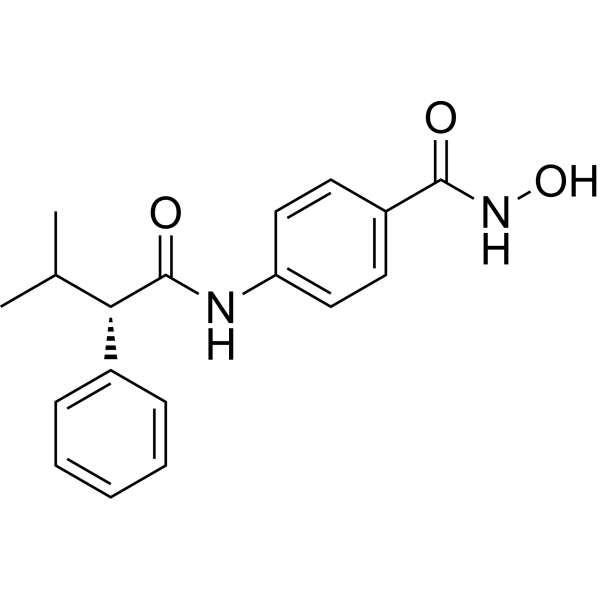
AR-42 (HDAC-42; OSU-HDAC42) is a potent, orally bioavailable pan-HDAC inhibitor (IC50=16 nM). AR-42 induces growth inhibition, cell-cycle arrest, apoptosis, and activation of caspases-3/7. AR-42 promotes hyperacetylation of H3, H4, and alpha-tubulin, and up-regulation of p21. AR-42 shows cytotoxicity against various human cancer cell lines.
Para uso exclusivo en investigación. No vendemos a pacientes.
- Pureza : 98.52%
- No. CAS: 935881-37-1
- Fòrmula: C18H20N2O3
- Peso molecular:312.36
-
Almacenamiento:Powder -20°C, 3 years , 4°C, 2 years ; In solvent -80°C, 2 years , -20°C, 1 year

To place orders, for customer services and technical support, please contact: MedChemExpress USA
Tel: 609-228-6898 E-mail: [email protected] [email protected]


-
 Actividad biológica
-
Chemical Information
-
Solvente y solubilidad
- Protocolo
- Pureza y Documentación
- Referencias
-
 Help & FAQs


-
HY-10221
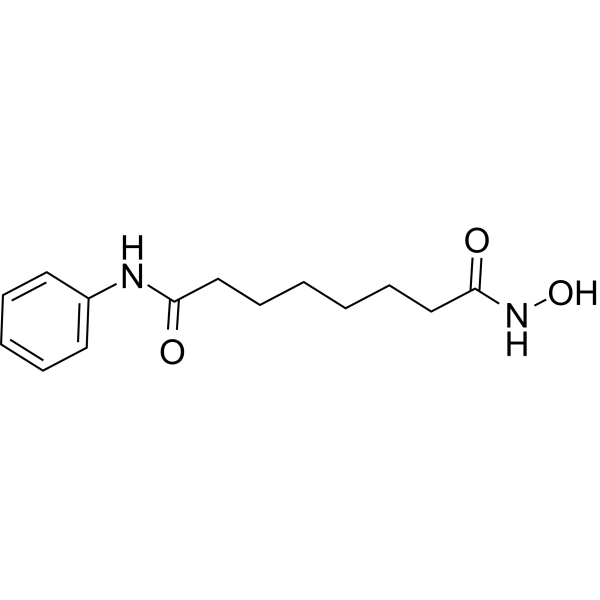
VorinostatHDAC Inhibitor -
HY-12163
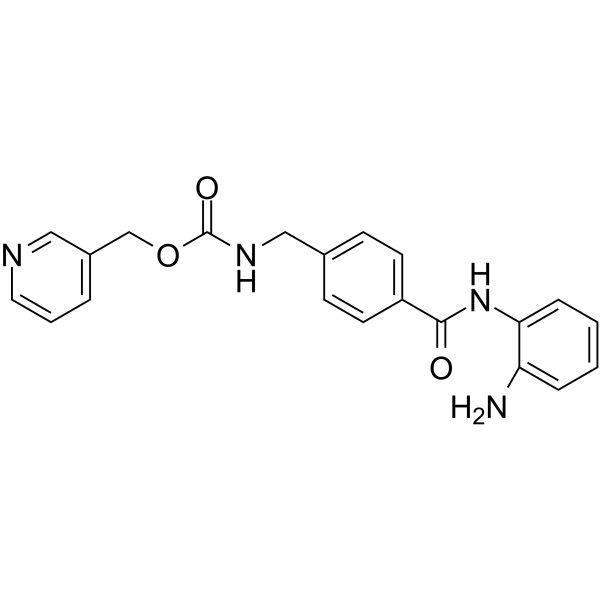
EntinostatHDAC Class I Inhibitor -
HY-15149
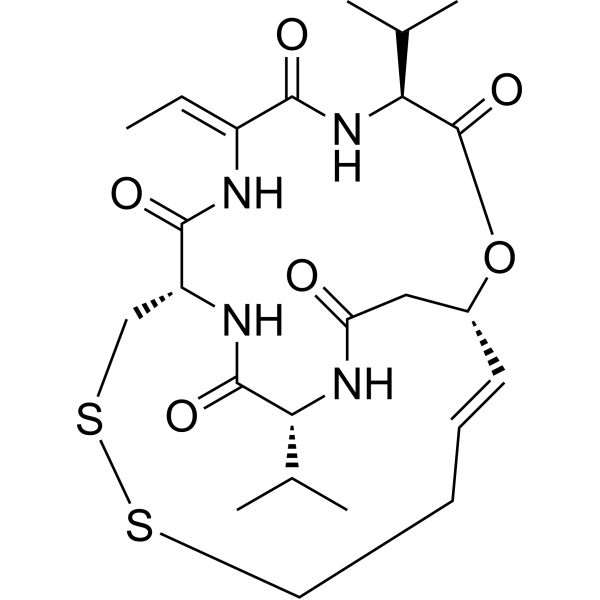
RomidepsinHDAC Inhibitor -
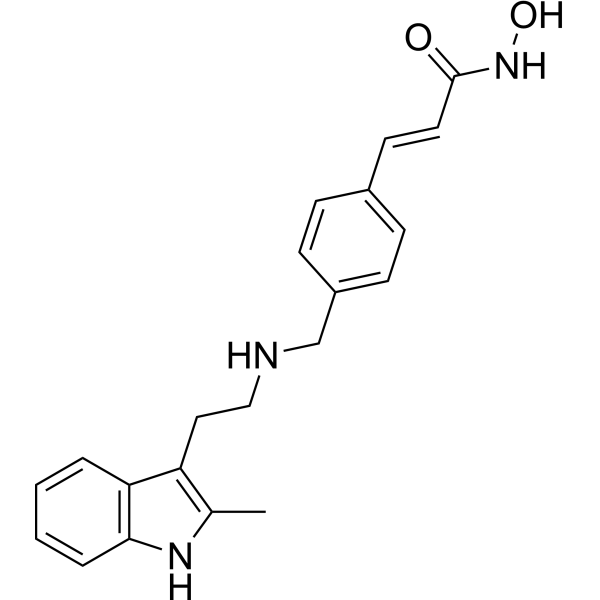
HY-10224
PanobinostatHDAC Inhibitor -
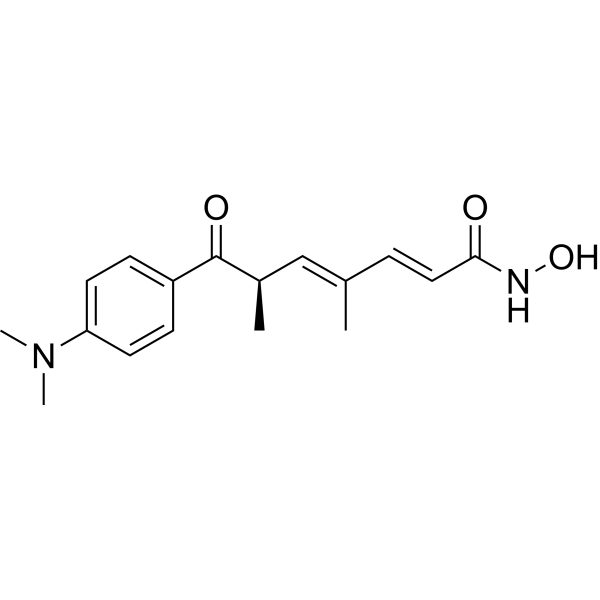
HY-15144
Trichostatin AHDAC Class I/II Inhibitor -
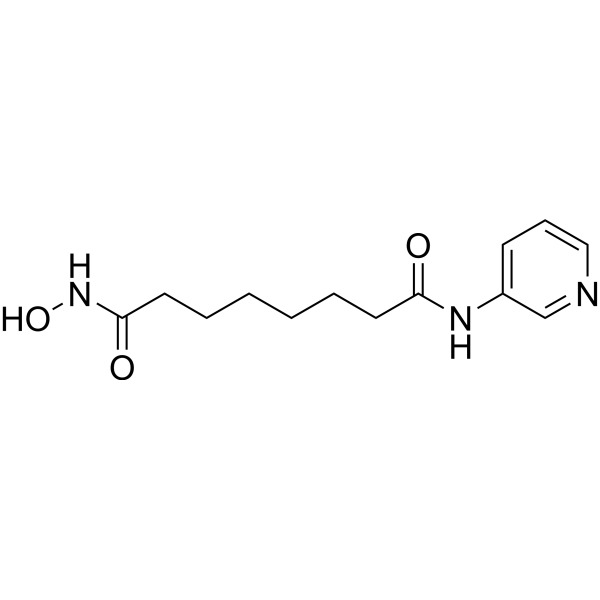
HY-13216
PyroxamideHDAC1 Inhibitor -
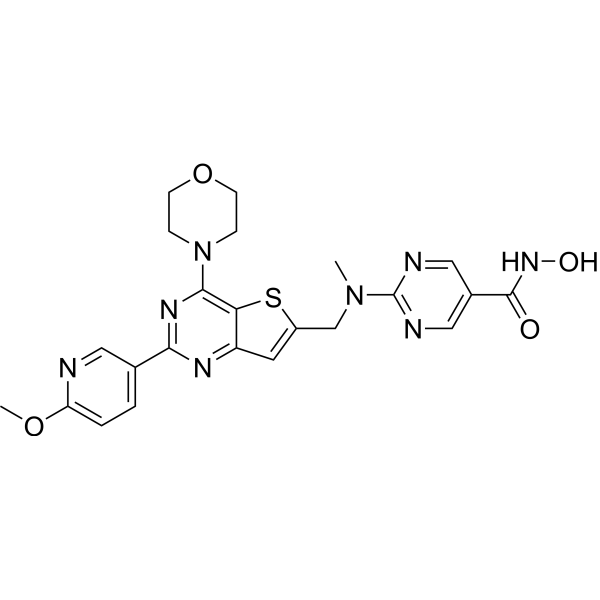
HY-13522
FimepinostatPI3K/HDAC Inhibitor -
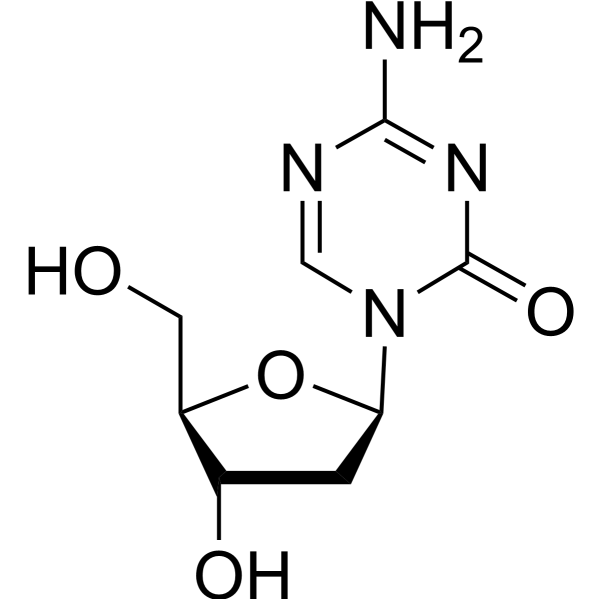
HY-A0004
DecitabineDNMT Inhibitor -
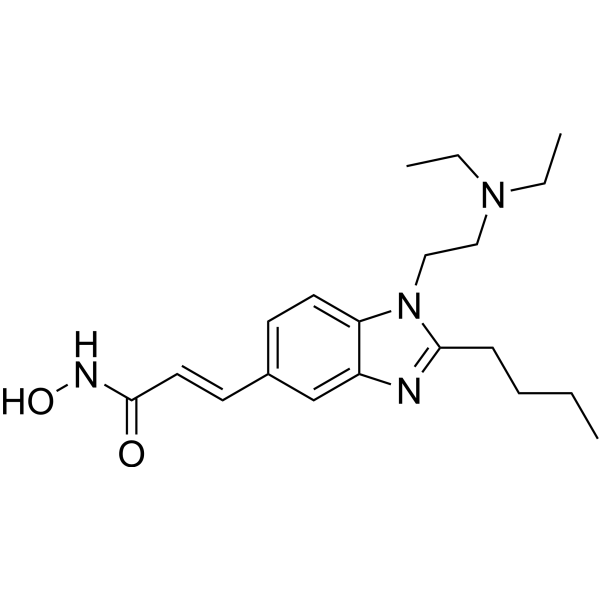
HY-13322
PracinostatHDAC/MBLAC2 Inhibitor -
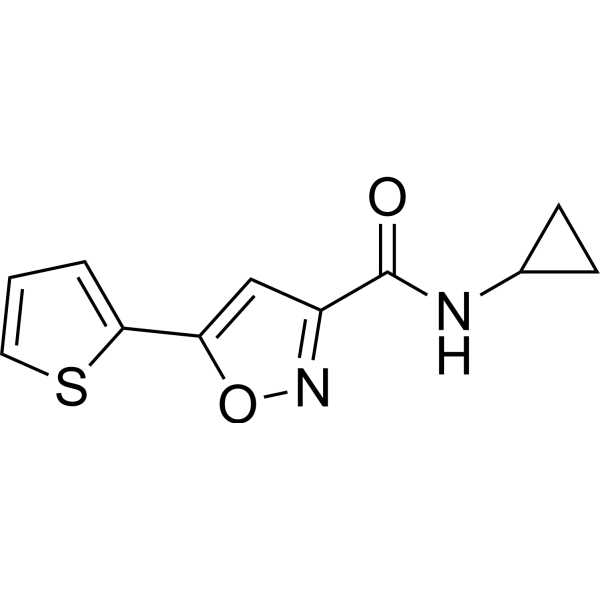
HY-12323
ISX-9Neural Stem Cell Differentiation Inducer -
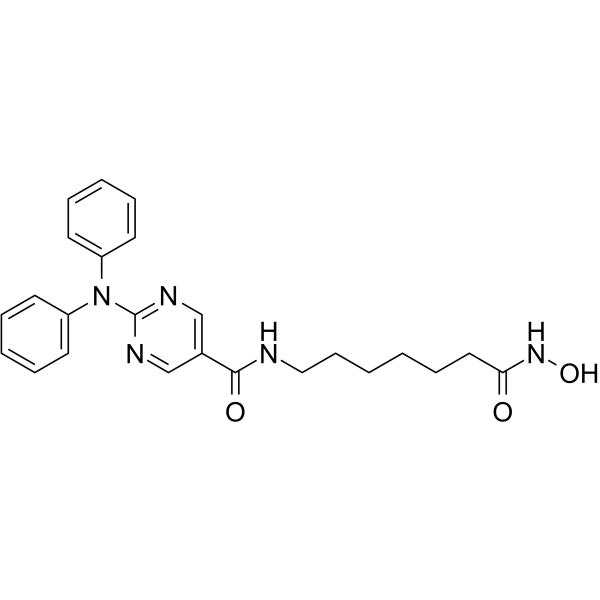
HY-16026
RicolinostatHDAC6 Inhibitor -

HY-10221R
Vorinostat (Standard)HDAC Inhibitor
Publications Citing Use of MedChemExpress (MCE) AR-42
More Customer Validation & Images

-
WB
-
WB


Actividad biológica
Descripciòn
IC50 & Target
IC50: 16 nM (HDAC)[2]
Cellular Effect
|
Cell Line

|
Type | Value | Description | References |
|---|---|---|---|---|
| DU-145 | IC50 |
0.11 μM
Compound: 11(S)
|
Inhibitory concentration against DU-145 prostate cancer cell proliferation over 96 hr
Inhibitory concentration against DU-145 prostate cancer cell proliferation over 96 hr
|
[PMID: 16107152] |
In Vitro
AR-42 (0.125-1 μM; 24 hours) inhibits cell proliferation in a dose-dependent manner, and the median IC50s for P815, C2, and BR cells are 0.65, 0.30, and 0.23 μM, respectively[3].
AR-42 (0.5 μM; 24 hours) induces cell-cycle arrest at G1 in the P815 cells and at G1/G2 in the C2 cells[3].
AR-42 (0.13-1 μM; 24 hours) causes a dose-dependent induction of apoptosis P815, C2, BR cells[3].
AR-42 (0.5-3 μM; 24 hours) induces hyperacetylation of histones H3 and H4 and α-tubulin[3].
MedChemExpress (MCE) has not independently confirmed the accuracy of these methods. They are for reference only. Further protocols information, click here.
-
Cell Line:Mouse (P815) and canine (C2 and BR) malignant mast cells
-
Concentration:0.0625, 0.125, 0.25, 0.5, 1 μM
-
Incubation Time:24 hours
-
Result:Inhibited cell proliferation in a dose-dependent manner, and the median IC50s for P815, C2, and BR cells were 0.65, 0.30, and 0.23 μM, respectively.
-
Cell Line:P815,C2 cells
-
Concentration:0.5 μM
-
Incubation Time:24 hours
-
Result:Induced cell-cycle arrest at G1 in the P815 cells and at G1/G2 in the C2 cells.
-
Cell Line:P815, C2, BR cells
-
Concentration:0.13, 0.25, 0.5, 1 μM
-
Incubation Time:24 hours
-
Result:Caused a dose-dependent induction of apoptosis.
-
Cell Line:P815, C2, BR cell lines
-
Concentration:0.5, 1, 3 μM
-
Incubation Time:24 hours
-
Result:A dose-dependent hyperacetylation of histone H3, histone H4, and α-tubulin.
In Vivo
MedChemExpress (MCE) has not independently confirmed the accuracy of these methods. They are for reference only.
-
Animal Model:Nude mice (HepG2 cell tumor xenograft model) [4]
-
Dosage:10 mg/kg
-
Administration:Tail vein injection; twice a week for three weeks
-
Result:Significantly inhibited tumor growth.
Ensayo clínico
| NCT Number | Sponsor | Condition | Start Date |
Phase
|
|---|---|---|---|---|
| NCT01329991 | Plexxikon| | 2011-05 | PHASE1 |


Chemical Information
-
No. CAS 935881-37-1
-
Appearance Solid
-
Peso molecular 312.36
-
Fòrmula C18H20N2O3
-
Color White to light brown
-
SMILES
CC([C@@H](C1=CC=CC=C1)C(NC2=CC=C(C=C2)C(NO)=O)=O)C
-
Synonyms
HDAC-42; OSU-HDAC42
-
Envío
Room temperature in continental US; may vary elsewhere.
-
Almacenamiento
Powder -20°C 3 years 4°C 2 years In solvent -80°C 2 years -20°C 1 year


Publications (4)
-
Journal Impact Factor
-
Most Recent
-
Int J Surg
Unveiling macrophage-fibroblast-driven inflammatory networks mediated pan-cancer immune features by integrated single-cell and bulk RNA sequencing. [Abstract]2025 Nov 20. PMID: 41263399 -
J Cell Physiol
Histone deacetylase inhibitor, AR-42, exerts antitumor effects by inducing apoptosis and cell cycle arrest in Y79 cells. [Abstract]2019 Dec;234(12):22411-22423. PMID: 31102271
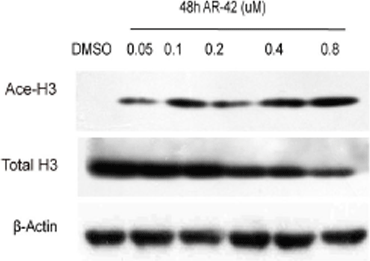
AR-42 purchased from MedChemExpress. Usage Cited in: J Cell Physiol. 2019 Dec;234(12):22411-22423. [Abstract]
Western blot shows dose-dependent increases in the levels of acetylated histone H3 after AR-42 treatment for 48 hr.
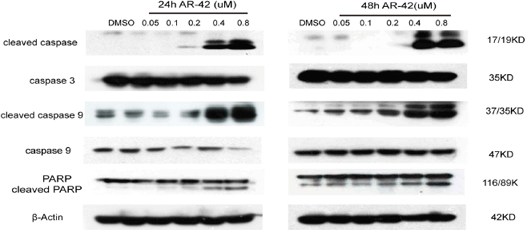
AR-42 purchased from MedChemExpress. Usage Cited in: J Cell Physiol. 2019 Dec;234(12):22411-22423. [Abstract]
Western blot shows that AR-42 induces cell apoptosis by inducing caspase3/9 and PARP cleavage.
-
-


Solvente y solubilidad
In Vitro:
Ethanol : 50 mg/mL (160.07 mM; Need ultrasonic)
DMSO : 10 mg/mL (32.01 mM; Need ultrasonic; Hygroscopic DMSO has a significant impact on the solubility of product, please use newly opened DMSO)
Please refer to the solubility information to select the appropriate solvent. Once prepared, please aliquot and store the solution to prevent product inactivation from repeated freeze-thaw cycles.
Storage method and period of stock solution: -80°C, 2 years; -20°C, 1 year. When stored at -80°C, please use it within 2 years. When stored at -20°C, please use it within 1 year.
Please refer to the solubility information to select the appropriate solvent. Once prepared, please aliquot and store the solution to prevent product inactivation from repeated freeze-thaw cycles.
Storage method and period of stock solution: -80°C, 2 years; -20°C, 1 year. When stored at -80°C, please use it within 2 years. When stored at -20°C, please use it within 1 year.
Concentration (start) × Volume (start) = Concentration (final) × Volume (final)
In Vivo:
Select the appropriate dissolution method based on your experimental animal and administration route.
- For the following dissolution methods, please ensure to first prepare a clear stock solution using an In Vitro approach and then sequentially add co-solvents:
- To ensure reliable experimental results, the clarified stock solution can be appropriately stored based on storage conditions. As for the working solution for In Vivo experiments, it is recommended to prepare freshly and use it on the same day.
- The percentages shown for the solvents indicate their volumetric ratio in the final prepared solution. If precipitation or phase separation occurs during preparation, heat and/or sonication can be used to aid dissolution.
Add each solvent one by one: 10% EtOH 40% PEG300 5% Tween-80 45% Saline
Solubility: ≥ 5 mg/mL (16.01 mM); Clear solution
This protocol yields a clear solution of ≥ 5 mg/mL (saturation unknown).
Taking 1 mL working solution as an example, add 100 μL EtOH stock solution (50.0 mg/mL) to 400 μL PEG300, and mix evenly; then add 50 μL Tween-80 and mix evenly; then add 450 μL Saline to adjust the volume to 1 mL.
Preparation of Saline: Dissolve 0.9 g sodium chloride in ddH₂O and dilute to 100 mL to obtain a clear Saline solution.
Add each solvent one by one: 10% EtOH 90% (20% SBE-β-CD in Saline)
Solubility: ≥ 5 mg/mL (16.01 mM); Clear solution
This protocol yields a clear solution of ≥ 5 mg/mL (saturation unknown).
Taking 1 mL working solution as an example, add 100 μL EtOH stock solution (50.0 mg/mL) to 900 μL 20% SBE-β-CD in Saline, and mix evenly.
Preparation of 20% SBE-β-CD in Saline (4°C, storage for one week): 2 g SBE-β-CD powder is dissolved in 10 mL Saline, completely dissolve until clear.
Add each solvent one by one: 10% EtOH 90% Corn Oil
Solubility: ≥ 5 mg/mL (16.01 mM); Clear solution
This protocol yields a clear solution of ≥ 5 mg/mL (saturation unknown). If the continuous dosing period exceeds half a month, please choose this protocol carefully.
Taking 1 mL working solution as an example, add 100 μL EtOH stock solution (50.0 mg/mL) to 900 μL Corn oil, and mix evenly.
Add each solvent one by one: 10% DMSO 40% PEG300 5% Tween-80 45% Saline
Solubility: ≥ 1 mg/mL (3.20 mM); Clear solution
This protocol yields a clear solution of ≥ 1 mg/mL (saturation unknown).
Taking 1 mL working solution as an example, add 100 μL DMSO stock solution (10.0 mg/mL) to 400 μL PEG300, and mix evenly; then add 50 μL Tween-80 and mix evenly; then add 450 μL Saline to adjust the volume to 1 mL.
Preparation of Saline: Dissolve 0.9 g sodium chloride in ddH₂O and dilute to 100 mL to obtain a clear Saline solution.
Add each solvent one by one: 10% DMSO 90% (20% SBE-β-CD in Saline)
Solubility: ≥ 1 mg/mL (3.20 mM); Clear solution
This protocol yields a clear solution of ≥ 1 mg/mL (saturation unknown).
Taking 1 mL working solution as an example, add 100 μL DMSO stock solution (10.0 mg/mL) to 900 μL 20% SBE-β-CD in Saline, and mix evenly.
Preparation of 20% SBE-β-CD in Saline (4°C, storage for one week): 2 g SBE-β-CD powder is dissolved in 10 mL Saline, completely dissolve until clear.
In Vivo Dissolution Calculator
Please enter the basic information of animal experiments:
-
-
-
-
Recommended: Prepare an additional quantity of animals to account for potential losses during experiments.
Please enter your animal formula composition:
-
%DMSO +
Recommended: Keep the proportion of DMSO in working solution below 2% if your animal is weak.
-
%+
-
+%Tween-80 + +
-
%Saline +
The co-solvents required include: DMSO, . All of co-solvents are available by MedChemExpress (MCE). , Tween 80. All of co-solvents are available by MedChemExpress (MCE).
Working solution concentration: 0.22 mg/mL
Method for preparing stock solution: mg drug dissolved in μL DMSO. Stock solution concentration: mg/mL.
1. Take μL DMSO stock solution;
2. Add μL .
μL , mix evenly;
3. Then add μL Tween 80, mix evenly;
4. Then add μL
Please ensure that the stock solution in the first step is dissolved to a clear state, and add co-solvents in sequence. You can use ultrasonic heating (ultrasonic cleaner, recommended frequency 20-40 kHz), vortexing, etc. to assist dissolution.

Protocolo
-
Detection of Apoptosis
Apoptosis, also called programmed cell death, is generally characterized by distinct morphological characteristics.
-
TUNEL staining for apoptotic DNA fragmentation
TUNEL staining detects DNA strand breaks by using terminal deoxynucleotidyl transferase to add labeled nucleotides to exposed 3′-OH DNA termini, generating either microscopic staining in fixed cells or tissue sections, or fluorescence/cytometric signal in cell suspensions. TUNEL positivity reflects DNA fragmentation but should not be interpreted alone as definitive apoptosis, because TUNEL can also label necrotic, autolytic, mechanically damaged, or DNA-repair-associated DNA breaks.
-
Cell Cytotoxicity Assay
Cytotoxicity assays are usually based on the assessment of cell membrane damage, which can also be indirectly detected by measuring cell viability. Detection methods include MTT assay, CKK-8 assay, LDH assay and ATP assay, etc.
-
Mammalian live/dead viability and cytotoxicity staining
Live/dead viability and cytotoxicity staining assays are based on the simultaneous detection of intracellular esterase activity in metabolically active (viable) cells and membrane integrity loss in non-viable cells. In commonly used dual-staining approaches, membrane-permeant fluorogenic substrates are converted by intracellular esterases into fluorescent products in live cells, while impermeant DNA-binding dyes selectively enter cells with compromised plasma membranes and label nucleic acids in dead or dying cells, enabling discrimination between viable and non-viable populations by fluorescence microscopy or flow cytometry.
-
Annexin V plus membrane-impermeant dye apoptosis staining
Annexin V-based apoptosis assays rely on the detection of phosphatidylserine (PS) externalization from the inner leaflet of the plasma membrane to the outer leaflet, an early biochemical hallmark of apoptosis. Fluorescently labeled Annexin V binds PS in a calcium-dependent manner, enabling identification of early apoptotic cells by flow cytometry or fluorescence microscopy. When combined with a membrane-impermeant DNA-binding dye (e. g. , propidium iodide), this approach allows discrimination between viable (Annexin V−/dye−), early apoptotic (Annexin V+/dye−), and late apoptotic or necrotic (Annexin V+/dye+) cell populations by assessing membrane integrity and PS exposure.
-
Apoptosis Solutions
Apoptosis is a regulated, generally non-lytic cell-death pathway that removes unwanted, damaged, infected, or abnormal cells through coordinated morphological changes, caspase activation, DNA fragmentation, and membrane remodeling. The intrinsic apoptosis pathway is controlled mainly by mitochondrial outer membrane permeabilization, BCL-2 family proteins, cytochrome c release, apoptosome formation, caspase-9 activation, and downstream executioner caspase-3/7 activation. The extrinsic apoptosis pathway is initiated by death receptors such as Fas, TNFR, and TRAIL receptors, which recruit adaptor proteins and activate caspase-8 before engaging executioner caspases or mitochondrial amplification through BID cleavage. Apoptosis is linked to many phenotypes, including cancer cell killing, tissue homeostasis, immune regulation, neurodegeneration, infection response, and treatment-induced cytotoxicity; unresolved questions include how apoptosis interacts with necroptosis, pyroptosis, ferroptos
-
Cell Viability Determination by MTT Colorimetric Assay
The following protocol uses the MTT colorimetric assay as a classic literature-established method for assessing cell viability/metabolic activity in cultured mammalian cells. MTT[3-(4,5-dimethylthiazol-2-yl)-2,5-diphenyltetrazolium bromide] is reduced by metabolically active cells to a colored formazan product; the amount of formazan is quantified spectrophotometrically and provides an indirect measure of metabolically active viable cells. Importantly, MTT reduction reflects cellular oxidoreductase/metabolic activity rather than an absolute direct count of living cells, so changes in cellular metabolism can alter the signal independently of cell number.


Pureza y Documentación
-
Ficha de datos (279 KB)
-
SDS (393 KB)
- English - EN (393 KB)
- Français - FR (393 KB)
- Deutsch - DE (393 KB)
- Norwegian - NO (393 KB)
- Español - ES (393 KB)
- Swedish - SV (393 KB)
- Italian - IT (393 KB)
- Korean - KR (393 KB)
- Portuguese - PT (393 KB)
-
Instrucciones de manejo (2659 KB)
Referencias
[1]. Lu YS, Chou CH, Tzen KY, Gao M, ChLu YS, et al. Radiosensitizing effect of a phenylbutyrate-derived histone deacetylase inhibitor in hepatocellular carcinoma. Int J Radiat Oncol Biol Phys. 2012 Jun 1;83(2):e181-9.eng AL, Kulp SK, Cheng JC.Radiosensitizing effect of a phenylbutyrate-derived histone deacetylase inhibitor in hepatocellular carcinoma.Int J Radiat Oncol Biol Phys. 2012 Jun 1;83(2):e181-9. Epub 2012 Feb 28. [Content Brief]
[2]. Lu Q, et al. Structure-based optimization of phenylbutyrate-derived histone deacetylase inhibitors. J Med Chem. 2005 Aug 25;48(17):5530-5. [Content Brief]
[3]. Lin TY, et al. AR-42, a novel HDAC inhibitor, exhibits biologic activity against malignant mast cell lines via down-regulation of constitutively activated Kit. Blood. 2010 May 27;115(21):4217-25. [Content Brief]
[4]. Zhang M, et al. AR-42 induces apoptosis in human hepatocellular carcinoma cells via HDAC5 inhibition. Oncotarget. 2016 Apr 19;7(16):22285-94. [Content Brief]


Complete Stock Solution Preparation Table
Please refer to the solubility information to select the appropriate solvent. Once prepared, please aliquot and store the solution to prevent product inactivation from repeated freeze-thaw cycles.
Storage method and period of stock solution: -80°C, 2 years; -20°C, 1 year. When stored at -80°C, please use it within 2 years. When stored at -20°C, please use it within 1 year.
| Optional Solvent | Concentration Solvent Mass | 1 mg | 5 mg | 10 mg | 25 mg |
|---|---|---|---|---|---|
| DMSO / Ethanol | 1 mM | 3.2014 mL | 16.0072 mL | 32.0143 mL | 80.0359 mL |
| 5 mM | 0.6403 mL | 3.2014 mL | 6.4029 mL | 16.0072 mL | |
| 10 mM | 0.3201 mL | 1.6007 mL | 3.2014 mL | 8.0036 mL | |
| 15 mM | 0.2134 mL | 1.0671 mL | 2.1343 mL | 5.3357 mL | |
| 20 mM | 0.1601 mL | 0.8004 mL | 1.6007 mL | 4.0018 mL | |
| 25 mM | 0.1281 mL | 0.6403 mL | 1.2806 mL | 3.2014 mL | |
| 30 mM | 0.1067 mL | 0.5336 mL | 1.0671 mL | 2.6679 mL | |
| Ethanol | 40 mM | 0.0800 mL | 0.4002 mL | 0.8004 mL | 2.0009 mL |
| 50 mM | 0.0640 mL | 0.3201 mL | 0.6403 mL | 1.6007 mL | |
| 60 mM | 0.0534 mL | 0.2668 mL | 0.5336 mL | 1.3339 mL | |
| 80 mM | 0.0400 mL | 0.2001 mL | 0.4002 mL | 1.0004 mL | |
| 100 mM | 0.0320 mL | 0.1601 mL | 0.3201 mL | 0.8004 mL |


AR-42 Related Classifications
HY-13265 Related Classifications
 Powered by Bioz