



Rotigotine
Based on 4 publication(s) in Google Scholar
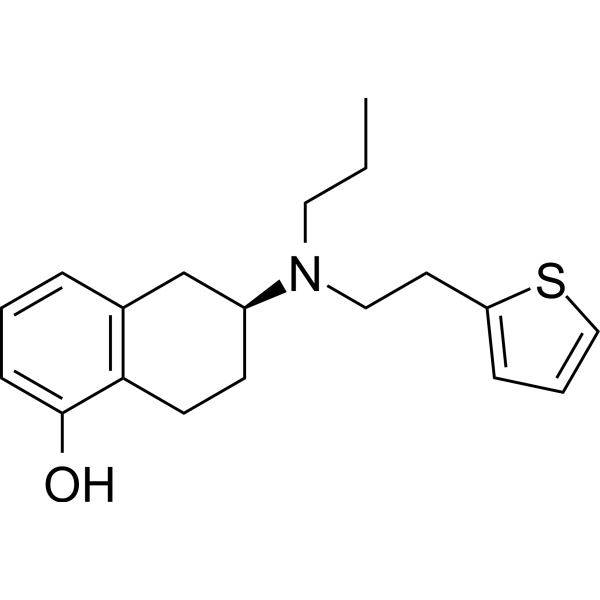
Rotigotine is a potent dopamine receptor agonist with Ki values of 0.71 nM, 4-15 nM, and 83 nM for the dopamine D3 receptor and D2, D5, D4 receptors and dopamine D1 receptor. Rotigotine a partial agonist of the 5-HT1A receptor, and an antagonist of the α2B-adrenergic receptor. Rotigotine can be used for parkinson's disease (PD) research.
For research use only. We do not sell to patients.
- Purity : 99.90%
- CAS No.: 99755-59-6
- Formula: C19H25NOS
- Molecular Weight:315.47
-
Storage:Powder -20°C, 3 years , 4°C, 2 years ; In solvent -80°C, 2 years , -20°C, 1 year

To place orders, for customer services and technical support, please contact: MedChemExpress USA
Tel: 609-228-6898 E-mail: [email protected] [email protected]


-
 Biological Activity
-
Chemical Information
-
Solvent & Solubility
- Protocols
- Purity & Documentation
- References
-
 Help & FAQs


-
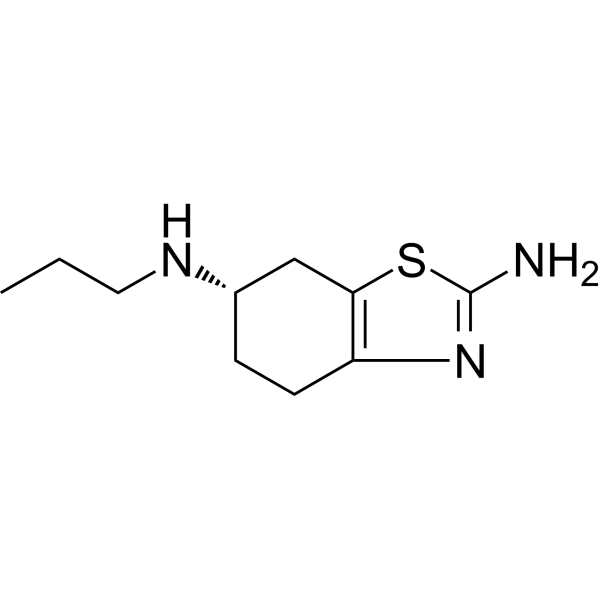
HY-B0410
PramipexoleDopamine Receptor Agonist -
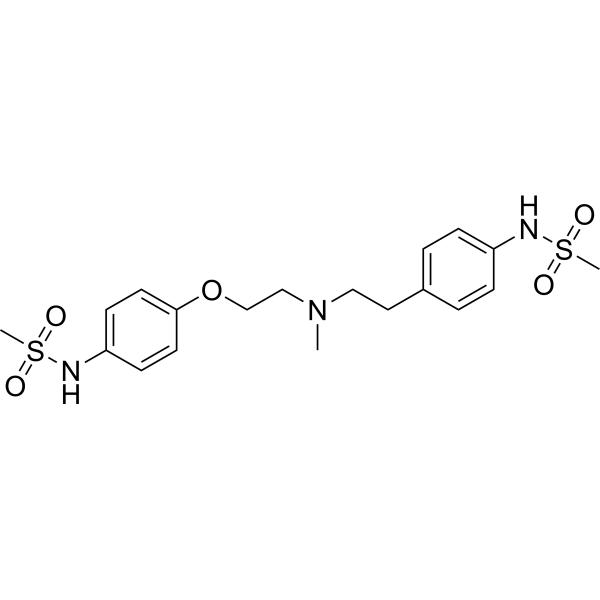
HY-B0232
DofetilideIKr Blocker -
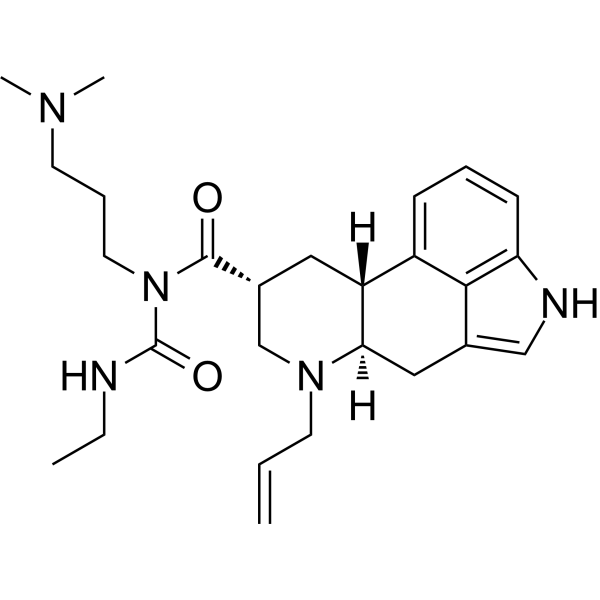
HY-15296
CabergolineAutophagy Inducer -
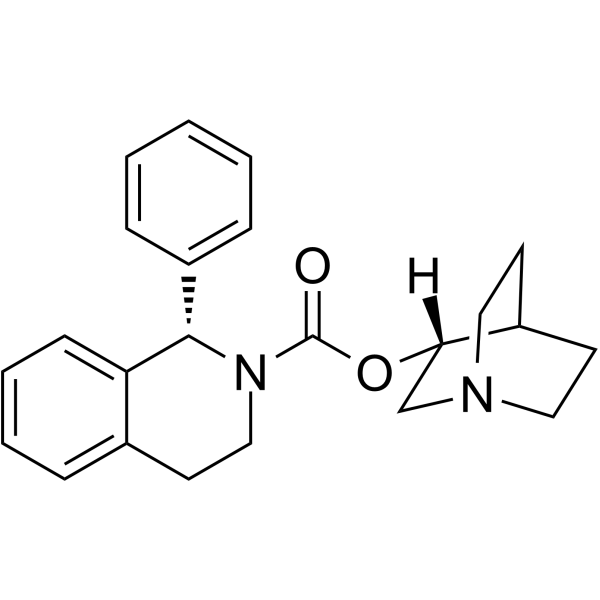
HY-A0034
SolifenacinmAChR Antagonist -
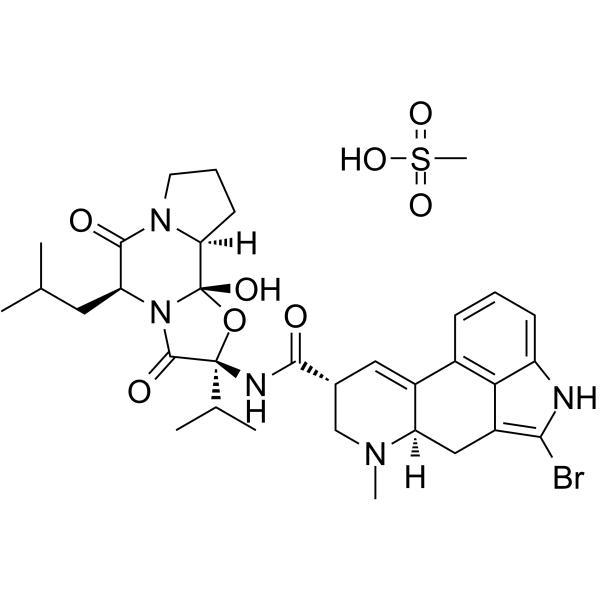
HY-12705A
Bromocriptine mesylate -
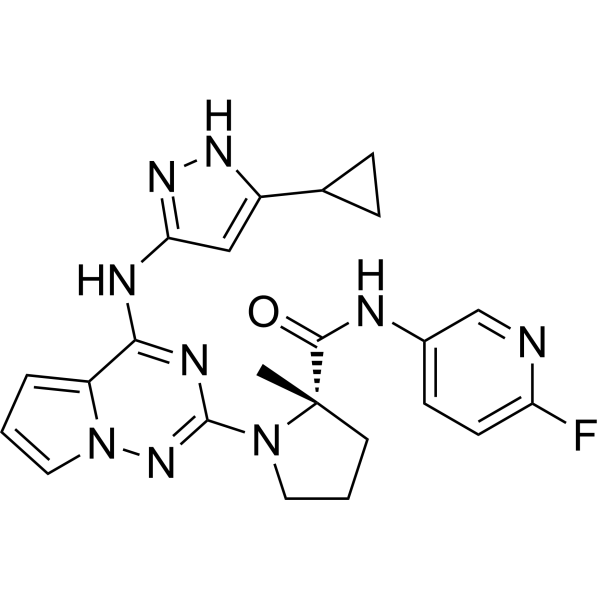
HY-10200
BMS-754807IGF-1R/IR Inhibitor -
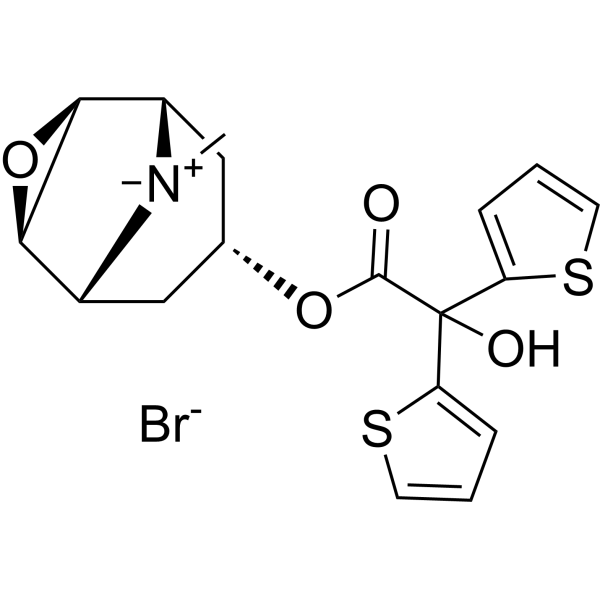
HY-17360
Tiotropium BromidemAChR Antagonist -
HY-B0588
BrinzolamideCarbonic Anhydrase II Inhibitor -
HY-A0024
TolterodinemAChR Inhibitor -
HY-A0012
Darifenacin hydrobromideM3 Muscarinic Receptor Antagonist -
HY-17465
GlycopyrrolateMuscarinic Receptor Antagonist -
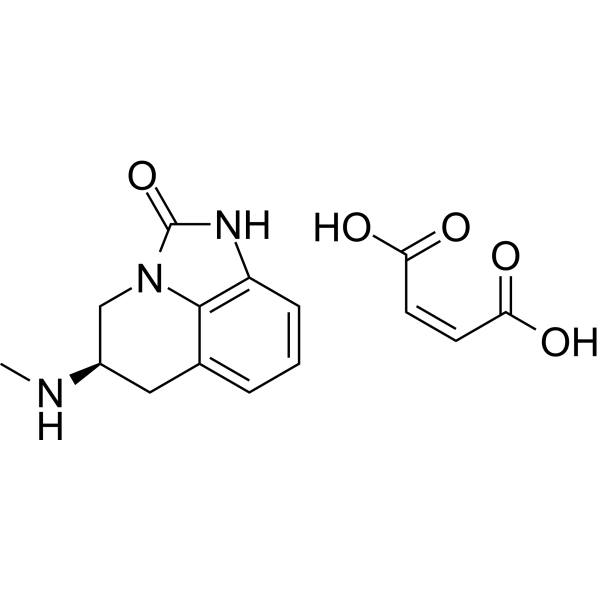
HY-70081A
Sumanirole maleateD2 Receptor Agonist
Publications Citing Use of MedChemExpress (MCE) Rotigotine
MoreAll Dopamine Receptor Isoforms
MoreAll Adrenergic Receptor Isoforms
MoreAll 5-HT Receptor Isoforms
More

Biological Activity
Description
|
D3 Receptor 0.71 nM (Ki) |
5-HT1A Receptor |
D2 Receptor 4-15 nM (Ki) |
D5 Receptor 4-15 nM (Ki) |
D4 Receptor 4-15 nM (Ki) |
D1 Receptor 83 nM (Ki) |
5-HT1A Receptor 30 nM (Ki) |
5-HT7 Receptor 86 nM (Ki) |
Cellular Effect
|
Cell Line

|
Type | Value | Description | References |
|---|---|---|---|---|
| CHO | EC50 |
0.7 nM
Compound: Rotigotine
|
Agonist activity at human dopamine D2 receptor expressed in CHO cells assessed as increase of forskolin-induced cAMP production after 20 mins
Agonist activity at human dopamine D2 receptor expressed in CHO cells assessed as increase of forskolin-induced cAMP production after 20 mins
|
[PMID: 24296012] |
| CHO | EC50 |
28 nM
Compound: Rotigotine
|
Agonist activity at human recombinant dopamine D1 receptor expressed in CHO cells assessed as cAMP production after 20 mins
Agonist activity at human recombinant dopamine D1 receptor expressed in CHO cells assessed as cAMP production after 20 mins
|
[PMID: 24296012] |
| HEK-293T | EC50 |
3.2 nM
Compound: Rotigotine
|
Agonist activity at human D2S receptor expressed in HEK293T cell membranes coexpressing Galphao1 assessed as induction of nucleotide exchange preincubated for 30 mins followed by addition of [35S]GTPgammaS measured after 30 mins by [35S]GTPgammaS binding
Agonist activity at human D2S receptor expressed in HEK293T cell membranes coexpressing Galphao1 assessed as induction of nucleotide exchange preincubated for 30 mins followed by addition of [35S]GTPgammaS measured after 30 mins by [35S]GTPgammaS binding
|
[PMID: 28489379] |
| HEK-293T | EC50 |
4.1 nM
Compound: Rotigotine
|
Partial agonist activity at human D2SR expressed in HEK293T cells co-expressing (EA)beta-arrestin2 assessed as induction of beta-arrestin2 recruitment after 5 hrs by chemiluminescence assay
Partial agonist activity at human D2SR expressed in HEK293T cells co-expressing (EA)beta-arrestin2 assessed as induction of beta-arrestin2 recruitment after 5 hrs by chemiluminescence assay
|
[PMID: 28489379] |
| HEK-293T | EC50 |
4.4 nM
Compound: Rotigotine
|
Partial agonist activity at human D2SR expressed in HEK293T cells co-expressing (EA)beta-arrestin2 and GRK2 assessed as induction of beta-arrestin2 recruitment after 5 hrs by chemiluminescence assay
Partial agonist activity at human D2SR expressed in HEK293T cells co-expressing (EA)beta-arrestin2 and GRK2 assessed as induction of beta-arrestin2 recruitment after 5 hrs by chemiluminescence assay
|
[PMID: 28489379] |
In Vitro
Rotigotine (0.01-10 μM) slightly protects dopaminergic neurons against MPP+ toxicity dopamine, protects dopaminergic neurons against rotenone-induced cell death and significantly inhibits ROS production by rotenone[2].
MedChemExpress (MCE) has not independently confirmed the accuracy of these methods. They are for reference only. Further protocols information, click here.
In Vivo
MedChemExpress (MCE) has not independently confirmed the accuracy of these methods. They are for reference only.
-
Animal Model:Male Sprague–Dawley rats[3]
-
Dosage:0.1, 0.5, 1, and 5 mg/kg
-
Administration:Subcutaneous injection; for 14 days.
-
Result:Had antidepressant effect at a dose of 1 mg/kg or less.
Clinical Trial
| NCT Number | Sponsor | Condition | Start Date |
Phase
|
|---|---|---|---|---|
| NCT01329991 | Plexxikon| | 2011-05 | PHASE1 |


Chemical Information
-
CAS No. 99755-59-6
-
Appearance Solid
-
Molecular Weight 315.47
-
Formula C19H25NOS
-
Color Off-white to pink
-
SMILES
CCCN(CCC1=CC=CS1)[C@H]2CCC3=C(C=CC=C3O)C2
-
Synonyms
N-0923; (-)-N 0437
-
Shipping
Room temperature in continental US; may vary elsewhere.
-
Storage
Powder -20°C 3 years 4°C 2 years In solvent -80°C 2 years -20°C 1 year


Publications (4)
-
Journal Impact Factor
-
Most Recent
-
Acta Pharmacol Sin
Dysfunction of subthalamic dopaminergic circuitry contributes to anxiety- and depression-like behaviors in 6-OHDA lesion-induced hemiparkinsonian mice. [Abstract]2025 May 6. PMID: 40329003 -
Clin Chem
Discovering Cross-Reactivity in Urine Drug Screening Immunoassays through Large-Scale Analysis of Electronic Health Records. [Abstract]2019 Dec;65(12):1522-1531. PMID: 31578215 -
-
bioRxiv
2025 Aug 12:2025.08.08.668522. PMID: 40832361


Solvent & Solubility
In Vitro:
DMSO : ≥ 50 mg/mL (158.49 mM; Hygroscopic DMSO has a significant impact on the solubility of product, please use newly opened DMSO)
* "≥" means soluble, but saturation unknown.
Please refer to the solubility information to select the appropriate solvent. Once prepared, please aliquot and store the solution to prevent product inactivation from repeated freeze-thaw cycles.
Storage method and period of stock solution: -80°C, 2 years; -20°C, 1 year. When stored at -80°C, please use it within 2 years. When stored at -20°C, please use it within 1 year.
Please refer to the solubility information to select the appropriate solvent. Once prepared, please aliquot and store the solution to prevent product inactivation from repeated freeze-thaw cycles.
Storage method and period of stock solution: -80°C, 2 years; -20°C, 1 year. When stored at -80°C, please use it within 2 years. When stored at -20°C, please use it within 1 year.
Concentration (start) × Volume (start) = Concentration (final) × Volume (final)
In Vivo:
Select the appropriate dissolution method based on your experimental animal and administration route.
- For the following dissolution methods, please ensure to first prepare a clear stock solution using an In Vitro approach and then sequentially add co-solvents:
- To ensure reliable experimental results, the clarified stock solution can be appropriately stored based on storage conditions. As for the working solution for In Vivo experiments, it is recommended to prepare freshly and use it on the same day.
- The percentages shown for the solvents indicate their volumetric ratio in the final prepared solution. If precipitation or phase separation occurs during preparation, heat and/or sonication can be used to aid dissolution.
Add each solvent one by one: 10% DMSO 40% PEG300 5% Tween-80 45% Saline
Solubility: ≥ 2.5 mg/mL (7.92 mM); Clear solution
This protocol yields a clear solution of ≥ 2.5 mg/mL (saturation unknown).
Taking 1 mL working solution as an example, add 100 μL DMSO stock solution (25.0 mg/mL) to 400 μL PEG300, and mix evenly; then add 50 μL Tween-80 and mix evenly; then add 450 μL Saline to adjust the volume to 1 mL.
Preparation of Saline: Dissolve 0.9 g sodium chloride in ddH₂O and dilute to 100 mL to obtain a clear Saline solution.
Add each solvent one by one: 10% DMSO 90% (20% SBE-β-CD in Saline)
Solubility: ≥ 2.5 mg/mL (7.92 mM); Clear solution
This protocol yields a clear solution of ≥ 2.5 mg/mL (saturation unknown).
Taking 1 mL working solution as an example, add 100 μL DMSO stock solution (25.0 mg/mL) to 900 μL 20% SBE-β-CD in Saline, and mix evenly.
Preparation of 20% SBE-β-CD in Saline (4°C, storage for one week): 2 g SBE-β-CD powder is dissolved in 10 mL Saline, completely dissolve until clear.
In Vivo Dissolution Calculator
Please enter the basic information of animal experiments:
-
-
-
-
Recommended: Prepare an additional quantity of animals to account for potential losses during experiments.
Please enter your animal formula composition:
-
%DMSO +
Recommended: Keep the proportion of DMSO in working solution below 2% if your animal is weak.
-
%+
-
+%Tween-80 + +
-
%Saline +
The co-solvents required include: DMSO, . All of co-solvents are available by MedChemExpress (MCE). , Tween 80. All of co-solvents are available by MedChemExpress (MCE).
Working solution concentration: 0.22 mg/mL
Method for preparing stock solution: mg drug dissolved in μL DMSO. Stock solution concentration: mg/mL.
1. Take μL DMSO stock solution;
2. Add μL .
μL , mix evenly;
3. Then add μL Tween 80, mix evenly;
4. Then add μL
Please ensure that the stock solution in the first step is dissolved to a clear state, and add co-solvents in sequence. You can use ultrasonic heating (ultrasonic cleaner, recommended frequency 20-40 kHz), vortexing, etc. to assist dissolution.

Protocols
-
Human pluripotent stem cell midbrain dopaminergic neuron differentiation
Human pluripotent stem cells are directed toward midbrain dopaminergic neurons by first inducing a neural floor-plate-like progenitor state, then patterning cells with ventralizing SHH signaling and midbrain/WNT-FGF cues, and finally maturing progenitors into neurons expressing dopaminergic markers such as TH, NURR1/NR4A2, PITX3, DAT/SLC6A3, VMAT2/SLC18A2, GIRK2/KCNJ6, FOXA2, LMX1A, and EN1. The main readouts are loss of pluripotency, acquisition of FOXA2+/LMX1A+ midbrain floor-plate progenitors, emergence of βIII-tubulin+/MAP2+ neurons, and production of TH+ dopaminergic neurons with molecular, dopamine-release, and electrophysiological features of midbrain dopaminergic identity.


Purity & Documentation
-
Data Sheet (276 KB)
-
SDS (394 KB)
- English - EN (394 KB)
- Français - FR (394 KB)
- Deutsch - DE (394 KB)
- Norwegian - NO (394 KB)
- Español - ES (394 KB)
- Swedish - SV (394 KB)
- Italian - IT (394 KB)
- Korean - KR (394 KB)
- Portuguese - PT (394 KB)
-
Handling Instructions (2659 KB)
References
[1]. Wood M, et, al. Rotigotine is a potent agonist at dopamine D1 receptors as well as at dopamine D2 and D3 receptors. Br J Pharmacol. 2015 Feb;172(4):1124-35. [Content Brief]
[2]. Radad K, et, al. Neuroprotective effect of rotigotine against complex I inhibitors, MPP⁺ and rotenone, in primary mesencephalic cell culture. Folia Neuropathol. 2014;52(2):179-86. [Content Brief]
[3]. Bertaina-Anglade V, et, al. Antidepressant properties of rotigotine in experimental models of depression. Eur J Pharmacol. 2006 Oct 24;548(1-3):106-14. [Content Brief]
[4]. Scheller D, et, al. The in vitro receptor profile of rotigotine: a new agent for the treatment of Parkinson's disease. Naunyn Schmiedebergs Arch Pharmacol. 2009 Jan;379(1):73-86. [Content Brief]


Complete Stock Solution Preparation Table
Please refer to the solubility information to select the appropriate solvent. Once prepared, please aliquot and store the solution to prevent product inactivation from repeated freeze-thaw cycles.
Storage method and period of stock solution: -80°C, 2 years; -20°C, 1 year. When stored at -80°C, please use it within 2 years. When stored at -20°C, please use it within 1 year.
| Optional Solvent | Concentration Solvent Mass | 1 mg | 5 mg | 10 mg | 25 mg |
|---|---|---|---|---|---|
| DMSO | 1 mM | 3.1699 mL | 15.8494 mL | 31.6987 mL | 79.2468 mL |
| 5 mM | 0.6340 mL | 3.1699 mL | 6.3397 mL | 15.8494 mL | |
| 10 mM | 0.3170 mL | 1.5849 mL | 3.1699 mL | 7.9247 mL | |
| 15 mM | 0.2113 mL | 1.0566 mL | 2.1132 mL | 5.2831 mL | |
| 20 mM | 0.1585 mL | 0.7925 mL | 1.5849 mL | 3.9623 mL | |
| 25 mM | 0.1268 mL | 0.6340 mL | 1.2679 mL | 3.1699 mL | |
| 30 mM | 0.1057 mL | 0.5283 mL | 1.0566 mL | 2.6416 mL | |
| 40 mM | 0.0792 mL | 0.3962 mL | 0.7925 mL | 1.9812 mL | |
| 50 mM | 0.0634 mL | 0.3170 mL | 0.6340 mL | 1.5849 mL | |
| 60 mM | 0.0528 mL | 0.2642 mL | 0.5283 mL | 1.3208 mL | |
| 80 mM | 0.0396 mL | 0.1981 mL | 0.3962 mL | 0.9906 mL | |
| 100 mM | 0.0317 mL | 0.1585 mL | 0.3170 mL | 0.7925 mL |


Rotigotine Related Classifications
HY-75502 Related Classifications
 Powered by Bioz