



Glabrene
Based on 1 publication(s) in Google Scholar
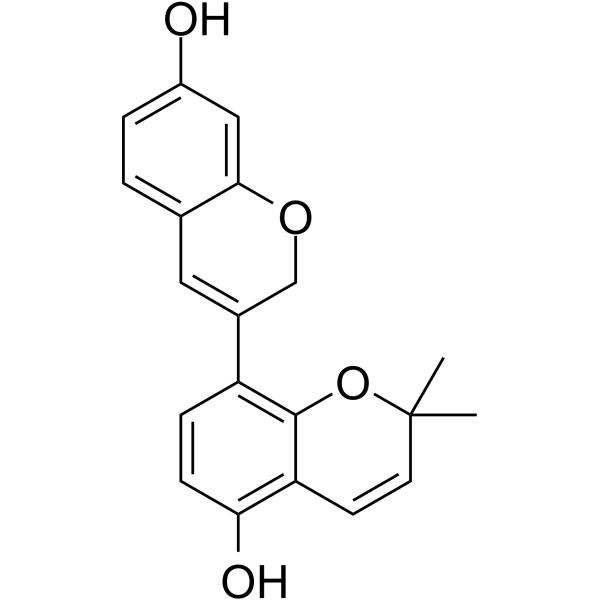
Glabrene is an isoflavene phytoestrogen isolated from the roots of Glycyrrhiza glabra, which activates human Estrogen Receptor with an EC50 of approximately 1 μM. Glabrene is a Tyrosinase inhibitor with an IC50 of 3.54 µM against mushroom tyrosinase and a Ki of 0.18 mM. Glabrene binds to ER, activates ER-mediated transcription, and competes with estradiol. Glabrene is predicted to bind to mTOR, inhibits melanin formation in melanocytes, and possesses antioxidant activity. Glabrene induces G2/M phase arrest in cancer cells at high concentrations and exhibits ER-independent antiproliferative activity. Glabrene can be used in research on hyperpigmentation, breast cancer, bone diseases in postmenopausal women, and prostate cancer.
商品は「研究用試薬」です。人や動物の医療用・臨床診断用・食品用の製品ではありません。
研究用途以外に使用した場合、当社は一切の責任を負いかねます。
- CAS 番号: 60008-03-9
- 分子式: C20H18O4
- 分子量:322.35
-
保管条件:
Please store the product under the recommended conditions in the Certificate of Analysis.

To place orders, for customer services and technical support, please contact: MedChemExpress USA
Tel: 609-228-6898 E-mail: [email protected] [email protected]


-
 生物活性
-
化学情報
- プロトコル
- 純度とドキュメンテーション
- 参考文献
-
 Help & FAQs


-
HY-N0616
TrifolirhizinPterocarpan Flavonoid -
HY-W003607
3-O-Ethyl-L-ascorbic acidVitamin C Derivative -
HY-N3266
Methyl rosmarinateHydroxycinnamic Acid -
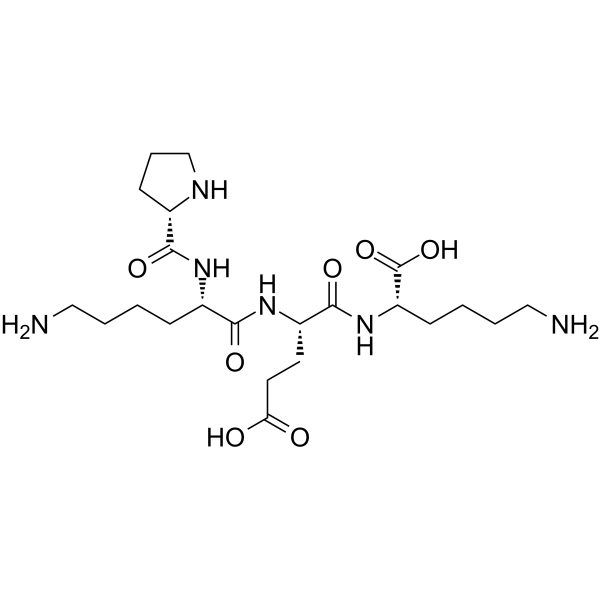
HY-P3452
Tetrapeptide-30Skin-Brightening Peptide -
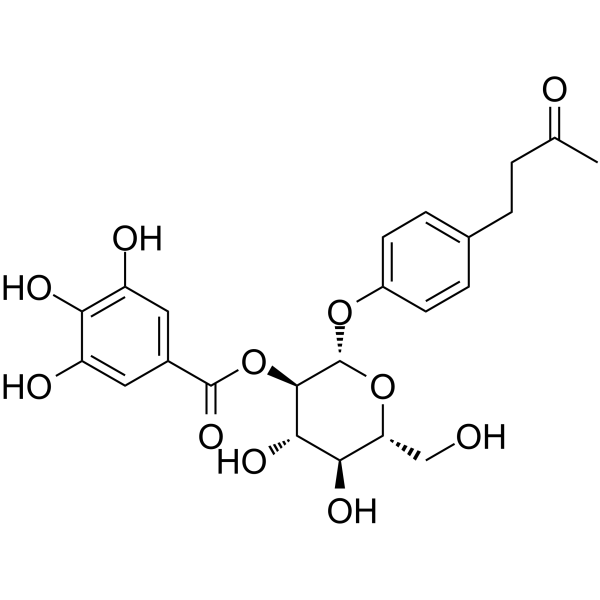
HY-N6244
IsolindleyinTyrosinase Inhibitor -
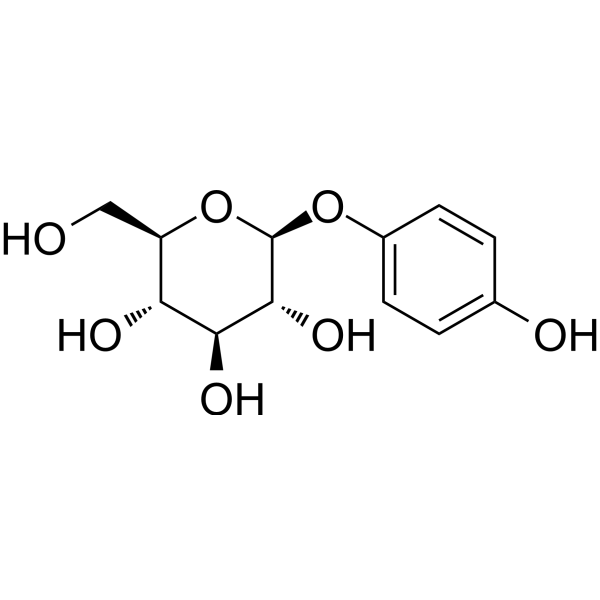
HY-N0192
ArbutinEndogenous Metabolite -
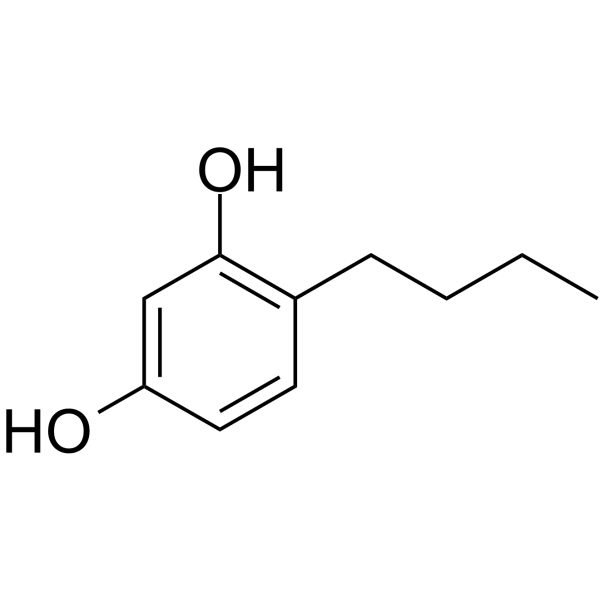
HY-107369
4-ButylresorcinolTyrosinase Inhibitor -

HY-W003607R
3-O-Ethyl-L-ascorbic acid (Standard)Reference Standard -

HY-N0192R
Arbutin (Standard)Endogenous Metabolite -

HY-N0616R
Trifolirhizin (Standard)Tyrosinase Inhibitor -
HY-N7135
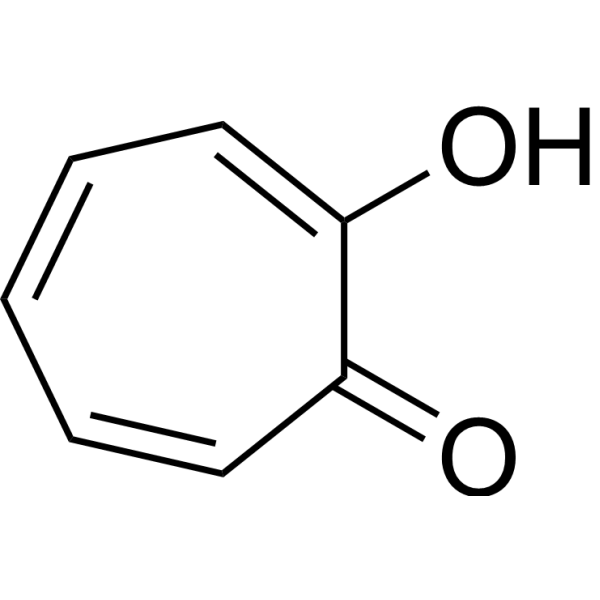
TropoloneTropone Derivatives; Tyrosinase Inhibitor; Virus Inhibitor; Funga Inhibitor -

HY-N3266R
Methyl rosmarinate (Standard)Tyrosinase Inhibitor


生物活性
製品説明
IC50 & Target
[4]|
ER ~ 1 μM (EC50) |
Cellular Effect
|
Cell Line

|
Type | Value | Description | References |
|---|---|---|---|---|
| G-361 | IC50 |
6.68 μg/mL
|
Inhibition of melanin formation in human G361 melanocytes assessed by melanin content at 405 nm after 3 days in culture.
Inhibition of melanin formation in human G361 melanocytes assessed by melanin content at 405 nm after 3 days in culture.
|
12590456 |
| HeLa | EC50 |
~ 1 μM
|
ER-mediated transcriptional activation in Hela human cervical carcinoma cells assessed by CAT reporter activity after 48 hrs, with half-maximal induction at 1 μM.
ER-mediated transcriptional activation in Hela human cervical carcinoma cells assessed by CAT reporter activity after 48 hrs, with half-maximal induction at 1 μM.
|
11595510 |
体外実験
Glabrene (10 nM-100 μM; 7 days) exhibits a biphasic proliferative regulatory effect in human breast cancer cells T-47D (ER+) and MCF-7 (ER+) (low concentrations of 100 nM-10 μM promote T-47D proliferation, and 0.1-1 μM promotes MCF-7 proliferation to approximately 150%; high concentrations > 15 μM inhibit T-47D and > 5 μM inhibit MCF-7), whereas in ER (-) breast cancer cells MDA-MB-468 it does not promote proliferation and only inhibits cell growth at high concentrations[4].
Glabrene (10 nM-100 μM; 7 days) in T-47D cells in the presence of Estradiol (HY-B0141) or Tamoxifen (HY-13757A): concentrations of 100 pM-0.1 μM do not affect the proliferation-promoting effect of Estradiol, and the biphasic effect at 0.1-100 μM is also unaffected by Estradiol; Tamoxifen inhibits the proliferation-promoting effect of the low-dose group but does not block the growth-inhibitory effect of high-concentration (25 μM) Glabrene, confirming that its proliferation-promoting effect is ER-dependent while its proliferation-inhibitory effect is ER-independent[4].
Glabrene (0.01-5.00 μM; 48 h) dose-dependently activates ER-mediated gene transcription in HeLa cells co-transfected with a human ERα expression plasmid (HEGO) and an ERE-CAT reporter plasmid, with a half-maximal induction concentration of approximately 1 μM and maximal activation reached at 5 μM[4].
Glabrene (10 µM; 3 days) inhibits melanin formation in G361 human melanocytes with an IC50 of 6.68 µg/mL, producing 73.6% melanin at 71.9% cell viability[1].
Glabrene (3 μM; 24 h) significantly stimulates creatine kinase (CK) activity in primary human osteocytes from both premenopausal and postmenopausal women, and the stimulatory effect is stronger in postmenopausal osteocytes than in premenopausal osteocytes, and this response is inhibited by pre-exposure to CB 1093 or JKF[5].
MedChemExpress (MCE) has not independently confirmed the accuracy of these methods. They are for reference only.
-
Cell Line:G361 human melanocytes
-
Concentration:10 µM
-
Incubation Time:3 days
-
Result:Significantly reduced melanin content in G361 cells to 73.6% of control with 71.9% cell survival.
体内実験
Glabrene (3-300 µg/rat; i.p.; single injection; 24 h) stimulates the specific activity of creatine kinase in the epiphyseal cartilage and diaphyseal bone of healthy immature female Wistar rats[5].
Glabrene (50 µg/rat; i.p.; single injection; 24 h) still increases creatine kinase specific activity in bone and cartilage of healthy immature female Wistar rats when co-administered with Raloxifene (HY-13738)[5].
MedChemExpress (MCE) has not independently confirmed the accuracy of these methods. They are for reference only.
-
Animal Model:Wistar (female, 25 days old, approximately 60 g)[5]
-
Dosage:50 µg/rat; Raloxifene 500 µg/rat co-administered
-
Administration:i.p.; single injection; 24 h
-
Result:The increase in creatine kinase specific activity in epiphyseal cartilage and diaphyseal bone was not blocked by Raloxifene.


Product Details
-
Structure Classification


化学情報
-
CAS 番号 60008-03-9
-
分子量 322.35
-
分子式 C20H18O4
-
SMILES
OC1=C2C=CC(C)(C)OC2=C(C3=CC4=CC=C(O)C=C4OC3)C=C1
-
輸送条件
Room temperature in continental US; may vary elsewhere.
-
保管条件
Please store the product under the recommended conditions in the Certificate of Analysis.


Publications (1)
-
Journal Impact Factor
-
Most Recent
純度とドキュメンテーション


参考文献
[1]. Nerya O, et al. Glabrene and isoliquiritigenin as tyrosinase inhibitors from licorice roots. Journal of agricultural and food chemistry. 2003 Feb 26;51(5):1201-7. [Content Brief]
[5]. Somjen D, et al. Estrogenic activity of glabridin and glabrene from licorice roots on human osteoblasts and prepubertal rat skeletal tissues. The Journal of steroid biochemistry and molecular biology. 2004 Aug;91(4-5):241-6. [Content Brief]

Calculators
濃度 (開始) × 体積 (開始) = 濃度 (終了) × 体積 (終了)


Glabrene 関連分類
HY-N3943 関連分類
 Powered by Bioz