



Cystamine
Based on 7 publication(s) in Google Scholar
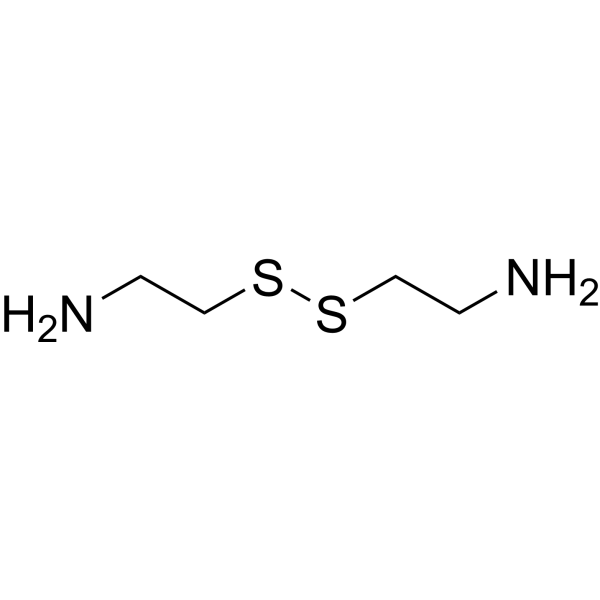
Cystamine is the disulfide form of the free thiol, cysteamine. Cystamine is an orally active transglutaminase (Tgase) inhibitor. Cystamine also has inhibition activity for caspase-3 with an IC50 value of 23.6 μM. Cystamine can be used for the research of severals diseases including Huntington's disease (HD) .
For research use only. We do not sell to patients.
- Purity : 99.85%
- CAS No.: 51-85-4
- Formula: C4H12N2S2
- Molecular Weight:152.28
-
Storage:Pure form -20°C, 3 years ; In solvent -80°C, 6 months , -20°C, 1 month

To place orders, for customer services and technical support, please contact: MedChemExpress USA
Tel: 609-228-6898 E-mail: [email protected] [email protected]


-
 Biological Activity
-
Chemical Information
-
Solvent & Solubility
- Protocols
- Purity & Documentation
- References
-
 Help & FAQs


-
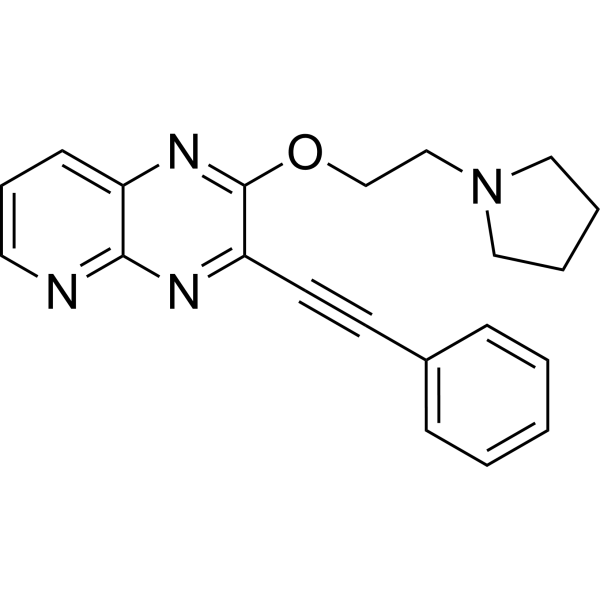
HY-12337
GK921Glutaminase Inhibitor -
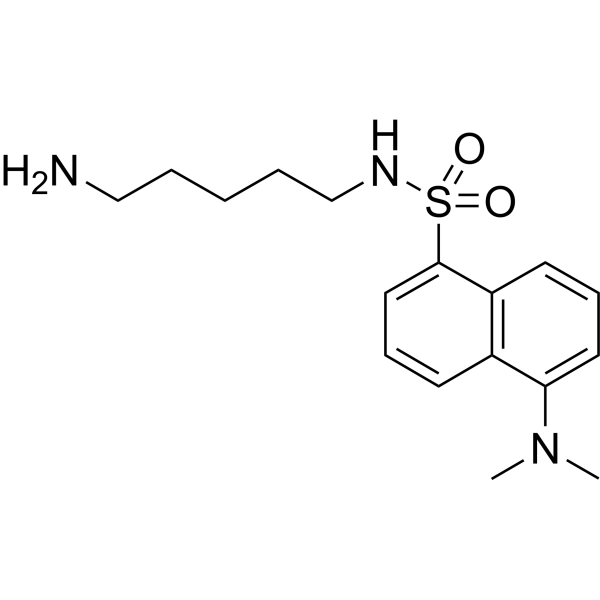
HY-D1027
DansylcadaverineAutofluorescent Probe -
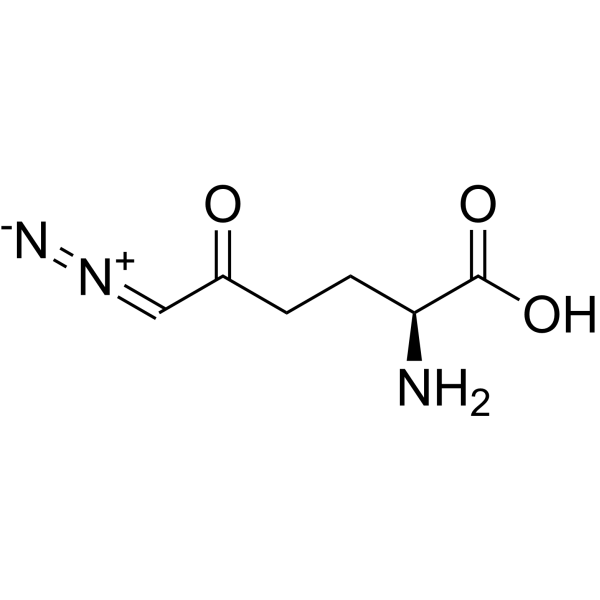
HY-108357
6-Diazo-5-oxo-L-nor-LeucineGlutaminases Antagonist -
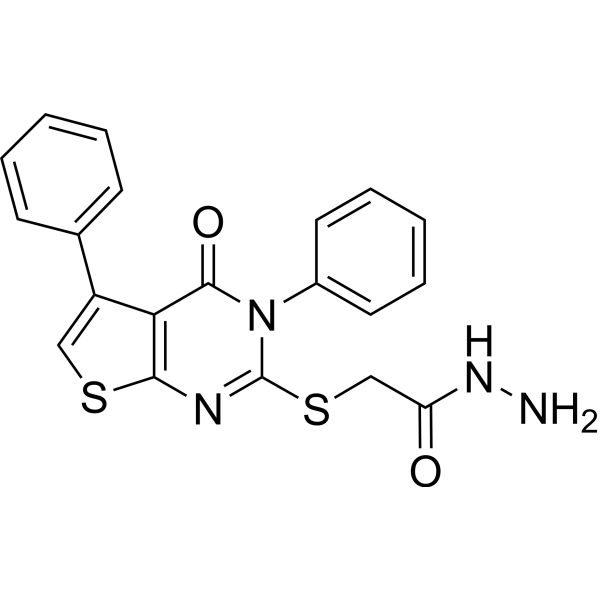
HY-16693
LDN-27219TGase Inhibitor -
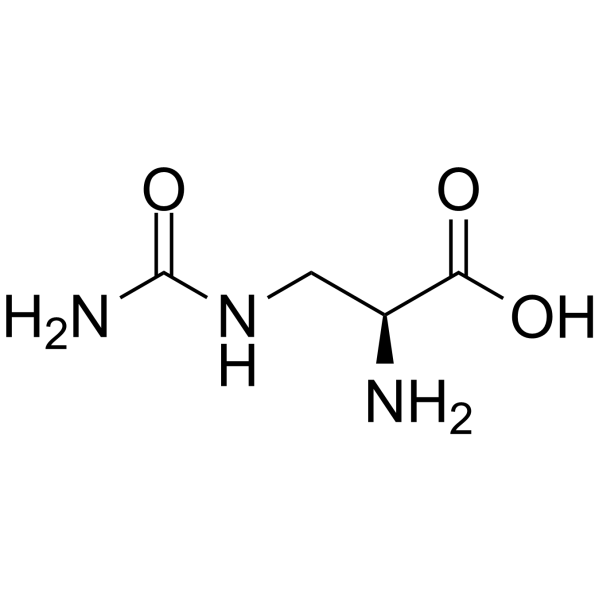
HY-121167
L-AlbizziinGlutamase Inhibitor -
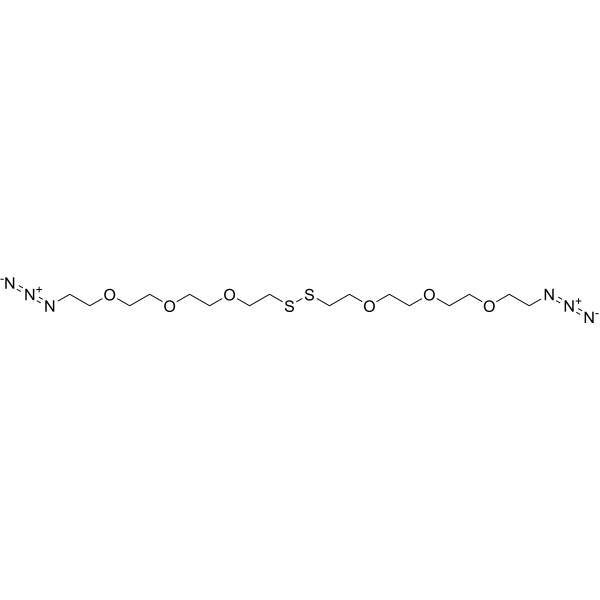
HY-140106
Azido-PEG3-SS-PEG3-azidePROTAC Linker -
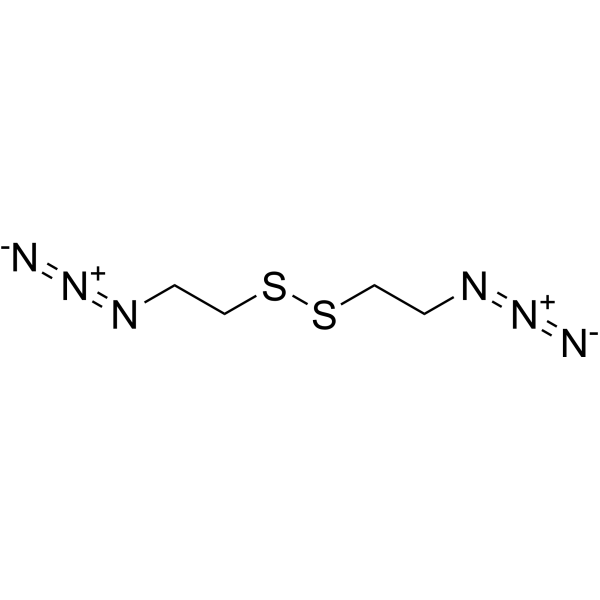
HY-140105
Azidoethyl-SS-ethylazideADC Linker -

HY-108357R
6-Diazo-5-oxo-L-nor-Leucine (Standard)Glutaminases Antagonist -
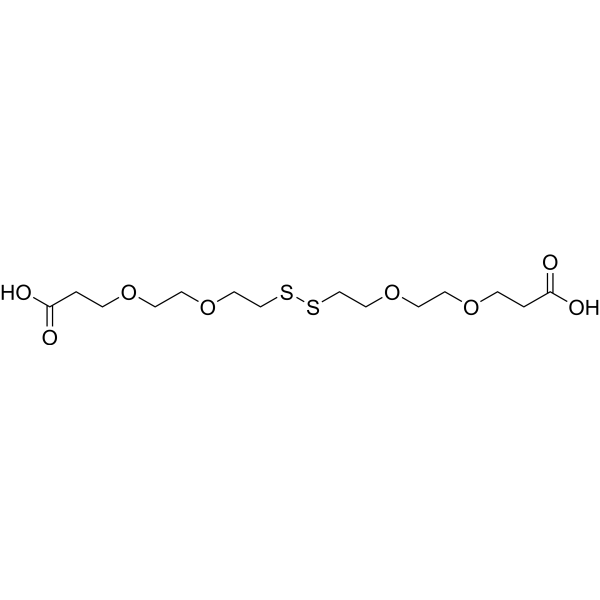
HY-140112
Acid-PEG2-SS-PEG2-acidADC Linker -
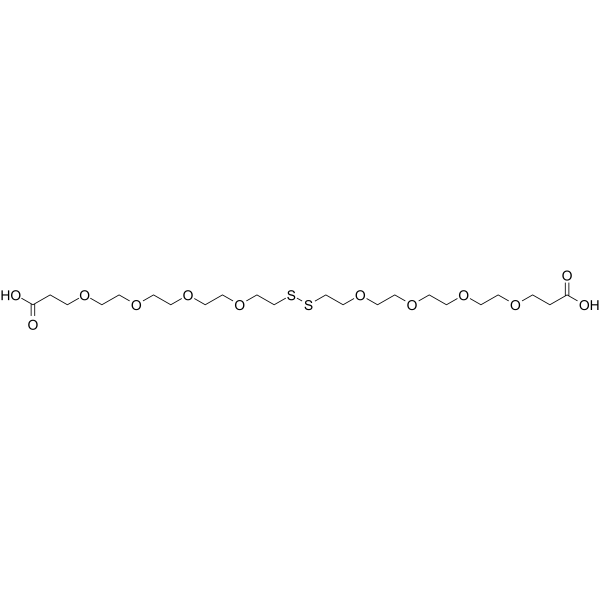
HY-140114
Acid-PEG4-S-S-PEG4-acidPROTAC Linkers -
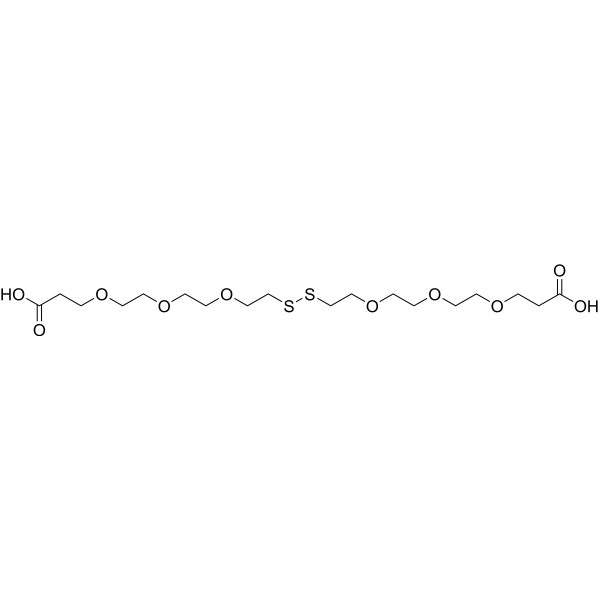
HY-140113
Acid-PEG3-SS-PEG3-acidADC Linker -
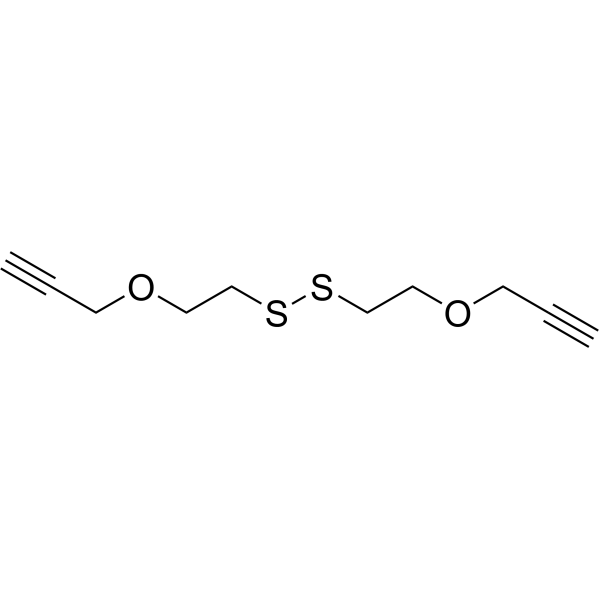
HY-140111
Propargyl-PEG1-SS-PEG1-propargylADC Linker
Publications Citing Use of MedChemExpress (MCE) Cystamine
More- Adv Sci (Weinh). 2026 Apr;13(24):e20739. [Abstract]
- Small. 2025 Jun;21(23):e2501944. [Abstract]
- Phytomedicine. 2026 Jul 25:157:158322. [Abstract]
- ACS Environ Au. 2025 Aug 5;5(6):573-582. [Abstract]
- Anal Chem. 2025 Jun 3;97(21):11099-11109. [Abstract]
- CNS Neurosci Ther. 2026 Apr;32(4):e70887. [Abstract]
- Discov Oncol. 2025 May 30;16(1):952. [Abstract]
 Customer Validation & Images

-
WB
-
IF
-
Histological Imaging/Staining
-
IHC
-
ELISA
All Caspase Isoforms
More

Biological Activity
Description
IC50 & Target
[1]|
Caspase 3 23.6 μM (IC50) |
Cellular Effect
|
Cell Line

|
Type | Value | Description | References |
|---|---|---|---|---|
| CEM-SS | EC50 |
4.3 μM
Compound: cystamine
|
Antiviral activity against HIV-1ADA in CEM-SS cells using monocyte/macrophage cultures
Antiviral activity against HIV-1ADA in CEM-SS cells using monocyte/macrophage cultures
|
[PMID: 9207937] |
| CEM-SS | EC50 |
56.2 μM
Compound: cystamine
|
Antiviral activity against HIV-1 in CEM-SS cells using XXT assay
Antiviral activity against HIV-1 in CEM-SS cells using XXT assay
|
[PMID: 9207937] |
| CEM-SS | IC50 |
>100 μM
Compound: cystamine
|
Antiviral activity against HIV-1ADA in CEM-SS cells using monocyte/macrophage cultures
Antiviral activity against HIV-1ADA in CEM-SS cells using monocyte/macrophage cultures
|
[PMID: 9207937] |
| CEM-SS | IC50 |
172 μM
Compound: cystamine
|
Antiviral activity against HIV-1 in CEM-SS cells using XXT assay
Antiviral activity against HIV-1 in CEM-SS cells using XXT assay
|
[PMID: 9207937] |
| KB 3-1 | IC50 |
0.79 mM
Compound: cystamine
|
Cytotoxicity against human KB-3-1 cells incubated for 72 hrs by MTT assay
Cytotoxicity against human KB-3-1 cells incubated for 72 hrs by MTT assay
|
[PMID: 21657271] |
| KB-V1 | IC50 |
1.55 mM
Compound: cystamine
|
Cytotoxicity against drug-resistant human KBV1 cells expressing P-gp incubated for 72 hrs by MTT assay
Cytotoxicity against drug-resistant human KBV1 cells expressing P-gp incubated for 72 hrs by MTT assay
|
[PMID: 21657271] |
In Vitro
Cystamine has inhibition activity for caspase-3 with an IC50 value of 23.6 μM[1].
Cystamine (0-500 μM; 0-16 h) inhibits recombinant active caspase-3 in a concentration-dependent manner[1].
Cystamine (250 μM; 10 h) robustly increases the levels of glutathione[1].
MedChemExpress (MCE) has not independently confirmed the accuracy of these methods. They are for reference only. Further protocols information, click here.
-
Cell Line:uman neuroblastoma SH-SY5Y cells
-
Concentration:250, 500 μM
-
Incubation Time:0-16 h
-
Result:Inhibited the MG132-mediated activation of caspase-3.
Inhibited the H2O2-mediated activation of caspase-3.
Inhibited caspase-3 activity in a tTG-independent manner.
In Vivo
MedChemExpress (MCE) has not independently confirmed the accuracy of these methods. They are for reference only.
-
Animal Model:R6/2 transgenic HD mice[2]
-
Dosage:112, 225 mg/kg
-
Administration:Intraperitoneal or oral, daily
-
Result:Significantly extended survival, improved body weight and motor performance, delayed the neuropathological sequela and significantly altered the levels of Tgase activity and N(Sigma)-(gamma-L-glutamyl)-L-lysine (GGEL) levels.


Chemical Information
-
CAS No. 51-85-4
-
Appearance Solid-Liquid Mixture
-
Molecular Weight 152.28
-
Formula C4H12N2S2
-
Color Light yellow to brown
-
SMILES
NCCSSCCN
-
Shipping
Room temperature in continental US; may vary elsewhere.
-
Storage
Pure form -20°C 3 years In solvent -80°C 6 months -20°C 1 month


Publications (7)
-
Journal Impact Factor
-
Most Recent
-
Adv Sci (Weinh)
TGM2 Aggravates Acute Pancreatitis by Impairing Macrophage Efferocytosis Through Inhibition of the STAT6-GAS6 Axis. [Abstract]2026 Apr;13(24):e20739. PMID: 41703992
Cystamine purchased from MedChemExpress. Usage Cited in: Adv Sci (Weinh). 2026 Apr;13(24):e20739. [Abstract]
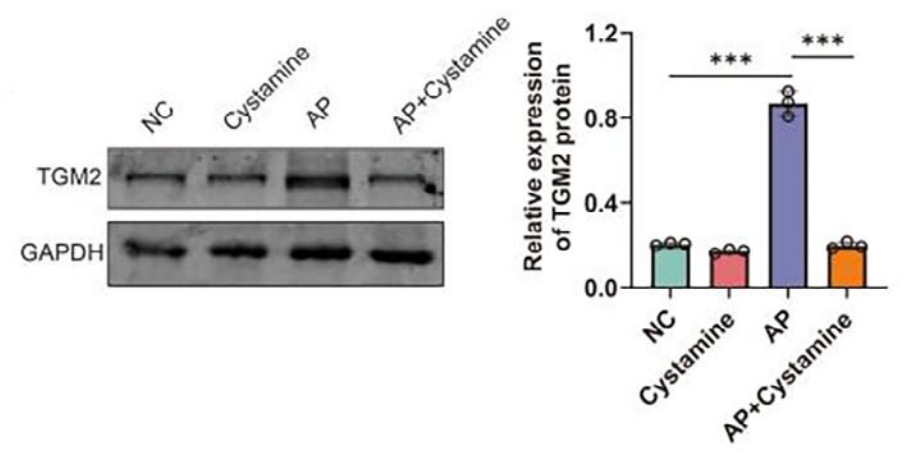
Cystamine (225 mg/kg; i.p.; once daily for 7 d) effectively suppressed TGM2 expression in pancreatic tissues of AP model mice.
Cystamine purchased from MedChemExpress. Usage Cited in: Adv Sci (Weinh). 2026 Apr;13(24):e20739. [Abstract]
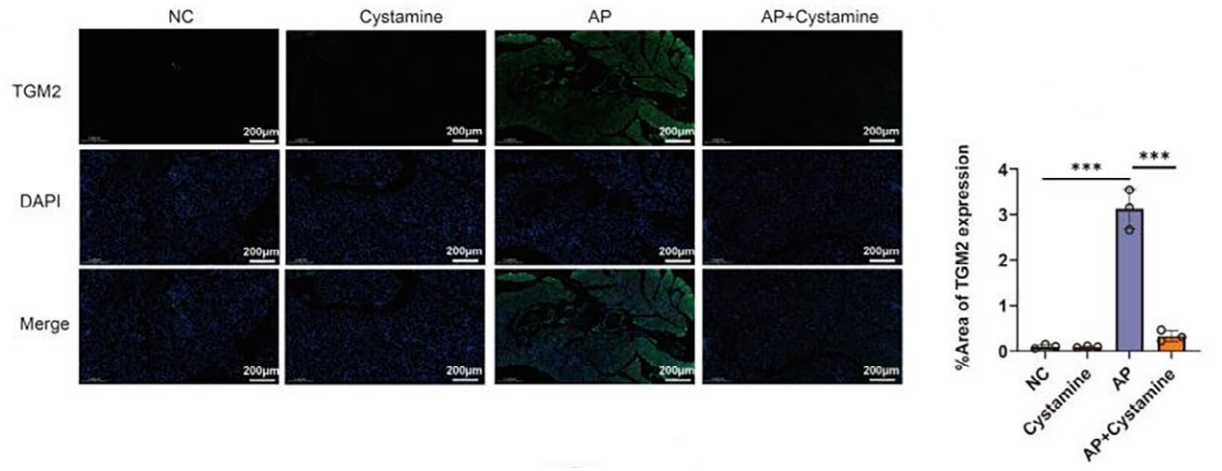
Cystamine (225 mg/kg; i.p.; once daily for 7 d) effectively inhibited TGM2 expression in pancreatic tissues of AP mice.
Cystamine purchased from MedChemExpress. Usage Cited in: Adv Sci (Weinh). 2026 Apr;13(24):e20739. [Abstract]
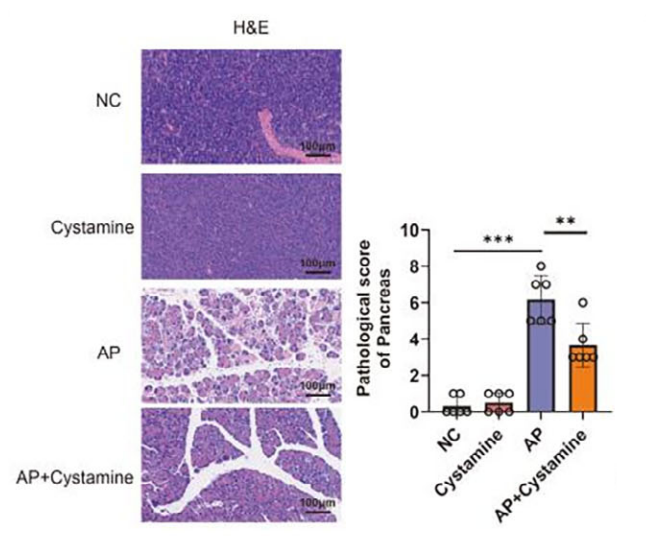
Cystamine (225 mg/kg; i.p.; once daily for 7 d) pretreatment alleviates pancreatic damage in AP mice.
Cystamine purchased from MedChemExpress. Usage Cited in: Adv Sci (Weinh). 2026 Apr;13(24):e20739. [Abstract]
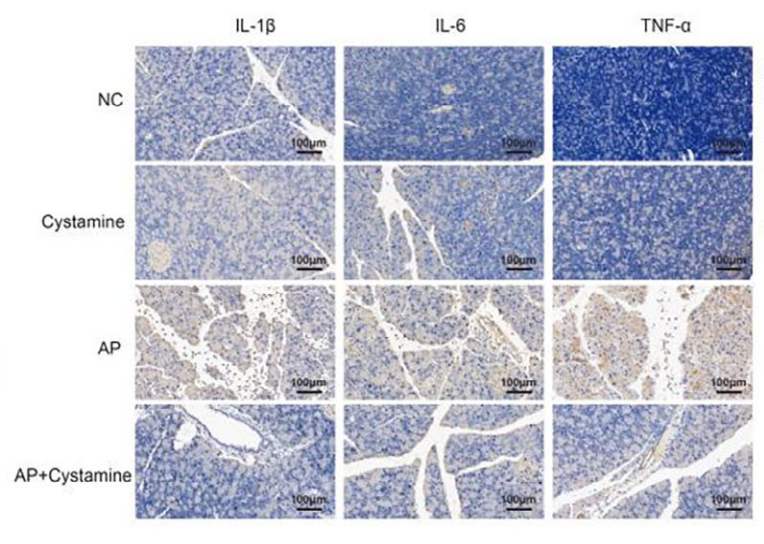
Cystamine (225 mg/kg; i.p.; once daily for 7 d) pretreatment reduced IL-1β, IL-6, and TNF-α expression in pancreatic tissues of AP mice.
Cystamine purchased from MedChemExpress. Usage Cited in: Adv Sci (Weinh). 2026 Apr;13(24):e20739. [Abstract]
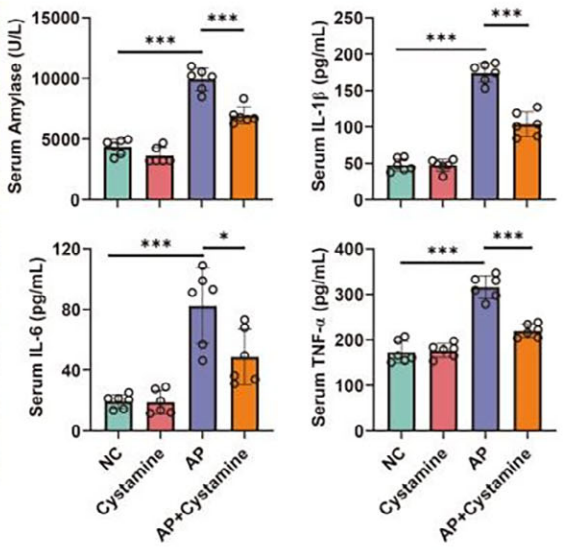
Cystamine (225 mg/kg; i.p.; once daily for 7 d) decreased serum amylase activity and levels of IL-1β, IL-6, and TNF-α in AP mice.
-
Small
Homocysteine-Responsive Covalent Organic Frameworks as Signaling Scaffolds: Modulating Transsulfuration for Depression Treatment. [Abstract]2025 Jun;21(23):e2501944. PMID: 40245113 -
Phytomedicine
β,β-Dimethylacrylshikonin suppresses hepatocellular carcinoma progression through mitochondrial stress and TGM2-associated mitophagy impairment. [Abstract]2026 Jul 25:157:158322. PMID: 42176510 -
ACS Environ Au
Machine Learning-Assisted Recognition of Environmental Sulfur-Containing Chemicals in Nontargeted Mass Spectrometry Analysis of Inadequate Mass Resolution. [Abstract]2025 Aug 5;5(6):573-582. PMID: 41277996 -
Anal Chem
Exposome-Scale Investigation of Cl-/Br-Containing Chemicals Using High-Resolution Mass Spectrometry, Multistage Machine Learning, and Cloud Computing. [Abstract]2025 Jun 3;97(21):11099-11109. PMID: 40401576 -
CNS Neurosci Ther
Inhibition of Transglutaminase 2 Preserves Blood-Brain Barrier Integrity and Improves Neurological Outcomes After Experimental Traumatic Brain Injury in Mice. [Abstract]2026 Apr;32(4):e70887. PMID: 42002982 -
Discov Oncol
2025 May 30;16(1):952. PMID: 40445445


Solvent & Solubility
In Vitro:
DMSO : 100 mg/mL (656.69 mM; Need ultrasonic; Hygroscopic DMSO has a significant impact on the solubility of product, please use newly opened DMSO)
Please refer to the solubility information to select the appropriate solvent. Once prepared, please aliquot and store the solution to prevent product inactivation from repeated freeze-thaw cycles.
Storage method and period of stock solution: -80°C, 6 months; -20°C, 1 month. When stored at -80°C, please use it within 6 months. When stored at -20°C, please use it within 1 month.
Please refer to the solubility information to select the appropriate solvent. Once prepared, please aliquot and store the solution to prevent product inactivation from repeated freeze-thaw cycles.
Storage method and period of stock solution: -80°C, 6 months; -20°C, 1 month. When stored at -80°C, please use it within 6 months. When stored at -20°C, please use it within 1 month.
Concentration (start) × Volume (start) = Concentration (final) × Volume (final)
In Vivo:
Select the appropriate dissolution method based on your experimental animal and administration route.
- For the following dissolution methods, please ensure to first prepare a clear stock solution using an In Vitro approach and then sequentially add co-solvents:
- To ensure reliable experimental results, the clarified stock solution can be appropriately stored based on storage conditions. As for the working solution for In Vivo experiments, it is recommended to prepare freshly and use it on the same day.
- The percentages shown for the solvents indicate their volumetric ratio in the final prepared solution. If precipitation or phase separation occurs during preparation, heat and/or sonication can be used to aid dissolution.
Add each solvent one by one: 10% DMSO 40% PEG300 5% Tween-80 45% Saline
Solubility: ≥ 5 mg/mL (32.83 mM); Clear solution
This protocol yields a clear solution of ≥ 5 mg/mL (saturation unknown).
Taking 1 mL working solution as an example, add 100 μL DMSO stock solution (50.0 mg/mL) to 400 μL PEG300, and mix evenly; then add 50 μL Tween-80 and mix evenly; then add 450 μL Saline to adjust the volume to 1 mL.
Preparation of Saline: Dissolve 0.9 g sodium chloride in ddH₂O and dilute to 100 mL to obtain a clear Saline solution.
Add each solvent one by one: 10% DMSO 90% (20% SBE-β-CD in Saline)
Solubility: ≥ 5 mg/mL (32.83 mM); Clear solution
This protocol yields a clear solution of ≥ 5 mg/mL (saturation unknown).
Taking 1 mL working solution as an example, add 100 μL DMSO stock solution (50.0 mg/mL) to 900 μL 20% SBE-β-CD in Saline, and mix evenly.
Preparation of 20% SBE-β-CD in Saline (4°C, storage for one week): 2 g SBE-β-CD powder is dissolved in 10 mL Saline, completely dissolve until clear.
In Vivo Dissolution Calculator
Please enter the basic information of animal experiments:
-
-
-
-
Recommended: Prepare an additional quantity of animals to account for potential losses during experiments.
Please enter your animal formula composition:
-
%DMSO +
Recommended: Keep the proportion of DMSO in working solution below 2% if your animal is weak.
-
%+
-
+%Tween-80 + +
-
%Saline +
The co-solvents required include: DMSO, . All of co-solvents are available by MedChemExpress (MCE). , Tween 80. All of co-solvents are available by MedChemExpress (MCE).
Working solution concentration: 0.22 mg/mL
Method for preparing stock solution: mg drug dissolved in μL DMSO. Stock solution concentration: mg/mL.
1. Take μL DMSO stock solution;
2. Add μL .
μL , mix evenly;
3. Then add μL Tween 80, mix evenly;
4. Then add μL
Please ensure that the stock solution in the first step is dissolved to a clear state, and add co-solvents in sequence. You can use ultrasonic heating (ultrasonic cleaner, recommended frequency 20-40 kHz), vortexing, etc. to assist dissolution.

Protocols
-
Apoptosis Solutions
Apoptosis is a regulated, generally non-lytic cell-death pathway that removes unwanted, damaged, infected, or abnormal cells through coordinated morphological changes, caspase activation, DNA fragmentation, and membrane remodeling. The intrinsic apoptosis pathway is controlled mainly by mitochondrial outer membrane permeabilization, BCL-2 family proteins, cytochrome c release, apoptosome formation, caspase-9 activation, and downstream executioner caspase-3/7 activation. The extrinsic apoptosis pathway is initiated by death receptors such as Fas, TNFR, and TRAIL receptors, which recruit adaptor proteins and activate caspase-8 before engaging executioner caspases or mitochondrial amplification through BID cleavage. Apoptosis is linked to many phenotypes, including cancer cell killing, tissue homeostasis, immune regulation, neurodegeneration, infection response, and treatment-induced cytotoxicity; unresolved questions include how apoptosis interacts with necroptosis, pyroptosis, ferroptos


Purity & Documentation
-
Data Sheet (273 KB)
-
SDS (476 KB)
- English - EN (476 KB)
- Français - FR (476 KB)
- Deutsch - DE (476 KB)
- Norwegian - NO (476 KB)
- Español - ES (476 KB)
- Swedish - SV (476 KB)
- Italian - IT (476 KB)
- Korean - KR (476 KB)
- Portuguese - PT (476 KB)
-
Handling Instructions (2659 KB)
References
[1]. Mathieu Lesort, et al. Cystamine inhibits caspase activity. Implications for the treatment of polyglutamine disorders. J Biol Chem. 2003 Feb 7;278(6):3825-30. [Content Brief]
[2]. Alpaslan Dedeoglu, et al. Therapeutic effects of cystamine in a murine model of Huntington's disease. J Neurosci. 2002 Oct 15;22(20):8942-50. [Content Brief]
[3]. Thomas M Jeitner, et al. Cystamine and cysteamine as inhibitors of transglutaminase activity in vivo. Biosci Rep. 2018 Sep 5;38(5):BSR20180691. [Content Brief]


Complete Stock Solution Preparation Table
Please refer to the solubility information to select the appropriate solvent. Once prepared, please aliquot and store the solution to prevent product inactivation from repeated freeze-thaw cycles.
Storage method and period of stock solution: -80°C, 6 months; -20°C, 1 month. When stored at -80°C, please use it within 6 months. When stored at -20°C, please use it within 1 month.
| Optional Solvent | Concentration Solvent Mass | 1 mg | 5 mg | 10 mg | 25 mg |
|---|---|---|---|---|---|
| DMSO | 1 mM | 6.5669 mL | 32.8343 mL | 65.6685 mL | 164.1713 mL |
| 5 mM | 1.3134 mL | 6.5669 mL | 13.1337 mL | 32.8343 mL | |
| 10 mM | 0.6567 mL | 3.2834 mL | 6.5669 mL | 16.4171 mL | |
| 15 mM | 0.4378 mL | 2.1890 mL | 4.3779 mL | 10.9448 mL | |
| 20 mM | 0.3283 mL | 1.6417 mL | 3.2834 mL | 8.2086 mL | |
| 25 mM | 0.2627 mL | 1.3134 mL | 2.6267 mL | 6.5669 mL | |
| 30 mM | 0.2189 mL | 1.0945 mL | 2.1890 mL | 5.4724 mL | |
| 40 mM | 0.1642 mL | 0.8209 mL | 1.6417 mL | 4.1043 mL | |
| 50 mM | 0.1313 mL | 0.6567 mL | 1.3134 mL | 3.2834 mL | |
| 60 mM | 0.1094 mL | 0.5472 mL | 1.0945 mL | 2.7362 mL | |
| 80 mM | 0.0821 mL | 0.4104 mL | 0.8209 mL | 2.0521 mL | |
| 100 mM | 0.0657 mL | 0.3283 mL | 0.6567 mL | 1.6417 mL |


Cystamine Related Classifications
HY-124476 Related Classifications
 Powered by Bioz