



Linopirdine
Based on 2 publication(s) in Google Scholar
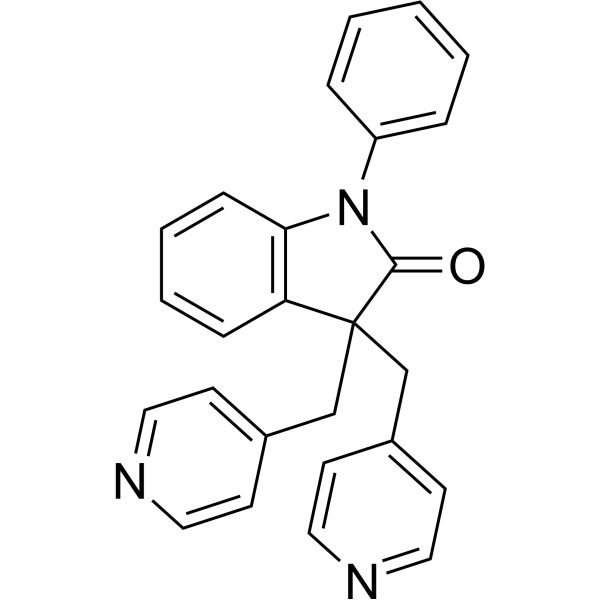
Linopirdine (DuP 996) is an orally active, selective M-type K+ current (IM; Kv7; KCNQ Channels) inhibitor with an IC50 of 2.4 μM. Linopirdine is a TRPV1 agonist. Linopirdine, a putative cognition enhancing agent, increases acetylcholine release in rat brain tissue.
연구목적의 판매만을 진행합니다. 환자를 대상으로 한 판매는 하지 않습니다.
- Purity : 99.90%
- CAS No.: 105431-72-9
- 화학식: C26H21N3O
- 분자량:391.46
-
보관:Powder -20°C, 3 years , 4°C, 2 years ; In solvent -80°C, 2 years , -20°C, 1 year

To place orders, for customer services and technical support, please contact: MedChemExpress USA
Tel: 609-228-6898 E-mail: [email protected] [email protected]


-
 Biological Activity
-
Chemical Information
-
용액&용해도
- Protocol
- 순도&문서
- References
-
 Help & FAQs


-
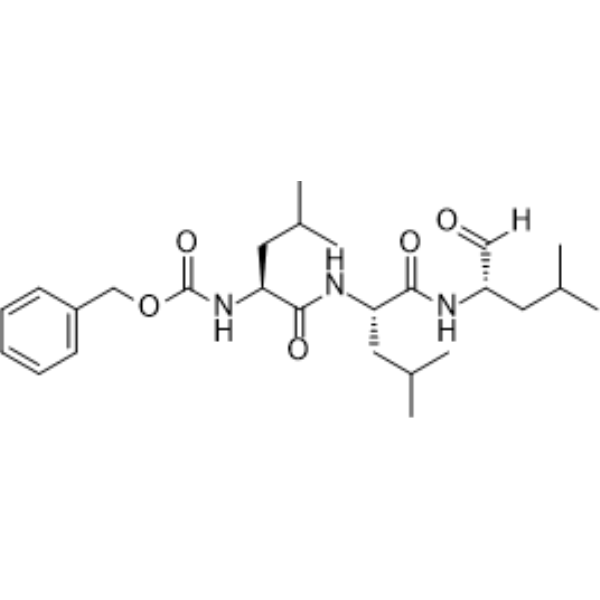
HY-13259
MG-132Proteasome Inhibitor -
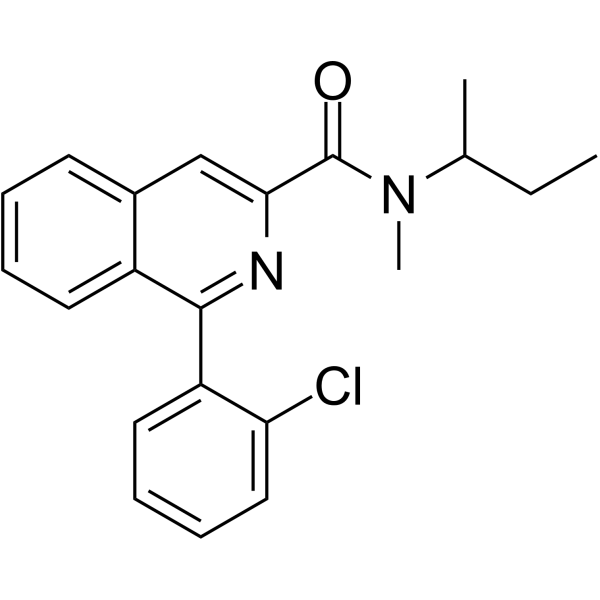
HY-19567
PK 11195Parasite Inhibitor -
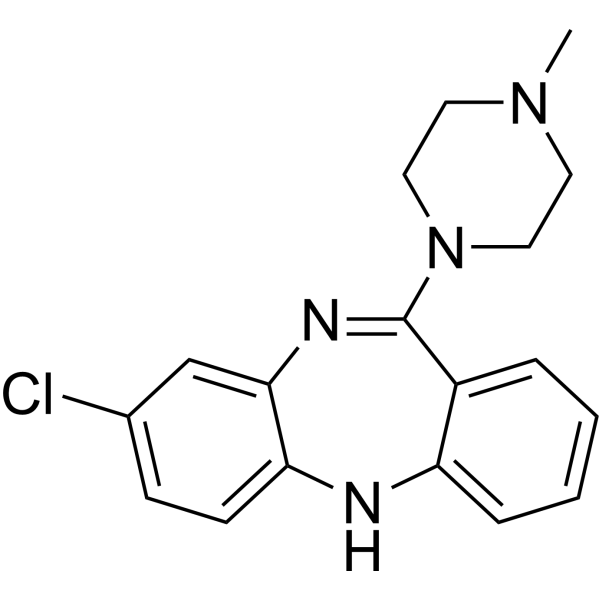
HY-14539
ClozapineAntipsychotic Agent -
HY-17031
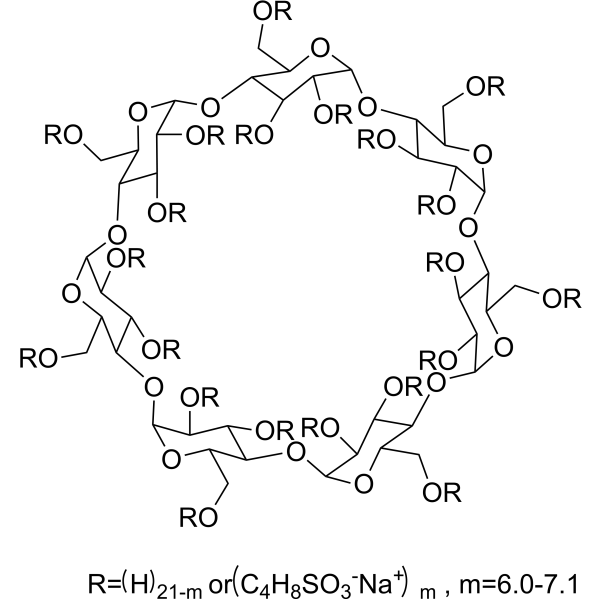
SBE-β-CDExcipient -
HY-B0726
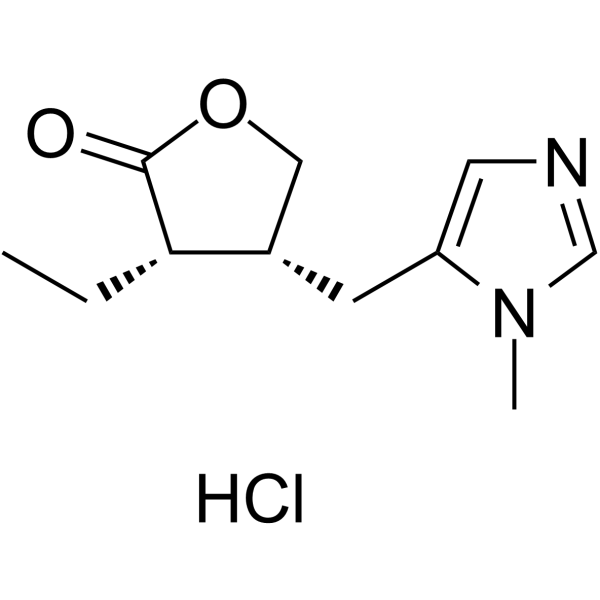
Pilocarpine HydrochloridemAChR Agonist -
HY-10227
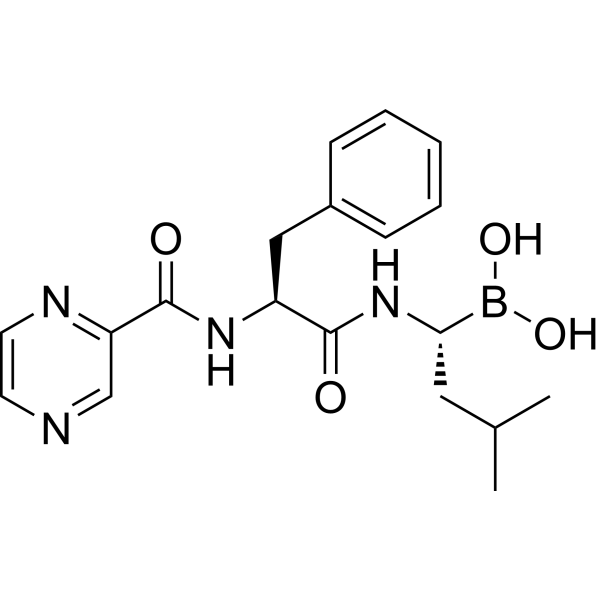
BortezomibProteasome Inhibitor -
HY-17551
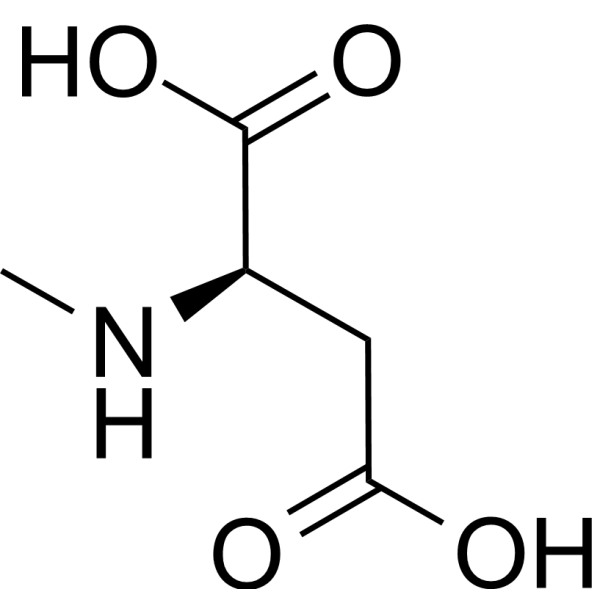
NMDAEndogenous Metabolite -
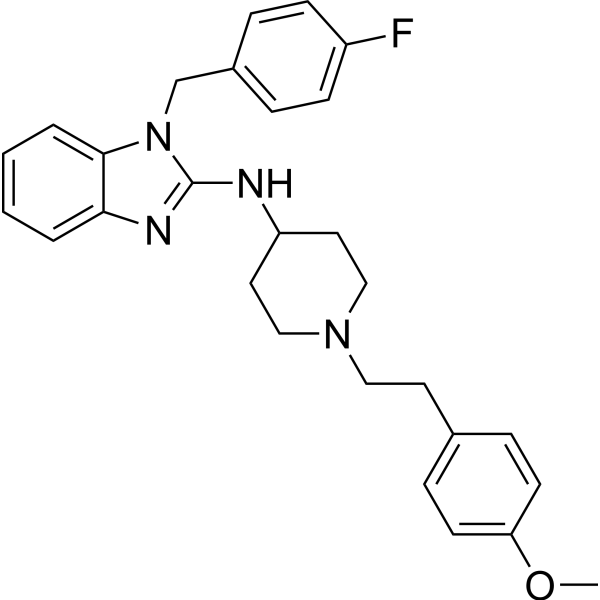
HY-12532
AstemizoleH1 Receptor Antagonist -
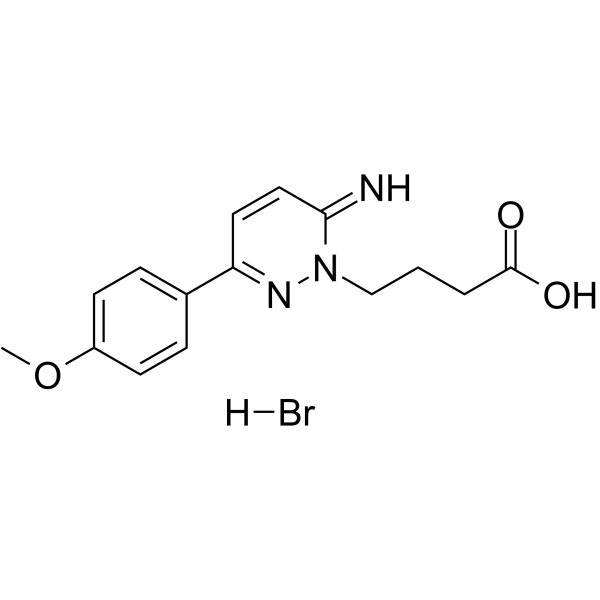
HY-103533
GabazineGABAA Antagonist -
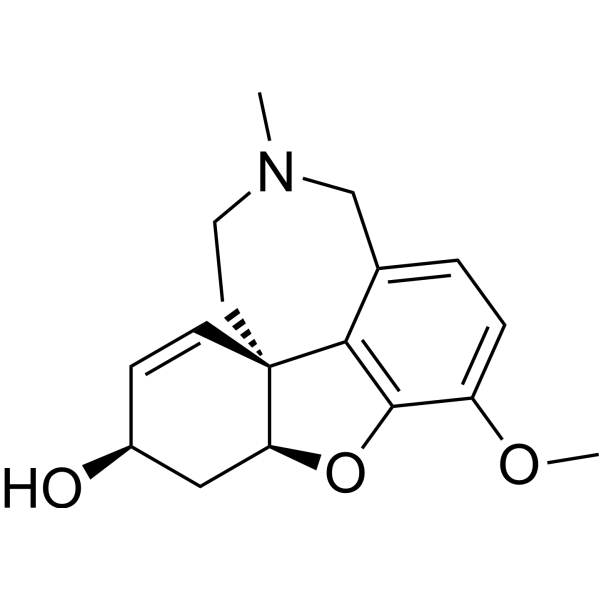
HY-76299
GalanthamineCholinesterase (ChE) Inhibitor -
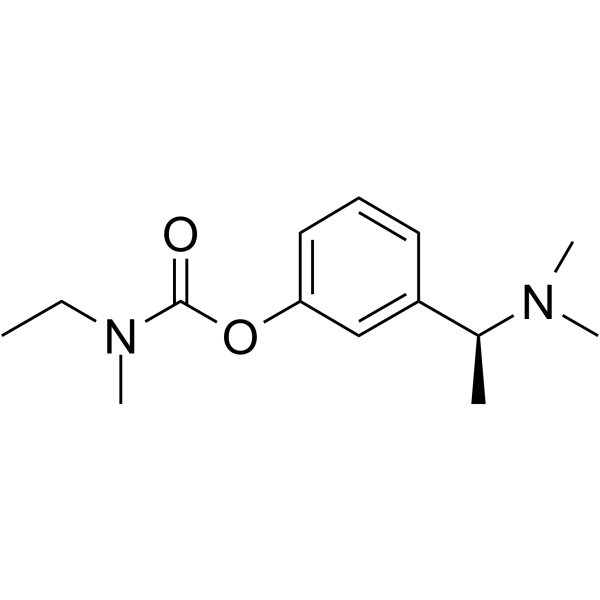
HY-17368
RivastigmineCholinesterase Inhibitor -
HY-B0321
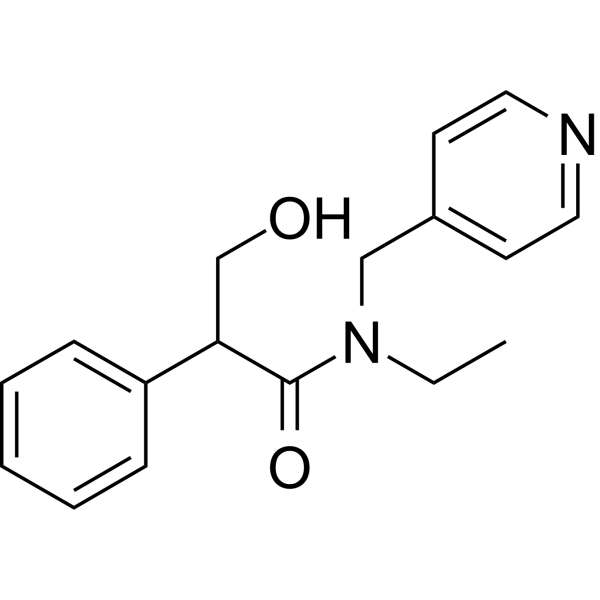
TropicamidemAChR M4 Antagonist
Publications Citing Use of MedChemExpress (MCE) Linopirdine
More

Biological Activity
제품 설명
IC50 & Target
IC50: 2.4 μM (M-type K+ current)[1]
In Vitro
Linopirdine (DuP 996) inhibits IC (measured as a medium afterhyperpolarization tail current, ImAHP) with an IC50 of 16.3 μM. Linopirdine (100 μM) weakly inhibits the K+ leak current, IL, the transient outward current, IA, the delayed rectifier, IK, and the slow component of IAHP, by 28, 37, 36 and 52 percent, respectively. The mixed Na+/K+ inward rectifying current, IQ, is essentially unaffected by Linopirdine (IC50>300 μM)[1].
?
Linopirdine acts as an agonist of TRPV1 (transient receptor potential vanilloid type 1)[3].
MedChemExpress (MCE) has not independently confirmed the accuracy of these methods. They are for reference only. Further protocols information, click here.
In Vivo
MedChemExpress (MCE) has not independently confirmed the accuracy of these methods. They are for reference only.
-
Animal Model:Male Sprague-Dawley rats (300-350 g)[2]
-
Dosage:0.1, 0.5, 1, 3, 6 mg/kg
-
Administration:5 intravenous bolus injections of increasing doses
-
Result:Transiently and dose-dependently increases MAP by up to 15%.


Chemical Information
-
CAS No. 105431-72-9
-
Appearance Solid
-
분자량 391.46
-
화학식 C26H21N3O
-
Color White to light yellow
-
SMILES
O=C1N(C2=CC=CC=C2)C3=C(C=CC=C3)C1(CC4=CC=NC=C4)CC5=CC=NC=C5
-
Synonyms
DuP 996
-
선적
Room temperature in continental US; may vary elsewhere.
-
보관
Powder -20°C 3 years 4°C 2 years In solvent -80°C 2 years -20°C 1 year


Publications (2)
-
Journal Impact Factor
-
Most Recent
-
Curr Biol
2022 Aug 22;32(16):3556-3563.e3. PMID: 35863353 -


용액&용해도
In Vitro:
DMSO : 125 mg/mL (319.32 mM; Need ultrasonic; Hygroscopic DMSO has a significant impact on the solubility of product, please use newly opened DMSO)
Please refer to the solubility information to select the appropriate solvent. Once prepared, please aliquot and store the solution to prevent product inactivation from repeated freeze-thaw cycles.
Storage method and period of stock solution: -80°C, 2 years; -20°C, 1 year. When stored at -80°C, please use it within 2 years. When stored at -20°C, please use it within 1 year.
Please refer to the solubility information to select the appropriate solvent. Once prepared, please aliquot and store the solution to prevent product inactivation from repeated freeze-thaw cycles.
Storage method and period of stock solution: -80°C, 2 years; -20°C, 1 year. When stored at -80°C, please use it within 2 years. When stored at -20°C, please use it within 1 year.
Concentration (start) × Volume (start) = Concentration (final) × Volume (final)
In Vivo:
Select the appropriate dissolution method based on your experimental animal and administration route.
- For the following dissolution methods, please ensure to first prepare a clear stock solution using an In Vitro approach and then sequentially add co-solvents:
- To ensure reliable experimental results, the clarified stock solution can be appropriately stored based on storage conditions. As for the working solution for In Vivo experiments, it is recommended to prepare freshly and use it on the same day.
- The percentages shown for the solvents indicate their volumetric ratio in the final prepared solution. If precipitation or phase separation occurs during preparation, heat and/or sonication can be used to aid dissolution.
Add each solvent one by one: 10% DMSO 40% PEG300 5% Tween-80 45% Saline
Solubility: ≥ 2.08 mg/mL (5.31 mM); Clear solution
This protocol yields a clear solution of ≥ 2.08 mg/mL (saturation unknown).
Taking 1 mL working solution as an example, add 100 μL DMSO stock solution (20.8 mg/mL) to 400 μL PEG300, and mix evenly; then add 50 μL Tween-80 and mix evenly; then add 450 μL Saline to adjust the volume to 1 mL.
Preparation of Saline: Dissolve 0.9 g sodium chloride in ddH₂O and dilute to 100 mL to obtain a clear Saline solution.
Add each solvent one by one: 10% DMSO 90% (20% SBE-β-CD in Saline)
Solubility: ≥ 2.08 mg/mL (5.31 mM); Clear solution
This protocol yields a clear solution of ≥ 2.08 mg/mL (saturation unknown).
Taking 1 mL working solution as an example, add 100 μL DMSO stock solution (20.8 mg/mL) to 900 μL 20% SBE-β-CD in Saline, and mix evenly.
Preparation of 20% SBE-β-CD in Saline (4°C, storage for one week): 2 g SBE-β-CD powder is dissolved in 10 mL Saline, completely dissolve until clear.
In Vivo Dissolution Calculator
Please enter the basic information of animal experiments:
-
-
-
-
Recommended: Prepare an additional quantity of animals to account for potential losses during experiments.
Please enter your animal formula composition:
-
%DMSO +
Recommended: Keep the proportion of DMSO in working solution below 2% if your animal is weak.
-
%+
-
+%Tween-80 + +
-
%Saline +
The co-solvents required include: DMSO, . All of co-solvents are available by MedChemExpress (MCE). , Tween 80. All of co-solvents are available by MedChemExpress (MCE).
Working solution concentration: 0.22 mg/mL
Method for preparing stock solution: mg drug dissolved in μL DMSO. Stock solution concentration: mg/mL.
1. Take μL DMSO stock solution;
2. Add μL .
μL , mix evenly;
3. Then add μL Tween 80, mix evenly;
4. Then add μL
Please ensure that the stock solution in the first step is dissolved to a clear state, and add co-solvents in sequence. You can use ultrasonic heating (ultrasonic cleaner, recommended frequency 20-40 kHz), vortexing, etc. to assist dissolution.

Protocol
-
Cell Cytotoxicity Assay
Cytotoxicity assays are usually based on the assessment of cell membrane damage, which can also be indirectly detected by measuring cell viability. Detection methods include MTT assay, CKK-8 assay, LDH assay and ATP assay, etc.


순도&문서
-
Data Sheet (282 KB)
-
SDS (393 KB)
- English - EN (393 KB)
- Français - FR (393 KB)
- Deutsch - DE (393 KB)
- Norwegian - NO (393 KB)
- Español - ES (393 KB)
- Swedish - SV (393 KB)
- Italian - IT (393 KB)
- Korean - KR (393 KB)
- Portuguese - PT (393 KB)
-
Handling Instructions (2659 KB)
References
[1]. Schnee ME, et al. Selectivity of linopirdine (DuP 996), a neurotransmitter release enhancer, in blocking voltage-dependent and calcium-activated potassium currents in hippocampal neurons. J Pharmacol Exp Ther. 1998 Aug;286(2):709-17. [Content Brief]
[2]. Nassoiy SP, et al. Kv7 voltage-activated potassium channel inhibitors reduce fluid resuscitation requirements afterhemorrhagic shock in rats. J Biomed Sci. 2017 Jan 17;24(1):8. [Content Brief]
[3]. Neacsu C, et al. The M-channel blocker linopirdine is an agonist of the capsaicin receptor TRPV1. J Pharmacol Sci. 2010;114(3):332-40. [Content Brief]


Complete Stock Solution Preparation Table
Please refer to the solubility information to select the appropriate solvent. Once prepared, please aliquot and store the solution to prevent product inactivation from repeated freeze-thaw cycles.
Storage method and period of stock solution: -80°C, 2 years; -20°C, 1 year. When stored at -80°C, please use it within 2 years. When stored at -20°C, please use it within 1 year.
| Optional Solvent | Concentration Solvent Mass | 1 mg | 5 mg | 10 mg | 25 mg |
|---|---|---|---|---|---|
| DMSO | 1 mM | 2.5545 mL | 12.7727 mL | 25.5454 mL | 63.8635 mL |
| 5 mM | 0.5109 mL | 2.5545 mL | 5.1091 mL | 12.7727 mL | |
| 10 mM | 0.2555 mL | 1.2773 mL | 2.5545 mL | 6.3863 mL | |
| 15 mM | 0.1703 mL | 0.8515 mL | 1.7030 mL | 4.2576 mL | |
| 20 mM | 0.1277 mL | 0.6386 mL | 1.2773 mL | 3.1932 mL | |
| 25 mM | 0.1022 mL | 0.5109 mL | 1.0218 mL | 2.5545 mL | |
| 30 mM | 0.0852 mL | 0.4258 mL | 0.8515 mL | 2.1288 mL | |
| 40 mM | 0.0639 mL | 0.3193 mL | 0.6386 mL | 1.5966 mL | |
| 50 mM | 0.0511 mL | 0.2555 mL | 0.5109 mL | 1.2773 mL | |
| 60 mM | 0.0426 mL | 0.2129 mL | 0.4258 mL | 1.0644 mL | |
| 80 mM | 0.0319 mL | 0.1597 mL | 0.3193 mL | 0.7983 mL | |
| 100 mM | 0.0255 mL | 0.1277 mL | 0.2555 mL | 0.6386 mL |


Linopirdine Related Classifications
HY-W020468 Related Classifications
 Powered by Bioz