



N-Desmethyltamoxifen
Based on 1 publication(s) in Google Scholar
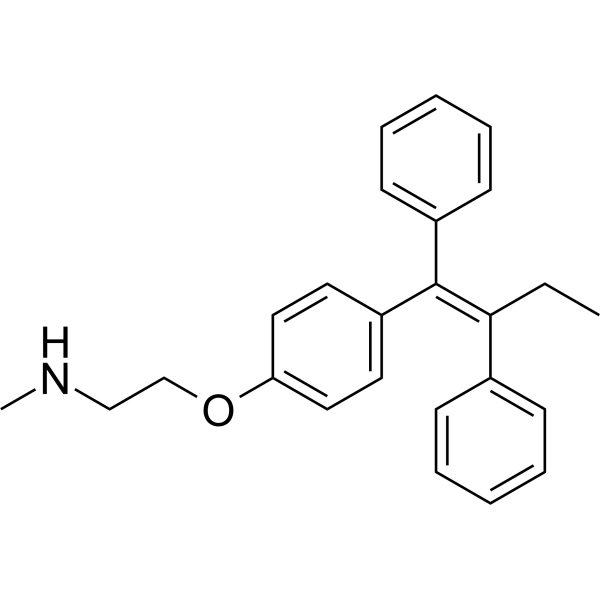
N-Desmethyltamoxifen is the major metabolite of tamoxifen in humans. N-Desmethyltamoxifen, a poor antiestrogen, is a ten-fold more potent protein kinase C (PKC) inhibitor than Tamoxifen. N-Desmethyltamoxifen is also a potent regulator of ceramide metabolism in human AML cells, limiting ceramide glycosylation, hydrolysis, and sphingosine phosphorylation.
For research use only. We do not sell to patients.
- Purity : 99.59%
- CAS No.: 31750-48-8
- Formula: C25H27NO
- Molecular Weight:357.50
-
Storage:Powder -20°C, 3 years , 4°C, 2 years ; In solvent -80°C, 6 months , -20°C, 1 month

To place orders, for customer services and technical support, please contact: MedChemExpress USA
Tel: 609-228-6898 E-mail: [email protected] [email protected]


-
 Biological Activity
-
Chemical Information
-
Solvent & Solubility
- Protocols
- Purity & Documentation
- References
-
 Help & FAQs


-
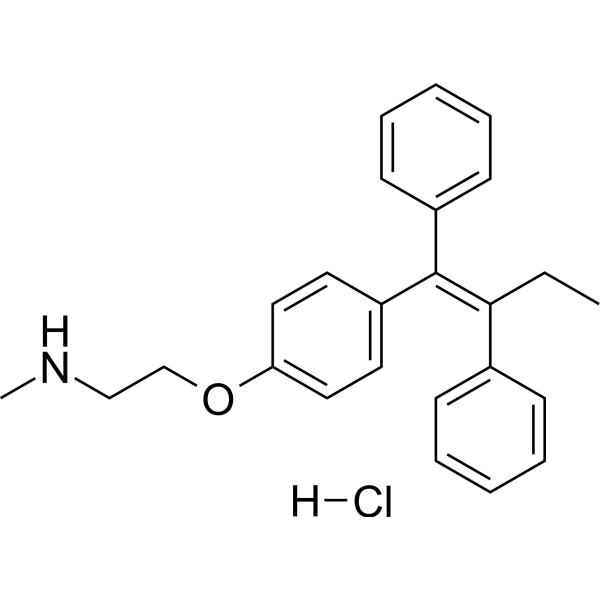
HY-129099A
N-Desmethyltamoxifen hydrochloridePKC Inhibitor -
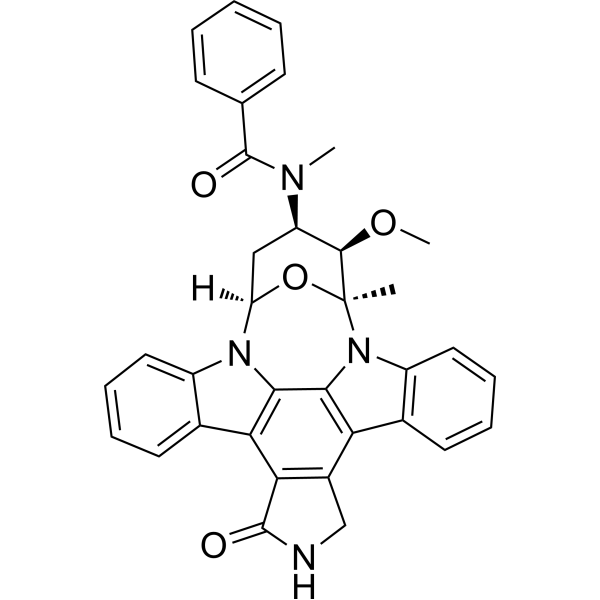
HY-10230
MidostaurinMulti-targeted Protein Kinase Inhibitor -

HY-129099AR
N-Desmethyltamoxifen hydrochloride (Standard)PKC Inhibitor -
HY-13689
Go 6983PKC Inhibitor -

HY-10230R
Midostaurin (Standard)Multi-targeted Protein Kinase Inhibitor -
HY-13502
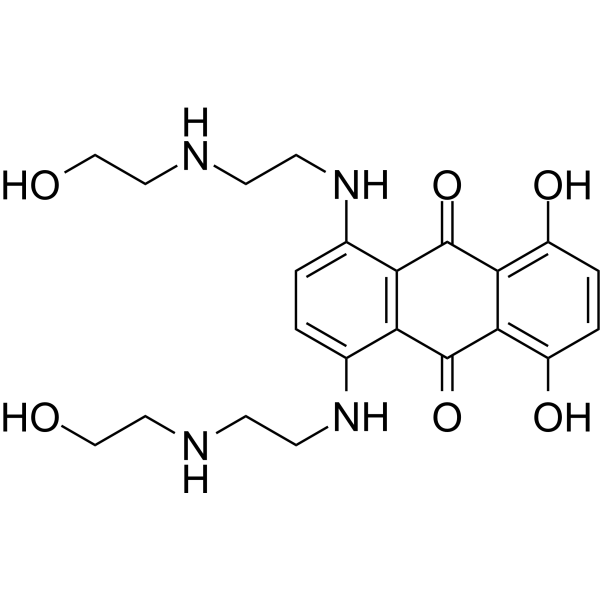
MitoxantroneTop II/PKC Inhibitor -
HY-N0152
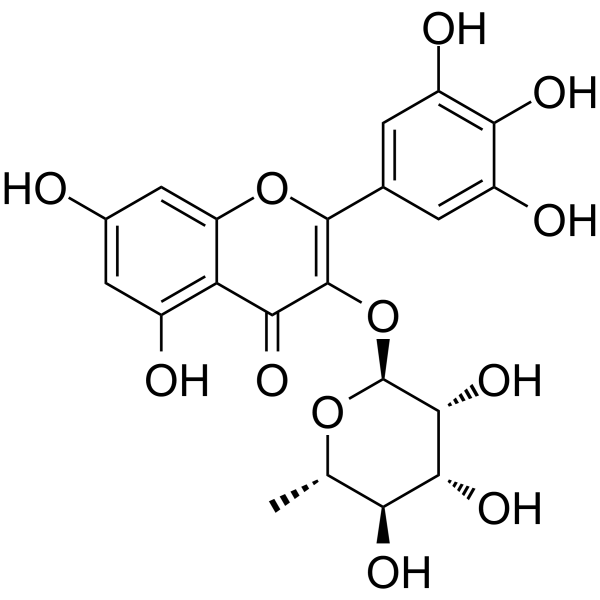
MyricitrinPKC Inhibitor -
HY-13867
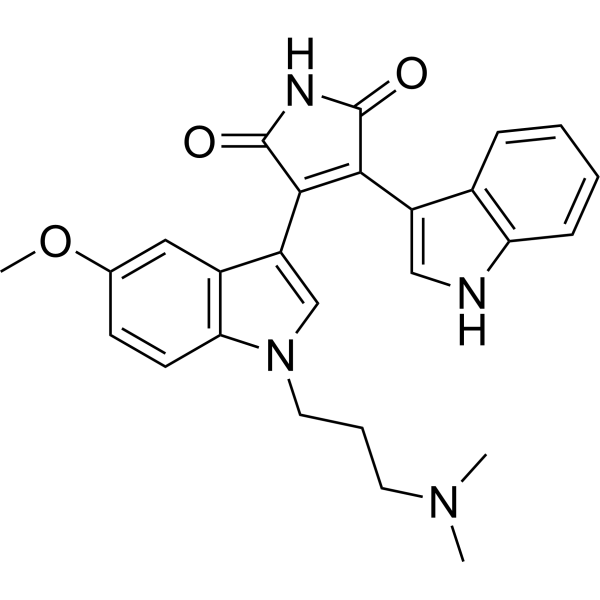
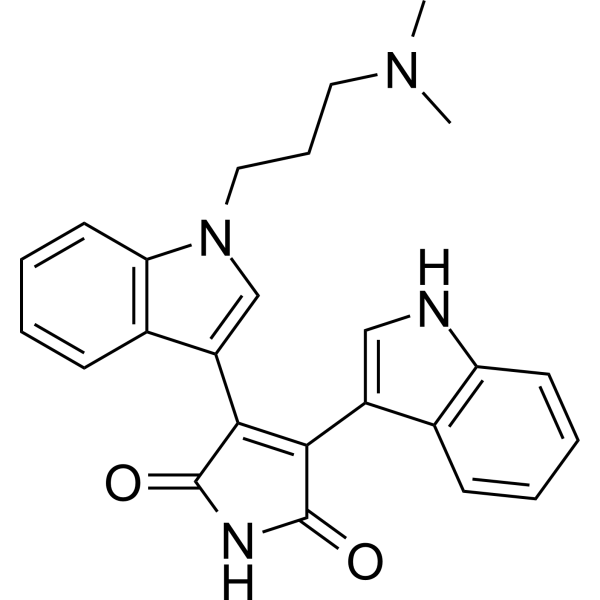
Bisindolylmaleimide IPKC Inhibitor -
HY-10343
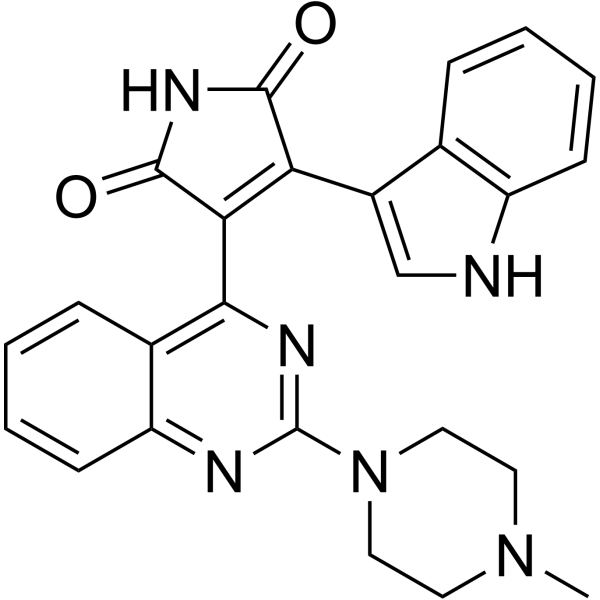
SotrastaurinPan-PKC Inhibitor -
HY-12048
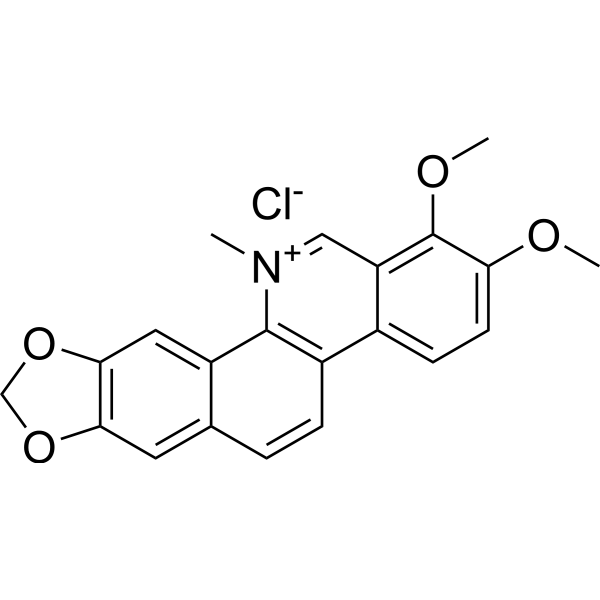
Chelerythrine chlorideBcl-2 Family Inhibitor -
HY-10341
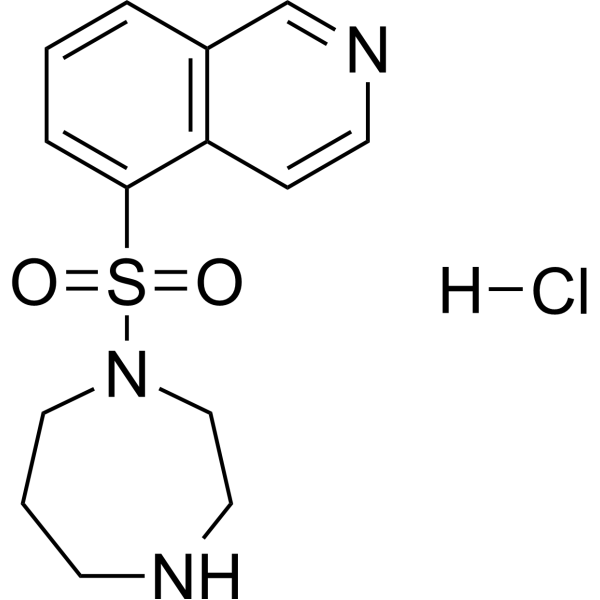
Fasudil HydrochlorideRhoA/ROCK Inhibitor -
HY-10183
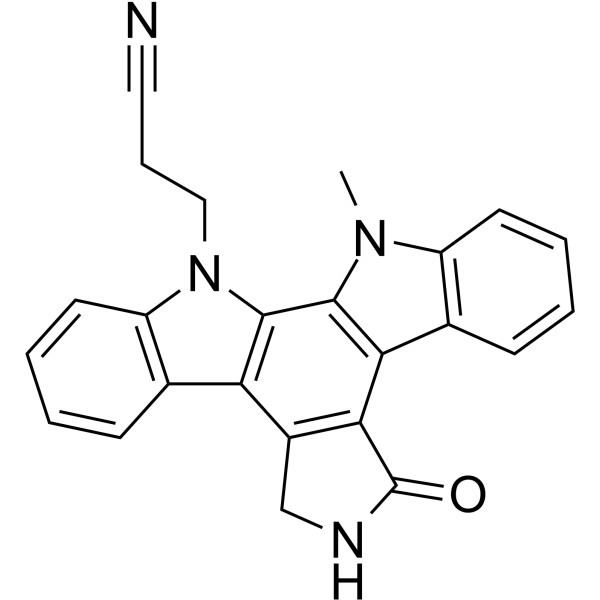
Go6976PKC Inhibitor
Publications Citing Use of MedChemExpress (MCE) N-Desmethyltamoxifen
More

Biological Activity
Description
|
PKC |
Estrogen Receptor |
In Vitro
N-desmethyltamoxifen (20-500 ng/ml; 48 hours) has a profound inhibitory effect upon all seven glioma lines (T98G, U87, U138, U373, ALW, AUK, CAS cells)[1].
N-desmethyltamoxifen (1.5-10 μM; 114 hours) inhibits growth of MCF 7 human mammary carcinoma cells[2].
N-desmethyltamoxifen, resulting from the CYP3A4/5-mediated catalysis of tamoxifen, is the major primary quantitative metabolite of tamoxifen[3].
MedChemExpress (MCE) has not independently confirmed the accuracy of these methods. They are for reference only. Further protocols information, click here.
-
Cell Line:MCF 7 human mammary carcinoma cells
-
Concentration:1.5, 2.5, 5, 7.5, 10 μM
-
Incubation Time:114 hours
-
Result:Inhibits growth of MCF 7 human mammary carcinoma cells


Chemical Information
-
CAS No. 31750-48-8
-
Appearance Solid
-
Molecular Weight 357.50
-
Formula C25H27NO
-
Color White to off-white
-
SMILES
CC/C(C1=CC=CC=C1)=C(C2=CC=C(OCCNC)C=C2)\C3=CC=CC=C3
-
Shipping
Room temperature in continental US; may vary elsewhere.
-
Storage
Powder -20°C 3 years 4°C 2 years In solvent -80°C 6 months -20°C 1 month


Publications (1)
-
Journal Impact Factor
-
Most Recent
-
Pharmaceuticals (Basel)
Development and Application of an UPLC-MS/MS Method for Simultaneous Quantification of Abemaciclib and Tamoxifen with Their Active Metabolites in Rat Plasma: Application to a Pharmacokinetic Study. [Abstract]2026 May 19;19(5):795. PMID: 42198468


Solvent & Solubility
In Vitro:
DMSO : 11.4 mg/mL (31.89 mM; Need ultrasonic; Hygroscopic DMSO has a significant impact on the solubility of product, please use newly opened DMSO)
Please refer to the solubility information to select the appropriate solvent. Once prepared, please aliquot and store the solution to prevent product inactivation from repeated freeze-thaw cycles.
Storage method and period of stock solution: -80°C, 6 months; -20°C, 1 month. When stored at -80°C, please use it within 6 months. When stored at -20°C, please use it within 1 month.
Please refer to the solubility information to select the appropriate solvent. Once prepared, please aliquot and store the solution to prevent product inactivation from repeated freeze-thaw cycles.
Storage method and period of stock solution: -80°C, 6 months; -20°C, 1 month. When stored at -80°C, please use it within 6 months. When stored at -20°C, please use it within 1 month.
Concentration (start) × Volume (start) = Concentration (final) × Volume (final)

Protocols
-
Kinase activity and phosphorylation assays
Kinase activity assays measure the ability of kinases to transfer phosphate groups from ATP to specific substrates, while phosphorylation assays detect the presence and levels of phosphorylated proteins. Common methods include radiolabeled ATP incorporation (e. g. ,), ADP release detection via bioluminescence (e. g. ,[3]), enzyme-linked immunosorbent assays (ELISA) for phospho-specific epitopes (e. g. ,[6]), and microtiter-based formats for high-throughput screening (e. g. ,[8]). The ADP-Glo assay quantifies kinase activity by measuring ADP produced during phosphorylation using a luciferase-based system. Radiometric assays involve autoradiography or scintillation counting after incorporation of 32P-labeled ATP into substrate proteins. ELISA-based approaches rely on phospho-specific antibodies to detect activated kinases in cell lysates or purified samples.
-
Western Blot
Western blotting (WB) is a commonly used experimental method in molecular biology, biochemistry, and immunogenetics for identifying and quantifying target proteins. It combines gel electrophoresis with immunoassay, enabling researchers to analyze protein expression, post-translational modifications, and molecular weight.
-
Protocol for Kinase activity and phosphorylation assays
Kinase activity assays measure transfer of phosphate from ATP to a protein or peptide substrate, generating phosphorylated substrate, ADP, or incorporated radiolabeled phosphate as the readout; phosphorylation assays measure site-specific phosphorylation in cells or tissues as a proxy for kinase-pathway activation, inhibition, or substrate regulation. Phosphorylation can be detected by phospho-specific Western blot, immunoprecipitation kinase assay, phospho-immunofluorescence, phospho-flow cytometry, luminescent ADP detection, radiolabeled ATP incorporation, or reporter-based pathway assays, and these readouts can be applied to cancer cells, primary neurons, mouse tumors, organoids, inflammatory macrophages, ferroptosis studies, and mitophagy studies when the kinase target is biologically relevant.


Purity & Documentation
-
Data Sheet (298 KB)
-
SDS (644 KB)
- English - EN (644 KB)
- Français - FR (644 KB)
- Deutsch - DE (644 KB)
- Norwegian - NO (644 KB)
- Español - ES (644 KB)
- Swedish - SV (644 KB)
- Italian - IT (644 KB)
- Korean - KR (644 KB)
- Portuguese - PT (644 KB)
-
Handling Instructions (2659 KB)
References
[1]. Vertosick FT Jr, et al. A comparison of the relative chemosensitivity of human gliomas to tamoxifen and n-desmethyltamoxifen in vitro. J Neurooncol. 1994;19(2):97-103. [Content Brief]
[2]. Morad SA, et al. Modification of sphingolipid metabolism by tamoxifen and N-desmethyltamoxifen in acute myelogenous leukemia--Impact on enzyme activity and response to cytotoxics. Biochim Biophys Acta. 2015 Jul;1851(7):919-28. [Content Brief]
[3]. Reddel RR,et al. N-desmethyltamoxifen inhibits growth of MCF 7 human mammary carcinoma cells in vitro. Eur J Cancer Clin Oncol. 1983 Aug;19(8):1179-81. [Content Brief]


Complete Stock Solution Preparation Table
Please refer to the solubility information to select the appropriate solvent. Once prepared, please aliquot and store the solution to prevent product inactivation from repeated freeze-thaw cycles.
Storage method and period of stock solution: -80°C, 6 months; -20°C, 1 month. When stored at -80°C, please use it within 6 months. When stored at -20°C, please use it within 1 month.
| Optional Solvent | Concentration Solvent Mass | 1 mg | 5 mg | 10 mg | 25 mg |
|---|---|---|---|---|---|
| DMSO | 1 mM | 2.7972 mL | 13.9860 mL | 27.9720 mL | 69.9301 mL |
| 5 mM | 0.5594 mL | 2.7972 mL | 5.5944 mL | 13.9860 mL | |
| 10 mM | 0.2797 mL | 1.3986 mL | 2.7972 mL | 6.9930 mL | |
| 15 mM | 0.1865 mL | 0.9324 mL | 1.8648 mL | 4.6620 mL | |
| 20 mM | 0.1399 mL | 0.6993 mL | 1.3986 mL | 3.4965 mL | |
| 25 mM | 0.1119 mL | 0.5594 mL | 1.1189 mL | 2.7972 mL | |
| 30 mM | 0.0932 mL | 0.4662 mL | 0.9324 mL | 2.3310 mL |


N-Desmethyltamoxifen Related Classifications
HY-129099 Related Classifications
 Powered by Bioz