



NBI-961

Based on 1 Customer Validation
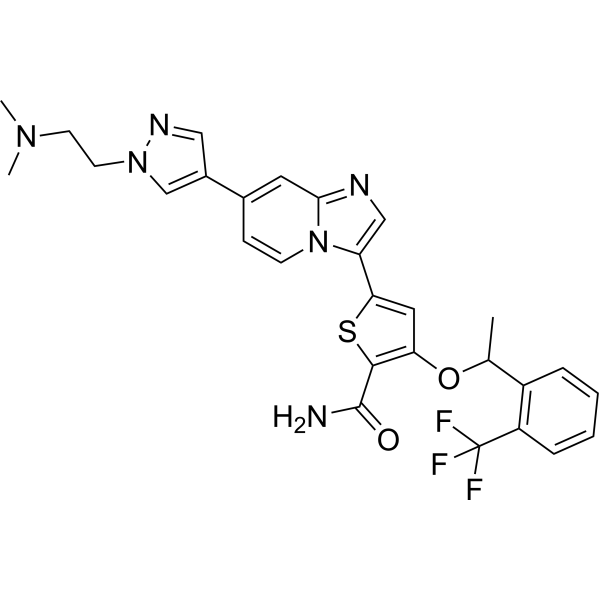
NBI-961 is a NEK2 catalytic inhibitor with human NEK2 IC50 ~12-fold lower than FLT3. NBI-961 induces proteasomal degradation of NEK2. NBI-961 induces G2/mitosis arrest, apoptosis, and compromises viability in DLBCL cells and patient-derived cells. NBI-961 sensitizes DLBCL cells to doxorubicin and vincristine, and suppresses DLBCL tumor growth in mice. NBI-961 can be used for the research of diffuse large b cell lymphoma.
Nos produits utilisent uniquement pour la recherche. Nous ne vendons pas aux patients.
- Pureté : 99.11%
- CAS No.: 2225902-98-5
- Formule: C28H27F3N6O2S
- Masse moléculaire:568.61
-
Stockage:Powder -20°C, 3 years , 4°C, 2 years ; In solvent -80°C, 6 months , -20°C, 1 month

To place orders, for customer services and technical support, please contact: MedChemExpress USA
Tel: 609-228-6898 E-mail: [email protected] [email protected]


-
 Activité biologique
-
Chemical Information
-
Solvant et solubilité
- Protocole
- Pureté et documentation
- Références
-
 Help & FAQs




Activité biologique
Description
IC50 & Target
[1]|
NEK2 |
Cellular Effect
|
Cell Line

|
Type | Value | Description | References |
|---|---|---|---|---|
| MGC-803 | IC50 |
0.17 μM
Compound: 17a
|
Antitumor activity against human MGC-803 cells assessed as inhibition of cell proliferation incubated for 72 hrs by MTT assay
Antitumor activity against human MGC-803 cells assessed as inhibition of cell proliferation incubated for 72 hrs by MTT assay
|
[PMID: 32992252] |
In Vitro
Compared with the other 96 tested human kinases, NBI-961 exhibits high binding selectivity for NEK2, with only weak binding to FLT3 at 15 nM[1].
NBI-961 (0.001-40 μM; 96 h) potently reduces the viability of DLBCL cell lines in vitro, with a nanomolar GI50 value, and exhibits a 4.2-fold therapeutic window relative to EBV-immortalized benign peripheral B cells[1].
NBI-961 (25-240 nM; 24-96 h) induces G2/M cell cycle arrest in sensitive DLBCL cell lines SUDHL5 and RIVA at 24 h[1].
NBI-961 (25-240 nM; 24-96 h) induces time- and concentration-dependent apoptosis in DLBCL cell lines[1].
NBI-961 (19 nM, 38 nM, 76 nM; 24 h) exerts a dual-functional mechanism of action, which catalytically inhibits NEK2 (reducing p-NEK2 levels) and induces proteasomal degradation of total NEK2 protein in DLBCL cell lines SUDHL5, VAL, RIVA and U2932[1].
NBI-961 (0.019-2.0 μM; 24-96 h) reduces the viability of the DLBCL cell line SUDHL5 and primary high-grade B-cell lymphoma cells[1].
Inhibition of NEK2 induced by NBI-961 (25-240 nM; 96 h) shifts the proteome and phosphoproteome of NEK2-sensitive diffuse large B-cell lymphoma (DLBCL) cell lines SUDHL5 and RIVA toward an anti-mitotic and pro-apoptotic state, and reduces the level of phosphorylated AKT in SUDHL5 cells[1].
NBI-961 (0-7.8 nM combined with 5 nM DOX or 0.15 nM VCR; 96 h) sensitizes the sensitive DLBCL cell lines SUDHL5, RIVA and U2932 to low concentrations of DOX (HY-15142A) and VCR (HY-N0488A) by inducing apoptosis, while it exerts no effect on low-sensitivity DLBCL cell lines or benign B cell lines[1].
MedChemExpress (MCE) has not independently confirmed the accuracy of these methods. They are for reference only. Further protocols information, click here.
-
Cell Line:DLBCL cell lines (U2932, RIVA, HT, SUDHL4, SUDHL5, SUDHL6, HBL1, VAL), benign EBV-immortalized peripheral B cell lines (GM22761, GM16113)
-
Concentration:0.001-40 μM
-
Incubation Time:96 h
-
Result:Achieved nanomolar growth inhibitory concentrations (GI50) in DLBCL cell lines, with particularly high potency in ABC-derived DLBCL cells.
Exhibited a 4.2-fold therapeutic window, calculated as the ratio of minimal toxic concentration (GI50 in benign B cells) to minimal effective concentration (7.8 nM).
-
Cell Line:DLBCL cell lines (SUDHL5, RIVA, VAL), benign EBV-immortalized peripheral B cell line (GM22671)
-
Concentration:25 nM (RIVA); 80 nM (SUDHL5, GM22671); 240 nM (VAL)
-
Incubation Time:24 h, 48 h, 72 h, 96 h
-
Result:Induced stark G2/M arrest in SUDHL5 and RIVA cells as early as 24 h post-treatment, which persisted through 48 h.
Caused milder G2/M arrest in VAL cells.
Showed no detectable G2/M arrest in GM22671 benign B cells.
-
Cell Line:DLBCL cell lines (SUDHL5, RIVA, VAL), benign EBV-immortalized peripheral B cell line (GM22671)
-
Concentration:25 nM (RIVA); 80 nM (SUDHL5, GM22671); 240 nM (VAL)
-
Incubation Time:24 h, 48 h, 72 h, 96 h
-
Result:Induced significant apoptotic death in SUDHL5 and RIVA cells starting at 24 h, which steadily increased through 96 h.
Caused no apoptosis in VAL cells until 48 h, requiring 3- to 9.6-fold higher concentrations than SUDHL5 and RIVA.
Induced apoptosis in GM22671 cells starting at 48 h, requiring ~3-fold higher concentration than RIVA.
-
Cell Line:DLBCL cell lines (SUDHL5, VAL, RIVA, U2932)
-
Concentration:19 nM, 38 nM, 76 nM (NBI-961); 10 nM (bortezomib, co-treatment)
-
Incubation Time:24 h
-
Result:Caused a concentration-dependent reduction in both p-NEK2 and total NEK2 protein levels in SUDHL5, VAL, RIVA, and U2932 cells.
Blocked NBI-961-induced loss of total NEK2 but did not prevent loss of p-NEK2 when co-treated with bortezomib.
Left NEK2 mRNA levels unchanged, confirming loss of NEK2 occurred at the protein level.
-
Cell Line:DLBCL cell line (SUDHL5), primary patient-derived high-grade B cell lymphoma cells (ID# 36206)
-
Concentration:0.019 μM, 0.038 μM, 0.076 μM, 0.5 μM, 2.0 μM (24 h incubation; SUDHL5); 0.038 μM, 0.076 μM, 0.5 μM, 1.0 μM, 2.0 μM (96 h incubation; primary cells)
-
Incubation Time:24 h (SUDHL5); 96 h (primary cells)
-
Result:Reduced the percentage of live cells in both SUDHL5 cells and primary patient-derived lymphoma cells.
Caused significant viability loss at 24 h in SUDHL5 and 96 h in primary cells.
-
Cell Line:DLBCL cell lines (SUDHL5, RIVA, VAL, U2932, HT, SUDHL4, HBL1), benign EBV-immortalized peripheral B cell lines (GM22671, GM16113)
-
Concentration:0 nM, 2.0 nM, 3.9 nM, 7.8 nM NBI-961 plus 5 nM DOX or 0.15 nM VCR; 7.8 nM NBI-961 plus 5 nM DOX (apoptosis analysis)
-
Incubation Time:96 h
-
Result:Significantly reduced cell viability in sensitive DLBCL cell lines SUDHL5, RIVA, and U2932 when co-treated with low, non-cytotoxic concentrations of DOX or VCR compared to DOX/VCR alone.
Induced increased apoptosis in SUDHL5 and RIVA cells with co-treatment.
Showed no chemosensitization or increased apoptosis in less sensitive VAL, HBL1, SUDHL4, and benign B cell lines.
In Vivo
MedChemExpress (MCE) has not independently confirmed the accuracy of these methods. They are for reference only.
-
Animal Model:NSG-TG(Hu-IL6) (NSG-IL6) (8-10 weeks old, randomized for sex, humanized)[1]
-
Dosage:5 mg/kg
-
Administration:i.p.; daily; 8 weeks
-
Result:Reduced bioluminescence signal over 7 weeks post-injection to delay disease onset.
Prolonged median mouse survival from 5.7 weeks to 6.4 weeks.
Showed no visible signs of distress, toxicity, weight loss, appetite loss, reduced activity, or fur tufting.


Chemical Information
-
CAS No. 2225902-98-5
-
Appearance Solid
-
Masse moléculaire 568.61
-
Formule C28H27F3N6O2S
-
Color Light yellow to yellow
-
SMILES
CC(C1=C(C=CC=C1)C(F)(F)F)OC2=C(SC(C3=CN=C4C=C(C=CN34)C5=CN(CCN(C)C)N=C5)=C2)C(N)=O
-
Livraison
Room temperature in continental US; may vary elsewhere.
-
Stockage
Powder -20°C 3 years 4°C 2 years In solvent -80°C 6 months -20°C 1 month


Solvant et solubilité
In Vitro:
DMSO : 100 mg/mL (175.87 mM; Need ultrasonic; Hygroscopic DMSO has a significant impact on the solubility of product, please use newly opened DMSO)
Please refer to the solubility information to select the appropriate solvent. Once prepared, please aliquot and store the solution to prevent product inactivation from repeated freeze-thaw cycles.
Storage method and period of stock solution: -80°C, 6 months; -20°C, 1 month. When stored at -80°C, please use it within 6 months. When stored at -20°C, please use it within 1 month.
Please refer to the solubility information to select the appropriate solvent. Once prepared, please aliquot and store the solution to prevent product inactivation from repeated freeze-thaw cycles.
Storage method and period of stock solution: -80°C, 6 months; -20°C, 1 month. When stored at -80°C, please use it within 6 months. When stored at -20°C, please use it within 1 month.
Concentration (start) × Volume (start) = Concentration (final) × Volume (final)
In Vivo:
Select the appropriate dissolution method based on your experimental animal and administration route.
- For the following dissolution methods, please ensure to first prepare a clear stock solution using an In Vitro approach and then sequentially add co-solvents:
- To ensure reliable experimental results, the clarified stock solution can be appropriately stored based on storage conditions. As for the working solution for In Vivo experiments, it is recommended to prepare freshly and use it on the same day.
- The percentages shown for the solvents indicate their volumetric ratio in the final prepared solution. If precipitation or phase separation occurs during preparation, heat and/or sonication can be used to aid dissolution.
Add each solvent one by one: 10% DMSO 40% PEG300 5% Tween-80 45% Saline
Solubility: ≥ 2.5 mg/mL (4.40 mM); Clear solution
This protocol yields a clear solution of ≥ 2.5 mg/mL (saturation unknown).
Taking 1 mL working solution as an example, add 100 μL DMSO stock solution (25.0 mg/mL) to 400 μL PEG300, and mix evenly; then add 50 μL Tween-80 and mix evenly; then add 450 μL Saline to adjust the volume to 1 mL.
Preparation of Saline: Dissolve 0.9 g sodium chloride in ddH₂O and dilute to 100 mL to obtain a clear Saline solution.
In Vivo Dissolution Calculator
Please enter the basic information of animal experiments:
-
-
-
-
Recommended: Prepare an additional quantity of animals to account for potential losses during experiments.
Please enter your animal formula composition:
-
%DMSO +
Recommended: Keep the proportion of DMSO in working solution below 2% if your animal is weak.
-
%+
-
+%Tween-80 + +
-
%Saline +
The co-solvents required include: DMSO, . All of co-solvents are available by MedChemExpress (MCE). , Tween 80. All of co-solvents are available by MedChemExpress (MCE).
Working solution concentration: 0.22 mg/mL
Method for preparing stock solution: mg drug dissolved in μL DMSO. Stock solution concentration: mg/mL.
1. Take μL DMSO stock solution;
2. Add μL .
μL , mix evenly;
3. Then add μL Tween 80, mix evenly;
4. Then add μL
Please ensure that the stock solution in the first step is dissolved to a clear state, and add co-solvents in sequence. You can use ultrasonic heating (ultrasonic cleaner, recommended frequency 20-40 kHz), vortexing, etc. to assist dissolution.

Protocole
-
Apoptosis
Apoptosis, also called programmed cell death, is generally characterized by distinct morphological characteristics.
-
TUNEL staining for apoptotic DNA fragmentation
TUNEL staining detects DNA strand breaks by using terminal deoxynucleotidyl transferase to add labeled nucleotides to exposed 3′-OH DNA termini, generating either microscopic staining in fixed cells or tissue sections, or fluorescence/cytometric signal in cell suspensions. TUNEL positivity reflects DNA fragmentation but should not be interpreted alone as definitive apoptosis, because TUNEL can also label necrotic, autolytic, mechanically damaged, or DNA-repair-associated DNA breaks.
-
Cell Cytotoxicity Assay
Cytotoxicity assays are usually based on the assessment of cell membrane damage, which can also be indirectly detected by measuring cell viability. Detection methods include MTT assay, CKK-8 assay, LDH assay and ATP assay, etc.
-
Annexin V plus membrane-impermeant dye apoptosis staining
Annexin V-based apoptosis assays rely on the detection of phosphatidylserine (PS) externalization from the inner leaflet of the plasma membrane to the outer leaflet, an early biochemical hallmark of apoptosis. Fluorescently labeled Annexin V binds PS in a calcium-dependent manner, enabling identification of early apoptotic cells by flow cytometry or fluorescence microscopy. When combined with a membrane-impermeant DNA-binding dye (e. g. , propidium iodide), this approach allows discrimination between viable (Annexin V−/dye−), early apoptotic (Annexin V+/dye−), and late apoptotic or necrotic (Annexin V+/dye+) cell populations by assessing membrane integrity and PS exposure.
-
Patient-Derived Xenograft (PDX)
Patient-derived xenograft (PDX) models are generated by engrafting primary human tumor tissue directly into immunodeficient mice, allowing in vivo propagation of patient tumor biology without initial in vitro adaptation. These models are used to preserve key histopathological and molecular characteristics of the original tumor and enable assessment of tumor growth dynamics and therapeutic response in a living organism. The biological readout is tumor engraftment and subsequent growth in the murine host, which reflects the ability of human tumor cells to survive, vascularize, and expand in an immunocompromised microenvironment.
-
Apoptosis Solutions
Apoptosis is a regulated, generally non-lytic cell-death pathway that removes unwanted, damaged, infected, or abnormal cells through coordinated morphological changes, caspase activation, DNA fragmentation, and membrane remodeling. The intrinsic apoptosis pathway is controlled mainly by mitochondrial outer membrane permeabilization, BCL-2 family proteins, cytochrome c release, apoptosome formation, caspase-9 activation, and downstream executioner caspase-3/7 activation. The extrinsic apoptosis pathway is initiated by death receptors such as Fas, TNFR, and TRAIL receptors, which recruit adaptor proteins and activate caspase-8 before engaging executioner caspases or mitochondrial amplification through BID cleavage. Apoptosis is linked to many phenotypes, including cancer cell killing, tissue homeostasis, immune regulation, neurodegeneration, infection response, and treatment-induced cytotoxicity; unresolved questions include how apoptosis interacts with necroptosis, pyroptosis, ferroptos
-
Patient-Derived Orthotopic Xenograft (PDOX)
Patient-derived orthotopic xenograft (PDOX) modeling implants fresh patient tumor tissue or patient-derived tumor cells into the anatomically corresponding organ or tissue site of immunodeficient mice, usually by surgical orthotopic implantation, to preserve patient tumor histology, local microenvironmental context, invasion, metastatic behavior, and treatment-response features better than subcutaneous implantation. PDOX readouts include tumor engraftment, orthotopic tumor growth, local invasion, metastasis, recurrence after resection, histologic similarity to the donor tumor, biomarker retention, molecular concordance, survival, and response or resistance to therapy. PDOX models are used for preclinical drug testing and individualized therapy evaluation, but engraftment success varies by tumor type and specimen quality.
-
Subcutaneous Cell-Line-Derived Xenograft
Subcutaneous cell-line-derived xenograft (CDX) models are established by implanting cultured human cancer cell lines into immunodeficient mice, where the injected cells form localized tumors that can be monitored in vivo as a measure of tumorigenic potential, growth kinetics, and treatment response. These models are widely used in oncology research because they allow reproducible tumor formation and enable comparative assessment of tumor growth between different cell lines or genetic manipulations in a controlled in vivo microenvironment. Subcutaneous implantation of cancer cells in immunodeficient mice is a standard approach for evaluating tumor growth behavior and therapeutic response across multiple cancer types, including prostate, esophageal, pancreatic, and colon cancer models.
-
Orthotopic Cell-Line Xenograft
Orthotopic cell-line xenograft models involve implantation of human cancer cell lines into the anatomically corresponding organ of immunodeficient mice to reproduce tumor growth within a native microenvironment, enabling more clinically relevant tumor behavior compared with subcutaneous models. These models are widely used because orthotopic placement better recapitulates tumor progression, including invasion and metastatic spread, which are often underrepresented in heterotopic implantation systems. Compared with conventional xenografts, orthotopic implantation is described as more technically complex but provides improved simulation of tumor-microenvironment interactions and metastatic behavior, making it particularly valuable for translational oncology research. Surgical orthotopic implantation approaches have been emphasized as enabling faithful reproduction of clinical cancer features, including metastasis and disease progression patterns that align with the tumor’s organ of origi
-
Cell Viability Determination by MTT Colorimetric Assay
The following protocol uses the MTT colorimetric assay as a classic literature-established method for assessing cell viability/metabolic activity in cultured mammalian cells. MTT[3-(4,5-dimethylthiazol-2-yl)-2,5-diphenyltetrazolium bromide] is reduced by metabolically active cells to a colored formazan product; the amount of formazan is quantified spectrophotometrically and provides an indirect measure of metabolically active viable cells. Importantly, MTT reduction reflects cellular oxidoreductase/metabolic activity rather than an absolute direct count of living cells, so changes in cellular metabolism can alter the signal independently of cell number.


Pureté et documentation
-
Fiche technique (297 KB)
-
SDS (254 KB)
- English - EN (254 KB)
- Français - FR (254 KB)
- Deutsch - DE (254 KB)
- Norwegian - NO (254 KB)
- Español - ES (254 KB)
- Swedish - SV (254 KB)
- Italian - IT (254 KB)
- Korean - KR (254 KB)
- Portuguese - PT (254 KB)
-
Instruction de manipulation (2659 KB)
Références


Complete Stock Solution Preparation Table
Please refer to the solubility information to select the appropriate solvent. Once prepared, please aliquot and store the solution to prevent product inactivation from repeated freeze-thaw cycles.
Storage method and period of stock solution: -80°C, 6 months; -20°C, 1 month. When stored at -80°C, please use it within 6 months. When stored at -20°C, please use it within 1 month.
| Optional Solvent | Concentration Solvent Mass | 1 mg | 5 mg | 10 mg | 25 mg |
|---|---|---|---|---|---|
| DMSO | 1 mM | 1.7587 mL | 8.7934 mL | 17.5867 mL | 43.9669 mL |
| 5 mM | 0.3517 mL | 1.7587 mL | 3.5173 mL | 8.7934 mL | |
| 10 mM | 0.1759 mL | 0.8793 mL | 1.7587 mL | 4.3967 mL | |
| 15 mM | 0.1172 mL | 0.5862 mL | 1.1724 mL | 2.9311 mL | |
| 20 mM | 0.0879 mL | 0.4397 mL | 0.8793 mL | 2.1983 mL | |
| 25 mM | 0.0703 mL | 0.3517 mL | 0.7035 mL | 1.7587 mL | |
| 30 mM | 0.0586 mL | 0.2931 mL | 0.5862 mL | 1.4656 mL | |
| 40 mM | 0.0440 mL | 0.2198 mL | 0.4397 mL | 1.0992 mL | |
| 50 mM | 0.0352 mL | 0.1759 mL | 0.3517 mL | 0.8793 mL | |
| 60 mM | 0.0293 mL | 0.1466 mL | 0.2931 mL | 0.7328 mL | |
| 80 mM | 0.0220 mL | 0.1099 mL | 0.2198 mL | 0.5496 mL | |
| 100 mM | 0.0176 mL | 0.0879 mL | 0.1759 mL | 0.4397 mL |


NBI-961 Related Classifications
HY-156437 Related Classifications
 Powered by Bioz