



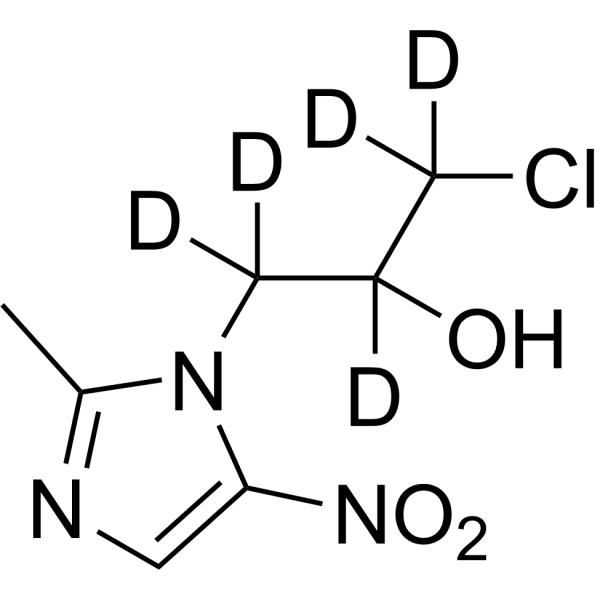
Ornidazole-d5
Ornidazole-d5 is deuterium labeled Ornidazole. Ornidazole (Ro 7-0207) is a nitroimidazole derivative with anti-trichomonad activity and in vitro activity against a variety of anaerobic bacteria. Ornidazole inhibits Sonic hedgehog (Shh) signaling pathway, exhibits antitumor activity. Ornidazole can be used in research of Crohn’s disease.
Nos produits utilisent uniquement pour la recherche. Nous ne vendons pas aux patients.
- CAS No.: 2747915-64-4
- Formule: C7H5D5ClN3O3
- Masse moléculaire:224.66
-
Stockage:
Please store the product under the recommended conditions in the Certificate of Analysis.

To place orders, for customer services and technical support, please contact: MedChemExpress USA
Tel: 609-228-6898 E-mail: [email protected] [email protected]


-
 Activité biologique
-
Chemical Information
- Protocole
- Pureté et documentation
- Références
-
 Help & FAQs


-
HY-127167
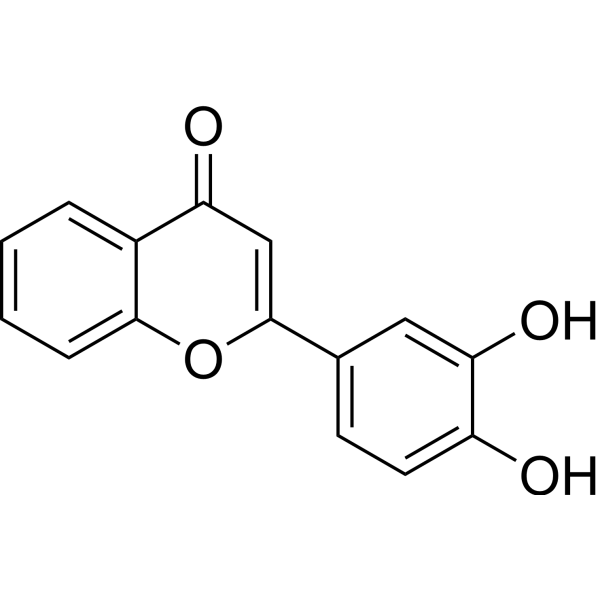
3',4'-DihydroxyflavoneAntioxidant -
HY-N0402S
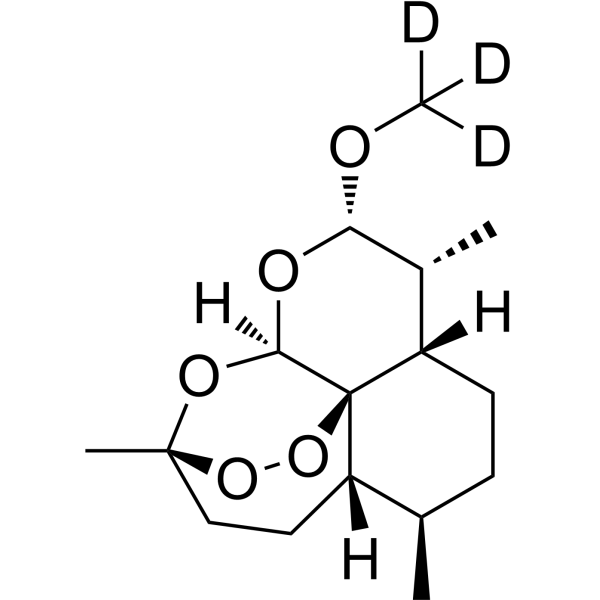
Artemether-d3Stable Isotope -
HY-41417S
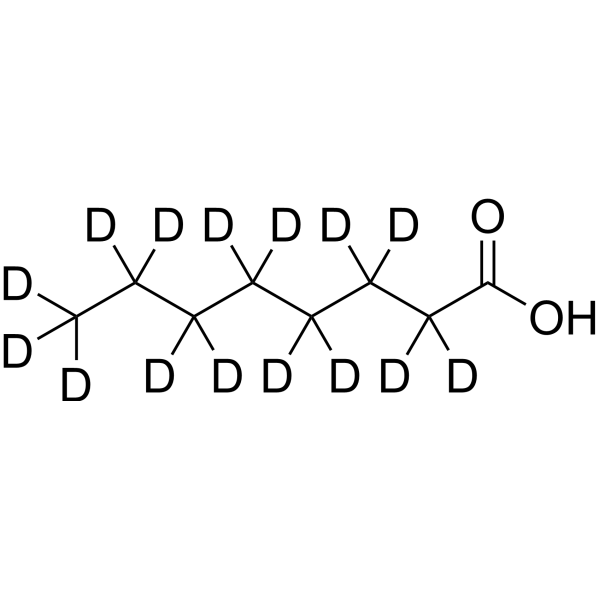
Octanoic acid-d15Stable Isotope -
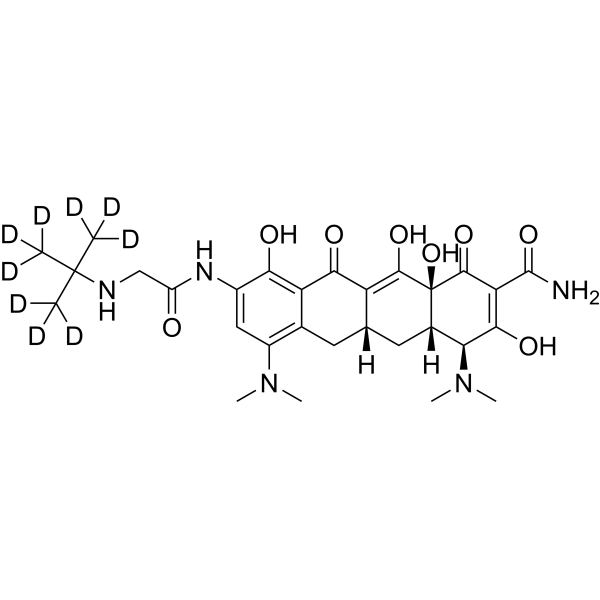
HY-B0117S
Tigecycline-d9Stable Isotope -
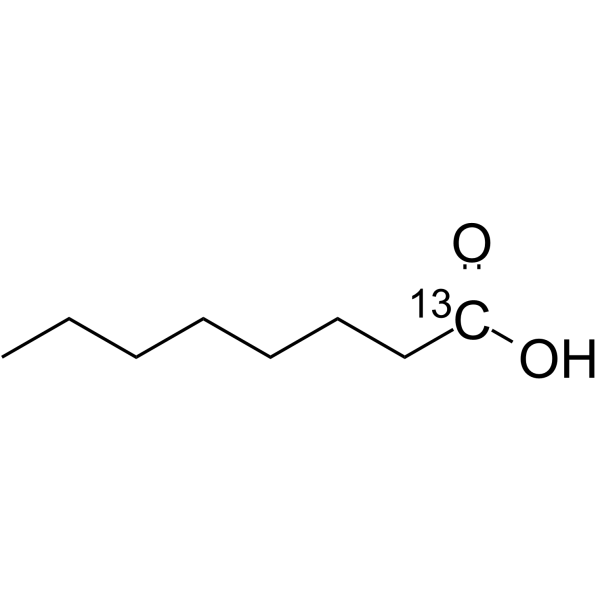
HY-41417S3
Octanoic acid-13CStable Isotope -
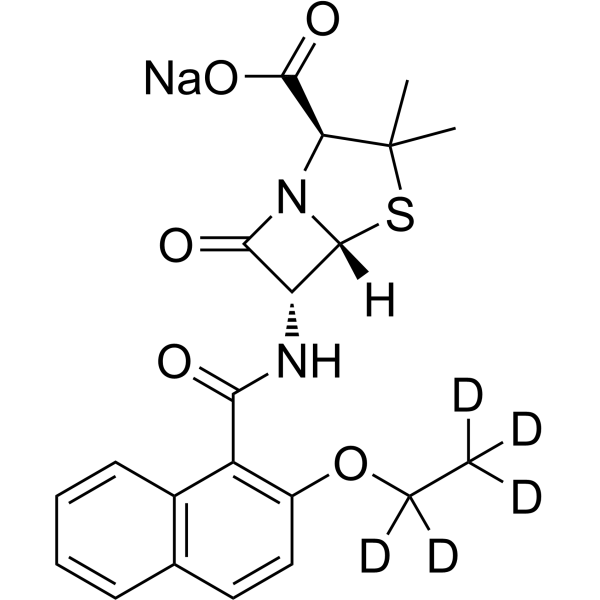
HY-B0555BS
Nafcillin-d5 sodiumStable Isotope -
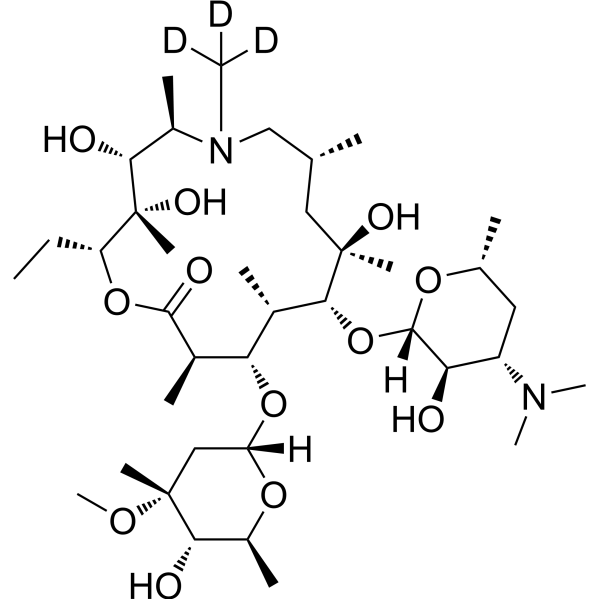
HY-17506S
Azithromycin-d3Stable Isotope -

HY-130187S
Sapienic acid-d19Stable Isotope -
HY-A0166S
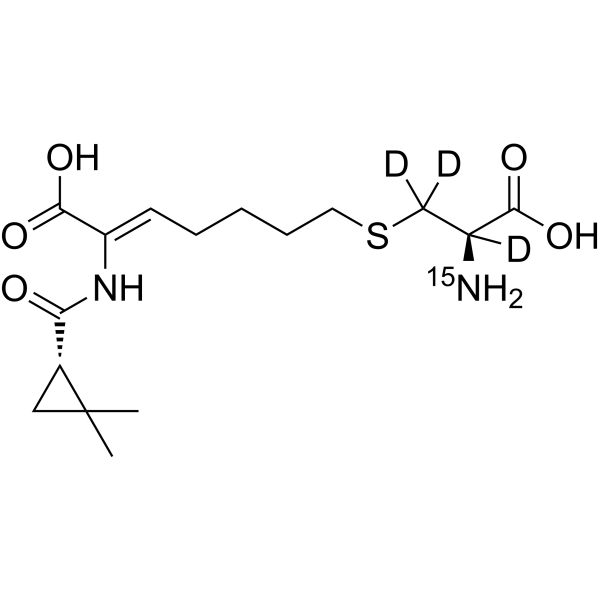
Cilastatin-15N,d3Stable Isotope -
HY-B0276S
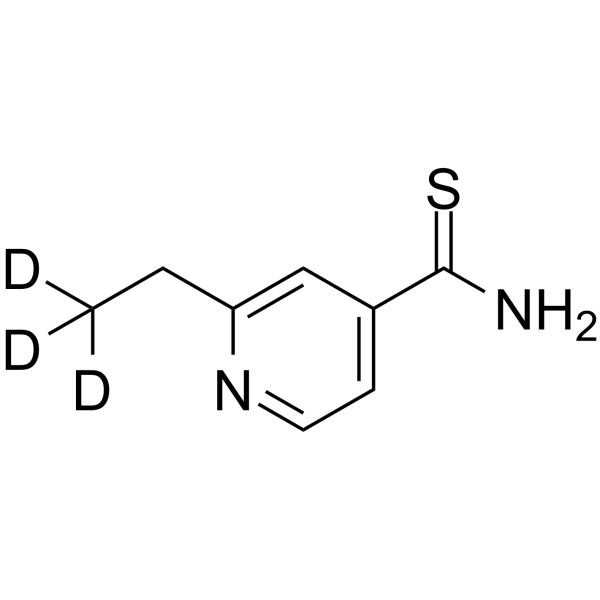
Ethionamide-d3Stable Isotope -

HY-N8470
Steffimycin BBacterial Metabolite -
HY-41417S1
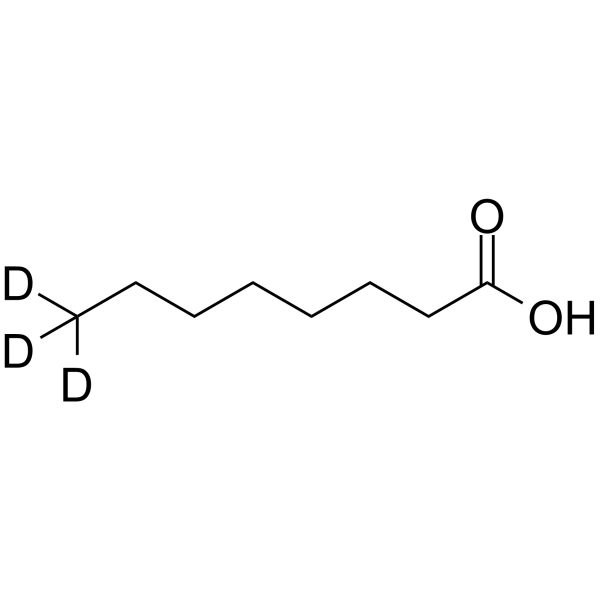
Octanoic acid-d3Stable Isotope
Voir tous les produits spécifiques à Isoform Parasite
MoreVoir tous les produits spécifiques à Isoform Antibiotic
More

Activité biologique
Description
In Vitro
Stable heavy isotopes of hydrogen, carbon, and other elements have been incorporated into drug molecules, largely as tracers for quantitation during the drug development process. Deuteration has gained attention because of its potential to affect the pharmacokinetic and metabolic profiles of drugs[1].
MedChemExpress (MCE) has not independently confirmed the accuracy of these methods. They are for reference only. Further protocols information, click here.
Application
1. This compound can be used as a tracer
2. This compound can be used as an internal standard for quantitative analysis by NMR, GC-MS, or LC-MS.


Chemical Information
-
CAS No. 2747915-64-4
-
Unlabeled CAS 16773-42-5
-
Masse moléculaire 224.66
-
Formule C7H5D5ClN3O3
-
SMILES
CC1=NC=C([N+]([O-])=O)N1C([2H])([2H])C(C([2H])([2H])Cl)([2H])O
-
Synonyms
Ro 7-0207-d5
-
Livraison
Room temperature in continental US; may vary elsewhere.
-
Stockage
Please store the product under the recommended conditions in the Certificate of Analysis.

Protocole
-
Anaerobic Bacterial Culture
Anaerobic bacterial culture detects viable bacteria that can grow under oxygen-depleted conditions; the readout is visible colony formation or broth turbidity after incubation in a chamber, jar, pouch, bag, or roll-tube system that maintains anaerobiosis. Oxygen control is central to the method because recovery depends on limiting oxygen exposure during collection, transport, inoculation, and incubation.
-
Subcutaneous Cell-Line-Derived Xenograft
Subcutaneous cell-line-derived xenograft (CDX) models are established by implanting cultured human cancer cell lines into immunodeficient mice, where the injected cells form localized tumors that can be monitored in vivo as a measure of tumorigenic potential, growth kinetics, and treatment response. These models are widely used in oncology research because they allow reproducible tumor formation and enable comparative assessment of tumor growth between different cell lines or genetic manipulations in a controlled in vivo microenvironment. Subcutaneous implantation of cancer cells in immunodeficient mice is a standard approach for evaluating tumor growth behavior and therapeutic response across multiple cancer types, including prostate, esophageal, pancreatic, and colon cancer models.


Pureté et documentation
Références
[1]. Russak EM, et al. Impact of Deuterium Substitution on the Pharmacokinetics of Pharmaceuticals. Ann Pharmacother. 2019;53(2):211-216. [Content Brief]
[2]. Rutgeerts, P., et al., Ornidazole for prophylaxis of postoperative Crohn's disease recurrence: a randomized, double-blind, placebo-controlled trial. Gastroenterology, 2005. 128(4): p. 856-61. [Content Brief]
[3]. Goldstein, E.J., V.L. Sutter, and S.M. Finegold, Comparative susceptibilities of anaerobic bacteria to metronidazole, ornidazole, and SC-28538. Antimicrob Agents Chemother, 1978. 14(4): p. 609-13. [Content Brief]

Calculators
Concentration (start) × Volume (start) = Concentration (final) × Volume (final)


Ornidazole-d5 Related Classifications
HY-B0508S Related Classifications
 Powered by Bioz