



Rhein 8-O-β-D-Glucopyranoside
Based on 1 publication(s) in Google Scholar
Rhein 8-O-β-D-Glucopyranoside is an orally active glycoside found in Rhubarb. Rhein 8-O-β-D-Glucopyranoside attenuates high glucose-induced apoptosis, recovers altered lincRNA ANRIL and let-7a expression, reverses high glucose-altered Bcl-2 and cleaved caspase-3 protein expression, and inhibits TGF-β1/Smad signaling. Rhein 8-O-β-D-Glucopyranoside accelerates Sennoside A (HY-N0365) metabolism, stimulates sennoside A purgative activity. Rhein 8-O-β-D-Glucopyranoside inhibits bacterial biofilm formation, suppresses its virulence gene expression, and exerts antibacterial activity. Rhein 8-O-β-D-Glucopyranoside can be used for the research of diabetic nephropathy, constipation, and infection.
For research use only. We do not sell to patients.
- Purity : 99.81%
- CAS No.: 34298-86-7
- Formula: C21H18O11
- Molecular Weight:446.36
-
Storage:
4°C, protect from light
* In solvent : -80°C, 6 months; -20°C, 1 month (protect from light)

To place orders, for customer services and technical support, please contact: MedChemExpress USA
Tel: 609-228-6898 E-mail: [email protected] [email protected]


-
 Biological Activity
-
Chemical Information
-
Solvent & Solubility
- Purity & Documentation
- References
-
 Help & FAQs


-
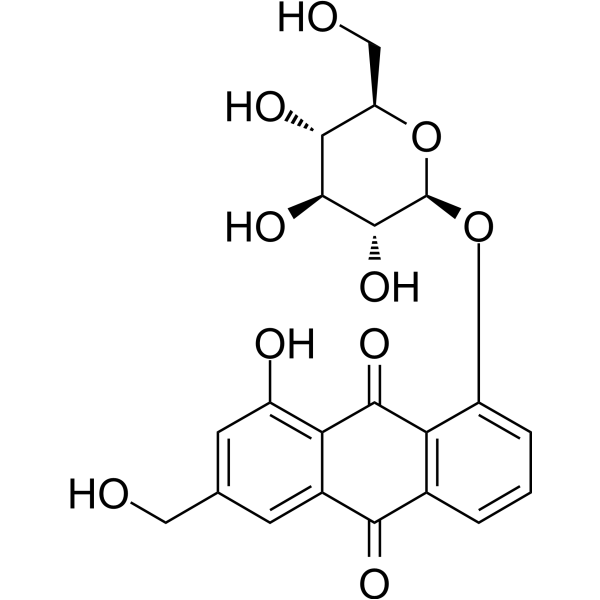
HY-N2451
Aloe-emodin-8-O-β-D-glucopyranoside -
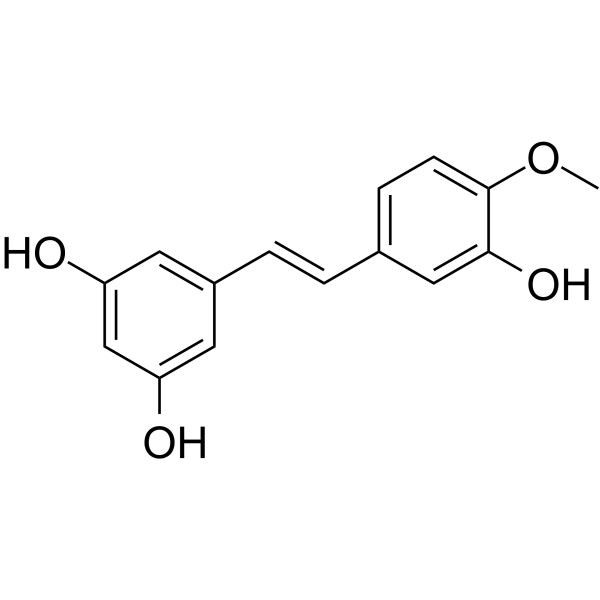
HY-N2229
Rhapontigenin -
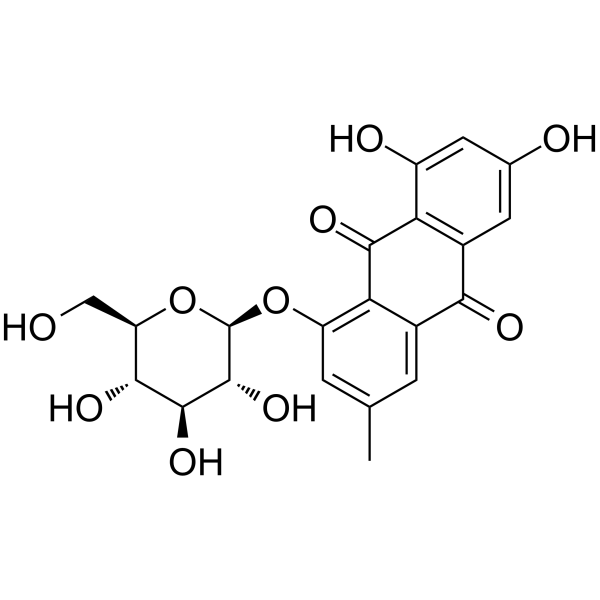
HY-N2394
Emodin-1-O-β-D-glucopyranoside -
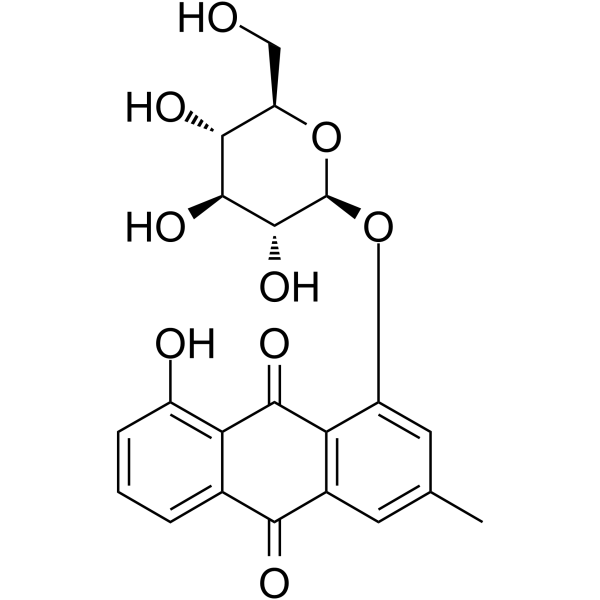
HY-N4151
Chrysophanein -
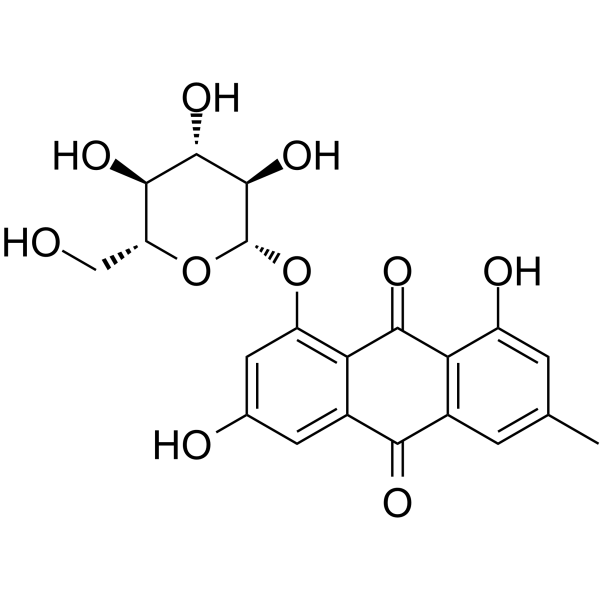
HY-N0311
Emodin-8-glucoside -
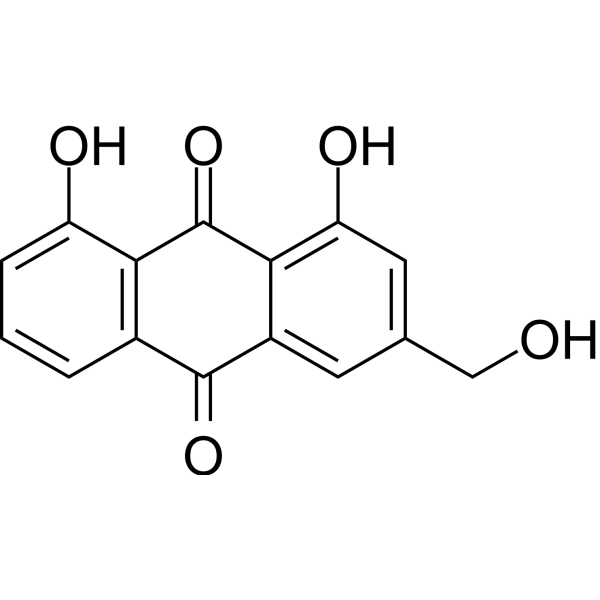
HY-N0189
Aloe emodin -
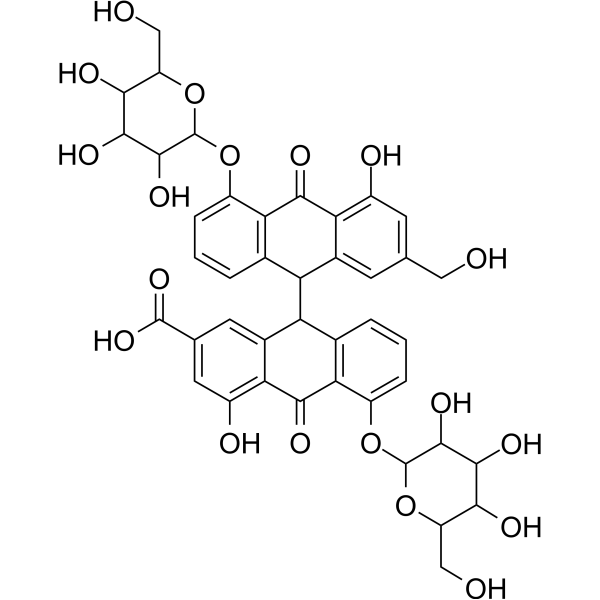
HY-N1972
Sennoside C -
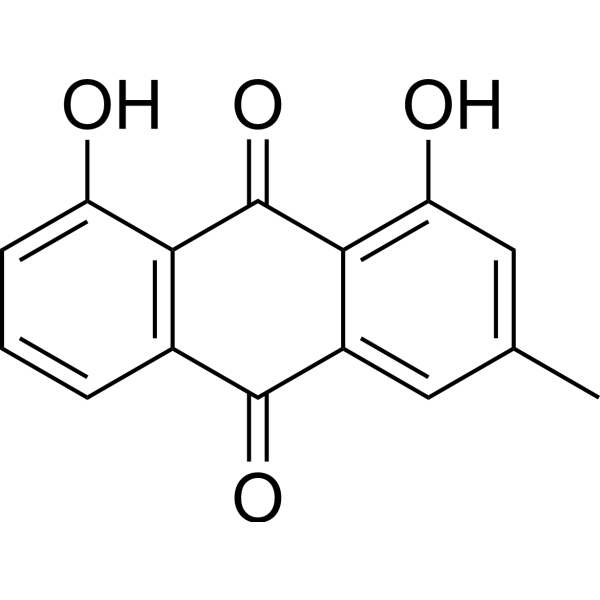
HY-13595
Chrysophanol -
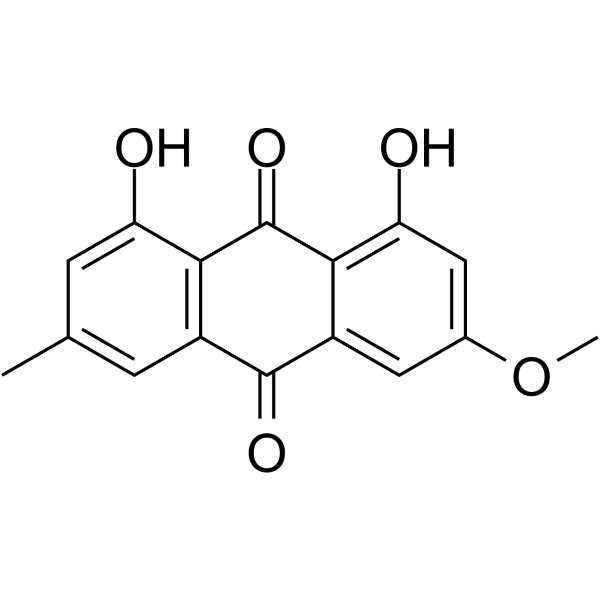
HY-N0108
Physcion -
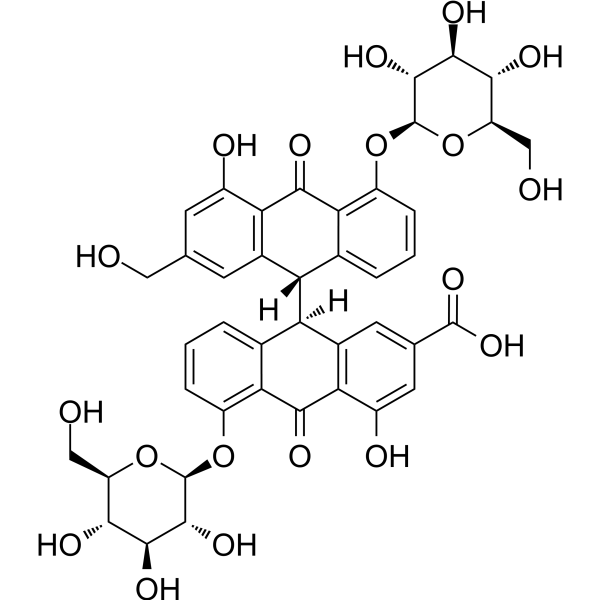
HY-N1973
Sennoside D -
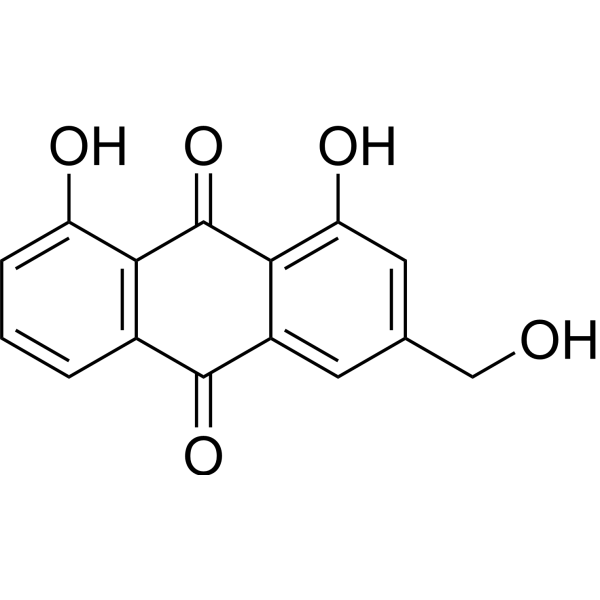
HY-N0189R
Aloe emodin (Standard) -

HY-N6082R
Rhein 8-O-β-D-Glucopyranoside (Standard)
Publications Citing Use of MedChemExpress (MCE) Rhein 8-O-β-D-Glucopyranoside
MoreAll Caspase Isoforms
More

Biological Activity
Description
IC50 & Target
[1]|
Caspase 3 |
Bcl-2 |
In Vitro
Rhein 8-O-β-D-Glucopyranoside (20-80 μM; 48 h) attenuates high glucose-induced apoptosis in human mesangial cells[1].
Rhein 8-O-β-D-Glucopyranoside (20-80 μM; 1-5 days) reverses high glucose-suppressed proliferation in human mesangial cells[1].
Rhein 8-O-β-D-Glucopyranoside (20-80 μM; 48 h) normalizes high glucose-altered lincRNA ANRIL and let-7a expression in human mesangial cells[1].
Rhein 8-O-β-D-Glucopyranoside (20-80 μM; 48 h) reverses high glucose-altered Bcl-2 and cleaved caspase-3 protein expression in human mesangial cells[1].
Rhein 8-O-β-D-Glucopyranoside (20-80 μM; 48 h) inhibits high glucose-activated TGF-β1/Smad signaling in human mesangial cells[1].
Rhein 8-O-β-D-Glucopyranoside (0.03-1 mM; 4 h) significantly accelerates the metabolism of Sennoside A (HY-N0365) in anaerobic mouse intestinal flora suspensions in a concentration-dependent manner[2].
Rhein 8-O-β-D-Glucopyranoside (10-50 μg/mL; 24 h) significantly inhibits the growth of Streptococcus mutans[3].
Rhein 8-O-β-D-Glucopyranoside (1-75 μg/mL; 4-24 h) inhibits Streptococcus mutans biofilm formation in a concentration-dependent manner, with 50 μg/mL and 75 μg/mL almost fully inhibiting biofilm formation at 4 h and 24 h, and 10 μg/mL suppressing nearly 60% of biofilm formation[3].
Rhein 8-O-β-D-Glucopyranoside (50 μg/mL; 48 h) significantly decreases the expression of luxS, brpA, ffh, recA, nth, and smx virulence-associated genes in Streptococcus mutans biofilms[3].
Rhein 8-O-β-D-Glucopyranoside (25-75 μg/mL; 24 h) is non-toxic to human THP monocytes after 24 h of incubation, and significantly restores THP monocyte viability reduced by Streptococcus mutans infection[3].
Rhein 8-O-β-D-Glucopyranoside (25-75 μg/mL; 24 h) significantly reduces increased lactate dehydrogenase activity in human THP monocytes caused by S. mutans infection, confirming non-toxicity to monocytes[3].
MedChemExpress (MCE) has not independently confirmed the accuracy of these methods. They are for reference only.
-
Cell Line:human mesangial cells (HMCs)
-
Concentration:20 μM, 80 μM
-
Incubation Time:48 h
-
Result:Reduced the percentage of apoptotic HMCs induced by high glucose.
Reduced the apoptotic cell percentage to a level comparable to that of non-targeted control interventions (ANRIL siRNA, let-7a mimics) at 80 μM.
-
Cell Line:human mesangial cells (HMCs)
-
Concentration:20 μM, 80 μM
-
Incubation Time:48 h
-
Result:Reduced high glucose-induced lincRNA ANRIL expression.
Increased high glucose-reduced let-7a expression.
-
Cell Line:human mesangial cells (HMCs)
-
Concentration:20 μM, 80 μM
-
Incubation Time:48 h
-
Result:Recovered Bcl-2 expression inhibited by high glucose.
Reduced cleaved caspase-3 expression increased by high glucose to levels closer to those of untreated control cells.\nReduced TGF-β1 expression upregulated by high glucose.
Decreased the ratio of p-Smad2 to total Smad2 increased by high glucose.
Increased Smad7 expression downregulated by high glucose to levels closer to those of untreated control cells.
-
Cell Line:human THP monocyte cell line
-
Concentration:25 μg/mL, 50 μg/mL, 75 μg/mL
-
Incubation Time:24 h
-
Result:Had no effect on monocyte viability at 25, 50, and 75 μg/mL alone compared to the control group.
Significantly restored monocyte viability reduced by Streptococcus mutans infection.
In Vivo
MedChemExpress (MCE) has not independently confirmed the accuracy of these methods. They are for reference only.
-
Animal Model:ddY (male, 30-40 g)[2]
-
Dosage:2.1 mg/kg; 4.2 mg/kg; 8.4 mg/kg; 16.8 mg/kg
-
Administration:p.o.; single dose
-
Result:Resulted in a mean feces score significantly higher than Sennoside A alone at 2.1 mg/kg.
Resulted in a further significant increase in mean feces score at 4.2 mg/kg.
Resulted in a marked significant increase in mean feces score at 8.4 mg/kg.
Resulted in the greatest significant increase in mean feces score, reaching a value of ~8 at 16.8 mg/kg.
Showed a dose-dependent stimulation of Sennoside A's purgative activity across all tested doses.


Chemical Information
-
CAS No. 34298-86-7
-
Appearance Solid
-
Molecular Weight 446.36
-
Formula C21H18O11
-
Color Light yellow to yellow
-
SMILES
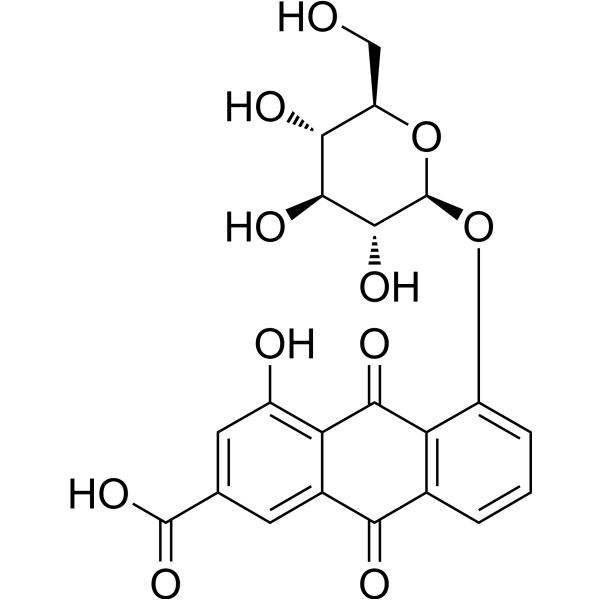
O=C(C1=CC(C(O)=O)=CC(O)=C1C2=O)C3=C2C(O[C@@H]4O[C@@H]([C@@H](O)[C@H](O)[C@H]4O)CO)=CC=C3
-
Structure Classification
-
Initial Source
-
Shipping
Room temperature in continental US; may vary elsewhere.
-
Storage
4°C, protect from light
* In solvent : -80°C, 6 months; -20°C, 1 month (protect from light)


Publications (1)
-
Journal Impact Factor
-
Most Recent
-
Biomed Res Int
Anti-influenza A Virus Effects and Mechanisms of Emodin and Its Analogs via Regulating PPAR α/ γ-AMPK-SIRT1 Pathway and Fatty Acid Metabolism. [Abstract]2021 Sep 9;2021:9066938. PMID: 34540999


Solvent & Solubility
In Vitro:
DMSO : 100 mg/mL (224.03 mM; Need ultrasonic; Hygroscopic DMSO has a significant impact on the solubility of product, please use newly opened DMSO)
Please refer to the solubility information to select the appropriate solvent. Once prepared, please aliquot and store the solution to prevent product inactivation from repeated freeze-thaw cycles.
Storage method and period of stock solution: -80°C, 6 months; -20°C, 1 month (protect from light). When stored at -80°C, please use it within 6 months. When stored at -20°C, please use it within 1 month.
Please refer to the solubility information to select the appropriate solvent. Once prepared, please aliquot and store the solution to prevent product inactivation from repeated freeze-thaw cycles.
Storage method and period of stock solution: -80°C, 6 months; -20°C, 1 month (protect from light). When stored at -80°C, please use it within 6 months. When stored at -20°C, please use it within 1 month.
Concentration (start) × Volume (start) = Concentration (final) × Volume (final)
In Vivo:
Select the appropriate dissolution method based on your experimental animal and administration route.
- For the following dissolution methods, please ensure to first prepare a clear stock solution using an In Vitro approach and then sequentially add co-solvents:
- To ensure reliable experimental results, the clarified stock solution can be appropriately stored based on storage conditions. As for the working solution for In Vivo experiments, it is recommended to prepare freshly and use it on the same day.
- The percentages shown for the solvents indicate their volumetric ratio in the final prepared solution. If precipitation or phase separation occurs during preparation, heat and/or sonication can be used to aid dissolution.
Add each solvent one by one: 10% DMSO 40% PEG300 5% Tween-80 45% Saline
Solubility: ≥ 4.55 mg/mL (10.19 mM); Clear solution
This protocol yields a clear solution of ≥ 4.55 mg/mL (saturation unknown).
Taking 1 mL working solution as an example, add 100 μL DMSO stock solution (45.5 mg/mL) to 400 μL PEG300, and mix evenly; then add 50 μL Tween-80 and mix evenly; then add 450 μL Saline to adjust the volume to 1 mL.
Preparation of Saline: Dissolve 0.9 g sodium chloride in ddH₂O and dilute to 100 mL to obtain a clear Saline solution.
Add each solvent one by one: 10% DMSO 90% (20% SBE-β-CD in Saline)
Solubility: ≥ 2.5 mg/mL (5.60 mM); Clear solution
This protocol yields a clear solution of ≥ 2.5 mg/mL (saturation unknown).
Taking 1 mL working solution as an example, add 100 μL DMSO stock solution (25.0 mg/mL) to 900 μL 20% SBE-β-CD in Saline, and mix evenly.
Preparation of 20% SBE-β-CD in Saline (4°C, storage for one week): 2 g SBE-β-CD powder is dissolved in 10 mL Saline, completely dissolve until clear.
In Vivo Dissolution Calculator
Please enter the basic information of animal experiments:
-
-
-
-
Recommended: Prepare an additional quantity of animals to account for potential losses during experiments.
Please enter your animal formula composition:
-
%DMSO +
Recommended: Keep the proportion of DMSO in working solution below 2% if your animal is weak.
-
%+
-
+%Tween-80 + +
-
%Saline +
The co-solvents required include: DMSO, . All of co-solvents are available by MedChemExpress (MCE). , Tween 80. All of co-solvents are available by MedChemExpress (MCE).
Working solution concentration: 0.22 mg/mL
Method for preparing stock solution: mg drug dissolved in μL DMSO. Stock solution concentration: mg/mL. * In solvent : -80°C, 6 months; -20°C, 1 month (protect from light)
1. Take μL DMSO stock solution;
2. Add μL .
μL , mix evenly;
3. Then add μL Tween 80, mix evenly;
4. Then add μL
Please ensure that the stock solution in the first step is dissolved to a clear state, and add co-solvents in sequence. You can use ultrasonic heating (ultrasonic cleaner, recommended frequency 20-40 kHz), vortexing, etc. to assist dissolution.


Purity & Documentation
-
Data Sheet (288 KB)
-
SDS (393 KB)
- English - EN (393 KB)
- Français - FR (393 KB)
- Deutsch - DE (393 KB)
- Norwegian - NO (393 KB)
- Español - ES (393 KB)
- Swedish - SV (393 KB)
- Italian - IT (393 KB)
- Korean - KR (393 KB)
- Portuguese - PT (393 KB)
-
Handling Instructions (2659 KB)
References
[1]. Zhang L S, et al. Rhein-8-O-β-D-glucopyranoside inhibited high glucose-induced apoptosis of human mesangial cells by regulating the lincRNA ANRIL/let-7a/TGF-β1/Smad signaling pathway[J]. Experimental and therapeutic medicine, 2020, 19(4): 2871-2878. [Content Brief]
[2]. Takayama K, et al. The influence of rhein 8-O-β-D-glucopyranoside on the purgative action of sennoside A from rhubarb in mice. Biol Pharm Bull. 2012;35(12):2204-2208. [Content Brief]
[3]. Zhang Y, et al. Effects of Rhein-8-O-β-D-glucopyranoside on the biofilm formation of Streptococcus mutans[J]. Current Microbiology, 2021, 78(1): 323-328. [Content Brief]


Complete Stock Solution Preparation Table
Please refer to the solubility information to select the appropriate solvent. Once prepared, please aliquot and store the solution to prevent product inactivation from repeated freeze-thaw cycles.
Storage method and period of stock solution: -80°C, 6 months; -20°C, 1 month (protect from light). When stored at -80°C, please use it within 6 months. When stored at -20°C, please use it within 1 month.
| Optional Solvent | Concentration Solvent Mass | 1 mg | 5 mg | 10 mg | 25 mg |
|---|---|---|---|---|---|
| DMSO | 1 mM | 2.2403 mL | 11.2017 mL | 22.4034 mL | 56.0086 mL |
| 5 mM | 0.4481 mL | 2.2403 mL | 4.4807 mL | 11.2017 mL | |
| 10 mM | 0.2240 mL | 1.1202 mL | 2.2403 mL | 5.6009 mL | |
| 15 mM | 0.1494 mL | 0.7468 mL | 1.4936 mL | 3.7339 mL | |
| 20 mM | 0.1120 mL | 0.5601 mL | 1.1202 mL | 2.8004 mL | |
| 25 mM | 0.0896 mL | 0.4481 mL | 0.8961 mL | 2.2403 mL | |
| 30 mM | 0.0747 mL | 0.3734 mL | 0.7468 mL | 1.8670 mL | |
| 40 mM | 0.0560 mL | 0.2800 mL | 0.5601 mL | 1.4002 mL | |
| 50 mM | 0.0448 mL | 0.2240 mL | 0.4481 mL | 1.1202 mL | |
| 60 mM | 0.0373 mL | 0.1867 mL | 0.3734 mL | 0.9335 mL | |
| 80 mM | 0.0280 mL | 0.1400 mL | 0.2800 mL | 0.7001 mL | |
| 100 mM | 0.0224 mL | 0.1120 mL | 0.2240 mL | 0.5601 mL |


Rhein 8-O-β-D-Glucopyranoside Related Classifications
HY-N6082 Related Classifications
 Powered by Bioz
Keywords
- Rhein 8-O-β-D-Glucopyranoside
- 34298-86-7
- Apoptosis
- Bcl-2 Family
- Caspase
- TGF-beta/Smad
- Bacterial
- dental caries
- human THP monocytes
- diabetic nephropathy
- apoptosis
- let-7a
- Streptococcus mutans
- TGF-β1/Smad signaling pathway
- human protein tyrosine phosphatase 1B
- human mesangial cells
- lincRNA ANRIL
- Inhibitor
- inhibitor
- inhibit