
89 Results for "

cold-induced depolymerization

" in MedChemExpress (MCE) Product Catalog:
Products (89)

89 Results for "cold-induced depolymerization" in MCE Product Catalog:

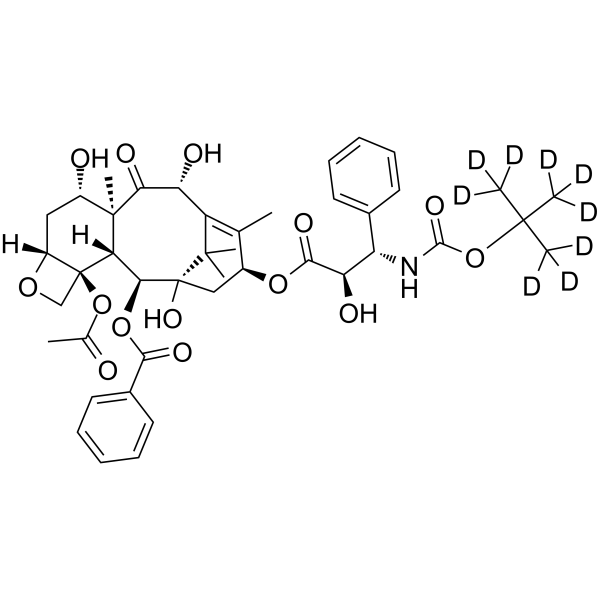
Cat. No.: HY-B0011S
CAS No.: 940867-25-4
Synonyms: RP-56976-d9
Docetaxel-d9 is the deuterium labeled Docetaxel. Docetaxel (RP-56976) is a microtubule?depolymerization inhibitor, with an IC50 of 0.2 μM. Docetaxel attenuates the effects of?bcl-2 and bcl-xL gene expression. Docetaxel arrests the cell cycle at G2/M and leads to cell apoptosis. Docetaxel has anti-cancer activity .
loading...
    loading...
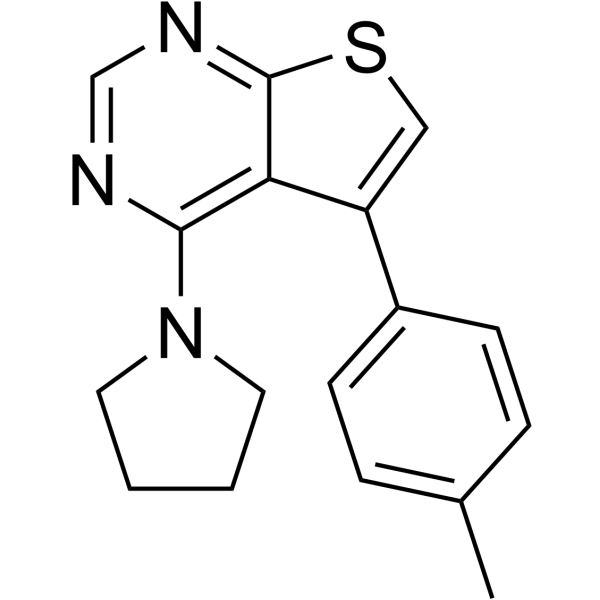
Cat. No.: HY-122236
CAS No.: 342595-74-8
Purity:  99.52%
Research Areas:  

Cancer

UMK57 is a MCAK activator and kinetochore-microtubule destabilizer. UMK57 enhances MCAK-dependent microtubule depolymerization, increases kinetochore-microtubule turnover, reduces chromosome mis-segregation and lagging chromosomes, and inhibits cancer cell proliferation. UMK57 triggers adaptive resistance in Aurora B cancer cells via reversible Aurora B signaling pathway alterations. UMK57 can be used for the research of solid tumors .
loading...
    loading...
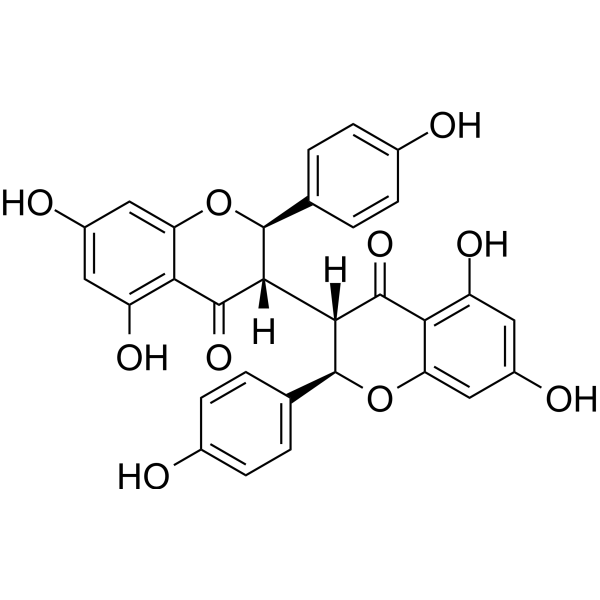
Cat. No.: HY-N10093
CAS No.: 69618-96-8
Synonyms: Chamaejasmin
Chamaejasmine (Chamaejasmin) is a natural biflavonoid found in the roots of Stellera chamaejasme, exhibiting antitumor activity. Chamaejasmine inhibits Bcl-2, upregulates Bax, and induces cleavage of caspase-9/-3 and PARP. Chamaejasmine induces ROS production, Δψm loss, cytochrome c release, G2/M arrest, apoptosis, and autophagy. Chamaejasmine induces apoptosis and autophagy through activation of AMPK and inhibition of mTOR, and inhibits microtubule depolymerization by binding to β-tubulin. Chamaejasmine inhibits IL-4, IgE, β-hexosaminidase, and mast cell infiltration, and improves skin barrier function in AD models. Chamaejasmine exhibits cytotoxicity against various cancer cells. Chamaejasmine can be used in research related to various cancers such as lung adenocarcinoma and osteosarcoma, as well as atopic dermatitis .
loading...
    loading...
Cat. No.: HY-W250112
CAS No.: 8068-05-1
Lignin alkali acts as a decomposer, depolymerizer and structural modifier. Lignin alkali is recovered from lignocellulosic biomass via alkaline pretreatment. Lignin alkali consists of p-hydroxyphenyl, guaiacyl and syringyl propanoid units. Lignin alkali can be custom-converted into high-value-added chemicals and materials. Lignin alkali exhibits significant application potential in the fields of biomass refining and high-value utilization .
loading...
    loading...
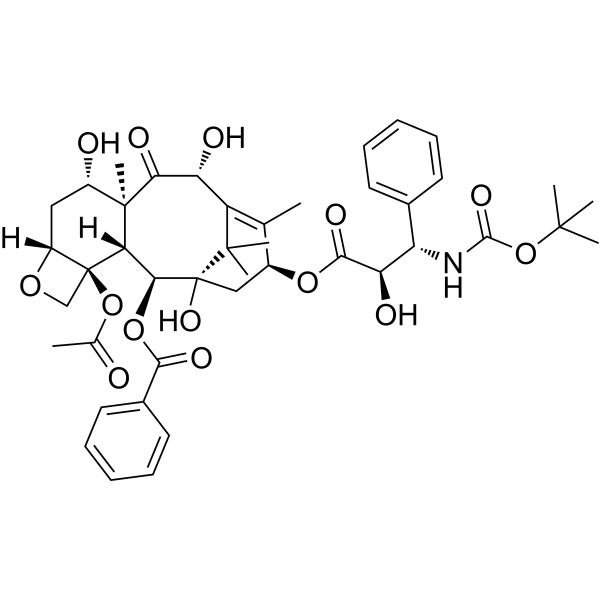
Cat. No.: HY-B0011R
CAS No.: 114977-28-5
Synonyms: RP-56976 (Standard)
Docetaxel (Standard) is the analytical standard of Docetaxel. This product is intended for research and analytical applications. Docetaxel (RP-56976) is a microtubule depolymerization inhibitor, with an IC50 of 0.2 μM. Docetaxel attenuates the effects of bcl-2 and bcl-xL gene expression. Docetaxel arrests the cell cycle at G2/M and leads to cell apoptosis. Docetaxel has anti-cancer activity .
loading...
    loading...
Cat. No.: HY-125972
CAS No.: 1263893-98-6
Purity:  98.01%
zr17-2 is a cold inducible RNA-binding protein (CIRBP) agonist. zr17-2 has anti-inflammatory and anti-oxidant and can be used for the study of myocardial infarction. zr17-2 is a hypothermia mimetic molecule that reduces oxidative stress-induced retinal cell death .
loading...
    loading...
Cat. No.: HY-U00446
CAS No.: 290814-68-5
Research Areas:  

Cancer

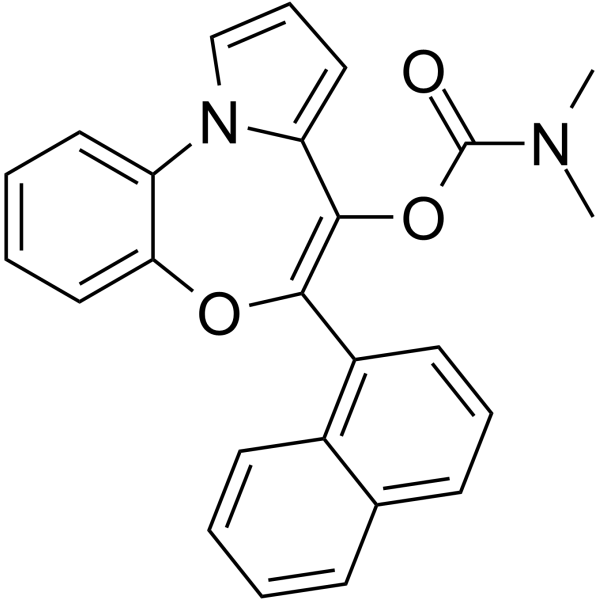
PBOX 6 is a pyrrolo-1,5-benzoxazepine (PBOX) compound, acts as a microtubule-depolymerizing agent and an apoptotic agent.
loading...
    loading...
Cat. No.: HY-N6772
CAS No.: 36011-19-5
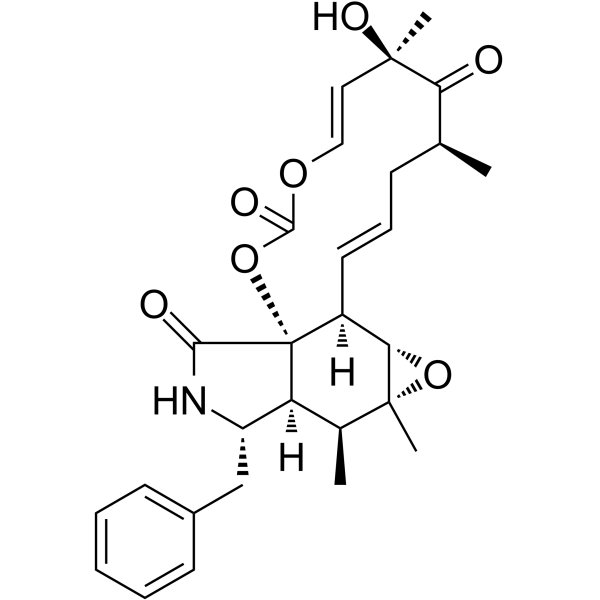
Cytochalasin E, an epoxide containing Aspergillus-derived fungal metabolite, inhibits angiogenesis and tumor growth. Cytochalasin E is a potent actin depolymerization agent, and it binds and caps the barbed end of actin filaments to prevent actin elongation .
loading...
    loading...
Cat. No.: HY-148128
CAS No.: 1802498-63-0
Purity:  98.53%
Research Areas:  

Cancer

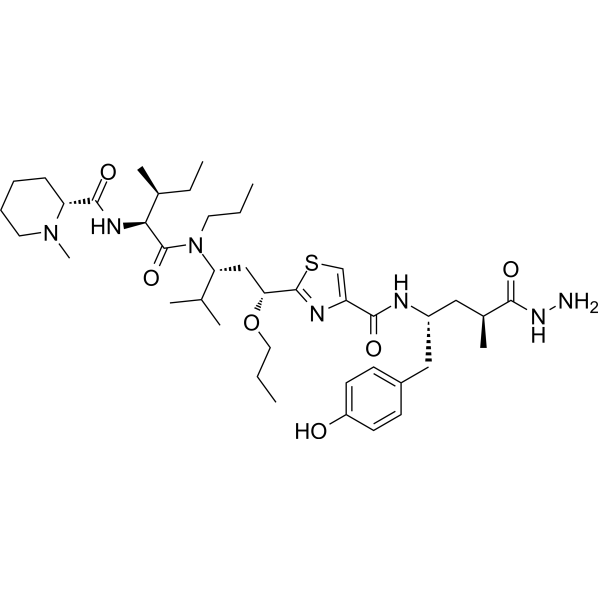
TAM470 is a novel cytolysin, inhibiting tubulin polymerization and microtubule depolymerization. TAM470 can be used in the synthesis of OMTX705 as payload molecule, OMTX705 is a novel FAP-targeting antibody-drug conjugates (ADCs) with antitumor activity .
loading...
    loading...
Cat. No.: HY-W117986
CAS No.: 352525-91-8
Aβ aggregation-IN-1 (Compound 1b) is a β-amyloid aggregation inhibitor/depolymerizer, with IC50 values of 3.92 μM and 7.19 μM, respectively. Aβ aggregation-IN-1 inhibits the activation of preformed β-amyloid fibrils, reactive oxygen species (ROS) and Caspase-3. Aβ aggregation-IN-1 can be used in research related to Alzheimer's disease .
loading...
    loading...
Cat. No.: HY-W008581
CAS No.: 1035-77-4
Synonyms: 3-O-Methyl estradiol; 17β-Estradiol 3-methyl ether; 3-Methoxyestradiol
Estradiol 3-methyl ether (EDME) is a highly selective TRPML1 ion channel antagonist and microtubule (microtubule) depolymerizing agent, with IC50 values of 0.22 μM and 3.8 μM against TRPML1 and TRPML2, respectively; it shows no activity against TRPML3. Estradiol 3-methyl ether induces the disruption of cytoplasmic microtubule networks in mammalian cells, with an EC50 of 9 μM. Independent of estrogen receptors, Estradiol 3-methyl ether blocks autophagy (autophagy), TFEB nuclear translocation, and inhibits the migration and invasion of triple-negative breast cancer cells by suppressing TRPML1. Estradiol 3-methyl ether is applicable for relevant research on triple-negative breast cancer .
loading...
    loading...
Cat. No.: HY-N7536
CAS No.: 510-22-5
Voacangine is an antagonist for TRPV1 and TRPM8 but as an agonist for TRPA1 (EC50=8 μM). Voacangine competitively blockes capsaicin binding to TRPV1 (IC50=50 μM). Voacangine competitively inhibits the binding of menthol to TRPM8 (IC50=9 μM) and it shows noncompetitive inhibition against icilin (IC50=7 μM). Voacangine selectively abrogates chemical agonist-induced TRPM8 activation and did not affect cold-induced activation. Voacangine is an alkaloid isolated from the root bark of Voacanga africana .
loading...
    loading...
Cat. No.: HY-N7526R
CAS No.: 475-38-7
Synonyms: DHNQ (Standard); 5,8-Dihydroxy-1,4-naphthoquinone (Standard)
Naphthazarin (DHNQ) is a naturally occurring compound. Naphthazarin is effective by various cellular mechanisms including oxidative stress, activation of mitochondrial apoptosis-inducing factor (AIF), depolymerization of microtubules, interference with lysosomal function and p53-dependent p21 activation. Naphthazarin triggers apoptosis and has anti-tumor effects .
loading...
    loading...
Cat. No.: HY-169183
Target:  

Myosin

Research Areas:  

Others

Myokinasib-II is a MLCK1 inhibitor with an IC50 of 4.4 μM. Myokinasib-II induces cell cortex softening, impairs cell migration capacity, induces multinucleation, reduces cell stiffness, alters membrane tether dynamics, decreases actomyosin tension and changes nuclear morphology. Myokinasib-II is a MLCK1 chemical biology probe with a unique structure that does not depolymerize tubulin and maintains cell viability even under high-concentration treatment in fibroblasts .
loading...
    loading...
Cat. No.: HY-W002112S
CAS No.: 66148-18-3
Synonyms: Nornicotine-d4
(±)-Nornicotine-d4 is the deuterium labeled (±)-Nornicotine (HY-W002112). (±)-Nornicotine is a major metabolite of Nicotine. (±)-Nornicotine is a partial nAChRs agonist, specifically activating receptor subtypes containing α7 and α6 subunits. (±)-Nornicotine disrupts β-catenin and ZO-1, and induces F-actin depolymerization. (±)-Nornicotine supports self-administration behavior. (±)-Nornicotine can be used in the research of atherosclerosis, Alzheimer's disease, and schizophrenia .
loading...
    loading...
Cat. No.: HY-124689
CAS No.: 1128165-86-5
Purity:  ≥99.0%
Target:  

Arp2/3 Complex

Research Areas:  

Metabolic Disease Cancer

TR-100 is a Tpm3.1 inhibitor that binds to and disrupts Tpm3.1-containing Actin filaments, enhancing the depolymerizing effect of Tpm3.1 on actin without altering actin-tropomyosin binding. TR-100 induces actin cytoskeleton rearrangement. TR-100 shortens membrane nanotubes and alters tube thickness in a concentration-dependent manner. TR-100 increases basal insulin secretion and inhibits glucose-stimulated insulin secretion. TR-100 inhibits insulin-stimulated glucose uptake. TR-100 can be used for research on B lymphoma .
loading...
    loading...
Cat. No.: HY-116920
CAS No.: 646-23-1
Research Areas:  

Cancer

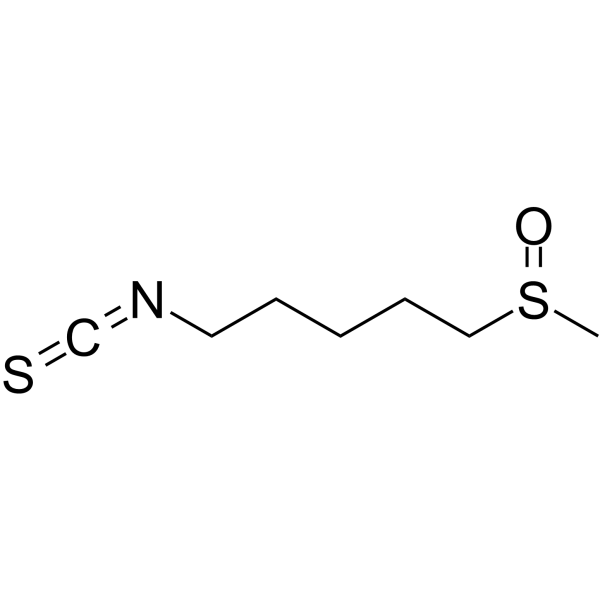
Alyssin, found in Cruciferous Vegetables, exerts anticancer activity in HepG2 by increasing intracellular reactive oxygen species and tubulin depolymerization .
loading...
    loading...
Cat. No.: HY-101287
CAS No.: 1346169-92-3
Purity:  99.63%
Research Areas:  

Cancer

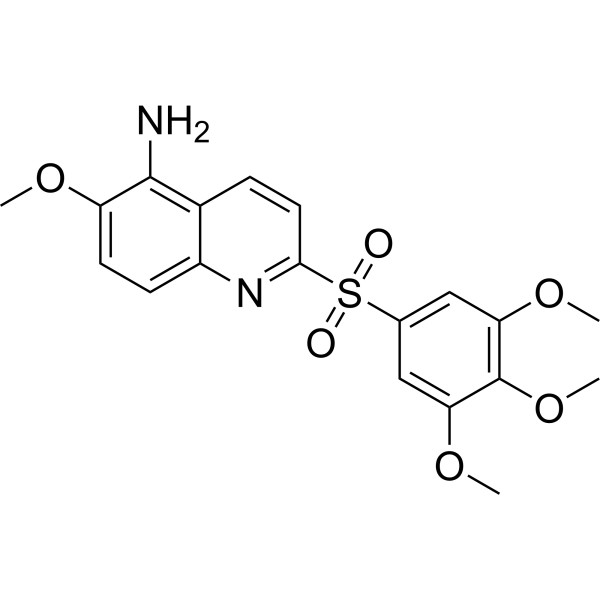
MPT0B392, an orally active quinoline derivative, induces c-Jun N-terminal kinase (JNK) activation, leading to apoptosis. MPT0B392 inhibits tubulin polymerization and triggers induction of the mitotic arrest, followed by mitochondrial membrane potential loss and caspases cleavage by activation of JNK and ultimately leads to apoptosis. MPT0B392 is demonstrated to be a novel microtubule-depolymerizing agent and enhances the cytotoxicity of sirolimus in sirolimus-resistant acute leukemic cells and the multidrug resistant cell line .
loading...
    loading...
Cat. No.: HY-N1171
CAS No.: 18457-44-8
Synonyms: Taxinin B
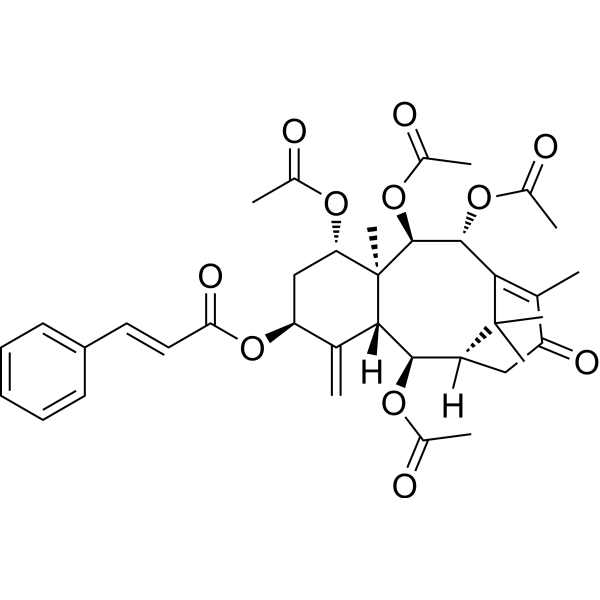
Taxinine B is a taxoid that can be isolated from Japanese Yew Taxus Cuspid. Taxinine B inhibits CaCl2-induced depolymerization of microtubule. Taxinine B is useful for overcoming multidrug resistance in tumor cells .
loading...
    loading...
Cat. No.: HY-157800
CAS No.: 1983180-82-0
Purity:  99.70%
Synonyms: TRX-E-009-1
Research Areas:  

Cancer

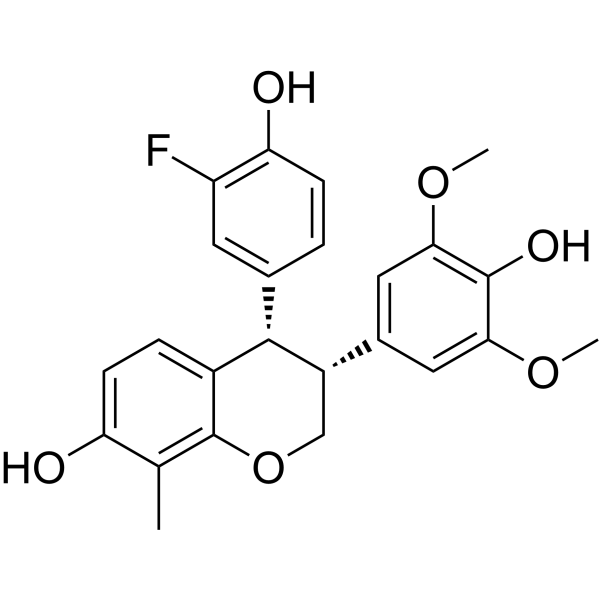
Trilexium (TRX-E-009-1) is a third-generation of benzopyran structurally related to TRX-E-002-1 (HY-114250). Trilexium increases p21 protein expression and induces apoptosis. Trilexium depolymerizes microtubules. Trilexium shows broad anti-cancer activity .
loading...
    loading...

