1443 Results for "

CDK

" in MedChemExpress (MCE) Product Catalog:
Products (1443)

1443 Results for "CDK" in MCE Product Catalog:

  • Categories Recommended:
    More
Cat. No.: HY-132862
CAS No.: 2711006-74-3
Target:  

PROTACs

Research Areas:  

Cancer

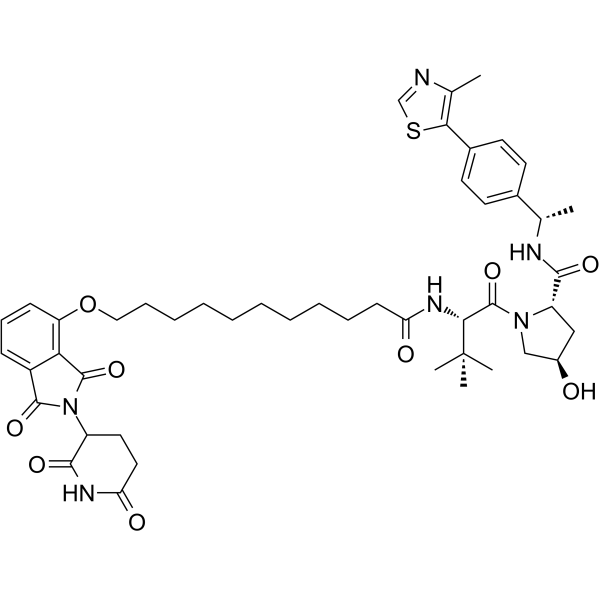
ZXH-4-137 is a CRBN PROTAC degrader. ZXH-4-137 brings CRBN and VHL E3 ligase into proximity, induces CRBN ubiquitination and proteasomal degradation, and exhibits high selectivity for CRBN. ZXH-4-137 blocks the degradation of CRBN-dependent target proteins such as GSPT1 and CDK9. ZXH-4-137 serves as a chemical knockdown tool compound for investigating CRBN-dependent biological processes .
loading...
    loading...
Cat. No.: HY-148366
Purity:  98.99%
Research Areas:  

Cancer

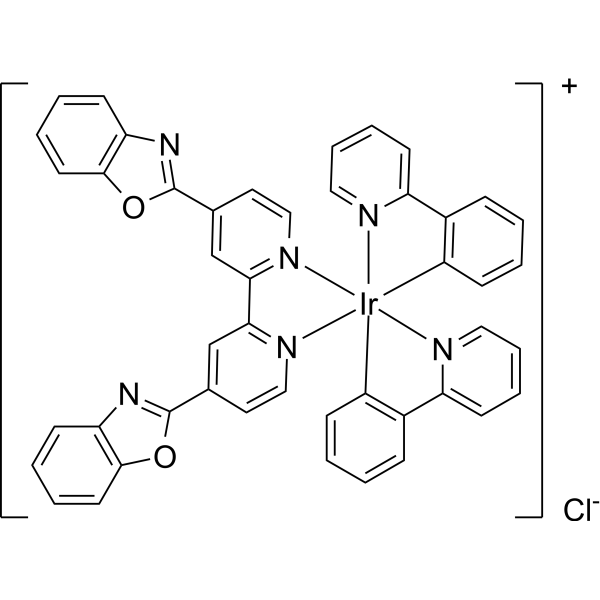
NecroIr2 is an iridium(III) complex, serves as necroptosis inducers in Cisplatin (HY-17394)-resistant lung cancer cells (A549R). NecroIr2 selectively accumulates in mitochondria, leading to oxidative stress and loss of mitochondrial membrane potential (MMP). NecroIr2 activates receptor-interacting serine-threonine kinase 3 (RIPK3) and mixed lineage kinase domain-like pseudokinase (MLKL), and regulates CDK4 expression .
loading...
    loading...
Cat. No.: HY-15163A
CAS No.: 1354567-82-0
Target:  

FLT3 JAK CDK

Research Areas:  

Cancer

Zotiraciclib hydrochloride is a novel small molecule multi-target enzyme inhibitor with activity in inhibiting tumor growth. Zotiraciclib hydrochloride exerts its anti-tumor effect by reducing the level of Myc through inhibiting cyclin-dependent kinase 9 (CDK9). Zotiraciclib hydrochloride may be useful for inhibiting cancers that cross the blood-brain barrier. The high protein level of MCL-1 of Zotiraciclib hydrochloride is associated with survival, suggesting that it may serve as a prognostic factor and inhibitory target in further studies .
loading...
    loading...
Cat. No.: HY-168205
Target:  

HSP Apoptosis

Research Areas:  

Cancer

HSP90-IN-33 (compound 24e) is a potent Hsp90 inhibitor with Kd values of ≥200, 7.3 µM for Hsp90α, Hsp90β, respectively. HSP90-IN-33 induces apoptosis and cell cycle arrest at G0/G1 phase. HSP90-IN-33 decreases the protein expression of ERα, CDK4 and Akt .
loading...
    loading...
Cat. No.: HY-180484
CAS No.: 2974454-59-4
Research Areas:  

Cancer

PKMYT1-IN-12 (Compound 4) is a selective inhibitor of PKMYT1, with an IC₅₀ of 2.6 nM. PKMYT1-IN-12 can effectively inhibit the phosphorylation of CDK1, with an IC₅₀ of 44 nM. PKMYT1-IN-12 is a target protein ligand that can be used for the synthesis of PROTAC D16-M1P2 (HY-180485) .
loading...
    loading...
Cat. No.: HY-181030
Research Areas:  

Cancer

BDE30671203 is a highly selective PLK1 inhibitor (IC50 = 2.163 nM). BDE30671203 induces G2/M phase arrest and Apoptosis. BDE30671203 downregulates key cell cycle regulators (CDC20, CDK1) and the anti-apoptotic gene Bcl-2. BDE30671203 exhibits anticancer activity against non-small cell lung cancer, large cell lung cancer, and liver cancer .
loading...
    loading...
Cat. No.: HY-181763
Research Areas:  

Cancer

Tubulin-IN-65 (Compound Imp-18) is a Tubulin inhibitor. Tubulin-IN-65 exhibits tubulin-disrupting activity. Tubulin-IN-65 disrupts microtubule integrity. Tubulin-IN-65 induces Apoptosis and increases the expression of CDK1 and Cyclin B1. Tubulin-IN-65 possesses anticancer activity against breast cancer and colorectal cancer. Tubulin-IN-65 can be used in research related to triple-negative breast cancer and colorectal adenocarcinoma .
loading...
    loading...
Cat. No.: HY-182906
CAS No.: 3040320-93-9
Target:  

Wee1 CDK

Research Areas:  

Cancer

XL495 is an potent, selective and orally active PKMYT1 inhibitor. XL495 inhibits CDK1 Thr14 phosphorylation and induces KAP1 Ser824 phosphorylation in xenograft tumors. XL495 reduces tumor growth in colorectal and breast cancer xenograft models, and achieves tumor regression with DNA-damaging agents in colorectal cancer xenograft models. XL495 can be used for the research of cancer, such as breast cancer and colorectal cancer .
loading...
    loading...
Cat. No.: HY-N11439
CAS No.: 87084-99-9
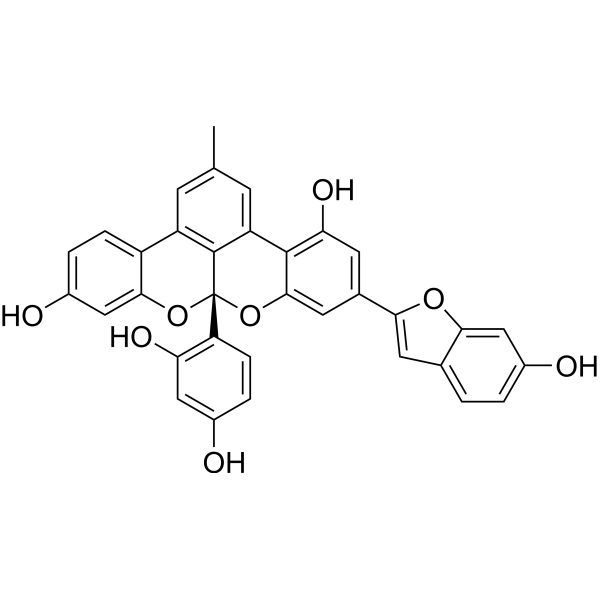
Albanol B is an arylbenzofuran derivative which can be isolated from mulberries. Albanol B exhibits anti-Alzheimer's disease, anti-bacterial and antioxidant activities. Albanol B inhibits cancer cells proliferation, down-regulates CDK1 expression. Albanol B also induces cell cycle arrest at G2/M and apoptosis. And Albanol B induces mitochondrial ROS production and increases the phosphorylation levels of AKT and ERK1/2 .
loading...
    loading...
Cat. No.: HY-N1513
CAS No.: 98665-19-1
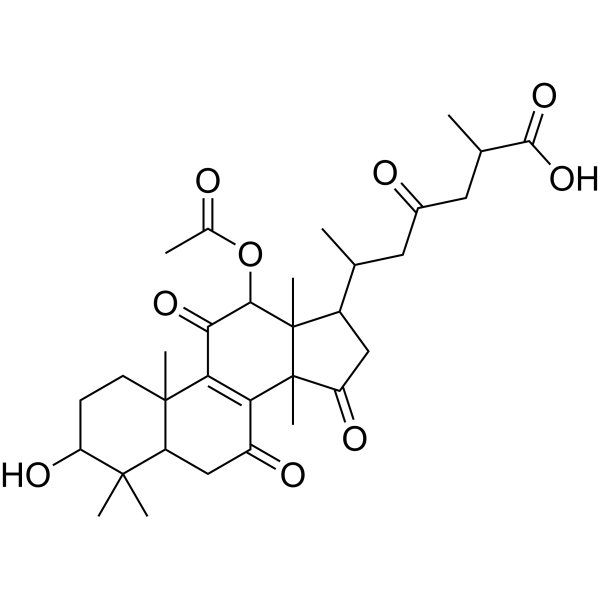
Ganoderic acid H is a hydroxylated lanostane-type triterpenoid derived from Ganoderma lucidum with anticancer activity. Ganoderic acid H inhibits the constitutive transactivation activity of AP-1 and NF-κB; it also downregulates the secretion of uPA and the expression of CDK4, and suppresses the growth, adhesion, migration and invasion of cancer cells. Ganoderic acid H inhibits HIV-1 protease in vitro. Ganoderic acid H can be used in studies related to breast cancer and HIV infection .
loading...
    loading...
Cat. No.: HY-W013386R
CAS No.: 91300-60-6
LY83583 (Standard) is the analytical standard of LY83583 (HY-W013386). This product is intended for research and analytical applications. LY83583 is inhibitor of soluble guanylate cyclase (sGC) with the ability to target the cGMP signaling pathway. LY83583 inhibits the kinase activity-related proliferation of tumor cells by inducing the Cdk inhibitor p21. LY83583 can be used for the study of cancers (colorectal cancer, breast cancer and melanoma) and cardiovascular disease .
loading...
    loading...
Cat. No.: HY-120917
CAS No.: 1597438-86-2
Synonyms: ML320
BRD1172 (ML320) is a selectivity GSK3β inhibitor with an IC50 of 24 nM for GSK3β over CDK5. BRD1172 significantly inhibits GSK3β-mediated Tau phosphorylation in SH-SY5Y cells, and relieves negative regulation by GSK3β on β-catenin degradation and TCF/LEF promoter activities. BRD1172 can be used for Alzheimer’s disease, cardiac hypertrophy and cancers research .
loading...
    loading...
Cat. No.: HY-168333
CAS No.: 2727088-38-0
Target:  

5-HT Receptor mTOR CDK

Research Areas:  

Neurological Disease

5-HT6 inverse agonist 1 (Compound 33) is an antagonist for 5-HT6 receptor with a Ki of 23 nM and a Kb of 6.62 nM. 5-HT6 inverse agonist 1 inhibits the 5-HT6R mediated Cdk5 and mTOR signaling pathway. 5-HT6 inverse agonist 1 reduces tactile hypersensitivity in spinal nerve ligation (SNL)-induced rat model .
loading...
    loading...
Cat. No.: HY-172970
CAS No.: 3093763-71-1
Research Areas:  

Cancer

HQY1428 is an orally active CDK12 inhibitor. HQY1428 inhibits DNA replication, causes G2/M arrest in SKOV3 cells, induces DNA double-strand breaks and apoptosis. HQY1428 has anti-tumor activity in the SKOV3 xenograft mouse model. HQY1428 combined with the HER2 inhibitor Lapatinib (HY-50898) in the NCI-N87 xenograft mouse model produces a synergistic therapeutic effect .
loading...
    loading...
Cat. No.: HY-175729
CAS No.: 3036231-62-3
Target:  

CDK

Research Areas:  

Cancer

Cyclin A/B RxL-IN-1 is a inhibitor targeting the Cyclin A/B RxL interaction at the hydrophobic patch (HP). Cyclin A/B RxL-IN-1 inhibits Cyclin A with an IC50 of 0.12 μM. Cyclin A/B RxL-IN-1 demonstrates antitumor efficacy in mouse cell line-derived xenograft (CDX) models. CDK-IN-19 can be used for the study of E2F-driven cancers such as small-cell lung cancer (SCLC) .
loading...
    loading...
Cat. No.: HY-178227
CAS No.: 2319609-67-9
KY19334 is a CXXC5-DVL inhibitor. KY19334 can activate the Wnt/β-catenin pathway by inhibiting CXXC5-Dvl interaction. KY19334 can inhibit cancer cells proliferation, migration, invasion and transformation by inhibiting CDK1. KY19334 can accelerate wound healing and exert regenerative effects. KY19334 can be used for the researches of cancer, inflammation, metabolic and neurological disease, such as cutaneous squamous cell carcinoma and diabetes .
loading...
    loading...
Cat. No.: HY-189206
Research Areas:  

Cancer

MM129 is an anticancer agent. MM129 inhibits key oncogenic signaling molecules such as AKT, mTOR, and CDK2, and downregulates the expression of PD-L1. MM129 induces cell cycle arrest. MM129 induces Apoptosis. MM129 induces DNA damage. MM129 induces oxidative stress. MM129 exhibits chemosensitizing properties. MM129 restores the expression of E-cadherin. MM129 can be used in the research of colorectal cancer .
loading...
    loading...
Cat. No.: HY-189307
Target:  

Wee1 CDK DNA/RNA Synthesis

Research Areas:  

Cancer

WEE1-IN-15 is an ATP-competitive, selective WEE1 kinase inhibitor (IC50: 42 nM). WEE1-IN-15 abolishes CDK1 phosphorylation. WEE1-IN-15 induces DNA damage and replication stress, and increases the S-phase cell population. WEE1-IN-15 shows selective anticancer effects on colorectal cancer organoids. WEE1-IN-15 can be used for research on colorectal cancer .
loading...
    loading...
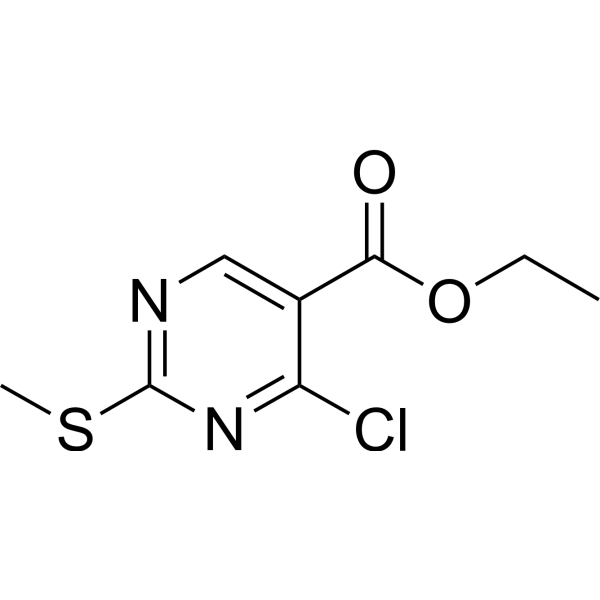
Cat. No.: HY-76558
CAS No.: 5909-24-0
Ethyl 4-chloro-2-(methylthio) pyrimidine-5-carboxylate is a pharmaceutical intermediate. Ethyl 4-chloro-2-(methylthio) pyrimidine-5-carboxylate can be used to synthesize inhibitors of various kinases (e.g., Cdk4, PDGF, FGF, EGF). Ethyl 4-chloro-2-(methylthio) pyrimidine-5-carboxylate is applicable to research related to cancer and fungal infections .
loading...
    loading...
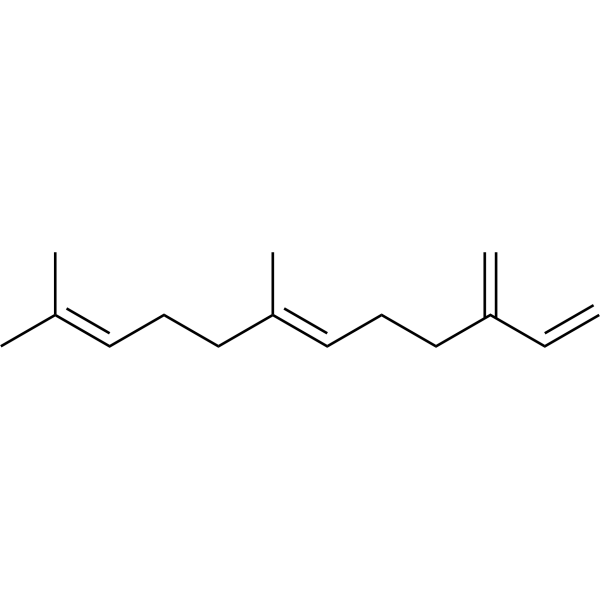
Cat. No.: HY-N7364
CAS No.: 18794-84-8
Synonyms: trans-β-Farnesene
(E)-β-Farnesene (trans-β-Farnesene) is an aphid alarm pheromone, which can be found in Phlomis aurea Decne essential oil. (E)-β-Farnesene shows good binding score with a value of -30.64 kcal/mol to the CDK2 receptor. (E)-β-Farnesene also exhibits good affinity to odorant-binding protein 3 (OBP3). (E)-β-Farnesene can be used as a feeding stimulant for the sand fly Lutzomyia longipalpis .
loading...
    loading...

