
82 Results for "

Advanced glycation

" in MedChemExpress (MCE) Product Catalog:
Products (82)

82 Results for "Advanced glycation" in MCE Product Catalog:

17
17 Publications Verification
Cat. No.: HY-50682
CAS No.: 603148-36-3
Synonyms: TTP488; PF-04494700
Target:  

Amyloid-β

Research Areas:  

Neurological Disease Cancer

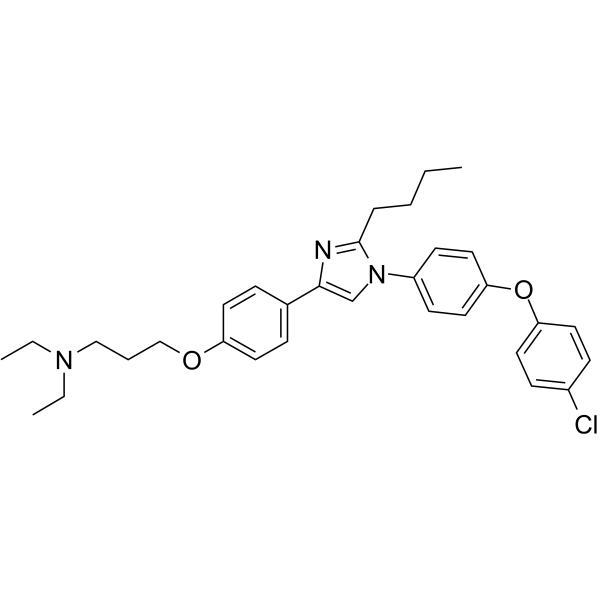
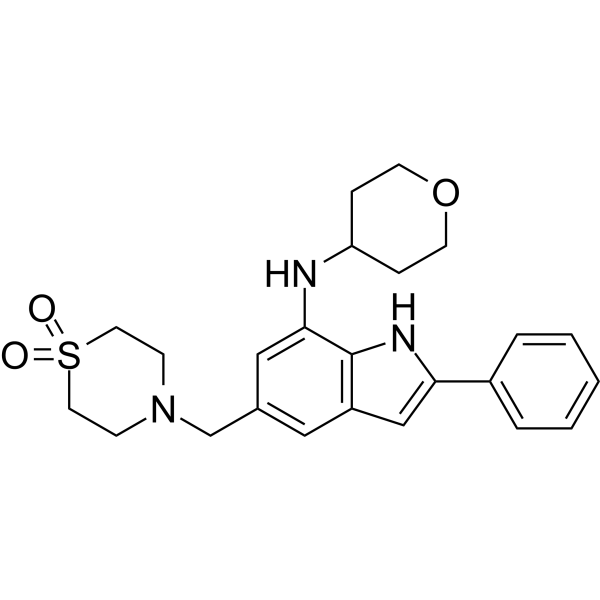
Azeliragon (TTP488) is an orally bioavailable inhibitor of the receptor for advanced glycation end products (RAGE) in development as a potential treatment to slow disease progression with mild Alzheimer’s disease (AD) . Azeliragon also can cross the blood-brain barrier (BBB) .
loading...
    loading...
11
11 Cited Publications
Cat. No.: HY-N0033
CAS No.: 94079-81-9
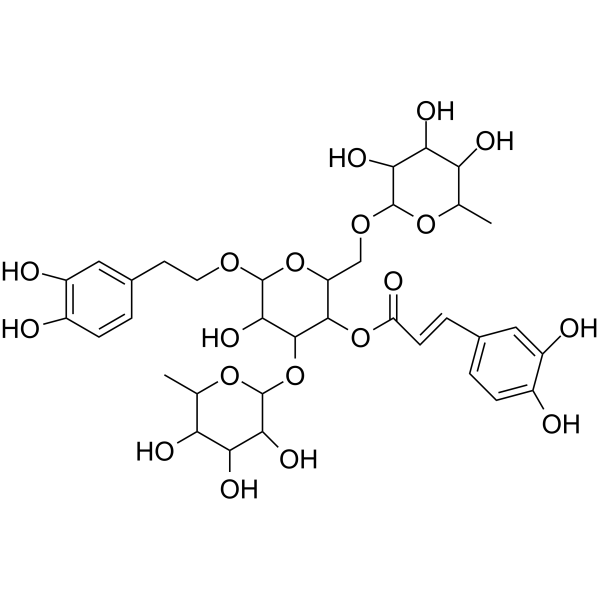
Poliumoside, a caffeoylated phenylpropanoid glycoside, is isolated from Brandisia hancei stems and leaves. Poliumoside is an advanced glycation end product (AGE) formation and rat lens aldose reductase (RLAR) inhibitor, with IC50s of 19.69 and 8.47 μM, respectively. Poliumoside also has antiinflammatory and antioxidant activity .
loading...
    loading...
10
10 Cited Publications
Cat. No.: HY-B1041
CAS No.: 1937-19-5
Synonyms: Pimagedine hydrochloride; GER-11; Aminoguanidinium hydrochloride
Target:  

NO Synthase Apoptosis ERK

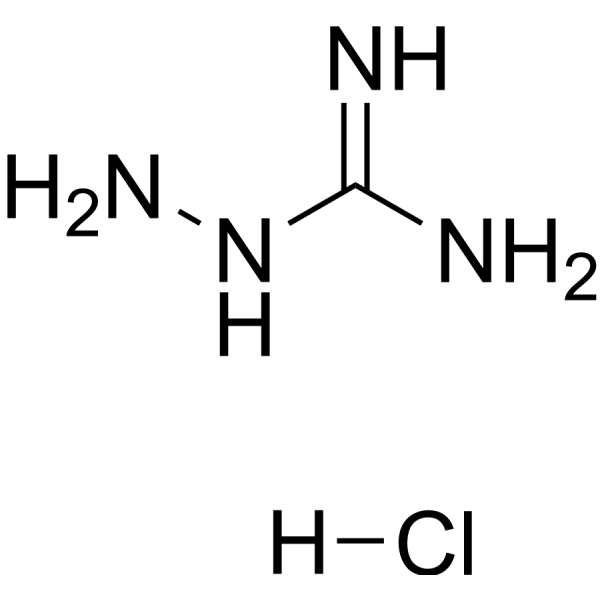
Aminoguanidine (Pimagedine) hydrochloride is an inhibitor of diamine oxidase (DAO) and nitric oxide synthase (NOS). Aminoguanidine hydrochloride can reduce the formation of advanced glycation end products (AGEs). Aminoguanidine hydrochloride has a dose-dependent inhibitory effect on Doxorubicin (HY-15142)-induced cell apoptosis. Aminoguanidine hydrochloride has antioxidant properties. Aminoguanidine hydrochloride can be used in the research of diabetic nephropathy .
loading...
    loading...
10
10 Cited Publications
Cat. No.: HY-W020772
CAS No.: 996-19-0
Synonyms: Pimagedine hemisulfate; GER-11 hemisulfate; Aminoguanidinium hemisulfate
Target:  

NO Synthase Apoptosis ERK

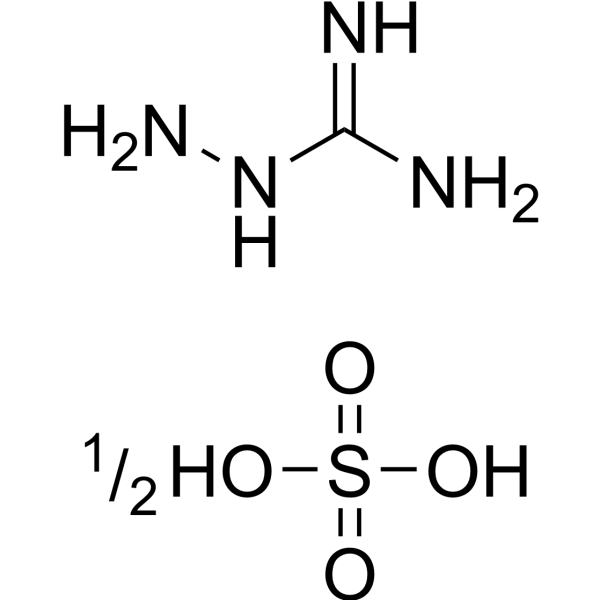
Aminoguanidine (Pimagedine) hemisulfate is an inhibitor of diamine oxidase (DAO) and nitric oxide synthase (NOS). Aminoguanidine hemisulfate can reduce the formation of advanced glycation end products (AGEs). Aminoguanidine hemisulfate has a dose-dependent inhibitory effect on Doxorubicin (HY-15142)-induced cell apoptosis. Aminoguanidine hemisulfate has antioxidant properties. Aminoguanidine hemisulfate can be used in the research of diabetic nephropathy .
loading...
    loading...
6
6 Cited Publications
Cat. No.: HY-141537
CAS No.: 1638200-22-2
Purity:  98.71%
Research Areas:  

Inflammation/Immunology

ABR-238901 is an orally active and potent S100A8/A9 blocker and inhibits S100A8/A9 interaction with its receptors RAGE (receptor for advanced glycation endproducts) and TLR4 (toll-like receptor 4). ABR-238901 has the potential for myocardial infarction (MI) research .
loading...
    loading...
6
6 Cited Publications
Cat. No.: HY-106024B
CAS No.: 341028-37-3
Purity:  99.82%
Synonyms: ALT711
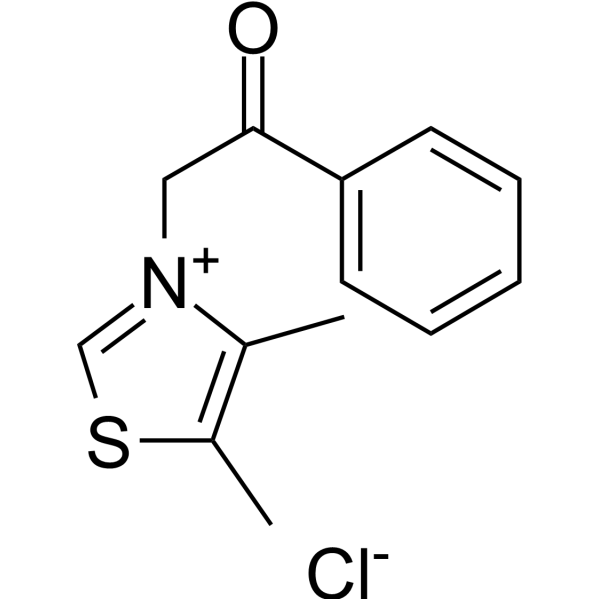
Alagebrium chloride (ALT711) is an advanced glycation end product (AGE) inhibitor.
loading...
    loading...
6
6 Cited Publications
Cat. No.: HY-B1745
CAS No.: 85-87-0
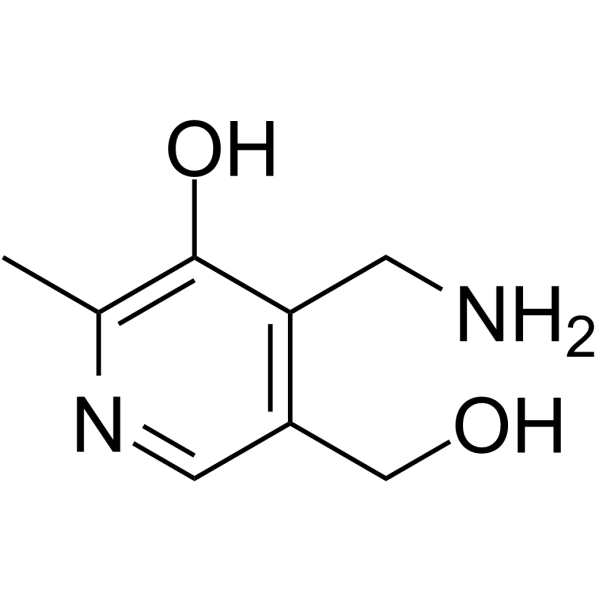
Pyridoxylamine is an advanced glycation end production (AGEs) and lipoxidation end products (ALEs) inhibitor, to protect against diabetes-induced retinal vascular lesions.
loading...
    loading...
6
6 Cited Publications
Cat. No.: HY-B1745A
CAS No.: 524-36-7
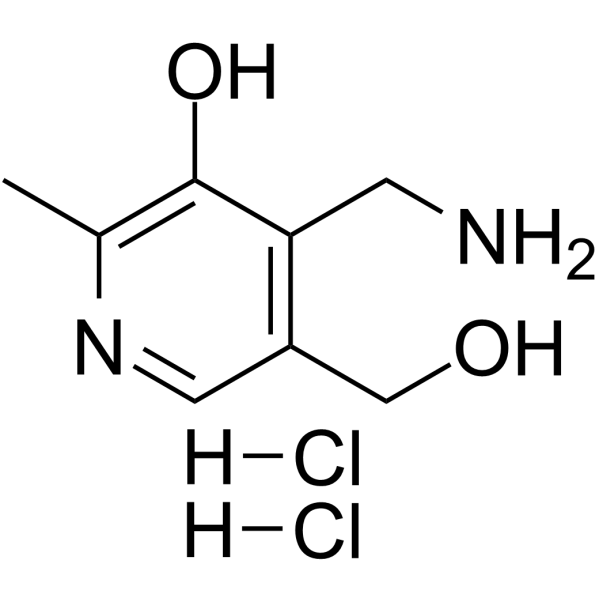
Pyridoxylamine dihydrochloride is an advanced glycation end production (AGEs) and lipoxidation end products (ALEs) inhibitor, to protect against diabetes-induced retinal vascular lesions .
loading...
    loading...
5
5 Cited Publications
Cat. No.: HY-P2268
CAS No.: 1092460-91-7
Target:  

Amyloid-β

Research Areas:  

Inflammation/Immunology Cancer

RAGE antagonist peptide is an advanced glycation end products (RAGE) antagonist. RAGE antagonist peptide prevents RAGE from binding with several of its most important ligands, including HMGB-1, S100P, and S100A4. RAGE antagonist peptide (RAP) possesses anti-tumor and anti-inflammatory activities .
loading...
    loading...
5
5 Cited Publications
Cat. No.: HY-P2268A
Target:  

Amyloid-β

Research Areas:  

Inflammation/Immunology Cancer

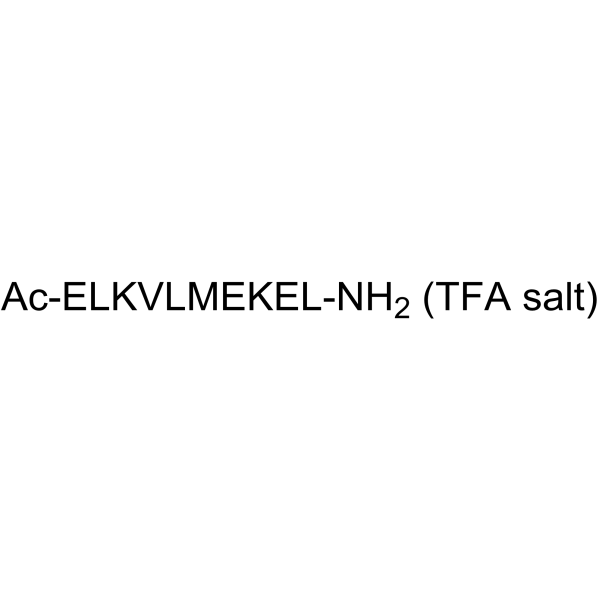
RAGE antagonist peptide TFA is an advanced glycation end products (RAGE) antagonist. RAGE antagonist peptide TFA prevents RAGE from binding with several of its most important ligands, including HMGB-1, S100P, and S100A4. RAGE antagonist peptide TFA possesses anti-tumor and anti-inflammatory activities .
loading...
    loading...
4
4 Cited Publications
Cat. No.: HY-107207
CAS No.: 32602-81-6
Purity:  99.68%
Synonyms: Kaempferol 3-O-neohesperidoside
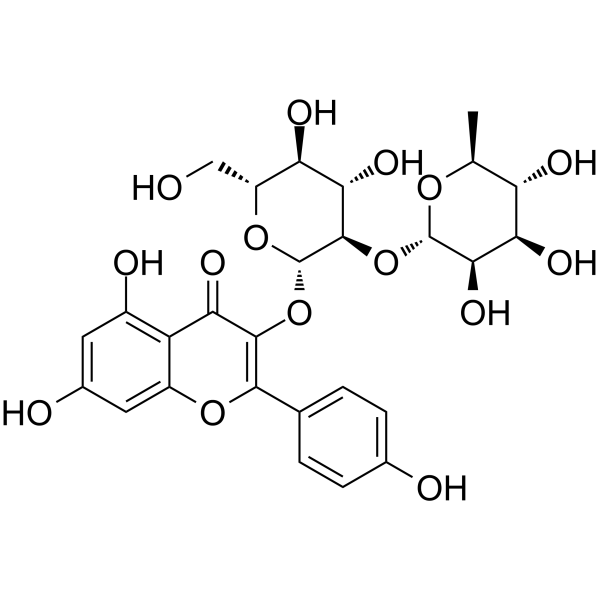
Kaempferol 3-neohesperidoside (Kaempferol 3-O-neohesperidoside) is a flavonoid. Kaempferol 3-neohesperidoside mimics insulin action via the PI3K/PKC pathway, significantly promoting glucose uptake and increasing muscle glycogen content in rat soleus muscles. Kaempferol 3-neohesperidoside also exhibits anti-glycation activity. Kaempferol 3-neohesperidoside binds to albumin through hydrogen bonding and hydrophobic interactions, and inhibits the formation of advanced glycation end products. Kaempferol 3-neohesperidoside can be used in studies of diabetes and its related complications .
loading...
    loading...
3
3 Cited Publications
Cat. No.: HY-B1392
CAS No.: 81161-17-3
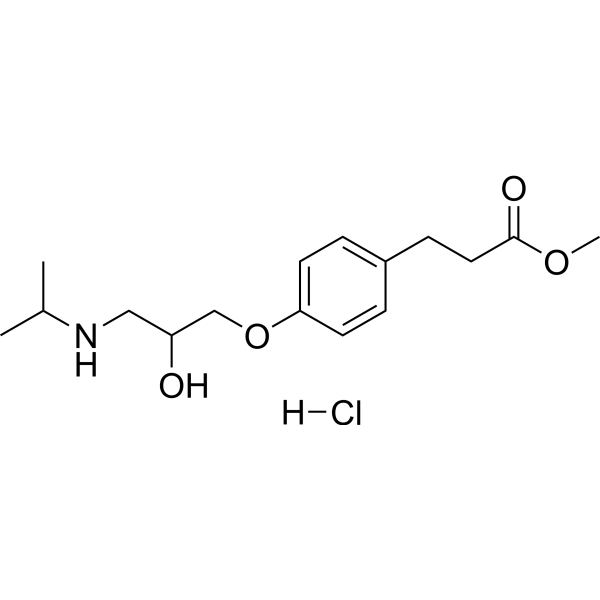
Esmolol hydrochloride is an ultra-short-acting cardioselective β1-adrenergic blocker. Esmolol hydrochloride exerts its antiarrhythmic effect by activating Neurokinin 1 Receptor. Esmolol hydrochloride attenuates post resuscitation myocardial dysfunction. Esmolol hydrochloride improves diabetic wound healing by inhibiting aldose reductase and the production of advanced glycation end products and promoting fibroblast migration. Esmolol hydrochloride can be used to study cardiac diseases such as arrhythmias and diabetic foot ulcers .
loading...
    loading...
2
2 Cited Publications
Cat. No.: HY-N4170
CAS No.: 23725-05-5
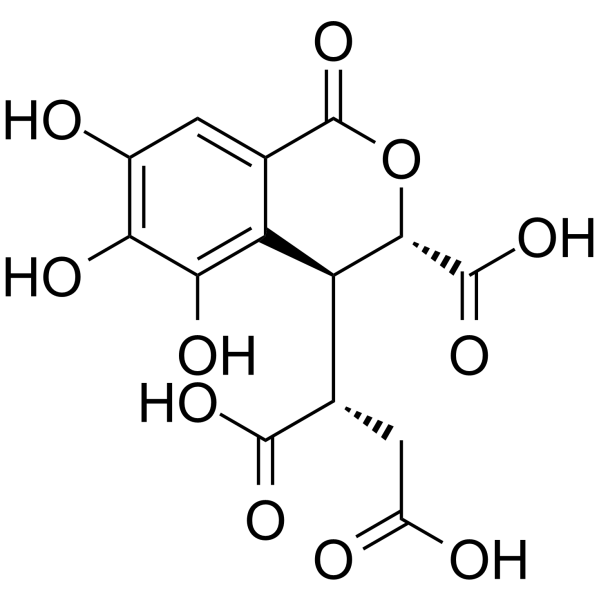
Chebulic acid is a phenolic acid compound isolated from Terminalia chebula with strong antioxidant activity, which breaks protein cross-links induced by advanced glycation end products (AGEs) and inhibits the formation of AGEs. Chebulic acid is effective in controlling elevated metabolic parameters, oxidative stress, and liver damage, supporting its beneficial role in asthma, diabetes, and liver protection .
loading...
    loading...
1
1 Cited Publications
Cat. No.: HY-B1235
CAS No.: 546-88-3
Synonyms: N-Hydroxyacetamide
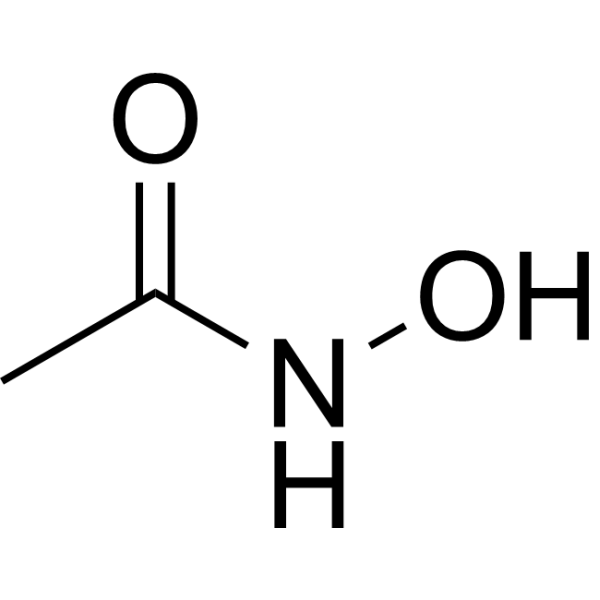
Acetohydroxamic acid is the inhibitor for bacterial and plant urease that can be used for chronic urinary tract infections. Acetohydroxamic acid selectively inhibits arachidonic acid 5-lipoxygenase that is useful in the research of asthma. Acetohydroxamic acid inhibits the formation of advanced glycation end products, and reduces oxidative stress and inflammatory responses. Acetohydroxamic acid exhibits antiviral activity against HIV .
loading...
    loading...
1
1 Cited Publications
Cat. No.: HY-W286743
CAS No.: 5746-04-3
Synonyms: CML; N6-(Carboxymethyl)-L-lysine; Nε-(1-Carboxymethyl)-L-lysine
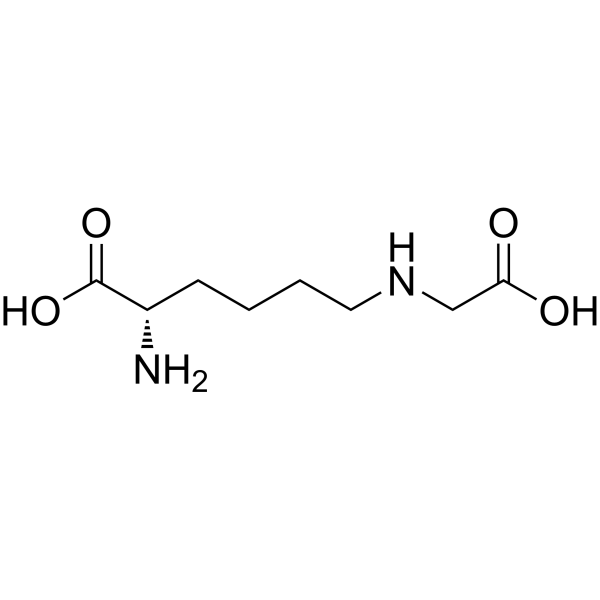
Nε-(Carboxymethyl)-L-lysine (CML) is an orally active advanced glycation end product. Nε-(Carboxymethyl)-L-lysine upregulates the expression of PLK1 and CEP20, and induces the activation of RAGE and ERK/NFκB. Nε-(Carboxymethyl)-L-lysine drives centrosome amplification. Nε-(Carboxymethyl)-L-lysine induces malignant transformation of hepatocytes and promotes the development of hepatocellular carcinoma. Nε-(Carboxymethyl)-L-lysine induces epithelial-mesenchymal transition in osteosarcoma cells and enhances their migration and invasion properties .
loading...
    loading...
1
1 Cited Publications
Cat. No.: HY-N7628
CAS No.: 119170-52-4
Synonyms: Toralactone 9-O-β-D-gentiobioside
Cassiaside C (Toralactone 9-O-β-D-gentiobioside) is a naphthopyrone isolated from the seed of Cassia tora and has inhibitory activity on advanced glycation end products (AGE) formation in vitro .
loading...
    loading...
1
1 Cited Publications
Cat. No.: HY-131528
CAS No.: 86696-86-8
Synonyms: CAS 997
Target:  

TNF Receptor

Tenilsetam (CAS 997) is an antidementia compound. Tenilsetam is an advanced glycation end product (AGE) inhibitor. Tenilsetam inhibits early retinopathy in experimental diabetes rats .
loading...
    loading...
Cat. No.: HY-N7426
CAS No.: 4084-27-9
Synonyms: 3-Deoxy-D-glucosone
3-Deoxyglucosone (3-Deoxy-D-glucosone) is a reactive intermediate of the Maillard reaction and the polyol pathway. 3-Deoxyglucosone rapidly reacts with protein amino groups to form advanced glycation end products (AGEs), such as imidazolone, it is the most specific AGE for 3-DG. 3-Deoxyglucosone synergizes with low glucose to potentiate GLP-1 secretion and is considered as a biomarker for diabetes .
loading...
    loading...
Cat. No.: HY-14892A
CAS No.: 1374639-74-3
Purity:  98.17%
Synonyms: LC15-0444 tartrate
Target:  

Dipeptidyl Peptidase

Research Areas:  

Metabolic Disease

Gemigliptin tartrate (LC15-0444 tartrate) is a highly selective, reversible and competitive dipeptidyl peptidase-4 (DPP-4) inhibitor, with an IC50 of 10.3 nM for human recombinant DPP-4. Gemigliptin tartrate exhibits potent anti-glycation properties. Gemigliptin tartrate can be used for the research of advanced glycation end products (AGE)-related diabetic complications .
loading...
    loading...
Cat. No.: HY-NP165
Synonyms: AGEs
Advanced glycation end products (AGEs) are a series of stable compounds generated through non-enzymatic reactions between reducing sugars and proteins, lipids, or nucleic acids. Advanced glycation end products are often used as targets to evaluate the inhibitory effects of anti-glycation compounds. Advanced glycation end products can be applied to research on diabetes, cardiovascular and cerebrovascular diseases, inflammation, aging, and other conditions .
loading...
    loading...

