1. Search Result
Search Result
Results for "

COMT

" in MedChemExpress (MCE) Product Catalog:

56

Inhibitors & Agonists

1

Screening Libraries

2

Fluorescent Dye

10

Natural
Products

2

Recombinant Proteins

12

Isotope-Labeled Compounds

1

Antibodies

3

Oligonucleotides

Targets Recommended:
Cat. No. Product Name Target Research Areas Chemical Structure
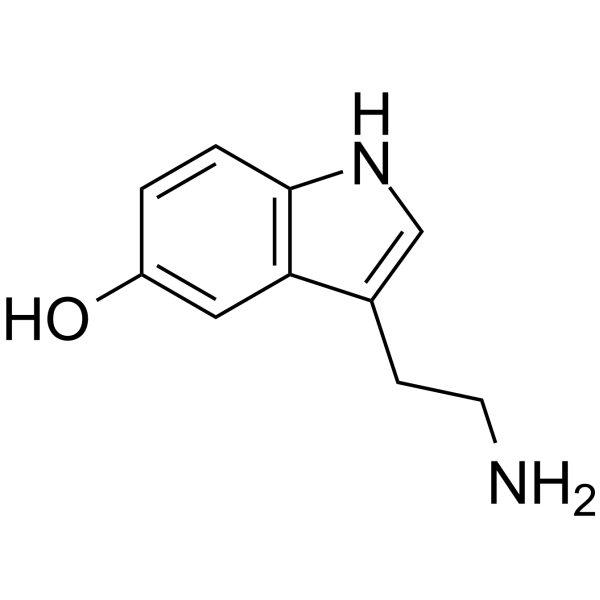
  • HY-B1473A
    Serotonin
    Maximum Cited Publications
    31 Publications Verification

    5-Hydroxytryptamine; 5-HT

    5-HT Receptor COMT Endogenous Metabolite Neurological Disease
    Serotonin is a monoamine neurotransmitter in the CNS and an endogenous 5-HT receptor agonist. Serotonin is also a catechol O-methyltransferase (COMT) inhibitor with a Ki of 44 μM.
    Serotonin
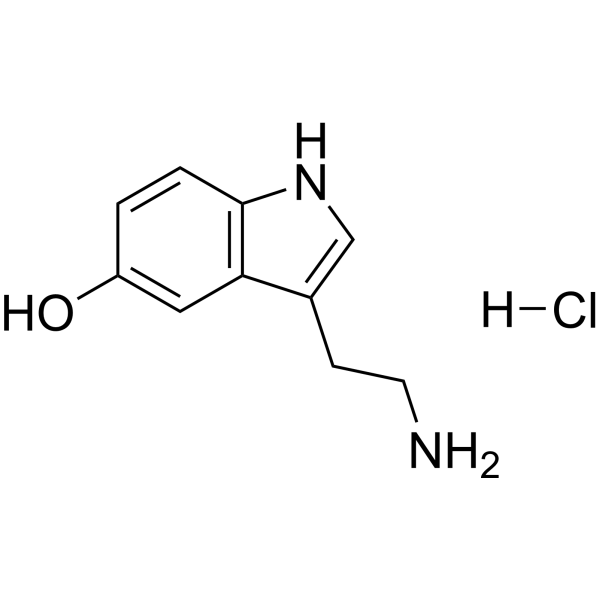
  • HY-B1473
    Serotonin hydrochloride
    Maximum Cited Publications
    31 Publications Verification

    5-Hydroxytryptamine hydrochloride; 5-HT hydrochloride

    5-HT Receptor COMT Endogenous Metabolite Neurological Disease
    Serotonin (5-Hydroxytryptamine) hydrochloride is a monoamine neurotransmitter in the CNS and an endogenous 5-HT receptor agonist, with blood-brain barrier permeability. Serotonin hydrochloride is also a catechol O-methyltransferase (COMT) inhibitor with a Ki of 44 μM.
    Serotonin hydrochloride
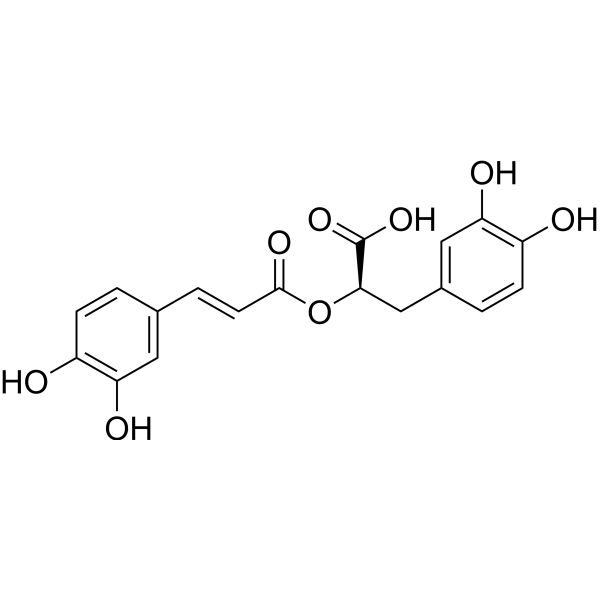
  • HY-N0529
    Rosmarinic acid
    15+ Cited Publications

    Labiatenic acid

    Monoamine Oxidase COMT Apoptosis Endogenous Metabolite Cancer
    Rosmarinic acid is a widespread phenolic ester compound in the plants. Rosmarinic acid inhibits MAO-A, MAO-B and COMT enzymes with IC50s of 50.1, 184.6 and 26.7 μM, respectively.
    Rosmarinic acid
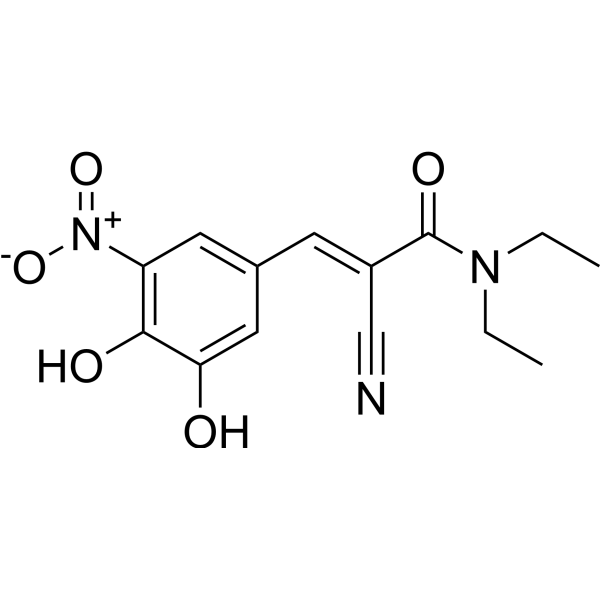
  • HY-14280
    Entacapone
    5+ Cited Publications

    COMT Neurological Disease Cancer
    Entacapone is a potent, reversible, peripherally acting and orally active catechol-O-methyltransferase (COMT) inhibitor. Entacapone inhibits COMT from rat brain, erythrocytes and liver with IC50 values of 10 nM, 20 nM, and 160 nM, respectively. Entacapone is selective for COMT over other catecholamine metabolizing enzymes, including MAO-A, MAO-B, phenolsulphotransferase M (PST-M) and PST-P (IC50s>50 μM). Entacapone can be used for the research of Parkinson's disease . Entacapone serves as a inhibitor of FTO demethylation with an IC50 of 3.5 μM, can be used for the research of metabolic disorders .
    Entacapone
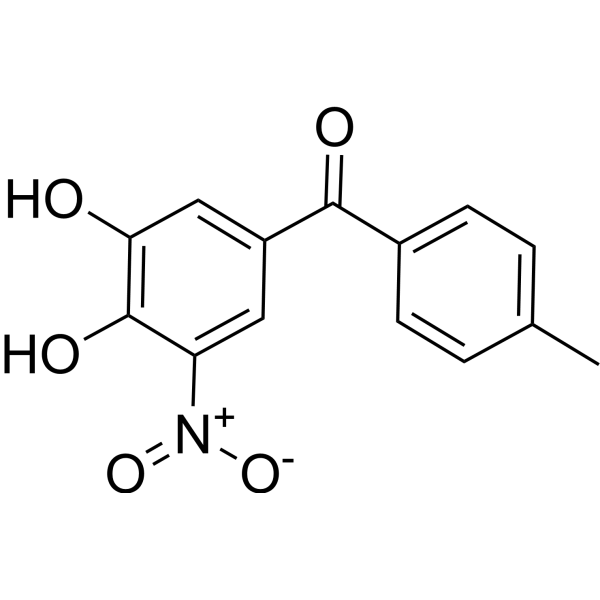
  • HY-17406
    Tolcapone
    3 Publications Verification

    Ro 40-7592

    COMT Amyloid-β Apoptosis Reactive Oxygen Species (ROS) Neurological Disease Cancer
    Tolcapone (Ro 40-7592) is a selective, potent and orally active COMT inhibitor with an IC50of 773 nM. Tolcapone can inhibits α-syn and Aβ42 oligomerization and fibrillogenesis. Tolcapone can cause oxidative stress and induce cancer cells apoptosis and ROS production. Tolcapone can be used for the researches of cancer and neurological disease, such as Parkinson disease and neuroblastoma .
    Tolcapone
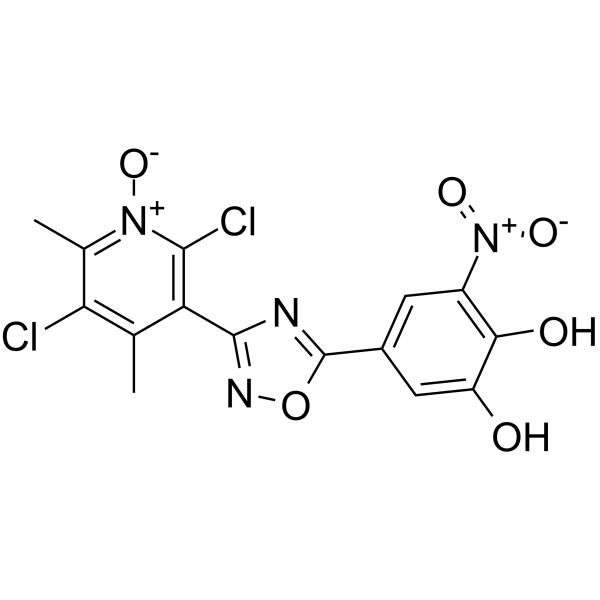
  • HY-14896
    Opicapone
    3 Publications Verification

    BIA 9-1067

    COMT Neurological Disease
    Opicapone (BIA 9-1067) is a potent third-generation catechol-O-methyltransferase (COMT) inhibitor for the research of Parkinson's disease and motor fluctuations. Opicapone decreases the ATP content of the cells with an IC50 of 98 μM .
    Opicapone
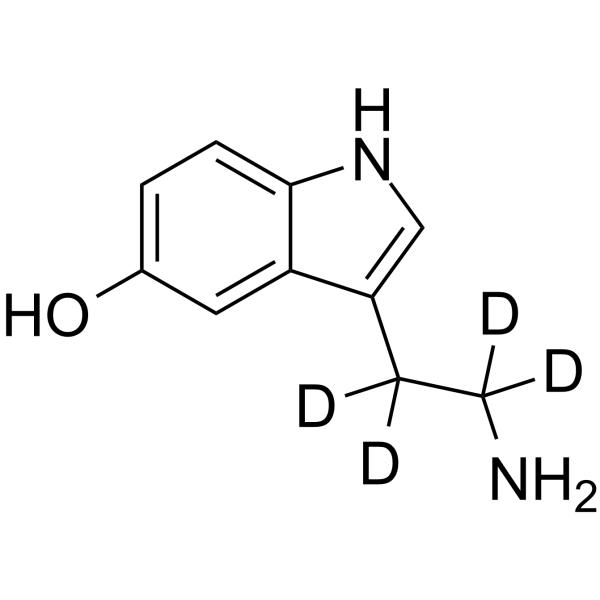
  • HY-B1473AS

    5-Hydroxytryptamine-d4; 5-HT-d4

    Isotope-Labeled Compounds 5-HT Receptor COMT Endogenous Metabolite Neurological Disease
    Serotonin-d4 is deuterium labeled Serotonin. Serotonin is a monoamine neurotransmitter in the CNS and an endogenous 5-HT receptor agonist. Serotonin is also a catechol O-methyltransferase (COMT) inhibitor with a Ki of 44 μM.
    Serotonin-d4
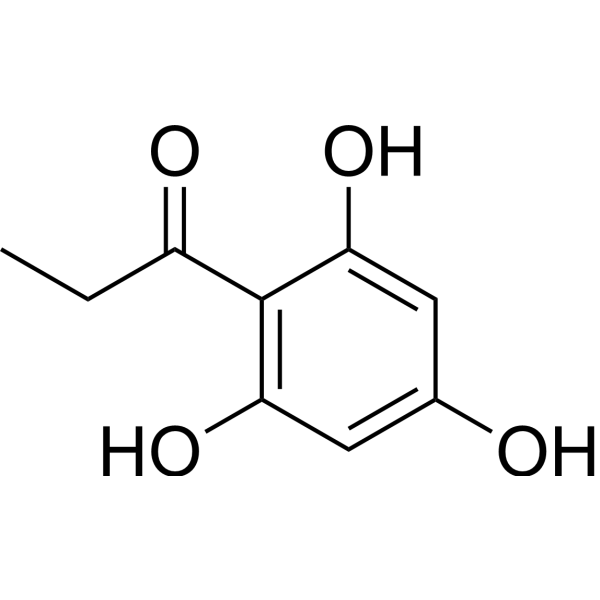
  • HY-100562

    5-HT Receptor COMT Neurological Disease
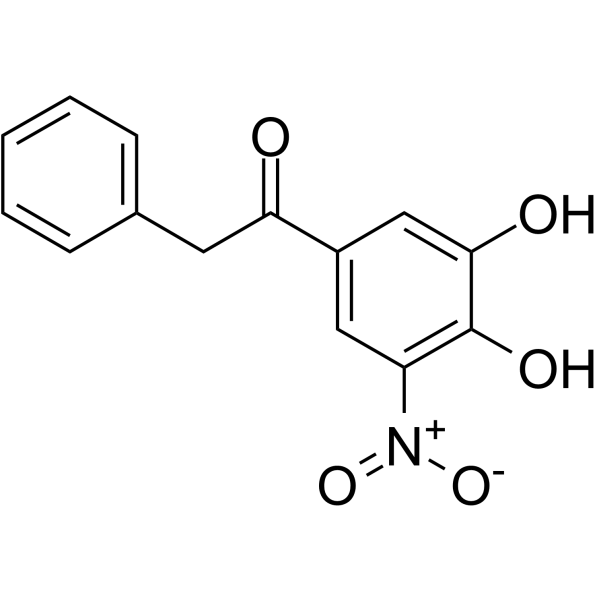
    Flopropione is a 5-HT receptor antagonist and also a catechol-o-methyltransferase (COMT) inhibitor . Flopropione also as an antispasmodic agent .
    Flopropione
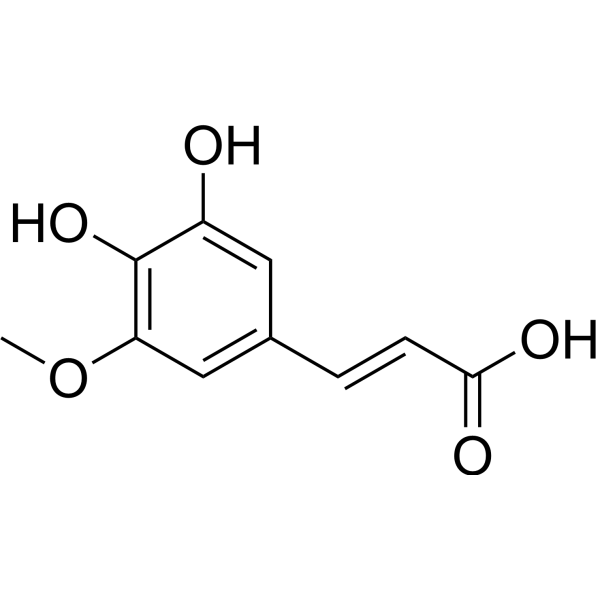
  • HY-133068

    COMT Endogenous Metabolite Others
    5-Hydroxyferulic acid is a hydroxycinnamic acid and is a metabolite of the phenylpropanoid pathway. 5-Hydroxyferulic acid is a precursor in the biosynthesis of sinapic acid and is also a COMT non-esterifed substrate .
    5-Hydroxyferulic acid
  • HY-N0529R
    Rosmarinic acid (Standard)
    1 Publications Verification

    Labiatenic acid (Standard)

    Reference Standards Monoamine Oxidase COMT Apoptosis Endogenous Metabolite Cancer
    Rosmarinic acid (Standard) is the analytical standard of Rosmarinic acid. This product is intended for research and analytical applications. Rosmarinic acid is a widespread phenolic ester compound in the plants. Rosmarinic acid inhibits MAO-A, MAO-B and COMT enzymes with IC50s of 50.1, 184.6 and 26.7 μM, respectively.
    Rosmarinic acid (Standard)
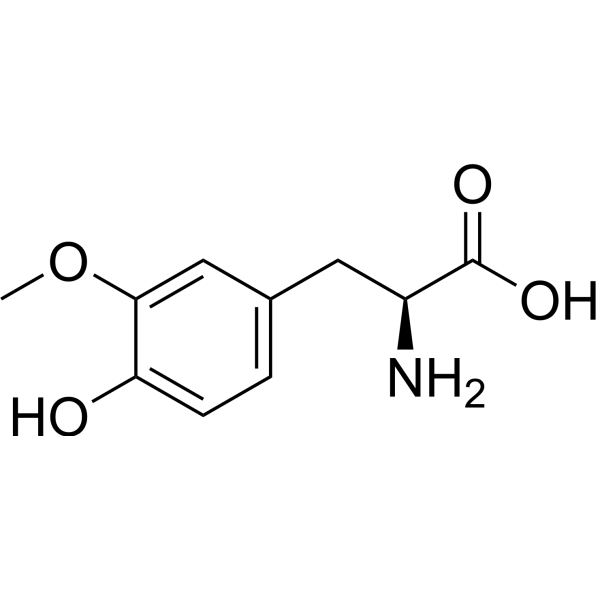
  • HY-113468A
    3-O-Methyldopa
    1 Publications Verification

    3-Methoxy-L-tyrosine; 3-O-Methyl-L-DOPA

    Drug Derivative Interleukin Related Neurological Disease Inflammation/Immunology
    3-O-Methyldopa (3-Methoxy-L-tyrosine) is a metabolite of L-DOPA (HY-N0304) that can cross the blood-brain barrier (BBB). 3-O-Methyldopa inhibits the astrocyte-mediated protective effect of L-DOPA (HY-N0304) on dopaminergic neurons. In addition, 3-O-Methyldopa has certain antidepressant and neuroprotective activities. 3-O-Methyldopa can be used in the research of nervous system diseases such as depression and Parkinson's disease .
    3-O-Methyldopa
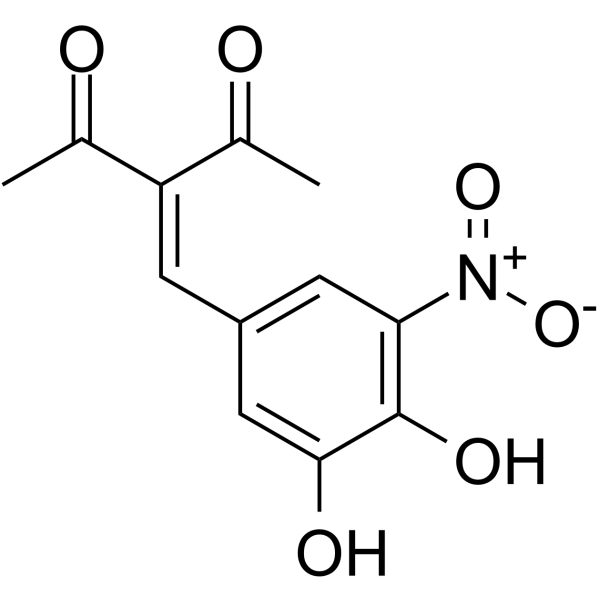
  • HY-106842

    OR-462

    COMT Neurological Disease Inflammation/Immunology
    Nitecapone (OR-462) is an orally active and short-acting catechol-O-methyltransferase (COMT) inhibitor with gastroprotective and antioxidant properties. Nitecapone (OR-462) scavenges reactive oxygen and nitric radicals and prevents lipid peroxidation .
    Nitecapone
  • HY-157719

    COMT Others
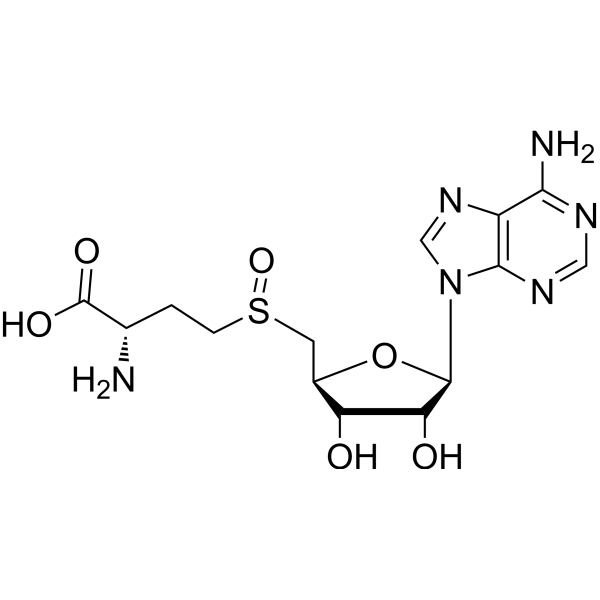
    S-Adenosylhomocysteine sulfoxide is an inhibitor of catechol-O-methyltransferase (COMT) with an IC50 value of 860 μM. S-Adenosylhomocysteine sulfoxide can be used in the research of methylation reaction modulators .
    S-Adenosylhomocysteine sulfoxide
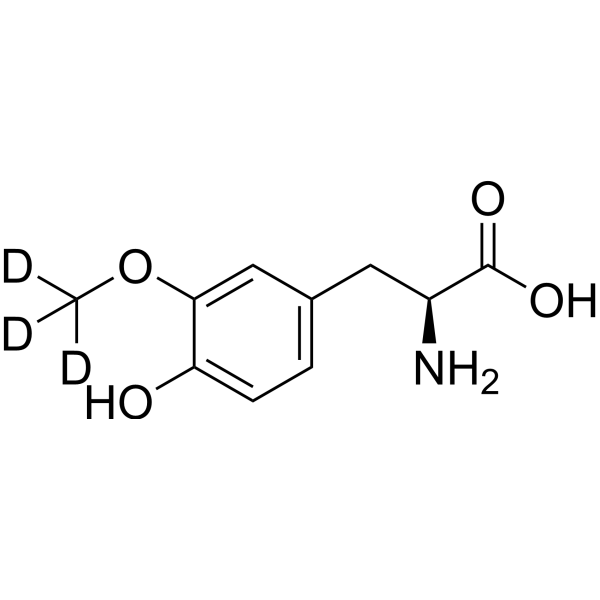
  • HY-113468AS

    3-Methoxy-L-tyrosine-d3; 3-O-Methyl-L-DOPA-d3

    Isotope-Labeled Compounds Drug Metabolite Interleukin Related Neurological Disease Inflammation/Immunology
    3-O-Methyldopa-d3 (3-Methoxy-L-tyrosine-d3) is deuterium labeled 3-O-Methyldopa (HY-113468A). 3-O-Methyldopa (3-Methoxy-L-tyrosine) is a metabolite of L-DOPA (HY-N0304) that can cross the blood-brain barrier (BBB). 3-O-Methyldopa inhibits the astrocyte-mediated protective effect of L-DOPA (HY-N0304) on dopaminergic neurons. In addition, 3-O-Methyldopa has certain antidepressant and neuroprotective activities. 3-O-Methyldopa can be used in the research of nervous system diseases such as depression and Parkinson's disease .
    3-O-Methyldopa-d3
  • HY-B1473S

    5-Hydroxytryptamine-d4 hydrochloride; 5-HT-d4 hydrochloride

    Isotope-Labeled Compounds 5-HT Receptor Endogenous Metabolite COMT Others
    Serotonin-d4 (5-Hydroxytryptamine-d4) hydrochloride is the deuterium labeled Serotonin (hydrochloride) (HY-B1473) . Serotonin (5-Hydroxytryptamine) hydrochloride is a monoamine neurotransmitter in the CNS and an endogenous 5-HT receptor agonist. Serotonin hydrochloride is also a catechol O-methyltransferase (COMT) inhibitor with a Ki of 44 μM .
    Serotonin-d4 hydrochloride
  • HY-106405

    BIA 3-202

    COMT Metabolic Disease
    Nebicapone (BIA 3-202), a reversible catechol-O-methyltransferase (COMT) inhibitor, is mainly metabolized by glucuronidation. Nebicapone is mainly peripherally acting inhibitor that decreases the biotransformation of L-DOPA to 3-O-methyl-DOPA by inhibition of COMT, and it is potential for the treatment of Parkinson's disease .
    Nebicapone
  • HY-125339

    COMT Neurological Disease
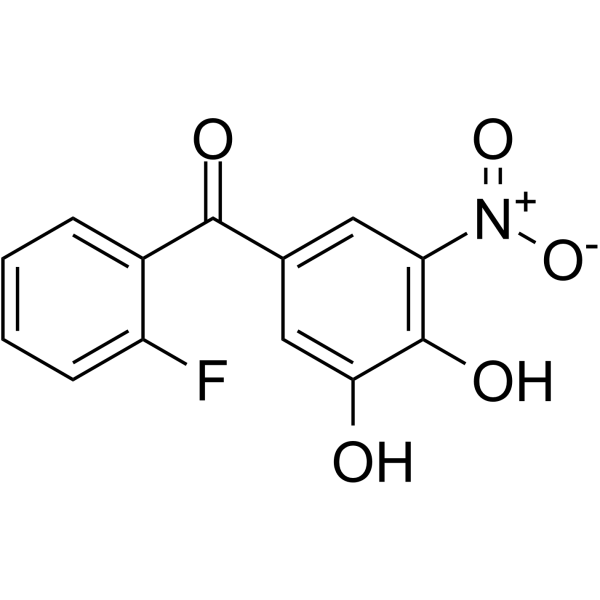
    Ro 41-0960 is a selective catechol-O-methyltransferase(COMT) inhibitor .
    Ro 41-0960
  • HY-D2344

    3-Benzothiazole-daphnetin

    Fluorescent Dye Others
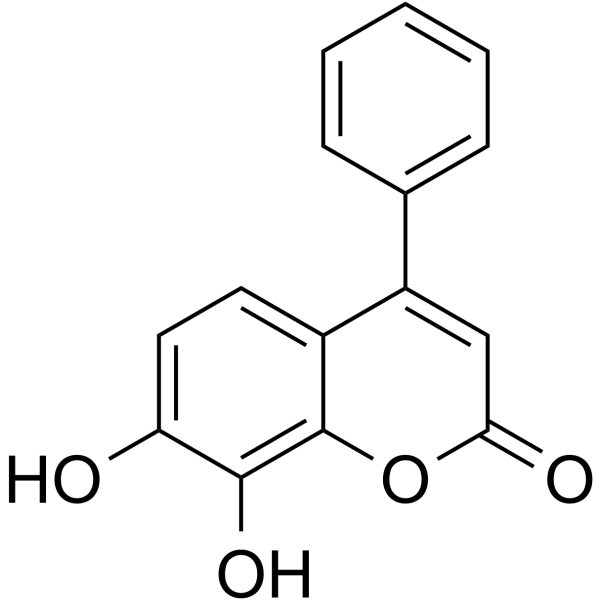
    3-BTD (3-Benzothiazole-daphnetin) is a Catechol-O-methyltransferase (COMT) two-photon fluorescence probe. 3-BTD can also be used for biological imaging of endogenous COMT in living cells and tissue sections .
    3-BTD
  • HY-B1481

    Isoetarine mesylate

    Adrenergic Receptor Cardiovascular Disease Inflammation/Immunology
    Isoetharine (Isoetarine) mesylate is an orally active selective agonist of β-adrenergic receptors. Isoetharine mesylate is a catechol-like agent and catechol O-methyltransferase (COMT) mediates its methylation. Isoetharine mesylate can promote the production of cAMP which stimulates the relaxation of smooth muscle cells and can be used as an emphysema, bronchitis and bronchodilator .
    Isoetharine mesylate
  • HY-14280S

    COMT Neurological Disease
    Entacapone-d10 is the deuterium labeled Entacapone. Entacapone is a potent, reversible, peripherally acting and orally active catechol-O-methyltransferase (COMT) inhibitor. Entacapone inhibits COMT from rat brain, erythrocytes and liver with IC50 values of 10 nM, 20 nM, and 160 nM, respectively. Entacapone is selective for COMT over other catecholamine metabolizing enzymes, including MAO-A, MAO-B, phenolsulphotransferase M (PST-M) and PST-P (IC50s>50 μM). Entacapone can be used for the research of Parkinson's disease . Entacapone serves as a inhibitor of FTO demethylation with an IC50 of 3.5 μM, can be used for the research of metabolic disorders .
    Entacapone-d10
  • HY-E70007

    COMT

    Endogenous Metabolite Neurological Disease
    Catechol O-methyltransferase, porcine liver (COMT), the magnesium-dependent transfer of methyl groups from S-adenosyl methionine to a hydroxyl group on dopamine, converting it to 3-methoxytyramine. Catechol O-methyltransferase has two forms in tissues, a soluble form (S-COMT) and a membrane-bound form (MB-COMT). Catechol O-methyltransferase is to regulate epinephrine, norepinephrine, and dopamine levels in the brain .
    Catechol O-methyltransferase, porcine liver
  • HY-113468AR

    3-Methoxy-L-tyrosine (Standard); 3-O-Methyl-L-DOPA (Standard)

    Drug Derivative Interleukin Related Reference Standards Neurological Disease Inflammation/Immunology
    3-O-Methyldopa (Standard) is the analytical standard of 3-O-Methyldopa. This product is intended for research and analytical applications. 3-O-Methyldopa (3-Methoxy-L-tyrosine) is a metabolite of L-DOPA which is formed by catechol-O-methyltransferase (COMT). 3-O-Methyldopa competitively inhibits the pharmacodynamics of l-DOPA and dopamine .
    3-O-Methyldopa (Standard)
  • HY-17406S1

    Ro 40-7592-d4

    Isotope-Labeled Compounds COMT Amyloid-β Apoptosis Reactive Oxygen Species (ROS) Neurological Disease Cancer
    Tolcapone-d4 (Ro 40-7592-d4) is the deuterium labeled Tolcapone (HY-17406). Tolcapone (Ro 40-7592) is a selective, potent and orally active COMT inhibitor with an IC50of 773 nM. Tolcapone can inhibits α-syn and Aβ42 oligomerization and fibrillogenesis. Tolcapone can cause oxidative stress and induce cancer cells apoptosis and ROS production. Tolcapone can be used for the researches of cancer and neurological disease, such as Parkinson disease and neuroblastoma .
    Tolcapone-d4
  • HY-151388

    Monoamine Oxidase COMT Neurological Disease
    hMAO-B/MB-COMT-IN-1 is a dual MAO-B/MB-COMT inhibitor (IC50s: 2.5 μΜ for hMAO-B, 3.84 μΜ for MB-COMT). hMAO-B/MB-COMT-IN-1 protects cells against oxidative damage. hMAO-B/MB-COMT-IN-1 can be used in the research of neurodegeneration disease, such as Parkinson’s Disease (PD) .
    hMAO-B/MB-COMT-IN-1
  • HY-W012264

    3-Methoxy-L-tyrosine monohydrate; 3-O-Methyl-L-DOPA monohydrate

    COMT Neurological Disease
    3-O-Methyldopa monohydrate (3-Methoxy-L-tyrosine monohydrate) is a significant metabolite of L-DOPA produced through the action of catechol O-methyltransferase (COMT). Unlike its precursor, 3-O-Methyldopa does not serve as a substrate or inhibitor of L-amino acid decarboxylase activity. Additionally, the inhibition of COMT can amplify the anti-Parkinson effects of L-DOPA.
    3-O-Methyldopa monohydrate
  • HY-14280R

    Reference Standards COMT Neurological Disease Cancer
    Entacapone (Standard) is the analytical standard of Entacapone. This product is intended for research and analytical applications. Entacapone is a potent, reversible, peripherally acting and orally active catechol-O-methyltransferase (COMT) inhibitor. Entacapone inhibits COMT from rat brain, erythrocytes and liver with IC50 values of 10 nM, 20 nM, and 160 nM, respectively. Entacapone is selective for COMT over other catecholamine metabolizing enzymes, including MAO-A, MAO-B, phenolsulphotransferase M (PST-M) and PST-P (IC50s>50 µM). Entacapone can be used for the research of Parkinson's disease . Entacapone serves as a inhibitor of FTO demethylation with an IC50 of 3.5 μM, can be used for the research of metabolic disorders .
    Entacapone (Standard)
  • HY-121949

    COMT Neurological Disease
    U-0521 is the inhibitor of the catechol-O-methyltransferase (COMT). U-0521 has the potential for the research of Parkinson's disease .
    U-0521
  • HY-B1481A

    Isoetarine

    Adrenergic Receptor Cardiovascular Disease Inflammation/Immunology
    Isoetharine (Isoetarine) is an orally active selective agonist of β-adrenergic receptors. Isoetharine is a catechol-like agent and catechol O-methyltransferase (COMT) mediates its methylation. Isoetharine can promote the production of cAMP which stimulates the relaxation of smooth muscle cells and can be used as an emphysema, bronchitis and bronchodilator .
    Isoetharine
  • HY-133068A

    COMT Metabolic Disease
    (E)-5-Hydroxyferulic acid is the E-isomer of 5-Hydroxyferulic acid (HY-133068). 5-hydroxyferulic acid is a hydroxycinnamic acid and is a metabolite of the phenylpropanoid pathway. 5-Hydroxyferulic acid is a precursor in the biosynthesis of sinapic acid and is also a COMT non-esterifed substrat .
    (E)-5-Hydroxyferulic acid
  • HY-B1473R

    5-Hydroxytryptamine hydrochloride (Standard); 5-HT hydrochloride (Standard)

    5-HT Receptor Reference Standards COMT Endogenous Metabolite Neurological Disease
    Serotonin (5-Hydroxytryptamine) (Standard) hydrochloride is the analytical standard of Serotonin hydrochloride (HY-B1473). This product is intended for research and analytical applications. Serotonin (5-Hydroxytryptamine) hydrochloride is a monoamine neurotransmitter in the CNS and an endogenous 5-HT receptor agonist. Serotonin hydrochloride is also a catechol O-methyltransferase (COMT) inhibitor with a Ki of 44 μM.
    Serotonin hydrochloride (Standard)
  • HY-B1473S2

    5-Hydroxytryptamine-13C,D4; 5-HT-13C,D4

    Isotope-Labeled Compounds 5-HT Receptor COMT Endogenous Metabolite Neurological Disease
    Serotonin- 13C,D4 (5-Hydroxytryptamine-13C,D4) is a 13C- and deuterated labeled Serotonin (HY-B1473A). Serotonin is a monoamine neurotransmitter in the CNS and an endogenous 5-HT receptor agonist. Serotonin is also a catechol O-methyltransferase (COMT) inhibitor with a Ki of 44 μM .
    Serotonin-13C,D4
  • HY-14280A

    COMT Neurological Disease Cancer
    Entacapone sodium salt is a potent, reversible, peripherally acting and orally active catechol-O-methyltransferase (COMT) inhibitor. Entacapone sodium salt inhibits COMT from rat brain, erythrocytes and liver with IC50 values of 10 nM, 20 nM, and 160 nM, respectively. Entacapone sodium salt is selective for COMT over other catecholamine metabolizing enzymes, including MAO-A, MAO-B, phenolsulphotransferase M (PST-M) and PST-P (IC50s>50 µM). Entacapone sodium salt can be used for the research of Parkinson's disease . Entacapone sodium salt serves as as a inhibit of FTO demethylation with an IC50 of 3.5 μM, can be used for the research of metabolic disorders .
    Entacapone sodium salt
  • HY-151390

    Monoamine Oxidase COMT Neurological Disease
    hMAO-B/MB-COMT-IN-2 is a dual MAO-B/MB-COMT inhibitor (IC50s: 4.27 μΜ for hMAO-B, 2.69 μΜ for MB-COMT). hMAO-B/MB-COMT-IN-2 protects cells against oxidative damage. hMAO-B/MB-COMT-IN-2 can be used in the research of neurodegeneration disease, such as Parkinson’s Disease (PD) .
    hMAO-B/MB-COMT-IN-2
  • HY-14896R

    BIA 9-1067 (Standard)

    Reference Standards COMT Neurological Disease
    Opicapone (Standard) is the analytical standard of Opicapone. This product is intended for research and analytical applications. Opicapone (BIA 9-1067) is a potent third-generation catechol-O-methyltransferase (COMT) inhibitor for the research of Parkinson's disease and motor fluctuations. Opicapone decreases the ATP content of the cells with an IC50 of 98 μM .
    Opicapone (Standard)
  • HY-W704878

    Isotope-Labeled Compounds COMT Metabolic Disease
    (Z)-Entacapone-d10-1 is the deuterium labeled (Z)-Entacapone (HY-139089). (Z)-Entacapone is a metabolite of the catechol-O-methyltransferase (COMT) inhibitor Entacapone (HY-14280). It is also a potential impurity found in commercial preparations of Entacapone and a degradant of Entacapone formed by UV light exposure.
    (Z)-Entacapone-d10-1
  • HY-W401531S

    Dopamine Receptor Endogenous Metabolite Neurological Disease
    (R)-3-O-Methyldopa-d3 is a deuterium labeled (R)-3-O-Methyldopa, and (R)-3-O-Methyldopa is an R-enantiomer of 3-O-Methyldopa. 3-O-Methyldopa is a metabolite of L-DOPA which is formed by catechol-O-methyltransferase (COMT). 3-O-Methyldopa competitively inhibits the pharmacodynamics of L-DOPA and dopamine .
    (R)-3-O-Methyldopa-d3
  • HY-W401531S1

    Dopamine Receptor Endogenous Metabolite Neurological Disease
    (R)-3-O-Methyldopa-d3 (hydrochloride) is a deuterium labeled (R)-3-O-Methyldopa, and (R)-3-O-Methyldopa is an R-enantiomer of 3-O-Methyldopa. 3-O-Methyldopa is a metabolite of L-DOPA which is formed by catechol-O-methyltransferase (COMT). 3-O-Methyldopa competitively inhibits the pharmacodynamics of L-DOPA and dopamine .
    (R)-3-O-Methyldopa-d3 hydrochloride
  • HY-168154

    COMT Cancer
    COMT-IN-2 (compund 9) is the potent COMT inhibitor, showing selective inhibition of brain (IC50=24 nM) and liver (IC50=81 nM) MB-COMT compared to the liver S-COMT (IC50=620 nM) isoform .
    COMT-IN-2
  • HY-162760

    COMT Monoamine Oxidase Neurological Disease
    COMT-IN-1 (compound C12), a nitrophenolic analogue, is an orally active dopamine metabolic enzyme catechol-O-methyltransferase (COMT) inhibitor with IC50s of 0.37 μM, 95.58 μM and 58.82 μM for COMT, MAO-A and MAO-B, respectively. COMT-IN-1 exhibits chelation with a variety of metal ions. COMT-IN-1 exhibits good BBB permeability. COMT-IN-1 improves dopamine levels and ameliorates MPTP (HY-15608)-induced Parkinson's disease (PD) symptoms in mice .
    COMT-IN-1
  • HY-RS03018

    Small Interfering RNA (siRNA) Others

    Comt Rat Pre-designed siRNA Set A contains three designed siRNAs for Comt gene (Rat), as well as a negative control, a positive control, and a FAM-labeled negative control.

    Comt Rat Pre-designed siRNA Set A
    Comt Rat Pre-designed siRNA Set A
  • HY-RS03017

    Small Interfering RNA (siRNA) Others

    Comt Mouse Pre-designed siRNA Set A contains three designed siRNAs for Comt gene (Mouse), as well as a negative control, a positive control, and a FAM-labeled negative control.

    Comt Mouse Pre-designed siRNA Set A
    Comt Mouse Pre-designed siRNA Set A
  • HY-RS03016

    Small Interfering RNA (siRNA) Others

    COMT Human Pre-designed siRNA Set A contains three designed siRNAs for COMT gene (Human), as well as a negative control, a positive control, and a FAM-labeled negative control.

    COMT Human Pre-designed siRNA Set A
    COMT Human Pre-designed siRNA Set A
  • HY-D2371

    Fluorescent Dye Others
    3-BTMD is obtained by COMT enzyme specifically catalyzing the substrate 3-BTD (Ex=390 nm, Em=510 nm) .
    3-BTMD
  • HY-109119

    COMT Neurological Disease
    Neluxicapone, a COMT inhibitor, is an antiparkinsonien agent. Neluxicapone can be used for the study of Parkinson's disease (PD) .
    Neluxicapone
  • HY-100642

    Ro 40-7591

    Drug Metabolite COMT Amyloid-β Apoptosis Reactive Oxygen Species (ROS) Neurological Disease Cancer
    3-O-Methyltolcapone (Ro 40-7591) is a metabolite of Tolcapone (HY-17406). Tolcapone (Ro 40-7592) is a selective, potent and orally active COMT inhibitor with an IC50of 773 nM. Tolcapone can inhibits α-syn and Aβ42 oligomerization and fibrillogenesis. Tolcapone can cause oxidative stress and induce cancer cells apoptosis and ROS production. Tolcapone can be used for the researches of cancer and neurological disease, such as Parkinson disease and neuroblastoma .
    3-O-Methyltolcapone
  • HY-17406R

    Ro 40-7592 (Standard)

    Reference Standards COMT Amyloid-β Apoptosis Reactive Oxygen Species (ROS) Neurological Disease Cancer
    Tolcapone (Standard) (Ro 40-7592 (Standard)) is the analytical standard of Tolcapone (HY-17406). Tolcapone (Ro 40-7592) is a selective, potent and orally active COMT inhibitor with an IC50of 773 nM. Tolcapone can inhibits α-syn and Aβ42 oligomerization and fibrillogenesis. Tolcapone can cause oxidative stress and induce cancer cells apoptosis and ROS production. Tolcapone can be used for the researches of cancer and neurological disease, such as Parkinson disease and neuroblastoma .
    Tolcapone (Standard)
  • HY-17406S

    Ro 40-7592 d7

    Isotope-Labeled Compounds COMT Amyloid-β Apoptosis Reactive Oxygen Species (ROS) Neurological Disease Cancer
    Tolcapone-d7 (Ro 40-7592-d7) is the deuterium labeled Tolcapone (HY-17406). Tolcapone (Ro 40-7592) is a selective, potent and orally active COMT inhibitor with an IC50of 773 nM. Tolcapone can inhibits α-syn and Aβ42 oligomerization and fibrillogenesis. Tolcapone can cause oxidative stress and induce cancer cells apoptosis and ROS production. Tolcapone can be used for the researches of cancer and neurological disease, such as Parkinson disease and neuroblastoma .
    Tolcapone-d7
  • HY-126194

    Ro 61-1448

    Drug Metabolite COMT Amyloid-β Apoptosis Reactive Oxygen Species (ROS) Others
    Tolcapone 3-β-D-glucuronide (Ro 61-1448) is an O-methyl metabolite of Tolcapone (HY-17406) and is pharmacologically inactive. Tolcapone (Ro 40-7592) is a selective, potent and orally active COMT inhibitor with an IC50of 773 nM. Tolcapone can inhibits α-syn and Aβ42 oligomerization and fibrillogenesis. Tolcapone can cause oxidative stress and induce cancer cells apoptosis and ROS production. Tolcapone can be used for the researches of cancer and neurological disease, such as Parkinson disease and neuroblastoma .
    Tolcapone 3-β-D-glucuronide
  • HY-100642R

    Ro 40-7591 (Standard)

    Reference Standards Drug Metabolite COMT Amyloid-β Apoptosis Reactive Oxygen Species (ROS) Neurological Disease Cancer
    3-O-Methyltolcapone (Standard) (Ro 40-7591 (Standard)) is the analytical standard of 3-O-Methyltolcapone (HY-174062). 3-O-Methyltolcapone (Ro 40-7591) is a metabolite of Tolcapone (HY-17406). Tolcapone (Ro 40-7592) is a selective, potent and orally active COMT inhibitor with an IC50of 773 nM. Tolcapone can inhibits α-syn and Aβ42 oligomerization and fibrillogenesis. Tolcapone can cause oxidative stress and induce cancer cells apoptosis and ROS production. Tolcapone can be used for the researches of cancer and neurological disease, such as Parkinson disease and neuroblastoma .
    3-O-Methyltolcapone (Standard)
  • HY-100642S

    Ro 40-7591 d7

    Isotope-Labeled Compounds Drug Metabolite COMT Amyloid-β Apoptosis Reactive Oxygen Species (ROS) Neurological Disease Cancer
    3-O-Methyltolcapone-d7 (Ro 40-7591 d7) is a deuterium labeled 3-O-Methyltolcapone (HY-174062). 3-O-Methyltolcapone (Ro 40-7591) is a metabolite of Tolcapone (HY-17406). Tolcapone (Ro 40-7592) is a selective, potent and orally active COMT inhibitor with an IC50of 773 nM. Tolcapone can inhibits α-syn and Aβ42 oligomerization and fibrillogenesis. Tolcapone can cause oxidative stress and induce cancer cells apoptosis and ROS production. Tolcapone can be used for the researches of cancer and neurological disease, such as Parkinson disease and neuroblastoma .
    3-O-Methyltolcapone-d7

Inquiry Online

Your information is safe with us. * Required Fields.

Salutation


Country or Region *

Applicant Name *


Organization Name *

Department *


Email Address *


Product Name *

Cat. No.


Requested quantity *

Phone Number *


Remarks

Inquiry Online

Inquiry Information

Product Name:
Cat. No.:
Quantity:
MCE Japan Authorized Agent:

