

282 Results for "

HCCs

" in MedChemExpress (MCE) Product Catalog:
Products (282)

282 Results for "HCCs" in MCE Product Catalog:

249
249 Publications Verification
Art. -Nr.: HY-50767
CAS. Nr.: 571190-30-2
Synonyms: PD 0332991
Target:  

CDK

Forschungsgebiete:  

Cancer

Palbociclib (PD 0332991) is an orally active selective CDK4 and CDK6 inhibitor with IC50 values of 11 and 16 nM, respectively. Palbociclib has potent anti-proliferative activity and induces cell cycle arrest in cancer cells, which can be used in the research of HR-positive and HER2-negative breast cancer and hepatocellular carcinoma .
loading...
    loading...
249
249 Publications Verification
Art. -Nr.: HY-50767A
CAS. Nr.: 827022-32-2
Synonyms: PD 0332991 monohydrochloride
Target:  

CDK

Forschungsgebiete:  

Cancer

Palbociclib (PD 0332991) monohydrochloride is an orally active selective CDK4 and CDK6 inhibitor with IC50 values of 11 and 16 nM, respectively. Palbociclib monohydrochloride has potent anti-proliferative activity and induces cell cycle arrest in cancer cells, which can be used in the research of HR-positive and HER2-negative breast cancer and hepatocellular carcinoma .
loading...
    loading...
245
245 Cited Publications
Art. -Nr.: HY-A0065
CAS. Nr.: 827022-33-3
Synonyms: PD 0332991 isethionate
Target:  

CDK

Forschungsgebiete:  

Infection Neurological Disease Cancer

Palbociclib (PD 0332991) isethionate is an orally active selective CDK4 and CDK6 inhibitor with IC50 values of 11 and 16 nM, respectively. Palbociclib isethionate has potent anti-proliferative activity and induces cell cycle arrest in cancer cells, which can be used in the research of HR-positive and HER2-negative breast cancer and hepatocellular carcinoma .
loading...
    loading...
229
229 Cited Publications
Art. -Nr.: HY-50767C
CAS. Nr.: 571189-11-2
Synonyms: PD-0332991 hydrochloride
Target:  

CDK

Forschungsgebiete:  

Cancer

Palbociclib (PD 0332991) hydrochloride is an orally active selective CDK4 and CDK6 inhibitor with IC50 values of 11 and 16 nM, respectively. Palbociclib hydrochloride has potent anti-proliferative activity and induces cell cycle arrest in cancer cells. Palbociclib hydrochloride can be used in the research of HR-positive and HER2-negative breast cancer and hepatocellular carcinoma .
loading...
    loading...
189
189 Cited Publications
Art. -Nr.: HY-17386
CAS. Nr.: 122320-73-4
Synonyms: BRL 49653
Rosiglitazone (BRL 49653) is an orally active selective PPARγ agonist (EC50: 60 nM, Kd: 40 nM), with blood-brain barrier permeability. Rosiglitazone is an TRPC5 activator (EC50: 30 μM) and TRPM3 inhibitor. Rosiglitazone can be used in the research of obesity and diabetes, senescence, ovarian cancer .
loading...
    loading...
189
189 Cited Publications
Art. -Nr.: HY-17386A
CAS. Nr.: 302543-62-0
Synonyms: BRL 49653 hydrochloride
Rosiglitazone (BRL 49653) hydrochloride is an orally active selective PPARγ agonist (EC50: 60 nM, Kd: 40 nM). Rosiglitazone hydrochloride is a TRPC5 activator (EC50: 30 μM) and TRPM3 inhibitor. Rosiglitazone hydrochloride can be used in the research of obesity and diabetes, senescence, ovarian cancer .
loading...
    loading...
186
186 Cited Publications
Art. -Nr.: HY-17386B
CAS. Nr.: 316371-84-3
Synonyms: BRL 49653 potassium
Rosiglitazone (BRL 49653) potassium is an orally active selective PPARγ agonist (EC50: 60 nM, Kd: 40 nM). Rosiglitazone potassium is a TRPC5 activator (EC50: 30 μM) and TRPM3 inhibitor. Rosiglitazone potassium can be used in the research of obesity and diabetes, senescence, ovarian cancer .
loading...
    loading...
24
24 Cited Publications
Art. -Nr.: HY-15306
CAS. Nr.: 496775-61-2
Reinheit:  99.94%
Synonyms: SB-497115
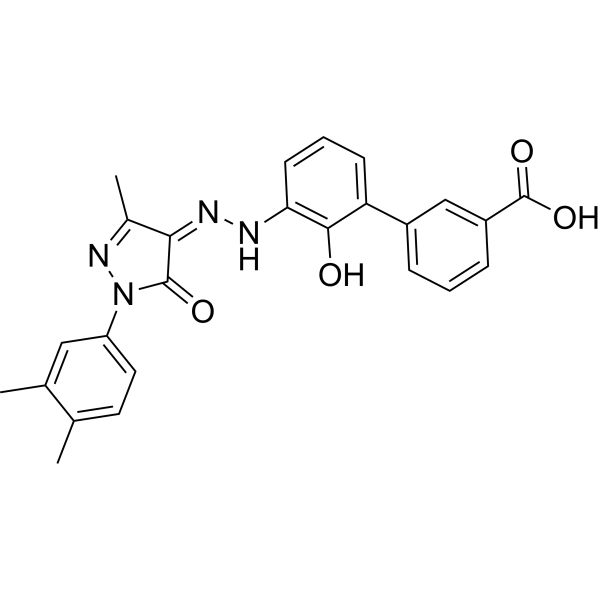
Eltrombopag (SB-497115) is an orally active thrombopoietin receptor nonpeptide agonist. Eltrombopag owns thrombopoietic activity, and has been used to research low blood platelet counts with chronic immune thrombocytopenia. Eltrombopag can be used for the research of cardiovascular. Eltrombopag also has highly inhibitory effects against multidrug resistant Staphylococcus aureus. Eltrombopag can induce apoptosis in hepatocellular carcinomab (HCC) as well .
loading...
    loading...
24
24 Cited Publications
Art. -Nr.: HY-N0751
CAS. Nr.: 27740-01-8
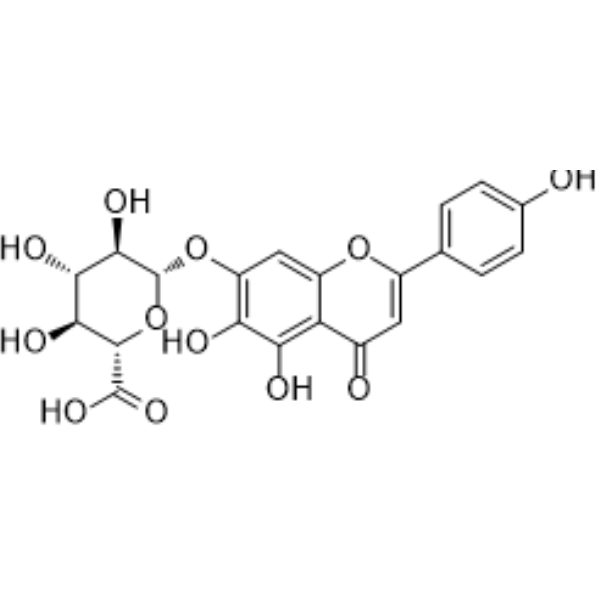
Scutellarin, an active flavone isolated from Scutellaria baicalensis, can down-regulates the STAT3/Girdin/Akt signaling in HCC cells, and inhibits RANKL-mediated MAPK and NF-κB signaling pathway in osteoclasts. Scutellarin is active against HIV-1IIIB, HIV-1(74V) and HIV-1KM018 with EC50s of 26 μM, 253 μM and 136 μM, respectively.
loading...
    loading...
24
24 Cited Publications
Art. -Nr.: HY-15306A
CAS. Nr.: 496775-62-3
Reinheit:  99.96%
Synonyms: Eltrombopag diethanolamine salt; SB-497115GR
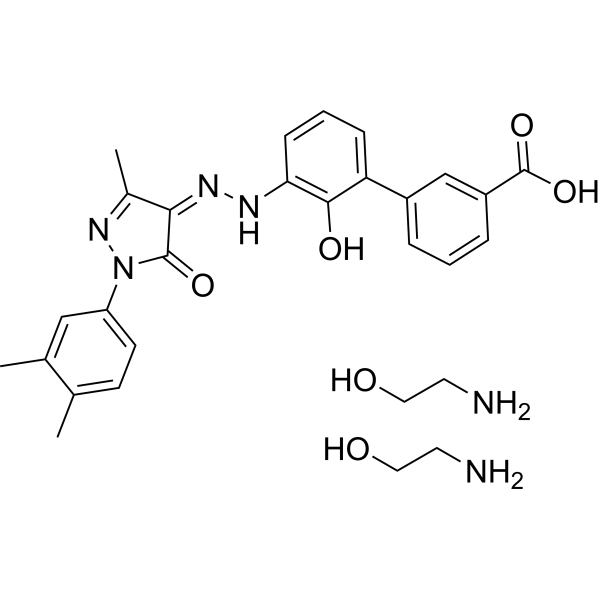
Eltrombopag Olamine (Eltrombopag diethanolamine salt) is an orally active thrombopoietin receptor nonpeptide agonist. Eltrombopag Olamine owns thrombopoietic activity, and has been used to research low blood platelet counts with chronic immune thrombocytopenia. Eltrombopag Olamine can be used for the research of cardiovascular. Eltrombopag Olamine also has highly inhibitory effects against multidrug resistant Staphylococcus aureus. Eltrombopag Olamine can induce apoptosis in hepatocellular carcinomab (HCC) as well .
loading...
    loading...
23
23 Cited Publications
Art. -Nr.: HY-16706A
CAS. Nr.: 1622921-15-6
Forschungsgebiete:  

Cancer

Remodelin hydrobromide is an orally active and selective inhibitor of acetyltransferase NAT10. Remodelin hydrobromide inhibits NAT10 activitity and slows DNA replication and suppresses growth of prostate cancer cells. Remodelin hydrobromide inhibits the growth of prostate cancer and hepatocellular carcinoma in xenograft model. Remodelin hydrobromide enhances the healthspan in hutchinson-gilford progeria syndrome (HGPS) mouse model .
loading...
    loading...
22
22 Cited Publications
Art. -Nr.: HY-16701
CAS. Nr.: 1001600-56-1
Target:  

IAP

Forschungsgebiete:  

Cancer

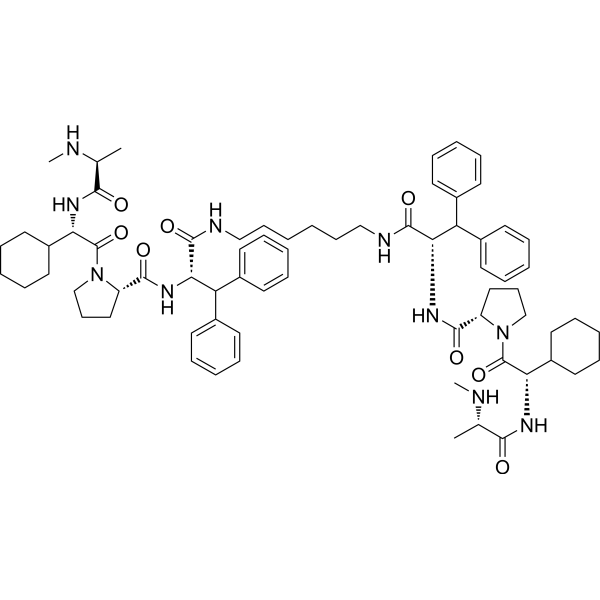
BV6 is an antagonist of cIAP1 and XIAP, members of the inhibitors of apoptosis (IAP) family. BV6 shows an IC50 of 7.2 μM in MTS assays in HCC193 cells. BV6 can be used in the research of endometrial cancer and endometriosis .
loading...
    loading...
22
22 Cited Publications
Art. -Nr.: HY-16701A
Target:  

IAP

Forschungsgebiete:  

Cancer

BV6 TFA is an antagonist of cIAP1 and XIAP, members of the inhibitors of apoptosis (IAP) family. BV6 TFA shows an IC50 of 7.2 μM in MTS assays in HCC193 cells. BV6 TFA can be used in the research of endometrial cancer and endometriosis .
loading...
    loading...
13
13 Cited Publications
Art. -Nr.: HY-131045
CAS. Nr.: 2253733-10-5
Reinheit:  99.08%
Synonyms: HCC-Amino-D-alanine hydrochloride
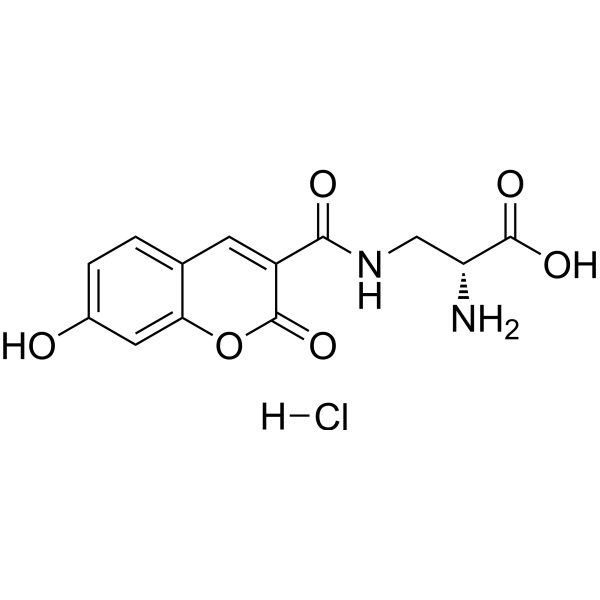
HADA hydrochloride (HCC-Amino-D-alanine hydrochloride) is a blue (λem~450 nm) fluorescent D-amino acid (FDAA). FDAAs are efficiently incorporated into the peptidoglycans (PGs) of diverse bacterial species at the sites of PG biosynthesis, allowing specific and covalent probing of bacterial growth with minimal perturbation .
loading...
    loading...
12
12 Cited Publications
Art. -Nr.: HY-12794
CAS. Nr.: 1383716-40-2
Reinheit:  99.63%
Target:  

PI3K Autophagy

Forschungsgebiete:  

Neurological Disease Cancer

Vps34-PIK-III is an orally active and selective VPS34 inhibitor (IC50=18 nM). Vps34-PIK-III effectively inhibits autophagy and can be used as a molecular tool. vps34-PIK-III is also a PI3K inhibitor that inhibits the expression of genes in liver cancer stem cells (CSCs) .
loading...
    loading...
11
11 Cited Publications
Art. -Nr.: HY-N7073
CAS. Nr.: 65666-07-1
Silymarin is an extract of the milk thistle (Silybum marianum). Silymarin is an effective SARS-CoV-2 main protease (M pro) inhibitor. Silymarin can significantly reduce tumor cell proliferation, angiogenesis as well as insulin resistance. Silymarin has the chemopreventive effect on hepatocellular carcinoma (HCC). Silymarin has the potential for COVID-19 research .
loading...
    loading...
11
11 Cited Publications
Art. -Nr.: HY-B0402A
CAS. Nr.: 665-66-7
Synonyms: 1-Adamantanamine hydrochloride; 1-Adamantylamine hydrochloride; 1-Aminoadamantane hydrochloride
Amantadine (1-Adamantanamine) hydrochloride is an orally avtive and potent antiviral agent with activity against influenza A viruses. Amantadine hydrochloride inhibits several ion channels such as NMDA and M2, and also inhibits Coronavirus ion channels. Amantadine hydrochloride also has anti-orthopoxvirus and anticancer activity. Amantadine hydrochloride can be used for Parkinson's disease, postoperative cognitive dysfunction (POCD) and COVID-19 research .
loading...
    loading...
11
11 Cited Publications
Art. -Nr.: HY-B0402
CAS. Nr.: 768-94-5
Synonyms: 1-Adamantanamine; 1-Aminoadamantane
Amantadine (1-Adamantanamine) is an orally avtive and potent antiviral agent with activity against influenza A viruses. Amantadine inhibits several ion channels such as NMDA and M2, and also inhibits Coronavirus ion channels. Amantadine also has anti-orthopoxvirus and anticancer activity. Amantadine can be used for Parkinson's disease, postoperative cognitive dysfunction (POCD) and COVID-19 research .
loading...
    loading...
9
9 Cited Publications
Art. -Nr.: HY-N2334
CAS. Nr.: 640-79-9
Synonyms: Chenodeoxycholylglycine
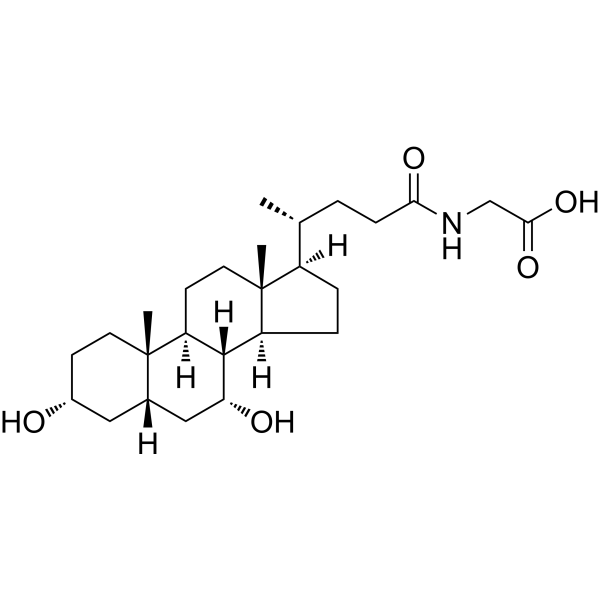
Glycochenodeoxycholic acid (Chenodeoxycholylglycine) is a relatively toxic bile salt generated in the liver from chenodeoxycholic acid and glycine. Glycochenodeoxycholic acid inhibits Autophagosome formation and impairs lysosomal function by inhibiting lysosomal proteolysis and increasing lysosomal pH in human normal liver cells, leading to the Apoptosis of human hepatocyte cells. Glycochenodeoxycholic acid induces stemness and chemoresistance via activating STAT3 signaling pathway in hepatocellular carcinoma cells (HCC). Glycochenodeoxycholic acid is promising for research in the field of cholestasis desease, hepatocellular carcinoma and primary sclerosing cholangitis (PSC) .
loading...
    loading...
9
9 Cited Publications
Art. -Nr.: HY-N2334A
CAS. Nr.: 16564-43-5
Synonyms: Chenodeoxycholylglycine sodium salt; Sodium glycochenodeoxycholate
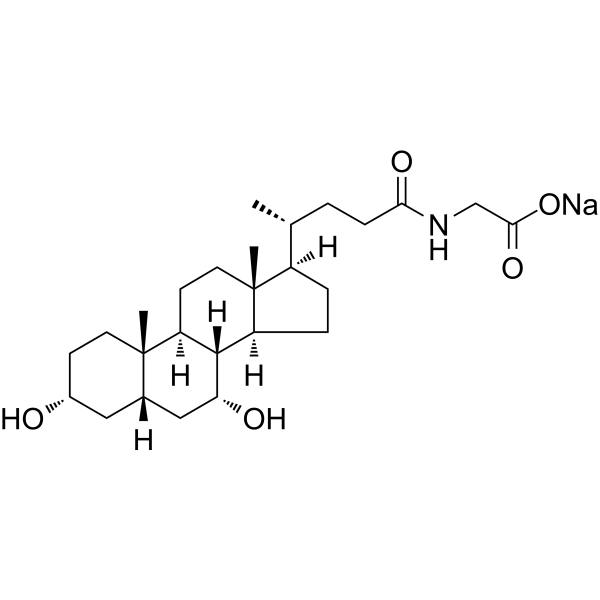
Glycochenodeoxycholic acid sodium salt (Sodium glycochenodeoxycholate) is a relatively toxic bile salt generated in the liver from chenodeoxycholic acid and glycine. Glycochenodeoxycholic acid sodium salt inhibits Autophagosome formation and impairs lysosomal function by inhibiting lysosomal proteolysis and increasing lysosomal pH in human normal liver cells, leading to the Apoptosis of human hepatocyte cells. Glycochenodeoxycholic acid sodium salt induces stemness and chemoresistance via activating STAT3 signaling pathway in hepatocellular carcinoma cells (HCC). Glycochenodeoxycholic acid sodium salt is promising for research in the field of cholestasis desease, hepatocellular carcinoma and primary sclerosing cholangitis (PSC) .
loading...
    loading...

