1. Search Result
Search Result
Results for "

Influenza

" in MedChemExpress (MCE) Product Catalog:

562

Inhibitors & Agonists

4

Screening Libraries

4

Fluorescent Dye

5

Biochemical Assay Reagents

48

Peptides

17

Inhibitory Antibodies

121

Natural
Products

387

Recombinant Proteins

40

Isotope-Labeled Compounds

2

Antibodies

3

Click Chemistry

3

Oligonucleotides

Targets Recommended:
Cat. No. Product Name Target Research Areas Chemical Structure
  • HY-W019823
    4-MUNANA
    2 Publications Verification

    Fluorescent Dye Infection Neurological Disease
    4-MUNANA is a substrate of influenza virus neuraminidase (NA) with high selectivity and irreversible reaction. In the enzymatic reaction, 4-MUNANA is hydrolyzed by NA to generate fluorescent 4-methylumbelliferone (4-MU). By detecting the fluorescence intensity of 4-MU, quantitative analysis of NA activity can be achieved. 4-MUNANA can be used in influenza-related research, such as screening NA inhibitors, developing new anti-influenza drugs, and studying the infection mechanism of influenza viruses .
    4-MUNANA
  • HY-145586

    ZSP1273

    Influenza Virus DNA/RNA Synthesis Infection
    Onradivir (ZSP1273) is an orally active antiviral agent targeting influenza A virus RNA polymerase PB2 subunit with an IC50 of 0.562 nM. Onradivir inhibits cap binding to influenza A virus RNA polymerase PB2 subunit, suppresses viral replication, reduces viral titres and RNA loads, and inhibits influenza A virus infection. Onradivir maintains high survival rates in influenza A virus-infected mice, and reduces influenza A virus titers in a murine model. Onradivir can be used for the research of influenza A virus infection .
    Onradivir
  • HY-P99750

    CT-P23

    Influenza Virus Infection
    Navivumab (CT-P23) is a monoclonal antibody targeting the hemagglutinin (HA) of influenza A virus. Navivumab binds to the HA2 stem fusion domain and the low-variability HA2 region of influenza viruses. Navivumab neutralizes influenza A viruses of subtypes H1, H2, H5, and H9. Navivumab is applicable to research related to influenza and influenza A .
    Navivumab
  • HY-P991446

    Influenza Virus Infection
    MEDI-8852 is a human IgG1 monoclonal antibody against influenza A virus hemagglutinin (HA). MEDI-8852 binds to the conserved HA stalk epitope and neutralizes viral infectivity. MEDI-8852 reduces viral titers in mouse lung tissues. MEDI-8852 is applicable to research related to pandemic influenza . Recommended isotype control: Human IgG1 kappa, Isotype Control (HY-P99001).
    MEDI-8852
  • HY-N11630

    Influenza Virus Biochemical Assay Reagents Infection
    Pinellic acid is an orally active adjuvant for intranasal influenza vaccines. Pinellic acid can be extracted from the tubers of Pinellia ternata Breitenbach. When administered intranasally in combination with influenza HA vaccine, Pinellic acid slightly increases the titers of antiviral IgG antibodies in bronchoalveolar lavage fluid and serum. Pinellic acid shows no hemolytic activity. Pinellic acid can be used in studies related to influenza virus infection .
    Pinellic acid
  • HY-132894

    Influenza Virus Infection
    Pixavir marboxilo is an orally active cap-dependent endonuclease inhibitor with high potency. Pixavir marboxilo can be used for the research of influenza .
    Pixavir marboxilo
  • HY-DY1034

    Fluorescent Dye Infection Neurological Disease
    4-MUNANA (solution) is a substrate of influenza virus neuraminidase (NA) with high selectivity and irreversible reaction. In the enzymatic reaction, 4-MUNANA is hydrolyzed by NA to generate fluorescent 4-methylumbelliferone (4-MU). By detecting the fluorescence intensity of 4-MU, quantitative analysis of NA activity can be achieved. 4-MUNANA can be used in influenza-related research, such as screening NA inhibitors, developing new anti-influenza drugs, and studying the infection mechanism of influenza viruses .
    Solvent and Concentration: Sterile water: 10 mM
    4-MUNANA (solution)
  • HY-164390

    Neu5Acα2-6Galβ1-4GlcNAc

    Endogenous Metabolite Infection Cancer
    6′SLN is a cancer-related extracellular vesicle (EVs) surface glycan that serves as a key form of protein glycosylation in EVs. 6′SLN is also a sialic acid derivative that can interact with hemagglutinins (HAs) from human and avian influenza virus strains, making it useful for research into anti-influenza drugs .
    6′SLN
  • HY-D0871

    N-Cyclohexyltaurine

    Biochemical Assay Reagents Influenza Virus Infection
    CHES (N-Cyclohexyltaurine) is a biological buffer reagent that binds to influenza virus hemagglutinin (HA). CHES mimics the binding mode of sialic acid to the HA receptor-binding site .
    CHES
  • HY-P991059

    Influenza Virus Infection
    VIS-410 is an antibody inhibitor targeting the stem region of hemagglutinin (HA). VIS-410 inhibits influenza virus replication by blocking HA-mediated membrane fusion. VIS-410 exhibits broad-spectrum neutralization against influenza A viruses with group 1 and group 2 hemagglutinins, including subtypes such as H1N1, H3N2, H5N1, and H7N9 (H5N1 IC50 = 1.5 μg/mL). VIS-410 is applicable to research related to influenza A virus infection .
    VIS-410
  • HY-156048
    Trifluoromethyl-tubercidin
    2 Publications Verification

    TFMT

    Influenza Virus Infection
    Trifluoromethyl-tubercidin (TFMT) is an inhibitor of 2'-O-ribose methyltransferase 1 (MTr1). Trifluoromethyl-tubercidin can inhibit the replication of influenza A and B viruses by interfering with the cap-snatching process of the influenza virus. Trifluoromethyl-tubercidin has antiviral activity and low toxicity .
    Trifluoromethyl-tubercidin
  • HY-P1837

    Influenza Virus HSV Infection
    Influenza HA (518-526) is an H-2d-restricted CTL epitope derived from influenza virus hemagglutinin. Influenza HA (518-526) is highly conserved across various H5N1, some H9N2, and H1N1 strains. Influenza HA (518-526) binds to the mouse MHC class I allele K d to form a complex, which is then recognized by specific CD8 + T cells. Influenza HA (518-526) is an immunodominant epitope in influenza-infected BALB/c mice, and it stimulates CD8 + T cells to secrete IFN-γ to induce a robust immune response. Currently, Influenza HA (518-526) is widely used in research related to respiratory syncytial virus (RSV), influenza virus, and H5N1 influenza .
    Influenza HA (518-526)
  • HY-P990811

    Influenza Virus Infection
    Anti-Influenza A virus NP Antibody (H16-L10-4R5 (HB-65)) is mouse-derived IgG2a κ type antibody inhibitor, targeting to influenza virus nucleoprotein. Anti-Influenza A virus NP Antibody (H16-L10-4R5 (HB-65)) reacts with influenza virus nucleoprotein (NP). Anti-Influenza A virus NP Antibody (H16-L10-4R5 (HB-65)) can induce passive immunity to influenza A virus. Anti-Influenza A virus NP Antibody (H16-L10-4R5 (HB-65)) can be used for the detections of western blot, flow cytometry and immunohistochemistry in Influenza A virus infection .
    Anti-Influenza A virus NP Antibody (H16-L10-4R5 (HB-65))
  • HY-P1749

    Influenza Virus Infection
    Influenza HA (307-319) is 13 amino acids 307 to 319 fragment of Influenza HA. Influenza HA is a glycoprotein found on the surface of influenza viruses .
    Influenza HA (307-319)
  • HY-P1788

    Influenza Virus Infection
    Influenza A NP(366-374) Strain A/PR/8/35 is an H2-Db-restricted epitope from Influenza A/PR/8/35 nucleoprotein .
    Influenza A NP(366-374) Strain A/PR/8/35
  • HY-177555

    Influenza Virus Endonuclease Infection
    AV5116 is a cap-dependent endonuclease inhibitor (CENI) that binds to the active site of the cap-dependent endonuclease (CEN) located in the N-terminal domain of the polymerase acidic. AV5116 exhibits potent inhibitory activity against influenza viruses (influenza A, B, and C viruses). AV5116 can be used for the study of influenza virus infections .
    AV5116
  • HY-143744

    GP681; Cap-dependent endonuclease-IN-3

    Endonuclease Influenza Virus Infection
    Suraxavir marboxil (GP681; Cap-dependent endonuclease-IN-3) is a PA subunit cap-dependent endonuclease inhibitor with antiviral activity. Suraxavir marboxil inhibits PA subunit cap-dependent endonuclease activity and inhibits influenza A and/or influenza B viral replication. Suraxavir marboxil can be used alone or in combination with other anti-influenzal agents for the prevention of influenza A and/or influenza B viral infectious diseases. Suraxavir marboxil can be used for the research of influenza A and/or influenza B viral infectious diseases .
    Suraxavir marboxil
  • HY-148309

    Influenza Virus Infection
    Anti-Influenza agent 4 is a potent and selective influenza virus inhibitor with EC50s of 150 nM and 62 nM for strains A/Roma and A/Parma, respectively .
    Anti-Influenza agent 4
  • HY-148202

    HIV Infection
    Influenza antiviral conjugate-1 (INT-2) is a HIV inhibitor, shows potent cell fusion inhibition . Influenza antiviral conjugate-1 is a click chemistry reagent, it contains an Alkyne group and can undergo copper-catalyzed azide-alkyne cycloaddition (CuAAc) with molecules containing Azide groups.
    Influenza antiviral conjugate-1
  • HY-N10581

    Influenza Virus Infection
    Flutimide is a novel endonuclease inhibitor of influenza virus. Flutimide selectively inhibits endonuclease with an IC50 value of 3 μM. Flutimide shows antiviral activity in cell culture. Flutimide can be used for the research of acute contagious respiratory disease, such as influenza .
    Flutimide
  • HY-W892911

    Influenza Virus Infection
    AV-5080 is an orally active neuraminidase inhibitor. AV-5080 can be used for the research of influenza A and B viruses .
    AV-5080
  • HY-131069A

    Influenza Virus Infection
    MBX2329, a potent influenza virus inhibitor, specifically inhibits hemagglutinin (HA)-mediated viral entry with HIV/HA(H5) displaying IC90 of 8.6 μM. MBX2329 inhibits a wide spectrum of influenza A viruses, which includes the 2009 pandemic influenza virus A/H1N1/2009, highly pathogenic avian influenza (HPAI) virus A/H5N1, and oseltamivir-resistant A/H1N1 strains .
    MBX2329
  • HY-123304

    Influenza Virus Infection
    MBX2546 is a influenza A virus inhibitor with the Kd values of 5.3μM and > 100 μM for H1 Hemagglutinin and H3 Hemagglutinin, respectively .
    MBX2546
  • HY-P5502A

    Influenza Virus MHC Infection Inflammation/Immunology
    Influenza NP (311-325) TFA is an Influenza A nucleoprotein peptide. Influenza NP (311-325) TFA is a class II restricted epitope. Influenza NP (311-325) Influenza NP (311-325) TFA fused to OVA protein can be used for immunological response studies .
    Influenza NP (311-325) TFA
  • HY-P1762

    Influenza Virus Infection
    Influenza NP (147-155) is a K d restricted epitope from influenza nucleoprotein .
    Influenza NP (147-155)
  • HY-P2520

    Influenza Virus Inflammation/Immunology
    Influenza HA (110-119) is the 110-119 fragment of influenza virus hemagglutinin that can stimulate Treg cells proliferation .
    Influenza HA (110-119)
  • HY-152078

    Influenza Virus Infection
    Influenza virus-IN-6 (Compound 35) is a potent influenza N-terminal domain of the polymerase acidic protein subunit (PAN) endonuclease inhibitor with an IC50 of 0.20 μM .
    Influenza virus-IN-6
  • HY-P5502

    Influenza Virus Others
    Influenza NP (311-325) is a biologically active peptide derived from the influenza virus nucleoprotein (NP). The NP protein is an MHC class II restricted epitope that elicits host immune responses during viral infection. Influenza NP (311-325) elicits the most potent interferon gamma (IFN-γ) production without stimulating CD8 T cells in mice.
    Influenza NP (311-325)
  • HY-131179

    Influenza Virus Infection
    Influenza A virus-IN-1 is a dihydropyrrolidones derivative and is a potent inhibitor against wide subtypes of influenza A virus (IAV) with IC50 values from 3.11 μM to 7.13 μM. Influenza A virus-IN-1 efficiently inhibits replication of IAV, up-regulates the expression of key antiviral cytokines IFN-β and antiviral protein MxA .
    Influenza A virus-IN-1
  • HY-112543

    Influenza Virus Infection
    S119-8 is a broad spectrum inhibitor of influenza A and B viruses, showing activity against multiple influenza B viruses and an oseltamivir-resistant influenza A virus, but does not inhibit a non-influenza virus, vesicular stomatitis nirus (VSV) .
    S119-8
  • HY-P5550

    Influenza Virus Infection
    Urumin has antiviral activity against the human influenza A virus. Urumin inhibits the growth of PR8 influenza virus (IC50: 3.8 μM). Urumin targets the conserved stalk of H1 hemagglutini, and is effective at neutralizing drug-resistant H1 influenza viruses. Urumin protects naive mice from lethal influenza infection .
    Urumin
  • HY-172515

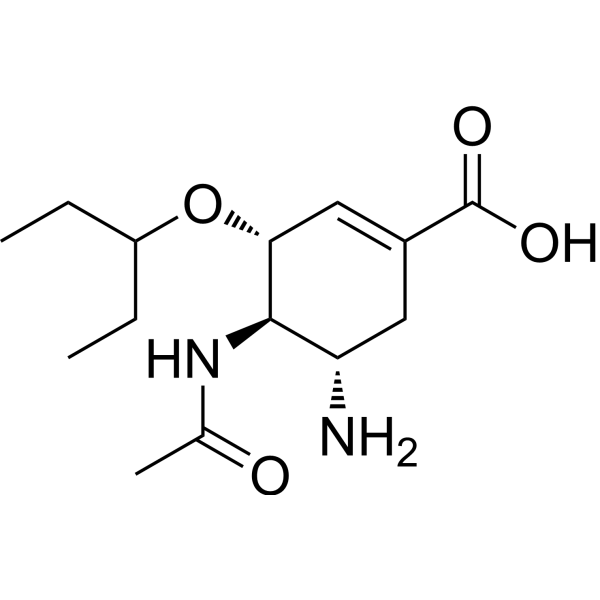
    Influenza Virus Virus Protease Drug Isomer Infection
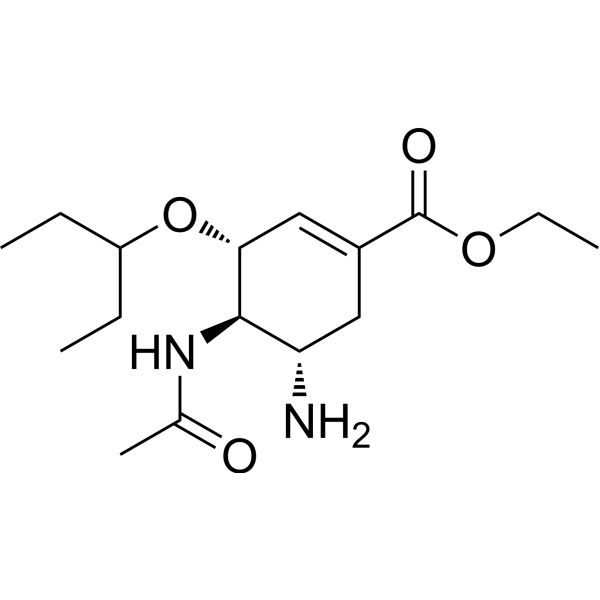
    ent-Oseltamivir, the enantiomer of Oseltamivir (HY-13317), is a neuraminidase (NA) of influenza virus inhibitor. ent-Oseltamivir is promising for research of influenza virus infections .
    ent-Oseltamivir
  • HY-P10593

    Transmembrane Glycoprotein Influenza Virus Cancer
    Influenza A NP (383-391) (HLA-B27) is a peptide sequence derived from tetanus toxin. Influenza A NP (383-391) (HLA-B27) is a broadly immunogenic CD4+ T helper cell epitope that enhances CD8+ cytotoxic T lymphocyte (CTL) responses. Influenza A NP (383-391) (HLA-B27) can be used in breast cancer research .
    Influenza A NP (383-391) (HLA-B27)
  • HY-145586A

    ZSP1273 monohydrate

    Influenza Virus DNA/RNA Synthesis Infection
    Onradivir (ZSP1273) monohydrate is an orally active antiviral agent targeting influenza A virus RNA polymerase PB2 subunit with an IC50 of 0.562 nM. Onradivir monohydrate inhibits cap binding to influenza A virus RNA polymerase PB2 subunit, suppresses viral replication, reduces viral titres and RNA loads, and inhibits influenza A virus infection. Onradivir monohydrate maintains high survival rates in influenza A virus-infected mice, and reduces influenza A virus titers in a murine model. Onradivir monohydrate can be used for the research of influenza A virus infection .
    Onradivir monohydrate
  • HY-N2216

    Onjisaponin F

    Influenza Virus Infection
    Polygalasaponin XXXI (Onjisaponin F) is an effective adjuvant for intranasal administration of influenza Influenza hemagglutinin (HA) vaccine to protect influenza virus infection .
    Polygalasaponin XXXI
  • HY-177791

    PROTACs Influenza Virus Infection
    vRNPs degrader-1 is a potent PROTAC viral ribonucleoproteins (vRNPs) degrader. vRNPs degrader-1 shows broad-spectrum anti-influenza A viruses (IAV) activity by targeting the conserved 5′ end of viral RNA, thereby inducing proteasomal degradation of viral proteins. vRNPs degrader-1 inhibits H1N1, H9N2, and H3N2 infection in mice. vRNPs degrader-1 can be used for influenza research .
    vRNPs degrader-1
  • HY-129150

    Influenza Virus Infection
    Ganoderic acid TR is a broad-spectrum inhibitor of influenza neuraminidase enzymes (NAs). Ganoderic acid TR has IC50 values of 10.9 and 4.6 μM for H5N1 and H1N1 NAs, respectively. Ganoderic acid TR is limited by cytotoxicity and shows only weak activity against Oseltamivir (HY-13317)-resistant H1N1 viruses and influenza B viruses .
    Ganoderic acid TR
  • HY-143769

    Cap-dependent endonuclease-IN-15

    Influenza Virus Infection
    Sebaloxavir marboxil (Cap-dependent endonuclease-IN-15) (Compound c-1) is a potent inhibitor of cap-dependent endonuclease (CEN). Sebaloxavir marboxil inhibits the replication of influenza virus. Sebaloxavir marboxil has the potential for the research of viral infections caused by influenza viruses .
    Sebaloxavir marboxil
  • HY-173204

    Influenza Virus Infection Inflammation/Immunology
    Influenza virus-IN-9 (12) is an influenza endonuclease inhibitor, with an IC50 of 0.03 μM .
    Influenza virus-IN-9
  • HY-156288

    Influenza Virus Infection
    Anti-Influenza agent 5 (Compound IIB-2), chalcone-like derivative, is an influenza nuclear export inhibitor. Anti-Influenza agent 5 has inhibitory effects on oseltamivir-resistant strains. Anti-Influenza agent 5 can impede virus proliferation by blocking the export of influenza virus nucleoprotein .
    Anti-Influenza agent 5
  • HY-155476

    Influenza Virus Infection
    Influenza virus-IN-8 (compound A4) is an inhibitor of influenza virus (Influenza Virus) that induces viral nucleoprotein (NP) aggregation and prevents its nuclear accumulation. Influenza virus-IN-8 has broad-spectrum anti-influenza activity and can inhibit the replication and transcription of influenza A virus. Influenza virus-IN-8 also inhibits Oseltamivir (HY-13317)-resistant H1N1/pdm09 strains .
    Influenza virus-IN-8
  • HY-146004

    Influenza Virus Infection
    Influenza A virus-IN-4 (compound 23b), an Oseltamivir derivative, is a potent inhibitor of neuraminidase. Influenza A virus-IN-4 exerts powerful inhibitions on influenza viruses .
    Influenza A virus-IN-4
  • HY-146147

    Influenza Virus Infection
    Influenza virus-IN-5 (Compound 5f) is an inhibitor of influenza virus hemagglutinin (HA) with an EC50 of 1 nM against influenza A/H3N2 virus .
    Influenza virus-IN-5
  • HY-153570

    Influenza Virus Infection
    Influenza virus-IN-7 (Example 16) is an orally active cap-dependent endonuclease inhibitor that can be used for the research of influenza viral infectious diseases .
    Influenza virus-IN-7
  • HY-P2521

    Influenza Virus Infection Inflammation/Immunology
    NS2 (114-121), Influenza, the 114-121 fragment of influenza nonstructural protein 2 (NS2), is a influenza-derived epitope. NS2 (114-121), Influenza can be used for the research of CD8 + cytotoxic T lymphocyte (CTL) in antiviral immune responses .
    NS2 (114-121), Influenza
  • HY-P2561

    Influenza Virus Infection Inflammation/Immunology
    Influenza Matrix Protein (61-72) is a peptide fragment derived from matrix protein of influenza viruses, corresponds to amino acids 61-72. Influenza Matrix Protein (61-72) is a specific epitope which can induce CD4 + T-cell response .
    Influenza Matrix Protein (61-72)
  • HY-172913

    Influenza Virus Infection
    Influenza A virus-IN-16 (compound 10) is a potent anti-viral agent. Influenza A virus-IN-16 inhibits pseudotyped H7N1 with an EC50 of 0.09 μM .
    Influenza A virus-IN-16
  • HY-170646

    Influenza Virus Infection
    Influenza A virus-IN-15 (Compound 9b), a quinoline derivative, is a broad-spectrum inhibitor of influenza A viruses with acceptable cytotoxicity (IC50: 0.88-6.33 μM). Influenza A virus-IN-15 can inhibit the transcription and replication of viral RNA and is used in research for its antiviral effects against influenza A viruses (IAV) .
    Influenza A virus-IN-15
  • HY-163659

    Influenza Virus Infection
    Anti-Influenza agent 6 (compound 19b) shows inhibitory activity against A/WSN/33/H1N1 (EC50 = 0.015 μM) and influenza B virus Yamagata/16/88 (EC50 = 0.073 μM) and Victotis/2/87 (EC50 = 0.067 μM) .
    Anti-Influenza agent 6
  • HY-149034

    S5

    Influenza Virus Infection Cancer
    Influenza A virus-IN-8 (S5) is a macrocyclic peptide with no cytotoxic. Influenza A virus-IN-8 is also a potent Influenza A Virus (IAV) inhibitor (with sufficient protease stability) with IC50s of 6.7 and 6.6 nM for H1 and H5 variants, respectively. Influenza A virus-IN-8 shows good affinitiescan to H1 variants, binds to a conserved region in the HA stem with a Kd of 1.0 nM .
    Influenza A virus-IN-8

Inquiry Online

Your information is safe with us. * Required Fields.

Salutation


Country or Region *

Applicant Name *


Organization Name *

Department *


Email Address *


Product Name *

Cat. No.


Requested quantity *

Phone Number *


Remarks

Inquiry Online

Inquiry Information

Product Name:
Cat. No.:
Quantity:
MCE Japan Authorized Agent:

