Search Result
Results for "
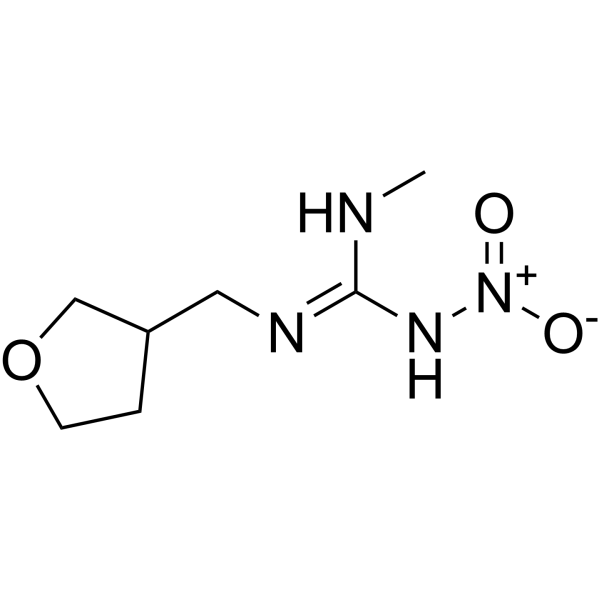
Insecticide
" in MedChemExpress (MCE) Product Catalog:
7
Biochemical Assay Reagents
87
Isotope-Labeled Compounds
| Cat. No. |
Product Name |
Target |
Research Areas |
Chemical Structure |
-
- HY-N0238
-
|
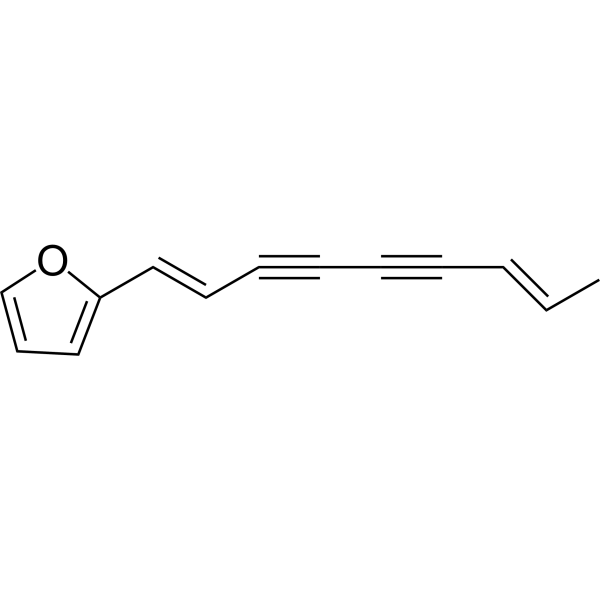
Atractydin
|
Insecticide
|
Infection
Inflammation/Immunology
|
|
Atractylodin (Atractydin) is an orally active active ingredient obtained from the rhizome of Atractylodes lancea and A. chinensis. Atractylodin is a natural insecticide. Atractylodin has anti-inflammatory activity .
|
-
-
- HY-145298
-
|
|
nAChR
|
Infection
|
|
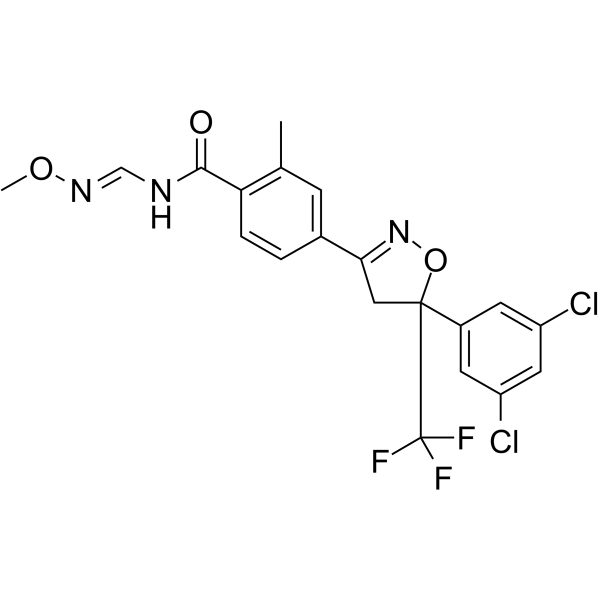
Dicloromezotiaz is a potent insecticide acting on nicotinic acetylcholine receptors (nAChRs). Dicloromezotiaz can be used to control a broad range of lepidoptera .
|
-
-
- HY-Y0055
-
-
-
- HY-B0823
-
|
|
Environmental Pollutants
nAChR
|
Neurological Disease
|
|
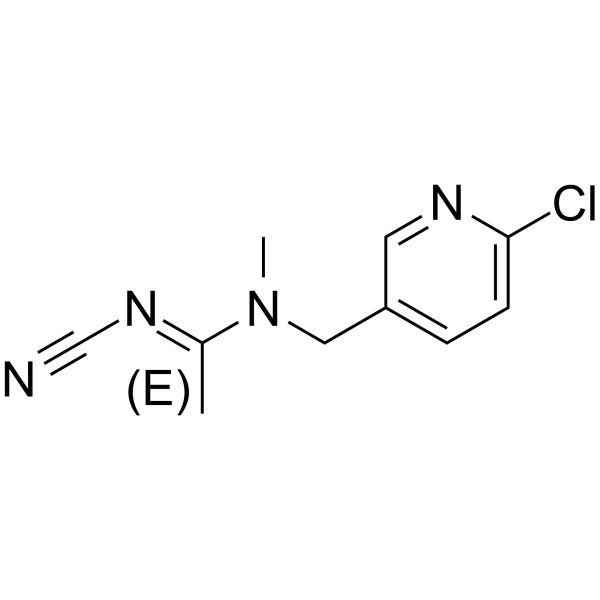
Acetamiprid is a neonicotinoid insecticide used worldwide. Acetamiprid is a nicotinic acetylcholine receptor (nAChR) agonist, and is shown to be associated with neuromuscular and reproductive disorders .
|
-
-
- HY-17516
-
-
-
- HY-117386
-
|
|
Environmental Pollutants
Insecticide
|
Infection
|
|
Methoxyfenozide is an orally active insecticide belonging to the diacylhydrazine and non-steroidal ecdysone agonist classes, which can interfere with the growth and development of insects. Methoxyfenozide has ovicidal and insecticidal activities against phytophagous pests .
|
-
-
- HY-B1315
-
-
-
- HY-B0833
-
-
-
- HY-B0834
-
|
(RS)-Indoxacarb; DPX-JW062
|
Environmental Pollutants
Sodium Channel
|
Neurological Disease
|
|
Indoxacarb ((±)-Indoxacarb; DPX-JW062) is a broad-spectrum oxadiazine insecticide with high insecticidal activity and low mammalian toxicity. Indoxacarb blocks insect sodium channels in nerve preparations and isolated neurons .
|
-
-
- HY-133167
-
|
|
Environmental Pollutants
Insecticide
|
Others
|
|
Clothianidin is a neonicotinoid insecticide. Clothianidin shows excellent long-term control effect in small doses against various insect pests such as Coleoptera, Thysanoptera, Lepidoptera, Diptera, Homoptera, Heteroptera, Orthoptera and Isoptera families. Clothianidin has various application methods and high safety for crops .
|
-
-
- HY-B0841
-
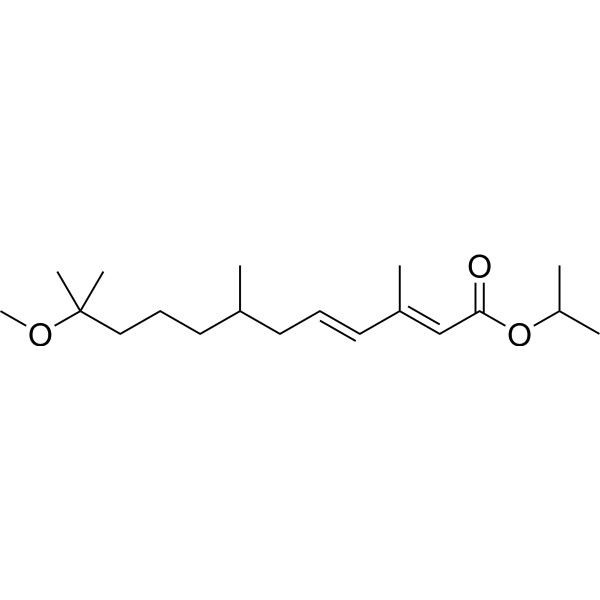
-
-
- HY-B1973
-
|
|
Environmental Pollutants
Insecticide
|
Others
|
|
Diflubenzuron is an insecticide with larvicidal and ovicidal activities. Diflubenzuron can inhibit the synthesis of chitin in insects, affect insect molting and lead to the death of insects .
|
-
-
- HY-12779
-
|
HGW-86
|
Environmental Pollutants
Parasite
|
Others
|
|
Cyantraniliprole (HGW-86) is a potent and selective aniline receptor activator with oral activity. Cyantraniliprole has insecticidal and antioxidant activity .
|
-
-
- HY-136330
-
|
|
Insecticide
Parasite
Sodium Channel
|
Infection
|
|
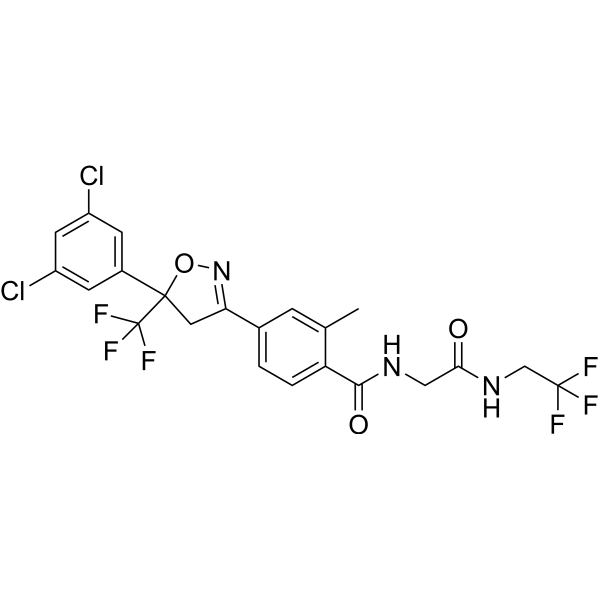
Oxazosulfyl is a sulfyl insecticide with potent and cross-spectrum insecticidal activity. Oxazosulfyl inhibits sodium currents by binding to and stabilizing the slow-inactivated state of voltage-gated sodium channels, leading to insect paralysis. Oxazosulfyl's ability to block sodium channels is correlated with its insecticidal activity .
|
-
-
- HY-B0823S
-
|
|
nAChR
|
Neurological Disease
|
|
Acetamiprid-d3 is the deuterium labeled Acetamiprid. Acetamiprid is a neonicotinoid insecticide. Acetamiprid is a nAChR agonist .
|
-
-
- HY-B2063
-
|
|
Insecticide
|
Infection
|
|
Chlorobenzuron is a chitin synthetase inhibitor and insecticide. Chlorobenzuron inhibits larval development and pupation. Chlorobenzuron controls Prodenia liturd Fabricius and Prodenia liturd Fabricius .
|
-
-
- HY-133204
-
|
IKI-7899
|
Environmental Pollutants
Insecticide
|
Others
|
|
Chlorfluazuron (IKI-7899) is a benzoylurea insecticide. Chlorfluazuron inhibts insect chitin and disrupts normal exuviation by inducing malformations, thereby preventing and controlling lepidopteran pests .
|
-
-
- HY-N16433
-
|
|
Parasite
Insecticide
|
Infection
|
|
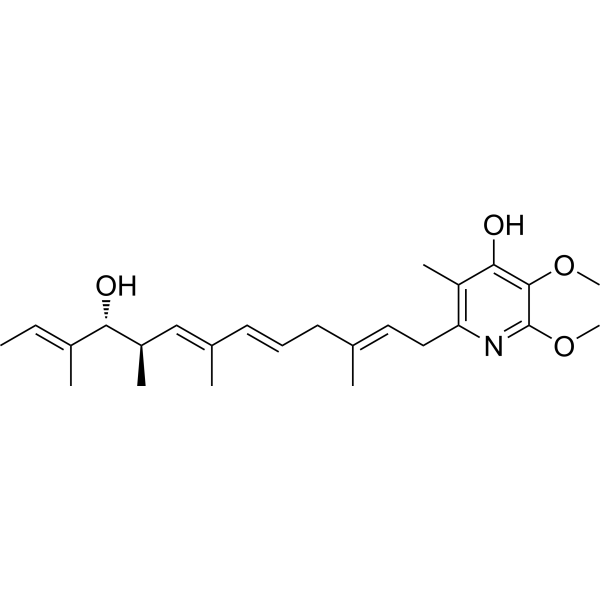
Nodulisporic acid A (Compound 1a) is an insecticidal agent. Nodulisporic acid A can isolated from fermentations of Nodulisporium sp. Nodulisporic acid A has a potent insecticidal activity against the larvae of the blowfly and mosquito with LC50s of 0.5 and 0.3 ppm against A. aegypti and L. seracata, respectively. Nodulisporic acid A can be used for the development of insecticide .
|
-
-
- HY-122062
-
-
-
- HY-W059342
-
-
-
- HY-N11654
-
|
Cardol monoene
|
Insecticide
|
Infection
Cancer
|
|
Bilobol is a potent insecticide against Aedes aegypti with a LC50 of 7.67 mg/L. Bilobol also has antitumor activity .
|
-
-
- HY-B1093
-
-
-
- HY-N7875
-
|
|
Others
|
Others
|
|
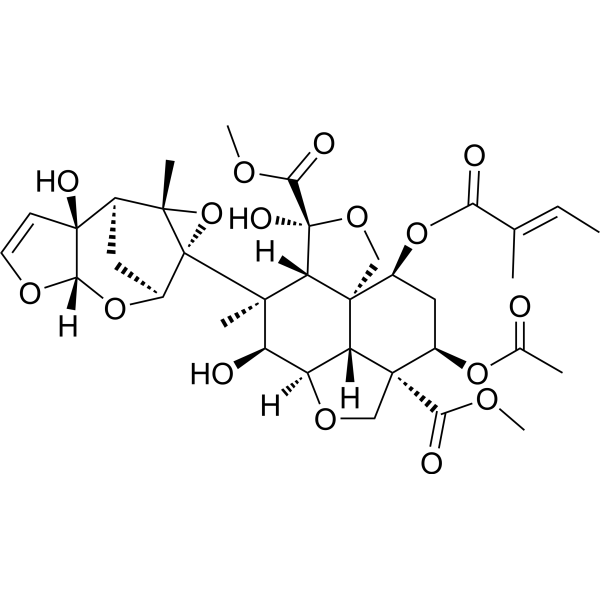
Celangulin is an insecticidal component isolated from Celastrus angulatus. Celangulin activates the calcium channel on the plasma membrane with increasing the intracellular Ca 2+ after influx from the external. Celangulin activates the calcium channel in the ER .
|
-
-
- HY-B0830
-
-
-
- HY-W338247
-
|
|
Insecticide
|
Others
|
|
Imidaclothiz is a kind of neonicotinoid insecticides. Imidaclothiz has excellent insecticidal effect. Imidaclothiz can be used for the research of sucking and biting insects .
|
-
-
- HY-162935
-
|
|
Proton Pump
|
Others
|
|
V-ATPase-IN-1 (Compound 3b-03) is a Vacuolar-type H +-ATPases (V-ATPase) inhibitor (IC50 = 194.80 μM) that can effectively target the V-ATPase subunit A (Kd = 0.803 μM). V-ATPase-IN-1 exhibits insecticidal activity against M. separata (LC50 = 2.64 mM) and contributes to research in the development of chemical insecticides .
|
-
-
- HY-108970
-
|
|
Proton Pump
Bacterial
Fungal
|
Infection
|
|
Bafilomycin D is a specific inhibitor of vacuolar-type ATPase (V-ATPase). Bafilomycin D has antimicrobial, insecticidal, herbicidal and cytotoxic activity .
|
-
-
- HY-N4250
-
|
|
Others
|
Infection
|
|
Periplocoside N, a pregnane glycoside isolated from root powder of Periploca sepium, possesses insecticidal activities against the red imported fire ant .
|
-
-
- HY-136609
-
|
|
nAChR
|
Neurological Disease
|
|
5-AMAM-2-CP is a major metabolite of Acetamiprid. Acetamiprid is a neonicotinoid insecticide used worldwide and is a nAChR agonist .
|
-
-
- HY-N0073A
-
|
|
Insecticide
|
Others
|
|
Spirostan-3-ol is a useful tool to keep bees away from areas recently treated with toxic insecticides .
|
-
-
- HY-178040
-
|
|
Acetyl-CoA Carboxylase
Pyruvate Carboxylase (PC)
Parasite
Insecticide
|
Infection
|
|
Insecticidal agent 26 (Compound A11), a spiro insecticidal agent, is a dual-functional inhibitor of pest Acetyl-CoA carboxylase (ACC) and Pyruvate carboxylase (PC). Insecticidal agent 26 has potent insecticidal activity against Sogatella furcifera with a LC50 of 11.0 μg/mL, with significant biosafety to bees. Insecticidal agent 26 can be used for management of white-backed planthoppers (WBPs) .
|
-
-
- HY-118659
-
|
3-Benzylidenephthalide
|
Insecticide
|
Infection
|
|
Benzalphthalide (3-Benzylidenephthalide), a phthalate compound, is an insecticide .
|
-
-
- HY-136608
-
|
|
nAChR
|
Neurological Disease
|
|
5-AAM-2-CP is a major metabolite of Acetamiprid. Acetamiprid is a neonicotinoid insecticide used worldwide and is a nAChR agonist .
|
-
-
- HY-169547
-
|
|
Insecticide
|
Others
|
|
ETNK-IN-1 (Compound 7) is an inhibitor of ethanolamine kinase (ETNK) with an IC50 value of ≥ 5 μM, which can be used in research for insecticide development .
|
-
-
- HY-W011035
-
|
|
Parasite
|
Infection
|
|
Dodecamethylpentasiloxane is a component of siloxanes and can be used as silicone oil. Dodecamethylpentasiloxane exhibits insecticidal activity against bed bug .
|
-
-
- HY-167826
-
|
|
Insecticide
|
Others
|
|
Spiropidion is a novel tetrameric acid pesticide with highly effective insecticidal and acaricidal activity .
|
-
-
- HY-121039
-
|
|
Insecticide
|
Others
|
|
Avenin is an insecticide that can be used for control of beet weevil .
|
-
-
- HY-133848
-
|
OK-135
|
Insecticide
|
Infection
|
|
Alanycarb (OK-135) is a broad-spectrum oxime carbamate insecticide with contact and oral toxicity. Alanycarb is effective against a wide variety of insect pests and is a pro-insecticide. The principal active molecule produced by the biological modification of Alanycarb within target organisms is methomyl .
|
-
-
- HY-N3068
-
|
Nigakilactone I; Simalikalactone B
|
Others
|
Others
|
|
Picrasin B (Nigakilactone I) can be isolated from the bark of Picrasma quassioides. Picrasin B shows antifeedant and insecticidal activity against Diamondback Moth .
|
-
-
- HY-137031
-
|
XDE-175-L; 3'-O-Ethyl spinosyn L
|
Insecticide
|
Infection
|
|
Spinetoram L (XDE-175-L) is a minor component of Spinetoram. Spinetoram is a kind of green and efficient insecticide with a broad range of action against various insects .
|
-
-
- HY-W111370
-
-
-
- HY-178175
-
|
|
Insecticide
|
Infection
|
|
Chitin synthase-IN-15 (Compound 6k) is a chitin synthase inhibitor. Chitin synthase-IN-15 has insecticidal efficacy against Plutella xylostella, with LC50 values of 0.789 and 0.951 μg/mL. Chitin synthase-IN-15 induces molting disruptions, larval mortality, and aberrant pupation, thereby effectively mitigating pest populations. Chitin synthase-IN-15 is an insecticidal agent with favorable ecological safety profiles .
|
-
-
- HY-N16421
-
-
-
- HY-124232
-
-
-
- HY-123135
-
|
|
Fungal
|
Infection
Cancer
|
|
Scirpusin B (compound 5) is a dimeric antioxidant isolated from Scirpus maritimus L.. Scirpusin B exhibits antitumor, antifungal, insecticidal, and plant growth inhibitory activities.
|
-
-
- HY-177745
-
|
5β-Cholan-24-dimethylamine
|
Insecticide
|
Infection
|
|
25-Azacoprostane (5β-Cholan-24-dimethylamine) is an azasteroid. 25-Azacoprostane has significant inhibitory activity against the molting and metamorphosis processes of various insects. 25-Azacoprostane can be used as insecticide .
|
-
-
- HY-W783157
-
|
Heterofos
|
Insecticide
Cholinesterase (ChE)
|
Infection
|
|
Heterophos (Heterofos) is an organophosphorus insecticide and an AChE inhibitor. Heterophos inhibits AChE's function of decomposing acetylcholine, causing disorder of insect nerve conduction and exerting insecticidal effects .
|
-
-
- HY-168862
-
|
|
Parasite
|
Infection
|
|
Insecticidal agent 18 (compound 34) is a potent insecticidal agent. Insecticidal agent 18 shows acaricidal activity .
|
-
-
- HY-122233
-
-
-
- HY-B2142
-
-
- HY-134625
-
|
|
Insecticide
|
Others
|
|
Kalecide is an isobutylamide found in Piper guineense. Kalecide shows insecticidal activity and can be used for insecticide .
|
-
- HY-N3156
-
|
Dehydroodoratol
|
Parasite
|
Others
|
|
Odoratone (Dehydroodoratol) has insecticidal activity (LC50: 154 ppm) .
|
-
- HY-122401
-
|
|
Insecticide
|
Infection
|
|
Daigremontianin is an insecticidal bufadienolide that can be isolated from K. daigremontiana x tubiflora. Daigremontianin shows insecticidal activity for silkworm .
|
-
- HY-173413
-
|
|
Insecticide
Cholinesterase (ChE)
nAChR
Sodium Channel
GABA Receptor
|
Others
|
|
Insecticidal agent 21 (Compound 6) is an insecticide that is effective against Culex pipiens larvae (LC50: 0.4 μg/mL). Insecticidal agent 21 achieves multi-target neurotoxicity by inhibiting acetylcholinesterase (AChE) and simultaneously targeting other neural receptors (nicotinic acetylcholine receptors (nAChR), voltage-gated sodium channels (VGSC), and γ-aminobutyric acid receptors (GABAAR)). Insecticidal agent 21 has a strong insecticidal effect and can be used in the development of new insecticides to address the problem of mosquito resistance to traditional insecticides .
|
-
- HY-157162
-
|
|
Cholinesterase (ChE)
|
Others
|
|
Insecticidal agent 5 (compound 8) is an AChE-targeting insecticide with an LD50 of 27.65 ppm against the cotton leafworm Spodoptera littoralis .
|
-
- HY-158327
-
|
|
Insecticide
|
Others
|
|
Insecticidal agent 9 (Compound I-17) is an insecticide with good insecticidal activity. Insecticidal agent 9 has LC50 values of 93.32 mg/L and 114.79 mg/L against Plutella xylostella and Ostrinia furnacalis respectively, and exhibits a mortality rate of up to 86.1% against Spodoptera frugiperda at a concentration of 500 mg/L. Insecticidal agent 9 can act simultaneously on the ecdysone receptor (EcR) and three chitinases (OfChtI, OfChtII, and OfChi-h), demonstrating good binding activity (to EcR) and inhibitory rates (to the three chitinases). Insecticidal agent 9 can be used in research for pest management .
|
-
- HY-129813
-
|
|
Insecticide
|
Others
|
|
Aspochracin is an insecticidal substance and a cyclotripeptide which can be extracted from Aspergillus ochraceus. Aspochracin can be utilized in insecticidal research .
|
-
- HY-P10390
-
|
|
Parasite
|
Infection
|
|
Insecticidal agent 11 (compound Q6) is a potent insect growth regulator (IGR)-based insecticide. Insecticidal agent 11 shows high insecticidal activity against Diploptera punctata by inhibiting juvenile hormone (JH) biosynthesis. Insecticidal agent 11 also exhibits insecticidal activity against Plutella xylostella .
|
-
- HY-168570
-
|
|
Parasite
|
Infection
|
|
Insecticidal agent 16 (compound A21) is a potent insecticidal agent. Insecticidal agent 16 shows insecticidal activities against Plutella xylostella and Spodoptera frugiperda with LC50 values of 1.2 and 13.2 µg/mL, respectively .
|
-
- HY-W777612
-
|
|
Others
|
Others
|
|
Cinerin I is a insecticidal ingredient of pyrethrins. Pyrethrins is a biogenic insecticide, that can be extracted from Chrysanthemum cinerariifolium .
|
-
- HY-N12130
-
|
|
Insecticide
|
Others
|
|
Celangulatin D (Compound 2) is an insecticidal sesquiterpene polyol ester isolated from the root bark of the natural Celastrus angulatus. Celangulatin D has insecticidal activity against armyworms. Celangulatin D can be used for insecticidal and anti-tumor research .
|
-
- HY-156256
-
|
|
Bacterial
|
Infection
|
|
Insecticidal agent 4 (compound IA-8) is an aryl isoxazoline derivative with insecticidal activity against M. separate .
|
-
- HY-135862
-
|
|
Insecticide
|
Infection
|
|
Tetraniliprole is an insecticide that can be used in the study of tobacco cutworms (TCW) .
|
-
- HY-132457S
-
|
|
Insecticide
|
Others
|
|
Fenthion-d6 is a deuterium labeled Fenthion. Fenthion is an organophosphorus insecticide .
|
-
- HY-163776
-
|
|
Parasite
|
Others
|
|
Insecticidal agent 13 (compound A15) is a phenylpyrazole derivative with insecticidal and acaricidal activities, which can be used in the research of agricultural pest control .
|
-
- HY-119509
-
-
- HY-145300
-
|
|
nAChR
|
Infection
|
|
nAChR modulator-2, a insecticide, is a insect nAChR orthosteric modulator .
|
-
- HY-145299
-
|
|
nAChR
|
Infection
|
|
nAChR modulator-1, a insecticide, is a insect nAChR orthosteric modulator .
|
-
- HY-B0830S
-
-
- HY-136396
-
|
|
Parasite
|
Others
|
|
Chlorempenthrin is a synthetic pyrethroid insecticide . Chlorempenthrin is a click chemistry reagent, it contains an Alkyne group and can undergo copper-catalyzed azide-alkyne cycloaddition (CuAAc) with molecules containing Azide groups.
|
-
- HY-119863
-
|
|
Insecticide
|
Others
|
|
Barthrin is a pyrethroid insecticide. The toxicity of Barthrin to housefly (Musca domestica L.) at the 50% mortality level is 14 % of that of Barthrin (HY-B1559) .
|
-
- HY-120479
-
|
|
Cholinesterase (ChE)
|
Neurological Disease
|
|
Cythioate is an organophosphorous insecticide and anthelmintic. Cythioate is an acetylcholinesterase inhibitor which interferes with neuromuscular transmission in ectoparastites .
|
-
- HY-B0830R
-
|
|
Reference Standards
Cholinesterase (ChE)
|
Neurological Disease
|
|
Isoprocarb (Standard) is the analytical standard of Isoprocarb. This product is intended for research and analytical applications. Isoprocarb is carbamate insecticide that widely used to control rice paddy lice and leafhopper. Isoprocarb is also an AChE inhibitor .
|
-
- HY-W338247R
-
|
|
Insecticide
Reference Standards
|
Others
|
|
Imidaclothiz (Standard) is the analytical standard of Imidaclothiz. This product is intended for research and analytical applications. Imidaclothiz is a kind of neonicotinoid insecticides. Imidaclothiz has excellent insecticidal effect. Imidaclothiz can be used for the research of sucking and biting insects .
|
-
- HY-157192
-
|
|
Insecticide
|
Infection
|
|
Clothianidin-2-S-propanoic acid is a clothianidin hapten. Clothianidin-2-S-propanoic can be used for the research of insecticide .
|
-
- HY-155388
-
|
|
Insecticide
|
Others
|
|
ZK-PI-9 inhibits trehalase. ZK-PI-9 inhibits chitinase activity in female pupae. ZK-PI-9 is an insecticide .
|
-
- HY-W775317
-
|
NNI-1501
|
Insecticide
|
Infection
|
|
Benzpyrimoxan (NNI-1501) is an insecticide that shows remarkable activity against nymphs of rice planthoppers .
|
-
- HY-N7939
-
|
|
Insecticide
|
Others
|
|
Celangulin XIX is a insecticidal that can be isolated from Celastrus angulatu. Celangulin XIX has strong insecticidal activity against Mythimna separate with an ED50 of 73.3 μg/g .
|
-
- HY-B0834R
-
|
(RS)-Indoxacarb (Standard); DPX-JW062 (Standard)
|
Reference Standards
Sodium Channel
|
Neurological Disease
|
|
(±)-Indoxacarb (Standard) is the analytical standard of Indoxacarb. This product is intended for research and analytical applications. Indoxacarb ((±)-Indoxacarb; DPX-JW062) is a broad-spectrum oxadiazine insecticide with high insecticidal activity and low mammalian toxicity. Indoxacarb blocks insect sodium channels in nerve preparations and isolated neurons .
|
-
- HY-149864
-
|
|
Insecticide
|
Others
|
|
Insecticidal agent 3 is a multichitinase inhibitors, belongs to insect growth regulators (IGRs),with Kis of 0.8μM, 11.9 μM, and 2.3 μM for Of ChtI, Of ChtII, and Of Chi-h, respectively. Insecticidal agent 3 exhibits insecticidal activity against two lepidopteran pests by interfering with normal insect growth and molting .
|
-
- HY-149399
-
|
|
GABA Receptor
|
Infection
|
|
GABA-IN-1 (Compound 6) is a GABA inhibitor. GABA-IN-1 has larvicidal activity and insecticidal effect, with mortality rates of 93% at 50 mg/L .
|
-
- HY-149400
-
|
|
GABA Receptor
|
Infection
|
|
GABA-IN-2 (Compound 5) is a GABA inhibitor. GABA-IN-2 has larvicidal activity and insecticidal effect, with mortality rates of 87% at 50 mg/L .
|
-
- HY-N1520
-
|
|
Others
|
Infection
|
|
Rediocide A is a highly modified daphnane with potent insecticidal activity. Rediocide A can be isolated from Trigonostemon reidioides .
|
-
- HY-W059342R
-
|
YI-5301 (Standard)
|
Biochemical Assay Reagents
Reference Standards
|
Infection
|
|
Etoxazole (Standard) is the analytical standard of Etoxazole. This product is intended for research and analytical applications. Etoxazole (YI-5301) is an organofluorine insecticide widely used in agriculture. Etoxazole affects the nymphs, eggs, and larvae of spider mites by inhibiting chitin biosynthesis .
|
-
- HY-N16476
-
|
|
GABA Receptor
nAChR
|
Infection
|
|
Spinosyn J is a non-competitive insect nicotinic acetylcholine receptor (nAChR) and γ-aminobutyric acid (GABA) receptor modulator with insecticidal activity. Spinosyn J is promising for research of agricultural pests .
|
-
- HY-W587768
-
|
S-21074
|
Insecticide
|
Others
|
|
Metoxadiazone is a type of insecticide that effectively controls a wide range of insects, including cockroaches and ants. Metoxadiazone exerts its insecticidal effect by impacting the nervous system of insects. Metoxadiazone can be used for research into its potential toxicity to humans and other non-target organisms .
|
-
- HY-169565
-
|
|
Insecticide
|
Others
|
|
ETNK-IN-2 (Compound 8) is an inhibitor of ethanolamine kinase (ETNK) with an IC50 value of ≥ 5 μM, which can be used in research for insecticide development .
|
-
- HY-126780
-
|
|
Antibiotic
Fungal
|
Infection
|
|
Nikkomycin N is a nucleoside antibiotic, which is initially produced by Streptomyces tendae. Nikkomycin N exhibits fungicidal and insecticidal properties through inhibition of chitin synthesis .
|
-
- HY-133167R
-
|
|
Insecticide
Reference Standards
|
Others
|
|
Clothianidin (Standard) is the analytical standard of Clothianidin. This product is intended for research and analytical applications. Clothianidin is a neonicotinoid insecticide. Clothianidin shows excellent long-term control effect in small doses against various insect pests such as Coleoptera, Thysanoptera, Lepidoptera, Diptera, Homoptera, Heteroptera, Orthoptera and Isoptera families. Clothianidin has various application methods and high safety for crops .
|
-
- HY-117179
-
|
|
Parasite
|
Infection
|
|
Endosulfan sulfate is the major metabolite of the insecticide Endosulfan, used for various crops. Endosulfan sulfate is more toxic and persistent than Endosulfan .
|
-
- HY-157037
-
|
|
Parasite
|
Others
|
|
OfChi-h-IN-2 (compound TQ19) is a potent OfChi-h inhibitor with a Ki value of 0.33 μM. OfChi-h-IN-2 can significantly inhibit the growth and development of Ostrinia nubilalis larvae. OfChi-h-IN-2 can be used in agricultural insecticide research .
|
-
- HY-162497
-
|
|
nAChR
|
Others
|
|
Insecticidal agent 12 (Compound F45) has insecticidal activity (LC50: 2.94 μg/mL). Insecticidal agent 12 is an nAChR inhibitor .
|
-
- HY-W935003
-
-
- HY-175339
-
|
|
nAChR
|
Infection
|
|
Insecticidal agent 25 (Compound WZ18) is an insecticide targeting the nicotinic acetylcholine receptors (nAChRs) in insect nervous systems. Insecticidal agent 25 disrupts neurotransmission by competitively binding to nAChRs, leading to insect paralysis and death .
|
-
- HY-W747609
-
|
|
Parasite
|
Infection
|
|
Butoxycarboxim is an organophosphate insecticide/acaricide mainly used in agriculture to control a variety of pests.
|
-
- HY-133992
-
|
|
Drug Metabolite
|
Others
|
|
Fensulfothion sulfone is a metabolite of the organophosphorus insecticide fensulfothion.
|
-
- HY-W587961
-
|
|
Insecticide
|
Infection
|
|
S-Hydroprene is an insecticide. S-Hydroprene prolongs larval and pupa durations, disrupts larval development, suppresses pupation, and exhibits larvicidal activity against Culex quinquefasciatus and Blatta orientalis .
|
-
- HY-178337
-
|
|
Insecticide
|
Infection
|
|
Insecticidal agent 27 (Compound D36) is an insecticide agent. Insecticidal agent 27 shows superior activity against P. xylostella, with a LC50 value of 0.025 mg/L. Insecticidal agent 27 exhibits LC50 values of 0.934 and 0.601 mg/L against Spodoptera frugiperda and Ostrinia furnacalis,respectively .
|
-
- HY-W743773
-
|
|
Parasite
|
Infection
|
|
γ-Cyhalothrin is an orally active, blood-brain barrier permeable Type II synthetic pyrethroid insecticide. γ-Cyhalothrin is the insecticidally active enantiomer of λ-Cyhalothrin (HY-B0836). γ-Cyhalothrin disrupts voltage-gated sodium channels, induces salivation and reduces spontaneous activity in rats. γ-Cyhalothrin exerts toxic effects on aquatic invertebrates and fish, triggers community-level effects in aquatic ecosystems, and inhibits host-seeking Ixodes scapularis nymphs in residential lawn ecotones. γ-Cyhalothrin is applicable to insecticidal-related research .
|
-
- HY-134099
-
|
|
Drug Metabolite
|
Others
|
|
Vamidothion-sulfone is the oxidative metabolite of the insecticide and acaricide Vamidothion (HY-116870) .
|
-
- HY-133167S
-
|
|
Isotope-Labeled Compounds
|
Others
|
|
Clothianidin-d3 is the deuterium labeled Clothianidin.Clothianidin-d3 is a neonicotinoid insecticide. Clothianidin-d3 shows excellent long-term control effect in small doses against various insect pests such as Coleoptera, Thysanoptera, Lepidoptera, Diptera, Homoptera, Heteroptera, Orthoptera and Isoptera families. Clothianidin-d3 has various application methods and high safety for crops .
|
-
- HY-133204R
-
|
IKI-7899 (Standard)
|
Insecticide
Reference Standards
|
Others
|
|
Chlorfluazuron (Standard) is the analytical standard of Chlorfluazuron. This product is intended for research and analytical applications. Chlorfluazuron (IKI-7899) is a benzoylurea insecticide. Chlorfluazuron inhibts insect chitin and disrupts normal exuviation by inducing malformations, thereby preventing and controlling lepidopteran pests .
|
-
- HY-B0841R
-
|
|
Reference Standards
Cholinesterase (ChE)
|
Neurological Disease
|
|
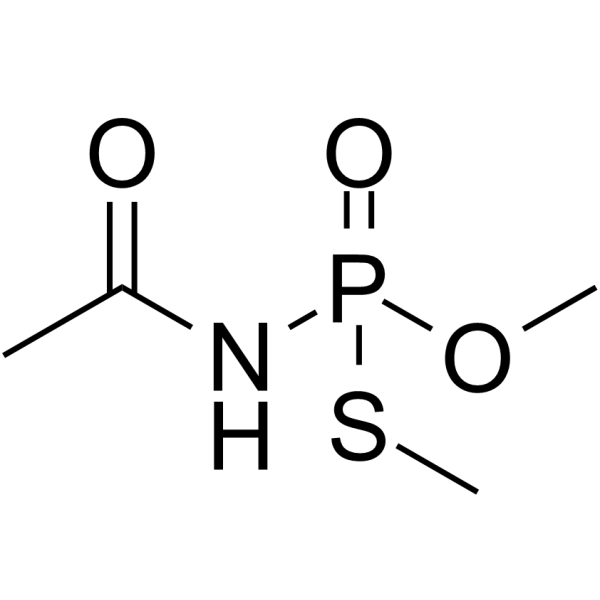
Acephate (Standard) is the analytical standard of Acephate. This product is intended for research and analytical applications. Acephate is a broad-spectrum anticholinesterase insecticide. Acephate acts via inhibiting AChE activity of insects. Acephate is used for control of several species of insects in agriculture and in horticulture .
|
-
- HY-B1093R
-
|
|
Reference Standards
Parasite
Cholinesterase (ChE)
|
Infection
|
|
Fenchlorphos (Standard) is the analytical standard of Fenchlorphos. This product is intended for research and analytical applications. Fenchlorphos, an organophosphate, is an insecticide. Fenchlorphos is an inhibitor of the enzyme acetylcholinesterase (AChE). Fenchlorphos is able to cause mitochondrial dysfunction .
|
-
- HY-N10743
-
|
|
Parasite
|
Infection
|
|
Pipercide is an amide of piper nigrum fruits. Pipercide has larvicidal activity to mosquito. Pipercide acts on the nervous system and induces repetitive discharge on the central nerve cord. Pipercide can be used as an insecticide .
|
-
- HY-W587768R
-
|
S-21074 (Standard)
|
Insecticide
Reference Standards
|
Others
|
|
Metoxadiazone (Standard) is the analytical standard of Metoxadiazone. This product is intended for research and analytical applications. Metoxadiazone is a type of insecticide that effectively controls a wide range of insects, including cockroaches and ants. Metoxadiazone exerts its insecticidal effect by impacting the nervous system of insects. Metoxadiazone can be used for research into its potential toxicity to humans and other non-target organisms .
|
-
- HY-N12548
-
|
|
Others
|
Others
|
|
Thamnosmonin is a coumarin that can be isolated from Sida acuta and Sida rhombifolia. Thamnosmonin has insecticidal activity .
|
-
- HY-119419
-
-
- HY-119360
-
|
|
Insecticide
|
Others
|
|
Lilly 18947 (free base) is a selective drug-potentiating agent that synergizes carbamate insecticides. Lilly 18947 (free base) inhibits a variety of detoxication mechanisms in mammals .
|
-
- HY-132409S
-
-
- HY-W747601
-
|
|
Cholinesterase (ChE)
SOD
Reactive Oxygen Species (ROS)
Bcl-2 Family
MDM-2/p53
Apoptosis
|
Infection
|
|
Chlorphoxim is a broad-spectrum and highly efficient insecticide. Chlorphoxim kills pests by inhibiting AChE. Chlorphoxim inhibits the activities of SOD and CAT in zebrafish embryos. Chlorphoxim induces oxidative stress in zebrafish embryos by activating ROS. Chlorphoxim induces apoptosis by upregulating the expression levels of Bax, Bcl2 and p53 in zebrafish embryos. Chlorphoxim exhibits neurotoxicity and developmental toxicity. Chlorphoxim is used in agricultural research for the control of various pests .
|
-
- HY-182041
-
|
|
Insecticide
GABA Receptor
|
Infection
|
|
Insecticidal agent 31 is an insecticide targeting the γ-aminobutyric acid receptor (GABAR). Insecticidal agent 31 exhibits insecticidal activity against Plutella xylostella, Spodoptera frugiperda and Spodoptera exigua. Insecticidal agent 31 can serve as a lead compound for the design and synthesis of novel isoxazole-based insecticides .
|
-
- HY-P1991
-
|
|
Parasite
|
Infection
|
|
Isariin D is a cyclodepsipeptide isolated from the fungus Isaria felina, which exhibits significant insecticidal activity against Galleria mellonella larvae .
|
-
- HY-136394
-
-
- HY-B2063R
-
|
|
Insecticide
Reference Standards
|
Infection
|
|
Chlorobenzuron (Standard) is the analytical standard of Chlorobenzuron (HY-B2063). This product is intended for research and analytical applications. Chlorobenzuron is a chitin synthetase inhibitor and insecticide. Chlorobenzuron inhibits larval development and pupation. Chlorobenzuron controls Prodenia liturd Fabricius and Prodenia liturd Fabricius .
|
-
- HY-131937
-
-
- HY-Z8942
-
|
|
Insecticide
Parasite
Chloride Channel
|
Infection
|
|
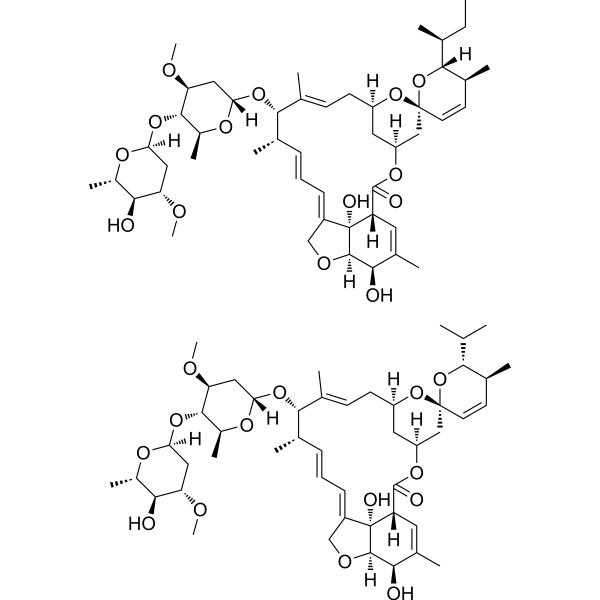
Avermectin B2a is an insecticide targeting glutamate-gated chloride channels (GluCls). Avermectin B2a causes hyperpolarization of nematode/insect neurons and subsequent paralysis/death. Avermectin B2a is promising for research of agricultural pests .
|
-
- HY-B0823R
-
|
|
Reference Standards
nAChR
|
Neurological Disease
|
|
Acetamiprid (Standard) is the analytical standard of Acetamiprid. This product is intended for research and analytical applications. Acetamiprid is a neonicotinoid insecticide used worldwide. Acetamiprid is a nicotinic acetylcholine receptor (nAChR) agonist, and is shown to be associated with neuromuscular and reproductive disorders .
|
-
- HY-Y0055R
-
|
Thiodiphenylamine (Standard)
|
Reference Standards
Antibiotic
Fungal
Bacterial
Parasite
|
Infection
Neurological Disease
|
|
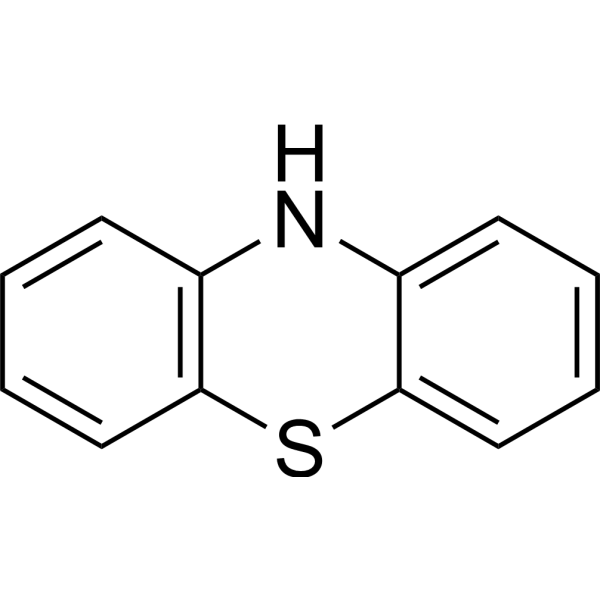
Phenothiazine (Standard) is the analytical standard of Phenothiazine. This product is intended for research and analytical applications. Phenothiazine is an antibiotic which has insecticidal, fungicidal, antibacterial and anthelmintic activities. Phenothiazine also can be used for the research of neurological diseases .
|
-
- HY-W741033
-
|
|
Drug Metabolite
|
Others
|
|
Demeton-S sulfone is an oxidative metabolite of the organophosphorus insecticide Disulfoton .
|
-
- HY-B1973R
-
|
|
Insecticide
Reference Standards
|
Others
|
|
Diflubenzuron (Standard) is the analytical standard of Diflubenzuron. This product is intended for research and analytical applications. Diflubenzuron is an insecticide with larvicidal and ovicidal activities. Diflubenzuron can inhibit the synthesis of chitin in insects, affect insect molting and lead to the death of insects .
|
-
- HY-12779R
-
|
HGW-86 (Standard)
|
Reference Standards
Parasite
|
Others
|
|
Cyantraniliprole (Standard) is the analytical standard of Cyantraniliprole. This product is intended for research and analytical applications. Cyantraniliprole (HGW-86) is a potent and selective aniline receptor activator with oral activity. Cyantraniliprole has insecticidal and antioxidant activity .
|
-
- HY-114899S
-
-
- HY-B1885
-
|
|
Environmental Pollutants
Apoptosis
Insecticide
Cholinesterase (ChE)
AMPK
PI3K
Parasite
Akt
SOD
|
Infection
|
|
Fenitrothion is a broad-spectrum and orally active insecticide/acaricide. Fenitrothion inhibits cholinesterase, AMPKα and IRS1/PI3K/AKT. Fenitrothion causes Apoptosis, reduces SOD activity. Fenitrothion shows insecticidal effect against Rhyzopertha dominica and Tribolium castaneum adults. Fenitrothion is widely used in cotton crops, vegetable crops, fruit crops and field crops, especially rice. Fenitrothion can be used for brain and spleen toxicology studies .
|
-
- HY-169999
-
|
|
Parasite
|
Infection
|
|
AAP4 is a potent OfChi-h and OfHex1 inhibitor with Ki values of 29.3 nM and 4.9 μM, respectively. AAP4 shows insecticidal activity for lepidopteran pests Ostrinia furnacalis .
|
-
- HY-W087962
-
|
|
Insecticide
|
Others
|
|
Phenylphosphonic acid (Compound 1) is a synthetic pyrethroid insecticide that can effectively control some underground pests. Phenylphosphonic acid also can be a ligand in some metal-catalyzed reactions, which is promising for research of metal phosphonates comprising layered structures and pesticides .
|
-
- HY-119604
-
|
|
Antibiotic
Bacterial
|
Infection
|
|
Cafamycin is a polyether antibiotic active against gram-positive bacteria, including Staphylococcus aureus. Cafamycin also demonstrates insecticidal and antiprotozoal activities. Cafamycin is isolated from the culture fluid of Streptomyces sp., an organism producing the anthracycline antibiotic galtamycin .
|
-
- HY-W011035R
-
|
|
Reference Standards
Parasite
|
Infection
|
|
Dodecamethylpentasiloxane (Standard) is the analytical standard of Dodecamethylpentasiloxane. This product is intended for research and analytical applications. Dodecamethylpentasiloxane is a component of siloxanes and can be used as silicone oil. Dodecamethylpentasiloxane exhibits insecticidal activity against bed bug .
|
-
- HY-114899R
-
-
- HY-N0238R
-
|
Atractydin (Standard)
|
Reference Standards
Others
|
Infection
Inflammation/Immunology
|
|
Atractylodin (Standard) is the analytical standard of Atractylodin. This product is intended for research and analytical applications. Atractylodin (Atractydin) is an orally active active ingredient obtained from the rhizome of Atractylodes lancea and A. chinensis. Atractylodin is a natural insecticide. Atractylodin has anti-inflammatory activity .
|
-
- HY-136897
-
|
|
Endogenous Metabolite
Insecticide
Parasite
|
Infection
|
|
Avermectin A2b (Compound A2b) is an avermectin. Avermectins are produced during the fermentation of the actinomycete Streptomyces avermitilis. Avermectins possess anthelmintic and insecticidal properties, and are commonly used as insecticides for the control of pests and parasitic worms .
|
-
- HY-W089538R
-
|
|
Reference Standards
Bacterial
|
Infection
|
|
2-Ethyl-6-methylphenol, an alkylphenol, is isolated form the tumorigenic neutral subfraction of cigarette smoke condensate. 2-Ethyl-6-methylphenol exhibits insecticidal and bactericidal activities .
|
-
- HY-W089538
-
|
|
Bacterial
|
Infection
|
|
2-Ethyl-6-methylphenol, an alkylphenol, is isolated form the tumorigenic neutral subfraction of cigarette smoke condensate. 2-Ethyl-6-methylphenol exhibits insecticidal and bactericidal activities .
|
-
- HY-B1881
-
-
- HY-117179R
-
|
|
Reference Standards
Parasite
|
Infection
|
|
Endosulfan sulfate (Standard) is the analytical standard of Endosulfan sulfate. This product is intended for research and analytical applications. Endosulfan sulfate is the major metabolite of the insecticide Endosulfan, used for various crops. Endosulfan sulfate is more toxic and persistent than Endosulfan .
|
-
- HY-115584R
-
|
|
Parasite
Reference Standards
|
Infection
|
|
Lufenuron (Standard) is the analytical standard of Lufenuron. This product is intended for research and analytical applications. Lufenuron is a lipophilic benzoylurea insecticide and a chitin synthesis inhibitor that can used for flea and fish lice control. Lufenuron inhibits moulting of arthropods .
|
-
- HY-126741
-
|
|
Environmental Pollutants
Parasite
Caspase
NF-κB
Apoptosis
Bcl-2 Family
|
Infection
Inflammation/Immunology
Cancer
|
|
Azadirachtin is an oral active triterpenoid compound with anticancer, antimalarial, anti-inflammatory, and insecticidal activities. Azadirachtin induces cell apoptosis through the mitochondrial pathway (by inhibiting Bcl-2/Bax ratio or activating Apaf-1 and caspase-3) or through death receptors (by inhibiting TNFR activation). Additionally, Azadirachtin exerts its anti-inflammatory effects by inhibiting NF-кB signaling pathway activation, and it exhibits insecticidal activity by inducing apoptosis in insect cells .
|
-
- HY-P2087
-
|
|
Insecticide
Parasite
Bacterial
|
Infection
|
|
Bassianolide is a cyclooligomer depsipeptide secondary metabolite. Bassianolide is an insecticidal virulence factor of Beauveria bassiana. Bassianolide inhibits acetylcholine-induced smooth muscle contraction, and shows moderate antiplasmodial and anti-mycobacterial activities .
|
-
- HY-B0835
-
-
- HY-119419R
-
|
|
Reference Standards
Cholinesterase (ChE)
Parasite
|
Neurological Disease
|
|
Pirimicarb (Standard) is the analytical standard of Pirimicarb. This product is intended for research and analytical applications. Pirimicarb is a fast-acting selective carbamate insecticide on a wide range of crops including cereals, sugar beet, potatoes, fruits and vegetables. Pirimicarb is an AChE inhibitor and an acaricide .
|
-
- HY-121366
-
|
RU-15525
|
Calcium Channel
|
Others
|
Kadethrin is a synthetic pyrethroid that acts as an insecticide. Kadethrin can affect the binding of [3H] full-histamine toxin ([3H]H12-HTX) to the nicotinic acetylcholine (Ach) receptor/channel binding sites, and it inhibits the Ca 2+ flux through the receptor ion channels .
|
-
- HY-138800
-
|
|
nAChR
|
Neurological Disease
|
|
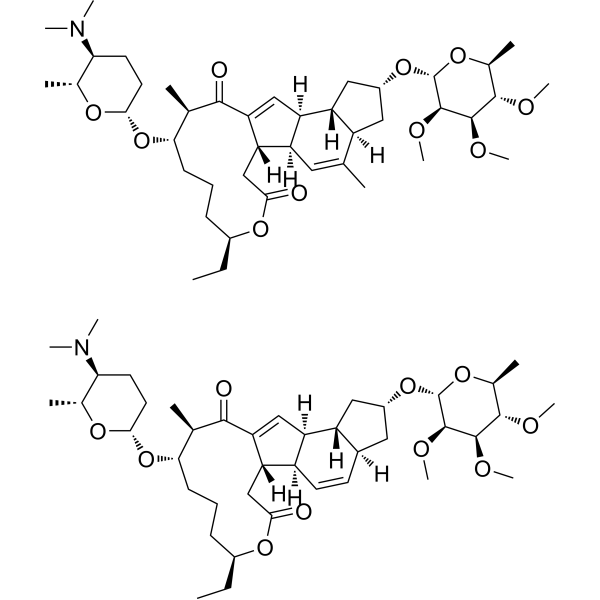
Spinosad, a mixture of spinosyns A and D known as fermentation products of a soil actinomycete (Saccharopolyspora spinosa), is a biological neurotoxic insecticide with a broader action spectrum. Spinosad targets the nicotinic acetylcholine receptor (nAChRs) of the insect nervous system. Spinosad has an excellent environmental and mammalian toxicological profile. Larvicidal activity .
|
-
- HY-N10013
-
|
|
Environmental Pollutants
Insecticide
|
Others
|
|
β-Damascone is an aroma active rice volatile and is widely used in perfume compositions. β-Damascone has also received certain attention as a potential cancer chemopreventive and a mosquito and muscoid insecticide .
|
-
- HY-B1885R
-
|
|
Reference Standards
Insecticide
Parasite
Cholinesterase (ChE)
AMPK
PI3K
Akt
Apoptosis
SOD
|
Infection
|
|
Fenitrothion (Standard) is the analytical standard of Fenitrothion (HY-B1885). This product is intended for research and analytical applications. Fenitrothion is a broad-spectrum and orally active insecticide/acaricide. Fenitrothion inhibits cholinesterase, AMPKα and IRS1/PI3K/AKT. Fenitrothion causes Apoptosis, reduces SOD activity. Fenitrothion shows insecticidal effect against Rhyzopertha dominica and Tribolium castaneum adults. Fenitrothion is widely used in cotton crops, vegetable crops, fruit crops and field crops, especially rice. Fenitrothion can be used for brain and spleen toxicology studies .
|
-
- HY-N1621
-
|
|
Fungal
Parasite
|
Infection
|
|
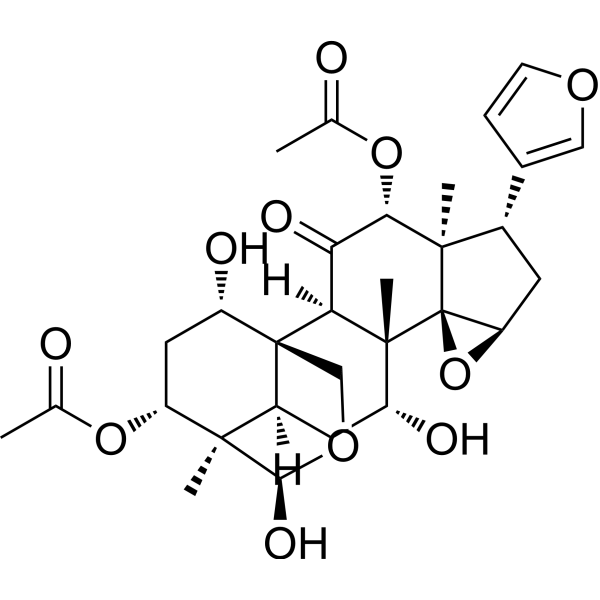
1-Deacetylnimbolinin B is a nimbolinin-type limonoid isolated from the fruits of Melia toosendan. Limonoids are a class of highly oxygenated nortriterpenoids that exhibit insecticidal, antifungal, nematicidal and cytotoxic properties .
|
-
- HY-115584
-
|
|
Environmental Pollutants
Parasite
|
Infection
|
|
Lufenuron is an orally active lipophilic benzoylurea insecticide and a chitin synthesis inhibitor that can used for flea and fish lice control. Lufenuron inhibits moulting of arthropods. Lufenuron induces reproductive toxicity, genotoxic effects and oxidative stresses in pregnant albino rats and their fetuses .
|
-
- HY-163352
-
|
|
Insecticide
|
Infection
|
|
Chitinase-IN-6 (Compound 4h) is a potent dual-Chitinase inhibitor, with Ki values of 1.82 and 2.00 μM against OfChtI and OfChi-h, respectively. Chitinase-IN-6 exhibits certain growth inhibition effects against Ostrinia furnacalis. Chitinase-IN-6 is a potential novel insecticide candidate friendly to nontarget organisms .
|
-
- HY-B0835R
-
-
- HY-N8355
-
|
|
Endogenous Metabolite
|
Infection
|
|
Beauveriolide I is the metabolite of Entomopathogenic Fungi Beauveria sp.. Beauveriolide I (1) exhibits moderate insecticidal activities against Spodoptera litura and Callosobruchus chinensis .
|
-
- HY-N3230
-
|
Murraxocin
|
TRP Channel
|
Inflammation/Immunology
|
|
Murpanicin (murraxocin) is a coumarin that is a thermosensitive transient receptor potential vanilloid 2 (TRPV2) channel inhibitor. Murpanicin has significant anti-inflammatory and insecticidal effects.
|
-
- HY-145296
-
|
|
Environmental Pollutants
nAChR
|
Infection
|
|
Triflumezopyrim, a mesoionic insecticide, has high efficiency at a low dosage, and is mainly used to control hopper species. Triflumezopyrim mainly acts on the nicotinic acetylcholine receptor (nAChR) inhibition, which is very highly efficient, rapidly effective, and nearly nontoxic to nontarget arthropods .
|
-
- HY-W009811
-
-
- HY-W009811R
-
|
|
Insecticide
Reference Standards
|
Others
|
|
2-Tridecanone, a nonalkaloid insecticide, is isolated from the wild tomato Lycopersicon hirsutum f. glabratum. 2-Tridecanone is a volatile organic compound .
|
-
- HY-156339
-
|
|
GABA Receptor
|
Others
|
|
GABA receptor Antagonist 1 (compound 7w) inhibits Px RDL1 GABAR with an IC50 value of 7.08 nmol/L. GABA receptor Antagonist 1 shows insecticide activity against P. xylostella, S. frugiperda, S. exigua, and S. litura, with LC50 of 0.09, 0.84, 0.87, and 0.68 mg/L respectively. GABA receptor Antagonist 1 shows a medium toxicity to honeybee (48 h, ID50 = 2.22 μg/adult), and low toxicity to zebrafish (LC50: 42.4 mg/L) .
|
-
- HY-W587941
-
|
|
Drug Metabolite
|
Infection
|
|
Fenthion sulfoxide is a metabolite of the organophosphate insecticide Fenthion. Fenthion sulfoxide can be formed from the transformation of Fenthion on grapes .
|
-
- HY-N10695
-
|
|
Parasite
|
Infection
|
|
Celangulatin C is an insecticidal sesquiterpene polyol ester, that can be isolated from the root bark of Pseudolarix kaempferi. Celangulatin C shows LD50 against Mythimna separata of 280.4 μg/mL .
|
-
- HY-118504R
-
|
|
Reference Standards
nAChR
|
Neurological Disease
|
|
Sulfoxaflor (Standard) is the analytical standard of Sulfoxaflor. This product is intended for research and analytical applications. Sulfoxaflor is a sulfoximine insecticide and is an agonist of nAChR1 and nAChR2 subtypes. Sulfoxaflor is used for the control of sap-feeding insects such as Myzus persicae, Aphis gossypii, Bemissia tabaci and Nilaparvata lugens .
|
-
- HY-B0831
-
|
|
Environmental Pollutants
Reactive Oxygen Species (ROS)
Oxidative Phosphorylation
|
Others
|
|
Buprofezin is a broad-spectrum insecticide and chitin synthesis inhibitor that targets developmental stage coleopteran pests.Buprofezin promotes the conversion of energy metabolism from the aerobic tricarboxylic acid (TCA) cycle and oxidative phosphorylation to anaerobic glycolysis. Buprofezin also promotes the production of reactive oxygen species (ROS) by inhibiting cytochrome c oxidase .
|
-
- HY-145295
-
|
|
Environmental Pollutants
nAChR
|
Infection
|
|
Flupyradifurone is a systemic nAChR agonist that interferes with signal transduction in the central nervous system of sucking pests. Flupyradifurone can be used as a butenolide insecticide .
|
-
- HY-N8668
-
|
|
Others
|
Others
|
|
Eudesmane K exhibits insecticidal activity against main pests to crops Lipaphis erysimi, Sitobion avenae, Rhopalosiphum padi, and Aphis craccivora .
|
-
- HY-B1946
-
-
- HY-N3990
-
|
(-)-Hardwickiic acid; (-)-Hardwikiic acid
|
Sodium Channel
Parasite
|
Infection
Neurological Disease
|
|
Hardwickiic acid ((-)-Hardwickiic acid) is a diterpenoid compound. Hardwickiic acid can block tetrodotoxin-sensitive voltage-dependent sodium channels and possesses multiple activities such as insecticidal, antinociceptive, and neurotransmitter release-regulating effects. Hardwickiic acid can be used in the study of neurological diseases .
|
-
- HY-121615
-
|
alpha-Phellandrene
|
Environmental Pollutants
Insecticide
NO Synthase
Apoptosis
Autophagy
|
Infection
Neurological Disease
Inflammation/Immunology
Cancer
|
|
α-Phellandrene (alpha-Phellandrene) is an orally active monoterpenoid and insecticide. α-Phellandrene can be isolated from plant essential oils. α-Phellandrene induces Apoptosis and Autophagy. α-Phellandrene promotes cAMP signaling pathway and increases NO production. α-Phellandrene has anti-inflammatory and anticancer (sarcoma) activities. α-Phellandrene shows insecticidal activity against Lucilia cuprina L3. α-Phellandrene reduces mechanical hyperalgesia .
|
-
- HY-N9496
-
|
|
Insecticide
|
Infection
|
|
Piperitone is as a powerful repellent and antiappetent agent. Piperitone is very toxic to Cymbopogon schoenanthus (C. schoenanthus) adults, newly laid eggs and to neonate larvae. Insecticidal activity .
|
-
- HY-139587
-
|
ML-878
|
Parasite
Chloride Channel
|
Infection
|
|
Umifoxolaner (ML-878), a γ-aminobutyric acid (GABA) regulated chloride channels antagonist, is a potent insecticide, and acaricide. Umifoxolaner can be uesd for parasite infection research .
|
-
- HY-133721
-
|
|
HBV
|
Infection
Inflammation/Immunology
|
|
Chamaechromone is a biflavonoid ingredient isolated from the roots of Stellera chamaejasme L. (Thymelaeaceae). Chamaechromone possesses anti-hepatitis B virus (HBV) effects against the surface antigen of HBV (HBsAg) secretion and has insecticidal activities .
|
-
- HY-B1881R
-
|
|
Reference Standards
Insecticide
Cholinesterase (ChE)
Parasite
|
Infection
|
|
Pirimiphos-methyl (Standard) is the analytical standard of Pirimiphos-methyl (HY-B1881). This product is intended for research and analytical applications. Pirimiphos-methyl is an organophosphorus insecticide and acaricide that can inhibit AChE in target organisms. Pirimiphos-methyl is often used for prevention and control of beetles, snout beetles, moths and Ephestia cautella during storage of agricultural grains.
|
-
- HY-B1837
-
|
|
Environmental Pollutants
Sodium Channel
|
Infection
|
|
Cyfluthrin is a type II pyrethroid and has effects on various insects. Cyfluthrin is a modulator of Nav1.8 sodium channels by repetitive stimulation. Cyfluthrin can be applied in agriculture,veterinary, insecticide,pyrethroid and stored product .
|
-
- HY-N10697
-
|
Celangulatin E
|
Parasite
|
Infection
|
|
Angulatin G (Celangulatin E) is an insecticidal sesquiterpene polyol ester with a β-dihydroagarofuran sesquiterpene skeleton, which can be isolated from the root bark of Celastrus angulatus. Angulatin G shows LD50 against Mythimna separata of 1656.4 μg/mL .
|
-
- HY-16974
-
|
|
GABA Receptor
Chloride Channel
Parasite
|
Infection
|
|
Afoxolaner is an orally active isoxazoline insecticide/acaricide against Ixodes scapularis in dogs. Afoxolaner acts on the insect γ-aminobutyric acid receptor (GABA) and glutamate receptors, inhibiting GABA & glutamate-regulated uptake of chloride ions, resulting in excess neuronal stimulation and death of the arthropod .
|
-
- HY-121328
-
|
S-2852F
|
Parasite
|
Infection
Neurological Disease
|
|
Empenthrin (S-2852F) is a synthetic pyrethroid. Empenthrin can be used in insecticides. Empenthrin shows a clear species-specificity in the inhibitory effect on the Pentobarbital (PTB)-metabolizing enzyme(s). Empenthrin prolongs PTB induced-sleeping time in mice through an inhibition of the PTB-metabolizing enzyme(s) in the liver, an effect that does not occur in rats. Empenthrin shows a clear species-specificity in the inhibitory effect on the PTB-metabolizing enzyme(s) .
|
-
- HY-N10013R
-
|
|
Insecticide
Reference Standards
|
Others
|
|
β-Damascone (Standard) is the analytical standard of β-Damascone. This product is intended for research and analytical applications. β-Damascone is an aroma active rice volatile and is widely used in perfume compositions. β-Damascone has also received certain attention as a potential cancer chemopreventive and a mosquito and muscoid insecticide .
|
-
- HY-N16479
-
|
|
Insecticide
|
Infection
|
|
Azadirachtin I is an insecticide targeting insect growth and development-related pathways (e.g., ecdysone signaling pathway, chitin synthesis pathway). Azadirachtin I inhibits chitin synthesis and disrupting intestinal function by interfering with the growth and development processes of insect larvae such as molting and pupation, increasing insect mortality and reducing adult fecundity. Azadirachtin I is promising for research of agricultural pests, such as Lepidoptera, Coleoptera .
|
-
- HY-126741R
-
-
- HY-B1946R
-
-
- HY-B0831R
-
|
|
Oxidative Phosphorylation
Reference Standards
Reactive Oxygen Species (ROS)
|
Others
|
|
Buprofezin (Standard) is the analytical standard of Buprofezin. This product is intended for research and analytical applications. Buprofezin is a broad-spectrum insecticide and chitin synthesis inhibitor that targets developmental stage coleopteran pests.Buprofezin promotes the conversion of energy metabolism from the aerobic tricarboxylic acid (TCA) cycle and oxidative phosphorylation to anaerobic glycolysis. Buprofezin also promotes the production of reactive oxygen species (ROS) by inhibiting cytochrome c oxidase .
|
-
- HY-B0835S
-
-
- HY-N8472
-
|
|
GABA Receptor
|
Infection
|
|
Chrodrimanin B, a metabolite of a fungal, is a potent, non-open-channel-blocking antagonist on?B.?mori GABAR RDL with an IC50?of 1.13 nM. Chrodrimanin B attenuates the peak current amplitude of the GABA response of RDL with an IC50?of 1.66 nM.?Chrodrimanin B, a meroterpenoid, shows insecticidal activity .
|
-
- HY-151470
-
|
|
Parasite
|
Others
|
|
Chitinase-IN-5 (8i) is a potent chitinase OfChi-h inhibitor with an IC50 value of 0.051 μM. Chitinase-IN-5 shows good insecticidal activity, it can be used for the research of green pest control and management .
|
-
- HY-145295R
-
|
|
Reference Standards
nAChR
|
Infection
|
|
Flupyradifurone (Standard) is the analytical standard of Flupyradifurone. This product is intended for research and analytical applications. Flupyradifurone is a systemic nAChR agonist that interferes with signal transduction in the central nervous system of sucking pests. Flupyradifurone can be used as a butenolide insecticide .
|
-
- HY-N9496R
-
|
|
Insecticide
Reference Standards
|
Infection
|
|
Piperitone (Standard) is the analytical standard of Piperitone. This product is intended for research and analytical applications. Piperitone is as a powerful repellent and antiappetent agent. Piperitone is very toxic to Cymbopogon schoenanthus (C. schoenanthus) adults, newly laid eggs and to neonate larvae. Insecticidal activity .
|
-
- HY-156082
-
|
|
Parasite
Calcium Channel
|
Others
|
|
RyRs activator 3 (compound A4) is an effective insecticide against diamondback moths (M. separata) and diamondback moths (P. xylostella). The LC50 value of RyRs activator 3 against diamondback moth is 3.27 mg/L. RyRs activator 3 can bind to ryanodine receptor, increase cytoplasmic Ca2+ concentration, and produce biological toxicity .
|
-
- HY-16974R
-
|
|
Reference Standards
GABA Receptor
Chloride Channel
Parasite
|
Infection
|
|
Afoxolaner (Standard) is the analytical standard of Afoxolaner. This product is intended for research and analytical applications. Afoxolaner is an orally active isoxazoline insecticide/acaricide against Ixodes scapularis in dogs. Afoxolaner acts on the insect γ-aminobutyric acid receptor (GABA) and glutamate receptors, inhibiting GABA & glutamate-regulated uptake of chloride ions, resulting in excess neuronal stimulation and death of the arthropod .
|
-
- HY-B0836
-
-
- HY-B1837R
-
|
|
Reference Standards
Sodium Channel
|
Infection
|
|
Cyfluthrin (Standard) is the analytical standard of Cyfluthrin. This product is intended for research and analytical applications. Cyfluthrin is a type II pyrethroid and has effects on various insects. Cyfluthrin is a modulator of Nav1.8 sodium channels by repetitive stimulation. Cyfluthrin can be applied in agriculture,veterinary, insecticide,pyrethroid and stored product[1][2].
|
-
- HY-119725
-
|
|
Environmental Pollutants
Insecticide
|
Infection
|
|
Tetradifon is a broad-spectrum organochlorine insecticide and an inhibitor of the mitochondrial oligomycin sensitivity conferring protein (OSCP), which can be used to control a variety of mites. Tetradifon inhibits energy-related activities such as ADP-stimulated respiration, DNP and Mg 2+-stimulated ATPase, with an IC50 of 4.5-27 nmoL/mg mitochondrial protein. Tetradifon exerts oligomycin-like activity by inhibiting the oxidative phosphorylation process, inducing oxidative stress and interfering with bone metabolism. Tetradifon is currently mainly used in the research of mitochondrial function regulation, bone remodeling mechanism and nephrotoxicity of environmental pollutants .
|
-
- HY-W718989
-
|
|
Insecticide
|
Infection
|
|
Nithiazine is a neonicotinoid insecticide that induces death in adult house flies via ingestion of sugar baits. The resistance level to Nithiazine is low .
|
-
- HY-B1971
-
-
- HY-B0840
-
|
|
Environmental Pollutants
Parasite
Oxidative Phosphorylation
|
Metabolic Disease
|
|
Chlorfenapyr is a pyrrole insecticide. Chlorfenapyr has a mode of action: the mixed function oxidase oxidizes and removes the Nethoxymethyl group to form the active metabolite, CL 303268. Chlorfenapyr is used for termite control and crop protection against a variety of insect and mite pests .
|
-
- HY-175190
-
|
|
GABA Receptor
|
Others
|
|
GABA receptor antagonist 2 (Compound IId) is a GABA receptor antagonist with a LC50 of 0.0735 μg/mL for Plutella xylostella (P. xylostella). GABA receptor antagonist 2 has significant insecticidal activities against P. xylostella and its resistant strain, and Spodoptera frugiperda, and Chilo suppressalis. GABA receptor antagonist 2 binds the GABA receptor at the site of Drosophila Rdl G335. GABA receptor antagonist 2 can be used to manage resistant pest populations .
|
-
- HY-122376
-
|
D-Trans-Allethrin; Esbiol
|
Environmental Pollutants
Sodium Channel
|
Neurological Disease
|
|
S-Bioallethrin (D-Trans-Allethrin) is a pyrethroid insecticide. S-Bioallethrin disrupts nerve function by modifying the gating kinetics of transitions between the conducting and nonconducting states of voltage-gated sodium channels. S-Bioallethrin also causes inhibition of lymphocyte proliferation and induces histamine release from human basophils .
|
-
- HY-151469
-
|
|
Parasite
|
Others
|
|
Chitinase-IN-4 (compound 8f), an azo-aminopyrimidine derivative, is a potent, selective OfChi-h inhibitor with an IC50 value of 0.1 μM. Chitinase-IN-4 has good insecticidal activity. Chitinase-IN-4 can be used in research of green pest control and management .
|
-
- HY-121248
-
|
AC217300
|
Mitochondrial Metabolism
|
Infection
|
|
Hydramethylnon (AC217300) is an amidinohydrazone insecticide. Hydramethylnon's mechanism of action is through inhibition of mitochondrial respiration by inhibiting the electron transport chain at the cytochrome b-c1 complex. Hydramethylnon can be used to eliminate red imported fire ants, cockroaches, and other insects .
|
-
- HY-119725R
-
|
|
Reference Standards
Insecticide
|
Infection
|
|
Tetradifon (Standard) is the analytical standard of Tetradifon (HY-119725). This product is intended for research and analytical applications. Tetradifon is a broad-spectrum organochlorine insecticide and an inhibitor of the mitochondrial oligomycin sensitivity conferring protein (OSCP), which can be used to control a variety of mites. Tetradifon inhibits energy-related activities such as ADP-stimulated respiration, DNP and Mg 2+-stimulated ATPase, with an IC50 of 4.5-27 nmoL/mg mitochondrial protein. Tetradifon exerts oligomycin-like activity by inhibiting the oxidative phosphorylation process, inducing oxidative stress and interfering with bone metabolism. Tetradifon is currently mainly used in the research of mitochondrial function regulation, bone remodeling mechanism and nephrotoxicity of environmental pollutants .
|
-
- HY-133108
-
|
|
EBV
Parasite
Phosphatase
Influenza Virus
|
Infection
Metabolic Disease
Inflammation/Immunology
Cancer
|
|
Azadirachtin B is an limonoid isolated from seed kernels of Azadirachta indica. Azadirachtin B increases alkaline phosphatase (ALP) activity and stimulates osteoblast differentiation. Azadirachtin B is active against the Epstein-Barr virus early antigen (EBV-EA). Azadirachtin B has insecticidal, nematocidal, anticancer, anti-inflammatory, antiviral and osteogenic properties .
|
-
- HY-B0827A
-
|
(R)-MTI-446
|
nAChR
Parasite
|
Infection
|
|
(R)-Dinotefuran ((R)-MTI-446), a neonicotinoid pesticide, exhibits comparative insecticidal activities (1.7-2.4 times) to typical sucking pests Aphis gossypii and Apolygus lucorum compared to racemic mixtures by inhibiting nicotinic acetylcholine receptors. (R)-Dinotefuran has a good efficacy in controlling target pests while minimizing hazard to honeybees .
|
-
- HY-B0836R
-
|
|
Reference Standards
Parasite
Sodium Channel
|
Infection
Neurological Disease
Endocrinology
|
|
λ-Cyhalothrin (Standard) is the analytical standard of λ-Cyhalothrin. This product is intended for research and analytical applications. λ-Cyhalothrin is a high efficiency, broad-spectrum type II synthetic pyrethroid insecticide containing α-cyano group. λ-Cyhalothrin is used to control a wide range of pests in a variety of applications. λ-Cyhalothrin is a neurotoxin that targets sodium channels in the membranes of neurons in the central nervous system .
|
-
- HY-B1971R
-
-
- HY-N11706
-
|
(+)-β-Cedrene
|
Fungal
|
Infection
Inflammation/Immunology
|
|
β-Cedrene ((+)-β-Cedrene) is a sesquiterpene compound that can be isolated from Centaurea kotschyi var. kotschyi and Centaurea kotschyi var. decumbens, exhibiting antibacterial, anti-inflammatory, antispasmodic, tonic, diuretic, sedative, insecticidal, and antifungal activities. β-Cedrene is also a potent competitive inhibitor of the CYP2B6-mediatedbupropion hydroxylase, with a Ki value of 1.6 μM .
|
-
- HY-B2049
-
|
|
Environmental Pollutants
Insecticide
|
Infection
|
|
Triflumuron is a potent chitin synthesis inhibitor. Triflumuron shows the efficacy in emergence inhibition (EI) against Culex quinquefasciatus and Aedes albopictus, with EI50 values of 5.28 and 1.59 μg/L, respectively. Triflumuron can be used as an insecticide. Triflumuron represents a potential tool for the control of disease vectors in public health .
|
-
- HY-N6693
-
|
NSC 122023
|
Apoptosis
Antibiotic
Autophagy
Fungal
|
Infection
Others
Cancer
|
|
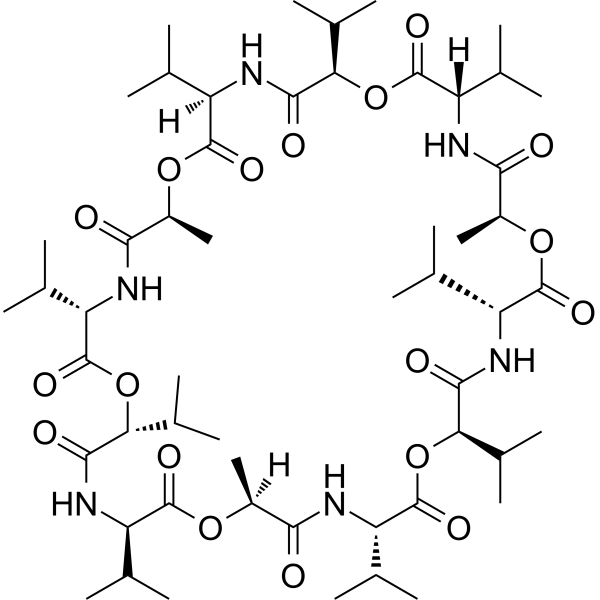
Valinomycin is a potassium-specific ionophore, the valinomycin-K + complex can be incorporated into biological bilayer membranes with the hydrophobic surface of valinomycin, destroys the normal K + gradient across the membrane, and as a result kills the cells, incorporating into liposomes can significantly reduces the cytotoxicity and enhances the targeting effect. Valinomycin exhibits antibiotic, antifungal, antiviral, antitumor and insecticidal efficacy, thus can be used for relevant research .
|
-
- HY-181706
-
|
|
Insecticide
|
Infection
|
|
Insecticidal agent 29 is a pyrethroid incorporating a pyridine heterocycle and insecticide. Insecticidal agent 29 exhibits insecticidal activity against Culex pipiens Pallens larvae, Aphis laburni Kaltenbach, and aphids. Insecticidal agent 29 shows inactivity against Tetranychus cinnabarinus Boisduval .
|
-
- HY-B1559
-
|
|
Environmental Pollutants
Apoptosis
|
Infection
Cancer
|
|
Allethrin, a pyrethroid insecticide is a major mosquito repellent agent. Allethrin induces oxidative stress, apoptosis and calcium release in rat testicular carcinoma cells (LC540). Allethrin induces BCL-2, caspase-3 activation and release of intracellular calcium .
|
-
- HY-B0840R
-
|
|
Oxidative Phosphorylation
Parasite
Reference Standards
|
Metabolic Disease
|
|
Chlorfenapyr (Standard) is the analytical standard of Chlorfenapyr. This product is intended for research and analytical applications. Chlorfenapyr is a pyrrole insecticide. Chlorfenapyr has a mode of action: the mixed function oxidase oxidizes and removes the Nethoxymethyl group to form the active metabolite, CL 303268. Chlorfenapyr is used for termite control and crop protection against a variety of insect and mite pests .
|
-
- HY-158721
-
|
Marinamide
|
Endogenous Metabolite
Parasite
|
Infection
Cancer
|
|
Penicinoline (Marinamide) (Compound 1), a pyrrolyl 4-quinolinone alkaloid, is a microbial secondary metabolite. Penicinoline can be isolated from endophytic fungus Penicillium sp. Penicinoline has antimalarial activity against Chloroquine (HY-17589A) sensitive strain (pf3d7) and against Chloroquine resistant strain (pfDd2) of plasmodium falciparum. Penicinoline also has strong insecticidal activity against Aphis gossypii and selective anticancer effect with significant cytotoxicity for 95-D and HepG2 cells .
|
-
- HY-N3497
-
|
|
NF-κB
DNA/RNA Synthesis
Parasite
Apoptosis
|
Infection
Cancer
|
|
Isochamaejasmin is a biflavonoid with anti-cancer, antiplasmodial and insecticidal activities. Isochamaejasmin displays a potent NF-κB (NF-κB) activation activity. Isochamaejasmin could cause DNA damage and induce apoptosis via the mitochondrial pathway in AW1 cells . Isochamaejasmin also has a moderate antiplasmodial activity (IC50 of 7.3 μM for P. falciparum) and relatively low cytotoxicity (CC50 of 29.0 μM) .
|
-
- HY-119309
-
|
|
Environmental Pollutants
Biochemical Assay Reagents
|
Others
|
|
Sucrose octaacetate is an acetylated derivative of sucrose with an intensely bitter tasting and can be used as bitter tasting surrogate. Sucrose octaacetate can be used as food additive and also used as an adhesive and plasticizer. Sucrose octaacetate also used in many pesticides, insecticides, and other toxic products as a deterrent to accidental poisoning. Sucrose octaacetate can also be used as an in situ seed and a soft template to synthesize polyaniline (PANI) nanofibers .
|
-
- HY-180778
-
|
|
Insecticide
Cholinesterase (ChE)
|
Infection
|
|
Insecticidal agent 28 (Compound 10) is an insecticide targeting the Culex pipiens. Insecticidal agent 28 exhibits LC₅₀ values for killing larvae and adults of 40.15 ppm and 55.02 ppm respectively. Insecticidal agent 28 inhibits the acetylcholinesterase (AchE) of the Anopheles gambiae. Insecticidal agent 28 shows lower cytotoxicity .
|
-
- HY-111991
-
|
|
Insecticide
|
Infection
|
|
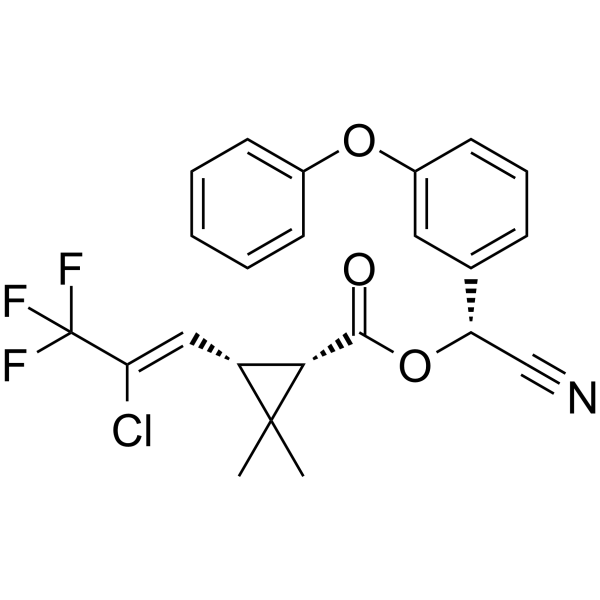
Cyhalothrin is a pyrethroid, a class of man-made insecticides that mimic the structure and insecticidal properties of the naturally-occurring insecticide pyrethrum which comes from the flowers of chrysanthemums.
|
-
- HY-173073
-
|
|
Insecticide
nAChR
|
Infection
|
|
Insecticidal agent 20 (Compound 17) is an insecticide that can bind to AChBP. Insecticidal agent 20 exhibits good insecticidal activity against the larvae (LC50: 1.57 ppm) and pupae (LC50: 4.17 ppm) of Culex pipiens .
|
-
- HY-B0824
-
|
|
Environmental Pollutants
Sodium Channel
|
Neurological Disease
|
|
Bifenthrin is a synthetic pyrethroid insecticide. Bifenthrin prolongs the opening time of Nav1.8 sodium channels, leading to membrane depolarization and conductance block in the insect nervous system, thereby disrupting neural function. Bifenthrin was effective in inhibiting A. gambiae (LD50=0.15 ng/mg) and C. quinquefasciatus (LD50=0.16 ng/mg). Bifenthrin has good lethality against susceptible and resistant mosquitoes and is very effective in inhibiting blood sucking and can be developed as a mosquito-removal netting material .
|
-
- HY-B2049R
-
|
|
Insecticide
Reference Standards
|
Infection
|
|
Triflumuron (Standard) is the analytical standard of Triflumuron. This product is intended for research and analytical applications. Triflumuron is a potent chitin synthesis inhibitor. Triflumuron shows the efficacy in emergence inhibition (EI) against Culex quinquefasciatus and Aedes albopictus, with EI50 values of 5.28 and 1.59 μg/L, respectively. Triflumuron can be used as an insecticide. Triflumuron represents a potential tool for the control of disease vectors in public health .
|
-
- HY-W042337
-
|
|
Environmental Pollutants
Apoptosis
|
Others
|
|
3-Methyl-4-nitrophenol, an environmental contaminant, is a well-known constituent of diesel exhaust particles and degradation products of insecticide fenitrothion. 3-Methyl-4-nitrophenol can induce nasal epithelial cell apoptosis and increase the permeability of the nasal epithelial barrier. 3-Methyl-4-nitrophenol is also toxic to the female reproductive system.
|
-
- HY-181985
-
|
|
Insecticide
|
Infection
|
|
Insecticidal agent 30 is an orally active insecticidal agent. Insecticidal agent 30 induces rapid contact mortality in adult Brassicogethes aeneus, achieves 100% 24-hour contact mortality against Brassicogethes aeneus, and exhibits moderate insecticidal activity against Drosophila melanogaster. Insecticidal agent 30 can be used for the research of pollen beetle (brassicogethes aeneus) infestation .
|
-
- HY-W614464
-
|
|
Sex Pheromone
|
Others
|
|
(9Z,12E)-Tetradeca-9,12-dien-1-yl acetate is a main active component of the sex pheromone of Spodoptera frugiperda, which has the advantages of the safety to the environment and the natural enemies, and without insecticides resistance .
|
-
- HY-W587665
-
|
|
Insecticide
|
Infection
|
|
Demeton-S sulfoxide is a systemic insecticide. When Demeton-S sulfoxide is topically applied to cotton stems, it is absorbed and transported to cotton leaves, whereas its penetration and diffusion capabilities are limited when it is topically applied to young lemon leaves .
|
-
- HY-142916
-
|
|
Insecticide
|
Others
|
|
Insecticidal agent 1 displays more potent insecticidal activity than obacunone and toosendanin.
|
-
- HY-B1559R
-
|
|
Reference Standards
Apoptosis
|
Cancer
|
|
Allethrin (Standard) is the analytical standard of Allethrin. This product is intended for research and analytical applications. Allethrin, a pyrethroid insecticide is a major mosquito repellent agent. Allethrin induces oxidative stress, apoptosis and calcium release in rat testicular carcinoma cells (LC540). Allethrin induces BCL-2, caspase-3 activation and release of intracellular calcium .
|
-
- HY-119309R
-
|
|
Biochemical Assay Reagents
Reference Standards
|
Others
|
|
Sucrose octaacetate (Standard) is the analytical standard of Sucrose octaacetate. This product is intended for research and analytical applications. Sucrose octaacetate is an acetylated derivative of sucrose with an intensely bitter tasting and can be used as bitter tasting surrogate. Sucrose octaacetate can be used as food additive and also used as an adhesive and plasticizer. Sucrose octaacetate also used in many pesticides, insecticides, and other toxic products as a deterrent to accidental poisoning. Sucrose octaacetate can also be used as an in situ seed and a soft template to synthesize polyaniline (PANI) nanofibers .
|
-
- HY-B0824R
-
|
|
Reference Standards
Sodium Channel
|
Neurological Disease
|
|
Bifenthrin (Standard) is the analytical standard of Bifenthrin. This product is intended for research and analytical applications. Bifenthrin is a synthetic pyrethroid insecticide. Bifenthrin prolongs the opening time of Nav1.8 sodium channels, leading to membrane depolarization and conductance block in the insect nervous system, thereby disrupting neural function. Bifenthrin was effective in inhibiting A. gambiae (LD50=0.15 ng/mg) and C. quinquefasciatus (LD50=0.16 ng/mg). Bifenthrin has good lethality against susceptible and resistant mosquitoes and is very effective in inhibiting blood sucking and can be developed as a mosquito-removal netting material .
|
-
- HY-121618
-
-
- HY-N18035
-
|
|
Insecticide
|
Infection
|
|
Spinosyn K is an insecticide found in the actinomycete Saccharopolyspora spinosa. Spinosyn K shows strong insecticidal activity .
|
-
- HY-108170
-
|
|
Environmental Pollutants
Parasite
|
Others
|
|
Pyrethrin II is a insecticidal ingredient of pyrethrins. Pyrethrins is a biogenic insecticide, that can be extracted from Chrysanthemum cinerariifolium .
|
-
- HY-178369S
-
|
|
Isotope-Labeled Compounds
Insecticide
|
Others
|
|
Cyhalothrin-d9 is the deuterium labeled Cyhalothrin (HY-111991). Cyhalothrin is a pyrethroid, a class of man-made insecticides that mimic the structure and insecticidal properties of the naturally-occurring insecticide pyrethrum which comes from the flowers of chrysanthemums.
|
-
- HY-172953
-
|
|
Parasite
|
Infection
|
|
Insecticidal agent 24 is an orally active pyridylspiroindoline frontrunner. Insecticidal agent 24 has antiplasmodial activity (Pf NF54 IC50: 0.08 μM). Insecticidal agent 24 inhibits hERG activity (IC50: 6.5 μM). Insecticidal agent 24 reduces parasitemia in a humanized immunodeficient NSG mouse Plasmodium falciparum infection model .
|
-
- HY-W269352
-
|
|
Insecticide
|
Infection
|
|
2-Dodecanone is an insecticide with repellent activity against specific insect species. 2-Dodecanone exhibits contact toxicity against adult Tribolium castaneum, Lasioderma serricorne and Liposcelis bostrychophila. 2-Dodecanone shows repellent effects against adult Lasioderma serricorne .
|
-
- HY-B1953R
-
|
|
Reference Standards
nAChR
Insecticide
|
Infection
|
|
Thiacloprid (Standard) is the analytical standard of Thiacloprid. This product is intended for research and analytical applications. Thiacloprid is an orally active neurotoxic insecticide and also a nAChR agonist. Thiacloprid reduces the viability of healthy cells, depletes reduced glutathione, and increases MDA levels, thereby inducing cytotoxicity and oxidative stress damage. In practical applications, Thiacloprid has lower acute toxicity to honeybees than other compounds of the same class such as Imidacloprid (HY-B0838), but it still significantly impairs the learning and memory function, immune capacity and survival status of honeybees. Thiacloprid induces intestinal microbial dysbiosis and reduces survival rate in middle-aged honeybees, increases the risk of premature collapse in bumblebee colonies, and significantly decreases the final colony weight and reproductive output. Thiacloprid is used in broad-spectrum agricultural pest control, often alone or in combination with Deltamethrin (HY-B1971), and meets the pest management needs of various crops including potatoes, cabbages, various fruits and vegetables, and nuts .
|
-
- HY-B1331
-
|
Cyromazin; CGA-72662
|
Environmental Pollutants
Endogenous Metabolite
Parasite
|
Neurological Disease
Metabolic Disease
|
|
Cyromazine (CGA-72662) is a triazine insect growth regulator used as an insecticide and an acaricide. It is a cyclopropyl derivative of melamine. Cyromazine works by affecting the nervous system of the immature larval stages of certain insects. Cyromazine reduced the number of germ cells by interfering with the Ecdysone (HY-N0179) signaling pathway. Cyromazine induces renal toxicity attenuated and restored by green tea extract in rats .
|
-
- HY-W685358
-
|
|
Insecticide
Apoptosis
|
Infection
Metabolic Disease
Inflammation/Immunology
|
|
D-Tetramethrin is a type I synthetic pyrethroid insecticide and hepatotoxicity inducer. D-Tetramethrin induces oxidative stress in the liver of zebrafish. D-Tetramethrin induces Apoptosis and inflammatory responses. D-Tetramethrin causes severe liver damage in zebrafish. D-Tetramethrin can be used in studies related to hepatotoxicity .
|
-
- HY-168840
-
|
|
Insecticide
|
Others
|
|
Insecticidal agent 17 (compound 31) is an insecticidal agent against Plutella xylostella Linnaeus with an LC50 value of 0.759 mg/mL .
|
-
- HY-149697
-
|
|
Parasite
|
Others
|
|
Insecticidal agent 6 (Compound Im) is an insect ryanodine receptors (RyRs) inhibitor, with an EC50 value of 0.6308 µM against S. frugiperda RyRs. Insecticidal agent 6 has excellent insecticidal activity against lepidopteran pests and can be used for research on pests and diseases .
|
-
- HY-163157
-
|
|
Parasite
|
Others
|
|
Insecticidal agent 7 (Compound 21m) is an insecticide that targets the insect ryanodine receptors (RyRs) with a LC50 of 0.0937 mg/L for the Plutella xylostella. Insecticidal agent 7 (Compound 21m) exhibits good selectivity and low toxicity towards non-target organisms .
|
-
- HY-W154397
-
|
|
Drug Derivative
|
Infection
|
|
Permethrinic Acid Methyl Ester is a derivative of the insecticide Permethrin (HY-B0887). Permethrin is an insecticide, an acaricide, and a highly selective inhibitor of mitochondrial complex I .
|
-
- HY-121618R
-
|
|
GABA Receptor
Reactive Oxygen Species (ROS)
Parasite
Apoptosis
Autophagy
Reference Standards
|
Infection
Neurological Disease
|
|
α-Thujone (Standard) is the analytical standard of α-Thujone. This product is intended for research and analytical applications. α-Thujone is a monoterpene isolated from Thuja occidentalis essential oil with potent anti-tumor activities. α-Thujone is a reversible modulator of the GABA type A receptor and the IC50 for α-Thujone is 21 μM in suppressing the GABA-induced currents. α-Thujone induces ROS accumulation-dependent cytotoxicity, also induces cell apoptosis and autophagy. α-Thujone has antinociceptive, insecticidal, and anthelmintic activity, and easily penetrates the blood-brain barrier .
|
-
- HY-176042
-
|
|
Insecticide
|
Others
|
|
Insecticidal agent 22 (Compound A13) is an insecticide, with LC50s of 1.4 and 9.9 μg/mL for diamondback moth (Plutella xylostella) and fall armyworm (Spodoptera frugiperda), respectively. Insecticidal agent 22 can be used as a low-toxicity alternative to Fluralaner (HY-16973) .
|
-
- HY-W131444
-
|
|
Insecticide
|
Others
|
|
Insecticidal agent 15 (compound 8f) is a potent insecticidal agent that shows LD50 of 4.27 nmol/mg for adult female Ae. Aegypti .
|
-
- HY-120131
-
|
|
Insecticide
Cholinesterase (ChE)
|
Neurological Disease
|
|
Cyanofenphos is an orally active organophosphate insecticide and brain AChE inhibitor with neurotoxicity. Cyanofenphos induces delayed neurotoxicity such as ataxia and paralysis. Cyanofenphos also causes symptoms including somnolence, reduced feed intake and weight loss in hens. Cyanofenphos has a unique self-antagonistic effect: repeated low-dose pre-treatment not only reduces subsequent acute toxicity, but also exacerbates delayed neurotoxicity and attenuates enzyme inhibition, with the protective effect peaking at 24 h after the last pre-treatment. Cyanofenphos is commonly used in studies related to delayed neurotoxicity .
|
-
- HY-130409
-
-
- HY-162279
-
|
|
Insecticide
|
Infection
|
|
Insecticidal agent 8 ((S)-4a-14) is an insecticidal agent that has significant selective biological against Aphis craccivora Koch and Plutella xylostella .
|
-
- HY-B1331R
-
|
Cyromazin (Standard); CGA-72662 (Standard)
|
Reference Standards
Endogenous Metabolite
Parasite
|
Neurological Disease
Metabolic Disease
|
|
Cyromazine (Standard) is the analytical standard of Cyromazine. This product is intended for research and analytical applications. Cyromazine (CGA-72662) is a triazine insect growth regulator used as an insecticide and an acaricide. It is a cyclopropyl derivative of melamine. Cyromazine works by affecting the nervous system of the immature larval stages of certain insects. Cyromazine reduced the number of germ cells by interfering with the Ecdysone (HY-N0179) signaling pathway. Cyromazine induces renal toxicity attenuated and restored by green tea extract in rats .
|
-
- HY-W144077
-
-
- HY-17524
-
-
- HY-119649
-
|
IKI220
|
Environmental Pollutants
Parasite
|
Infection
|
|
Flonicamid (IKI220) is a novel systemic insecticide with selective activity against hemipterous pests. The main insecticidal mechanism of flonicamid is starvation based on the inhibition of stylet penetration to plant tissues .
|
-
- HY-148964
-
|
HY366
|
Insecticide
|
Others
|
|
Thiotraniliprole (HY366) is an ortho formamidobenzamide insecticide that can be used for the synthesis of insecticidal combinations. Thiotraniliprole has potential applications in the prevention of lepidoptera pests, coleoptera pests, ants, and termites .
|
-
- HY-164322
-
|
|
Insecticide
|
Others
|
|
Cyproflanilide is a meta-diamide insecticide. Cyproflanilide exhibits potent insecticidal activity against third Chilo suppressalis and Spodoptera frugiperda larvae. Cyproflanilide can be used for the research of insect pests .
|
-
- HY-122996
-
-
- HY-118769
-
|
|
Parasite
|
Others
|
|
Japonilure serves as an agent for insecticides and pheromones.
|
-
- HY-114680
-
-
- HY-B2029
-
-
- HY-124495
-
|
|
Parasite
|
Others
|
|
Butocarboxime serves as both an insecticide and acaricide.
|
-
- HY-W751257
-
-
- HY-122062R
-
|
|
Insecticide
Reference Standards
|
Others
|
|
Erythromycin C (Standard) is the analytical standard of Erythromycin C. This product is intended for research and analytical applications. Erythromycin C is an antibiotic. Erythromycin C could be isolated from the fermentation process of the penicillium Streptomyces erythreus .
|
-
- HY-W513778
-
|
|
Insecticide
|
Infection
|
|
(+)-trans-Chrysanthemic acid is a component of pyrethroids that inhibits Orlando strain mosquitoes .
|
-
- HY-W654238
-
|
|
Isotope-Labeled Compounds
Others
|
Others
|
|
Imidaclothiz-d4 is deuterium labeled Imidaclothiz. Imidaclothiz is a kind of neonicotinoid insecticides. Imidaclothiz has excellent insecticidal effect. Imidaclothiz can be used for the research of sucking and biting insects .
|
-
- HY-107852
-
|
|
Insecticide
|
Others
|
|
Demeton-S-methyl sulfone is an organophosphorus insecticide metabolite.Demeton-S-methyl sulfone serves as a substrate for metabolic breakdown.Demeton-S-methyl sulfone forms via oxidation of demeton S-methyl sulfoxide in sugar-beet cell suspension cultures.Demeton-S-methyl sulfone undergoes thioester bond cleavage, producing ethanethiols that convert into S-methylated compounds or S-glucosides .
|
-
- HY-121768
-
|
|
Parasite
|
Others
|
|
Trimethacarb is a type of insecticide used for pest control.
|
-
- HY-17523
-
-
- HY-W588209
-
-
- HY-117097
-
-
- HY-118428
-
|
M2060; TH 367-1
|
Insecticide
|
Others
|
|
Fluenetil (M2060) is a compound with insecticidal activity.
|
-
- HY-W753728
-
|
|
Insecticide
|
Infection
|
|
Xiaochongliulin is a organophosphate insecticide. Xiaochongliulin shows insecticidal activity against citrus red mite, citrus scales, cotton bollworm, diamondback moth, and rice planthopper. Xiaochongliulin has low acute oral toxicity in rats .
|
-
- HY-105581
-
|
Oxinothiofos
|
Cholinesterase (ChE)
|
Others
|
|
Quintiofos (Oxinothiofos) is an insecticide. Quintiofos inhibits the activity of acetylcholinesterase in insects, causing nerve conduction disorders, thereby achieving an insecticidal effect. Quintiofos can be used to control a variety of pests, such as aphids, whiteflies, and stem borers .
|
-
- HY-W587734
-
|
|
Insecticide
Acetyl-CoA Carboxylase
|
Infection
|
|
Spirotetramat-enol, Spirotetramat (HY-120253) metabolite, is an insecticide. Spirotetramat-enol shows inhibitory activity against acetyl-CoA carboxylase. Spirotetramat-enol exerts insecticidal activity against Aphis craccivora Koch .
|
-
- HY-12643
-
-
- HY-119556
-
|
|
Parasite
|
Infection
|
|
Butonate is an insecticide. Butonate is an orally active anthelmintic .
|
-
- HY-118322
-
|
|
Insecticide
|
Others
|
|
Bayer 30468 is an insecticide that is toxic to adult boll weevils.
|
-
- HY-W751122
-
|
|
Parasite
|
Infection
|
|
Thiofanox sulfone is an oxidative metabolite of the insecticide/nematicide Thiofanox.
|
-
- HY-W343578
-
-
- HY-177147
-
|
|
Insecticide
|
Others
|
|
Decafentin is an insecticide and is active against Mamestra brassicae L. .
|
-
- HY-172794
-
|
|
Insecticide
|
Infection
|
|
Insecticidal agent 23 (compound 17) has antischistosomal efficacy and low toxicity. Insecticidal agent 23 exhibits potent in vitro activity against adult S. japonicum, with an LC50 (72 h) value of 25.31 μM.
|
-
- HY-114117
-
|
GF-3242
|
Environmental Pollutants
Insecticide
|
Infection
|
|
Tyclopyrazoflor (GF-3242) is a pyridylpyrazole Insecticide. Tyclopyrazoflor exhibits excellent insecticidal efficacy against sap-sucking insects. Tyclopyrazoflor effectively controls insect pests caused by Myzus persicae and Bemisia tabaci larvae .\n
|
-
- HY-129257
-
-
- HY-116448
-
-
- HY-W340326
-
-
- HY-W713358
-
-
- HY-W517110
-
-
- HY-N14120
-
|
Opopanax oil
|
Insecticide
|
Others
|
|
Opoponax oil is an effective insecticide against mosquito larvae .
|
-
- HY-W550259
-
|
Coumaphos oxon
|
Cholinesterase (ChE)
|
Others
|
|
Coroxon (Coumaphos oxon) is an oxidative metabolite of the organophosphate insecticide Coumaphos (HY-W653717) and an active AChE inhibitor with insecticidal and acaricidal properties. Coroxon can be hydrolyzed by phosphotriesterases of microorganisms such as Nocardia asteroides to produce the fluorescent product Chlorferon .
|
-
- HY-W714852
-
|
|
Insecticide
Sodium Channel
|
Infection
|
|
Zeta-Cypermethrin is a type II pyrethroid insecticide. Zeta-Cypermethrin primarily acts on voltage-gated sodium channels in nerve cells, causing delayed channel closure, persistent nerve excitation and convulsions. In Drosophila, Zeta-Cypermethrin rapidly induces extremely high metabolic resistance that can be screened, and exhibits in vitro genotoxicity to human peripheral blood lymphocytes .
|
-
- HY-163560
-
|
|
Parasite
|
Others
|
|
Insecticidal agent 10 (Compound 8c) is an inhibitor for chitinase, which inhibits OfChi-h and OfChtI with IC50 of 1.51 and 9.21 nM, respectively. Insecticidal agent 10 inhibits growth of Ostrinia furnacalis with LC50 of 22.14 mg/L .
|
-
- HY-N8333
-
|
|
Insecticide
|
Others
|
|
Lepimectin A4, a macrocyclic lactone, is a component of the insecticide Lepimectin .
|
-
- HY-N1418
-
|
(-)-Canadine; (S)-(-)-Canadine
|
Others
|
Inflammation/Immunology
|
|
(S)-(-)-Tetrahydroberberine is an alkaloid and intermediate in the biosynthesis of berberine with insecticidal activity .
|
-
- HY-119649R
-
|
IKI220 (Standard)
|
Parasite
Reference Standards
|
Infection
|
|
Flonicamid (Standard) is the analytical standard of Flonicamid. This product is intended for research and analytical applications. Flonicamid (IKI220) is a novel systemic insecticide with selective activity against hemipterous pests. The main insecticidal mechanism of flonicamid is starvation based on the inhibition of stylet penetration to plant tissues .
|
-
- HY-N7869
-
|
|
Insecticide
|
Infection
|
|
Celangulin VII is a β-dihydroagarofuran sesquiterpene polyol ester present in the root bark of Celastrus angulatus. Celangulin VII exhibits insecticidal and narcotic activities against the 4th-instar larvae of Mythimna separata. Celangulin VII can be used in insecticide-related research .
|
-
- HY-B0767
-
|
|
Insecticide
|
Others
|
|
Spinosyn A, a polyketide-derived macrolide produced by Saccharopolyspora spinosa, is a potent insecticide .
|
-
- HY-N12093
-
-
- HY-W923487
-
|
|
Insecticide
|
Others
|
|
(Rac)-Bifenthrin is a pyrethroid insecticide commonly utilized in both urban and agricultural settings.
|
-
- HY-119438
-
|
|
Insecticide
|
Others
|
|
Aspon is an organophosphorus insecticide. Aspon can be utilized as phosphorus sources by bacteria .
|
-
- HY-W714217
-
-
- HY-119525
-
|
|
Insecticide
|
Infection
|
|
Propetamphos is an organophosphorus insecticide. Propetamphos causes cytotoxicity and oxidative stress .
|
-
- HY-W040149
-
-
- HY-12643R
-
-
- HY-W1007773
-
|
|
Insecticide
|
Others
|
|
Acaricidal agent-1 (Compound 34) exhibits acaricide activity, that inhibits P. cuniculi with a LC50 of 0.82 mM (146.6 μg/mL) .
|
-
- HY-W020785R
-
|
|
Cholinesterase (ChE)
Reference Standards
|
Others
|
|
Fosthiazate (Standard) is the analytical standard of Fosthiazate. This product is intended for research and analytical applications. Fosthiazate is a broad-spectrum nematicide against various plant parasitic nematodes, including Meloidogyne spp., Globodera spp., and Pratylenchus spp., through inhibiting the synthesis of acetylcholinesterase .
|
-
- HY-W020785
-
|
|
Environmental Pollutants
Cholinesterase (ChE)
|
Others
|
|
Fosthiazate is a broad-spectrum nematicide against various plant parasitic nematodes, including Meloidogyne spp., Globodera spp., and Pratylenchus spp., through inhibiting the synthesis of acetylcholinesterase .
|
-
- HY-N3076
-
|
(-)-Phyllostine; Phyllostin
|
Others
|
Others
|
|
Phyllostine ((-)-Phyllostine) can be isolated from D. miriciae. Phyllostine exhibits strong antifeedant, contact toxicity, and oviposition deterrent activities against P. xylostella .
|
-
- HY-169169
-
|
|
Parasite
|
Infection
|
|
Insecticidal agent 14 (compound 8a) shows potent insecticidal activity against Plutella xylostella and Mythimna separata, with LC50 values of 0.79 and 9.17 mg/L against P. xylostella, respectively, and 3.58 and 83.09 mg/L against M. separata, respectively .
|
-
- HY-B1072
-
|
|
Environmental Pollutants
Parasite
Insecticide
|
Infection
|
|
Phenothrin is a Type I pyrethroid insecticide. Phenothrin induces dose-dependent DNA damage in human peripheral blood lymphocytes and hepatocytes, and exhibits definite genotoxic potential. Phenothrin acts as an insecticide for pest control in agriculture, households and public health, as well as for the elimination of human head lice infestations .
|
-
- HY-W728085
-
|
|
Bacterial
Antibiotic
Insecticide
Reactive Oxygen Species (ROS)
|
Infection
|
|
CPPD-Q is an antimicrobial agent and insecticide. CPPD-Q has an EC50 of 6.98 mg/L against Vibrio fischeri. At doses of 1 or 10 µg/mL, CPPD-Q exerts its insecticidal effect by inducing the production of reactive oxygen species (ROS) in the intestines of Caenorhabditis elegans .
|
-
- HY-N8484
-
|
|
Parasite
|
Infection
|
|
Eprinomectin B1b is a minor component and belongs to the avermectin family of insecticides and anthelmintics.
|
-
- HY-167246
-
|
|
Insecticide
|
Infection
|
|
Profluthrin is a pyrethroid insecticide. Profluthrin can be used as mothproof repellents for clothes .
|
-
- HY-12779S
-
-
- HY-131936
-
|
|
Drug Metabolite
|
Others
|
|
Diazoxon is a metabolite of Diazinon (HY-B1113). Diazinon is an organophosphate insecticide .
|
-
- HY-W714238
-
|
|
Drug Metabolite
|
Others
|
|
Spirotetramat-mono-hydroxy is a metabolite of Spirotetramat (HY-120253). Spirotetramat is an insecticide .
|
-
- HY-W332450
-
-
- HY-B0887D
-
|
(-)-cis-NRDC-143
|
Insecticide
|
Others
|
|
(-)-cis-Permethrin is a pyrethroid insecticide widely used to control many common pests .
|
-
- HY-117386S
-
|
|
Isotope-Labeled Compounds
Insecticide
|
Infection
|
|
Methoxyfenozide-d9 is the deuterium labeled Methoxyfenozide (HY-117386). Methoxyfenozide is an orally active insecticide belonging to the diacylhydrazine and non-steroidal ecdysone agonist classes, which can interfere with the growth and development of insects. Methoxyfenozide has ovicidal and insecticidal activities against phytophagous pests .
|
-
- HY-W719559
-
|
|
Insecticide
|
Infection
|
|
Cyclaniliprole is an insecticide and insect ryanodine receptor modulator with higher selectivity for insect ryanodine receptors than for mammalian ones. Cyclaniliprole exerts lethal effects on larvae and adults of various agricultural pests. Cyclaniliprole exhibits broad-spectrum insecticidal activity against pests of the orders Lepidoptera, Thysanoptera, Diptera, Hemiptera and Coleoptera .
|
-
- HY-117386R
-
|
|
Reference Standards
Insecticide
|
Infection
|
|
Methoxyfenozide (Standard) is the analytical standard of Methoxyfenozide (HY-117386). This product is intended for research and analytical applications. Methoxyfenozide is an orally active insecticide belonging to the diacylhydrazine and non-steroidal ecdysone agonist classes, which can interfere with the growth and development of insects. Methoxyfenozide has ovicidal and insecticidal activities against phytophagous pests.
|
-
- HY-W774937
-
|
GH414; NK-8116
|
Insecticide
|
Others
|
|
Cycloprothrin (GH414; NK-8116) is an insecticide pesticide that contains two isomers, (1R, alphaR)-Cycloprothrin and (R)-Cycloprothrin. The insecticidal activity of (1R, alphaR)-Cycloprothrin against Mythimaseparata and Aphismedicagini larvae is about 6 times and 4 times higher than that of (R)-Cycloprothrin, respectively .
|
-
- HY-W421914
-
|
|
Insecticide
|
Infection
|
|
Chlorthion is an organic phosphorothionate insecticide. Chlorthion inhibits liver microsomal hydroxylation of testosterone .
|
-
- HY-118412
-
|
M108
|
Parasite
|
Infection
|
|
Terallethrin (M108) is a synthetic pyrethroid widely used as an insecticide in agricultural and household Settings .
|
-
- HY-W714239
-
|
|
Drug Metabolite
|
Others
|
|
Spirotetramat-keto-hydroxy is a metabolite of Spirotetramat (HY-120253). Spirotetramat is an insecticide .
|
-
- HY-123178
-
-
- HY-126772
-
|
|
Insecticide
|
Infection
|
|
Tralomethrin is a pyrethroid insecticide used to control a wide range of pests in agriculture and public health .
|
-
- HY-111742
-
|
|
Drug Metabolite
|
Others
|
|
Bifenazate-diazene is a major degradation product of Bifenazate. Bifenazate is a selective carbazate acaricide and an insecticide .
|
-
- HY-W588212
-
|
trans-NRDC-143
|
Parasite
|
Neurological Disease
|
|
trans-Permethrin is a transconfiguration of Permethrin (HY-B0887). Permethrin is an insecticide and neurotoxin .
|
-
- HY-N8067
-
|
Terbufos oxon sulfoxide
|
Drug Metabolite
|
Others
|
|
Terbufoxon sulfoxide (Terbufos oxon sulfoxide) is a metabolite of the insecticide Terbufos in the pepper leaf matrix .
|
-
- HY-W009165R
-
|
cis-9-Tricosene (Standard)
|
Insecticide
Reference Standards
|
Others
|
|
(Z)-9-Tricosene (Standard) is the analytical standard of (Z)-9-Tricosene. This product is intended for research and analytical applications. (Z)-9-Tricosene (cis-9-Tricosene) is an insect pheromone present in flies of the order Diptera (such as the housefly) and can be used as an insecticide[1].
|
-
- HY-12643S
-
|
MK-397-d3
|
Isotope-Labeled Compounds
|
Infection
Cancer
|
|
Eprinomectin-d3 (MK-397-d3) is the deuterium-labeled Eprinomectin (HY-12643). Eprinomectin is a type of avermectin. Eprinomectin, as a broad-spectrum fungicide, has insecticidal, insecticidal and acaricidal activities. Eprinomectin induces apoptosis and autophagy in prostate cancer cells and has antitumor activity .
|
-
- HY-168918
-
|
|
Parasite
Dihydrofolate reductase (DHFR)
|
Infection
|
|
Insecticidal agent 19 (Compound 7b) exhibits antimalarial activity by inhibiting dihydrofolate
reductase-thymidylate synthase (DHFR-TS) and pteridine reductase 1 (PTR1) through the folic acid metabolic pathway. Insecticidal agent 19 inhibits Leishmania major promastigote and amastigote with IC50 of 1.43 μM and 3.78 μM .
|
-
- HY-W495759
-
-
- HY-N14917
-
|
|
Insecticide
|
Infection
|
|
Destruxins C is found in the strain of Hyphomycetes and Metarrhiziurn anosopliae. Destruxins C has insecticidal activity .
|
-
- HY-118926
-
|
|
Parasite
|
Others
|
|
Bioresmethrin is an insecticide that protects grain. Bioresmethrin against malathion-resistant and susceptible strains R. dominica .
|
-
- HY-120002
-
|
Kilacar; R 8284
|
Parasite
|
Infection
|
|
Proclonol (Kilacar) is an insecticide-acaricide. Proclonol is a weak mutagen in the TA97 strain of S. typhimurium .
|
-
- HY-W751921
-
|
|
Insecticide
|
Others
|
|
Chlorethoxyfos is an organophosphate insecticide. Chlorethoxyfos undergoes oxidation to form its oxon in chlorinated laboratory water .
|
-
- HY-164052
-
|
|
Parasite
|
Infection
|
|
Antiparasitic agent-23 (compound 14) is an anthelmintic and insecticide that inhibits insect or helminth parasitism .
|
-
- HY-160758
-
|
|
Insecticide
|
Others
|
|
J9Z38 is a metabolite of Cyantraniliprole (HY-12779), a broad-spectrum agrochemical insecticide belonging to the anthranilic diamide insecticide class. Cyantraniliprole effectively controls the growth of various pests on fruits, vegetables, cereals and other crops. Thus, J9Z38 is a key indicator for indirect detection and evaluation of Cyantraniliprole residue levels .
|
-
- HY-N3507
-
|
|
Others
|
Others
|
|
Euojaponine D is a sesquiterpene alkaloids from Euonymus japonica (Celastraceae). Celastraceae has potent insecticidal activity .
|
-
- HY-B0874
-
-
- HY-153732
-
|
|
Parasite
|
Infection
|
|
Insecticidal agent 2 (example 2) is a pesticide that exhibits potent growth-retarding activity against pests .
|
-
- HY-N15098
-
|
|
Parasite
|
Infection
|
|
Milbemycin α15 possess a potent antiparasitic activity, including acaricidal, insecticidal and nematocidal activities .
|
-
- HY-17519
-
-
- HY-16973
-
|
A1443; AH252723
|
Parasite
|
Infection
|
|
Fluralaner (INN) is a systemic insecticide and acaricide Fluralaner through potent blockage of GABA and L-glutamate gated chloride channels.
|
-
- HY-119649S
-
|
IKI220-15N18O
|
Isotope-Labeled Compounds
Parasite
|
Infection
|
|
Flonicamid- 15N,18O (IKI220- 15N,18O) is 15N labeled Flonicamid. Flonicamid (IKI220) is a novel systemic insecticide with selective activity against hemipterous pests. The main insecticidal mechanism of flonicamid is starvation based on the inhibition of stylet penetration to plant tissues .
|
-
- HY-B0833S1
-
-
- HY-122551
-
|
|
Insecticide
|
Others
|
|
Chlorfenethol is a dehydrochlorinase inhibitor. Chlorfenethol can be used as a synergist for insecticide DDT to increase its effect on resistant strains .
|
-
- HY-W585931
-
|
|
Drug Metabolite
|
Others
|
|
Fipronil sulfide is a toxic, persistent metabolite of Fipronil (HY-B0822). Fipronil is a broad-spectrum insecticide .
|
-
- HY-W753832
-
|
|
Drug Derivative
|
Others
|
|
Spirotetramat-enol-glucoside is a Spirotetramat (HY-120253) metabolite Spirotetramat-enol and glucoside conjugate. Spirotetramat is an insecticide .
|
-
- HY-W460727
-
|
|
Insecticide
|
Infection
|
|
Boron sodium oxide (tetrahydrate) is an alkaline salt. Boron sodium oxide (tetrahydrate) can be used as an insecticide, a flame retardant, and an agricultural micronutrient .
|
-
- HY-176748
-
|
PP 484
|
Parasite
|
Infection
|
|
Primidophos is an ingredient in insecticide and acaricide compositions. Primidophos can be used in research on the prevention and control of insect and acarid pests .
|
-
- HY-116448S
-
-
- HY-B1858
-
|
|
Environmental Pollutants
Parasite
Fungal
Interleukin Related
|
Infection
Metabolic Disease
Inflammation/Immunology
|
|
Isoprothiolane is a blast fungicide with antifungal, anti-inflammatory and insecticidal activities. Isoprothiolane primarily acts on fungi during the penetration and growth stages of infecting hyphae. Isoprothiolane can be used as an insecticide, pesticide, etc. In addition, Isoprothiolane can reduce serum phospholipid and total lipid concentrations, regulating lipid metabolism. Isoprothiolane is also used in the research of fatty liver .
|
-
- HY-129925
-
|
|
Insecticide
|
Others
|
|
CP-49674 is an organophosphorus compound. CP-49674 can be used as an insecticide to control the common cattle grub .
|
-
- HY-N12146
-
|
|
Parasite
|
Infection
|
|
Spinosyn D 17-pseudoaglycone is a hydrolysis product of the minor insecticide component Spinosyn D (HY-125326) .
|
-
- HY-116631
-
|
Asaricin
|
Fungal
Insecticide
|
Infection
|
|
Sarisan (Asaricin) is a phenolic derivative with antifungal and insecticidal activity. Sarisan can be found in the stem bark of Ocotea opifera Mart. .
|
-
- HY-N1304
-
|
Shyobunon
|
Others
|
Others
|
|
Shyobunone (Shyobunon) is a nature product that could be isolated from Acorus calamus rhizomes. Shyobunone has insecticidal and repellant activity .
|
-
- HY-121745
-
|
Imidoxon; Oxoimidan
|
Drug Metabolite
|
Infection
|
|
Phosmet oxon (Imidoxon) is a main and toxic metabolite of phosmet. Phosmet is a cholinesterase inhibitor insecticide used on pome and stone fruits .
|
-
- HY-145297
-
|
|
nAChR
Insecticide
|
Neurological Disease
|
|
Flupyrimin is the antagonist for insect nicotinic acetylcholine receptor (nAChR) that exhibits insecticidal effect by targeting insect nervous system .
|
-
- HY-169008
-
|
|
PROTACs
Acetyl-CoA Carboxylase
|
Infection
|
|
PROTAC ACC degrader-1 (Compound 9b) is a Acetyl-CoA Carboxylase degrader. PROTAC ACC degrader-1 exhibits superior potency against Aphis craccivora (IC50 = 107.8 μg/mL). (Structure Note: Pink, Target protein ligand (HY-169009); Blue, E3 ligand (HY-10984); Black, linker (HY-W007559) .
|
-
- HY-114899
-
|
|
Environmental Pollutants
Cholinesterase (ChE)
Insecticide
|
Infection
Neurological Disease
|
|
Azamethiphos is an acetylcholinesterase inhibitor and insecticide. Azamethiphos covalently binds to acetylcholinesterase via phosphorylation, inhibits its activity, causes acetylcholine to accumulate in cholinergic synapses, triggers uncontrolled excitation of cholinergic sites, induces paralysis and leads to death. Azamethiphos can be used as a bath insecticide in salmonid aquaculture to control sea lice infestations, and it exerts acute toxicity to European lobster larvae, including mortality and movement disorders .
|
-
- HY-B1072R
-
|
|
Reference Standards
Parasite
Environmental Pollutants
Insecticide
|
Infection
|
|
Phenothrin (Standard) is the analytical standard of Phenothrin (HY-B1072). This product is intended for research and analytical applications. Phenothrin is a Type I pyrethroid insecticide. Phenothrin induces dose-dependent DNA damage in human peripheral blood lymphocytes and hepatocytes, and exhibits definite genotoxic potential. Phenothrin acts as an insecticide for pest control in agriculture, households and public health, as well as for the elimination of human head lice infestations.
|
-
- HY-B0833R
-
|
|
nAChR
Reference Standards
|
Others
|
|
Thiamethoxam (Standard) is the analytical standard of Thiamethoxam. This product is intended for research and analytical applications. Thiamethoxam is a broad spectrum neonicotinoid insecticide .
|
-
- HY-116702
-
|
|
GABA Receptor
|
Others
|
|
Flufiprole is a nonsystemic phenylpyrazole insecticide targeting the GABA receptor used in the rice field. Flufiprole is excellent in controlling a wide range of pests .
|
-
- HY-17530
-
-
- HY-162778
-
|
|
Parasite
|
Infection
|
|
FM-1088 is an insecticide. FM-1088 can be used in research related to crop disease and insect pest control .
|
-
- HY-N14968
-
|
|
Parasite
Fungal
|
Infection
|
|
Enniatin F has insecticidal and antifungal activity. Enniatin F also can inhibit acyl-CoA, cholesterol acyltransferase (ACAT) .
|
-
- HY-137445
-
|
|
Parasite
|
Infection
|
|
Modoflaner is an isophenylamide insecticide. Modoflaner may act through allosteric regulation of gamma-aminobutyric acid-gated chloride channels .
|
-
- HY-114614
-
|
|
Parasite
|
Infection
|
|
Clenpirin is a insecticide against cattle ticks Boophilus microplus. Clenpirin exhibits slightly toxicity to rats with LD50 of 3050 mg/kg .
|
-
- HY-114502
-
|
NSC 11779
|
Insecticide
|
Others
|
|
Chrysanthemic acid (NSC 11779) is an organic compound that is associated with a variety of natural and synthetic insecticides for the prevention of insect-borne diseases, among others .
|
-
- HY-Y0267
-
|
|
Insecticide
Fungal
Phytohormone
|
Infection
|
|
Phenoxyacetic acid is a multifunctional drug prodrug or auxin-type growth regulator, and its derivatives have insecticidal, herbicidal and antifungal activities .
|
-
- HY-W052144
-
|
|
Endogenous Metabolite
|
Others
|
|
(±) Anabasine is the racemate of Anabasine (HY-B1532). Anabasine is an agonist of α7nAChR and exhibits anti-inflammatory and insecticidal activities .
|
-
- HY-B0833S
-
-
- HY-Z9100
-
|
|
Antibiotic
|
Infection
|
|
N-demethyl Promethazine hydrochloride is a metabolite of Phenothiazine (HY-Y0055). Phenothiazine is an antibiotic which has insecticidal, fungicidal, antibacterial and anthelmintic activities.
|
-
- HY-W209279
-
|
|
Endogenous Metabolite
|
Others
|
|
(±) Anabasine hydrochloride is the racemate of Anabasine (HY-B1532). Anabasine hydrochloride is an agonist of α7nAChR and exhibits anti-inflammatory and insecticidal activities .
|
-
- HY-B2009
-
|
|
Environmental Pollutants
Insecticide
|
Others
|
|
Flufenoxuron is a chitin synthesis inhibitor that is used as a benzoylurea insecticide. Flufenoxuron decreases chitin synthesis, molting, and egg hatching, preventing development in insects .
|
-
- HY-125040
-
-
- HY-W765182
-
-
- HY-133709
-
|
|
Parasite
|
Infection
|
|
β-Aflatrem is an insecticide metabolite from the sclerotium of Aspergillus flavus that exhibits significant activity against the corn borer H. zea .
|
-
- HY-114720
-
|
|
Insecticide
|
Others
|
|
Laureatin is an active product that can be isolated from the marine algae Laurencia nipponica. Laureatin exhibits potent insecticidal activity against mosquitos .
|
-
- HY-W075176
-
|
|
Insecticide
|
Others
|
|
Transfluthrin is a fast-acting pyrethroid insecticide and mosquito repellent. Transfluthrin is against flying insects, such as mosquito and flies, and in agriculture material pests .
|
-
- HY-134338
-
|
|
Environmental Pollutants
Parasite
|
Others
|
|
Ipflufenoquin is an insecticide with the potential to control primary infection with apple scab. Ipflufenoquin should be applied between half an inch of green and fruit set .
|
-
- HY-111634
-
|
|
Constitutive Androstane Receptor
|
Cancer
|
|
Epsilon-momfluorothrin is a type I synthetic pyrethroid insecticide, activates constitutive androstane receptor (CAR), and induces hepatocellular tumors in rats .
|
-
- HY-W052144R
-
-
- HY-129257R
-
|
|
Insecticide
Reference Standards
|
Others
|
|
Esfenvalerate (Standard) is the analytical standard of Esfenvalerate. This product is intended for research and analytical applications. Esfenvalerate is one of the four isomers of the pyrethroid insecticide fenvalerate .
|
-
- HY-116448R
-
|
BAS-320I (Standard)
|
Reference Standards
Sodium Channel
Parasite
|
Infection
|
|
Metaflumizone (Standard) is the analytical standard of Metaflumizone. This product is intended for research and analytical applications. Metaflumizone is a semicarbazone insecticide, acts as a potent sodium channel blocker .
|
-
- HY-108690
-
|
|
Environmental Pollutants
GABA Receptor
|
Others
|
|
Fluxametamide is an insecticide with wide spectrum, acts as an antagonist of GABA- and glutamate-gated chloride channels, with IC50 of 1.95 nM and 225 nM for M. domestica GABACls and GluCls.
|
-
- HY-W014225
-
-
- HY-N0263
-
|
|
Others
|
Inflammation/Immunology
|
|
Toosendanin, a triterpenoid extracted from the bark of fruit of Melia toosendan Sieb. et Zucc., possesses analgesic, insecticidal and anti-inflammatory activities .
|
-
- HY-107034
-
|
349C59
|
Parasite
|
Infection
|
|
Moxipraquine is a potent insecticide against Trypanosoma cruzi. Moxipraquine effectively inhibits Leishmania major, L. mexicana mexicana and L. brasiliensis panamensis but not L.b. brasiliensis .
|
-
- HY-W585834
-
|
|
Insecticide
|
Others
|
|
Fipronil desulfinyl is a photodegradation product of the insecticide Fipronil (HY-B0822) and has similar in vivo toxicity to Fipronil but higher environmental pollution .
|
-
- HY-N10682
-
|
|
Insecticide
|
Others
|
Hypoglaunine A is a sesquiterpene pyridine alkaloid isolated from the bark of the roots of Tripterygium hypoglaucum, a traditional Chinese medicine often used as a cancer and insecticide research .
|
-
- HY-B0887C
-
|
1R-cis-NRDC-143
|
Parasite
|
Infection
|
|
1R-cis-Permethrin is an insecticide and neurotoxin. 1R-cis-Permethrin affects neuron membranes by prolonging sodium channel activation .
|
-
- HY-123178S
-
|
|
Isotope-Labeled Compounds
|
Neurological Disease
|
Fenpropathrin-d5 is the deuterium labeled Fenpropathrin. Fenpropathrin is a synthetic pyrethroid insecticide in agriculture. Fenpropathrin may induces parkinsonian symptoms progressively .
|
-
- HY-B1858S
-
|
|
Isotope-Labeled Compounds
Fungal
Interleukin Related
Parasite
|
Infection
Metabolic Disease
Inflammation/Immunology
|
|
Isoprothiolane-d4 is the deuterium labeled Isoprothiolane (HY-B1858). Isoprothiolane is a blast fungicide with antifungal, anti-inflammatory and insecticidal activities. Isoprothiolane primarily acts on fungi during the penetration and growth stages of infecting hyphae. Isoprothiolane can be used as an insecticide, pesticide, etc. In addition, Isoprothiolane can reduce serum phospholipid and total lipid concentrations, regulating lipid metabolism. Isoprothiolane is also used in the research of fatty liver .
|
-
- HY-W040149R
-
|
|
Insecticide
Reference Standards
|
Others
|
|
Tetramethrin (Standard) is the analytical standard of Tetramethrin. This product is intended for research and analytical applications. Tetramethrin is a synthetic pyrethroid insecticide for use on a broad spectrum of insect pests .
|
-
- HY-N15090
-
-
- HY-B1161
-
Methoprene
Maximum Cited Publications
15 Publications Verification
ZR-515
|
Environmental Pollutants
Insecticide
|
Others
|
|
Methoprene, an insect juvenile growth hormone mimic, is a growth-regulating insecticide that manifests its toxicity to target organisms by acting as a juvenile hormone agonist .
|
-
- HY-N14860
-
|
|
Antibiotic
Bacterial
|
Infection
|
|
Milbemycin β3 is a macrolide antibiotic. Milbemycin β3 has insecticidal effects on agricultural harmful insects, pans, larvae, etc .
|
-
- HY-66035
-
|
4-(Trifluoromethyl)pyridine-3-carboxylic acid
|
Parasite
|
Infection
|
|
4-(Trifluoromethyl)nicotinic acid (4-(Trifluoromethyl)pyridine-3-carboxylic acid) is a metabolite of the pyridinecarboxamide insecticide Flonicamid (HY-119649) .
|
-
- HY-18599
-
|
|
Insecticide
|
Others
|
|
Chitinase-IN-2 is an insecticide that can inhibit the activity of chitinase and N-acetylhexosaminidase, with inhibition percentages of 98% and 92% at concentrations of 50 μM and 20 μM, respectively.
|
-
- HY-119525R
-
|
|
Insecticide
Reference Standards
|
Infection
|
|
Propetamphos (Standard) is the analytical standard of Propetamphos. This product is intended for research and analytical applications. Propetamphos is an organophosphorus insecticide. Propetamphos causes cytotoxicity and oxidative stress .
|
-
- HY-126021
-
|
|
Cholinesterase (ChE)
|
Neurological Disease
|
|
Mobam is a insecticide against Anoplura Pediculidae. Mobam inhibits cholinesterase (ChE) levels in rats plasma, erythrocytes, and brain, suppresses the avoidance behavior in rats .
|
-
- HY-B1113
-
|
Dimpylate
|
Environmental Pollutants
Parasite
|
Infection
|
|
Diazinon is an orally active, irreversible AChE inhibitor and insecticide that can be absorbed through the digestive system, skin or respiratory tract. Diazinon inhibits AChE, leading to accumulation of acetylcholine, which in turn overstimulates ACh receptors and affects the nervous system. Diazinon also produces reactive oxygen species (ROS), which induce oxidative stress in various tissues. Diazinon is mainly used in the agricultural field as an insecticide and may have potential effects on human and animal health .
|
-
- HY-B1858R
-
|
|
Reference Standards
Fungal
Interleukin Related
Parasite
|
Infection
Metabolic Disease
Inflammation/Immunology
|
|
Isoprothiolane (Standard) is the analytical standard of Isoprothiolane (HY-B1858). This product is intended for research and analytical applications. Isoprothiolane is a blast fungicide with antifungal, anti-inflammatory and insecticidal activities. Isoprothiolane primarily acts on fungi during the penetration and growth stages of infecting hyphae. Isoprothiolane can be used as an insecticide, pesticide, etc. In addition, Isoprothiolane can reduce serum phospholipid and total lipid concentrations, regulating lipid metabolism. Isoprothiolane is also used in the research of fatty liver .
|
-
- HY-W009165
-
|
cis-9-Tricosene
|
Environmental Pollutants
Insecticide
|
Others
|
|
(Z)-9-Tricosene (cis-9-Tricosene) is an insect pheromone present in flies of the order Diptera (such as the housefly) and can be used as an insecticide .
|
-
- HY-W727480
-
|
|
Insecticide
|
Infection
|
|
Tetrachlorantraniliprole is an anthranilic diamide insecticide that shows no significant affinity to the key odorant-binding proteins (DhelOBP4/DhelOBP21) of Dastarcus helophoroides .
|
-
- HY-W013767
-
|
|
Insecticide
|
Infection
|
|
Thiodicarb is a carbamate insecticide used to control flies in animal and poultry houses and dairies. Thiodicarb is metabolized into methomyl in animals and plants, and subsequently degraded into carbon dioxide and acetonitrile .
|
-
- HY-B0826
-
|
BAJ-2740
|
Environmental Pollutants
Parasite
|
Infection
|
|
Spirodiclofen (BAJ-2740) is a broad spectrum acaricide acting via lipid biosynthesis inhibition (LBI) with no cross resistance to currently available acaricides and with additional insecticidal properties.
|
-
- HY-W154117
-
|
|
Drug Metabolite
|
Others
|
|
2,2-Dichloro-1,1-ethanediol is a metabolite of the insecticides Dichlorvos (HY-B1312) and Trichlorphon, is mutagenic in the Salmonella/microsome test.
|
-
- HY-113162A
-
|
|
Insecticide
|
Others
|
|
Bovinic acid sodium is a fatty acid (FA) extracted from the Indonesian coix seed (C. lacryma-jobi) variety Agrotis. Bovinic acid sodium is an insecticide with inhibitory activity against Leptinotarsa ??decemlineata .
|
-
- HY-177533
-
|
|
Insecticide
|
Others
|
|
3'-Ethoxy Spinosyn L 17-pseudoaglycone is an acid degradation product of 3'-ethoxy-5,6-dihydrospinosyn L, a component of the insecticide spinosyn L .
|
-
- HY-W052144S
-
|
|
Isotope-Labeled Compounds
Endogenous Metabolite
|
Others
|
|
(±) Anabasine-d4 dihydrochloride is deuterium labeled (±) Anabasine dihydrochloride. (±) Anabasine dihydrochloride is the racemate of Anabasine dihydrochloride. Anabasine dihydrochloride is an agonist of α7nAChR and exhibits anti-inflammatory and insecticidal activities .
|
-
- HY-137801
-
|
|
Antibiotic
Parasite
|
Infection
|
|
Sesquicillin A is an insecticidal antibiotic, a fungal metabolite isolated from white plantain. Sesquicillin A inhibits the growth of A. salina brine shrimp with the MIC value of 6.25 µg/mL .
|
-
- HY-W341259
-
|
|
Parasite
|
Infection
|
|
Isazofos is a broad-spectrum organophosphate insecticide-nematicide that controls numerous pests of turf, such as nematode Radopholus similis. Isazofos is also effective in the control of rice gall midge .
|
-
- HY-N1418A
-
|
(+)-Canadine; (R)-(+)-Canadine
|
Others
|
Inflammation/Immunology
|
|
(R)-(+)-Tetrahydroberberine is the isomer of (S)-(-)-Tetrahydroberberine (HY-N1418), and can be used as an experimental control. (S)-(-)-Tetrahydroberberine is an alkaloid and intermediate in the biosynthesis of berberine with insecticidal activity .
|
-
- HY-175506
-
|
|
Parasite
Calcium Channel
|
Infection
|
|
RyRs activator 6 (compound C3) is a ryanodine receptor (RyRs) activator that activates calcium release in insect neurons. RyRs activator 6 has insecticidal activity .
|
-
- HY-W740651
-
|
|
Insecticide
Sodium Channel
|
Infection
|
|
Jasmolin II is an insecticide targeting voltage-gated sodium channels in insects. Jasmolin II leads to neuronal hyperexcitation and insect paralysis. Jasmolin II is promising for research of agricultural pests .
|
-
- HY-B0841S
-
-
- HY-W706237
-
|
|
Isotope-Labeled Compounds
Insecticide
|
Infection
|
|
Tralomethrin-d5 is the deuterium labeled Tralomethrin (HY-126772). Tralomethrin is a pyrethroid insecticide used to control a wide range of pests in agriculture and public health .
|
-
- HY-B2006
-
-
- HY-123178R
-
|
|
Insecticide
Reference Standards
|
Neurological Disease
|
Fenpropathrin (Standard) is the analytical standard of Fenpropathrin. This product is intended for research and analytical applications. Fenpropathrin is a synthetic pyrethroid insecticide in agriculture. Fenpropathrin may induces parkinsonian symptoms progressively .
|
-
- HY-B2054
-
-
- HY-N4202
-
|
|
Environmental Pollutants
Insecticide
Apoptosis
p38 MAPK
|
Neurological Disease
Inflammation/Immunology
Cancer
|
|
Dihydrorotenone is an insecticide and irreversible inhibitor of mitochondrial complex I. Dihydrorotenone may induce Parkinson's disease. Dihydrorotenone induces apoptosis in human plasma cells by triggering endoplasmic reticulum stress and activating the p38 signaling pathway. The oral LD50 of dihydrorotenone in rats is approximately 2.5 g/kg. Dihydrorotenone exhibits insecticide activity and cytotoxicity to plasma cells. Dihydrorotenone can be used to establish animal models of Parkinson's disease, safety assessment of natural pesticides, and potential cancer chemoprevention studies .
|
-
- HY-W004303S
-
|
Tetradecyl Aldehyde-d27
|
Isotope-Labeled Compounds
|
Others
|
|
Tetradecanal-d27 (Tetradecyl Aldehyde-d27) is the deuterium labeled Tetradecanal. Tetradecanal is a compound belonging to the class of fatty aldehydes. It is an aldehyde with a 14-carbon chain that occurs naturally in certain plant and animal sources, such as coconut oil and butter. Due to its unique properties, Tetradecanal has several uses in industry, such as a flavoring agent in certain foods and as a precursor for the production of perfumes and other cosmetics. It is also used as an insecticide and insecticide due to its ability to repel certain types of insects.
|
-
- HY-W727481
-
|
|
Parasite
Insecticide
|
Infection
|
|
Cyetpyrafen is a pyrazole insecticide/acaricide with broad-spectrum insecticidal activity. Cyetpyrafen binds to DhelOBP4 (Ki = 4.95 μM) and DhelOBP21 (Ki = 5.51 μM) to mediate olfactory recognition in *Cryptolaemus montrouzieri*. Cyetpyrafen induces dose-dependent electroantennogram responses in *Cryptolaemus montrouzieri* and exhibits repellent effects on the species. Cyetpyrafen has bioaccumulative properties, is rapidly and passively absorbed by the roots of lettuce and rice, reaches a steady state within 24 h, preferentially accumulates in roots, and shows limited xylem/phloem translocation .
|
-
- HY-B2015
-
|
|
Environmental Pollutants
Insecticide
Parasite
Cholinesterase (ChE)
|
Infection
|
|
Carbosulfan is an orally active AChE inhibitor that hydrolyzes to Carbofuran in organisms to exert insecticidal effects. Carbosulfan exhibits broad-spectrum insecticidal activity, and it also induces severe oxidative stress by enhancing lipid peroxidation and impairing the antioxidant defense system. Carbosulfan causes reproductive toxicity in male rats and developmental disorders in their offspring. Carbosulfan shows persistence in paddy field environments and potential hazards to non-target organisms, and it is commonly used in studies related to reproductive toxicity and environmental risk assessment .
|
-
- HY-N11761
-
|
|
Parasite
|
Infection
|
|
4,5-Dihydropiperlonguminine is a natural product that can be isolated from the seeds of Piper tuberculatum Jacq. (Piperaceae). 4,5-Dihydropiperlonguminine is a insecticide against velvetbean caterpillars .
|
-
- HY-B0887S1
-
|
NRDC-143-d9
|
Isotope-Labeled Compounds
Parasite
|
Infection
|
|
Permethrin-d9 is the deuterium labeled Permethrin. Permethrin (NRDC-143) is an insecticide, acaricide, and insect repellent; functions as a neurotoxin, affecting neuron membranes by prolonging sodium channel activation.
|
-
- HY-18598
-
|
|
Insecticide
|
Infection
|
|
Chitinase-IN-1 is an insecticide that can inhibit the activity of chitinase and N-acetylglucosaminidase. The inhibition percentages for glycosidase and N-acetylglucosaminidase at concentrations of 50 uM and 20 uM are 75% and 67%, respectively.
|
-
- HY-B1111
-
-
- HY-W783659
-
|
|
Insecticide
|
Others
|
|
Spirobudiclofen is a selective, non-systemic acaricide and insecticide, primarily used to control mites in agriculture. Spirobudiclofen significantly inhibited survival and reproduction of Panonychus citri (Acari: Tetranychidae) , and the effects aggravated as concentration increased.
|
-
- HY-W781976
-
|
XDE-175-J
|
Insecticide
|
Infection
|
|
Spinetoram J (XDE-175-J) is the major component of Spinetoram. Spinetoram is a green, highly effective and broad-spectrum insecticide, which is friendly to the environment, humans and animals, and degradable .
|
-
- HY-155252
-
|
(-)-Spinosyn A aglycon
|
Insecticide
|
Others
|
|
Spinosyn A aglycone ((-)-Spinosyn A aglycon) is an aglycone form of the insecticide Spinosyn A (HY-B0767). Spinosyn A aglycone is an acid degradation product produced by hydrolysis of both saccharide groups on spinosyn A .
|
-
- HY-Y0946S2
-
|
|
Isotope-Labeled Compounds
|
Cancer
|
|
Acetamide-d5 is the deuterium labeled Acetamide . Acetamide is used as an intermediate in the synthesis of methylamine, thioacetamide, and insecticides, and as a plasticizer in leather, cloth and coatings. Acetamide has carcinogenicity .
|
-
- HY-16973R
-
|
A1443 (Standard); AH252723 (Standard)
|
Reference Standards
Parasite
|
Infection
|
|
Fluralaner (Standard) is the analytical standard of Fluralaner. This product is intended for research and analytical applications. Fluralaner (INN) is a systemic insecticide and acaricide Fluralaner through potent blockage of GABA and L-glutamate gated chloride channels.
|
-
- HY-119141
-
|
|
Sodium Channel
|
Neurological Disease
|
|
RH 3421, an insecticidal dihydropyrazole, acts as an inhibitor of sodium channel-specific sodium uptake, blocking the uptake stimulated by Veratridine (HY-N6691), Vatrachotoxin (HY-12549), crude scorpion .
|
-
- HY-B0820
-
|
|
nAChR
Parasite
|
Neurological Disease
|
|
Nitenpyram is a calss of neonicotinoid and an insect nicotinic acetylcholine receptor (nAChR) agonist with an IC50 of 14 nM. Nitenpyram is an oral fast-acting insecticide used to suppress sucking insects on companion animals .
|
-
- HY-Y0946S
-
|
|
Isotope-Labeled Compounds
|
Cancer
|
|
Acetamide- 15N is the 15N-labeled Acetamide. Acetamide is used as an intermediate in the synthesis of methylamine, thioacetamide, and insecticides, and as a plasticizer in leather, cloth and coatings. Acetamide has carcinogenicity .
|
-
- HY-155387
-
|
|
Insecticide
|
Others
|
|
ZK-PI-5 is a potent trehalase inhibitor and regulate the reproduction of Spodoptera frugiperda. ZK-PI-5 has the potential to be a new insecticide and has pest control potential .
|
-
- HY-126906
-
-
- HY-167244
-
|
|
Insecticide
|
Others
|
|
AI 3-23445 is a compound with environmental toxicity and insecticidal activity, capable of inducing avoidance behavior in Peromyscus maniculatus and Mus musculus. AI 3-23445 can be utilized in agricultural research .
|
-
- HY-B0827S
-
|
MTI-446-d3
|
nAChR
Parasite
|
Infection
Cardiovascular Disease
|
|
Dinotefuran-d3 is the deuterium labeled Dinotefuran . Dinotefuran is an insecticide of the neonicotinoid class, its mechanism of action involves disruption of the insect's nervous system by inhibiting nicotinic acetylcholine receptors .
|
-
- HY-126744
-
|
|
Parasite
|
Others
|
|
Juncin E is a diterpenoid found in the soft coral Junceella juncea that exhibits significant insecticidal activity against the larvae of two important agricultural pests: southern corn rootworm and tobacco armyworm [2].
|
-
- HY-114373
-
|
|
Parasite
|
Infection
|
|
Calarene is an insecticide that can be obtained from the stem of Kadsura heteroclite. Calarene is toxic to Meloidogyne incognita, Sitophilus zeamais, and mosquitoes. Calarene can be used in the research of plant pests and mosquito control .
|
-
- HY-W339331R
-
|
NNI-0001 (Standard)
|
Insecticide
Reference Standards
|
Others
|
|
Flubendiamide (Standard) is the analytical standard of Flubendiamide. This product is intended for research and analytical applications. Flubendiamide is a 1,2-diamide insecticide via action mode of action action by activating the ryanodine receptor .
|
-
- HY-W040171
-
-
- HY-W016433
-
|
|
DNA/RNA Synthesis
|
Others
|
|
2-Aminofluorene is a synthetic chemical insecticide. 2-Aminofluorene is a genotoxin. 2-Aminofluorene can be used in the research of DNA adduct structure, DNA repair, carcinogenesis, and mutagenesis .
|
-
- HY-W016433R
-
|
|
Reference Standards
DNA/RNA Synthesis
|
Others
|
|
2-Aminofluorene is a synthetic chemical insecticide. 2-Aminofluorene is a genotoxin. 2-Aminofluorene can be used in the research of DNA adduct structure, DNA repair, carcinogenesis, and mutagenesis .
|
-
- HY-B1971S
-
|
Decamethrin-d5
|
Isotope-Labeled Compounds
Endogenous Metabolite
|
Cancer
|
|
Deltamethrin-d5 is the deuterium labeled Deltamethrin. Deltamethrin (Decamethrin), a neurotoxic pyrethroid insecticide, produces a reversible sequence of motor symptoms in rats involving hind limb rigidity and choreoathetosis .
|
-
- HY-Y0055S
-
-
- HY-115584B
-
|
|
Parasite
|
Infection
|
|
Lufenuron, (-)- is an active isomer form of Lufenuron. Lufenuron is a lipophilic benzoyl urea insecticide and chitin synthesis inhibitor that can be used for flea and fish lice control. Lufenuron inhibits the molting of arthropods .
|
-
- HY-108689
-
|
|
Environmental Pollutants
GABA Receptor
|
Neurological Disease
|
|
Broflanilide is a potential insecticide and metabolized to Desmethyl-Broflanilide, which is a potent antagonist at the insect resistant-to-dieldrin (RDL) GABA Receptor, and inhibits S. litura RDL GABAR, with an IC50 value of 1.3 nM .
|
-
- HY-W078592
-
|
1,1-Bis(p-chlorophenyl)-2-chloroethane
|
Drug Derivative
|
Infection
|
|
1-Chloro-4-benzene (1,1-Bis (p-chlorophenyl)-2-chloroethane) (Compound DDMS) is the dechlorination reduction product of DDT (insecticide) and DDD .
|
-
- HY-169068
-
|
|
Carboxylesterase (CES)
|
Infection
|
|
Antifeedant agent 1 is a carboxylesterase inhibitor that exerts insecticidal activity by inhibiting insect feeding, with an EC50 value of 0.038 mg/mL. Antifeedant agent 1 can be used in research related to pest control .
|
-
- HY-W127474
-
|
|
Biochemical Assay Reagents
|
Others
|
|
Ethyl pentadecanoate is an organic compound that is commonly used as a flavoring and food additive, and can also be used in industrial manufacturing, such as the production of lubricants and surfactants. In addition, Ethyl pentadecanoate has biological activities such as antibacterial, insecticidal and antiseptic.
|
-
- HY-B0887R
-
|
NRDC-143 (Standard)
|
Reference Standards
Parasite
Mitochondrial Metabolism
|
Infection
Neurological Disease
|
|
Permethrin (Standard) is the analytical standard of Permethrin. This product is intended for research and analytical applications. Permethrin (NRDC-143) is an insecticide, acaricide, and insect repellent; functions as a neurotoxin, affecting neuron membranes by prolonging sodium channel activation.
|
-
- HY-W488109
-
|
|
Insecticide
|
|
|
Genite is a highly effective pesticide with strong insecticidal activity. Genite can effectively control the number of various pests and is widely used in agricultural production. The use of Genite can significantly increase the yield and quality of crops.
|
-
- HY-119779
-
|
S 1812
|
Environmental Pollutants
Insecticide
|
Others
|
|
Pyridalyl (S 1812) is an insecticides against Lepidoptera and Thrips. Pyridalyl is less toxic to some beneficial arthropods, and non-target organisms, such as mammals and fish, and thus be utilized in integrated pest management and resistance management .
|
-
- HY-145297R
-
|
|
Reference Standards
nAChR
Insecticide
|
Neurological Disease
|
|
Flupyrimin (Standard) is the analytical standard of Flupyrimin. This product is intended for research and analytical applications. Flupyrimin is the antagonist for insect nicotinic acetylcholine receptor (nAChR) that exhibits insecticidal effect by targeting insect nervous system .
|
-
- HY-B2015S
-
|
|
Isotope-Labeled Compounds
Parasite
Insecticide
Cholinesterase (ChE)
|
Infection
|
|
Carbosulfan-d18 is the deuterium labeled Carbosulfan. Carbosulfan is an orally active AChE inhibitor that hydrolyzes to Carbofuran in organisms to exert insecticidal effects. Carbosulfan exhibits broad-spectrum insecticidal activity, and it also induces severe oxidative stress by enhancing lipid peroxidation and impairing the antioxidant defense system. Carbosulfan causes reproductive toxicity in male rats and developmental disorders in their offspring. Carbosulfan shows persistence in paddy field environments and potential hazards to non-target organisms, and it is commonly used in studies related to reproductive toxicity and environmental risk assessment .
|
-
- HY-17516R
-
|
|
Reference Standards
Insecticide
Bacterial
Mitochondrial Metabolism
|
Infection
|
|
Tolfenpyrad (Standard) is the analytical standard of Tolfenpyrad (HY-17516). This product is intended for research and analytical applications. Tolfenpyrad is an orally active insecticide, acaricide and antibacterial agent. Tolfenpyrad inhibits Complex I in the mitochondrial respiratory electron transport chain, interfering with the cell respiration process. Tolfenpyrad has significant insecticidal activity against a variety of insect pests such as H. contortus, Coccinella septempunctata. Tolfenpyrad has antibacterial activity against Francisella novicida, with an IC50 of 1.2 µM or 1.5 µM .
|
-
- HY-W778140
-
|
|
Isotope-Labeled Compounds
Bacterial
Parasite
|
Infection
|
|
Diethyl phosphate- 13C4 (sodium) is the 13C labeled isotope of Diethyl phosphate- 13C4 (sodium)(HY-101417).Diethylphosphate (DEP) is product of metabolism and of environmental degradation of a commonly used insecticide Chlorpyrifos .
|
-
- HY-177552
-
|
|
GABA Receptor
Chloride Channel
Insecticide
|
Infection
|
|
4''-Oxoavermectin B1a is a potentiator targeting GABA (γ-aminobutyric acid) and glutamate-gated chloride channels with insecticidal and acaricidal activities. 4''-Oxoavermectin B1a is promising for research of agricultural pests .
|
-
- HY-118751
-
|
Bancol
|
nAChR
|
Others
Neurological Disease
|
|
Bensultap (Bancol) is an insecticide, which can control Colorado beetle and some other insect pests. Bensultap is a modulator for nicotinic acetylcholine receptor (nAChR), and exhibits mild and temporary neuromodulatory efficacy on rat nervous system .
|
-
- HY-114633
-
VU625
2 Publications Verification
|
Potassium Channel
|
Others
|
|
VU625 is an inhibitor for potassium channel, that selectively inhibits mosquito Aedes aegypti inward rectifier potassium channel 1 (AeKir), with IC50 of 96.8 nM in HEK293 cell. VU625 can be used in development of insecticide .
|
-
- HY-B1973S
-
|
|
Isotope-Labeled Compounds
|
Others
|
|
Diflubenzuron-d4 is the deuterium labeled Diflubenzuron. Diflubenzuron is an insecticide with larvicidal and ovicidal activities. Diflubenzuron can inhibit the synthesis of chitin in insects, affect insect molting and lead to the death of insects .
|
-
- HY-B2055R
-
|
|
Insecticide
Reference Standards
|
Others
|
|
Teflubenzuron (Standard) is the analytical standard of Teflubenzuron. This product is intended for research and analytical applications. Teflubenzuron is a chitin synthesis inhibitor used as a biocide. Teflubenzuron is toxic for F. candida .
|
-
- HY-163662
-
-
- HY-W753602
-
|
|
Isotope-Labeled Compounds
|
Neurological Disease
|
|
Acetamiprid-N-desmethyl- 13C,d3 is the 13C and deuterium labeled isotope of Acetamiprid-N-desmethyl( 13C,d3)(HY-B0823).Acetamiprid is a nAChR agonist that has been implicated in neuromuscular and reproductive disorders.
|
-
- HY-B2055
-
|
|
Insecticide
|
Others
|
|
Teflubenzuron is a chitin synthesis inhibitor used as a biocide. Teflubenzuron is toxic for F. candida .
|
-
- HY-B2009R
-
|
|
Insecticide
Reference Standards
|
Others
|
|
Flufenoxuron (Standard) is the analytical standard of Flufenoxuron. This product is intended for research and analytical applications. Flufenoxuron is a chitin synthesis inhibitor that is used as a benzoylurea insecticide. Flufenoxuron decreases chitin synthesis, molting, and egg hatching, preventing development in insects .
|
-
- HY-115584S
-
|
|
Isotope-Labeled Compounds
Parasite
|
Infection
|
|
Lufenuron- 13C6 is a 13C-labeled Lufenuron. Lufenuron is a lipophilic benzoylurea insecticide and a chitin synthesis inhibitor that can used for flea and fish lice control. Lufenuron inhibits moulting of arthropods .
|
-
- HY-B0874R
-
|
FMC 45497 (Standard); Fendona (Standard); WL 85871 (Standard)
|
Insecticide
Reference Standards
|
Others
|
|
Alpha-Cypermethrin (Standard) is the analytical standard of Alpha-Cypermethrin. This product is intended for research and analytical applications. Alpha-Cypermethrin (FMC 45497; Fendona; WL 85871) is an effective insecticide against house flies .
|
-
- HY-B1161S
-
|
ZR-515-d7
|
Isotope-Labeled Compounds
|
Others
|
|
Methoprene-d7 is the deuterium labeled Methoprene . Methoprene, an insect juvenile growth hormone mimic, is a growth-regulating insecticide that manifests its toxicity to target organisms by acting as a juvenile hormone agonist .
|
-
- HY-121745R
-
|
Imidoxon (Standard); Oxoimidan (Standard)
|
Reference Standards
Drug Metabolite
|
Infection
|
|
Phosmet oxon (Standard) is the analytical standard of Phosmet oxon. This product is intended for research and analytical applications. Phosmet oxon (Imidoxon) is a main and toxic metabolite of phosmet. Phosmet is a cholinesterase inhibitor insecticide used on pome and stone fruits .
|
-
- HY-B0823A
-
|
|
nAChR
Drug Isomer
|
Neurological Disease
|
|
(E/Z)-Acetamiprid is the E/Z mixture of Acetamiprid (HY-B0823). Acetamiprid is a neonicotinoid insecticide used worldwide. Acetamiprid is a nicotinic acetylcholine receptor (nAChR) agonist, and is shown to be associated with neuromuscular and reproductive disorders .
|
-
- HY-W750777
-
|
|
Isotope-Labeled Compounds
nAChR
|
Infection
|
|
Flupyradifurone-d5 is the deuterium labeled Flupyradifurone (HY-145295). Flupyradifurone is a systemic?nAChR?agonist that interferes with signal transduction in the central nervous system of sucking pests. Flupyradifurone can be used as a butenolide?insecticide .
|
-
- HY-16973S4
-
|
A1443-d3; AH252723-d3
|
Isotope-Labeled Compounds
|
Infection
|
|
Fluralaner-d3 (A1443-d3) is deuterium labeled Fluralaner. Fluralaner (INN) is a systemic insecticide and acaricide Fluralaner through potent blockage of GABA and L-glutamate gated chloride channels.
|
-
- HY-N0263R
-
|
|
Reference Standards
Others
|
Inflammation/Immunology
|
|
Toosendanin (Standard) is the analytical standard of Toosendanin. This product is intended for research and analytical applications. Toosendanin, a triterpenoid extracted from the bark of fruit of Melia toosendan Sieb. et Zucc., possesses analgesic, insecticidal and anti-inflammatory activities .
|
-
- HY-W075176R
-
|
|
Insecticide
Reference Standards
|
Others
|
|
Transfluthrin (Standard) is the analytical standard of Transfluthrin. This product is intended for research and analytical applications. Transfluthrin is a fast-acting pyrethroid insecticide and mosquito repellent. Transfluthrin is against flying insects, such as mosquito and flies, and in agriculture material pests .
|
-
- HY-16973S5
-
|
A1443-d2; AH252723-d2
|
Isotope-Labeled Compounds
Parasite
|
Infection
|
|
Fluralaner-d2 (A1443-d2) is deuterium labeled Fluralaner. Fluralaner (INN) is a systemic insecticide and acaricide Fluralaner through potent blockage of GABA and L-glutamate gated chloride channels.
|
-
- HY-B1111S1
-
-
- HY-B1331S
-
|
|
Endogenous Metabolite
|
Neurological Disease
|
|
Cyromazine-d4 is the deuterium labeled Cyromazine. Cyromazine is a triazine insect growth regulator used as an insecticide and an acaricide. It is a cyclopropyl derivative of melamine. Cyromazine works by affecting the nervous system of the immature larval stages of certain insects.
|
-
- HY-116883
-
|
|
Biochemical Assay Reagents
|
Others
|
|
Endothion, a systemic insecticide, has been used for agricultural and horticultural areas. Endothion can prevent Mediterranean Drosophila on peaches, and the residual effect lasts for more than 3 weeks without toxicity to leaves and fruits .
|
-
- HY-W415107
-
|
|
Insecticide
|
Others
|
|
Copper citrate is a is the copper salt of Citric acid (HY-N1428). Copper citrate can be used as a source of copper in industrial, agricultural and some supplement applications. Copper citrate can also be used as a preservative, insecticide, and astringent .
|
-
- HY-B2015R
-
|
|
Reference Standards
Parasite
Insecticide
Cholinesterase (ChE)
|
Infection
|
|
Carbosulfan (Standard) is the analytical standard of Carbosulfan. This product is intended for research and analytical applications. Carbosulfan is an orally active AChE inhibitor that hydrolyzes to Carbofuran in organisms to exert insecticidal effects. Carbosulfan exhibits broad-spectrum insecticidal activity, and it also induces severe oxidative stress by enhancing lipid peroxidation and impairing the antioxidant defense system. Carbosulfan causes reproductive toxicity in male rats and developmental disorders in their offspring. Carbosulfan shows persistence in paddy field environments and potential hazards to non-target organisms, and it is commonly used in studies related to reproductive toxicity and environmental risk assessment .
|
-
- HY-B2009S
-
|
|
Isotope-Labeled Compounds
Insecticide
|
Others
|
|
Flufenoxuron-d3 is the deuterium labeled Flufenoxuron (HY-B2009). Flufenoxuron is a chitin synthesis inhibitor that is used as a benzoylurea insecticide. Flufenoxuron decreases chitin synthesis, molting, and egg hatching, preventing development in insects .
|
-
- HY-N12131
-
|
|
Others
|
Metabolic Disease
|
|
Ejaponine A (Compound 1) is an insecticidal sesquiterpene ester. Ejaponine A is obtained from the natural Euonymus japonicus. Ejaponine A has Mythimna separata killing activity (LD5089.2 μgg -1). Ejaponine A is used to kill Mythimna separata .
|
-
- HY-16973S3
-
|
A1443-d5; AH252723-d5
|
Isotope-Labeled Compounds
Parasite
|
Infection
|
|
Fluralaner-d5 (A1443-d5) is deuterium labeled Fluralaner. Fluralaner (INN) is a systemic insecticide and acaricide Fluralaner through potent blockage of GABA and L-glutamate gated chloride channels .
|
-
- HY-W698871
-
|
|
Isotope-Labeled Compounds
Endogenous Metabolite
|
Others
|
|
(±) Anabasine-d4 is the deuterium labeled (±) Anabasine (HY-W052144). (±) Anabasine is the racemate of Anabasine (HY-B1532). Anabasine is an agonist of α7nAChR and exhibits anti-inflammatory and insecticidal activities .
|
-
- HY-B2006S
-
|
|
Isotope-Labeled Compounds
Phosphatase
Bacterial
|
Infection
|
|
Fenvalerate-d5 is the deuterium labeled Fenvalerate. Fenvalerate is a potent protein phosphatase 2B (calcineurin) inhibitor with an IC50 of 2-4 nM for PP2B-Aα. Fenvalerate is a pyrethroid ester insecticide and acaricide .
|
-
- HY-137970
-
|
A-83543D aglycone
|
Parasite
|
Infection
|
|
Spinosyn D aglycone is an aglycone form of the insecticide Spinosyn D (HY-125326). Unlike spinosyn D, spinosyn D aglycone is not lethal to H. virescens (tobacco budworm) neonate larvae (LC50=>64 ppm).
|
-
- HY-B0836A
-
|
|
Drug Isomer
Insecticide
|
Infection
|
|
(1S,3S)-λ-Cyhalothrin is an isomer of λ-Cyhalothrin (HY-B0836). λ-Cyhalothrin is a highly potent, broad-spectrum, Type II synthetic pyrethroid Insecticide .
|
-
- HY-17530R
-
|
|
Reference Standards
Cholinesterase (ChE)
Parasite
Drug Metabolite
|
Infection
|
|
Aldicarb sulfone (Standard) is the analytical standard of Aldicarb sulfone (HY-17530). This product is intended for research and analytical applications. Aldicarb sulfone is one of the metabolites of the carbamate pesticide Aldicarb and has insecticidal activity. Aldicarb sulfone is also an inhibitor of cholinesterase.
|
-
- HY-B1161R
-
|
ZR-515 (Standard)
|
Insecticide
Reference Standards
|
Others
|
|
Methoprene (Standard) is the analytical standard of Methoprene. This product is intended for research and analytical applications. Methoprene, an insect juvenile growth hormone mimic, is a growth-regulating insecticide that manifests its toxicity to target organisms by acting as a juvenile hormone agonist .
|
-
- HY-B1315S1
-
-
- HY-B1331S1
-
|
Cyromazin-13C3; CGA-72662-13C3
|
Isotope-Labeled Compounds
Endogenous Metabolite
|
Neurological Disease
|
|
Cyromazine- 13C3 is the 13C3 labeled Cyromazine. Cyromazine is a triazine insect growth regulator used as an insecticide and an acaricide. It is a cyclopropyl derivative of melamine. Cyromazine works by affecting the nervous system of the immature larval stages of certain insects.
|
-
- HY-183066
-
|
|
Insecticide
Cholinesterase (ChE)
|
Infection
|
|
AChE-IN-115 is an acetylcholinesterase (AChE) inhibitor. AChE-IN-115 forms stable complexes with AChE from Spodoptera litura (tobacco cutworm) and Tribolium castaneum (red flour beetle). AChE-IN-115 exhibits insecticidal activity .
|
-
- HY-B1885S
-
|
|
Isotope-Labeled Compounds
Insecticide
Cholinesterase (ChE)
AMPK
PI3K
Akt
Apoptosis
SOD
|
Infection
|
|
Fenitrothion-d6 is the deuterium labeled Fenitrothion (HY-B1885). Fenitrothion is a broad-spectrum and orally active insecticide/acaricide. Fenitrothion inhibits cholinesterase, AMPKα and IRS1/PI3K/AKT. Fenitrothion causes Apoptosis, reduces SOD activity. Fenitrothion shows insecticidal effect against Rhyzopertha dominica and Tribolium castaneum adults. Fenitrothion is widely used in cotton crops, vegetable crops, fruit crops and field crops, especially rice. Fenitrothion can be used for brain and spleen toxicology studies .
|
-
- HY-W585834R
-
|
|
Insecticide
Reference Standards
|
Others
|
|
Fipronil desulfinyl (Standard) is the analytical standard of Fipronil desulfinyl. This product is intended for research and analytical applications. Fipronil desulfinyl is a photodegradation product of the insecticide Fipronil (HY-B0822) and has similar in vivo toxicity to Fipronil but higher environmental pollution .
|
-
- HY-119419S
-
|
|
Cholinesterase (ChE)
Parasite
Isotope-Labeled Compounds
|
Others
|
|
Pirimicarb-d6 is the deuterium labeled Pirimicarb (HY-119419). Pirimicarb is a fast-acting selective carbamate insecticide on a wide range of crops including cereals, sugar beet, potatoes, fruits and vegetables. Pirimicarb is an AChE inhibitor and an acaricide .
|
-
- HY-W014225S
-
-
- HY-B0826R
-
|
BAJ-2740 (Standard)
|
Reference Standards
Parasite
|
Infection
|
|
Spirodiclofen (BAJ-2740) (Standard) is the analytical standard of Spirodiclofen. This product is intended for research and analytical applications. Spirodiclofen is a broad spectrum acaricide acting via lipid biosynthesis inhibition (LBI) with no cross resistance to currently available acaricides and with additional insecticidal properties.
|
-
- HY-B1315S
-
-
- HY-I0144
-
|
|
Drug Intermediate
|
Others
|
|
Thiazolidine is a five-membered heterocyclic compound containing sulfur and nitrogen heteroatoms. Thiazolidine is an important intermediate in organic synthesis. Thiazolidine derivatives possess diverse bioactivities, such as anti-tumor, antibacterial and insecticidal activities, and the capacity to reduce blood glucose levels .
|
-
- HY-W013767R
-
|
|
Insecticide
Reference Standards
|
Infection
|
|
Thiodicarb (Standard) is the analytical standard of Thiodicarb. This product is intended for research and analytical applications. Thiodicarb is a carbamate insecticide used to control flies in animal and poultry houses and dairies. Thiodicarb is metabolized into methomyl in animals and plants, and subsequently degraded into carbon dioxide and acetonitrile .
|
-
- HY-B1111R
-
|
BTS-27419 (Standard)
|
Reference Standards
Adrenergic Receptor
Monoamine Oxidase
Parasite
|
Infection
Endocrinology
|
|
Amitraz (Standard) is the analytical standard of Amitraz. This product is intended for research and analytical applications. Amitraz is a non-systemic acaricide and insecticide with alpha-adrenergic agonist activity that interacts with octopamine receptors in the central nervous system and inhibits monoamine oxidase and prostaglandin synthesis.
|
-
- HY-W588214
-
|
|
Insecticide
Cholinesterase (ChE)
|
Infection
|
|
Phorate sulfone, Phorate metabolite, is an insecticide. Phorate sulfone shows inhibitory activity aainst acetylcholinesterase with an IC50 of 40 μM, leading to acetylcholine accumulation at cellular and subcellular levels. Phorate sulfone can be used for the research of severe phorate poisoning .
|
-
- HY-16973S
-
|
A1443-13C2,15N,d3; AH252723-13C2,15N,d3
|
Isotope-Labeled Compounds
Parasite
|
Infection
|
|
Fluralaner- 13C2, 15N,d3 is the deuterium, 13C-, and 15-labeled Fluralaner. Fluralaner (INN) is a systemic insecticide and acaricide Fluralaner through potent blockage of GABA and L-glutamate gated chloride channels.
|
-
- HY-B1315R
-
-
- HY-B0815
-
|
|
Environmental Pollutants
Cholinesterase (ChE)
|
Neurological Disease
|
|
Chlorpyrifos is a neurotoxic insecticide that belongs to the class of thionite esters. Chlorpyrifos is also a AChE inhibitor that affects neurological function in insects, humans and other animals. Chlorpyrifos interferes with cell replication and differentiation, ultimately altering synaptic transmission in neurons .
|
-
- HY-B0887S
-
|
NRDC-143-d5
|
Parasite
|
Infection
|
|
Permethrin-d5 (NRDC-143-d5) is the deuterium labeled Permethrin. Permethrin (NRDC-143) is an insecticide, acaricide, and insect repellent; functions as a neurotoxin, affecting neuron membranes by prolonging sodium channel activation .
|
-
- HY-N14276
-
|
|
Antibiotic
Bacterial
|
Infection
Cancer
|
|
Miyakamide B1 is an antibiotic with insecticidal effect. Miyakamide B1 inhibits the growth of Artemia salina. Miyakamide B1 has a weak antixanthomonas activity. Miyakamide B1 inhibits P388 cells with an IC50 of 8.8 μg/mL .
|
-
- HY-B2006R
-
|
|
Reference Standards
Phosphatase
Bacterial
|
Infection
|
|
Fenvalerate (Standard) is the analytical standard of Fenvalerate. This product is intended for research and analytical applications. Fenvalerate is a potent protein phosphatase 2B (calcineurin) inhibitor with an IC50 of 2-4 nM for PP2B-Aα. Fenvalerate is a pyrethroid ester insecticide and acaricide .
|
-
- HY-N14274
-
|
|
Antibiotic
Bacterial
|
Infection
Cancer
|
|
Miyakamide A1 is an antibiotic with insecticidal effect. Miyakamide A1 inhibits the growth of Artemia salina. Miyakamide A1 has a weak antixanthomonas activity. Miyakamide A1 inhibits P388 cells with an IC50 of 10.5 μg/mL .
|
-
- HY-W004520
-
|
5-Methylphenazinium methylsulfate
|
Bacterial
Antibiotic
Apoptosis
|
Cancer
|
|
Phenazine methylsulfate is a free radical generator that can act as an electron transfer reactant in cell viability assays. It also has insecticidal properties. Furthermore, Phenazine methylsulfate induces oxidative DNA damage and cell apoptosis, showing antitumor activity .
|
-
- HY-N14277
-
|
|
Antibiotic
Bacterial
|
Infection
Cancer
|
|
Miyakamide B2 is an antibiotic with insecticidal effect. Miyakamide B2 inhibits the growth of Artemia salina. Miyakamide B2 has a weak antixanthomonas activity. Miyakamide B2 inhibits P388 cells with an IC50 of 7.6 μg/mL .
|
-
- HY-N14275
-
|
|
Antibiotic
Bacterial
|
Infection
Cancer
|
|
Miyakamide A2 is an antibiotic with insecticidal effect. Miyakamide A2 inhibits the growth of Artemia salina. Miyakamide A2 has a weak antixanthomonas activity. Miyakamide A2 inhibits P388 cells with an IC50 of 12.2 μg/mL .
|
-
- HY-W749948
-
|
|
Isotope-Labeled Compounds
Cholinesterase (ChE)
|
Neurological Disease
|
|
Acephate-d6 is the deuterium labeled Acephate (HY-B0841). Acephate is a broad-spectrum anticholinesterase insecticide. Acephate acts via inhibiting AChE activity of insects. Acephate is used for control of several species of insects in agriculture and in horticulture .
|
-
- HY-W014225R
-
-
- HY-N6689
-
|
|
Insecticide
Bacterial
|
Infection
Inflammation/Immunology
Cancer
|
|
Destruxin A is a fungal cyclopeptide with insecticidal and antiviral activities. Destruxin A has a certain inhibitory effect on leukemia cells in vitro. Destruxin A can also specifically inhibit the innate immune response of Drosophila melanogaster, making the flies more susceptible to bacterial infections .
|
-
- HY-100599R
-
-
- HY-P3100
-
|
|
Parasite
|
Infection
|
|
Orfamide A is a major metabolite of insecticidal biosurfactant in Pseudomonas sp. F6 and has aphidicidal activity. Orfamide A can be used for aphid control in organic agriculture. Orfamide A exhibits dose-dependent mortality against aphids with an LC50 value of 34.5 μg/mL .
|
-
- HY-119381
-
|
Jodfenphos
|
Insecticide
|
Others
|
|
Iodofenphos (Jodfenphos) is an insecticide, that can be used as a protectant for stored grains. Iodofenphos is effective against grain pests, such as Sitophilus oryzae, Tribolium castaneum, and larvae of Trogoderma granarium, and has a significant residual toxicity, which could provide good insect control for several months .
|
-
- HY-W099582
-
-
- HY-W010056
-
|
|
NOD-like Receptor (NLR)
|
Neurological Disease
Inflammation/Immunology
|
|
Diethyl fumarate is a decomposition product of Malathion 9 (a pesticide) and reactant in the Diels-Alder reaction. Diethyl fumarate is a reputed skin irritant. Diethyl fumarate can causes non-immunologic contact urticaria on skin. Diethyl fumarate and Curcumin (HY-N0005) hybridize to exert neuroprotective effects .
|
-
- HY-W010056R
-
|
|
Others
Reference Standards
|
Neurological Disease
Inflammation/Immunology
|
|
Diethyl fumarate (Standard) is the analytical standard of Diethyl fumarate (HY-W010056). This product is intended for research and analytical applications. Diethyl fumarate is a decomposition product of Malathion 9 (a pesticide) and reactant in the Diels-Alder reaction. Diethyl fumarate is a reputed skin irritant. Diethyl fumarate can causes non-immunologic contact urticaria on skin. Diethyl fumarate and Curcumin (HY-N0005) hybridize to exert neuroprotective effects .
|
-
- HY-N16747
-
|
|
Others
|
Others
|
|
Excavatin G is a novel coumarin compound that can be isolated from Clausena excavata. While the Clausena excavata plant itself has traditional uses such as insecticidal properties and relieving stomach pain, the specific key activities and functions of Excavatin G require targeted research and verification .
|
-
- HY-136395
-
|
|
Reactive Oxygen Species (ROS)
|
Infection
|
|
Cartap, an organonitrogen insecticide, can cause a marked irreversible Ca 2+-dependent contracture in both isolated mouse and rabbit phrenic nerve-diaphragms. Cartap significantly increases the level of endogenous reactive oxygen species (ROS) in C2C12 cells .
|
-
- HY-W040028
-
|
|
Reactive Oxygen Species (ROS)
|
Infection
|
|
Cartap hydrochloride, an organonitrogen insecticide, can cause a marked irreversible Ca 2+-dependent contracture in both isolated mouse and rabbit phrenic nerve-diaphragms. Cartap hydrochloride significantly increases the level of endogenous reactive oxygen species (ROS) in C2C12 cells .
|
-
- HY-B0820R
-
|
|
Reference Standards
nAChR
Parasite
|
Neurological Disease
|
|
Nitenpyram (Standard) is the analytical standard of Nitenpyram. This product is intended for research and analytical applications. Nitenpyram is a calss of neonicotinoid and an insect nicotinic acetylcholine receptor (nAChR) agonist with an IC50 of 14 nM. Nitenpyram is an oral fast-acting insecticide used to suppress sucking insects on companion animals .
|
-
- HY-N6811
-
|
|
Insecticide
|
Infection
Cardiovascular Disease
|
|
1-Octacosanol is a straight-chain aliphatic 28-carbon fatty alcohol and a major component of the cholesterol-lowering agent Policosanol. 1-Octacosanol exhibits various activities such as anti-fatigue, anti-angiogenic, cholesterol-lowering, and insecticidal effects .
|
-
- HY-119902
-
|
|
Insecticide
|
Infection
|
|
Bistrifluron is a benzoylphenylurea compound and orally active insecticide with activity against termites. At a concentration of 5,000 ppm, Bistrifluron acts as a bait toxicant against workers of the Formosan subterranean termite (Coptotermes formosanus), and also inhibits the grooming behavior of termites and impairs their motor ability prematurely .
|
-
- HY-N3544
-
-
- HY-125721
-
|
|
Fungal
Bacterial
Antibiotic
|
Infection
|
|
Tetranactin is an orally active antibiotic that has insecticidal properties and can inhibit the growth of Gram-positive bacteria and plant pathogenic fungal in vitro. Tetranactin LD50 for intraperitoneal injection in mice is greater than 300 mg/kg, and the LD50 is greater than 15,000 mg/kg .
|
-
- HY-108689R
-
|
|
Reference Standards
GABA Receptor
|
Neurological Disease
|
|
Broflanilide (Standard) is the analytical standard of Broflanilide. This product is intended for research and analytical applications. Broflanilide is a potential insecticide and metabolized to Desmethyl-Broflanilide, which is a potent antagonist at the insect resistant-to-dieldrin (RDL) GABA Receptor, and inhibits S. litura RDL GABAR, with an IC50 value of 1.3 nM .
|
-
- HY-B1111S
-
-
- HY-N18873
-
|
|
Insecticide
|
Infection
|
|
Inulasalsolin is a insecticide with antifeedant activity, which is isolated from the plant Inula salsoloides. Inulasalsolin reduces the feeding behavior of third-instar Plutella xylostella larvae. Inulasalsolin induces the death of third-instar Plutella xylostella larvae and vegetable aphids. Inulasalsolin is applicable to pest control research .
|
-
- HY-120425
-
|
|
Environmental Pollutants
Insecticide
|
Infection
|
|
Ethiprole is an insecticide.Metabolic sulfones are produced faster than Fipronil (HY-B0822) in CYP3A4-expressing cells and in vivo in mouse brain and liver.Ethiprole's sulfide, sulfoxide, sulfone and desulfinyl derivatives have better biological activity .
|
-
- HY-Y0946
-
|
|
Environmental Pollutants
|
Inflammation/Immunology
Cancer
|
|
Acetamide is used as an intermediate in the synthesis of methylamine, thioacetamide, and insecticides, and as a plasticizer in leather, cloth and coatings. Acetamide has carcinogenicity. Acetamide derivatives may has antioxidant activity and potential anti-inflammatory activity. Acetamide holds promise for research in the fields of anti-inflammatory and cancer studies .
|
-
- HY-17530S
-
-
- HY-112820
-
|
|
Environmental Pollutants
Insecticide
|
Others
|
|
Chlorantraniliprole is an insecticide that potently and selectively activates insect ryanodine receptor, with EC50s of 40 nM and 50 nM for Drosophila melanogaster and H. virescens ryanodine receptor, and ~300-fold more potent than that in the mouse myoblast cell line, C2C12 (EC50, 14 μM).
|
-
- HY-114501
-
|
|
Parasite
|
Endocrinology
|
|
Z3-Dodecenyl E2-butenoate is a female sex pheromone produced by the sweet potato weevil, C. formicarius. It has been used to bait and trap male sweet potato weevils to manage population counts in agriculture fields with reduced use of insecticides.
|
-
- HY-B1837A
-
|
beta-Cyfluthrin
|
Environmental Pollutants
Calcium Channel
SOD
|
Neurological Disease
|
|
β-Cyfluthrin (beta-Cyfluthrin) is a type II synthetic pyrethroid and also an active ingredient of many insecticide products used for pestsin agriculture. β-Cyfluthrin is a neurotoxicant and affects calcium concentration in nervous tissue by inhibiting Ca 2+ ATPase involved in calcium transport .
|
-
- HY-W436478
-
|
|
Drug Derivative
|
Others
|
|
(+)-2,5-epi-Goniothalesdiol is an analogue of Goniothalesdiol, which exhibits significant cytotoxicity against P388 mouse leukemia cells and has insecticidal activity. (+)-2,5-epi-Goniothalesdiol can be synthesized starting from D-mannitol (HY-N0378) .
|
-
- HY-119779R
-
|
S 1812 (Standard)
|
Insecticide
Reference Standards
|
Others
|
|
Pyridalyl (Standard) is the analytical standard of Pyridalyl. This product is intended for research and analytical applications. Pyridalyl (S 1812) is an insecticides against Lepidoptera and Thrips. Pyridalyl is less toxic to some beneficial arthropods, and non-target organisms, such as mammals and fish, and thus be utilized in integrated pest management and resistance management .
|
-
- HY-B0820S1
-
|
|
Isotope-Labeled Compounds
nAChR
Parasite
|
Neurological Disease
|
|
Nitenpyram-d3-1 is the deuterium labeled Nitenpyram (HY-B0820). Nitenpyram is a calss of neonicotinoid and an insect nicotinic acetylcholine receptor (nAChR) agonist with an IC50 of 14 nM. Nitenpyram is an oral fast-acting insecticide used to suppress sucking insects on companion animals .
|
-
- HY-126906R
-
|
|
Reference Standards
Antibiotic
P-glycoprotein
|
Cancer
|
|
Milbemycin A4 (Standard) is the analytical standard of Milbemycin A4. This product is intended for research and analytical applications. Milbemycin A4 inhibits P-glycoprotein activity, and reverses multidrug resistance of tumor cells. Milbemycins are a family of macrolide antibiotics with insecticidal and acaricidal activity sup> .
|
-
- HY-W016433S1
-
|
|
DNA/RNA Synthesis
|
Others
|
|
2-Aminofluorene-d11 is the deuterium labeled 2-Aminofluorene . 2-Aminofluorene is a synthetic chemical insecticide. 2-Aminofluorene is a genotoxin. 2-Aminofluorene can be used in the research of DNA adduct structure, DNA repair, carcinogenesis, and mutagenesis .
|
-
- HY-W016433S
-
|
|
DNA/RNA Synthesis
|
Others
|
|
2-Aminofluorene- 13C is the 13C labeled 2-Aminofluorene . 2-Aminofluorene is a synthetic chemical insecticide. 2-Aminofluorene is a genotoxin. 2-Aminofluorene can be used in the research of DNA adduct structure, DNA repair, carcinogenesis, and mutagenesis .
|
-
- HY-118504
-
|
|
Environmental Pollutants
nAChR
|
Neurological Disease
|
|
Sulfoxaflor is an orally active full agonist of insect nicotinic acetylcholine receptors (nAChRs), targeting the α-bungarotoxin-insensitive nAChR1 and nAChR2 subtypes. Sulfoxaflor binding to nACh is not inhibited by d-Tubocurarine (HY-125901), but is partially inhibited by Mecamylamine (HY-B1395A). Sulfoxaflor induces inward currents by activating nAChRs, leading to insect neurotoxicity. Sulfoxaflor can be used in the research of agricultural pest control, pesticide toxicology, insect neural receptor pharmacology, etc .
|
-
- HY-W587805
-
|
FHxSA
|
Carbonic Anhydrase
|
Others
|
|
Perfluorohexane sulfonamide (FHxSA) is the inhibitor for carbonic anhydrase, that inhibits bovine CA and human CA II with IC50 of 0.122 and 1.38 μM. Perfluorohexane sulfonamide is a delayed-action insecticide, that can be used to control red fire ants (Solenopsis invicta). Perfluorohexane sulfonamide could be a environmental pollutant .
|
-
- HY-N2534
-
-
- HY-B1946S
-
-
- HY-118839
-
|
|
Endogenous Metabolite
|
Infection
|
|
Trans-Phenothrin is a synthetic pyrethroid with activity against adult fleas and ticks. Trans-Phenothrin has shown significant differences in biological activity between its different enantiomers in comparison with fenvalerate and d-trans-phenothrin. Trans-Phenothrin is used in agriculture for its potential insecticide activity against pests such as Plutella xylostella .
|
-
- HY-N7144AR
-
|
|
Reference Standards
TRP Channel
PKC
PKA
|
Neurological Disease
|
|
Citronellyl acetate (Standard) is the analytical standard of Citronellyl acetate (HY-N7144A). This product is intended for research and analytical applications. Citronellyl acetate is a monoterpene product of the secondary metabolism of plants, with antinociceptive activity. Citronellyl acetate exhibits pro-apoptotic activity in human hepatoma cells. Citronellyl acetate shows fungicidal, larvicidal, bactericidal and repelling/insecticidal effects .
|
-
- HY-17533
-
|
ANS118
|
Insecticide
|
Infection
|
|
Chromafenozide is a potent partial ecdysone receptor agonist and dibenzoylhydrazine insecticide. Chromafenozide inhibits insect feeding and causes the insect to molt prematurely, leading to death. Chromafenozide shows antagonistic activity against 20-HE. Chromafenozide shows high toxicity against Spodoptera exigua and Spodoptera littoralis .
|
-
- HY-N1487
-
|
3-Oxooleanolic acid
|
HIV
Autophagy
Ferroptosis
Amyloid-β
|
Infection
Neurological Disease
Inflammation/Immunology
Cancer
|
|
Oleanonic acid (3-Oxooleanolic acid) is an orally available triterpene that has anti-inflammatory and insecticidal properties. In vitro, oleanonic acid can improve oxidative stress, autophagy defects, ferroptosis, mitochondrial damage, and endoplasmic reticulum stress induced by Amyloid-β, and in vivo, it can alleviate myocardial hypertrophy in rats .
|
-
- HY-B0816
-
|
|
Environmental Pollutants
Insecticide
|
Others
Cancer
|
|
Etofenprox is an orally active non-ester pyrethroid insecticide. Etofenprox induces toxicity against many pest insects, including Diptera rather than mammalian and fish. Etofenprox has a liver tumor-promoting activity in rats accompanied with microsomal ROS production increase. Etofenprox can be used in agricultural pest control and malaria research .
|
-
- HY-130423
-
|
|
Insecticide
|
Infection
|
|
Milbemycin A3 is a 16-membered macrocyclic lactone compound found in the soil bacterium Saccharopolyspora hygroscopicus subsp. aureolacrimosus. Milbemycin A3 enhances the opening of glutamate- and GABA-gated chloride channels and exhibits insecticidal activity. Milbemycin A3 can be used in insect resistance-related research .
|
-
- HY-135450
-
|
|
Insecticide
Cholinesterase (ChE)
|
Infection
Neurological Disease
|
|
Dimefluthrin is an insecticide. Dimefluthrin exhibits contact toxicity against large red imported fire ant workers. Dimefluthrin undergoes horizontal transfer among red imported fire ant workers, causing secondary mortality in recipient workers. Dimefluthrin is a neurodevelopmental toxicant, which can reduces acetylcholinesterase activity, impairing neurotransmitter .
|
-
- HY-W015850
-
|
|
Insecticide
|
Infection
|
|
2,3-Dimethylmaleic anhydride is biofumigant found in Colocasia esculenta var. esculenta (L.) Schott. 2,3-Dimethylmaleic anhydride is highly toxic to insect pests for stored grains even at very low concentration, but has no adverse effect on seed germination. 2,3-Dimethylmaleic anhydride can be used as insecticide .
|
-
- HY-B1837S
-
|
β-Cyfluthi-d6
|
Isotope-Labeled Compounds
Sodium Channel
|
Infection
|
|
Cyfluthrin-d6 (β-Cyfluthi-d6) is deuterium labeled Cyfluthrin. Cyfluthrin is a type II pyrethroid and has effects on various insects. Cyfluthrin is a modulator of Nav1.8 sodium channels by repetitive stimulation. Cyfluthrin can be applied in agriculture,veterinary, insecticide,pyrethroid and stored product .
|
-
- HY-W724397
-
-
- HY-119381R
-
|
Jodfenphos (Standard)
|
Reference Standards
Insecticide
|
Infection
|
|
Iodofenphos (Standard) is the analytical standard of Iodofenphos. This product is intended for research and analytical applications. Iodofenphos (Jodfenphos) is an insecticide, that can be used as a protectant for stored grains. Iodofenphos is effective against grain pests, such as Sitophilus oryzae, Tribolium castaneum, and larvae of Trogoderma granarium, and has a significant residual toxicity, which could provide good insect control for several months .
|
-
- HY-B1881S
-
|
|
Isotope-Labeled Compounds
Insecticide
Cholinesterase (ChE)
Parasite
|
Infection
|
|
Pirimiphos-methyl-d6 is the deuterium labeled Pirimiphos-methyl (HY-B1881) . Pirimiphos-methyl is an organophosphorus insecticide and acaricide that can inhibit AChE in target organisms. Pirimiphos-methyl is often used for prevention and control of beetles, snout beetles, moths and Ephestia cautella during storage of agricultural grains .
|
-
- HY-B1161A
-
|
(+)-Methoprene; (7S)-Methoprene
|
Environmental Pollutants
Cannabinoid Receptor
|
Others
|
|
S-Methoprene is an insect juvenile hormone analog and effective insecticide that blocks the transition from pupa to adult. S-Methoprene is also a CB(1) receptor ligand and inhibits the binding of the CB1 receptor antagonist [ 3H]CP-55940 to the CB1 receptor (IC50: 19.31 μM) .
|
-
- HY-141456
-
|
|
Insecticide
|
Infection
|
|
Tetramethylfluthrin is an insecticide with potent activity against Aedes albopictus. Tetramethylfluthrin contributes to rapid Aedes albopictus population reduction when deployed via unmanned aerial vehicle cold mist spray. Tetramethylfluthrin exerts a knock-down effect and exhibits high toxicity to target insects. Tetramethylfluthrin can be used for the research of dengue fever and dengue hemorrhagic fever .
|
-
- HY-B0815R
-
|
|
Reference Standards
Cholinesterase (ChE)
|
Neurological Disease
|
|
Chlorpyrifos (Standard) is the analytical standard of Chlorpyrifos. This product is intended for research and analytical applications. Chlorpyrifos is a neurotoxic insecticide that belongs to the class of thionite esters. Chlorpyrifos is also a AChE inhibitor that affects neurological function in insects, humans and other animals. Chlorpyrifos interferes with cell replication and differentiation, ultimately altering synaptic transmission in neurons .
|
-
- HY-W010415
-
|
|
Environmental Pollutants
Insecticide
|
Infection
|
|
Prenyl acetate is an insecticide. At low concentrations, prenyl acetate exhibits an attractant effect on worker ants of the red imported fire ant, and it elicits strong antennal electroantennogram (EAG) responses in all castes of the red imported fire ant. Prenyl acetate shows low toxicity to mammals. It can be used in research related to the control of the red imported fire ant (Solenopsis invicta) .
|
-
- HY-170513
-
|
|
Insecticide
|
Infection
Cancer
|
|
3'-Ethoxy-5,6-dihydrospinosyn J 17-pseudoaglycone is a Spinosyn derivative with potent insecticidal activity. 3'-Ethoxy-5,6-dihydrospinosyn J 17-pseudoaglycone (500mg/L) achieves a 100% mortality rate against Mythimna separata, aphids, and red spiders .
|
-
- HY-W007980
-
|
|
Fungal
|
Infection
|
|
Antifungal agent 98 (compound 2) is an antifungal agent. Antifungal agent 98 (100 μg/mL) shows insecticidal activity against Bipolaris sorokinianum, Fusarium oxysporium f. sp.vasinfectum, Pyricularia oryzae, Alternaria
Brassicae and Alternaria alternata with a death rate of 41.5%, 40.0%, 23.4, 36.8%, and 35.0% .
|
-
- HY-114811
-
|
|
Insecticide
GABA Receptor
Chloride Channel
|
Infection
Neurological Disease
|
|
Leptophos oxon, a metabolite of leptophos, is a GABAA receptor chloride channel inhibitor with an IC50 values of 89.6 μM. Leptophos oxon inhibits GABA-induced chloride influx, binds to GABAA receptor-associated TBPS sites, and inhibits TBPS binding to voltage-dependent chloride channels. Leptophos oxon is a insecticide. Leptophos oxon can be used for the research of neurological disease .
|
-
- HY-120425R
-
|
|
Insecticide
Reference Standards
|
Infection
|
|
Ethiprole (Standard) is the analytical standard of Ethiprole. This product is intended for research and analytical applications. Ethiprole is an insecticide.Metabolic sulfones are produced faster than Fipronil (HY-B0822) in CYP3A4-expressing cells and in vivo in mouse brain and liver.Ethiprole's sulfide, sulfoxide, sulfone and desulfinyl derivatives have better biological activity .
|
-
- HY-157016
-
|
|
Insecticide
|
Others
|
|
OfChi-h-IN-1 is a potent OfChi-h inhibitor with a Ki value of 0.33 μM. OfChi-h-IN-1 dramatically inhibit the growth and development of Ostrinia nubilalis larvae, and it shows higher insecticidal activity than Hexaflumuron (HY-B1848). OfChi-h-IN-1 serves as novel candidates for insect growth regulator .
|
-
- HY-W004520R
-
|
5-Methylphenazinium methylsulfate (Standard)
|
Reference Standards
Bacterial
Antibiotic
Apoptosis
|
Cancer
|
|
Phenazine (methylsulfate) (Standard) is the analytical standard of Phenazine (methylsulfate). This product is intended for research and analytical applications. Phenazine methylsulfate is a free radical generator that can act as an electron transfer reactant in cell viability assays. It also has insecticidal properties. Furthermore, Phenazine methylsulfate induces oxidative DNA damage and cell apoptosis, showing antitumor activity[1][2][3].
|
-
- HY-B0815S
-
|
|
Cholinesterase (ChE)
|
Neurological Disease
|
|
Chlorpyrifos-d10 is the deuterium labeled Chlorpyrifos. Chlorpyrifos is an organophosphate insecticide that is classified as a phosphorothionate. The oxon metabolite of Chlorpyrifos is an inhibitor of acetylcholinesterase (AChE), affecting neurological function in insects, humans, and other animals. The Chlorpyrifos oxon (CPO) metabolite is hydrolyzed by the plasma enzyme paraoxonase 1 (PON1), and susceptibility to neurotoxicity associated with CPO exposure is mitigated by PON1 overexpression.
|
-
- HY-W040028R
-
|
|
Reference Standards
Reactive Oxygen Species (ROS)
|
Infection
|
|
Cartap (hydrochloride) (Standard) is the analytical standard of Cartap (hydrochloride). This product is intended for research and analytical applications. Cartap hydrochloride, an organonitrogen insecticide, can cause a marked irreversible Ca2+-dependent contracture in both isolated mouse and rabbit phrenic nerve-diaphragms. Cartap hydrochloride significantly increases the level of endogenous reactive oxygen species (ROS) in C2C12 cells .
|
-
- HY-119902R
-
|
|
Insecticide
Reference Standards
|
Infection
|
|
Bistrifluron (Standard) is the analytical standard of Bistrifluron. This product is intended for research and analytical applications. Bistrifluron is a benzoylphenylurea compound and orally active insecticide with activity against termites. At a concentration of 5,000 ppm, Bistrifluron acts as a bait toxicant against workers of the Formosan subterranean termite (Coptotermes formosanus), and also inhibits the grooming behavior of termites and impairs their motor ability prematurely .
|
-
- HY-N6790
-
-
- HY-107577
-
|
|
HSP
|
Infection
Inflammation/Immunology
Cancer
|
|
Gedunin is a limonoid with anti-cancer, anti-viral, anti-inflammatory and insecticidal activities. Gedunin acts as a potent Hsp90 inhibitor and induces the degradation of Hsp90-dependent client proteins. Geduni may obstructs the entry of SARS-CoV-2 virus into human host cells and can be used for COVID-19 research .
|
-
- HY-B0900
-
|
Anise camphor; p-Propenylanisole; Isoestragole
|
Environmental Pollutants
Apoptosis
NF-κB
Fungal
Bacterial
MMP
|
Infection
Neurological Disease
Inflammation/Immunology
Cancer
|
|
Anethole is a type of orally active aromatic compound that is widely found in nature and used as a flavoring agent. Anethole possesses anticancer, anti-inflammatory, antioxidant, antibacterial, antifungal, anesthetic, estrogenic, central nervous system depressant, hypnotic, insecticidal, and gastroprotective effects. Anethole can be used in the study of oxidative stress-related skin diseases and prostate cancer .
|
-
- HY-112820R
-
|
|
Insecticide
Reference Standards
|
Others
|
|
Chlorantraniliprole (Standard) is the analytical standard of Chlorantraniliprole. This product is intended for research and analytical applications. Chlorantraniliprole is an insecticide that potently and selectively activates insect ryanodine receptor, with EC50s of 40 nM and 50 nM for Drosophila melanogaster and H. virescens ryanodine receptor, and ~300-fold more potent than that in the mouse myoblast cell line, C2C12 (EC50, 14 μM).
|
-
- HY-B0831S
-
|
|
Oxidative Phosphorylation
Reactive Oxygen Species (ROS)
|
Metabolic Disease
|
|
Buprofezin-d6 is the deuterium labeled Buprofezin. Buprofezin is a broad-spectrum insecticide and chitin synthesis inhibitor that targets developmental stage coleopteran pests.Buprofezin promotes the conversion of energy metabolism from the aerobic tricarboxylic acid (TCA) cycle and oxidative phosphorylation to anaerobic glycolysis. Buprofezin also promotes the production of reactive oxygen species (ROS) by inhibiting cytochrome c oxidase .
|
-
- HY-170768
-
|
|
Parasite
|
Others
|
|
Alkaline tryptase-IN-1 (compound H-13) is an insecticide that targets alkaline tryptase. The LC50 of Alkaline tryptase-IN-1 inhibits Aphid graminearum, Schizaphis graminearum, Aphid natans, Aphid oleraceus, Aphid fusca, Aphid mariana, and Myzus persicae with concentrations of 8.72, 13.77, 14.17, 12.96, and 12.35 μg/mL, respectively .
|
-
- HY-W024365
-
|
|
PROTAC Linkers
|
Cancer
|
|
3-tert-Butyl-4-methoxyphenol is a PROTAC linker, belongs to alkyl/ether class, with insecticidal activity. 3-tert-Butyl-4-methoxyphenol also induced increased activities of glutathione (GSH) S-transferase and epoxide hydrolase in the liver and forestomach tissues of A/HeJ mice, regulating the carcinogen metabolism system .
|
-
- HY-155331
-
|
|
Fungal
|
Infection
|
|
Antifungal agent 77 (Compound 13h) is an antifungal agent. Antifungal agent 77 (500 μg/mL) also shows good insecticidal activity against Mythimna separate, Helicoverpa armigera, Ostrinia nubilalis, and Spodoptera frugiperda with a death rate of 30%, 25%, 40%, and 25%. Antifungal agent 77 shows toxicity in zebrafish embryo with a LC50 of 2.43 μg/mL .
|
-
- HY-Y0946R
-
|
|
Biochemical Assay Reagents
Reference Standards
|
Inflammation/Immunology
Cancer
|
|
Acetamide (Standard) is the analytical standard of Acetamide. This product is intended for research and analytical applications. Acetamide is used as an intermediate in the synthesis of methylamine, thioacetamide, and insecticides, and as a plasticizer in leather, cloth and coatings. Acetamide has carcinogenicity. Acetamide derivatives may has antioxidant activity and potential anti-inflammatory activity. Acetamide holds promise for research in the fields of anti-inflammatory and cancer studies .
|
-
- HY-B0828
-
|
|
Parasite
Cholinesterase (ChE)
|
Others
|
|
Triazophos, a non-systemic insecticide and acaricide that acts as an acetylcholinesterase (AChE) inhibitor, covalently and irreversibly binds to the acetylcholine binding site, thus blocking the hydrolysis of acetylcholine and leading to hyperexcitability; it is effective against a variety of soil insects and mites, including aphids, thrips, midges, beetles, Lepidoptera larvae, cutworms, and spider mites in crops such as ornamentals, cotton, rice, maize, soybeans, oil palms, olives, and coffee.
|
-
- HY-W721606
-
|
|
Isotope-Labeled Compounds
Insecticide
|
Others
|
|
Chlorantraniliprole-d6 is the deuterium labeled Chlorantraniliprole (HY-112820). Chlorantraniliprole is an insecticide that potently and selectively activates insect ryanodine receptor, with EC50s of 40 nM and 50 nM for Drosophila melanogaster and H. virescens ryanodine receptor, and ~300-fold more potent than that in the mouse myoblast cell line, C2C12 (EC50, 14 μM).
|
-
- HY-W006957
-
-
- HY-W010435
-
-
- HY-117901
-
|
|
Insecticide
|
Others
|
|
Sandoricin is a limonoid compound that can be extracted from the seeds of Sandoricum koetjape. Sandoricin exhibits strong antifeedant properties in larvae of Fall Armyworm (Spodoptera frugiperda) and European Corn Borer (Ostrinia nubilalis) fed on artificial diets. Sandoricin induces reduced growth rate and delayed pupation at lower doses, while higher doses cause massive mortality of larvae. Sandoricin is a potential field insecticide .
|
-
- HY-B0887
-
|
NRDC-143
|
Environmental Pollutants
Parasite
Mitochondrial Metabolism
Sodium Channel
|
Infection
Neurological Disease
|
|
Permethrin (NRDC-143) is an insecticide, acaricide and a high selectively inhibitor of the Mitochondrial complex I, found in sediment and water samples. Permethrin shows estrogenic in vivo and anti-estrogenic activity in vitro. Permethrin also acts as a neurotoxin affecting neuron membranes by prolonging Sodium channel activation. Permethrin decreases resistance to bacterial infections in medaka (Oryzias latipes) .
|
-
- HY-W770250
-
|
|
Isotope-Labeled Compounds
Insecticide
|
Others
|
|
Clothianidin-d3, 13C1 is the 13C-labeled Clothianidin (HY-133167). Clothianidin is a neonicotinoid insecticide. Clothianidin shows excellent long-term control effect in small doses against various insect pests such as Coleoptera, Thysanoptera, Lepidoptera, Diptera, Homoptera, Heteroptera, Orthoptera and Isoptera families. Clothianidin has various application methods and high safety for crops .
|
-
- HY-N3544R
-
|
(-)-Caryophyllene oxide (Standard)
|
Reference Standards
Apoptosis
Bacterial
Fungal
Parasite
|
Infection
Neurological Disease
Inflammation/Immunology
Cancer
|
|
Caryophyllene oxide (Standard) ((-)-Caryophyllene oxide (Standard)) is the analytical standard of Caryophyllene oxide (HY-N3544). This product is intended for research and analytical applications. Caryophyllene oxide is a bicyclic sesquiterpene with anticancer effects. Caryophyllene oxide induces apoptosis of PC-3 cells. Caryophyllene oxide shows analgesic and anti-inflammatory activities. Caryophyllene oxide has insecticidal, antioxidant, antimicrobial, antifungal, and antiparasitic properties.
|
-
- HY-N2534R
-
-
- HY-116870
-
|
|
Parasite
|
Infection
|
|
Vamidothion is a polar organophosphorus insecticide and acaricide with biological activity against insects and mites. Vamidothion is degraded by human serum albumin (HSA) and promotes adduct formation with tyrosine residues. The phosphate amino acid adducts formed after the reaction of vamidothion with HSA are detected by liquid chromatography quadrupole-Orbitrap mass spectrometry. The metabolites of vamidothion can be used in forensic toxicology to help determine deaths caused by organophosphorus poisoning .
|
-
- HY-124920
-
|
Mercaptodimethur
|
Insecticide
SOD
Glutathione Peroxidase
Reactive Oxygen Species (ROS)
Cholinesterase (ChE)
|
Infection
Inflammation/Immunology
|
|
Methiocarb (Mercaptodimethur) is an orally active carbamate insecticide. Methiocarb exerts dose-dependent toxic effects on onions. In addition to inhibiting acetylcholinesterase to induce cholinergic excitation, Methiocarb can induce lipid peroxidation in liver, kidney, brain and testicular tissues and alter reduced glutathione levels by generating ROS. Methiocarb can be used for agricultural pest control and research on oxidative stress-related cellular damage in mammals .
|
-
- HY-B0816R
-
|
|
Insecticide
Reference Standards
|
Others
|
|
Etofenprox (Standard) is the analytical standard of Etofenprox. This product is intended for research and analytical applications. Etofenprox is an orally active non-ester pyrethroid insecticide. Etofenprox induces toxicity against many pest insects, including Diptera rather than mammalian and fish. Etofenprox has a liver tumor-promoting activity in rats accompanied with microsomal ROS production increase. Etofenprox can be used in agricultural pest control and malaria research .
|
-
- HY-B1837AR
-
|
beta-Cyfluthrin (Standard)
|
Reference Standards
Calcium Channel
SOD
|
Neurological Disease
|
|
β-Cyfluthrin (Standard) is the analytical standard of β-Cyfluthrin. This product is intended for research and analytical applications. β-Cyfluthrin (beta-Cyfluthrin) is a type II synthetic pyrethroid and also an active ingredient of many insecticide products used for pestsin agriculture. β-Cyfluthrin is a neurotoxicant and affects calcium concentration in nervous tissue by inhibiting Ca 2+ ATPase involved in calcium transport .
|
-
- HY-163980
-
|
|
Cholinesterase (ChE)
nAChR
|
Others
|
|
AChE-IN-73 (compound 6) is an insecticide with higher toxicity than HY-B0815. The LC50 for C. pipiens is 78.0 mg/L. AChE-IN-73 has high affinity for acetylcholinesterase (AChE) and nicotinic acetylcholine receptors (nAChR), with binding energies of -8.11 kcal/mol and -6.27 kcal/mol, respectively. AChE-IN-73 is a potentially potent mosquito inhibitor .
|
-
- HY-14895
-
|
CM346
|
Parasite
Monoamine Oxidase
Sigma Receptor
P-glycoprotein
|
Infection
Cardiovascular Disease
Neurological Disease
|
|
Fabomotizole (CM346) is an insecticide with anxiolytic, antianxiety, and neuroprotective activities and a substrate of p-glycoprotein. Fabomotizole inhibits the ST-segment depression induced by isoproterenol in a rat model of acute subendocardial ischemia. Fabomotizole also inhibits Giardia lamblia and has the potential to inhibit giardiasis. Fabomotizole also targets Sigma1R, NRH:quinone reductase 2 (NQO2), and MAO-A to exert anxiolytic effects .
|
-
- HY-B2052A
-
|
Monosultap
|
Insecticide
Angiotensin-converting Enzyme (ACE)
Apoptosis
|
Infection
|
|
Thiosultap monosodium (Monosultap) is a broad-spectrum insecticide and a competitive inhibitor of acetylcholine. Thiosultap monosodium exerts contact and stomach poisoning effects through systemic conduction in field pests. Thiosultap monosodium has teratogenic effects, induces notochord malformations in zebrafish embryos, and causes apoptosis and abnormally elevated cell proliferation in partial notochord tissues of zebrafish. Thiosultap monosodium is applicable to the research of controlling rice stem borers .
|
-
- HY-17533R
-
|
ANS118 (Standard)
|
Insecticide
Reference Standards
|
Infection
|
|
Chromafenozide (Standard) is the analytical standard of Chromafenozide. This product is intended for research and analytical applications. Chromafenozide is a potent partial ecdysone receptor agonist and dibenzoylhydrazine insecticide. Chromafenozide inhibits insect feeding and causes the insect to molt prematurely, leading to death. Chromafenozide shows antagonistic activity against 20-HE. Chromafenozide shows high toxicity against Spodoptera exigua and Spodoptera littoralis .
|
-
- HY-15866
-
|
|
Others
|
Cancer
|
|
FR901465 is a potent anti-cancer and anti-tumor agent. FR901465 can be used for cancer research .
|
-
- HY-W018171S2
-
|
TCPy-13C3
|
Isotope-Labeled Compounds
Herbicide
|
Others
|
|
3,5,6-Trichloro-2-pyridinol- 13C3 (TCPy- 13C3) is the 13C-labeled 3,5,6-Trichloro-2-pyridinol (HY-W018171). 3,5,6-Trichloro-2-pyridinol (TCPy) is the main degradation product of the herbicide Triclopyr and the insecticides Chlorpyrifos and Chlorpyrifos-methyl .
|
-
- HY-B1971S1
-
-
- HY-N6690
-
|
|
Bcl-2 Family
Caspase
Apoptosis
|
Infection
Cancer
|
|
Destruxin B, isolated from entomopathogenic fungus Metarhizium anisopliae, is one of the cyclodepsipeptides with insecticidal and anticancer activities. Destruxin B induces apoptosis via a Bcl-2 Family-dependent mitochondrial pathway in human nonsmall cell lung cancer cells . Destruxin B significantly activates caspase-3 and reduces tumor cell proliferation through caspase-mediated apoptosis, not only in vitro but also in vivo .
|
-
- HY-W718786
-
|
|
Isotope-Labeled Compounds
Insecticide
|
Cancer
|
|
Etofenprox-phenol-d5 is the deuterium labeled Etofenprox (HY-B0816). Etofenprox is an orally active non-ester pyrethroid insecticide. Etofenprox induces toxicity against many pest insects, including Diptera rather than mammalian and fish. Etofenprox has a liver tumor-promoting activity in rats accompanied with microsomal ROS production increase. Etofenprox can be used in agricultural pest control and malaria research .
|
-
- HY-W768057
-
|
|
Isotope-Labeled Compounds
Biochemical Assay Reagents
|
Cancer
|
|
Acetamide- 13C2, 15N is the 13C- and 15N-labeled Acetamide (HY-Y0946). Acetamide is used as an intermediate in the synthesis of methylamine, thioacetamide, and insecticides, and as a plasticizer in leather, cloth and coatings. Acetamide has carcinogenicity. Acetamide derivatives may has antioxidant activity and potential anti-inflammatory activity. Acetamide holds promise for research in the fields of anti-inflammatory and cancer studies .
|
-
- HY-N18024
-
-
- HY-114936
-
|
AR-054
|
Bacterial
ADC Payload
Antibiotic
Mitochondrial Metabolism
|
Infection
Neurological Disease
Cancer
|
|
Piericidin A (AR-054) is a natural mitochondrial NADH-ubiquinone oxidoreductase (complex I) inhibitor. Piericidin A is a potent neurotoxin and inhibits mitochondrial respiration by disrupting the electron transport system through its action on NADH-ubiquinone reductase. Piericidin A is also a potential quorum-sensing inhibitor that suppresses the expression of the virulence genes of Erwinia carotovora subsp. atroseptica (Eca). Piericidin A is an ADC cytotoxin and has anti-bacterial, anticancer, insecticidal activity .
|
-
- HY-107835
-
|
FCR 2769
|
Environmental Pollutants
Apoptosis
Bcl-2 Family
Parasite
Insecticide
|
Infection
Cancer
|
|
Flumethrin (FCR 2769) is a pyrethroid insecticide and acaricide . Flumethrin targets voltage-gated sodium channels and estrogen receptor α (ERα). Flumethrin induces cytotoxicity, apoptosis, genotoxicity and DNA damage in breast cancer cells by regulating the expression of BCL2, BAX, TP53 and P21 genes. Flumethrin is applicable to relevant studies on ectoparasite infections (tick and flea burdens) in dogs and cats, as well as breast cancer .
|
-
- HY-N7719
-
-
- HY-118607
-
|
|
Potassium Channel
Parasite
|
Infection
|
|
VU041 is a first submicromolar-affinity inhibitor of Anopheles (An.) gambiae and Aedes (Ae.) aegypti inward rectifier potassium 1 (Kir1) channels with IC50 values of 2.5 μM and 1.7 μM, respectively. VU041 inhibits appreciably is mammalian Kir2.1 (IC50 of 12.7 μM), and has less inhibitory effect on mammalian Kir1.1, Kir4.1, Kir6.2/SUR1, and Kir7.1. VU041 also induces impaired Malpighian tubule function .
|
-
- HY-15311R
-
|
Abamectin (Standard); Avermectin B1a-Avermectin B1b mixt. (Standard)
|
Reference Standards
Parasite
Autophagy
Apoptosis
Reactive Oxygen Species (ROS)
Antibiotic
|
Infection
Inflammation/Immunology
|
|
Avermectin B1 (Standard) is the analytical standard of Avermectin B1. This product is intended for research and analytical applications. Avermectin B1 (Abamectin) is a mixture of two similar segments of avermectin. Avermectin B1 is an orally anti-infection agent, which can be used in the research of parasitic worms, insect pests, agriculture and animal husbandry. Avermectin B1 can also induce the production of ROS and induces cytotoxicity, apoptosis and autophagy .
|
-
- HY-15311
-
-
- HY-100196AR
-
|
PQQ disodium salt (Standard); Methoxatin disodium salt (Standard)
|
Reference Standards
Endogenous Metabolite
|
Inflammation/Immunology
|
|
Triazophos (Standard) is the analytical standard of Triazophos. This product is intended for research and analytical applications. Triazophos, a non-systemic insecticide and acaricide that acts as an acetylcholinesterase (AChE) inhibitor, covalently and irreversibly binds to the acetylcholine binding site, thus blocking the hydrolysis of acetylcholine and leading to hyperexcitability; it is effective against a variety of soil insects and mites, including aphids, thrips, midges, beetles, Lepidoptera larvae, cutworms, and spider mites in crops such as ornamentals, cotton, rice, maize, soybeans, oil palms, olives, and coffee.
|
-
- HY-N6739
-
|
|
Bacterial
Apoptosis
Fungal
PI3K
Akt
TNF Receptor
Interleukin Related
|
Infection
Cancer
|
|
Beauvericin is a cyclohexapeptide Fusarium toxin with insecticidal, antibacterial, anticancer, antiviral and cytotoxic activities. Beauvericin causes cellular genotoxicity by producing DNA breaks, chromosomal aberrations and micronuclei, and inhibits the PI3K/AKT pathway to induce apoptosis, thereby inhibiting the growth of HCC. In addition, Beauvericin affects immune function by inhibiting lymphocyte proliferation and interfering with the differentiation process of human monocytes into macrophages .
|
-
- HY-B0900R
-
|
Anise camphor (Standard); p-Propenylanisole (Standard); Isoestragole (Standard)
|
Apoptosis
Fungal
Bacterial
MMP
NF-κB
Reference Standards
|
Infection
Neurological Disease
Inflammation/Immunology
Cancer
|
|
Anethole (Standard) is the analytical standard of Anethole. This product is intended for research and analytical applications. Anethole is a type of orally active aromatic compound that is widely found in nature and used as a flavoring agent. Anethole possesses anticancer, anti-inflammatory, antioxidant, antibacterial, antifungal, anesthetic, estrogenic, central nervous system depressant, hypnotic, insecticidal, and gastroprotective effects. Anethole can be used in the study of oxidative stress-related skin diseases and prostate cancer .
|
-
- HY-130423R
-
|
|
Insecticide
Reference Standards
|
Infection
|
|
Milbemycin A3 (Standard) is the analytical standard of Milbemycin A3 (HY-130423). This product is intended for research and analytical applications. Milbemycin A3 is a 16-membered macrocyclic lactone compound found in the soil bacterium Saccharopolyspora hygroscopicus subsp. aureolacrimosus. Milbemycin A3 enhances the opening of glutamate- and GABA-gated chloride channels and exhibits insecticidal activity. Milbemycin A3 can be used in insect resistance-related research .
|
-
- HY-17518
-
|
IR5885; Valiphenal
|
Environmental Pollutants
Bacterial
Fungal
|
Infection
|
|
Valifenalate (IR5885; Valiphenal) is an insecticide agent and fungicide, which is approved for application on high-value crops such as grapes, tomatoes and other vegetables. Valifenalate interferes with cell-wall synthesisValifenalate is effective against various types of mildew. Valifenalate can be used against crown rot of rose cuased by Phytophthora citrophthora. Valifenalate induces non-adverse thyroid changes via adaptive induction of uridine 5’-diphosphoglucuronosyltransferase (UGT) in the liver of dogs and rats .
|
-
- HY-B0828R
-
|
|
Parasite
Reference Standards
|
Others
|
|
Triazophos (Standard) is the analytical standard of Triazophos. This product is intended for research and analytical applications. Triazophos, a non-systemic insecticide and acaricide that acts as an acetylcholinesterase (AChE) inhibitor, covalently and irreversibly binds to the acetylcholine binding site, thus blocking the hydrolysis of acetylcholine and leading to hyperexcitability; it is effective against a variety of soil insects and mites, including aphids, thrips, midges, beetles, Lepidoptera larvae, cutworms, and spider mites in crops such as ornamentals, cotton, rice, maize, soybeans, oil palms, olives, and coffee.
|
-
- HY-B2041
-
|
|
Insecticide
|
Infection
|
|
Benfuracarb is a broad-spectrum carbamate insecticide with crop protection activity. Benfuracarb is used to control springtails, aphids, and other pests, typically on sugar beet crops. Benfuracarb exhibits toxicity to humans and aquatic organisms. Benfuracarb exposure to zebrafish embryos resulted in a reduction in the body length of zebrafish larvae. Superoxide dismutase (SOD) activity was significantly increased after Benfuracarb treatment. Benfuracarb also interfered with the transcriptional levels of marker genes associated with early embryonic development .
|
-
- HY-Y0546
-
|
|
Environmental Pollutants
Endogenous Metabolite
Photosensitizer
|
Cancer
|
|
Benzophenone is an endogenous metabolite. Benzophenone is a photosensitizer, that absorbs UV light, transfers its energy to DNA, and triggers DNA damage. Benzophenone can be used as the fragrance enhancer, ultraviolet curing agent, additive in plastics, or the flavor ingredient. Benzophenone can also be used in the manufacturing of insecticides, agricultural chemicals, hypnotics, antihistamines, and other pharmaceuticals. Benzophenone exhibits certain carcinogenicity in mouse/rat models under long term exposure. Benzophenone exhibits estrogenic activity .
|
-
- HY-W716702
-
|
Lexamine M-13-d6; MAPD-d6
|
Isotope-Labeled Compounds
Fungal
Bacterial
Antibiotic
Biochemical Assay Reagents
Insecticide
|
Inflammation/Immunology
|
|
Aldox-d6 (Lexamine M-13-d6; MAPD-d6) is the deuterium labeled Myristamidopropyl dimethylamine (HY-W099582). Myristamidopropyl dimethylamine (MAPD) is an antimicrobial agent (including against bacteria and fungi) and an insecticide, exhibiting inhibitory activity against Pseudomonas aeruginosa, Staphylococcus aureus, Candida albicans, Fusarium solani, and Acanthamoeba polyphaga. Myristamidopropyl dimethylamine can be used in research on microbial-induced keratitis .
|
-
- HY-W774926
-
|
NRDC-143-d6
|
Isotope-Labeled Compounds
Na+/K+ ATPase
Parasite
Sodium Channel
Mitochondrial Metabolism
|
Infection
Neurological Disease
|
|
Permethrin-d6 (NRDC-143-d6) is deuterium labeled Permethrin. Permethrin (NRDC-143) is an insecticide, acaricide and a high selectively inhibitor of the Mitochondrial complex I, found in sediment and water samples. Permethrin shows estrogenic in vivo and anti-estrogenic activity in vitro. Permethrin also acts as a neurotoxin affecting neuron membranes by prolonging Sodium channel activation. Permethrin decreases resistance to bacterial infections in medaka (Oryzias latipes) .
|
-
- HY-107532
-
|
NN-DNJ; Nonyl-DNJ
|
Glycosidase
Flavivirus
Parasite
|
Infection
Metabolic Disease
Cancer
|
|
N-Nonyldeoxynojirimycin (NN-DNJ) is a deoxynojirimycin derivative with a hydrophobic long chain. N-Nonyldeoxynojirimycin is an orally active inhibitor of acid α-glucosidase (IC50: 0.42 μM) and α-1,6-glucosidase (IC50: 8.4 μM). N-Nonyldeoxynojirimycin has activities of inhibiting glycogen breakdown, anti-virus and anti-tumor. N-Nonyldeoxynojirimycin also has insecticidal effects, with an LD50 of 5 mM for adults of Bemisia tabaci .
|
-
- HY-B2021
-
|
|
Insecticide
|
Neurological Disease
|
|
τ-Fluvalinate is an insecticide and in-hive miticide, with its mechanism involving interfering with nervous systems. τ-Fluvalinate binds to the open state of Varroa destructor (VdNaV1) and Apis mellifera (AmNaV1) voltage-dependent sodium channels, with EC50 values of 160 nM and 60 nM respectively. τ-Fluvalinate has higher affinity for AmNaV1, which causes sublethal toxicity to honeybees. τ-Fluvalinate can be applied for research on Varroa destructor infestation in honeybee colonies .
|
-
- HY-180460
-
|
|
Insecticide
|
Others
|
|
SCPI-1 is a potent and competitive mosquito sterol carrier protein-2 (SCP-2) inhibitor (AeSCP-2 IC50 = 0.347 µM; AeSCP-x IC50 = 0.527 µM). SCPI-1 exhibits physiological effects on cholesterol metabolism in cultured insect cells (IC50 of 5.53 µM in Aag-2 cells). SCPI-1 shows insecticidal activity against Aedes aegypti with a LD50 of 4.8 µM .
|
-
- HY-180500
-
|
|
Insecticide
|
Others
|
|
SCPI-3 is a potent and competitive mosquito sterol carrier protein-2 (SCP-2) inhibitor (AeSCP-2 IC50 = 0.159 µM; AeSCP-x IC50 = 0.285 µM). SCPI-3 exhibits physiological effects on cholesterol metabolism in cultured insect cells (IC50 of 3.09 µM in Aag-2 cells). SCPI-3 shows insecticidal activity against Aedes aegypti with a LD50 of 12.3 µM .
|
-
- HY-119475
-
|
|
Bacterial
Insecticide
DNA/RNA Synthesis
|
Infection
|
|
Satranidazole is an orally active insecticide and antimicrobial agent with high electron affinity. Satranidazole forms reduced nitro intermediates, which interact with DNA, causing helix instability, strand breakage and release of thymidine derivatives. Satranidazole exhibits antitrichomonal activity against Trichomonas vaginalis and Trichomonas foetus, and antiamoebic activity in rodent models of hepatic amoebiasis and caecal amoebiasis. Satranidazole inhibits the replication of bacteriophage φX174 DNA. Satranidazole can be used in research related to caecal amoebiasis, trichomoniasis and anaerobic bacterial infections .
|
-
- HY-B0837
-
|
MK-244
|
Environmental Pollutants
Parasite
Apoptosis
Reactive Oxygen Species (ROS)
GABA Receptor
|
Infection
Neurological Disease
|
|
Emamectin Benzoate (MK-244) is an orally active nervoussystem toxicant by binding g-aminobutyric (GABA) receptor in insects. Emamectin Benzoate is one of semi-synthetic derivative of Avermectin (HY-15311) with a broadspectrum of insecticidal and acaricidal activity. Emamectin Benzoate induces ROS-mediated DNA damage and cell apoptosis. Emamectin Benzoate, a mixture of the natural Emamectin B1a benzoate and Emamectin B1b benzoate, has the main component of Emamectin B1a benzoate .
|
-
- HY-B0822
-
|
|
Environmental Pollutants
Cytochrome P450
GABA Receptor
Apoptosis
|
Neurological Disease
|
|
Fipronil is a broad-spectrum insecticide effective against Lepidoptera species as well as thrips, locusts, ants, cockroaches, fleas and ticks. Fipronil selectively inhibits GABA receptor with IC50s of 30 nM and 1600 nM for cockroach and rat GABA receptors, respectively. Glutamate-gated chloride channels (GluCls), which are present in cockroaches but not in mammals, are sensitive to the blocking effect of Fipronil. Fipronil also induces apoptosis in HepG2 cells and promotes the expression of CYP1A1 and CYP3A4 mRNA in human hepatocytes .
|
-
- HY-W753557
-
|
|
Drug Derivative
Insecticide
Bacterial
|
Infection
Inflammation/Immunology
Cancer
|
|
Avocadene is a natural product isolated from Persea americana leaves, with anticancer, insecticidal, anti-Helicobacter pylori, and anti-inflammatory activity. Avocadene exerts antibacterial and anti‑inflammatory effects by suppressing Helicobacter pylori growth and inhibiting protein denaturation. Avocadene displays obvious cytotoxic activity against human prostate cancer PC‑3 cells with an IC50 of 0.5 μg/mL. Avocadene can be used for research of Helicobacter pylori‑associated gastrointestinal inflammation, gastroduodenal injury and prostate tumors .
|
-
- HY-N0928
-
|
|
Apoptosis
|
Inflammation/Immunology
Cancer
|
|
Mimosine, a tyrosine analog , can act as an antioxidant by its potent iron-binding activity . Mimosine is a known chelator of Fe(III) . Mimosine induces apoptosis through metal ion chelation, mitochondrial activation and ROS production in human leukemic cells . Anti-cancer, antiinflammation.
|
-
- HY-N0928R
-
|
|
Reference Standards
Apoptosis
|
Inflammation/Immunology
Cancer
|
|
Mimosine, a tyrosine analog , can act as an antioxidant by its potent iron-binding activity . Mimosine is a known chelator of Fe(III) . Mimosine induces apoptosis through metal ion chelation, mitochondrial activation and ROS production in human leukemic cells . Anti-cancer, antiinflammation.
|
-
- HY-Y0546S2
-
|
|
Isotope-Labeled Compounds
Endogenous Metabolite
Photosensitizer
|
Cancer
|
|
Benzophenone- 13C is the 13C labeled Benzophenone (HY-Y0546). Benzophenone is an endogenous metabolite. Benzophenone is a photosensitizer, that absorbs UV light, transfers its energy to DNA, and triggers DNA damage. Benzophenone can be used as the fragrance enhancer, ultraviolet curing agent, additive in plastics, or the flavor ingredient. Benzophenone can also be used in the manufacturing of insecticides, agricultural chemicals, hypnotics, antihistamines, and other pharmaceuticals. Benzophenone exhibits certain carcinogenicity in mouse/rat models under long term exposure. Benzophenone exhibits estrogenic activity .
|
-
- HY-107835R
-
|
FCR 2769 (Standard)
|
Reference Standards
Insecticide
Parasite
Apoptosis
Bcl-2 Family
|
Infection
Cancer
|
|
Flumethrin (Standard) (FCR 2769 (Standard)) is the analytical standard of Flumethrin (HY-107835). This product is intended for research and analytical applications. Flumethrin (FCR 2769) is a pyrethroid insecticide and acaricide. Flumethrin targets voltage-gated sodium channels and estrogen receptor α (ERα). Flumethrin induces cytotoxicity, apoptosis, genotoxicity and DNA damage in breast cancer cells by regulating the expression of BCL2, BAX, TP53 and P21 genes. Flumethrin is applicable to relevant studies on ectoparasite infections (tick and flea burdens) in dogs and cats, as well as breast cancer.
|
-
- HY-111664
-
|
(+)-Citronellal
|
Bacterial
Fungal
Insecticide
Taste Receptor
Opioid Receptor
|
Infection
Neurological Disease
Inflammation/Immunology
|
|
(R)-(+)-Citronellal ((+)-Citronellal) is a monoterpenoid compound and is one of the main components of essential oils from plants such as lemon grass. (R)-(+)-Citronellal has antibacterial, antifungal, and insecticidal activities. (R)-(+)-Citronellal alleviates the bitterness of caffeine by antagonizing the bitter taste receptors Tas2r43 (IC50 = 84 μM) and Tas2R46. (R)-(+)-Citronellal generates analgesic activity by activating the opioid receptor (broad-spectrum opioid receptor) pathway, and its effect is particularly significant for inflammatory pain .
|
-
- HY-N15141
-
|
|
Insecticide
Fungal
|
Infection
Cancer
|
|
γ-Thujaplicin is a Hinokitiol (HY-B2230)-related compound that can be isolated from the wood of Thujopsis dolabrata. γ-Thujaplicin shows strong cytotoxic activities against human stomach cancer cell lines KATO-III and Ehrlich’s ascites carcinoma. γ-Thujaplicin exhibits potent and broad-spectrum antifungal activity on wood-rotting fungi, and insecticidal activity on the noxious insects. γ-Thujaplicin can be used for cancer and infection research and pest management .
|
-
- HY-Y0546S1
-
|
|
Isotope-Labeled Compounds
Endogenous Metabolite
Photosensitizer
|
Cancer
|
|
Benzophenone-d5 is the deuterium labeled Benzophenone (HY-Y0546). Benzophenone is an endogenous metabolite. Benzophenone is a photosensitizer, that absorbs UV light, transfers its energy to DNA, and triggers DNA damage. Benzophenone can be used as the fragrance enhancer, ultraviolet curing agent, additive in plastics, or the flavor ingredient. Benzophenone can also be used in the manufacturing of insecticides, agricultural chemicals, hypnotics, antihistamines, and other pharmaceuticals. Benzophenone exhibits certain carcinogenicity in mouse/rat models under long term exposure. Benzophenone exhibits estrogenic activity .
|
-
- HY-B2041R
-
|
|
Parasite
Reference Standards
|
Infection
|
|
Benfuracarb (Standard) is the analytical standard of Benfuracarb. This product is intended for research and analytical applications. Benfuracarb is a broad-spectrum carbamate insecticide with crop protection activity. Benfuracarb is used to control springtails, aphids, and other pests, typically on sugar beet crops. Benfuracarb exhibits toxicity to humans and aquatic organisms. Benfuracarb exposure to zebrafish embryos resulted in a reduction in the body length of zebrafish larvae. Superoxide dismutase (SOD) activity was significantly increased after Benfuracarb treatment. Benfuracarb also interfered with the transcriptional levels of marker genes associated with early embryonic development .
|
-
- HY-N7719R
-
|
|
Endogenous Metabolite
Reference Standards
Bacterial
Fungal
Parasite
Apoptosis
Reactive Oxygen Species (ROS)
Caspase
HSV
|
Infection
Inflammation/Immunology
Cancer
|
|
Oosporein (Standard) is the analytical standard of Oosporein (HY-N7719). This product is intended for research and analytical applications. Oosporein is a microbial metabolite and a red crystalline toxin produced by various fungi. Oosporein can promote the reproduction of fungi in host bodies by inhibiting insect immunity, and possesses multiple activities such as antibacterial, antiviral (HSV), and insecticidal effects. Oosporein can inhibit plant growth. In addition, Oosporein can also induce apoptosis, cell membrane damage, oxidative stress, and mitochondrial damage. Oosporein has certain antitumor activity .
|
-
- HY-B1984
-
|
4,4'-DDD; p,p'-Dichlorodiphenyl dichloroethane
|
Environmental Pollutants
Drug Metabolite
Apoptosis
Insecticide
Necroptosis
|
Infection
Neurological Disease
Cancer
|
|
p,p'-DDD (4,4’-DDD) is an organochlorine insecticide, a major metabolite of p,p'-DDT. p,p'-DDD is an agonist at estrogen receptor α(ERα) and ERβ. p,p'-DDD increases DNA damage, apoptosis and necrosis in peripheral blood. p,p'-DDD stimulates cell proliferation in SKBR3 cells. p,p'-DDD activates the AP-1 transcription factor. p,p'-DDD decreases sleep times of barbiturates and steroids in rats .
|
-
- HY-Y1887
-
|
|
Environmental Pollutants
Biochemical Assay Reagents
Insecticide
|
Cardiovascular Disease
Infection
Inflammation/Immunology
|
|
Cottonseed oil is an edible oil extracted from the seeds of cotton (Gossypium hirsutum). Its fatty acid composition includes 26-35% saturated fatty acids, 42-52% polyunsaturated fatty acids, and 18-24% monounsaturated fatty acids. Cottonseed oil is regarded as an Insecticide, as it is used to protect the trunks of apple trees from damage by the apple clearwing moth. Cottonseed oil possesses anti-inflammatory and cardioprotective properties. It also has extensive applications in many fields such as biofuels, animal husbandry, cosmetics, agriculture, and chemical industry .
|
-
- HY-17518R
-
|
IR5885 (Standard); Valiphenal (Standard)
|
Reference Standards
Bacterial
Fungal
|
Infection
|
|
Valifenalate (Standard) is the analytical standard of Valifenalate. This product is intended for research and analytical applications. Valifenalate (IR5885; Valiphenal) is an insecticide agent and fungicide, which is approved for application on high-value crops such as grapes, tomatoes and other vegetables. Valifenalate interferes with cell-wall synthesisValifenalate is effective against various types of mildew. Valifenalate can be used against crown rot of rose cuased by Phytophthora citrophthora. Valifenalate induces non-adverse thyroid changes via adaptive induction of uridine 5’-diphosphoglucuronosyltransferase (UGT) in the liver of dogs and rats .
|
-
- HY-W099331R
-
|
MEGX hydrochloride (Standard); Norlidocaine hydrochloride (Standard)
|
Reference Standards
Drug Metabolite
|
Metabolic Disease
Inflammation/Immunology
|
|
Benfuracarb (Standard) is the analytical standard of Benfuracarb. This product is intended for research and analytical applications. Benfuracarb is a broad-spectrum carbamate insecticide with crop protection activity. Benfuracarb is used to control springtails, aphids, and other pests, typically on sugar beet crops. Benfuracarb exhibits toxicity to humans and aquatic organisms. Benfuracarb exposure to zebrafish embryos resulted in a reduction in the body length of zebrafish larvae. Superoxide dismutase (SOD) activity was significantly increased after Benfuracarb treatment. Benfuracarb also interfered with the transcriptional levels of marker genes associated with early embryonic development .
|
-
- HY-119475S
-
|
|
Isotope-Labeled Compounds
Insecticide
DNA/RNA Synthesis
Bacterial
|
Others
|
|
Satranidazole-d3 is the deuterium labeled Satranidazole. Satranidazole is an orally active insecticide and antimicrobial agent with high electron affinity. Satranidazole forms reduced nitro intermediates, which interact with DNA, causing helix instability, strand breakage and release of thymidine derivatives. Satranidazole exhibits antitrichomonal activity against Trichomonas vaginalis and Trichomonas foetus, and antiamoebic activity in rodent models of hepatic amoebiasis and caecal amoebiasis. Satranidazole inhibits the replication of bacteriophage φX174 DNA. Satranidazole can be used in research related to caecal amoebiasis, trichomoniasis and anaerobic bacterial infections.
|
-
- HY-B0828S
-
|
Hostathion 40EC-d5; Hostathion-d5; Hostation-d5
|
Isotope-Labeled Compounds
Parasite
Cholinesterase (ChE)
|
Others
|
|
Triazophos-d5 (Hostathion 40EC-d5) is the deuterium labeled Triazophos(HY-B0828) . Triazophos, a non-systemic insecticide and acaricide that acts as an acetylcholinesterase (AChE) inhibitor, covalently and irreversibly binds to the acetylcholine binding site, thus blocking the hydrolysis of acetylcholine and leading to hyperexcitability; it is effective against a variety of soil insects and mites, including aphids, thrips, midges, beetles, Lepidoptera larvae, cutworms, and spider mites in crops such as ornamentals, cotton, rice, maize, soybeans, oil palms, olives, and coffee.
|
-
- HY-Y0546S
-
|
|
Isotope-Labeled Compounds
Endogenous Metabolite
Photosensitizer
|
Cancer
|
|
Benzophenone-d10 is the deuterium labeled Benzophenone (HY-Y0546). Benzophenone is an endogenous metabolite. Benzophenone is a photosensitizer, that absorbs UV light, transfers its energy to DNA, and triggers DNA damage. Benzophenone can be used as the fragrance enhancer, ultraviolet curing agent, additive in plastics, or the flavor ingredient. Benzophenone can also be used in the manufacturing of insecticides, agricultural chemicals, hypnotics, antihistamines, and other pharmaceuticals. Benzophenone exhibits certain carcinogenicity in mouse/rat models under long term exposure. Benzophenone exhibits estrogenic activity .
|
-
- HY-W339331
-
|
NNI-0001
|
Insecticide
Calcium Channel
Reactive Oxygen Species (ROS)
Apoptosis
|
Infection
Metabolic Disease
|
|
Flubendiamide (NNI-0001) is an orally active phthalic diamide insecticide that acts by targeting insect ryanodine receptors (RyRs), causing insect muscle dysfunction, paralysis and death. Flubendiamide disrupts molting, metamorphosis and reproductive processes, induces oxidative stress by increasing the levels of ROS/RNS, MDA and 8OHdG and decreasing the levels of SOD, CAT and GST, activates the CncC/Maf apoptosis pathway, impairs calcium homeostasis, promotes adipogenesis, increases triglyceride accumulation, and upregulates the expression of regulatory factors for adipocyte differentiation and adipogenesis .
|
-
- HY-W018171
-
|
TCPy
|
Environmental Pollutants
Herbicide
|
Metabolic Disease
Inflammation/Immunology
|
|
3,5,6-Trichloro-2-pyridinol (TCPy) is a chloride of 2-pyridone with oral activity. 3,5,6-Trichloro-2-pyridinol is the main degradation product of the herbicide Triclopyr and the insecticides Chlorpyrifos and chlorpyrifos-methyl. 3,5,6-Trichloro-2-pyridinol is associated with attention deficit hyperactivity disorder (ADHD) and decreased testosterone levels. 3,5,6-Trichloro-2-pyridinol causes hearing loss, hepatotoxicity and nephrotoxicity in mice .
|
-
- HY-Y0546R
-
|
|
Reference Standards
Endogenous Metabolite
Photosensitizer
|
Cancer
|
|
Benzophenone (Standard) is the analytical standard of Benzophenone. This product is intended for research and analytical applications. Benzophenone standard is a photosensitizer, that absorbs UV light, transfers its energy to DNA, and triggers DNA damage. Benzophenone standard can be used as the fragrance enhancer, ultraviolet curing agent, additive in plastics, or the flavor ingredient. Benzophenone standard can also be used in the manufacturing of insecticides, agricultural chemicals, hypnotics, antihistamines, and other pharmaceuticals. Benzophenone standard exhibits certain carcinogenicity in mouse/rat models under long term exposure. Benzophenone standard exhibits estrogenic activity .
|
-
- HY-W024365R
-
|
|
PROTAC Linkers
Reference Standards
|
Cancer
|
|
3-tert-Butyl-4-methoxyphenol (Standard) is the analytical standard of 3-tert-Butyl-4-methoxyphenol. This product is intended for research and analytical applications. 3-tert-Butyl-4-methoxyphenol is a PROTAC linker, belongs to alkyl/ether class, with insecticidal activity. 3-tert-Butyl-4-methoxyphenol also induced increased activities of glutathione (GSH) S-transferase and epoxide hydrolase in the liver and forestomach tissues of A/HeJ mice, regulating the carcinogen metabolism system .
|
-
- HY-W010176
-
|
3,7-Dimethyloctan-1-ol
|
Environmental Pollutants
Biochemical Assay Reagents
|
Others
|
|
3,7-Dimethyloctan-1-ol, 3,7-Dimethyloctan-1-ol is commonly used as a flavor and fragrance ingredient due to its pleasant aroma, it can also be used as a solvent, and in the synthesis of various organic compounds (including pharmaceuticals and agrochemicals), in addition, due to its high energy content and low volatility, 3,7-Dimethyloctan-1-ol has been investigated for its potential use as a biofuel, due to its toxicity to some pests, it has also been studied as a potential repellent and insecticide,
|
-
- HY-N6739S
-
|
|
Acyltransferase
Isotope-Labeled Compounds
|
Infection
|
|
Beauvericin- 13C45 is 13C labeled Beauvericin (HY-N6739). Beauvericin is a cyclohexapeptide Fusarium toxin with insecticidal, antibacterial, anticancer, antiviral and cytotoxic activities. Beauvericin causes cellular genotoxicity by producing DNA breaks, chromosomal aberrations and micronuclei, and inhibits the PI3K/AKT pathway to induce apoptosis, thereby inhibiting the growth of HCC. In addition, Beauvericin affects immune function by inhibiting lymphocyte proliferation and interfering with the differentiation process of human monocytes into macrophages .
|
-
- HY-W010435R
-
-
- HY-N3968
-
|
GTN; (R)-(+)-Goniothalamin
|
Apoptosis
Insecticide
Bacterial
Fungal
Reactive Oxygen Species (ROS)
|
Infection
Inflammation/Immunology
Cancer
|
|
Goniothalamin is a styryl lactone. Goniothalamin exhibits insecticidal, anti-tumor and antibacterial activities. Goniothalamin induces cell cycle arrest and apoptosis in tumor cells. Goniothalamin acts as a larvicide against Culex quinquefasciatus larvae and as a cytotoxin against brine shrimp larvae. Goniothalamin functions as an antibacterial agent against Gram-positive and Gram-negative bacteria, and also acts as an antifungal agent against pathogens including Candida albicans, Trichophyton rubrum and Trichophyton mentagrophytes. Goniothalamin is applicable to research related to breast cancer, lymphatic filariasis, bacterial infections and fungal infections .
|
-
- HY-Y0496
-
|
|
Insecticide
Environmental Pollutants
Mitosis
|
Cancer
|
1,4-Dichlorobenzene is a non-genotoxic, orally active mitogenic/tumor-promoting carcinogen that is also widely used as a dye, resin intermediate, and deodorant, moth repellent/insecticide. 1,4-Dichlorobenzene induces liver tumors in mice and promotes the growth of spontaneous precancerous lesions, but shows no liver tumor-inducing activity in F344 rats. Exposure to 1,4-dichlorobenzene leads to elevated leukocyte counts, serum alanine aminotransferase, and blood urea nitrogen levels. Due to the hepatotoxic characteristics, 1,4-Dichlorobenzene is applicable to liver cancer-related research .
|
-
- HY-B0822R
-
|
|
Reference Standards
GABA Receptor
Cytochrome P450
Apoptosis
|
Neurological Disease
|
|
Fipronil (Standard) is the analytical standard of Fipronil. This product is intended for research and analytical applications. Fipronil is a broad-spectrum insecticide effective against Lepidoptera species as well as thrips, locusts, ants, cockroaches, fleas and ticks. Fipronil selectively inhibits GABA receptor with IC50s of 30 nM and 1600 nM for cockroach and rat GABA receptors, respectively. Glutamate-gated chloride channels (GluCls), which are present in cockroaches but not in mammals, are sensitive to the blocking effect of Fipronil. Fipronil also induces apoptosis in HepG2 cells and promotes the expression of CYP1A1 and CYP3A4 mRNA in human hepatocytes .
|
-
- HY-107532R
-
|
NN-DNJ (Standard); Nonyl-DNJ (Standard)
|
Reference Standards
Glycosidase
Flavivirus
Parasite
|
Infection
Metabolic Disease
Cancer
|
|
N-Nonyldeoxynojirimycin (Standard) is the analytical standard of N-Nonyldeoxynojirimycin (HY-107532). This product is intended for research and analytical applications. N-Nonyldeoxynojirimycin (NN-DNJ) is a deoxynojirimycin derivative with a hydrophobic long chain. N-Nonyldeoxynojirimycin is an orally active inhibitor of acid α-glucosidase (IC50: 0.42 μM) and α-1,6-glucosidase (IC50: 8.4 μM). N-Nonyldeoxynojirimycin has activities of inhibiting glycogen breaKdown, anti-virus and anti-tumor. N-Nonyldeoxynojirimycin also has insecticidal effects, with an LD50 of 5 mM for adults of Bemisia tabaci .
|
-
- HY-W782193
-
-
- HY-W042337S
-
|
|
Isotope-Labeled Compounds
Environmental Pollutants
Apoptosis
|
Others
|
|
3-Methyl-4-nitrophenol-d3 is the deuterium labeled 3-Methyl-4-nitrophenol (HY-W042337). 3-Methyl-4-nitrophenol, an environmental contaminant, is a well-known constituent of diesel exhaust particles and degradation products of insecticide fenitrothion. 3-Methyl-4-nitrophenol can induce nasal epithelial cell apoptosis and increase the permeability of the nasal epithelial barrier. 3-Methyl-4-nitrophenol is also toxic to the female reproductive system.
|
-
- HY-N2512
-
|
|
Environmental Pollutants
Endogenous Metabolite
FAAH
Autophagy
Bacterial
Fungal
|
Infection
Cancer
|
|
1-Monomyristin acts as an insecticide, enzyme inhibitor, antibacterial and antifungal agent, with an IC50 of 18 μM against rat FAAH and an IC50 of 32 μM against rat MAGL. 1-Monomyristin inhibits 2-oleoylglycerol hydrolysis via MAGL. 1-Monomyristin suppresses the growth of Staphylococcus aureus, Aggregatibacter actinomycetemcomitans and Candida albicans. 1-Monomyristin is lethal to brine shrimp . 1-Monomyristin exhibits marginal cytotoxicity against prostate cancer cells. 1-Monomyristin is applicable to research related to bacterial infections, fungal infections, renal cancer, prostate adenocarcinoma and pancreatic cancer .
|
-
- HY-B0822S1
-
|
|
GABA Receptor
Cytochrome P450
|
Inflammation/Immunology
|
|
Fipronil- 13C6 is the 13C-labeled Fipronil. Fipronil is an insecticide that acts as a selective antagonist of insect GABA receptors (IC50s = 30 nM and 1,600 nM for cockroach and rat receptors, respectively). Fipronil also inhibits desensitizing and non-desensitizing glutamate-induced chloride currents in cockroach neurons (IC50s = 800 nM and 10 nM, respectively). Fipronil induces activity of the cytochrome P450 (CYP) isoforms CYP1A1/2, CYP2B1/2, and CYP3A1/2 in isolated rat liver microsomes.
|
-
- HY-N18288
-
|
|
Insecticide
|
Infection
|
|
6''-O-(3'''-Hydroxy-3'''-methylglutaryl) vitexin is an orally active flavonoid glycoside and insecticide that can be isolated from the twigs of Eleusine coracana. 6''-O-(3'''-Hydroxy-3'''-methylglutaryl) vitexin exhibits distinct antifeedant activity against Nilaparvata lugens (brown planthopper) nymphs and effectively inhibits their feeding behavior. 6''-O-(3'''-Hydroxy-3'''-methylglutaryl) vitexin can serve as a plant-derived natural defense substance for regulating pest behavior and investigating potential control mechanisms of agricultural pests .
|
-
- HY-B1984R
-
|
4,4'-DDD (Standard); p,p'-Dichlorodiphenyl dichloroethane (Standard)
|
Reference Standards
Drug Metabolite
Apoptosis
Necroptosis
Insecticide
|
Infection
Neurological Disease
Cancer
|
|
p,p'-DDD (Standard) is the analytical standard of p,p'-DDD (HY-B1984) . This product is intended for research and analytical applications. p,p'-DDD (4,4’-DDD) is an organochlorine insecticide, a major metabolite of p,p'-DDT. p,p'-DDD is an agonist at estrogen receptor α(ERα) and ERβ. p,p'-DDD increases DNA damage, apoptosis and necrosis in peripheral blood. p,p'-DDD stimulates cell proliferation in SKBR3 cells. p,p'-DDD activates the AP-1 transcription factor. p,p'-DDD decreases sleep times of barbiturates and steroids in rats.
|
-
- HY-B1984S
-
|
4,4'-DDD-d8; p,p'-Dichlorodiphenyl dichloroethane-d8
|
Drug Metabolite
Apoptosis
Necroptosis
Insecticide
|
Infection
Neurological Disease
Cancer
|
|
p,p'-DDD-d8 is the deuterium labeled p,p'-DDD[1]. p,p'-DDD (4,4’-DDD) is an organochlorine insecticide, a major metabolite of p,p'-DDT. p,p'-DDD is an agonist at estrogen receptor α(ERα) and ERβ. p,p'-DDD increases DNA damage, apoptosis and necrosis in peripheral blood. p,p'-DDD stimulates cell proliferation in SKBR3 cells. p,p'-DDD activates the AP-1 transcription factor. p,p'-DDD decreases sleep times of barbiturates and steroids in rats .
|
-
- HY-N3980
-
Guaiol
1 Publications Verification
Champacol; Guaiac alcohol
|
Autophagy
RAD51
|
Infection
Cardiovascular Disease
Inflammation/Immunology
Cancer
|
|
Guaiol is a sesquiterpenoid alcohol with oral activity found in various traditional Chinese medicines, exhibiting biological activities such as anti-proliferative, autophagy-promoting, insecticidal, anti-anxiety, anti-inflammatory, diuretic, and blood pressure-lowering effects. Guaiol induces apoptosis in non-small cell lung cancer cells by regulating the stability of RAD51 through autophagy modulation. Guaiol can also act directly on parasites, inhibiting their growth by affecting the kinetoplast, mitochondrial matrix and plasma membrane of the promastigotes. Guaiol kills amastigotes at an IC50 of 0.01 µg/mL. Guaiol can be used in research related to cancer, infections, cardiovascular diseases, and inflammatory conditions [4]
|
-
- HY-W761985
-
|
|
Insecticide
|
Inflammation/Immunology
|
|
Furathiocarb is a carbamate pro-insecticide and a contact allergen. Furathiocarb is commonly used in studies related to contact allergy. Furathiocarb induces significant proliferation of MHC II-positive B cells in auricular lymph node cells and induces the production of Th1 cytokines (such as IL-2, TNF-γ and IFN-γ). However, Furathiocarb does not induce respiratory allergy in mice. After absorption through the abdominal skin of isolated rats, Furathiocarb is completely metabolized into carbofuran, and its permeation amount increases with time and dosage. The skin permeation rates of both emulsifiable concentrate (EC) and wettable powder (WP) formulations of Furathiocarb are higher than that of Furathiocarb itself, with no significant difference between the two formulations .
|
-
- HY-B0916
-
|
|
Environmental Pollutants
MMP
Insecticide
Cholinesterase (ChE)
ERK
Keap1-Nrf2
Reactive Oxygen Species (ROS)
|
Infection
Neurological Disease
Cancer
|
|
Propoxur is a reversible, competitive, orally active AChE inhibitor that can cross the blood-brain barrier. Propoxur inhibits AChE activity to induce neurotoxicity, while promoting MMP-2 expression and enhancing tumor cell migration and invasion by inducing intracellular ROS generation and activating the ERK/Nrf2 signaling pathway. On the one hand, Propoxur inhibits AChE, leading to acetylcholine accumulation and causing neurological dysfunction; on the other hand, it promotes Nrf2 nuclear translocation through ROS-dependent ERK1/2 phosphorylation, and upregulates MMP-2 and other invasion-related proteins. Propoxur is also a carbamate insecticide used to combat turf, forestry, and household pests .
|
-
- HY-N3980R
-
|
Champacol (Standard); Guaiac alcohol (Standard)
|
Reference Standards
Autophagy
RAD51
|
Infection
Cardiovascular Disease
Inflammation/Immunology
Cancer
|
|
Guaiol (Standard) is the analytical standard of Guaiol. This product is intended for research and analytical applications. Guaiol is a sesquiterpenoid alcohol with oral activity found in various traditional Chinese medicines, exhibiting biological activities such as anti-proliferative, autophagy-promoting, insecticidal, anti-anxiety, anti-inflammatory, diuretic, and blood pressure-lowering effects. Guaiol induces apoptosis in non-small cell lung cancer cells by regulating the stability of RAD51 through autophagy modulation. Guaiol can also act directly on parasites, inhibiting their growth by affecting the kinetoplast, mitochondrial matrix and plasma membrane of the promastigotes. Guaiol kills amastigotes at an IC50 of 0.01 µg/mL. Guaiol can be used in research related to cancer, infections, cardiovascular diseases, and inflammatory conditions [4]
|
-
- HY-W331198
-
|
|
Insecticide
Ferroptosis
|
Infection
|
|
Tralopyril is an orally active, blood-brain barrier-penetrating antifouling insecticide and endocrine disruptor. By interfering with the thyroid hormone system and mitochondrial oxidative phosphorylation, Tralopyril downregulates the transcription of genes such as TRHR, Nkx2.1, TRα and induces ferroptosis. Tralopyril disrupts amino acid, energy and lipid metabolism, exhibits significant skeletal and reproductive toxicity, and causes developmental damage. Tralopyril has a long half-life in vivo and wide tissue distribution, posing potential risks to aquatic organisms and human health. Tralopyril shows species specificity in in vitro liver microsomal metabolism, exerts lethal effects on target insects and laboratory animals, and is commonly used in studies of chlorfenapyr poisoning and related toxic mechanisms .
|
-
- HY-W018171R
-
|
TCPy (Standard)
|
Herbicide
Reference Standards
|
Others
|
|
3,5,6-Trichloro-2-pyridinol (Standard) is the analytical standard of 3,5,6-Trichloro-2-pyridinol. This product is intended for research and analytical applications. 3,5,6-Trichloro-2-pyridinol (TCPy) is a chloride of 2-pyridone with oral activity. 3,5,6-Trichloro-2-pyridinol is the main degradation product of the herbicide Triclopyr and the insecticides Chlorpyrifos and chlorpyrifos-methyl. 3,5,6-Trichloro-2-pyridinol is associated with attention deficit hyperactivity disorder (ADHD) and decreased testosterone levels. 3,5,6-Trichloro-2-pyridinol causes hearing loss, hepatotoxicity and nephrotoxicity in mice.
|
-
- HY-W106720
-
|
|
Insecticide
|
Infection
|
|
(E)-11-Tetradecenyl acetate is a monounsaturated 14-carbon acetate insecticide and a component of the sex pheromone of the currant shoot borer. (E)-11-Tetradecenyl acetate triggers strong antennal responses in males and is used in combination with (Z)-11-tetradecenyl acetate to produce an attracting effect. (E)-11-Tetradecenyl acetate has important application value in the sustainable control of pests, and can be used to monitor population dynamics and implement mating disruption. (E)-11-Tetradecenyl acetate is highly species-specific, triggering only extremely weak responses and showing no attracting activity towards Melanotus communis beetles. (E)-11-Tetradecenyl acetate can be used in studies related to the currant shoot borer and targeted pest control .
|
-
- HY-W750153
-
|
|
Isotope-Labeled Compounds
Insecticide
MMP
Cholinesterase (ChE)
Reactive Oxygen Species (ROS)
ERK
Keap1-Nrf2
|
Infection
Neurological Disease
Cancer
|
|
Propoxur-d7 is the deuterium labeled Propoxur. Propoxur is a reversible, competitive, orally active AChE inhibitor that can cross the blood-brain barrier. Propoxur inhibits AChE activity to induce neurotoxicity, while promoting MMP-2 expression and enhancing tumor cell migration and invasion by inducing intracellular ROS generation and activating the ERK/Nrf2 signaling pathway. On the one hand, Propoxur inhibits AChE, leading to acetylcholine accumulation and causing neurological dysfunction; on the other hand, it promotes Nrf2 nuclear translocation through ROS-dependent ERK1/2 phosphorylation, and upregulates MMP-2 and other invasion-related proteins. Propoxur is also a carbamate insecticide used to combat turf, forestry, and household pests .
|
-
- HY-B0916S
-
|
|
Isotope-Labeled Compounds
Insecticide
Cholinesterase (ChE)
MMP
Reactive Oxygen Species (ROS)
ERK
Keap1-Nrf2
|
Infection
Neurological Disease
Cancer
|
|
Propoxur-d3 is the deuterated form of Propoxur (HY-B0916). Propoxur is a reversible, competitive, orally active AChE inhibitor that can cross the blood-brain barrier. Propoxur inhibits AChE activity to induce neurotoxicity, while promoting MMP-2 expression and enhancing tumor cell migration and invasion by inducing intracellular ROS generation and activating the ERK/Nrf2 signaling pathway. On the one hand, Propoxur inhibits AChE, leading to acetylcholine accumulation and causing neurological dysfunction; on the other hand, it promotes Nrf2 nuclear translocation through ROS-dependent ERK1/2 phosphorylation, and upregulates MMP-2 and other invasion-related proteins. Propoxur is also a carbamate insecticide used to combat turf, forestry, and household pests .
|
-
- HY-N18080
-
|
|
Parasite
DNA Alkylator/Crosslinker
Bacterial
|
Infection
Inflammation/Immunology
Cancer
|
|
Parthenin is a pseudoguaianolide-type sesquiterpene lactone present in Parthenium hysterophorus L. Parthenin induces chromosomal aberrations, mainly chromatid breaks, in human peripheral blood lymphocytes. Parthenin exhibits toxicity against Salmonella typhimurium and Escherichia coli strains, with reduced toxicity in the presence of a metabolic activation system (S9). Parthenin acts as an antifeedant against the 6th instar larvae of the tobacco cutworm (Spodoptera litura). Parthenin shows insecticidal activity against adult cowpea weevils (Callosobruchus maculatus). Parthenin inhibits seed germination and seedling growth of sicklepod (Cassia tora). Parthenin possesses nematicidal activity against the 2nd instar larvae of the southern root-knot nematode (Meloidogyne incognita). Parthenin serves as a research agent for studies related to cancer, malaria, amoebiasis, inflammatory diseases, and bacterial infections .
|
-
- HY-W027592
-
|
|
Environmental Pollutants
MOFs
|
Others
|
|
1H-1,2,4-Triazol-3-amine consists of a triazole ring system and an amino group attached to carbon atom 3. The compound has potential applications in various fields such as medicinal chemistry, agrochemicals and material science. In medicinal chemistry, 1H-1,2,4-Triazol-3-amine is used as a starting material for the synthesis of pharmaceutical compounds such as antifungal agents, anticancer agents, and enzyme inhibitors associated with cardiovascular disease. In agrochemicals, it can be used as a raw material for the synthesis of herbicides, fungicides and insecticides. Furthermore, 1H-1,2,4-Triazol-3-amine is used as a ligand in coordination chemistry and as a precursor for the production of new functional materials such as polymers and metal-organic frameworks.
|
-
- HY-B0827
-
|
MTI-446
|
Environmental Pollutants
Parasite
nAChR
|
Infection
Cardiovascular Disease
|
|
Dinotefuran is an orally active and competitive inhibitor and insecticide targeting insect nicotinic acetylcholine receptors (nAChRs). Dinotefuran blocks neural signaling and induces neural dysfunction in insects. Dinotefuran binds to [ 3H]epibatidine in the neural cord membrane of American cockroach with an IC50 of 890 nM and to [ 3H]α-bungarotoxin with an IC50 of 36.1 μM. Dinotefuran exhibits knockdown activity (KD50=0.351 nmol/g) and lethal activity (LD50=0.173 nmol/g) against German cockroach. Dinotefuran is mainly used for agricultural pest control, such as field control of piercing-sucking and chewing insects (e.g., aphids, planthoppers), while its environmental toxicological effects (e.g., oxidative stress and reproductive neurotoxicity on earthworms) are also a research focus to assess ecological risks .
|
-
- HY-117146
-
|
(S)-DPX-JW062
|
Parasite
|
Infection
|
|
Indoxacarb ((S)-DPX-JW062) is an oxathiazole insecticide with activity against a wide range of insect pests. Indoxacarb is used in forest pest management to control insect pests, and its toxicity has significant effects on adult individuals of the predatory stink bug Podisus distinctus. Indoxacarb showed high toxicity to P. distinctus at a lethal concentration (LC50 = 2.62 g L-1). Indoxacarb treatment significantly reduced the survival rate of P. distinctus, with the survival rate of individuals exposed to 2.62 g L-1 decreasing to 40.7%. Indoxacarb also reduced the respiration rate of P. distinctus from 18.45 to 14.41 μL CO2 h-1, and inhibited its food intake. P. distinctus showed hyperexcitatory responses after Indoxacarb treatment .
|
-
- HY-B0916R
-
|
|
Reference Standards
MMP
Insecticide
Cholinesterase (ChE)
Reactive Oxygen Species (ROS)
ERK
Keap1-Nrf2
|
Infection
Neurological Disease
Cancer
|
|
Propoxue (Standard) is the analytical standard of Propoxue (HY-B0916). This product is intended for research and analytical applications. Propoxur is a reversible, competitive, orally active AChE inhibitor that can cross the blood-brain barrier. Propoxur inhibits AChE activity to induce neurotoxicity, while promoting MMP-2 expression and enhancing tumor cell migration and invasion by inducing intracellular ROS generation and activating the ERK/Nrf2 signaling pathway. On the one hand, Propoxur inhibits AChE, leading to acetylcholine accumulation and causing neurological dysfunction; on the other hand, it promotes Nrf2 nuclear translocation through ROS-dependent ERK1/2 phosphorylation, and upregulates MMP-2 and other invasion-related proteins. Propoxur is also a carbamate insecticide used to combat turf, forestry, and household pests .
|
-
- HY-W050154R
-
|
|
Reference Standards
Parasite
Tyrosinase
NF-κB
CDK
|
Infection
Inflammation/Immunology
Cancer
|
|
Kojic acid (Standard) is the analytical standard of Kojic acid. This product is intended for research and analytical applications. Kojic acid is a substance produced by Aspergillus oryzae, with various biological activities including antitumor, insecticidal, antibacterial, antioxidant, and radioprotective effects. Kojic acid exhibits tyrosinase inhibition activity by capturing copper ions that bind to the active site of tyrosinase, preventing its activation. Tyrosinase is a key enzyme in the biosynthesis of melanin, so kojic acid can block melanin production. Additionally, kojic acid shows potential inhibition of NF-κB activity in human keratinocytes, which may also be related to the anti-melanogenic effect induced by kojic acid. Kojic acid is effective when administered orally and can also be absorbed transdermally. Nano-carrier systems prepared with kojic acid demonstrate effective delivery of anticancer drugs. Kojic acid holds promise for research in cancer, infectious diseases, and skin whitening among other fields .
|
-
- HY-Y0496S
-
|
|
Isotope-Labeled Compounds
Insecticide
|
Others
|
|
1,4-Dichlorobenzene-d4 is the deuterium labeled 1,4-Dichlorobenzene. 1,4-Dichlorobenzene is a non-genotoxic, orally active mitogenic/tumor-promoting carcinogen that is also widely used as a dye, resin intermediate, and deodorant, moth repellent/insecticide. 1,4-Dichlorobenzene induces liver tumors in mice and promotes the growth of spontaneous precancerous lesions, but shows no liver tumor-inducing activity in F344 rats. 1,4-Dichlorobenzene increases the levels of white blood cell count, serum alanine aminotransferase and blood urea nitrogen in occupationally exposed populations. 1,4-Dichlorobenzene is metabolized to 2,5-dichlorophenol and excreted in urine, and this metabolite can serve as a biomarker for 1,4-Dichlorobenzene exposure. Due to its specific hepatotoxic characteristics, 1,4-Dichlorobenzene is applicable to liver cancer-related research .
|
-
- HY-B1120
-
|
Temefos
|
Insecticide
Cholinesterase (ChE)
Dengue Virus
Flavivirus
|
Infection
|
Temephos (Temefos) is an orally active, blood-brain barrier-permeable organophosphate insecticide and AChE inhibitor. By irreversibly inhibiting AChE to induce cholinergic overactivation, Temephos effectively blocks larval development of Aedes aegypti (yellow fever mosquito) and Aedes albopictus (Asian tiger mosquito), and is commonly used in studies related to Dengue Virus, Zika Virus and other relevant pathogens. Temephos exhibits genotoxicity and neurodevelopmental toxicity, and may also cause liver injury, reproductive system abnormalities and cholinergic poisoning symptoms in mammals. Temephos tends to accumulate in adipose tissues and aquatic organisms, and is excreted via feces after metabolism through oxidation and hydrolysis. Note that CYP-mediated metabolic detoxification may reduce the actual larvicidal efficacy of Temephos against some mosquito species. Temephos can be used in research related to dengue fever, Zika virus disease, chikungunya and dracunculiasis .
|
-
- HY-B1953
-
|
|
Environmental Pollutants
Insecticide
nAChR
|
Infection
|
|
Thiacloprid is an orally active neurotoxic insecticide and also a nAChR agonist. Thiacloprid reduces the viability of healthy cells, depletes reduced glutathione, and increases MDA levels, thereby inducing cytotoxicity and oxidative stress damage. In practical applications, Thiacloprid has lower acute toxicity to honeybees than other compounds of the same class such as Imidacloprid (HY-B0838), but it still significantly impairs the learning and memory function, immune capacity and survival status of honeybees. Thiacloprid induces intestinal microbial dysbiosis and reduces survival rate in middle-aged honeybees, increases the risk of premature collapse in bumblebee colonies, and significantly decreases the final colony weight and reproductive output. Thiacloprid is used in broad-spectrum agricultural pest control, often alone or in combination with Deltamethrin (HY-B1971), and meets the pest management needs of various crops including potatoes, cabbages, various fruits and vegetables, and nuts .
|
-
- HY-P5142A
-
|
ω-ACTX-Hv1 TFA; ω-Atracotoxin-HV1 TFA
|
Insecticide
Apoptosis
Calcium Channel
Necroptosis
|
Cardiovascular Disease
Neurological Disease
Inflammation/Immunology
|
|
ω-Hexatoxin-Hv1a (ω-ACTX-Hv1; ω-Atracotoxin-HV1) TFA is an orally active insecticidal neurotoxin containing an inhibitor cystine knot motif and a selective calcium channel inhibitor. ω-Hexatoxin-Hv1a TFA blocks L-type voltage-dependent Ca 2+ channels and reduces intracellular calcium ion concentration, thereby decreasing apoptosis, necroptosis and oxidative stress, and promoting cell recovery and energy level elevation. ω-Hexatoxin-Hv1a TFA causes larval paralysis and death by impairing neurotransmission in the central nervous system of insects. It shows high injectable toxicity against insects of multiple orders, but exhibits weak oral toxicity. ω-Hexatoxin-Hv1a TFA is widely applicable to studies related to ischemia-reperfusion injury, atopic dermatitis, and ischemic injury of cardiomyocytes and neurons .
|
-
- HY-Y0496R
-
|
|
Reference Standards
Insecticide
|
Others
|
|
1,4-Dichlorobenzene (Standard) is the analytical standard of 1,4-Dichlorobenzene. This product is intended for research and analytical applications. 1,4-Dichlorobenzene is a non-genotoxic, orally active mitogenic/tumor-promoting carcinogen that is also widely used as a dye, resin intermediate, and deodorant, moth repellent/insecticide. 1,4-Dichlorobenzene induces liver tumors in mice and promotes the growth of spontaneous precancerous lesions, but shows no liver tumor-inducing activity in F344 rats. 1,4-Dichlorobenzene increases the levels of white blood cell count, serum alanine aminotransferase and blood urea nitrogen in occupationally exposed populations. 1,4-Dichlorobenzene is metabolized to 2,5-dichlorophenol and excreted in urine, and this metabolite can serve as a biomarker for 1,4-Dichlorobenzene exposure. Due to its specific hepatotoxic characteristics, 1,4-Dichlorobenzene is applicable to liver cancer-related research .
|
-
- HY-B1953S
-
|
|
nAChR
Insecticide
|
Infection
|
|
Thiacloprid-d4 is the deuterium labeled Thiacloprid. Thiacloprid is an orally active neurotoxic insecticide and also a nAChR agonist. Thiacloprid reduces the viability of healthy cells, depletes reduced glutathione, and increases MDA levels, thereby inducing cytotoxicity and oxidative stress damage. In practical applications, Thiacloprid has lower acute toxicity to honeybees than other compounds of the same class such as Imidacloprid (HY-B0838), but it still significantly impairs the learning and memory function, immune capacity and survival status of honeybees. Thiacloprid induces intestinal microbial dysbiosis and reduces survival rate in middle-aged honeybees, increases the risk of premature collapse in bumblebee colonies, and significantly decreases the final colony weight and reproductive output. Thiacloprid is used in broad-spectrum agricultural pest control, often alone or in combination with Deltamethrin (HY-B1971), and meets the pest management needs of various crops including potatoes, cabbages, various fruits and vegetables, and nuts .
|
-
- HY-B1120R
-
|
Temefos (Standard)
|
Reference Standards
Insecticide
Cholinesterase (ChE)
Dengue Virus
Flavivirus
|
Infection
|
|
Temephos (Standard) is the analytical standard of Temephos. This product is intended for research and analytical applications. Temephos (Temefos) is an orally active, blood-brain barrier-permeable organophosphate insecticide and AChE inhibitor. By irreversibly inhibiting AChE to induce cholinergic overactivation, Temephos effectively blocks larval development of Aedes aegypti (yellow fever mosquito) and Aedes albopictus (Asian tiger mosquito), and is commonly used in studies related to Dengue Virus, Zika Virus and other relevant pathogens. Temephos exhibits genotoxicity and neurodevelopmental toxicity, and may also cause liver injury, reproductive system abnormalities and cholinergic poisoning symptoms in mammals. Temephos tends to accumulate in adipose tissues and aquatic organisms, and is excreted via feces after metabolism through oxidation and hydrolysis. Note that CYP-mediated metabolic detoxification may reduce the actual larvicidal efficacy of Temephos against some mosquito species. Temephos can be used in research related to dengue fever, Zika virus disease, chikungunya and dracunculiasis .
|
-
- HY-B1120S
-
|
Temefos-d12
|
Cholinesterase (ChE)
Dengue Virus
Flavivirus
Parasite
|
Infection
|
|
Temephos-d12 is the deuterium labeled Temephos. Temephos (Temefos) is an orally active, blood-brain barrier-permeable organophosphate insecticide and AChE inhibitor. By irreversibly inhibiting AChE to induce cholinergic overactivation, Temephos effectively blocks larval development of Aedes aegypti (yellow fever mosquito) and Aedes albopictus (Asian tiger mosquito), and is commonly used in studies related to Dengue Virus, Zika Virus and other relevant pathogens. Temephos exhibits genotoxicity and neurodevelopmental toxicity, and may also cause liver injury, reproductive system abnormalities and cholinergic poisoning symptoms in mammals. Temephos tends to accumulate in adipose tissues and aquatic organisms, and is excreted via feces after metabolism through oxidation and hydrolysis. Note that CYP-mediated metabolic detoxification may reduce the actual larvicidal efficacy of Temephos against some mosquito species. Temephos can be used in research related to dengue fever, Zika virus disease, chikungunya and dracunculiasis .
|
-
- HY-P5142
-
|
ω-ACTX-Hv1; ω-Atracotoxin-HV1
|
Insecticide
Calcium Channel
Apoptosis
Necroptosis
|
Cardiovascular Disease
Neurological Disease
Inflammation/Immunology
|
|
ω-Hexatoxin-Hv1a (ω-ACTX-Hv1; ω-Atracotoxin-HV1) is an orally active insecticidal neurotoxin containing an inhibitor cystine knot motif and a selective calcium channel inhibitor. ω-Hexatoxin-Hv1a blocks L-type voltage-dependent Ca 2+ channels and reduces intracellular calcium ion concentration, thereby decreasing apoptosis, necroptosis and oxidative stress, and promoting cell recovery and energy level elevation. ω-Hexatoxin-Hv1a causes larval paralysis and death by impairing neurotransmission in the central nervous system of insects. It shows high injectable toxicity against insects of multiple orders, but exhibits weak oral toxicity. ω-Hexatoxin-Hv1a is widely applicable to studies related to ischemia-reperfusion injury, atopic dermatitis, and ischemic injury of cardiomyocytes and neurons .
|
-
- HY-138074
-
|
5-Ketomilbemycin A4 oxime; 5-Oxomilbemycin A4 5-oxime
|
Parasite
|
Infection
|
|
Milbemycin A4 oxime (5-Ketomilbemycin A4 oxime; 5-Oxomilbemycin A4 5-oxime) is a derivative of Milbemycin A4 (HY-126906) and a component of Milbemycin oxime (HY-B0778), both of which have insecticidal and nematicidal activities. Milbemycin A4 oxime (0.05 mg/kg) reduces the number of microfilariae in naturally infected dogs with D. immitis and inhibits the growth of clinical isolates of Candida glabrata (MIC80=16-32 μg/mL). Milbemycin A4 oxime (2.5 μg/mL) blocks the efflux of Fluconazole (HY-B0101) from clinical isolates of Candida glabrata. Milbemycin A4 oxime enhances doxorubicin-induced cell growth inhibition and increases the intracellular accumulation of doxorubicin and P-glycoprotein substrate Rhodamine 123 (HY-D0816) in doxorubicin-resistant but not sensitive MCF-7 breast cancer cells in a concentration-dependent manner.
|
-
- HY-Y0148
-
|
NSC 15139; 10-HDAA
|
Parasite
Autophagy
NF-κB
Interleukin Related
NO Synthase
MDM-2/p53
TNF Receptor
RANKL/RANK
Caspase
|
Infection
Neurological Disease
Inflammation/Immunology
|
|
10-Hydroxydecanoic acid (10-HDAA) is a saturated fatty acid derived from 10-hydroxy-trans-2-decenoic acid, which can be isolated from royal jelly. 10-Hydroxydecanoic acid exhibits various biological activities, including anti-inflammatory, insecticidal, anti-malarial, and anti-Leishmania properties, as well as enhancing antigen-specific immune responses. The anti-inflammatory effects of 10-Hydroxydecanoic acid are primarily mediated by inhibiting the activation of NF-κB and the translation of interferon regulatory factor 1 (IRF-1), which reduces the production of interleukin 6 (IL-6) and nitric oxide (NO) in inflammatory cells. Additionally, 10-Hydroxydecanoic acid alleviates neuroinflammatory responses through the p53-autophagy pathway and the p53-NLRP3 pathway. Finally, 10-Hydroxydecanoic acid enhances antigen-specific immune responses by promoting the effective uptake of antigens by microfold cells .
|
-
- HY-W027592R
-
|
|
Biochemical Assay Reagents
Reference Standards
|
Others
|
|
1H-1,2,4-Triazol-3-amine (Standard) is the analytical standard of 1H-1,2,4-Triazol-3-amine. This product is intended for research and analytical applications. 1H-1,2,4-Triazol-3-amine consists of a triazole ring system and an amino group attached to carbon atom 3. The compound has potential applications in various fields such as medicinal chemistry, agrochemicals and material science. In medicinal chemistry, 1H-1,2,4-Triazol-3-amine is used as a starting material for the synthesis of pharmaceutical compounds such as antifungal agents, anticancer agents, and enzyme inhibitors associated with cardiovascular disease. In agrochemicals, it can be used as a raw material for the synthesis of herbicides, fungicides and insecticides. Furthermore, 1H-1,2,4-Triazol-3-amine is used as a ligand in coordination chemistry and as a precursor for the production of new functional materials such as polymers and metal-organic frameworks.
|
-
- HY-Y0148R
-
|
NSC 15139 (Standard); 10-HDAA (Standard)
|
Reference Standards
Parasite
Autophagy
NF-κB
Interleukin Related
NO Synthase
MDM-2/p53
TNF Receptor
RANKL/RANK
Caspase
|
Infection
Neurological Disease
Inflammation/Immunology
|
|
10-Hydroxydecanoic acid (Standard) is the analytical standard of 10-Hydroxydecanoic acid. This product is intended for research and analytical applications. 10-Hydroxydecanoic acid (10-HDAA) is a saturated fatty acid derived from 10-hydroxy-trans-2-decenoic acid, which can be isolated from royal jelly. 10-Hydroxydecanoic acid exhibits various biological activities, including anti-inflammatory, insecticidal, anti-malarial, and anti-Leishmania properties, as well as enhancing antigen-specific immune responses. The anti-inflammatory effects of 10-Hydroxydecanoic acid are primarily mediated by inhibiting the activation of NF-κB and the translation of interferon regulatory factor 1 (IRF-1), which reduces the production of interleukin 6 (IL-6) and nitric oxide (NO) in inflammatory cells. Additionally, 10-Hydroxydecanoic acid alleviates neuroinflammatory responses through the p53-autophagy pathway and the p53-NLRP3 pathway. Finally, 10-Hydroxydecanoic acid enhances antigen-specific immune responses by promoting the effective uptake of antigens by microfold cells[1][2][3][4][5].
|
-
- HY-171722
-
|
Asc-C9
|
Insecticide
PGC-1α
|
Infection
Cancer
|
|
Ascr#10 (Asc-C9) is an orally active thermogenesis inducer and insecticide that can be obtained from Monochamus alternatus. Ascr#10 binds to the insect adipokinetic hormone (AKH) receptor (Ka=272 µM) and stimulates mitochondrial biogenesis via the PGC1α-UCP4 axis. Consequently, Ascr#10 induces UCP4-mediated uncoupled respiration, reduces the ATP/ADP ratio and accelerates lipid mobilization, thereby driving the thermogenesis process. Ascr#10 delays pupation and exerts specific chemotaxis toward dispersive fourth-stage pinewood nematode LIV larvae. Ascr#10 promotes cold acclimation of Monochamus alternatus larvae through metabolic inhibition and cryoprotectant accumulation, enhancing their survival rate under cold stress. Ascr#10 also induces browning of white adipose tissue and activates brown adipose tissue in mice, thereby helping the body resist cold and tumor growth. Ascr#10 can be widely applied to research related to pine wilt disease, lung tumors and cold stress .
|
-
-
-
HY-L183
-
|
|
499 compounds
|
|
Pesticide is a single substance or mixture that can be used to prevent, mitigate, iminate pests or as a plant conditioner, defoliant or desiccant. In recent years, scientists have proposed the concept of "Molecules to Ecosystems", bringing the concept of molecular biology to understand the impact of pesticides, degradation and relationship with the environment or organisms. MCE integrates effective compounds approved as pesticides by agencies such as the Environmental Protection Agency (EPA), China Pesticide Information Network and some insecticidal compounds with potential for agricultural applications.
MCE can provide a library of 499 pesticide compounds that are tool compounds for relevant research.
|
| Cat. No. |
Product Name |
Type |
-
- HY-W027592
-
|
|
Biochemical Assay Reagents
|
|
1H-1,2,4-Triazol-3-amine consists of a triazole ring system and an amino group attached to carbon atom 3. The compound has potential applications in various fields such as medicinal chemistry, agrochemicals and material science. In medicinal chemistry, 1H-1,2,4-Triazol-3-amine is used as a starting material for the synthesis of pharmaceutical compounds such as antifungal agents, anticancer agents, and enzyme inhibitors associated with cardiovascular disease. In agrochemicals, it can be used as a raw material for the synthesis of herbicides, fungicides and insecticides. Furthermore, 1H-1,2,4-Triazol-3-amine is used as a ligand in coordination chemistry and as a precursor for the production of new functional materials such as polymers and metal-organic frameworks.
|
-
- HY-Y1887
-
|
|
Biochemical Assay Reagents
|
|
Cottonseed oil is an edible oil extracted from the seeds of cotton (Gossypium hirsutum). Its fatty acid composition includes 26-35% saturated fatty acids, 42-52% polyunsaturated fatty acids, and 18-24% monounsaturated fatty acids. Cottonseed oil is regarded as an Insecticide, as it is used to protect the trunks of apple trees from damage by the apple clearwing moth. Cottonseed oil possesses anti-inflammatory and cardioprotective properties. It also has extensive applications in many fields such as biofuels, animal husbandry, cosmetics, agriculture, and chemical industry .
|
-
- HY-W059342
-
|
YI-5301
|
Biochemical Assay Reagents
|
|
Etoxazole (YI-5301) is an organofluorine insecticide widely used in agriculture. Etoxazole affects the nymphs, eggs, and larvae of spider mites by inhibiting chitin biosynthesis .
|
-
- HY-W127474
-
|
|
Biochemical Assay Reagents
|
|
Ethyl pentadecanoate is an organic compound that is commonly used as a flavoring and food additive, and can also be used in industrial manufacturing, such as the production of lubricants and surfactants. In addition, Ethyl pentadecanoate has biological activities such as antibacterial, insecticidal and antiseptic.
|
-
- HY-W010176
-
|
3,7-Dimethyloctan-1-ol
|
Biochemical Assay Reagents
|
|
3,7-Dimethyloctan-1-ol, 3,7-Dimethyloctan-1-ol is commonly used as a flavor and fragrance ingredient due to its pleasant aroma, it can also be used as a solvent, and in the synthesis of various organic compounds (including pharmaceuticals and agrochemicals), in addition, due to its high energy content and low volatility, 3,7-Dimethyloctan-1-ol has been investigated for its potential use as a biofuel, due to its toxicity to some pests, it has also been studied as a potential repellent and insecticide,
|
-
- HY-W059342R
-
|
YI-5301 (Standard)
|
Biochemical Assay Reagents
|
|
Etoxazole (Standard) is the analytical standard of Etoxazole. This product is intended for research and analytical applications. Etoxazole (YI-5301) is an organofluorine insecticide widely used in agriculture. Etoxazole affects the nymphs, eggs, and larvae of spider mites by inhibiting chitin biosynthesis .
|
-
- HY-W027592R
-
|
|
Biochemical Assay Reagents
|
|
1H-1,2,4-Triazol-3-amine (Standard) is the analytical standard of 1H-1,2,4-Triazol-3-amine. This product is intended for research and analytical applications. 1H-1,2,4-Triazol-3-amine consists of a triazole ring system and an amino group attached to carbon atom 3. The compound has potential applications in various fields such as medicinal chemistry, agrochemicals and material science. In medicinal chemistry, 1H-1,2,4-Triazol-3-amine is used as a starting material for the synthesis of pharmaceutical compounds such as antifungal agents, anticancer agents, and enzyme inhibitors associated with cardiovascular disease. In agrochemicals, it can be used as a raw material for the synthesis of herbicides, fungicides and insecticides. Furthermore, 1H-1,2,4-Triazol-3-amine is used as a ligand in coordination chemistry and as a precursor for the production of new functional materials such as polymers and metal-organic frameworks.
|
| Cat. No. |
Product Name |
Target |
Research Area |
-
- HY-N6693
-
|
NSC 122023
|
Apoptosis
Antibiotic
Autophagy
Fungal
|
Infection
Others
Cancer
|
|
Valinomycin is a potassium-specific ionophore, the valinomycin-K + complex can be incorporated into biological bilayer membranes with the hydrophobic surface of valinomycin, destroys the normal K + gradient across the membrane, and as a result kills the cells, incorporating into liposomes can significantly reduces the cytotoxicity and enhances the targeting effect. Valinomycin exhibits antibiotic, antifungal, antiviral, antitumor and insecticidal efficacy, thus can be used for relevant research .
|
-
- HY-N6689
-
|
|
Insecticide
Bacterial
|
Infection
Inflammation/Immunology
Cancer
|
|
Destruxin A is a fungal cyclopeptide with insecticidal and antiviral activities. Destruxin A has a certain inhibitory effect on leukemia cells in vitro. Destruxin A can also specifically inhibit the innate immune response of Drosophila melanogaster, making the flies more susceptible to bacterial infections .
|
-
- HY-P5142
-
|
ω-ACTX-Hv1; ω-Atracotoxin-HV1
|
Insecticide
Calcium Channel
Apoptosis
Necroptosis
|
Cardiovascular Disease
Neurological Disease
Inflammation/Immunology
|
|
ω-Hexatoxin-Hv1a (ω-ACTX-Hv1; ω-Atracotoxin-HV1) is an orally active insecticidal neurotoxin containing an inhibitor cystine knot motif and a selective calcium channel inhibitor. ω-Hexatoxin-Hv1a blocks L-type voltage-dependent Ca 2+ channels and reduces intracellular calcium ion concentration, thereby decreasing apoptosis, necroptosis and oxidative stress, and promoting cell recovery and energy level elevation. ω-Hexatoxin-Hv1a causes larval paralysis and death by impairing neurotransmission in the central nervous system of insects. It shows high injectable toxicity against insects of multiple orders, but exhibits weak oral toxicity. ω-Hexatoxin-Hv1a is widely applicable to studies related to ischemia-reperfusion injury, atopic dermatitis, and ischemic injury of cardiomyocytes and neurons .
|
-
- HY-P3100
-
|
|
Parasite
|
Infection
|
|
Orfamide A is a major metabolite of insecticidal biosurfactant in Pseudomonas sp. F6 and has aphidicidal activity. Orfamide A can be used for aphid control in organic agriculture. Orfamide A exhibits dose-dependent mortality against aphids with an LC50 value of 34.5 μg/mL .
|
-
- HY-P10390
-
|
|
Parasite
|
Infection
|
|
Insecticidal agent 11 (compound Q6) is a potent insect growth regulator (IGR)-based insecticide. Insecticidal agent 11 shows high insecticidal activity against Diploptera punctata by inhibiting juvenile hormone (JH) biosynthesis. Insecticidal agent 11 also exhibits insecticidal activity against Plutella xylostella .
|
-
- HY-P1991
-
|
|
Parasite
|
Infection
|
|
Isariin D is a cyclodepsipeptide isolated from the fungus Isaria felina, which exhibits significant insecticidal activity against Galleria mellonella larvae .
|
-
- HY-P2087
-
|
|
Insecticide
Parasite
Bacterial
|
Infection
|
|
Bassianolide is a cyclooligomer depsipeptide secondary metabolite. Bassianolide is an insecticidal virulence factor of Beauveria bassiana. Bassianolide inhibits acetylcholine-induced smooth muscle contraction, and shows moderate antiplasmodial and anti-mycobacterial activities .
|
-
- HY-B1603S
-
|
|
Peptides
|
Others
|
|
Chlorophenothane-d8 is the deuterium labeled Chlorophenothane. Chlorophenothane has stomach poisoning and contact killing effects. Chlorophenothane has been widely used as an insecticide .
|
-
- HY-125040
-
-
- HY-P5142A
-
|
ω-ACTX-Hv1 TFA; ω-Atracotoxin-HV1 TFA
|
Insecticide
Apoptosis
Calcium Channel
Necroptosis
|
Cardiovascular Disease
Neurological Disease
Inflammation/Immunology
|
|
ω-Hexatoxin-Hv1a (ω-ACTX-Hv1; ω-Atracotoxin-HV1) TFA is an orally active insecticidal neurotoxin containing an inhibitor cystine knot motif and a selective calcium channel inhibitor. ω-Hexatoxin-Hv1a TFA blocks L-type voltage-dependent Ca 2+ channels and reduces intracellular calcium ion concentration, thereby decreasing apoptosis, necroptosis and oxidative stress, and promoting cell recovery and energy level elevation. ω-Hexatoxin-Hv1a TFA causes larval paralysis and death by impairing neurotransmission in the central nervous system of insects. It shows high injectable toxicity against insects of multiple orders, but exhibits weak oral toxicity. ω-Hexatoxin-Hv1a TFA is widely applicable to studies related to ischemia-reperfusion injury, atopic dermatitis, and ischemic injury of cardiomyocytes and neurons .
|
| Cat. No. |
Product Name |
Category |
Target |
Chemical Structure |
- HY-N3156
-
-
- HY-129813
-
-
- HY-W777612
-
-
- HY-N12130
-
-
- HY-N7939
-
-
- HY-N1520
-
-
- HY-N16476
-
-
- HY-126780
-
-
- HY-N12548
-
-
- HY-P1991
-
-
- HY-Z8942
-
-
- HY-119604
-
-
- HY-W089538R
-
-
- HY-P2087
-
-
- HY-N1621
-
-
- HY-N8355
-
-
- HY-N3230
-
-
- HY-N8668
-
-
- HY-N10013R
-
-
- HY-N16479
-
-
- HY-N3497
-
-
- HY-121618R
-
-
- HY-B1331R
-
|
Cyromazin (Standard); CGA-72662 (Standard)
|
Structural Classification
Natural Products
Endogenous metabolite
Source Classification
|
Reference Standards
Endogenous Metabolite
Parasite
|
|
Cyromazine (Standard) is the analytical standard of Cyromazine. This product is intended for research and analytical applications. Cyromazine (CGA-72662) is a triazine insect growth regulator used as an insecticide and an acaricide. It is a cyclopropyl derivative of melamine. Cyromazine works by affecting the nervous system of the immature larval stages of certain insects. Cyromazine reduced the number of germ cells by interfering with the Ecdysone (HY-N0179) signaling pathway. Cyromazine induces renal toxicity attenuated and restored by green tea extract in rats .
|
-
- HY-N14917
-
-
- HY-N3507
-
-
- HY-N15098
-
-
- HY-116631
-
-
- HY-N1304
-
-
- HY-N14968
-
-
- HY-133709
-
-
- HY-114720
-
-
- HY-W052144R
-
-
- HY-N10682
-
-
- HY-N15090
-
-
- HY-N14860
-
-
- HY-137801
-
-
- HY-N1418A
-
-
- HY-W740651
-
-
- HY-N11761
-
-
- HY-126744
-
-
- HY-N0263R
-
-
- HY-N12131
-
-
- HY-N14276
-
-
- HY-N14274
-
-
- HY-136897
-
-
- HY-W009811R
-
-
- HY-N18035
-
-
- HY-N14120
-
-
- HY-N7869
-
-
- HY-N3076
-
-
- HY-N14277
-
-
- HY-N14275
-
-
- HY-W014225R
-
-
- HY-N6689
-
-
- HY-100599R
-
-
- HY-W010056
-
-
- HY-W010056R
-
|
|
Structural Classification
Natural Products
Endogenous metabolite
Source Classification
|
Others
Reference Standards
|
|
Diethyl fumarate (Standard) is the analytical standard of Diethyl fumarate (HY-W010056). This product is intended for research and analytical applications. Diethyl fumarate is a decomposition product of Malathion 9 (a pesticide) and reactant in the Diels-Alder reaction. Diethyl fumarate is a reputed skin irritant. Diethyl fumarate can causes non-immunologic contact urticaria on skin. Diethyl fumarate and Curcumin (HY-N0005) hybridize to exert neuroprotective effects .
|
-
- HY-N16747
-
-
- HY-N6811
-
-
- HY-N3544
-
-
- HY-125721
-
-
- HY-N18873
-
-
- HY-Y0946
-
-
- HY-N2534
-
-
- HY-N7144AR
-
-
- HY-N1487
-
-
- HY-W015850
-
-
- HY-W010415
-
-
- HY-N6790
-
-
- HY-107577
-
-
- HY-B0900
-
|
Anise camphor; p-Propenylanisole; Isoestragole
|
Structural Classification
Classification of Application Fields
Simple Phenylpropanols
Leguminosae
Phenylpropanoids
Umbelliferae
Plants
Vernonia Schreb.
Glycyrrhiza uralensis Fisch.
Disease Research Fields
Source Classification
Cancer
|
Environmental Pollutants
Apoptosis
NF-κB
Fungal
Bacterial
MMP
|
|
Anethole is a type of orally active aromatic compound that is widely found in nature and used as a flavoring agent. Anethole possesses anticancer, anti-inflammatory, antioxidant, antibacterial, antifungal, anesthetic, estrogenic, central nervous system depressant, hypnotic, insecticidal, and gastroprotective effects. Anethole can be used in the study of oxidative stress-related skin diseases and prostate cancer .
|
-
- HY-W024365
-
-
- HY-Y0946R
-
-
- HY-W010435
-
-
- HY-117901
-
|
|
Natural Products
Sandoricum koetjape (Burm. f.) Merr.
Plants
Meliaceae
Source Classification
|
Insecticide
|
|
Sandoricin is a limonoid compound that can be extracted from the seeds of Sandoricum koetjape. Sandoricin exhibits strong antifeedant properties in larvae of Fall Armyworm (Spodoptera frugiperda) and European Corn Borer (Ostrinia nubilalis) fed on artificial diets. Sandoricin induces reduced growth rate and delayed pupation at lower doses, while higher doses cause massive mortality of larvae. Sandoricin is a potential field insecticide .
|
-
- HY-N3544R
-
-
- HY-N2534R
-
-
- HY-N6690
-
-
- HY-N18024
-
-
- HY-114936
-
-
- HY-N7719
-
-
- HY-15311R
-
-
- HY-15311
-
-
- HY-100196AR
-
|
PQQ disodium salt (Standard); Methoxatin disodium salt (Standard)
|
Quinones
Structural Classification
Microorganisms
Benzene Quinones
Endogenous metabolite
Source Classification
|
Reference Standards
Endogenous Metabolite
|
|
Triazophos (Standard) is the analytical standard of Triazophos. This product is intended for research and analytical applications. Triazophos, a non-systemic insecticide and acaricide that acts as an acetylcholinesterase (AChE) inhibitor, covalently and irreversibly binds to the acetylcholine binding site, thus blocking the hydrolysis of acetylcholine and leading to hyperexcitability; it is effective against a variety of soil insects and mites, including aphids, thrips, midges, beetles, Lepidoptera larvae, cutworms, and spider mites in crops such as ornamentals, cotton, rice, maize, soybeans, oil palms, olives, and coffee.
|
-
- HY-N6739
-
-
- HY-B0900R
-
|
Anise camphor (Standard); p-Propenylanisole (Standard); Isoestragole (Standard)
|
Structural Classification
Simple Phenylpropanols
Leguminosae
Phenylpropanoids
Umbelliferae
Plants
Vernonia Schreb.
Glycyrrhiza uralensis Fisch.
Source Classification
|
Apoptosis
Fungal
Bacterial
MMP
NF-κB
Reference Standards
|
|
Anethole (Standard) is the analytical standard of Anethole. This product is intended for research and analytical applications. Anethole is a type of orally active aromatic compound that is widely found in nature and used as a flavoring agent. Anethole possesses anticancer, anti-inflammatory, antioxidant, antibacterial, antifungal, anesthetic, estrogenic, central nervous system depressant, hypnotic, insecticidal, and gastroprotective effects. Anethole can be used in the study of oxidative stress-related skin diseases and prostate cancer .
|
-
- HY-Y0546
-
|
|
Structural Classification
Microorganisms
Classification of Application Fields
Ketones, Aldehydes, Acids
Metabolic Disease
Endogenous metabolite
Disease Research Fields
Source Classification
|
Environmental Pollutants
Endogenous Metabolite
Photosensitizer
|
|
Benzophenone is an endogenous metabolite. Benzophenone is a photosensitizer, that absorbs UV light, transfers its energy to DNA, and triggers DNA damage. Benzophenone can be used as the fragrance enhancer, ultraviolet curing agent, additive in plastics, or the flavor ingredient. Benzophenone can also be used in the manufacturing of insecticides, agricultural chemicals, hypnotics, antihistamines, and other pharmaceuticals. Benzophenone exhibits certain carcinogenicity in mouse/rat models under long term exposure. Benzophenone exhibits estrogenic activity .
|
-
- HY-W753557
-
|
|
Persea americana Mill
Structural Classification
Natural Products
Plants
Lauraceae
Source Classification
|
Drug Derivative
Insecticide
Bacterial
|
|
Avocadene is a natural product isolated from Persea americana leaves, with anticancer, insecticidal, anti-Helicobacter pylori, and anti-inflammatory activity. Avocadene exerts antibacterial and anti‑inflammatory effects by suppressing Helicobacter pylori growth and inhibiting protein denaturation. Avocadene displays obvious cytotoxic activity against human prostate cancer PC‑3 cells with an IC50 of 0.5 μg/mL. Avocadene can be used for research of Helicobacter pylori‑associated gastrointestinal inflammation, gastroduodenal injury and prostate tumors .
|
-
- HY-N0928
-
-
- HY-N0928R
-
-
- HY-111664
-
-
- HY-N15141
-
-
- HY-N7719R
-
-
- HY-Y0546R
-
|
|
Structural Classification
Microorganisms
Ketones, Aldehydes, Acids
Endogenous metabolite
Source Classification
|
Reference Standards
Endogenous Metabolite
Photosensitizer
|
|
Benzophenone (Standard) is the analytical standard of Benzophenone. This product is intended for research and analytical applications. Benzophenone standard is a photosensitizer, that absorbs UV light, transfers its energy to DNA, and triggers DNA damage. Benzophenone standard can be used as the fragrance enhancer, ultraviolet curing agent, additive in plastics, or the flavor ingredient. Benzophenone standard can also be used in the manufacturing of insecticides, agricultural chemicals, hypnotics, antihistamines, and other pharmaceuticals. Benzophenone standard exhibits certain carcinogenicity in mouse/rat models under long term exposure. Benzophenone standard exhibits estrogenic activity .
|
-
- HY-W024365R
-
|
|
Monophenols
Jatropha curcas Linn.
Phenols
Euphorbiaceae
Plants
Source Classification
|
PROTAC Linkers
Reference Standards
|
|
3-tert-Butyl-4-methoxyphenol (Standard) is the analytical standard of 3-tert-Butyl-4-methoxyphenol. This product is intended for research and analytical applications. 3-tert-Butyl-4-methoxyphenol is a PROTAC linker, belongs to alkyl/ether class, with insecticidal activity. 3-tert-Butyl-4-methoxyphenol also induced increased activities of glutathione (GSH) S-transferase and epoxide hydrolase in the liver and forestomach tissues of A/HeJ mice, regulating the carcinogen metabolism system .
|
-
- HY-W010435R
-
-
- HY-N3968
-
|
GTN; (R)-(+)-Goniothalamin
|
Structural Classification
Natural Products
Lythraceae
Plants
Lythrum salicaria L.
Source Classification
|
Apoptosis
Insecticide
Bacterial
Fungal
Reactive Oxygen Species (ROS)
|
|
Goniothalamin is a styryl lactone. Goniothalamin exhibits insecticidal, anti-tumor and antibacterial activities. Goniothalamin induces cell cycle arrest and apoptosis in tumor cells. Goniothalamin acts as a larvicide against Culex quinquefasciatus larvae and as a cytotoxin against brine shrimp larvae. Goniothalamin functions as an antibacterial agent against Gram-positive and Gram-negative bacteria, and also acts as an antifungal agent against pathogens including Candida albicans, Trichophyton rubrum and Trichophyton mentagrophytes. Goniothalamin is applicable to research related to breast cancer, lymphatic filariasis, bacterial infections and fungal infections .
|
-
- HY-N2512
-
-
- HY-N18288
-
|
|
Structural Classification
Monophenols
Flavonoids
Flavones
Phenols
Poaceae
Plants
Source Classification
|
Insecticide
|
|
6''-O-(3'''-Hydroxy-3'''-methylglutaryl) vitexin is an orally active flavonoid glycoside and insecticide that can be isolated from the twigs of Eleusine coracana. 6''-O-(3'''-Hydroxy-3'''-methylglutaryl) vitexin exhibits distinct antifeedant activity against Nilaparvata lugens (brown planthopper) nymphs and effectively inhibits their feeding behavior. 6''-O-(3'''-Hydroxy-3'''-methylglutaryl) vitexin can serve as a plant-derived natural defense substance for regulating pest behavior and investigating potential control mechanisms of agricultural pests .
|
-
- HY-N3980
-
Guaiol
1 Publications Verification
Champacol; Guaiac alcohol
|
Infection
Structural Classification
Classification of Application Fields
Terpenoids
Sesquiterpenes
Distemonanthus benthamianus Baill.
Plants
Compositae
Disease Research Fields
Source Classification
|
Autophagy
RAD51
|
|
Guaiol is a sesquiterpenoid alcohol with oral activity found in various traditional Chinese medicines, exhibiting biological activities such as anti-proliferative, autophagy-promoting, insecticidal, anti-anxiety, anti-inflammatory, diuretic, and blood pressure-lowering effects. Guaiol induces apoptosis in non-small cell lung cancer cells by regulating the stability of RAD51 through autophagy modulation. Guaiol can also act directly on parasites, inhibiting their growth by affecting the kinetoplast, mitochondrial matrix and plasma membrane of the promastigotes. Guaiol kills amastigotes at an IC50 of 0.01 µg/mL. Guaiol can be used in research related to cancer, infections, cardiovascular diseases, and inflammatory conditions [4]
|
-
- HY-N3980R
-
|
Champacol (Standard); Guaiac alcohol (Standard)
|
Structural Classification
Natural Products
Distemonanthus benthamianus Baill.
Plants
Compositae
Source Classification
|
Reference Standards
Autophagy
RAD51
|
|
Guaiol (Standard) is the analytical standard of Guaiol. This product is intended for research and analytical applications. Guaiol is a sesquiterpenoid alcohol with oral activity found in various traditional Chinese medicines, exhibiting biological activities such as anti-proliferative, autophagy-promoting, insecticidal, anti-anxiety, anti-inflammatory, diuretic, and blood pressure-lowering effects. Guaiol induces apoptosis in non-small cell lung cancer cells by regulating the stability of RAD51 through autophagy modulation. Guaiol can also act directly on parasites, inhibiting their growth by affecting the kinetoplast, mitochondrial matrix and plasma membrane of the promastigotes. Guaiol kills amastigotes at an IC50 of 0.01 µg/mL. Guaiol can be used in research related to cancer, infections, cardiovascular diseases, and inflammatory conditions [4]
|
-
- HY-N18080
-
|
|
Structural Classification
Terpenoids
Sesquiterpenes
Antheroporum pierrei Gagnep.
Plants
Compositae
Source Classification
|
Parasite
DNA Alkylator/Crosslinker
Bacterial
|
|
Parthenin is a pseudoguaianolide-type sesquiterpene lactone present in Parthenium hysterophorus L. Parthenin induces chromosomal aberrations, mainly chromatid breaks, in human peripheral blood lymphocytes. Parthenin exhibits toxicity against Salmonella typhimurium and Escherichia coli strains, with reduced toxicity in the presence of a metabolic activation system (S9). Parthenin acts as an antifeedant against the 6th instar larvae of the tobacco cutworm (Spodoptera litura). Parthenin shows insecticidal activity against adult cowpea weevils (Callosobruchus maculatus). Parthenin inhibits seed germination and seedling growth of sicklepod (Cassia tora). Parthenin possesses nematicidal activity against the 2nd instar larvae of the southern root-knot nematode (Meloidogyne incognita). Parthenin serves as a research agent for studies related to cancer, malaria, amoebiasis, inflammatory diseases, and bacterial infections .
|
-
- HY-W050154R
-
|
|
Structural Classification
Human Gut Microbiota Metabolites
Microorganisms
Ketones, Aldehydes, Acids
Endogenous metabolite
Source Classification
|
Reference Standards
Parasite
Tyrosinase
NF-κB
CDK
|
|
Kojic acid (Standard) is the analytical standard of Kojic acid. This product is intended for research and analytical applications. Kojic acid is a substance produced by Aspergillus oryzae, with various biological activities including antitumor, insecticidal, antibacterial, antioxidant, and radioprotective effects. Kojic acid exhibits tyrosinase inhibition activity by capturing copper ions that bind to the active site of tyrosinase, preventing its activation. Tyrosinase is a key enzyme in the biosynthesis of melanin, so kojic acid can block melanin production. Additionally, kojic acid shows potential inhibition of NF-κB activity in human keratinocytes, which may also be related to the anti-melanogenic effect induced by kojic acid. Kojic acid is effective when administered orally and can also be absorbed transdermally. Nano-carrier systems prepared with kojic acid demonstrate effective delivery of anticancer drugs. Kojic acid holds promise for research in cancer, infectious diseases, and skin whitening among other fields .
|
-
- HY-Y0148
-
|
NSC 15139; 10-HDAA
|
Structural Classification
Animals
Classification of Application Fields
Ketones, Aldehydes, Acids
Inflammation/Immunology
Disease Research Fields
Source Classification
|
Parasite
Autophagy
NF-κB
Interleukin Related
NO Synthase
MDM-2/p53
TNF Receptor
RANKL/RANK
Caspase
|
|
10-Hydroxydecanoic acid (10-HDAA) is a saturated fatty acid derived from 10-hydroxy-trans-2-decenoic acid, which can be isolated from royal jelly. 10-Hydroxydecanoic acid exhibits various biological activities, including anti-inflammatory, insecticidal, anti-malarial, and anti-Leishmania properties, as well as enhancing antigen-specific immune responses. The anti-inflammatory effects of 10-Hydroxydecanoic acid are primarily mediated by inhibiting the activation of NF-κB and the translation of interferon regulatory factor 1 (IRF-1), which reduces the production of interleukin 6 (IL-6) and nitric oxide (NO) in inflammatory cells. Additionally, 10-Hydroxydecanoic acid alleviates neuroinflammatory responses through the p53-autophagy pathway and the p53-NLRP3 pathway. Finally, 10-Hydroxydecanoic acid enhances antigen-specific immune responses by promoting the effective uptake of antigens by microfold cells .
|
-
- HY-Y0148R
-
|
NSC 15139 (Standard); 10-HDAA (Standard)
|
Structural Classification
Animals
Ketones, Aldehydes, Acids
Source Classification
|
Reference Standards
Parasite
Autophagy
NF-κB
Interleukin Related
NO Synthase
MDM-2/p53
TNF Receptor
RANKL/RANK
Caspase
|
|
10-Hydroxydecanoic acid (Standard) is the analytical standard of 10-Hydroxydecanoic acid. This product is intended for research and analytical applications. 10-Hydroxydecanoic acid (10-HDAA) is a saturated fatty acid derived from 10-hydroxy-trans-2-decenoic acid, which can be isolated from royal jelly. 10-Hydroxydecanoic acid exhibits various biological activities, including anti-inflammatory, insecticidal, anti-malarial, and anti-Leishmania properties, as well as enhancing antigen-specific immune responses. The anti-inflammatory effects of 10-Hydroxydecanoic acid are primarily mediated by inhibiting the activation of NF-κB and the translation of interferon regulatory factor 1 (IRF-1), which reduces the production of interleukin 6 (IL-6) and nitric oxide (NO) in inflammatory cells. Additionally, 10-Hydroxydecanoic acid alleviates neuroinflammatory responses through the p53-autophagy pathway and the p53-NLRP3 pathway. Finally, 10-Hydroxydecanoic acid enhances antigen-specific immune responses by promoting the effective uptake of antigens by microfold cells[1][2][3][4][5].
|
-
| Cat. No. |
Product Name |
Chemical Structure |
-
- HY-B0815S
-
|
|
|
Chlorpyrifos-d10 is the deuterium labeled Chlorpyrifos. Chlorpyrifos is an organophosphate insecticide that is classified as a phosphorothionate. The oxon metabolite of Chlorpyrifos is an inhibitor of acetylcholinesterase (AChE), affecting neurological function in insects, humans, and other animals. The Chlorpyrifos oxon (CPO) metabolite is hydrolyzed by the plasma enzyme paraoxonase 1 (PON1), and susceptibility to neurotoxicity associated with CPO exposure is mitigated by PON1 overexpression.
|
-
-
- HY-B0823S
-
|
|
|
Acetamiprid-d3 is the deuterium labeled Acetamiprid. Acetamiprid is a neonicotinoid insecticide. Acetamiprid is a nAChR agonist .
|
-
-
- HY-B0887S
-
|
|
|
Permethrin-d5 (NRDC-143-d5) is the deuterium labeled Permethrin. Permethrin (NRDC-143) is an insecticide, acaricide, and insect repellent; functions as a neurotoxin, affecting neuron membranes by prolonging sodium channel activation .
|
-
-
- HY-Y0546S
-
|
|
|
Benzophenone-d10 is the deuterium labeled Benzophenone (HY-Y0546). Benzophenone is an endogenous metabolite. Benzophenone is a photosensitizer, that absorbs UV light, transfers its energy to DNA, and triggers DNA damage. Benzophenone can be used as the fragrance enhancer, ultraviolet curing agent, additive in plastics, or the flavor ingredient. Benzophenone can also be used in the manufacturing of insecticides, agricultural chemicals, hypnotics, antihistamines, and other pharmaceuticals. Benzophenone exhibits certain carcinogenicity in mouse/rat models under long term exposure. Benzophenone exhibits estrogenic activity .
|
-
-
- HY-B1111S1
-
|
|
|
Amitraz-d3 is the deuterium labeled Amitraz. Amitraz is a non-systemic acaricide and insecticide, with alpha-adrenergic agonist activity, interaction with octopamine receptors of the central nervous system and inhibition of monoamine oxidases and prostaglandin synthesis.
|
-
-
- HY-B1946S
-
|
|
|
Dimethoate-d6 is the deuterium labeled Dimethoate. Dimethoate is an organophosphate insecticide and acaricide. Dimethoate is an orally active acetylcholinesterase inhibitor. Dimethoate induces reactive oxygen species (ROS). Dimethoate induces DNA damage and cell apoptosis in vivo. Dimethoate affect immune system in mice .
|
-
-
- HY-W698871
-
|
|
|
(±) Anabasine-d4 is the deuterium labeled (±) Anabasine (HY-W052144). (±) Anabasine is the racemate of Anabasine (HY-B1532). Anabasine is an agonist of α7nAChR and exhibits anti-inflammatory and insecticidal activities .
|
-
-
- HY-W014225S
-
|
|
|
3-Phenoxybenzoic acid- 13C6 is the 13C6 labeled 3-Phenoxybenzoic acid. 3-Phenoxybenzoic acid is the metabolite of pyrethroid insecticides. 3-Phenoxybenzoic acid induces immunotoxicity and oxidative stress, and inhibits the phagocytic ability of macrophages .
|
-
-
- HY-16973S
-
|
|
|
Fluralaner- 13C2, 15N,d3 is the deuterium, 13C-, and 15-labeled Fluralaner. Fluralaner (INN) is a systemic insecticide and acaricide Fluralaner through potent blockage of GABA and L-glutamate gated chloride channels.
|
-
-
- HY-133167S
-
|
|
|
Clothianidin-d3 is the deuterium labeled Clothianidin.Clothianidin-d3 is a neonicotinoid insecticide. Clothianidin-d3 shows excellent long-term control effect in small doses against various insect pests such as Coleoptera, Thysanoptera, Lepidoptera, Diptera, Homoptera, Heteroptera, Orthoptera and Isoptera families. Clothianidin-d3 has various application methods and high safety for crops .
|
-
-
- HY-12779S
-
|
|
|
Cyantraniliprole-d3 is the deuterium labeled Cyantraniliprole, which is an insecticide of the ryanoid class.
|
-
-
- HY-117386S
-
|
|
|
Methoxyfenozide-d9 is the deuterium labeled Methoxyfenozide (HY-117386). Methoxyfenozide is an orally active insecticide belonging to the diacylhydrazine and non-steroidal ecdysone agonist classes, which can interfere with the growth and development of insects. Methoxyfenozide has ovicidal and insecticidal activities against phytophagous pests .
|
-
-
- HY-119649S
-
|
|
|
Flonicamid- 15N,18O (IKI220- 15N,18O) is 15N labeled Flonicamid. Flonicamid (IKI220) is a novel systemic insecticide with selective activity against hemipterous pests. The main insecticidal mechanism of flonicamid is starvation based on the inhibition of stylet penetration to plant tissues .
|
-
-
- HY-116448S
-
|
|
|
Metaflumizone-d4 is deuterium labeled Metaflumizone. Metaflumizone is a semicarbazone insecticide, acts as a potent sodium channel blocker .
|
-
-
- HY-B0827S
-
|
|
|
Dinotefuran-d3 is the deuterium labeled Dinotefuran . Dinotefuran is an insecticide of the neonicotinoid class, its mechanism of action involves disruption of the insect's nervous system by inhibiting nicotinic acetylcholine receptors .
|
-
-
- HY-W753602
-
|
|
|
Acetamiprid-N-desmethyl- 13C,d3 is the 13C and deuterium labeled isotope of Acetamiprid-N-desmethyl( 13C,d3)(HY-B0823).Acetamiprid is a nAChR agonist that has been implicated in neuromuscular and reproductive disorders.
|
-
-
- HY-W750777
-
|
|
|
Flupyradifurone-d5 is the deuterium labeled Flupyradifurone (HY-145295). Flupyradifurone is a systemic?nAChR?agonist that interferes with signal transduction in the central nervous system of sucking pests. Flupyradifurone can be used as a butenolide?insecticide .
|
-
-
- HY-B1315S1
-
|
|
|
Carbaryl-d7 is the deuterium labeled Carbaryl (HY-B1315). Carbaryl is the inhibitor for acetylcholinesterase that inhibits the degradation of acetylcholine in the synaptic cleft, leads to the accumulation of acetylcholine and causes neurotoxicity. Carbaryl can be used as an insecticide .
|
-
-
- HY-W016433S1
-
|
|
|
2-Aminofluorene-d11 is the deuterium labeled 2-Aminofluorene . 2-Aminofluorene is a synthetic chemical insecticide. 2-Aminofluorene is a genotoxin. 2-Aminofluorene can be used in the research of DNA adduct structure, DNA repair, carcinogenesis, and mutagenesis .
|
-
-
- HY-B0831S
-
|
|
|
Buprofezin-d6 is the deuterium labeled Buprofezin. Buprofezin is a broad-spectrum insecticide and chitin synthesis inhibitor that targets developmental stage coleopteran pests.Buprofezin promotes the conversion of energy metabolism from the aerobic tricarboxylic acid (TCA) cycle and oxidative phosphorylation to anaerobic glycolysis. Buprofezin also promotes the production of reactive oxygen species (ROS) by inhibiting cytochrome c oxidase .
|
-
-
- HY-Y0546S2
-
|
|
|
Benzophenone- 13C is the 13C labeled Benzophenone (HY-Y0546). Benzophenone is an endogenous metabolite. Benzophenone is a photosensitizer, that absorbs UV light, transfers its energy to DNA, and triggers DNA damage. Benzophenone can be used as the fragrance enhancer, ultraviolet curing agent, additive in plastics, or the flavor ingredient. Benzophenone can also be used in the manufacturing of insecticides, agricultural chemicals, hypnotics, antihistamines, and other pharmaceuticals. Benzophenone exhibits certain carcinogenicity in mouse/rat models under long term exposure. Benzophenone exhibits estrogenic activity .
|
-
-
- HY-N6739S
-
|
|
|
Beauvericin- 13C45 is 13C labeled Beauvericin (HY-N6739). Beauvericin is a cyclohexapeptide Fusarium toxin with insecticidal, antibacterial, anticancer, antiviral and cytotoxic activities. Beauvericin causes cellular genotoxicity by producing DNA breaks, chromosomal aberrations and micronuclei, and inhibits the PI3K/AKT pathway to induce apoptosis, thereby inhibiting the growth of HCC. In addition, Beauvericin affects immune function by inhibiting lymphocyte proliferation and interfering with the differentiation process of human monocytes into macrophages .
|
-
-
- HY-123178S
-
|
|
Fenpropathrin-d5 is the deuterium labeled Fenpropathrin. Fenpropathrin is a synthetic pyrethroid insecticide in agriculture. Fenpropathrin may induces parkinsonian symptoms progressively .
|
-
-
- HY-Y0946S2
-
|
|
|
Acetamide-d5 is the deuterium labeled Acetamide . Acetamide is used as an intermediate in the synthesis of methylamine, thioacetamide, and insecticides, and as a plasticizer in leather, cloth and coatings. Acetamide has carcinogenicity .
|
-
-
- HY-115584S
-
|
|
|
Lufenuron- 13C6 is a 13C-labeled Lufenuron. Lufenuron is a lipophilic benzoylurea insecticide and a chitin synthesis inhibitor that can used for flea and fish lice control. Lufenuron inhibits moulting of arthropods .
|
-
-
- HY-B1111S
-
|
|
|
Amitraz-d6 (BTS-27419-d6) is the deuterium labeled Amitraz. Amitraz is a non-systemic acaricide and insecticide, with alpha-adrenergic agonist activity, interaction with octopamine receptors of the central nervous system and inhibition of monoamine oxidases and prostaglandin synthesis.
|
-
-
- HY-W018171S2
-
|
|
|
3,5,6-Trichloro-2-pyridinol- 13C3 (TCPy- 13C3) is the 13C-labeled 3,5,6-Trichloro-2-pyridinol (HY-W018171). 3,5,6-Trichloro-2-pyridinol (TCPy) is the main degradation product of the herbicide Triclopyr and the insecticides Chlorpyrifos and Chlorpyrifos-methyl .
|
-
-
- HY-B0822S1
-
|
|
|
Fipronil- 13C6 is the 13C-labeled Fipronil. Fipronil is an insecticide that acts as a selective antagonist of insect GABA receptors (IC50s = 30 nM and 1,600 nM for cockroach and rat receptors, respectively). Fipronil also inhibits desensitizing and non-desensitizing glutamate-induced chloride currents in cockroach neurons (IC50s = 800 nM and 10 nM, respectively). Fipronil induces activity of the cytochrome P450 (CYP) isoforms CYP1A1/2, CYP2B1/2, and CYP3A1/2 in isolated rat liver microsomes.
|
-
-
- HY-B1984S
-
|
|
|
p,p'-DDD-d8 is the deuterium labeled p,p'-DDD[1]. p,p'-DDD (4,4’-DDD) is an organochlorine insecticide, a major metabolite of p,p'-DDT. p,p'-DDD is an agonist at estrogen receptor α(ERα) and ERβ. p,p'-DDD increases DNA damage, apoptosis and necrosis in peripheral blood. p,p'-DDD stimulates cell proliferation in SKBR3 cells. p,p'-DDD activates the AP-1 transcription factor. p,p'-DDD decreases sleep times of barbiturates and steroids in rats .
|
-
-
- HY-B0916S
-
|
|
|
Propoxur-d3 is the deuterated form of Propoxur (HY-B0916). Propoxur is a reversible, competitive, orally active AChE inhibitor that can cross the blood-brain barrier. Propoxur inhibits AChE activity to induce neurotoxicity, while promoting MMP-2 expression and enhancing tumor cell migration and invasion by inducing intracellular ROS generation and activating the ERK/Nrf2 signaling pathway. On the one hand, Propoxur inhibits AChE, leading to acetylcholine accumulation and causing neurological dysfunction; on the other hand, it promotes Nrf2 nuclear translocation through ROS-dependent ERK1/2 phosphorylation, and upregulates MMP-2 and other invasion-related proteins. Propoxur is also a carbamate insecticide used to combat turf, forestry, and household pests .
|
-
-
- HY-Y0496S
-
|
|
|
1,4-Dichlorobenzene-d4 is the deuterium labeled 1,4-Dichlorobenzene. 1,4-Dichlorobenzene is a non-genotoxic, orally active mitogenic/tumor-promoting carcinogen that is also widely used as a dye, resin intermediate, and deodorant, moth repellent/insecticide. 1,4-Dichlorobenzene induces liver tumors in mice and promotes the growth of spontaneous precancerous lesions, but shows no liver tumor-inducing activity in F344 rats. 1,4-Dichlorobenzene increases the levels of white blood cell count, serum alanine aminotransferase and blood urea nitrogen in occupationally exposed populations. 1,4-Dichlorobenzene is metabolized to 2,5-dichlorophenol and excreted in urine, and this metabolite can serve as a biomarker for 1,4-Dichlorobenzene exposure. Due to its specific hepatotoxic characteristics, 1,4-Dichlorobenzene is applicable to liver cancer-related research .
|
-
-
- HY-132457S
-
|
|
|
Fenthion-d6 is a deuterium labeled Fenthion. Fenthion is an organophosphorus insecticide .
|
-
-
- HY-B0830S
-
|
|
|
Isoprocarb-d3 is deuterium labeled Isoprocarb. Isoprocarb is carbamate insecticide that widely used to control rice paddy lice and leafhopper. Isoprocarb is also an AChE inhibitor .
|
-
-
- HY-132409S
-
|
|
|
Monocrotophos-d6 is the deuterium labeled Monocrotophos. Monocrotophos. Monocrotophos is an organophosphate insecticide with broad application in crops. Monocrotophos inhibits the activity of the acetylcholine esterase (AChE) enzyme and affects the neurotransmission between neurons .
|
-
-
- HY-114899S
-
|
|
|
Azamethiphos-d6 is deuterated labeled Azamethiphos (HY-114899). Azamethiphos is an organophosphate insecticide that inhibits AChE. Azamethiphos inhibits sea lice .
|
-
-
- HY-B0835S
-
|
|
|
Fenobucarb-d3 is the deuterium labeled Fenobucarb. Fenobucarb is a carbamate insecticide. Fenobucarb induces zebrafish developmental neurotoxicity through pathways involved in inflammation, oxidative stress, degeneration and apoptosis. Fenobucarb is a possible risk factor to cardiovascular and cerebrovascular systems in animals .
|
-
-
- HY-12643S
-
|
|
|
Eprinomectin-d3 (MK-397-d3) is the deuterium-labeled Eprinomectin (HY-12643). Eprinomectin is a type of avermectin. Eprinomectin, as a broad-spectrum fungicide, has insecticidal, insecticidal and acaricidal activities. Eprinomectin induces apoptosis and autophagy in prostate cancer cells and has antitumor activity .
|
-
-
- HY-B0833S1
-
|
|
|
Thiamethoxam-d3 is the deuterium labeled Thiamethoxam . Thiamethoxam is a broad spectrum neonicotinoid insecticide .
|
-
-
- HY-B0833S
-
|
|
|
Thiamethoxam-d4 is the deuterium labeled Thiamethoxam (HY-B0833). Thiamethoxam is a broad spectrum neonicotinoid insecticide .
|
-
-
- HY-W765182
-
|
|
|
Emamectin-d3 is the deuterium labeled Emamectin. Emamectin is a macrocyclic lactone insecticide. Emamectin acts as agonist for GABA-gated chloride channels .
|
-
-
- HY-B1858S
-
|
|
|
Isoprothiolane-d4 is the deuterium labeled Isoprothiolane (HY-B1858). Isoprothiolane is a blast fungicide with antifungal, anti-inflammatory and insecticidal activities. Isoprothiolane primarily acts on fungi during the penetration and growth stages of infecting hyphae. Isoprothiolane can be used as an insecticide, pesticide, etc. In addition, Isoprothiolane can reduce serum phospholipid and total lipid concentrations, regulating lipid metabolism. Isoprothiolane is also used in the research of fatty liver .
|
-
-
- HY-W052144S
-
|
|
|
(±) Anabasine-d4 dihydrochloride is deuterium labeled (±) Anabasine dihydrochloride. (±) Anabasine dihydrochloride is the racemate of Anabasine dihydrochloride. Anabasine dihydrochloride is an agonist of α7nAChR and exhibits anti-inflammatory and insecticidal activities .
|
-
-
- HY-B0841S
-
|
|
|
Acephate-d3 is the deuterium labeled Acephate. Acephate is an anticholinesterase insecticide that produces cholinotoxicity. Acephate displays weak inhibition of rat AChE but potently inhibits cockroach AChE.
|
-
-
- HY-W706237
-
|
|
|
Tralomethrin-d5 is the deuterium labeled Tralomethrin (HY-126772). Tralomethrin is a pyrethroid insecticide used to control a wide range of pests in agriculture and public health .
|
-
-
- HY-B0887S1
-
|
|
|
Permethrin-d9 is the deuterium labeled Permethrin. Permethrin (NRDC-143) is an insecticide, acaricide, and insect repellent; functions as a neurotoxin, affecting neuron membranes by prolonging sodium channel activation.
|
-
-
- HY-Y0946S
-
|
|
|
Acetamide- 15N is the 15N-labeled Acetamide. Acetamide is used as an intermediate in the synthesis of methylamine, thioacetamide, and insecticides, and as a plasticizer in leather, cloth and coatings. Acetamide has carcinogenicity .
|
-
-
- HY-Y0055S
-
|
|
|
Phenothiazine-d8 is the deuterium labeled Phenothiazine. Phenothiazine is an antibiotic which has insecticidal, fungicidal, antibacterial and anthelmintic activities. Phenothiazine also can be used for the research of neurological diseases .
|
-
-
- HY-B1971S
-
|
|
|
Deltamethrin-d5 is the deuterium labeled Deltamethrin. Deltamethrin (Decamethrin), a neurotoxic pyrethroid insecticide, produces a reversible sequence of motor symptoms in rats involving hind limb rigidity and choreoathetosis .
|
-
-
- HY-B2015S
-
|
|
|
Carbosulfan-d18 is the deuterium labeled Carbosulfan. Carbosulfan is an orally active AChE inhibitor that hydrolyzes to Carbofuran in organisms to exert insecticidal effects. Carbosulfan exhibits broad-spectrum insecticidal activity, and it also induces severe oxidative stress by enhancing lipid peroxidation and impairing the antioxidant defense system. Carbosulfan causes reproductive toxicity in male rats and developmental disorders in their offspring. Carbosulfan shows persistence in paddy field environments and potential hazards to non-target organisms, and it is commonly used in studies related to reproductive toxicity and environmental risk assessment .
|
-
-
- HY-W778140
-
|
|
|
Diethyl phosphate- 13C4 (sodium) is the 13C labeled isotope of Diethyl phosphate- 13C4 (sodium)(HY-101417).Diethylphosphate (DEP) is product of metabolism and of environmental degradation of a commonly used insecticide Chlorpyrifos .
|
-
- HY-B1973S
-
|
|
|
Diflubenzuron-d4 is the deuterium labeled Diflubenzuron. Diflubenzuron is an insecticide with larvicidal and ovicidal activities. Diflubenzuron can inhibit the synthesis of chitin in insects, affect insect molting and lead to the death of insects .
|
-
- HY-B1331S
-
|
|
|
Cyromazine-d4 is the deuterium labeled Cyromazine. Cyromazine is a triazine insect growth regulator used as an insecticide and an acaricide. It is a cyclopropyl derivative of melamine. Cyromazine works by affecting the nervous system of the immature larval stages of certain insects.
|
-
- HY-B1161S
-
|
|
|
Methoprene-d7 is the deuterium labeled Methoprene . Methoprene, an insect juvenile growth hormone mimic, is a growth-regulating insecticide that manifests its toxicity to target organisms by acting as a juvenile hormone agonist .
|
-
- HY-16973S5
-
|
|
|
Fluralaner-d2 (A1443-d2) is deuterium labeled Fluralaner. Fluralaner (INN) is a systemic insecticide and acaricide Fluralaner through potent blockage of GABA and L-glutamate gated chloride channels.
|
-
- HY-B2009S
-
|
|
|
Flufenoxuron-d3 is the deuterium labeled Flufenoxuron (HY-B2009). Flufenoxuron is a chitin synthesis inhibitor that is used as a benzoylurea insecticide. Flufenoxuron decreases chitin synthesis, molting, and egg hatching, preventing development in insects .
|
-
- HY-16973S3
-
|
|
|
Fluralaner-d5 (A1443-d5) is deuterium labeled Fluralaner. Fluralaner (INN) is a systemic insecticide and acaricide Fluralaner through potent blockage of GABA and L-glutamate gated chloride channels .
|
-
- HY-B2006S
-
|
|
|
Fenvalerate-d5 is the deuterium labeled Fenvalerate. Fenvalerate is a potent protein phosphatase 2B (calcineurin) inhibitor with an IC50 of 2-4 nM for PP2B-Aα. Fenvalerate is a pyrethroid ester insecticide and acaricide .
|
-
- HY-B1331S1
-
|
|
|
Cyromazine- 13C3 is the 13C3 labeled Cyromazine. Cyromazine is a triazine insect growth regulator used as an insecticide and an acaricide. It is a cyclopropyl derivative of melamine. Cyromazine works by affecting the nervous system of the immature larval stages of certain insects.
|
-
- HY-B1885S
-
|
|
|
Fenitrothion-d6 is the deuterium labeled Fenitrothion (HY-B1885). Fenitrothion is a broad-spectrum and orally active insecticide/acaricide. Fenitrothion inhibits cholinesterase, AMPKα and IRS1/PI3K/AKT. Fenitrothion causes Apoptosis, reduces SOD activity. Fenitrothion shows insecticidal effect against Rhyzopertha dominica and Tribolium castaneum adults. Fenitrothion is widely used in cotton crops, vegetable crops, fruit crops and field crops, especially rice. Fenitrothion can be used for brain and spleen toxicology studies .
|
-
- HY-119419S
-
|
|
|
Pirimicarb-d6 is the deuterium labeled Pirimicarb (HY-119419). Pirimicarb is a fast-acting selective carbamate insecticide on a wide range of crops including cereals, sugar beet, potatoes, fruits and vegetables. Pirimicarb is an AChE inhibitor and an acaricide .
|
-
- HY-B1315S
-
|
|
|
Carbaryl-d3 is the deuterium labeled Carbaryl (HY-B1315). Carbaryl is the inhibitor for acetylcholinesterase that inhibits the degradation of acetylcholine in the synaptic cleft, leads to the accumulation of acetylcholine and causes neurotoxicity. Carbaryl can be used as an insecticide .
X
|
-
- HY-W749948
-
|
|
|
Acephate-d6 is the deuterium labeled Acephate (HY-B0841). Acephate is a broad-spectrum anticholinesterase insecticide. Acephate acts via inhibiting AChE activity of insects. Acephate is used for control of several species of insects in agriculture and in horticulture .
|
-
- HY-17530S
-
|
|
|
Aldicarb sulfone- 13C2,d3 is the deuterium and 13C labeled Aldicarb sulfone (HY-17530). Aldicarb sulfone is one of the metabolites of the carbamate pesticide Aldicarb and has insecticidal activity. Aldicarb sulfone is also an inhibitor of cholinesterase .
|
-
- HY-W016433S
-
|
|
|
2-Aminofluorene- 13C is the 13C labeled 2-Aminofluorene . 2-Aminofluorene is a synthetic chemical insecticide. 2-Aminofluorene is a genotoxin. 2-Aminofluorene can be used in the research of DNA adduct structure, DNA repair, carcinogenesis, and mutagenesis .
|
-
- HY-B1837S
-
|
|
|
Cyfluthrin-d6 (β-Cyfluthi-d6) is deuterium labeled Cyfluthrin. Cyfluthrin is a type II pyrethroid and has effects on various insects. Cyfluthrin is a modulator of Nav1.8 sodium channels by repetitive stimulation. Cyfluthrin can be applied in agriculture,veterinary, insecticide,pyrethroid and stored product .
|
-
- HY-B1881S
-
|
|
|
Pirimiphos-methyl-d6 is the deuterium labeled Pirimiphos-methyl (HY-B1881) . Pirimiphos-methyl is an organophosphorus insecticide and acaricide that can inhibit AChE in target organisms. Pirimiphos-methyl is often used for prevention and control of beetles, snout beetles, moths and Ephestia cautella during storage of agricultural grains .
|
-
- HY-W721606
-
|
|
|
Chlorantraniliprole-d6 is the deuterium labeled Chlorantraniliprole (HY-112820). Chlorantraniliprole is an insecticide that potently and selectively activates insect ryanodine receptor, with EC50s of 40 nM and 50 nM for Drosophila melanogaster and H. virescens ryanodine receptor, and ~300-fold more potent than that in the mouse myoblast cell line, C2C12 (EC50, 14 μM).
|
-
- HY-W770250
-
|
|
|
Clothianidin-d3, 13C1 is the 13C-labeled Clothianidin (HY-133167). Clothianidin is a neonicotinoid insecticide. Clothianidin shows excellent long-term control effect in small doses against various insect pests such as Coleoptera, Thysanoptera, Lepidoptera, Diptera, Homoptera, Heteroptera, Orthoptera and Isoptera families. Clothianidin has various application methods and high safety for crops .
|
-
- HY-B1971S1
-
|
|
|
Deltamethrin-d6 (Decamethrin-d6) is deuterium labeled Deltamethrin. Deltamethrin (Decamethrin) is an orally active synthetic pyrethroid insecticide. Deltamethrin induces oxidative stress and results in inflammation and apoptosis via inhibiting Nrf2/HO-1 pathway. Deltamethrin has an anticancer effect by inducing apoptosis. Deltamethrin can be used extensively in pest control .
|
-
- HY-W718786
-
|
|
|
Etofenprox-phenol-d5 is the deuterium labeled Etofenprox (HY-B0816). Etofenprox is an orally active non-ester pyrethroid insecticide. Etofenprox induces toxicity against many pest insects, including Diptera rather than mammalian and fish. Etofenprox has a liver tumor-promoting activity in rats accompanied with microsomal ROS production increase. Etofenprox can be used in agricultural pest control and malaria research .
|
-
- HY-W768057
-
|
|
|
Acetamide- 13C2, 15N is the 13C- and 15N-labeled Acetamide (HY-Y0946). Acetamide is used as an intermediate in the synthesis of methylamine, thioacetamide, and insecticides, and as a plasticizer in leather, cloth and coatings. Acetamide has carcinogenicity. Acetamide derivatives may has antioxidant activity and potential anti-inflammatory activity. Acetamide holds promise for research in the fields of anti-inflammatory and cancer studies .
|
-
- HY-W716702
-
|
|
|
Aldox-d6 (Lexamine M-13-d6; MAPD-d6) is the deuterium labeled Myristamidopropyl dimethylamine (HY-W099582). Myristamidopropyl dimethylamine (MAPD) is an antimicrobial agent (including against bacteria and fungi) and an insecticide, exhibiting inhibitory activity against Pseudomonas aeruginosa, Staphylococcus aureus, Candida albicans, Fusarium solani, and Acanthamoeba polyphaga. Myristamidopropyl dimethylamine can be used in research on microbial-induced keratitis .
|
-
- HY-W774926
-
|
|
|
Permethrin-d6 (NRDC-143-d6) is deuterium labeled Permethrin. Permethrin (NRDC-143) is an insecticide, acaricide and a high selectively inhibitor of the Mitochondrial complex I, found in sediment and water samples. Permethrin shows estrogenic in vivo and anti-estrogenic activity in vitro. Permethrin also acts as a neurotoxin affecting neuron membranes by prolonging Sodium channel activation. Permethrin decreases resistance to bacterial infections in medaka (Oryzias latipes) .
|
-
- HY-Y0546S1
-
|
|
|
Benzophenone-d5 is the deuterium labeled Benzophenone (HY-Y0546). Benzophenone is an endogenous metabolite. Benzophenone is a photosensitizer, that absorbs UV light, transfers its energy to DNA, and triggers DNA damage. Benzophenone can be used as the fragrance enhancer, ultraviolet curing agent, additive in plastics, or the flavor ingredient. Benzophenone can also be used in the manufacturing of insecticides, agricultural chemicals, hypnotics, antihistamines, and other pharmaceuticals. Benzophenone exhibits certain carcinogenicity in mouse/rat models under long term exposure. Benzophenone exhibits estrogenic activity .
|
-
- HY-W782193
-
|
|
|
Sulcatone-d5 (6-Methyl-5-hepten-2-one-d5) is the deuterium labeled Sulcatone (HY-W010435). Sulcatone (6-Methyl-5-hepten-2-one) is a plant-derived volatile organic compound with activities such as insecticidal, antifungal, and blood pressure-lowering effects. Sulcatone also serves as an insect pheromone and an endogenous metabolite, which can be found in feces. Changes in Sulcatone levels can be used for the auxiliary diagnosis of ulcerative colitis .
|
-
- HY-B1953S
-
|
|
|
Thiacloprid-d4 is the deuterium labeled Thiacloprid. Thiacloprid is an orally active neurotoxic insecticide and also a nAChR agonist. Thiacloprid reduces the viability of healthy cells, depletes reduced glutathione, and increases MDA levels, thereby inducing cytotoxicity and oxidative stress damage. In practical applications, Thiacloprid has lower acute toxicity to honeybees than other compounds of the same class such as Imidacloprid (HY-B0838), but it still significantly impairs the learning and memory function, immune capacity and survival status of honeybees. Thiacloprid induces intestinal microbial dysbiosis and reduces survival rate in middle-aged honeybees, increases the risk of premature collapse in bumblebee colonies, and significantly decreases the final colony weight and reproductive output. Thiacloprid is used in broad-spectrum agricultural pest control, often alone or in combination with Deltamethrin (HY-B1971), and meets the pest management needs of various crops including potatoes, cabbages, various fruits and vegetables, and nuts .
|
-
- HY-B1120S
-
|
|
|
Temephos-d12 is the deuterium labeled Temephos. Temephos (Temefos) is an orally active, blood-brain barrier-permeable organophosphate insecticide and AChE inhibitor. By irreversibly inhibiting AChE to induce cholinergic overactivation, Temephos effectively blocks larval development of Aedes aegypti (yellow fever mosquito) and Aedes albopictus (Asian tiger mosquito), and is commonly used in studies related to Dengue Virus, Zika Virus and other relevant pathogens. Temephos exhibits genotoxicity and neurodevelopmental toxicity, and may also cause liver injury, reproductive system abnormalities and cholinergic poisoning symptoms in mammals. Temephos tends to accumulate in adipose tissues and aquatic organisms, and is excreted via feces after metabolism through oxidation and hydrolysis. Note that CYP-mediated metabolic detoxification may reduce the actual larvicidal efficacy of Temephos against some mosquito species. Temephos can be used in research related to dengue fever, Zika virus disease, chikungunya and dracunculiasis .
|
-
- HY-178369S
-
|
|
|
Cyhalothrin-d9 is the deuterium labeled Cyhalothrin (HY-111991). Cyhalothrin is a pyrethroid, a class of man-made insecticides that mimic the structure and insecticidal properties of the naturally-occurring insecticide pyrethrum which comes from the flowers of chrysanthemums.
|
-
- HY-W654238
-
|
|
|
Imidaclothiz-d4 is deuterium labeled Imidaclothiz. Imidaclothiz is a kind of neonicotinoid insecticides. Imidaclothiz has excellent insecticidal effect. Imidaclothiz can be used for the research of sucking and biting insects .
|
-
- HY-W004303S
-
|
|
|
Tetradecanal-d27 (Tetradecyl Aldehyde-d27) is the deuterium labeled Tetradecanal. Tetradecanal is a compound belonging to the class of fatty aldehydes. It is an aldehyde with a 14-carbon chain that occurs naturally in certain plant and animal sources, such as coconut oil and butter. Due to its unique properties, Tetradecanal has several uses in industry, such as a flavoring agent in certain foods and as a precursor for the production of perfumes and other cosmetics. It is also used as an insecticide and insecticide due to its ability to repel certain types of insects.
|
-
- HY-16973S4
-
|
|
|
Fluralaner-d3 (A1443-d3) is deuterium labeled Fluralaner. Fluralaner (INN) is a systemic insecticide and acaricide Fluralaner through potent blockage of GABA and L-glutamate gated chloride channels.
|
-
- HY-B0820S1
-
|
|
|
Nitenpyram-d3-1 is the deuterium labeled Nitenpyram (HY-B0820). Nitenpyram is a calss of neonicotinoid and an insect nicotinic acetylcholine receptor (nAChR) agonist with an IC50 of 14 nM. Nitenpyram is an oral fast-acting insecticide used to suppress sucking insects on companion animals .
|
-
- HY-W724397
-
|
|
|
3-Phenoxybenzoic acid-d9 (3-PBA-d9) is the deuterium labeled 3-Phenoxybenzoic acid (HY-W014225). 3-Phenoxybenzoic acid is the metabolite of pyrethroid insecticides. 3-Phenoxybenzoic acid induces immunotoxicity and oxidative stress, and inhibits the phagocytic ability of macrophages .
|
-
- HY-119475S
-
|
|
|
Satranidazole-d3 is the deuterium labeled Satranidazole. Satranidazole is an orally active insecticide and antimicrobial agent with high electron affinity. Satranidazole forms reduced nitro intermediates, which interact with DNA, causing helix instability, strand breakage and release of thymidine derivatives. Satranidazole exhibits antitrichomonal activity against Trichomonas vaginalis and Trichomonas foetus, and antiamoebic activity in rodent models of hepatic amoebiasis and caecal amoebiasis. Satranidazole inhibits the replication of bacteriophage φX174 DNA. Satranidazole can be used in research related to caecal amoebiasis, trichomoniasis and anaerobic bacterial infections.
|
-
- HY-B0828S
-
|
|
|
Triazophos-d5 (Hostathion 40EC-d5) is the deuterium labeled Triazophos(HY-B0828) . Triazophos, a non-systemic insecticide and acaricide that acts as an acetylcholinesterase (AChE) inhibitor, covalently and irreversibly binds to the acetylcholine binding site, thus blocking the hydrolysis of acetylcholine and leading to hyperexcitability; it is effective against a variety of soil insects and mites, including aphids, thrips, midges, beetles, Lepidoptera larvae, cutworms, and spider mites in crops such as ornamentals, cotton, rice, maize, soybeans, oil palms, olives, and coffee.
|
-
- HY-W042337S
-
|
|
|
3-Methyl-4-nitrophenol-d3 is the deuterium labeled 3-Methyl-4-nitrophenol (HY-W042337). 3-Methyl-4-nitrophenol, an environmental contaminant, is a well-known constituent of diesel exhaust particles and degradation products of insecticide fenitrothion. 3-Methyl-4-nitrophenol can induce nasal epithelial cell apoptosis and increase the permeability of the nasal epithelial barrier. 3-Methyl-4-nitrophenol is also toxic to the female reproductive system.
|
-
- HY-W750153
-
|
|
|
Propoxur-d7 is the deuterium labeled Propoxur. Propoxur is a reversible, competitive, orally active AChE inhibitor that can cross the blood-brain barrier. Propoxur inhibits AChE activity to induce neurotoxicity, while promoting MMP-2 expression and enhancing tumor cell migration and invasion by inducing intracellular ROS generation and activating the ERK/Nrf2 signaling pathway. On the one hand, Propoxur inhibits AChE, leading to acetylcholine accumulation and causing neurological dysfunction; on the other hand, it promotes Nrf2 nuclear translocation through ROS-dependent ERK1/2 phosphorylation, and upregulates MMP-2 and other invasion-related proteins. Propoxur is also a carbamate insecticide used to combat turf, forestry, and household pests .
|
-
| Cat. No. |
Product Name |
|
Classification |
-
- HY-136396
-
|
|
|
Alkynes
|
|
Chlorempenthrin is a synthetic pyrethroid insecticide . Chlorempenthrin is a click chemistry reagent, it contains an Alkyne group and can undergo copper-catalyzed azide-alkyne cycloaddition (CuAAc) with molecules containing Azide groups.
|
| Cat. No. |
Product Name |
|
Classification |
-
- HY-Y1887
-
|
|
|
Solvents
|
|
Cottonseed oil is an edible oil extracted from the seeds of cotton (Gossypium hirsutum). Its fatty acid composition includes 26-35% saturated fatty acids, 42-52% polyunsaturated fatty acids, and 18-24% monounsaturated fatty acids. Cottonseed oil is regarded as an Insecticide, as it is used to protect the trunks of apple trees from damage by the apple clearwing moth. Cottonseed oil possesses anti-inflammatory and cardioprotective properties. It also has extensive applications in many fields such as biofuels, animal husbandry, cosmetics, agriculture, and chemical industry .
|
Your information is safe with us. * Required Fields.
Inquiry Information
- Product Name:
- Cat. No.:
- Quantity:
- MCE Japan Authorized Agent:

