
1. Search Result
Search Result
Pathways Recommended: Stem Cell/Wnt Cell Cycle/DNA Damage
Results for "

KB cell

" in MedChemExpress (MCE) Product Catalog:

817

Inhibitors & Agonists

7

Screening Libraries

5

Fluorescent Dye

28

Biochemical Assay Reagents

39

Peptides

15

Inhibitory Antibodies

371

Natural
Products

34

Isotope-Labeled Compounds

6

Click Chemistry

3

Oligonucleotides

3

GMP Molecules

Cat. No. Product Name Target Research Areas Chemical Structure
  • HY-13453
    BAY 11-7082
    445+ Cited Publications

    BAY 11-7821

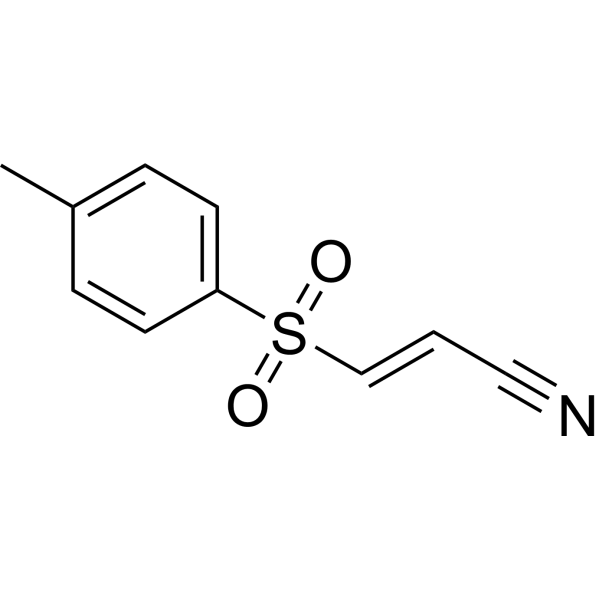
    IKK Deubiquitinase Autophagy Apoptosis NF-κB Inflammation/Immunology Cancer
    BAY 11-7082 is an IκBα phosphorylation and NF-κB inhibitor. BAY 11-7082 selectively and irreversibly inhibits the TNF-α-induced phosphorylation of IκB-α, and decreases NF-κB and expression of adhesion molecules. BAY 11-7082 inhibits ubiquitin-specific protease USP7 and USP21 (IC50=0.19, 0.96 μM, respectively). BAY 11-7082 inhibits gasdermin D (GSDMD) pore formation in liposomes and inflammasome-mediated pyroptosis and IL-1β secretion in human and mouse cells .
    BAY 11-7082
  • HY-N0191
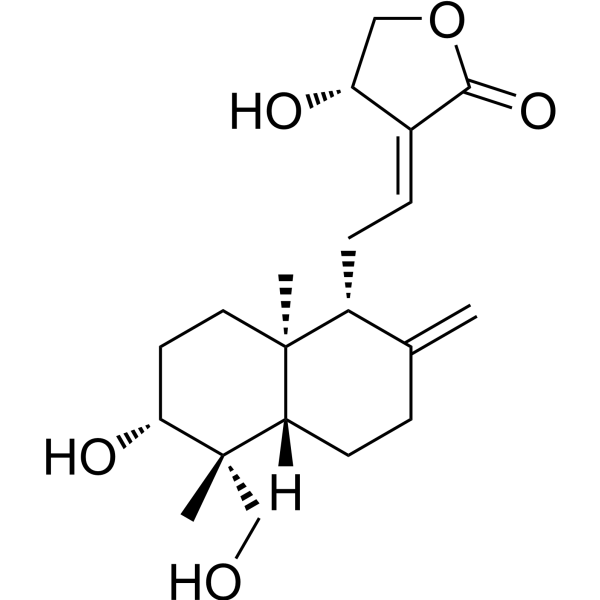
    Andrographolide
    30+ Cited Publications

    Andrographis

    NF-κB SARS-CoV Influenza Virus Autophagy Parasite Infection Inflammation/Immunology Cancer
    Andrographolide is a NF-κB inhibitor, which inhibits NF-κB activation through covalent modification of a cysteine residue on p50 in endothelial cells without affecting IκBα degradation or p50/p65 nuclear translocation. Andrographolide has antiviral effects.
    Andrographolide
  • HY-13295
    Vinpocetine
    5+ Cited Publications

    Ethyl apovincaminate

    Sodium Channel IKK Phosphodiesterase (PDE) Cardiovascular Disease Neurological Disease Inflammation/Immunology Cancer
    Vinpocetine (Ethyl apovincaminate) is a derivative of the alkaloid Vincamine that blocks voltage-gated Na + channels. The IC50 value of Vinpocetine on direct IKK inhibition in the cell-free system is 17.17 μM. Vinpocetine is a phosphodiesterase (PDE) inhibitor and inhibits NF-κB-dependent inflammatory responses by directly targeting IκB kinase complex (IKK), and has been widely used for the treatment of cerebrovascular disorders .
    Vinpocetine
  • HY-N2149
    Tomatidine
    5+ Cited Publications

    NF-κB JNK Autophagy Endogenous Metabolite Cardiovascular Disease Inflammation/Immunology
    Tomatidine acts as an anti-inflammatory agent by blocking NF-κB and JNK signaling . Tomatidine activates autophagy either in mammal cells or C elegans .
    Tomatidine
  • HY-P0151
    SN50
    Maximum Cited Publications
    44 Publications Verification

    NF-κB Inflammation/Immunology
    SN50 is a cell permeable inhibitor of NF-κB translocation.
    SN50
  • HY-B0808

    Oxaprozinum; Wy21743

    COX NF-κB Akt IKK Apoptosis Inflammation/Immunology Cancer
    Oxaprozin is an orally active and potent COX inhibitor, with IC50 values of 2.2 μM for human platelet COX-1 and and 36 μM for IL-1-stimulated human synovial cell COX-2, respectively. Oxaprozin also inhibits the activation of NF-κB. Oxaprozin induces cell apoptosis. Oxaprozin shows anti-inflammatory activity. Oxaprozin-mediated inhibition of the Akt/IKK/NF-κB pathway contributes to its anti-inflammatory properties .
    Oxaprozin
  • HY-15415
    KB-R7943 mesylate
    4 Publications Verification

    Na+/Ca2+ Exchanger Autophagy Cancer
    KB-R7943 mesylate is a widely used inhibitor of the reverse Na +/Ca 2+ exchanger (NCXrev) with IC50 of 5.7±2.1 μM. KB-R7943 mesylate induces cancer cell death via activating the JNK pathway and blocking autophagic flux.
    KB-R7943 mesylate
  • HY-N6727
    Gliotoxin
    2 Publications Verification

    Aspergillin

    Apoptosis PKA NF-κB Bacterial Fungal Antibiotic Infection Inflammation/Immunology Cancer
    Gliotoxin is a secondary metabolite, the most abundant mycotoxin secreted by A. fumigatus, inhibits the phagocytosis of macrophages and the immune functions of other immune cells . Gliotoxin inhibits inducible NF-κB activity by preventing IκB degradation, which consequently induces host-cell apoptosis . Gliotoxin activates PKA and increases intracellular cAMP concentration; modulates actin cytoskeleton rearrangement to facilitate A. fumigatus internalization into lung epithelial cells . Gliotoxin is a potent NOTCH2 transactivation inhibitor, can effectively induce apoptosis of chronic lymphocytic leukemia (CLL) cells .
    Gliotoxin
  • HY-N0128
    Sclareol
    3 Publications Verification

    Environmental Pollutants Apoptosis Cancer
    Sclareol is isolated from Salvia sclarea with anticarcinogenic activity. Sclareol shows strong cytotoxic activity against mouse leukemia (P-388), human epidermal carcinoma (KB) cells and human leukemia cell lines. Sclareol induces cell apoptosis .
    Sclareol
  • HY-16172
    DMAPT
    2 Publications Verification

    Dimethylamino Parthenolide

    NF-κB Cancer
    DMAPT (Dimethylamino Parthenolide), an analogue of Parthenolide (PTL), is an oral active NF-κB inhibitor, with a LD50 of 1.7 μM for cell population in AML cells. Has potential anti-cancer and anti-metastatic effect .
    DMAPT
  • HY-14942A

    RTA 744; WP 744; WP 769 hydrochloride

    NF-κB Apoptosis Caspase Drug Derivative Neurological Disease Cancer
    Berubicin (RTA 744) hydrochloride is a Doxorubicin (HY-15142A) analog that can cross the blood-brain barrier. Berubicin hydrochloride inhibits P-gp and MRP1-mediated efflux and suppresses glioblastoma multiforme (GBM). Berubicin hydrochloride exerts toxic effects on leukemia cells by activating nuclear factor κB (NF-κB) and induces apoptosis in neuroblastoma cells. Berubicin hydrochloride can be used in the study of tumors related to the nervous system .
    Berubicin hydrochloride
  • HY-104073
    CAY10602
    5+ Cited Publications

    Sirtuin Metabolic Disease Inflammation/Immunology
    CAY10602 is a SIRT1 activator. CAY10602 dose-dependently suppresses the NF-κB-dependent induction of TNF-α by lipopolysaccharide in THP-1 cells .
    CAY10602
  • HY-N2815

    Acetylursolic acid; 3-Acetylursolic acid

    Parasite HSP Infection Cancer
    Ursolic acid acetate (Acetylursolic acid) is a triterpenoid compound and an inhibitor of Plasmodium falciparum heat shock protein 90 (PfHsp90) with a KD of 8.16 μM. Ursolic acid acetate is cytotoxic to KB cells, with an IC50 value of 8.4 μM. Ursolic acid acetate can be used in tumor and antimalarial research .
    Ursolic acid acetate
  • HY-N0191R

    Andrographis (Standard)

    Reference Standards NF-κB SARS-CoV Influenza Virus Autophagy Parasite Infection Inflammation/Immunology Cancer
    Andrographolide (Standard) is the analytical standard of Andrographolide. This product is intended for research and analytical applications. Andrographolide is a NF-κB inhibitor, which inhibits NF-κB activation through covalent modification of a cysteine residue on p50 in endothelial cells without affecting IκBα degradation or p50/p65 nuclear translocation. Andrographolide has antiviral effects.
    Andrographolide (Standard)
  • HY-N2497
    Isoliquiritin apioside
    2 Publications Verification

    NF-κB MMP p38 MAPK Cancer
    Isoliquiritin apioside significantly decreases PMA-induced increases in MMP9 activities and suppresses PMA-induced activation of MAPK and NF-κB. Isoliquiritin apioside auppresseses invasiveness and angiogenesis of cancer cells and endothelial cells .
    Isoliquiritin apioside
  • HY-N2149A
    Tomatidine hydrochloride
    5+ Cited Publications

    NF-κB JNK Autophagy Endogenous Metabolite Cardiovascular Disease Inflammation/Immunology
    Tomatidine hydrochloride acts as an anti-inflammatory agent by blocking NF-κB and JNK signaling . Tomatidine hydrochloride activates autophagy either in mammal cells or C elegans .
    Tomatidine hydrochloride
  • HY-N2132
    Flavokawain B
    2 Publications Verification

    Flavokavain B

    Apoptosis Caspase PARP Bcl-2 Family NF-κB PI3K Akt p38 MAPK MMP Reactive Oxygen Species (ROS) Cardiovascular Disease Inflammation/Immunology Cancer
    Flavokawain B (Flavokavain B) is an orally active chalcone. Flavokawain B results in activation of caspase-9, -3 and -8, cleavage of PARP. Flavokawain B down-regulates Bcl-2 with concomitant increase in Bax level. Flavokawain B inhibits NF-κB, PI3K/Akt and MAPK signaling pathway. Flavokawain B exhibits Apoptotic effects. Flavokawain B inhibits MMP-9 and promotes ROS generation. Flavokawain B inhibits multiple tumors and inflammation .
    Flavokawain B
  • HY-138537
    NF-κB-IN-1
    3 Publications Verification

    IKK Cancer
    NF-κB-IN-1, a 4-arylidene crucumin analogue, is a potent NF-κB signaling pathway inhibitor. NF-κB-IN-1 directly inhibits IKK to block NF-κB activation. NF-κB-IN-1 effectively inhibits the viability of lung cancer cells and attenuates the clonogenic activity of A549 cells .
    NF-κB-IN-1
  • HY-133987
    AP-1/NF-κB activation inhibitor 1
    3 Publications Verification

    NF-κB Inflammation/Immunology
    AP-1/NF-κB activation inhibitor 1 is a potent AP-1 and NF-κB mediated transcriptional activation inhibitor (IC50=1 μM), without blocking basal transcription driven by the β-actin promoter. AP-1/NF-κB activation inhibitor 1 has a similar inhibitory effect on the production of IL-2 and IL-8 levels in stimulated cells .
    AP-1/NF-κB activation inhibitor 1
  • HY-103001

    DNA/RNA Synthesis Cancer
    HMN-154 is a novel benzenesulfonamide anticancer compound; inhibits KB and colon38 cells with IC50 values of 0.0026 and 0.003 μg/mL, respectively.
    HMN-154
  • HY-103662
    GW-870086
    1 Publications Verification

    Glucocorticoid Receptor Inflammation/Immunology Endocrinology
    GW-870086 is a potent anti-inflammatory agent, acting as a glucocorticoid receptor agonist, with a pIC50 of 10.1 in A549 cells expressing NF-κB.
    GW-870086
  • HY-N1410

    STAT NF-κB Cancer
    Triacetylresveratrol, an acetylated analog of Resveratrol. Triacetylresveratrol decreases the phosphorylation of STAT3 and NF-κB in a dose- and time- dependent manner in PANC-1 and BxPC-3 cells. Anticancer effects .
    Triacetylresveratrol
  • HY-N0907

    NF-κB Apoptosis Inflammation/Immunology Cancer
    Ginsenoside Rg6 inhibits TNF-α-induced NF-κB transcriptional activity with an IC50 of 29.34 μM in HepG2 cells. Ginsenoside Rg6 also exhibits apoptosis-inducing effect.
    Ginsenoside Rg6
  • HY-120026
    KB130015
    1 Publications Verification

    KB015

    Thyroid Hormone Receptor Calcium Channel Potassium Channel Sodium Channel Cardiovascular Disease
    KB130015 (KB015) is an orally active and potent ThRα and ThRβ (thyroid hormone receptor) inhibitor, with IC50 values of 4.5 and 5.1 μM, respectively. KB130015 markedly slows the kinetics of inactivation of Na + channels. KB130015 activates hERG1 channels (EC50 = 12.2 μM) and large-conductance Ca 2+-activated K + (BKCa) channels formed by hSlo1 (α) subunits in HEK 293 cells. KB130015 has antiarrhythmic properties. KB130015 can be used for the study of cardiovascular disease .
    KB130015
  • HY-101359

    GABA Receptor Neurological Disease
    TPMPA, a hybrid of isoguvacine and 3-APMPA, is the first selective antagonist for a GABAC receptor (KB = 2.1 μM), but not to interact with GABAA (KB = 320 μM) or GABAB receptors (EC50 = 500 μM). TPMPA has the potential for the research of suppressing orientation selectivity in ganglion cells .
    TPMPA
  • HY-152177
    JS6
    1 Publications Verification

    NF-κB Cancer
    JS6 is a Bcl3 inhibitor, and inhibits Bcl3-NF-kB1 binding. JS6 inhibits tumor cell growth in vitro and in vivo .
    JS6
  • HY-110151

    NF-κB Interleukin Related Inflammation/Immunology Cancer
    Bengamide B is an alkaloid with anti-tumor and anti-inflammatory activities. Bengamide B reduces the phosphorylation level of IκBα, thereby blocking the activation of NF-κB. Bengamide B inhibits the proliferation of tumor cells. Bengamide B can be used in research related to inflammatory diseases and cancers .
    Bengamide B
  • HY-14942

    RTA 744 free base; WP 744 free base; WP 769

    NF-κB Apoptosis Caspase Drug Derivative Neurological Disease Cancer
    Berubicin (RTA 744 free base) is a Doxorubicin (HY-15142A) analog that can cross the blood-brain barrier. Berubicin inhibits P-gp and MRP1-mediated efflux and suppresses glioblastoma multiforme (GBM). Berubicin exerts toxic effects on leukemia cells by activating nuclear factor κB (NF-κB) and induces apoptosis in neuroblastoma cells. Berubicin can be used in the study of tumors related to the nervous system .
    Berubicin
  • HY-16172A

    (S)-Dimethylamino Parthenolide

    NF-κB Cancer
    (S)-DMAPT (Dimethylamino Parthenolide), an analogue of Parthenolide (PTL), is an oral active NF-κB inhibitor, with a LD50 of 1.7 μM for cell population in AML cells. Has potential anti-cancer and anti-metastatic effect .
    (S)-DMAPT
  • HY-N2149R

    Reference Standards NF-κB JNK Autophagy Endogenous Metabolite Cardiovascular Disease Inflammation/Immunology
    Tomatidine acts as an anti-inflammatory agent by blocking NF-κB and JNK signaling . Tomatidine activates autophagy either in mammal cells or C elegans .
    Tomatidine (Standard)
  • HY-N15199

    Others Cancer
    Schisanlactone A is a natural triterpenoid compound. Schisanlactone A has moderate cytotoxicity, with its IC50 value being 63.3 μM against KB cells. Schisanlactone A does not possess antibacterial or tyrosinase inhibitory activities. Schisanlactone A can be used for the study of oral epidermoid carcinoma .
    Schisanlactone A
  • HY-19498

    SIM-688

    NF-κB Inflammation/Immunology
    WAY-204688 is an estrogen receptor (ER-α) selective, orally active inhibitor of NF-κB transcriptional activity with an IC50 of 122 ± 30 nM for NF-κB-luciferase (NF-κB-luc) in HAECT-1 cells.
    WAY-204688
  • HY-112225

    Antibiotic Bacterial Parasite NF-κB Apoptosis Infection Cancer
    Narasin sodium is a cationic ionophore and coccidiostat agent. Narasin inhibits NF-κB signaling and induces tumor cells apoptosis. Narasin sodium has antimicrobial and anticancer activity .
    Narasin sodium
  • HY-153320

    MAP3K Cancer
    AZ-TAK1, an ATP-competitive small molecule inhibitor of TAK1, dephosphorylates TAK1, p38, and IκB-α in lymphoma cell lines .
    AZ-TAK1
  • HY-N11638

    Apoptosis Cancer
    Ganoderic acid R is a potent anticancer agent. Ganoderic acid R inhibits the growth by inducing apoptosis on tumor cell line. Ganoderic acid R possesses significant cytotoxicity on a multidrug resistance (MDR) tumor cell line (KB-A-1/Dox) and a sensitive tumor cell line (KB-A-1) .
    Ganoderic acid R
  • HY-175227

    STAT NF-κB Apoptosis Caspase Bcl-2 Family Cancer
    STAT3/NF-κB-IN-1 is a potentSTAT3 and NF-κB inhibitor with IC50s of 5.86 (STAT3) and 4.22 μM (NF-κB) in 4T1 cells. STAT3/NF-κB-IN-1 is able to induce apoptosis via its upregulation on key apoptotic regulators; caspases-3/9, Bax and downregulation of Bcl-2. STAT3/NF-κB-IN-1 exerts considerable anticancer activity against breast cancer cell lines and reduces tumor volume in vivo. STAT3/NF-κB-IN-1 can be used for the study of breast cancer .
    STAT3/NF-κB-IN-1
  • HY-176535

    BBC0115

    Epigenetic Reader Domain Interleukin Related STAT Inflammation/Immunology
    KB-0118 (BBC0115) is an orally active BET bromodomain inhibitor. KB-0118 selective binds to BRD2 and BRD4 over BRD3, with Kd values of 36.7 μM for BRD2 BD1 and 47.4 μM for BRD4 BD1. KB-0118 inhibits pro-inflammatory cytokines, including TNF, IL-1β, and IL-23a and selectively suppresses Th17 cell differentiation. KB-0118 modulates Th17-driven inflammation occurs through epigenetic suppression of BRD4, confirmed by downregulation of STAT3 and BRD4 target genes. KB-0118 has immunomodulatory effects in inflammatory bowel disease (IBD) model.
    KB-0118
  • HY-130073

    NF-κB Apoptosis Cancer
    Amorfrutin A is the inhibition of NF-κB activation, that inhibits TNF-α-induced IκBα degradation, p65 nuclear translocation, and DNA-binding activity. Amorfrutin A promotes TNF-α-induced apoptosis in HeLa cell through promotion of caspase-3 and PARP proteolysis .
    Amorfrutin A
  • HY-N10009

    NF-κB TNF Receptor COX ERK p38 MAPK Sirtuin Inflammation/Immunology
    Cudraflavone B is a prenylated flavonoid with anti-inflammatory and anti-tumor properties. Cudraflavone B is also a dual inhibitor of COX-1 and COX-2. Cudraflavone B blocks the translocation of nuclear factor κB (NF-κB) from the cytoplasm to the nucleus in macrophages. Thus, Cudraflavone B inhibits tumor necrosis factor α (TNFα) gene expression and secretion. Cudraflavone B also triggers the mitochondrial apoptotic pathway, activates NF-κB, the MAPK p38, and ERK, and induced the expression of SIRT1. Thus Cudraflavone B inhibits the growth of human oral squamous cell carcinoma cells .
    Cudraflavone B
  • HY-N4308

    Hexa-O-methylquercetagetin; Quercetagetin hexamethyl ether; 3,5,6,7,3',4'-Hexamethoxyflavone

    NF-κB IKK Bcl-2 Family Cancer
    Hexamethylquercetagetin (Hexa-O-methylquercetagetin; Quercetagetin hexamethyl ether; 3,5,6,7,3',4'-Hexamethoxyflavone) is an orally active NF-κB inhibitor. Hexamethylquercetagetin inhibits NF-κB-derived luciferase activity, reduces phosphorylated p65 and IκBα, Cyclin D1, Bcl-2 and blocks TNFα-induced NF-κB activation. Hexamethylquercetagetin inhibits survival and proliferation of cervical carcinoma cells. Hexamethylquercetagetin suppresses tumor volume and weight in BALB/c nude mouse xenograft models of cervical carcinoma. Hexamethylquercetagetin can be used for the research of cancer, such as cervical carcinoma .
    Hexamethylquercetagetin
  • HY-N1251

    Others Others
    Scholaricine (compound 13 ) is an alkaloid isolated from the leaf and stem-bark extracts of Alstonia spatulata. Scholaricine reverse multidrug resistance in vincristine-resistant KB cells with an IC50 value of 13.35 μM .
    Scholaricine
  • HY-117708

    Drug Intermediate Cancer
    Antitumor agent-144 (16) is an antitumor agent, with IC50 values of 2.6 μM and 8.4 μM in L1210 and KB cells, respectively .
    Antitumor agent-144
  • HY-N3916

    (+)-Galanolactone

    Fungal Infection
    Galanolactone is a natural product that can be isolated from the seeds of Alpinia galanga. Galanolactone shows antifungal activitie. Galanolactone shows cytotoxicity against KB cells with an EC50 of 38.5 µg/ml .
    Galanolactone
  • HY-N2779

    Others Cancer
    8-Lavandulylkaempferol is a flavonoid that can be isolated from Sophora flaWescens. 8-Lavandulylkaempferol exhibits cytotoxic activity against the KB epidermoid carcinoma cell line with an IC50 of 15.1 μg/mL .
    8-Lavandulylkaempferol
  • HY-118385

    Microtubule/Tubulin Cancer
    ER-67880 is a potent microtubule inhibitor with an IC50 of 9.5 μM. ER-67880 exhibits anti-proliferative activity against KB, Colon 38 and P338 cells with IC50s of 0.55, 0.2 and 0.76 μg/mL. ER-67880 causes G2/M phase arrest and is accompanied by abnormal DNA replication. ER-67880 exhibits a down-regulation pattern of G1 phase-related genes. ER-67880 can be used in various cancer studies, including those of nasopharyngeal carcinoma and murine adenocarcinoma .
    ER-67880
  • HY-175542

    STAT Apoptosis Reactive Oxygen Species (ROS) PARP Cancer
    KB-15 is a STAT3 inhibitor. KB-15 exhibits potent anti-proliferative activity against AGS gastric cancer cells (IC50 = 0.29 μM) and BGC-823 gastric cancer cells (IC50 = 0.65 μM). KB-15 exerts anti-tumor effects by inhibiting STAT3 phosphorylation, downregulating HO-1 expression, and promoting intracellular ROS accumulation. KB-15 induces G0/G1 phase cell cycle arrest and apoptosis, as well as suppresses colony formation and migration of gastric cancer cells. KB-15 demonstrates excellent anti-tumor efficacy in BGC-823 subcutaneous xenograft model. KB-15 can be used for the study of gastric cancer .
    KB-15
  • HY-126026

    NF-κB Inflammation/Immunology
    NF-κB-IN-17 (Zinc5) is a NF-κB inhibitor. NF-κB-IN-17 inhibits TNF-α-induced NF-κB DNA binding activity in C2C12 cells .
    NF-κB-IN-17
  • HY-142958

    NF-κB Neurological Disease
    NF-κB-IN-2 inhibits TNF-α-induced canonical NF-κB signaling in PC-3 cells.
    NF-κB-IN-2
  • HY-147682

    NF-κB Apoptosis Cancer
    NF-κB-IN-5 (compound 4d) is an orally active and potent NF-κB inhibitor by interacting directly with NF-κB. NF-κB-IN-5 shows antitumor activity against human cancer cell lines (HCT116, U87-MG, HepG2, BGC823, PC9), with IC50 values of 5.35, 2.81, 2.83, 2.02 and 3.90 μM, respectively. NF-κB-IN-5 induces apoptosis in U87-MG tumor cell and cell cycle arrest in G0/G1 phase .
    NF-κB-IN-5
  • HY-172201

    NF-κB Reactive Oxygen Species (ROS) Autophagy Apoptosis HIF/HIF Prolyl-Hydroxylase Akt STAT PI3K Inflammation/Immunology Cancer
    NF-κB-IN-19 (Compound 8) is an NF-κB inhibitor. NF-κB-IN-19 effectively induces DNA damage, promotes the generation of ROS, and induces autophagy and apoptosis through the NF-κB signaling pathway in tumor cells. In addition, NF-κB-IN-19 can inhibit the levels of VEGF and HIF-1α, and exert antiproliferative activity in tumor cells through the PI3K/AKT and STAT-3 pathways. NF-κB-IN-19 can effectively overcome cisplatin resistance and has anti-tumor activity .
    NF-κB-IN-19

Inquiry Online

Your information is safe with us. * Required Fields.

Salutation


Country or Region *

Applicant Name *


Organization Name *

Department *


Email Address *


Product Name *

Cat. No.


Requested quantity *

Phone Number *


Remarks

Inquiry Online

Inquiry Information

Product Name:
Cat. No.:
Quantity:
MCE Japan Authorized Agent:

