
1. Search Result
Search Result
Results for "

LC

" in MedChemExpress (MCE) Product Catalog:

305

Inhibitors & Agonists

140

Screening Libraries

3

Fluorescent Dye

4

Biochemical Assay Reagents

19

Peptides

53

Natural
Products

17

Recombinant Proteins

17

Isotope-Labeled Compounds

22

Antibodies

1

Click Chemistry

21

Oligonucleotides

Targets Recommended:
Cat. No. Product Name Target Research Areas Chemical Structure
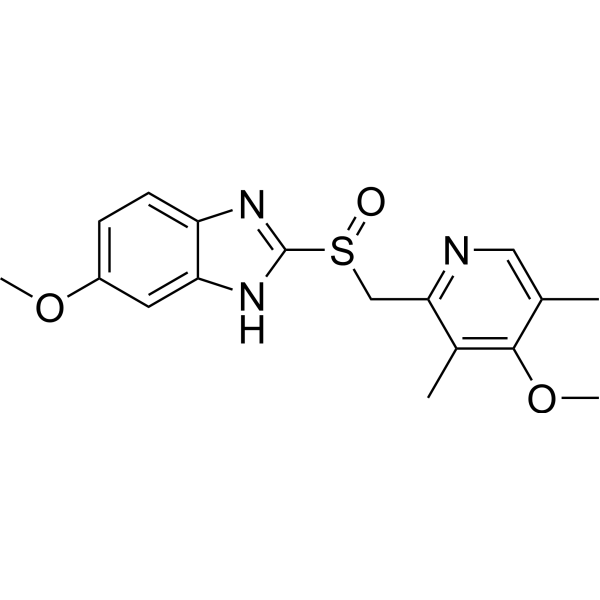
  • HY-B0113
    Omeprazole
    5+ Cited Publications

    H 16868

    Na+/K+ ATPase Proton Pump Bacterial Cytochrome P450 Apoptosis Autophagy Atg8/LC3 TNF Receptor Interleukin Related Infection Neurological Disease Inflammation/Immunology Cancer
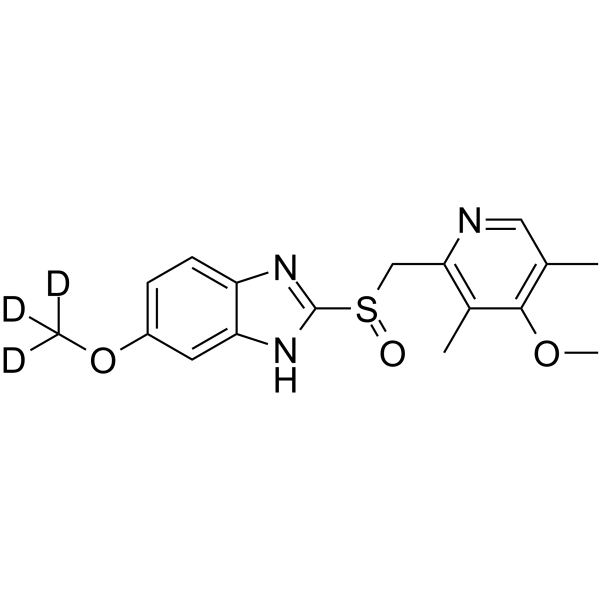
    Omeprazole (H 16868) is an orally active H +,K +-ATPase inhibitor and a proton pump inhibitor. Omeprazole competitively inhibits CYP2C19, CYP3A4, and CYP2C9 activity. Omeprazole inhibits gastric acid secretion and can be used for acid-related gastrointestinal disorders. Omeprazole inhibits pancreatic cancer cell proliferation, induces apoptosis, autophagosome accumulation (elevated LC3-I and LC3-II levels), oxidative stress, and cytogenetic imbalance, modulates lysosomal transport, reduces inflammatory cytokines. Omeprazole alters small intestinal morphology and magnesium absorption, and induces gastric mucosa morphologic changes. Omeprazole aslo has neuroprotective and antibacterial effects .
    Omeprazole
  • HY-D0799
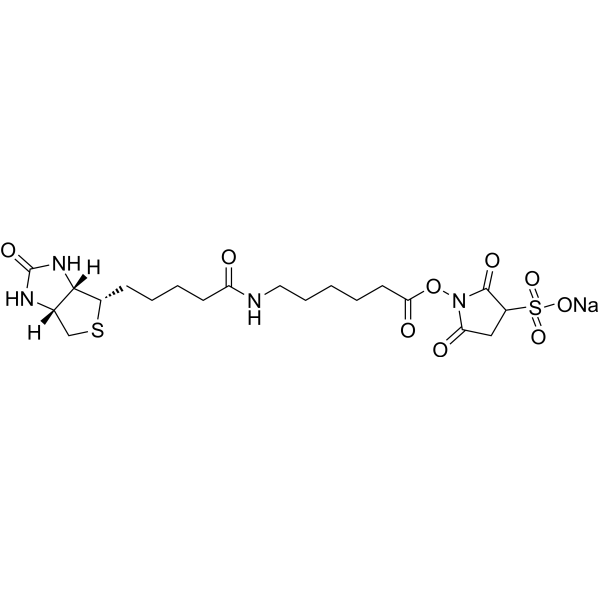
    Sulfo-NHS-LC-Biotin sodium
    5+ Cited Publications

    Fluorescent Dye Others
    Sulfo-NHS-LC-Biotin sodium is an amine-reactive ester derivative of biotin and cannot pass the intact blood-retinal barrier. It can be used to assess vascular permeability of the brain and retinal vasculature.
    Sulfo-NHS-LC-Biotin sodium
  • HY-137516
    LC-2
    2 Publications Verification

    PROTACs Ras Cancer
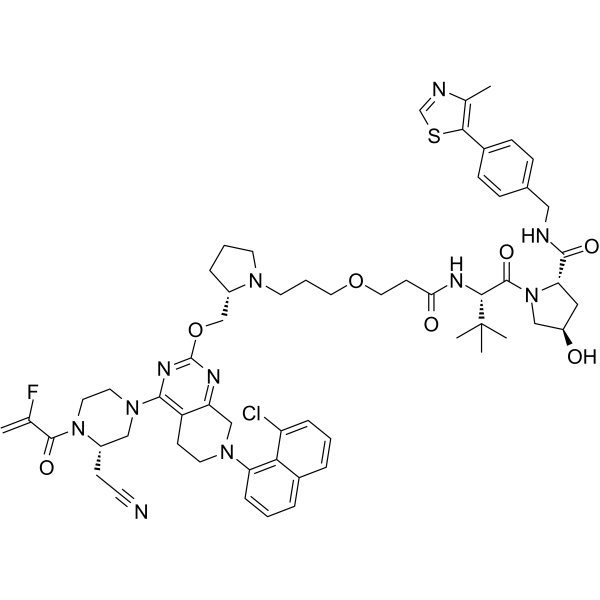
    LC-2 is a potent and first-in-class von Hippel-Lindau-based PROTAC capable of degrading endogenous KRAS G12C, with DC50s between 0.25 and 0.76 μM . LC-2 covalently binds KRAS G12C with a MRTX849 warhead and recruits the E3 ligase VHL, inducing rapid and sustained KRAS G12C degradation leading to suppression of MAPK signaling in both homozygous and heterozygous KRAS G12C cell lines .
    LC-2
  • HY-172162

    Molecular Glues NEKs Interleukin Related Inflammation/Immunology Cancer
    LC-04-045 is a selective NIMA-related kinase 7 (NEK7) molecular glue degrader. LC-04-045 induces NEK7 degradation via the CRBN-based ubiquitin-proteasome system, dependent on the glycine 57-containing degron motif. LC-04-045 inhibits secretion of downstream cytokines IL-1β and IL-18. LC-04-045 can be used for the research of lymphoblastic leukemia .
    LC-04-045
  • HY-14892A

    LC15-0444 tartrate

    Dipeptidyl Peptidase Metabolic Disease
    Gemigliptin tartrate (LC15-0444 tartrate) is a highly selective, reversible and competitive dipeptidyl peptidase-4 (DPP-4) inhibitor, with an IC50 of 10.3 nM for human recombinant DPP-4. Gemigliptin tartrate exhibits potent anti-glycation properties. Gemigliptin tartrate can be used for the research of advanced glycation end products (AGE)-related diabetic complications .
    Gemigliptin tartrate
  • HY-115627
    PKUMDL-LC-101-D04
    5+ Cited Publications

    GPX4-Activator-1d4

    Glutathione Peroxidase Inflammation/Immunology
    PKUMDL-LC-101-D04 (GPX4-Activator-1d4) is a glutathione peroxidase 4 (GPX4) allosteric activator (pEC50=4.7). PKUMDL-LC-101-D04 can inhibit ferroptosis and inflammation .
    PKUMDL-LC-101-D04
  • HY-B0113A
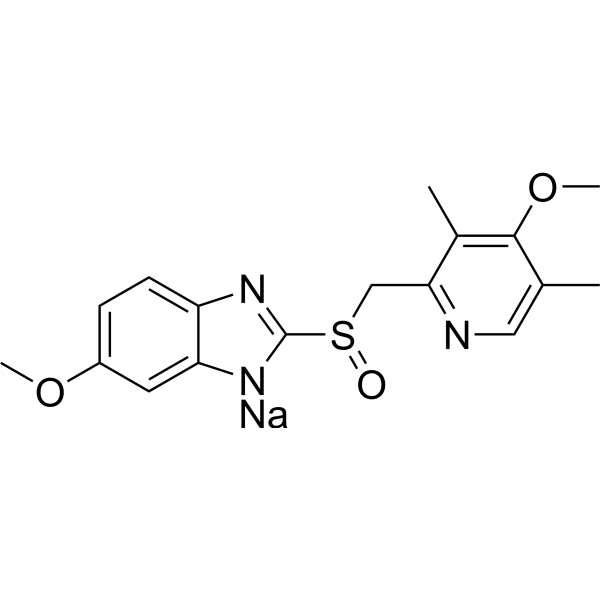
    Omeprazole sodium
    5+ Cited Publications

    H 16868 sodium

    Na+/K+ ATPase Interleukin Related Proton Pump Cytochrome P450 Bacterial Apoptosis Autophagy TNF Receptor Atg8/LC3 Infection Inflammation/Immunology
    Omeprazole (H 16868) sodium is an orally active H +,K +-ATPase inhibitor and a proton pump inhibitor. Omeprazole sodium competitively inhibits CYP2C19, CYP3A4, and CYP2C9 activity. Omeprazole sodium inhibits gastric acid secretion and can be used for acid-related gastrointestinal disorders. Omeprazole sodium inhibits pancreatic cancer cell proliferation, induces apoptosis, autophagosome accumulation (elevated LC3-I and LC3-II levels), oxidative stress, and cytogenetic imbalance, modulates lysosomal transport, reduces inflammatory cytokines. Omeprazole sodium alters small intestinal morphology and magnesium absorption, and induces gastric mucosa morphologic changes. Omeprazole sodium aslo has neuroprotective and antibacterial effects .
    Omeprazole sodium
  • HY-130259

    Atg8/LC3 Autophagy Neurological Disease
    LC3-mHTT-IN-AN2 (Compound AN2) is a mHTT-LC3 linker compound, which interacts with both mutant huntingtin protein (mHTT) and LC3B but not with wtHTT or irrelevant control proteins. LC3-mHTT-IN-AN2 reduces the levels of mHTT in an allele-selective manner in cultured Huntington disease (HD) mouse neurons .
    LC3-mHTT-IN-AN2
  • HY-130258

    Atg8/LC3 Autophagy Neurological Disease
    LC3-mHTT-IN-AN1 (Compound AN1) is a mHTT-LC3 linker compound, which interacts with both mutant huntingtin protein (mHTT) and LC3B but not with wtHTT or irrelevant control proteins. LC3-mHTT-IN-AN1 reduces the levels of mHTT in an allele-selective manner in cultured Huntington disease (HD) mouse neurons .
    LC3-mHTT-IN-AN1
  • HY-101885

    Biotinamidocaproyl hydrazide; BACH; (+)-Biotinamidohexanoic Acid hydrazide; Biotin Aminocaproyl Hydrazide

    Biochemical Assay Reagents Others
    Biotin LC hydrazide is a long chain protein modification reagent, which can transform periodate-oxidized glycoproteins.
    Biotin LC hydrazide
  • HY-W040254

    Fluorescent Dye Others
    Biotin-LC-LC-NHS is a biotinylation reagent that contains an NHS moiety, which can react efficiently with primary amino (-NH2). Biotin-LC-LC-NHS enables simple and efficient biotinylation of antibodies, proteins, and any other primary amine-containing biomolecules in solution. Biotin-LC-LC-NHS can be used to biotinylate small molecules such as Paclitaxel (HY-B0015) for use in binding site characterization.
    Biotin-LC-LC-NHS
  • HY-D1635

    Biotin-XX-SSE

    Fluorescent Dye Exosomes Infection
    Sulfo-NHS-LC-LC-Biotin (Biotin-XX-SSE), a biotin reagent, is used to label the proteins exposed to the external leaflet of intact exosomes and contains a larger spacer arm between the biotin and amine reactive linker. The size of this linker helps to overcome steric hindrance and increases labeling efficiency at the crowded exosome surface .
    Sulfo-NHS-LC-LC-Biotin
  • HY-135710

    ADAMTS Bacterial Infection Inflammation/Immunology
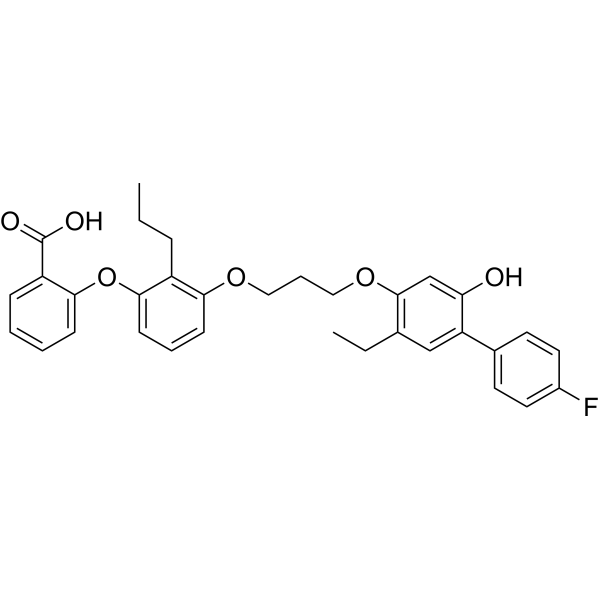
    ADAMTS-5-IN-2 is an inhibitor of ADAMTS-5 (IC50: 9.6 μM) and BoNT/A LC (IC50: 0.71 μM). ADAMTS-5-IN-2 can be used in research related to botulism, osteoarthritis, and other conditions .
    ADAMTS-5-IN-2
  • HY-141882
    DC-LC3in-D5
    1 Publications Verification

    Atg8/LC3 Autophagy Infection Inflammation/Immunology Cancer
    DC-LC3in-D5 acts as an autophagy inhibitor by attenuating LC3B lipidation. DC-LC3in-D5 binds with LC3B. DC-LC3in-D5 disrupts the LC3B-LBP2 interaction with an IC50 of 200 nM. DC-LC3in-D5 may contribute to anti-HCV or combination researchs in cancer through inhibiting autophagy .
    DC-LC3in-D5
  • HY-16730
    Sarolaner
    1 Publications Verification

    PF-6450567

    Parasite Infection
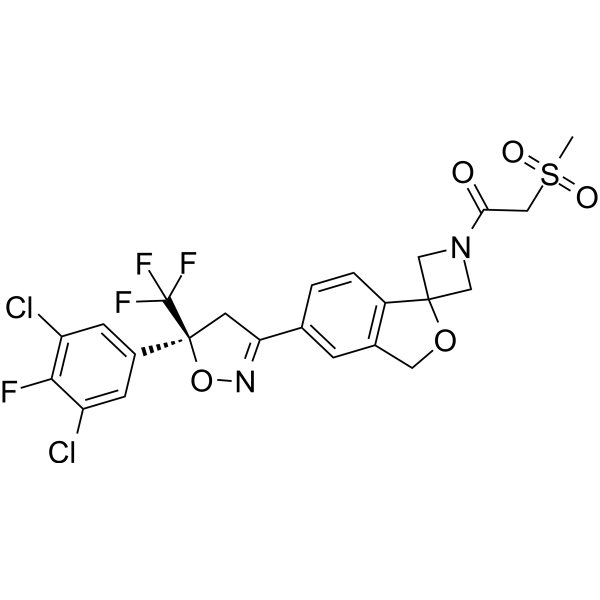
    Sarolaner (PF-6450567) is an orally active and broad-spectrum ectoparasiticide. Sarolaner is an isoxazoline compound which shows efficacy against fleas and ticks on dogs, with a LC80 value of 0.3 μg/mL against C. felis and a LC100 value of 0.003 μg/mL against O. turicata .
    Sarolaner
  • HY-P4125A

    HIV Fluorescent Dye Others
    FITC-LC-TAT (47-57) acetate is a FITC-labeled TAT peptide (HY-P0281) (λex: 493 nm, λem: 522 nm). Derived from the trans-activator of transcription (TAT) of immunodeficiency virus (HIV-1), TAT enhances the yield of heterologous proteins .
    FITC-LC-TAT (47-57) acetate
  • HY-149843

    FGFR PROTACs Cancer
    LC-MB12 is an orally active PROTAC compound targets FGFR2 degradation with a DC50 of 11.8 nM. LC-MB12 contains BGJ398 (a FGFR2 inhibitor), PROTAC linker and CRBN.LC-MB12 inhibits FGFR2 signaling in gastric cancer cells and has anti-tumor activity .
    LC-MB12
  • HY-126495A

    ADC Linker Cancer
    Sulfo-LC-SPDP sodium is a cleavable ADC linker used in the synthesis of antibody-drug conjugates (ADCs) .
    Sulfo-LC-SPDP sodium
  • HY-138065

    Apoptosis Others
    Iodoacetyl-LC-biotin is a biotinylated electrophile probe that can be used to investigate the scope and characteristics of protein covalent binding to subcellular proteomes .
    Iodoacetyl-LC-biotin
  • HY-14892

    LC15-0444

    Dipeptidyl Peptidase Metabolic Disease Cancer
    Gemigliptin (LC15-0444 ) is a highly selective, reversible and competitive dipeptidyl peptidase-4 (DPP-4) inhibitor, with an IC50 of 10.3 nM for human recombinant DPP-4. Gemigliptin exhibits potent anti-glycation properties. Gemigliptin can be used for the research of advanced glycation end products (AGE)-related diabetic complications .
    Gemigliptin
  • HY-139585

    LC350189

    Xanthine Oxidase Metabolic Disease
    Tigulixostat (LC350189) is an orally active non-purine selective xanthine oxidase inhibitor. Tigulixostat has IC50 values of 0.003 µM and 0.073 µM in bovine milk and rat plasma, respectively. Tigulixostat can effectively reduce serum uric acid levels and can be used in the research of gout and hyperuricemia .
    Tigulixostat
  • HY-139402

    Ras Cancer
    MRTX849 acid, a derivative of MRTX849, can be used in the synthesis of PROTAC LC-2 (HY-137516). LC-2 is a potent and first-in-class PROTAC capable of degrading endogenous KRAS G12C (DC50s between 0.25 and 0.76 μM) .
    MRTX849 acid
  • HY-B0113R

    H 16868 (Standard)

    Reference Standards Na+/K+ ATPase Interleukin Related Proton Pump Cytochrome P450 Bacterial Apoptosis Autophagy TNF Receptor Atg8/LC3 Infection Metabolic Disease Cancer
    Omeprazole (Standard) is the analytical standard of Omeprazole. This product is intended for research and analytical applications. Omeprazole (H 16868) is an orally active H +,K +-ATPase inhibitor and a proton pump inhibitor. Omeprazole competitively inhibits CYP2C19, CYP3A4, and CYP2C9 activity. Omeprazole inhibits gastric acid secretion and can be used for acid-related gastrointestinal disorders. Omeprazole inhibits pancreatic cancer cell proliferation, induces apoptosis, autophagosome accumulation (elevated LC3-I and LC3-II levels), oxidative stress, and cytogenetic imbalance, modulates lysosomal transport, reduces inflammatory cytokines. Omeprazole alters small intestinal morphology and magnesium absorption, and induces gastric mucosa morphologic changes. Omeprazole aslo has neuroprotective and antibacterial effects .
    Omeprazole (Standard)
  • HY-101535
    ARP101
    1 Publications Verification

    Atg8/LC3 MMP Cancer
    ARP101 is a potent and selective inhibitor matrix metalloproteinase-2 (MMP-2). ARP101 induces autophagy-associated cell death in cancer cells. ARP101 is effective in inducing the formation of autophagosome and conversion of LC3I into LC3II .
    ARP101
  • HY-W688687

    Autophagy p62 Atg8/LC3 Others
    XIE62-1004-A is an inducer of p62-LC3 interaction. XIE62-1004-A can bind to the ZZ-domain of p62, inducing p62 oligomerization and activating p62-dependent autophagy .
    XIE62-1004-A
  • HY-P4125

    HIV Fluorescent Dye Infection
    FITC-LC-TAT (47-57) is a FITC-labeled TAT peptide (HY-P0281) (λex: 493 nm, λem: 522 nm). Derived from the trans-activator of transcription (TAT) of human immunodeficiency virus (HIV-1), TAT enhances the yield of heterologous proteins .
    FITC-LC-TAT (47-57)
  • HY-177888

    Biochemical Assay Reagents Endocrinology
    Lc2Cer(d18:1, 22:0) is a lactosylceramide containing d18:1, C22:0 ceramides. Lc2Cer(d18:1, 22:0) can be used for renal cortical epithelial cell research .
    Lc2Cer(d18:1, 22:0)
  • HY-RS08029

    Small Interfering RNA (siRNA) Others

    MAP1LC3B Human Pre-designed siRNA Set A contains three designed siRNAs for MAP1LC3B gene (Human), as well as a negative control, a positive control, and a FAM-labeled negative control.

    MAP1LC3B Human Pre-designed siRNA Set A
    MAP1LC3B Human Pre-designed siRNA Set A
  • HY-146307

    TrxR Cancer
    TrxR-IN-3 (Compound 2c) is a potent inhibitor of TrxR. TrxR-IN-3 exhibits potent antiproliferative activities against five human cancer cell lines, especially against breast tumor cells. TrxR-IN-3 increases ROS levels and resulted in marked apoptosis by regulating apoptosis-related proteins expressed in the breast cancer cells. TrxR-IN-3 also triggers the formation of autophagosomes and autolysosomes by promoting the expression of LC3-II and Beclin-1 and diminishing the expression of LC3-I and p62 proteins .
    TrxR-IN-3
  • HY-P4532

    Cathepsin Neurological Disease
    Ac-Leu-Val-Lys-Aldehyde is a potent cathepsin B inhibitor with IC50s of 4 nM. Ac-Leu-Val-Lys-Aldehyde significantly reduces quinolinic acid (HY-100807)-induced striatal cell death and causes accumulation of LC3-II .
    Ac-Leu-Val-Lys-Aldehyde
  • HY-126495

    ADC Linker Cancer
    Sulfo-LC-SPDP is a heterobifunctional, thiol-cleavable and membrane impermeable crosslinker.
    Sulfo-LC-SPDP
  • HY-175665

    Ligands for E3 Ligase Others
    LC3 liagnd-2 is an E3 ligase ligand. LC3 liagnd-2 can be used for synthesis of PROTAC PDEδ autophagic degrader 1 (HY-157458) .
    LC3 liagnd-2
  • HY-131389

    Biochemical Assay Reagents Others
    Cholesteryl heptadecanoate is a cholesteryl ester internal standard that accurately determines the concentration of free cholesterol in cells without hydrolyzing triglycerides. Cholesteryl heptadecanoate can be used for the quantitative determination of cholesteryl esters by GC or LC mass spectrometry .
    Cholesteryl heptadecanoate
  • HY-D0799A

    Fluorescent Dye Others
    Sulfo-NHS-LC-Biotin is an amine-reactive ester derivative of biotin and cannot pass the intact blood-retinal barrier. It can be used to assess vascular permeability of the brain and retinal vasculature.
    Sulfo-NHS-LC-Biotin
  • HY-W123007

    Succinimidyl-[4-(N-maleimidomethyl)]-cyclohexane-1-carboxy-(6-amidocaproate)

    ADC Linker Cancer
    LC-SMCC (Succinimidyl-[4-(N-maleimidomethyl)]-cyclohexane-1-carboxy-(6-amidocaproate)) is an ADC linker used in the synthesis of antibody-drug conjugates (ADCs) .
    LC-SMCC
  • HY-14892C

    LC15-0444 hydrochloride

    Dipeptidyl Peptidase Metabolic Disease Cancer
    Gemigliptin hydrochloride is the hydrochloride salt of Gemigliptin (HY-14892). Gemigliptin hydrochloride is a highly selective, reversible and competitive dipeptidyl peptidase-4 (DPP-4) inhibitor, with an IC50 of 10.3 nM for human recombinant DPP-4. Gemigliptin hydrochloride exhibits potent anti-glycation properties. Gemigliptin hydrochloride can be used for the research of advanced glycation end products (AGE)-related diabetic complications .
    Gemigliptin hydrochloride
  • HY-N8585

    Parasite Infection
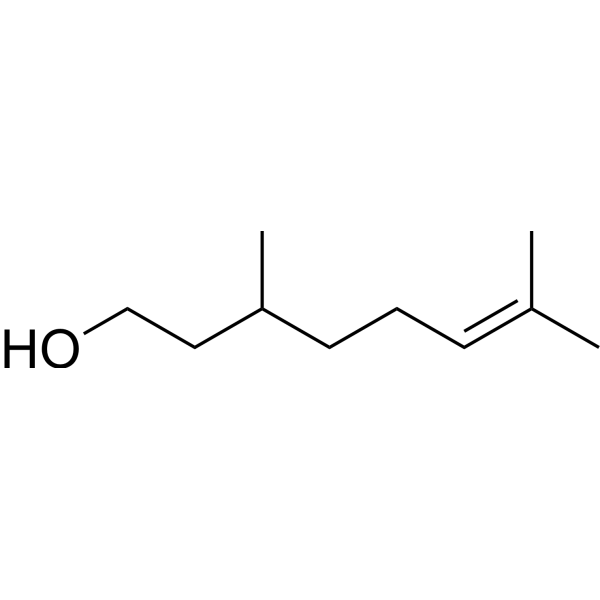
    Neoprocurcumenol is a larvicidal compound that exerts significant toxicity on mosquito larvae with LC50 and LC 90 values of 13.69 and 23.92 ppm, respectively .
    Neoprocurcumenol
  • HY-137516A

    PROTACs Ras Cancer
    LC-2 epimer is a differential isomer of LC-2. LC-2 is a mutation-selective PROTAC depressant for KRAS and contains a ligand for the von Hippel Lindau E3 ligase linked to the KRAS inhibitor MRTX849 .
    LC-2 epimer
  • HY-158062

    PROTACs DNA/RNA Synthesis Apoptosis Cancer
    LC-1-40 is a PROTAC that selectively degrades NUDT1 (DC50=0.97 nM). LC-1-40 selectively inhibits MYCN-induced tumor growth in mouse models. LC-1-40 also induces nucleotide damage and apoptosis in MYCN-associated tumors. LC-1-40 can be used in cancer research . (Red: NUDT1 binder; Blue: CRBN ligand; Black: Linker).
    LC-1-40
  • HY-161872

    Autophagy p62 Cancer
    LC3in-C42 is a cell-active LC3A/B and autophagy covalent inhibitor. LC3in-C42 selectively inhibits the binding of P62 to LC3A/B in vitro and at the cellular level like D5 and can function on a lower concentration .
    LC3in-C42
  • HY-172916

    SHP2 FGFR p38 MAPK ERK Cancer
    LC-SF-14 is a selective dual inhibitor of SHP2 and FGFR (IC50 values are 71.6 and 8.9 nM, respectively). LC-SF-14 inhibits FGFR2-FRS2α-SHP2-MAPK signaling and ERK phosphorylation. LC-SF-14 inhibits the proliferation of KATOIII cancer cells (IC50: 9.2 nM). LC-SF-14 has antitumor activity in the SNU-16 xenograft mouse model. LC-SF-14 can be used in FGFR2-driven gastric cancer research .
    LC-SF-14
  • HY-N16318

    Biochemical Assay Reagents Others
    CP-LC-1067 is a certest lipid.
    CP-LC-1067
  • HY-174412

    Reactive Oxygen Species (ROS) Cancer
    LC-PDin06 is a selective PRDX1 inhibitor with an IC50 of 0.042 μM. LC-PDin06, a Celastrol (HY-13067) derivative, shows potent antiproliferative activity against colorectal cancer cells by significantly increasing ROS levels .
    LC-PDin06
  • HY-168892

    Atg8/LC3 Autophagy Cancer
    LC3B recruiter 2 (34R) is an LC3B recruiter and a component of the autophagy-lysosome pathway degradation system (ATTEC, Autophagy-Tethering Compounds), which directly binds to LC3B. LC3B recruiter 2 binds to CDK9 inhibitor SNS-032 (HY-10008) through a linker, forming an ATTEC that targets the degradation of the CDK9 and Cyclin T1 complex (with inhibitory effects on both). Therefore, LC3B recruiter 2 exerts activity through the LC3B-dependent autophagy-lysosome pathway, interfering with the cell cycle of cancer cells, thus exhibiting antitumor activity .
    LC3B recruiter 2
  • HY-174981

    PROTACs FGFR ATP Synthase Cancer
    LC-MF-4 is a selective FGFR3 PROTAC degrader with a DC50 of 30.89 nM in KMS-11 cells. LC-MF-4 inhibits the metabolic function of FGFR3-TACC3 fusion positive cancers with reduction of ATP synthesis and inhibition of mitochondrial biogenesis genes. LC-MF-4 has potent antitumor activity in the Ba/F3-FGFR3-TACC3 xenograft mice model. LC-MF-4 can be used for FGFR3-altered cancers like bladder cancer and urothelial carcinoma (UC) research . Pink: FGFR3 ligand (HY-175414); Blue: VHL ligase ligand (HY-125905); Black: linker (HY-Y1224)
    LC-MF-4
  • HY-172018

    Liposome Cancer
    CP-LC-0729 is an ionizable cationic amino lipid efficient delivery of different kinds of RNA (mRNA, cRNA and saRNA) .
    CP-LC-0729
  • HY-126497

    ADC Linker Cancer
    LC-PEG8-SPDP is a cleavable ADC linker used for the antibody-drug conjugates (ADCs) .
    LC-PEG8-SPDP
  • HY-14892B

    LC15-0444 tartrate hydrate

    Dipeptidyl Peptidase Metabolic Disease
    Gemigliptin (LC15-0444 ) tartrate hydrate is a selective, reversible and competitive dipeptidyl peptidase-4 (DPP-4) inhibitor, with an IC50 of 10.3 nM for human recombinant DPP-4. Gemigliptin tartrate hydrate exhibits potent anti-glycation properties. Gemigliptin tartrate hydrate can be used for the research of advanced glycation end products (AGE)-related diabetic complications .
    Gemigliptin tartrate hydrate
  • HY-168347

    Atg8/LC3 Others
    TH152 is a reversible, pan ligand for LC3/GABARAP with a KD of 2 µM. LC3/GABARAP is an autophagy associated protein .
    TH152
  • HY-121546

    Atg8/LC3 Autophagy Cancer
    ALLO-1, an autophagy receptor, is essential for autophagosome formation around paternal organelles and directly binds to the worm LC3 homologue LGG-1 through its LC3-interacting region (LIR) motif .
    ALLO-1

Inquiry Online

Your information is safe with us. * Required Fields.

Salutation


Country or Region *

Applicant Name *


Organization Name *

Department *


Email Address *


Product Name *

Cat. No.


Requested quantity *

Phone Number *


Remarks

Inquiry Online

Inquiry Information

Product Name:
Cat. No.:
Quantity:
MCE Japan Authorized Agent:

