1. Search Result
Search Result
Results for "

Monoamine

" in MedChemExpress (MCE) Product Catalog:

389

Inhibitors & Agonists

4

Screening Libraries

9

Fluorescent Dye

2

Biochemical Assay Reagents

1

Peptides

51

Natural
Products

5

Recombinant Proteins

33

Isotope-Labeled Compounds

4

Antibodies

14

Click Chemistry

1

GMP Molecules

Cat. No. Product Name Target Research Areas Chemical Structure
  • HY-W008566

    Norharman; β-Carboline

    Monoamine Oxidase Endogenous Metabolite Infection Neurological Disease Cancer
    Norharmane (Norharman), a β-carboline alkaloid, is a potent and reversible monoamine oxidase inhibitor, with IC50 values of 6.5 and 4.7 μM for MAO-A and MAO-B, respectively. Norharmane causes antidepressant responses. Norharmane is also a prospective anti-cancer photosensitizer. Norharmane alters polar auxin transport (PAT) by inhibiting PIN2, PIN3 and PIN7 transport proteins, thus causing a significant inhibitory effect on the growth of Arabidopsis thaliana seedlings .
    Norharmane
  • HY-16771
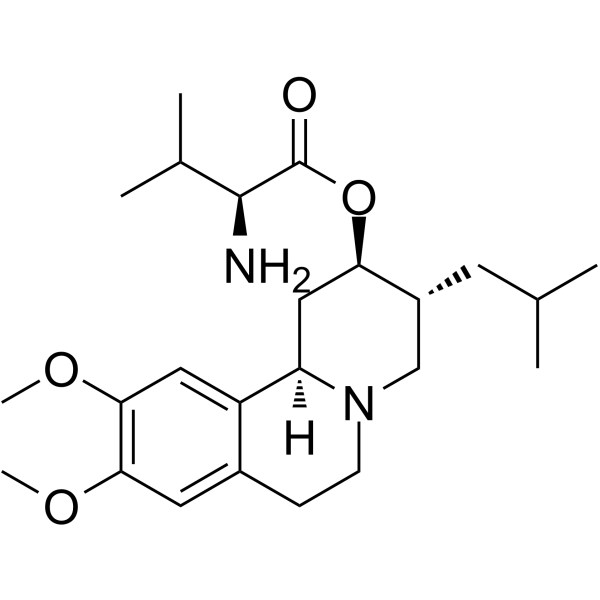
    Valbenazine
    4 Publications Verification

    NBI-98854

    Monoamine Transporter Neurological Disease
    Valbenazine (NBI-98854) is a vesicular monoamine transporter 2 (VMAT2) inhibitor with the Ki of 110-190 nM .
    Valbenazine
  • HY-B0590
    Tetrabenazine
    1 Publications Verification

    Ro 1-9569

    Monoamine Transporter Dopamine Receptor Neurological Disease
    Tetrabenazine (Ro 1-9569) is a brain-penetrant and orally active VMAT2-selective ligand with human VMAT2 Ki 100 nM. Tetrabenazine binds VMAT2 to block monoamine uptake into synaptic vesicles, potentiates cytoplasmic monoamine degradation. Tetrabenazine weakly blocks dopamine D2 receptors, and increases dopamine turnover via elevated cerebrospinal fluid homovanillic acid. Tetrabenazine can be used for the research of Huntington’s disease, tardive dyskinesia, and Tourette’s syndrome .
    Tetrabenazine
  • HY-B0534
    Moclobemide
    2 Publications Verification

    Ro111163

    Monoamine Oxidase Neurological Disease
    Moclobemide (Ro111163) is a brain-penetrant and reversible monoamine oxidase (MAO-A) inhibitor with an IC50 of 6.061 μM for hMAO-A .Moclobemide up-regulates proliferation of hippocampal progenitor cells in chronically stressed mice.
    Moclobemide
  • HY-14472

    NS-2330

    Dopamine Transporter Serotonin Transporter Metabolic Disease
    Tesofensine (NS-2330) is a triple monoamine reuptake inhibitor inducing a potent inhibition of the re-uptake process in the synaptic cleft of the neurotransmitters dopamine (DA; IC50=6.5 nM), norepinephrine (NE;IC50=1.7 nM), and serotonin (5-HT;IC50=11 nM), and with potentials as an anti-obesity agent . Tesofensine is a CNS acting anti-obesity agent .
    Tesofensine
  • HY-B0590S

    Ro 1-9569-d6

    Monoamine Transporter Neurological Disease
    Tetrabenazine-d6 (Deutetrabenazine) is a deuterium-labled Tetrabenazine (HY-B0590). Tetrabenazine (Ro 1-9569) is a brain-penetrant and orally active VMAT2-selective ligand with human VMAT2 Ki 100 nM. Tetrabenazine binds VMAT2 to block monoamine uptake into synaptic vesicles, potentiates cytoplasmic monoamine degradation. Tetrabenazine weakly blocks dopamine D2 receptors, and increases dopamine turnover via elevated cerebrospinal fluid homovanillic acid. Tetrabenazine can be used for the research of Huntington’s disease, tardive dyskinesia, and Tourette’s syndrome .
    Tetrabenazine-d6
  • HY-108256

    5-HT Receptor Neurological Disease
    Melitracen hydrochloride is an orally active biphasic antidepressant and antianxiety agent. Melitracen hydrochloride can inhibit the uptake of Norepinephrine and 5-HT (serotonin) through the presynaptic membrane inducing the increase of monoamine transmitters in synaptic space .
    Melitracen hydrochloride
  • HY-103164

    (E)-CSC

    Adenosine Receptor Monoamine Oxidase Neurological Disease
    (E)-8-(3-Chlorostyryl)caffeine is a selective adenosine A2A receptor antagonist. (E)-8-(3-Chlorostyryl)caffeine inhibits monoamine oxidase B (MAO-B) with a Ki value of 70 nM by a pathway that is independent of its actions on the A2A receptor. (E)-8-(3-Chlorostyryl)caffeine has the potential for Parkinson's disease research .
    (E)-8-(3-Chlorostyryl)caffeine
  • HY-13779

    Monoamine Oxidase Dopamine Transporter Neurological Disease
    (E/Z)-J147 is an exceptionally potent, orally active, neuroprotective agent for cognitive enhancement. (E/Z)-J147 can readily pass the blood brain barrier (BBB). (E/Z)-J147 can inhibit monoamine oxidase B (MAO B) and the dopamine transporter with EC50 values of 1.88 μM and 0.649 μM, respectively. (E/Z)-J147 has potential for the study of Alzheimer’s disease (AD) .
    (E/Z)-J147
  • HY-W015490
    1,4-Naphthoquinone
    3 Publications Verification

    Environmental Pollutants DNA/RNA Synthesis NF-κB Monoamine Oxidase TNF Receptor Bacterial Infection Inflammation/Immunology Cancer
    1,4-Naphthoquinone is an inhibitor with broad-spectrum inhibitory activity targeting DNA polymerase, NF-κB and monoamine oxidase (MAO-A/B), with antibacterial and anti-biofilm efficacy. 1,4-Naphthoquinone is a competitive inhibitor of MAO-B (Ki=1.4 μM) and a non-competitive inhibitor of MAO-A (Ki=7.7 μM). 1,4-Naphthoquinone inhibits DNA polymerase pol α, β, γ, δ, ε, λ with IC50 ranging from 5.57-128 μM. 1,4-Naphthoquinone inhibits tumor cell proliferation, induces apoptosis and necrosis, and has anti-angiogenic and anti-inflammatory activities by inducing oxidative stress, depleting glutathione (GSH), inhibiting DNA polymerase-mediated DNA synthesis and blocking NF-κB nuclear translocation. 1,4-Naphthoquinone can be used in anti-bacterial , anti-tumor and anti-inflammatory studies, including inhibition of melanoma and colon cancer cell growth and endothelial cell function, as well as LPS-induced inflammation models .
    1,4-Naphthoquinone
  • HY-19333
    OG-L002
    2 Publications Verification

    Histone Demethylase Monoamine Oxidase HSV Infection
    OG-L002 is a potent and highly selective LSD1 inhibitor with an IC50 of 0.02 μM. OG-L002 is a potent monoamine oxidases (MAO) inhibitor with IC50s of 1.38 μM and 0.72 μM for MAO-A and MAO-B, respectively. OG-L002 potently inhibits the expression of HSV IE genes .
    OG-L002
  • HY-14201

    Ro 19-6327

    Monoamine Oxidase Neurological Disease
    Lazabemide (Ro 19-6327) is a selective, reversible inhibitor of monoamine oxidase B (MAO-B) (IC50=0.03 μM) but less active for MAO-A (IC50>100 μM). Lazabemide ?inhibits monoamine uptake at high concentrations, the IC50 values are 86 μM, 123 μM and >500 μM for noradrenalin, serotonin and dopamine uptake, respectively. Lazabemide can be used for the research of parkinson and?alzheimer′s disease .
    Lazabemide
  • HY-149170

    5-HT Receptor Monoamine Transporter Neurological Disease
    FFN246 is a fluorescent, dual substrate of serotonin transporter (SERT) probe and vesicular monoamine transporter 2 (VMAT2) with excitation and emission spectra 392/427 nm. FFN246 can be used for labeling serotonergic neurons in mouse brain tissue through SERT-dependent accumulation .
    FFN246
  • HY-N6057

    Monoamine Oxidase Neurological Disease
    Obtusin, isolated from Cassia obtusifolia Linn seed, is a highly selective and competitive human monoamine oxidase-A (hMAO-A) inhibitor with an IC50 of 11.12 μM and a Ki of 6.15 μM. Obtusin plays a preventive role in neurodegenerative diseases, especially anxiety and depression .
    Obtusin
  • HY-125515

    Leptaflorine

    Monoamine Oxidase Neurological Disease
    Tetrahydroharmine (Leptaflorine) is a selective reversible monoamine oxidase A (MAO-A) inhibitor with an IC50 of 74 nM. Tetrahydroharmine can be used for the research of parkinson’s disease .
    Tetrahydroharmine
  • HY-N0918

    Demethoxyyangonin; 5,6-Dehydrokavain

    Monoamine Oxidase JAK IKK STAT NO Synthase Cytochrome P450 Neurological Disease Inflammation/Immunology
    Desmethoxyyangonin is one of the six major kavalactones found in the Piper methysticum (kava) plant. Desmethoxyyangonin is a selective inhibitor of monoamine oxidase-B (MAO-B) (IC50: 0.123  µM). Desmethoxyyangonin exerts anti-inflammatory effects by inhibiting Jak2/STAT3 and IKK signaling pathways. Desmethoxyyangonin induces CYP3A23 expression and leads to skeletal muscle relaxation .
    Desmethoxyyangonin
  • HY-B0590A

    Ro 1-9569 Racemate

    Monoamine Transporter Dopamine Receptor Neurological Disease
    Tetrabenazine (Ro 1-9569) Racemate is a brain-penetrant and orally active VMAT2-selective ligand with human VMAT2 Ki 100 nM. Tetrabenazine Racemate binds VMAT2 to block monoamine uptake into synaptic vesicles, potentiates cytoplasmic monoamine degradation. Tetrabenazine Racemate weakly blocks dopamine D2 receptors, and increases dopamine turnover via elevated cerebrospinal fluid homovanillic acid. Tetrabenazine Racemate can be used for the research of Huntington’s disease, tardive dyskinesia, and Tourette’s syndrome .
    Tetrabenazine Racemate
  • HY-13929
    Isocarboxazid
    2 Publications Verification

    Monoamine Oxidase Neurological Disease
    Isocarboxazid is a non-selective and irreversible inhibitor of monoamine oxidase, with an IC50 of 4.8 μM for rat brain monoamine oxidase in vitro .
    Isocarboxazid
  • HY-W224327A

    β-Phenylisopropylhydrazine hydrochloride

    Monoamine Oxidase Neurological Disease
    Pheniprazine hydrochloride is a potent and long acting inhibitor of monoamine oxidase. Pheniprazine has the potential for the research of depression .
    Pheniprazine hydrochloride
  • HY-13779A

    Monoamine Oxidase Dopamine Transporter Neurological Disease
    J147 is an exceptionally potent, orally active, neuroprotective agent for cognitive enhancement. J147 can pass the blood brain barrier (BBB). J147 can inhibit monoamine oxidase B (MAO B) and the dopamine transporter. J147 plays an impotant role in Alzheimer’s disease (AD) .
    J147
  • HY-E70074

    Monoamine Oxidase Neurological Disease
    Monoamine oxidase (EC 1.4.3.4) is an enzyme composed of different polypeptides. Monoamine oxidation catalyzes the oxidative deamination of various biological amines in brain and peripheral tissues by producing hydrogen peroxide. Monoamine oxidase plays an important role in maintaining the regulation of synaptic transmission, emotional behavior and other brain functions .
    Monoamine oxidase, plasma
  • HY-16771A
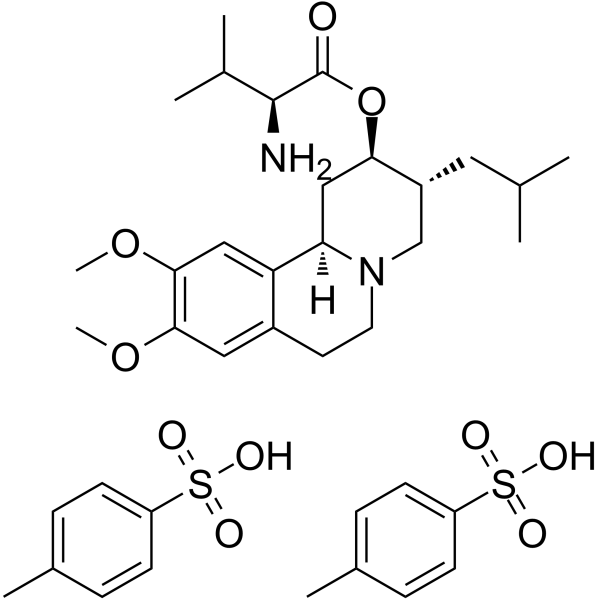
    Valbenazine tosylate
    4 Publications Verification

    NBI-98854 tosylate

    Monoamine Transporter Neurological Disease
    Valbenazine tosylate (NBI-98854 tosylate) is a vesicular monoamine transporter 2 (VMAT2) inhibitor with the Ki of 110-190 nM .
    Valbenazine tosylate
  • HY-110019

    Lu 19-005

    Serotonin Transporter Dopamine Transporter Neurological Disease
    Indatraline hydrochloride (Lu 19-005) is a non-selective monoamine transporter inhibitor that blocks the reuptake of neurotransmitters (dopamine, serotonin, and norepinephrine). Indatraline hydrochloride can be used for the research of antidepressive. Indatraline hydrochloride induces autophagy while simultaneously inhibiting cell proliferation. Indatraline hydrochloride may also serve to direct the development of new agents for autophagy-related diseases such as atherosclerosis or restenosis .
    Indatraline hydrochloride
  • HY-110334

    Fluorescent Dye Others
    FFN 206 dihydrochloride, a fluorescent probe, is used as an excellent Vesicular Monoamine Transporter 2 (VMAT2) substrate with an apparent Km of 1.16 μM. FFN 206 dihydrochloride is capable of detecting VMAT2 activity in intact cells using fluorescence microscopy, with subcellular localization to VMAT2-expressing acidic compartments without apparent labeling of other organelles .
    FFN 206 dihydrochloride
  • HY-10399A

    TV-3326 hydrochloride

    Monoamine Oxidase Cholinesterase (ChE) Neurological Disease
    Ladostigil (TV-3326) hydrochloride is an orally active dual inhibitor of cholinesterase and brain-selective monoamine oxidase (MAO), with IC50s of 37.1 and 31.8 μM for MAO-B and AChE, respectively. Ladostigil hydrochloride exhibits neuroprotective, antioxidant and anti-inflammatory activities. Ladostigil can be used for the research of depression and Alzheimer's disease . Ladostigil (hydrochloride) is a click chemistry reagent, it contains an Alkyne group and can undergo copper-catalyzed azide-alkyne cycloaddition (CuAAc) with molecules containing Azide groups.
    Ladostigil hydrochloride
  • HY-W049881

    Dopamine Receptor PI3K Monoamine Oxidase Neurological Disease
    9-Methyl-β-carboline is a monoamine oxidase inhibitor and dopaminergic modulator, with an IC50 of 1 μM against human MAO-A and an IC50 of 15.5 μM against human MAO-B. 9-Methyl-β-carboline possesses cognitive enhancement potential and can cross the blood-brain barrier. 9-Methyl-β-carboline increases dopamine levels by inhibiting monoamine oxidase activity and microglial proliferation. 9-Methyl-β-carboline activates PKA/PKC and mitochondrial respiratory chain complex I, promotes neurotrophic factor expression and reduces α-synuclein (α-synuclein) levels, thereby reversing neurotoxin-induced dopaminergic neuron damage. 9-Methyl-β-carboline also regulates the PI3K pathway and exerts an anti-proliferative effect on astrocytes. 9-Methyl-β-carboline is widely used in Parkinson's disease-related studies .
    9-Methyl-β-carboline
  • HY-N7506

    Delta3,2-Hydroxylbakuchiol

    Monoamine Transporter Dopamine Transporter Neurological Disease
    13-Hydroxyisobakuchiol (Delta3,2-Hydroxylbakuchiol), an analog of Bakuchiol (HY-N0235) that can be isolated from Psoralea corylifolia (L.), is a potent selective monoamine transporter inhibitor. 13-Hydroxyisobakuchiol is more selective for the dopamine transporter (DAT) (IC50 = 0.58 μM) and norepinephrine transporter (NET) (IC50 = 0.69 μM) than for the serotonin transporter (SERT) (IC50 = 312.02 μM). 13-Hydroxyisobakuchiol increases the activity of intact mice and improves the decreased activity of reserpinized mice in vivo. 13-Hydroxyisobakuchiol can be used for the research of disorders such as Parkinson's disease and depression .
    13-Hydroxyisobakuchiol
  • HY-W415287

    Monoamine Oxidase Endocrinology
    DL-Thyroxine, a thyroid hormone, is a monoamine oxidase inhibitor .
    DL-Thyroxine
  • HY-N9540

    Monoamine Oxidase Neurological Disease
    Methyl citrate is a Monoamine oxidase B (MAO-B) inhibitor (IC50=0.23 mM). Methyl citrate is isolated from the fruits of Opuntia ficus-indica var. saboten Makino .
    Methyl citrate
  • HY-17447AG

    SKF 385 hydrochloride

    Monoamine Oxidase Cardiovascular Disease Endocrinology
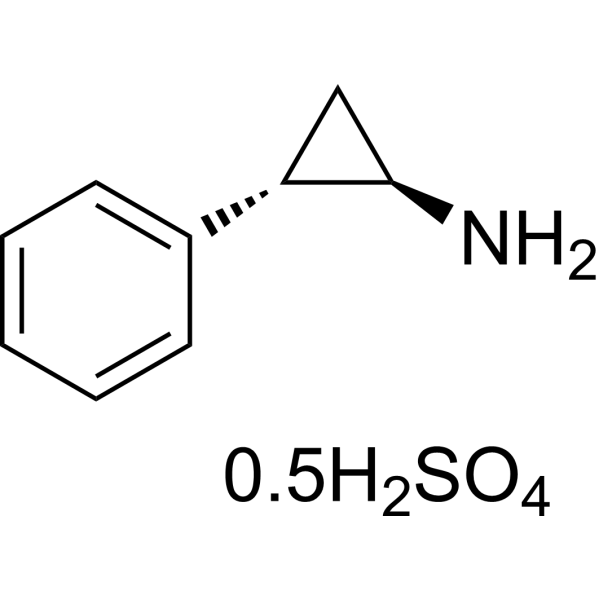
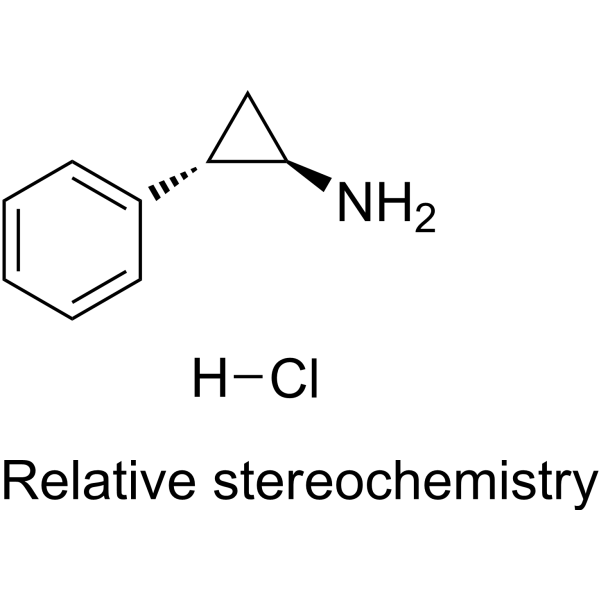
    Tranylcypromine (SKF 385) hydrochloride (GMP) is Tranylcypromine hydrochloride (HY-17447A) produced by using GMP guidelines. GMP small molecules work appropriately as an auxiliary reagent for cell therapy manufacture. Tranylcypromine hydrochloride is a potent monoamine oxidase (MAO) inhibitor .
    Tranylcypromine hydrochloride
  • HY-B1558A
    Bifemelane hydrochloride
    2 Publications Verification

    MCI-2016

    Monoamine Oxidase Neurological Disease
    Bifemelane hydrochloride (MCI-2016) is a potent, selective and competitive inhibitor of monoamine oxidase A (MAO-A), with a Ki of 4.20 μM. Bifemelane hydrochloride also inhibits MAO-B noncompetitively with a Ki of 46.0 μM. Bifemelane hydrochloride has a potent antidepressant activity and can be used for the research of cognitive and emotional disturbances related to cerebrovascular disease .
    Bifemelane hydrochloride
  • HY-10399

    TV-3326

    Monoamine Oxidase Cholinesterase (ChE) Neurological Disease
    Ladostigil (TV-3326) is an orally active dual inhibitor of cholinesterase and brain-selective monoamine oxidase (MAO), with IC50s of 37.1 and 31.8 μM for MAO-B and AChE, respectively. Ladostigil exhibits neuroprotective, antioxidant and anti-inflammatory activities. Ladostigil can be used for the research of depression and Alzheimer's disease . Ladostigil is a click chemistry reagent, it contains an Alkyne group and can undergo copper-catalyzed azide-alkyne cycloaddition (CuAAc) with molecules containing Azide groups.
    Ladostigil
  • HY-120419

    Monoamine Oxidase Neurological Disease
    PF9601N, an monoamine oxidase B (MAO-B) inhibitor, possesses neuroprotective properties in several in vitro and in vivo models of Parkinson's disease (PD). PF9601N can be used for the research of neurodegenerative diseases mediated by excitotoxicity . PF9601N is a click chemistry reagent, it contains an Alkyne group and can undergo copper-catalyzed azide-alkyne cycloaddition (CuAAc) with molecules containing Azide groups.
    PF9601N
  • HY-W193398

    Monoamine Oxidase Cardiovascular Disease
    N-2-Cyclohexylethyl-N-methylamine is an amine from A.ridigula Benth for a reduction of monoamine oxidase (MAO) activity .
    N-2-Cyclohexylethyl-N-methylamine
  • HY-158555

    Monoamine Transporter Neurological Disease
    4-Ethyl-N,N-Dmc hydrochloride is an analog of Methedrone. Methedrone acts as a non-selective substrate for monoamine transporters, facilitating a neurotransmitter release .
    4-Ethyl-N,N-Dmc hydrochloride
  • HY-U00031

    EN3324

    Opioid Receptor Neurological Disease
    Axomadol (EN3324) is a centrally active analgesic agent with opioid agonistic properties and inhibitory effects on the reuptake of monoamines .
    Axomadol
  • HY-B0590D

    (-)-TBZ; (3S,11bS)-TBZ; (3S,11bS)-Tetrabenazine

    Monoamine Transporter Neurological Disease
    (-)-Tetrabenazine ((-)-TBZ; compound 13) is an enantiomer of Tetrabenazine (HY-B0590). (+)-Tetrabenazine proves 3-fold more active than (-)-Tetrabenazine in inhibiting vesicular monoamine transporter 2 (VMAT2) .
    (-)-Tetrabenazine
  • HY-19915B

    MRX-4 sodium

    Bacterial Antibiotic Monoamine Oxidase Infection Inflammation/Immunology
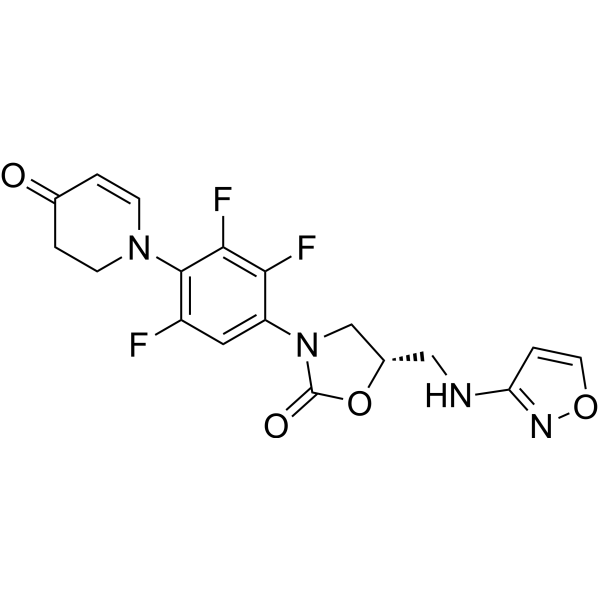
    Contezolid acefosamil sodium (MRX-4), a new and orally active oxazolidinone, is an antibiotic in study for complicated skin and soft tissue infections (cSSTI) caused by resistant Gram-positive bacteria. Contezolid acefosamil sodium (MRX-4) markedly reduces potential for myelosuppression and monoamine oxidase inhibition (MAOI) .
    Contezolid acefosamil sodium
  • HY-14202

    Ro 19-6327 hydrochloride

    Monoamine Oxidase Neurological Disease
    Lazabemide hydrochloride (Ro 19-6327 hydrochloride) is a selective, reversible inhibitor of monoamine oxidase B (MAO-B) (IC50=0.03 μM) but less active for MAO-A (IC50>100 μM). Lazabemide  inhibits monoamine uptake at high concentrations, the IC50 values are 86 μM, 123 μM and >500 μM for noradrenalin, serotonin and dopamine uptake, respectively. Lazabemide can be used for the research of parkinson and alzheimer′s disease .
    Lazabemide hydrochloride
  • HY-B0884

    Monoamine Oxidase Cholinesterase (ChE) Neurological Disease
    Minaprine is a brain-penetrant monoamine oxidase inhibitor. Minaprine also weakly inhibits acetylcholinesterase (AChE) activity. Minaprine reduces intraneuronal dopamine metabolism, lowers striatal homovanillic acid and dihydroxyphenylacetic acid levels, and raises striatal 3-methoxytyramine and 5-hydroxytryptamine levels. Minaprine exhibits convulsant, antidepressant properties .
    Minaprine
  • HY-W628136

    Monoamine Oxidase Neurological Disease
    MAO-B-IN-47 is a selective monoamine oxidase B (MAO-B) inhibitor with a Ki of 875 nM. MAO-B-IN-47 shows an IC50 >100 μM for SH-SY5Y cells. MAO-B-IN-47 shows neuroprotective effect in 6-OHDA-treated SH-SY5Y cells. MAO-B-IN-47 can be used for the research of neurological disease, such as Parkinson’s disease (PD) .
    MAO-B-IN-47
  • HY-14472R

    NS-2330 (Standard)

    Dopamine Transporter Serotonin Transporter Reference Standards Metabolic Disease
    Tesofensine (Standard) is the analytical standard of Tesofensine. This product is intended for research and analytical applications. Tesofensine (NS-2330) is a triple monoamine reuptake inhibitor inducing a potent inhibition of the re-uptake process in the synaptic cleft of the neurotransmitters dopamine (DA; IC50=6.5 nM), norepinephrine (NE;IC50=1.7 nM), and serotonin (5-HT;IC50=11 nM), and with potentials as an anti-obesity agent . Tesofensine is a CNS acting anti-obesity agent .
    Tesofensine (Standard)
  • HY-W001601

    iGluR Neurological Disease
    Budipine is an anti-parkinson agent. Budipine also is a substrate of P-glycoprotein (P-gp), is mediated the uptake into the brain by P-gp. Budipine also is N-methyl-d-aspartate (NMDA) antagonist, and has indirect dopaminergic effects through an improved dopamine release, the inhibition of monoamine oxidase type B (MAO-B). Budipine can be used for the research of CNS disorders include Parkinson disease .
    Budipine
  • HY-163618

    Fluorescent Dye Monoamine Oxidase Cancer
    DHMQ is a NIR fluorescent probe that binds to the propylamino group of monoamine oxidase A (MAO-A). DHMQ tracks MAO-A activity in real-time by using fluorescence imaging on mice and cells .
    DHMQ
  • HY-135265

    Ro 12-5637

    Monoamine Oxidase Neurological Disease
    Moclobemide N-Oxide (Ro 12-5637) is N-oxide metabolite of Moclobemide. Moclobemide N-Oxide retains certain MAO-A (monoamine oxidase) inhibitory activity, but is generally present in low concentrations. Moclobemide N-Oxide can be detected by UV absorption at 240 nm .
    Moclobemide N-Oxide
  • HY-107811A

    Autophagy α-synuclein Apoptosis Monoamine Oxidase Mitosis Neurological Disease Cancer
    Harmol hydrochloride is an orally active β-carboline alkaloid. Harmol hydrochloride is a TFEB activator and monoamine oxidase inhibitor. Harmol hydrochloride can induce cell mitosis, Autophagy and Apoptosis. Harmol hydrochloride promotes the degradation of α-synuclein by regulating the autophagy-lysosomal pathway. Harmol hydrochloride has anti-tumor, anti-depressant and anti-aging activities. Harmol hydrochloride improves motor impairment in a mouse Parkinson's disease model .
    Harmol hydrochloride
  • HY-W015490R

    Reference Standards DNA/RNA Synthesis NF-κB Monoamine Oxidase TNF Receptor Bacterial Infection Inflammation/Immunology Cancer
    1,4-Naphthoquinone is an inhibitor with broad-spectrum inhibitory activity targeting DNA polymerase, NF-κB and monoamine oxidase (MAO-A/B), with antibacterial and anti-biofilm efficacy. 1,4-Naphthoquinone is a competitive inhibitor of MAO-B (Ki=1.4 μM) and a non-competitive inhibitor of MAO-A (Ki=7.7 μM). 1,4-Naphthoquinone inhibits DNA polymerase pol α, β, γ, δ, ε, λ with IC50 ranging from 5.57-128 μM. 1,4-Naphthoquinone inhibits tumor cell proliferation, induces apoptosis and necrosis, and has anti-angiogenic and anti-inflammatory activities by inducing oxidative stress, depleting glutathione (GSH), inhibiting DNA polymerase-mediated DNA synthesis and blocking NF-κB nuclear translocation. 1,4-Naphthoquinone can be used in anti-bacterial , anti-tumor and anti-inflammatory studies, including inhibition of melanoma and colon cancer cell growth and endothelial cell function, as well as LPS-induced inflammation models .
    1,4-Naphthoquinone (Standard)
  • HY-144824

    Cytochrome P450 Monoamine Oxidase Neurological Disease Cancer
    Monoamine oxidase/Aromatase-IN-1 (compound 2q) is a highly potent monoamine oxidase (MAO) and aromatase dual inhibitor with IC50s of 39 nM and 31 nM for MAO-B and aromatase, respectively. Monoamine oxidase/Aromatase-IN-1 can be used for researching neurological disorder and breast cancer .
    Monoamine oxidase/Aromatase-IN-1
  • HY-162573

    Monoamine Oxidase Neurological Disease
    Monoamine Oxidase B inhibitor 5 (Compound 16d) is a selective and reversible inhibitor for monoamine oxidase B (hMAO-B) with an IC50 of 67.3 nM and a Ki of 82.5 nM. Monoamine Oxidase B inhibitor 5 exhibits good pharmacokinetic characters and weak toxicity in rats model. Monoamine Oxidase B inhibitor 5 alleviates MPTP-induced (HY-15608) motor impairment in Parkinson’s mouse model. Monoamine Oxidase B inhibitor 5 is blood-brain barrier (BBB) penetrate .
    Monoamine Oxidase B inhibitor 5
  • HY-143245

    Monoamine Oxidase Neurological Disease
    Monoamine Oxidase B inhibitor 2 is a potent, reversible, orally active and selective monoamine oxidase B (MAO-B) inhibitor with an IC50 of 1.33 nM. Monoamine Oxidase B inhibitor 2 has antioxidant and anti-neuroinflammatory activities. Monoamine Oxidase B inhibitor 2 can across the blood-brain barrier (BBB), and can be used for Parkinson’s disease study .
    Monoamine Oxidase B inhibitor 2

Inquiry Online

Your information is safe with us. * Required Fields.

Salutation


Country or Region *

Applicant Name *


Organization Name *

Department *


Email Address *


Product Name *

Cat. No.


Requested quantity *

Phone Number *


Remarks

Inquiry Online

Inquiry Information

Product Name:
Cat. No.:
Quantity:
MCE Japan Authorized Agent:

