308 Results for "

Proline

" in MedChemExpress (MCE) Product Catalog:
Products (308)

308 Results for "Proline" in MCE Product Catalog:

  • Targets Recommended:
42
42 Publications Verification
Cat. No.: HY-13233A
CAS No.: 150080-09-4
Purity:  98.35%
Synonyms: Val-boroPro mesylate; PT100 mesylate
Target:  

Dipeptidyl Peptidase

Research Areas:  

Inflammation/Immunology Cancer

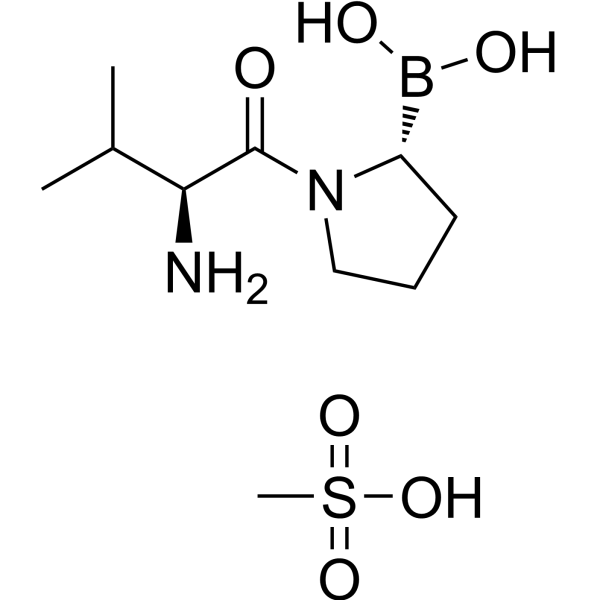
Talabostat mesylate (Val-boroPro mesylate; PT100 mesylate) is an orally active and nonselective dipeptidyl peptidase IV (DPP-IV) inhibitor (IC50 < 4 nM; Ki = 0.18 nM) and the inhibitor of fibroblast activation protein (FAP) (IC50 = 560 nM), inhibits DPP8/9 (IC50 = 4/11 nM; Ki = 1.5/0.76 nM), quiescent cell proline dipeptidase (QPP) (IC50 = 310 nM), DPP2, and some other DASH family enzymes. Antineoplastic and hematopoiesis- stimulating activities .
loading...
    loading...
25
25 Cited Publications
Cat. No.: HY-N0455
CAS No.: 74-79-3
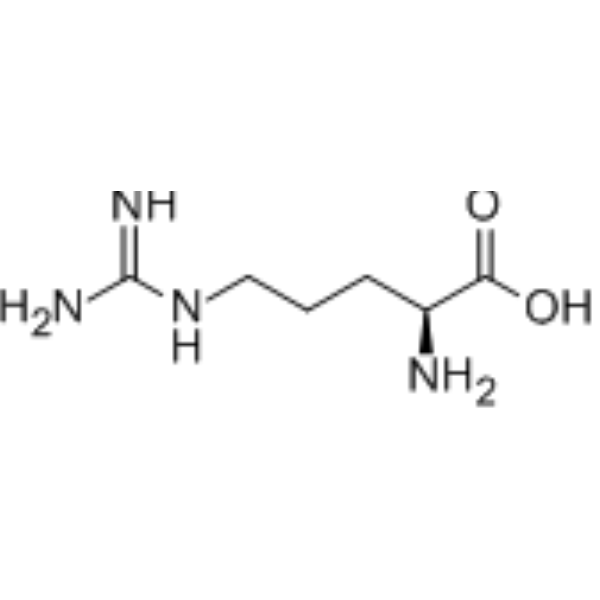
L-Arginine ((S)-(+)-Arginine) is the substrate for the endothelial nitric oxide synthase (eNOS) to generate NO. L-Arginine is transported into vascular smooth muscle cells by the cationic amino acid transporter family of proteins where it is metabolized to nitric oxide (NO), polyamines, or L-proline. L-Arginine is a potent vasodilator, and can be used to induce experimental acute pancreatitis .
loading...
    loading...
25
25 Cited Publications
Cat. No.: HY-N0455A
CAS No.: 1119-34-2
Synonyms: (S)-(+)-Arginine hydrochloride
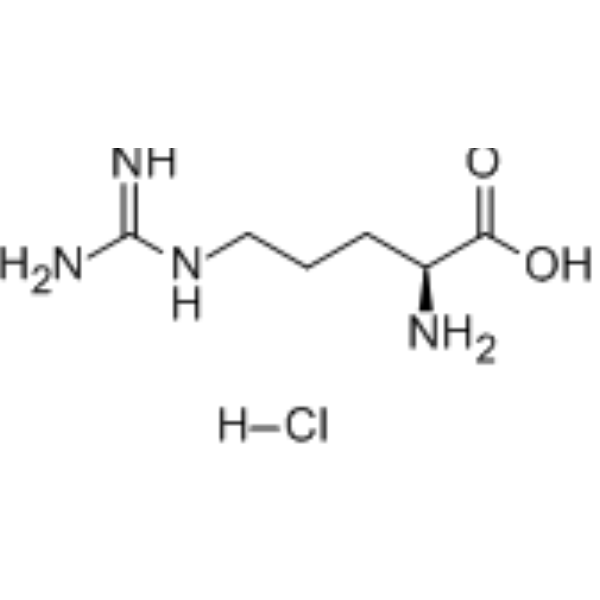
L-Arginine ((S)-(+)-Arginine) is the substrate for the endothelial nitric oxide synthase (eNOS) to generate NO. L-Arginine is transported into vascular smooth muscle cells by the cationic amino acid transporter family of proteins where it is metabolized to nitric oxide (NO), polyamines, or L-proline. L-Arginine is a potent vasodilator, and can be used to induce experimental acute pancreatitis .
loading...
    loading...
10
10 Cited Publications
Cat. No.: HY-Y0252
CAS No.: 147-85-3
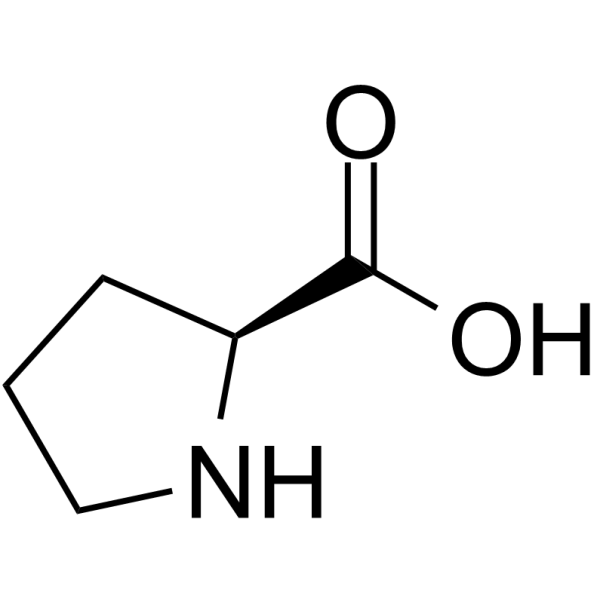
L-Proline is one of the twenty amino acids used in living organisms as the building blocks of proteins.
loading...
    loading...
8
8 Cited Publications
Cat. No.: HY-14894A
CAS No.: 951382-34-6
Purity:  99.94%
Target:  

SGLT

Research Areas:  

Metabolic Disease

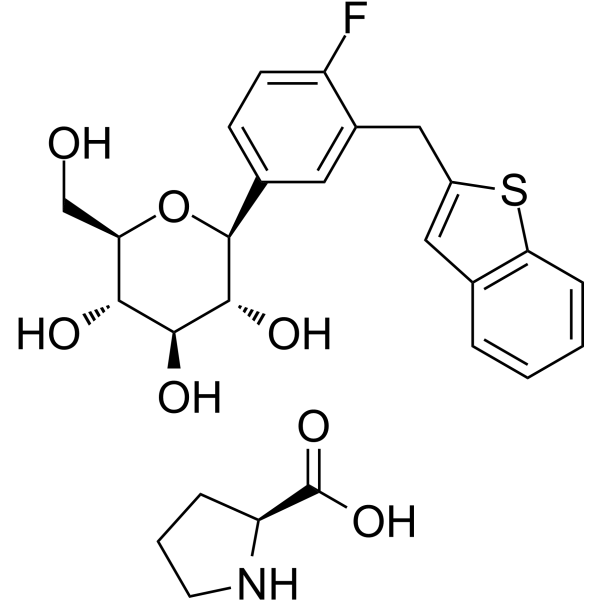
Ipragliflozin (L-Proline) is a highly potent and selective SGLT2 inhibitor with an IC50 of 2.8 nM; little and NO potency for SGLT1/3/4/5/6.
loading...
    loading...
6
6 Cited Publications
Cat. No.: HY-N0391
CAS No.: 372-75-8
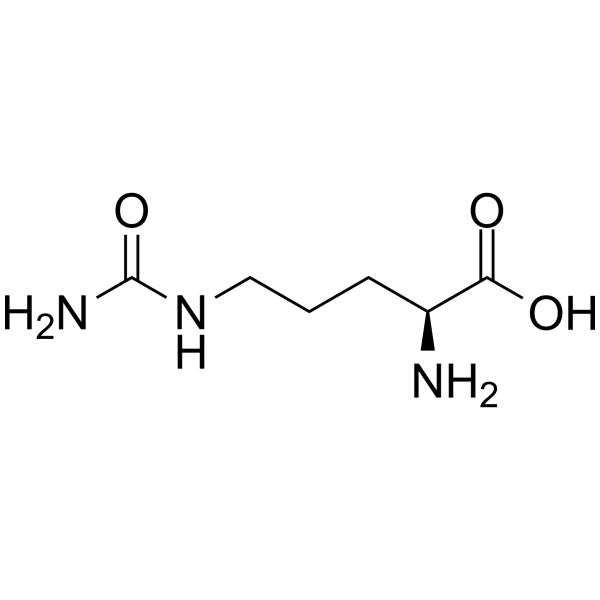
L-Citrulline is an amino acid derived from ornithine in the catabolism of proline or glutamine and glutamate, or from l-arginine via arginine-citrulline pathway.
loading...
    loading...
6
6 Cited Publications
Cat. No.: HY-10460
CAS No.: 717906-29-1
Purity:  99.74%
Target:  

Pyk2 FAK

Research Areas:  

Cancer

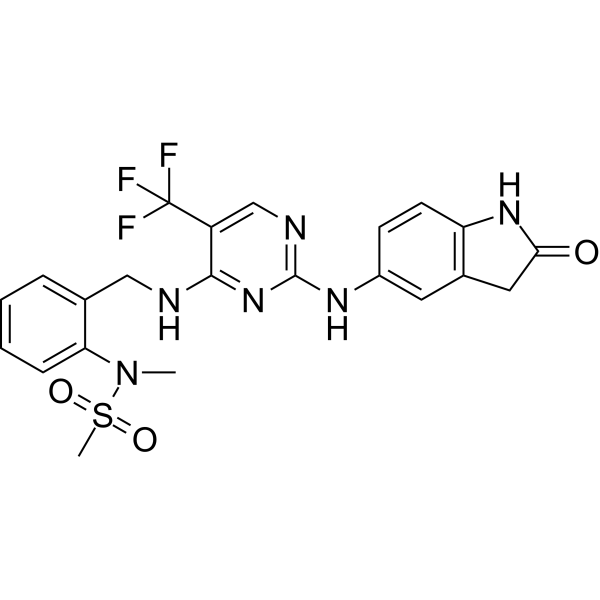
PF-431396 is an orally active dual focal adhesion kinase (FAK) and proline-rich tyrosine kinase 2 (PYK2) inhibitor, with IC50 values of 2 nM and 11 nM, respectively .
loading...
    loading...
4
4 Cited Publications
Cat. No.: HY-P80644
Synonyms: DNM1L; DLP1; DRP1; Dynamin-1-like protein; Dnm1p/Vps1p-like protein; DVLP; Dynamin family member Proline-rich carboxyl-terminal domain less; Dymple; Dynamin-like protein; Dynamin-like protein 4; Dynamin-like protein IV; HdynIV; Dynamin-rela

Host:  

Rabbit

Application:  

WB, IHC-P

Reactivity:  

Human, Mouse, Rat

loading...
    loading...
2
2 Cited Publications
Cat. No.: HY-P1259A
Target:  

Proteasome Bacterial

Research Areas:  

Inflammation/Immunology

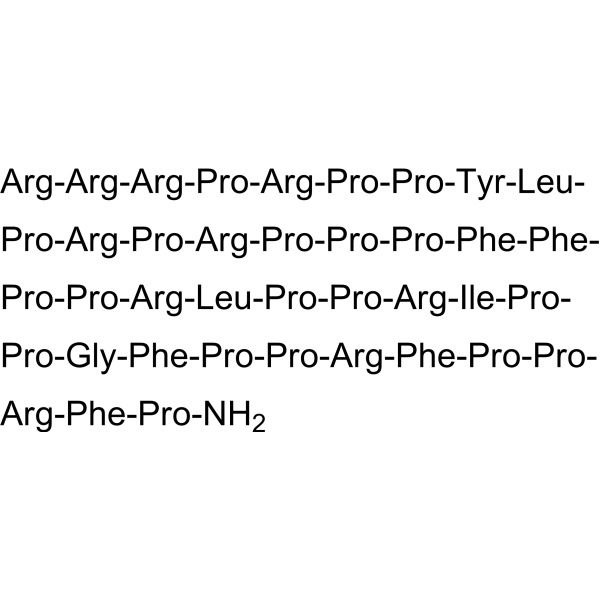
PR-39 TFA, a natural proline- and arginine-rich antibacterial peptide, is a noncompetitive, reversible and allosteric proteasome inhibitor. PR-39 TFAreversibly binds to the α7 subunit of the proteasome and blocks degradation of NF-κB inhibitor IκBα by the ubiquitin-proteasome pathway. PR-39 TFA stimulates angiogenesis, inhibits inflammatory responses and significant reduces myocardial infarct size in mice .
loading...
    loading...
2
2 Cited Publications
Cat. No.: HY-126271
CAS No.: 709-85-3
Purity:  99.79%
Target:  

DNA/RNA Synthesis

Research Areas:  

Cancer

PYCR1-IN-1 (compound 4) is a pyrroline-5-carboxylate reductase 1 (PYCR1) inhibitor with an IC50 of 8.8 µM. PYCR1-IN-1 has anticancer effects .
loading...
    loading...
2
2 Cited Publications
Cat. No.: HY-16757
CAS No.: 853400-76-7
Synonyms: NNZ-2566
Target:  

iGluR

Research Areas:  

Neurological Disease

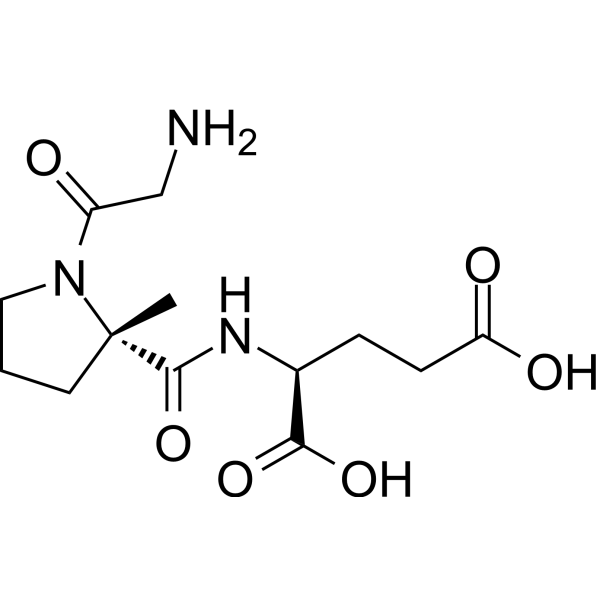
Trofinetide (NNZ-2566), a synthetic analogue of the endogenous N-terminus tripeptide, Glycine-Proline-Glutamate (GPE), has been shown to be neuroprotective in animal models of brain injury.
loading...
    loading...
2
2 Cited Publications
Cat. No.: HY-158426
CAS No.: 500271-63-6
Purity:  99.70%
Target:  

Sirtuin

Research Areas:  

Cardiovascular Disease

2-APQC is an orally active and selective agonist of Sirtuin-3 (SIRT3) (Kd=2.756 μM), antagonizes Isoproterenol/ISO (HY-B0468)-induced cytotoxicity. 2-APQC activates the SIRT3-PYCR1 axis to enhance mitochondrial proline metabolism and inhibit the ROS-p38MAPK pathway by inhibiting signaling pathways such as mTOR-p70S6K, JNK, and TGF-β/Smad3. 2-APQC also activates the AMPK-Parkin axis to alleviate myocardial hypertrophy and fibrosis and protect cardiac function. 2-APQC can be used in the study of heart failure .
loading...
    loading...
1
1 Cited Publications
Cat. No.: HY-W016887
CAS No.: 704-15-4
Synonyms: H-Gly-Pro-OH; Gly-Pro
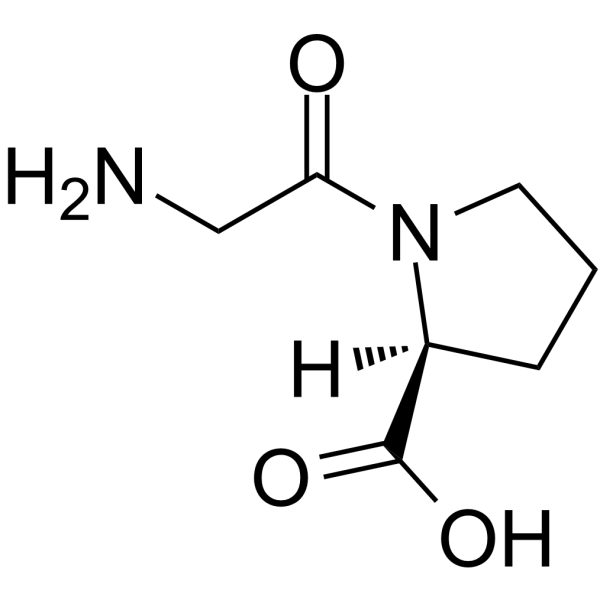
Glycyl-L-proline (H-Gly-Pro-OH) is a dipeptide. Glycyl-L-proline can induce MCF-7 cells apoptosis. Glycyl-L-proline can enhance the inhibitory effect of the PRODH/POX knockout on collagen and DNA biosynthesis. Glycyl-L-proline can inhibit Gly-Sar and L-proline transport. Glycyl-L-proline can be used for the researches of cancer and metabolic disease, such as breast cancer .
loading...
    loading...
1
1 Cited Publications
Cat. No.: HY-Y0588
CAS No.: 1148-11-4
Synonyms: L-Cbz-Proline
Target:  

MMP

Research Areas:  

Others

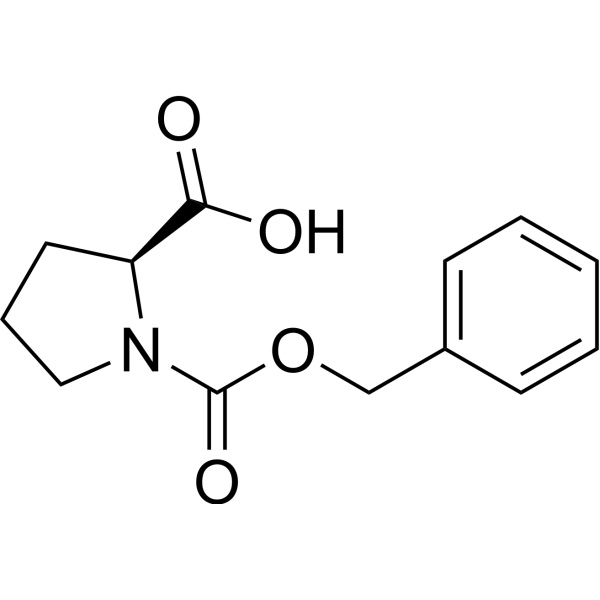
Carbobenzoxyproline (L-Cbz-Proline) is an inhibitor of prolidase. Carbobenzoxyproline can be used for prolidase deficiency (PD) research .
loading...
    loading...
1
1 Cited Publications
Cat. No.: HY-109018B
CAS No.: 1661838-94-3
Purity:  99.43%
Target:  

SGLT

Research Areas:  

Metabolic Disease

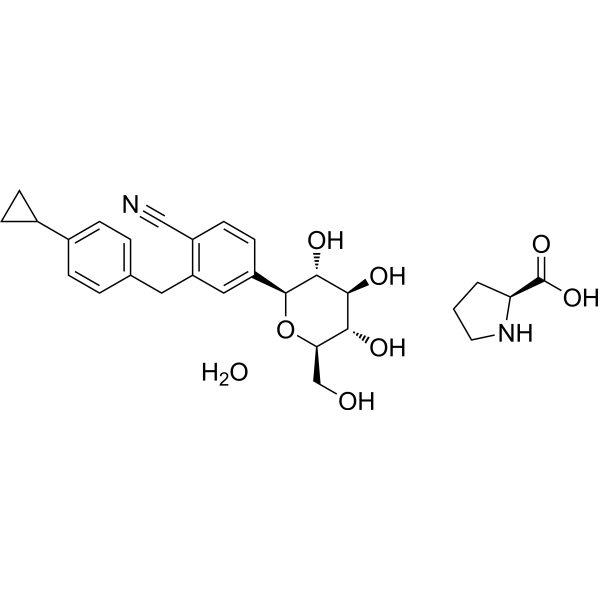
Velagliflozin proline hydrate is the clinical form of Velagliflozin (HY-109018). Velagliflozin is an oral sodium-glucose cotransporter 2 (SGLT2) inhibitor with antidiabetic activity. Velagliflozin reduces renal glucose reabsorption and stimulates glycosuria, which lowers blood sugar and insulin concentrations .
loading...
    loading...
1
1 Cited Publications
Cat. No.: HY-109018A
CAS No.: 1539295-26-5
Purity:  99.43%
Target:  

SGLT

Research Areas:  

Metabolic Disease

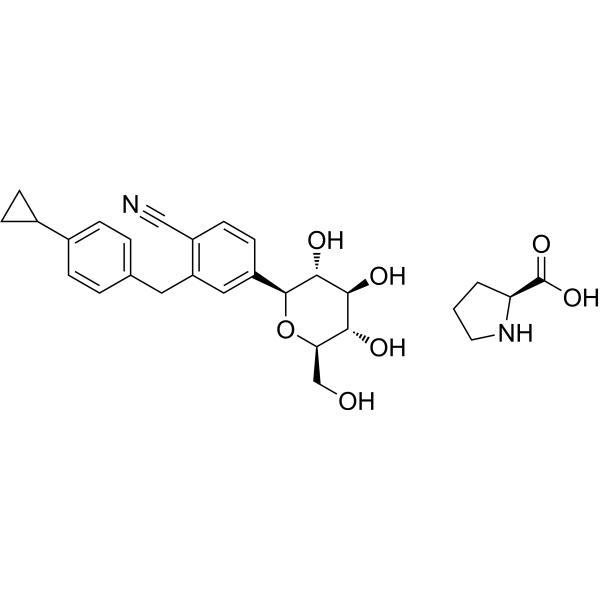
Velagliflozin proline is an oral sodium-glucose cotransporter 2 (SGLT2) inhibitor with antidiabetic activity. Velagliflozin proline reduces renal glucose reabsorption and stimulates glycosuria, which lowers blood sugar and insulin concentrations .
loading...
    loading...
1
1 Cited Publications
Cat. No.: HY-134145
CAS No.: 73096-22-7
Purity:  99.60%
Target:  

Fluorescent Dye

Research Areas:  

Neurological Disease

1-(Anilinocarbonyl)proline can be used to identify dual action probes in a cell model of Huntington .
loading...
    loading...
1
1 Cited Publications
Cat. No.: HY-75308
CAS No.: 2517-04-6
Azetidine-2-carboxylic acid is a non proteinogenic amino acid homologue of proline. Found in common beets. Azetidine-2-carboxylic acid can be misincorporated into proteins in place of proline in many species, including humans. Toxic and teratogenic agent .
loading...
    loading...
1
1 Cited Publications
Cat. No.: HY-142035
CAS No.: 58160-95-5
Purity:  99.70%
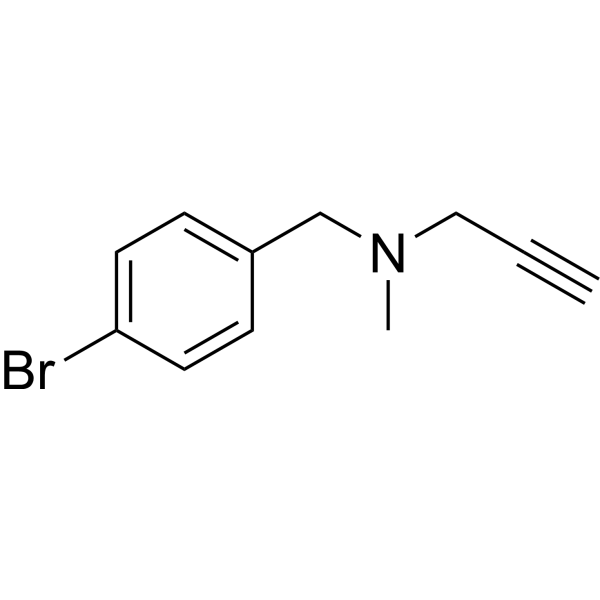
N-Propargylglycine is a brain-penetrant and orally active PRODH inhibitor. N-Propargylglycine covalently modifies enzyme-bound FAD and active site lysine, causing enzyme structural distortion, protein decay, and irreversible inhibition of proline and 4-hydroxyproline catabolism. N-Propargylglycine induces UPRmt, upregulates mitochondrial chaperones and YME1L1, enhances mitochondrial proteostasis, blocks astrocytic L-proline consumption, and abolishes L-proline’s ATP-maintaining and viability-protective effects. N-Propargylglycine stimulates neural processes, increases brain proline, hydroxyproline, and sarcosine levels, partially normalizes Huntington’s disease whole brain transcriptomes. N-Propargylglycine reduces hyperoxaluria, prevents calcium oxalate stone formation, reduces kidney tubular damage, and restores weight and survival in Grhpr knockout mice. N-Propargylglycine can be used for the research of breast cancer, neurodegenerative disorders, Huntington’s disease, and primary hyperoxaluria type 2 .
loading...
    loading...
1
1 Cited Publications
Cat. No.: HY-114161
CAS No.: 58872-39-2
Purity:  99.86%
H-Val-Pro-Pro-OH, a milk-derived proline peptides derivative, is an inhibitor of Angiotensin I converting enzyme (ACE), with an IC50 of 9 μM.
loading...
    loading...

