Search Result
Results for "
amino acid polymer
" in MedChemExpress (MCE) Product Catalog:
14
Biochemical Assay Reagents
3
Isotope-Labeled Compounds
| Cat. No. |
Product Name |
Target |
Research Areas |
Chemical Structure |
-
- HY-15582
-
|
|
Microtubule/Tubulin
ADC Payload
|
Cancer
|
|
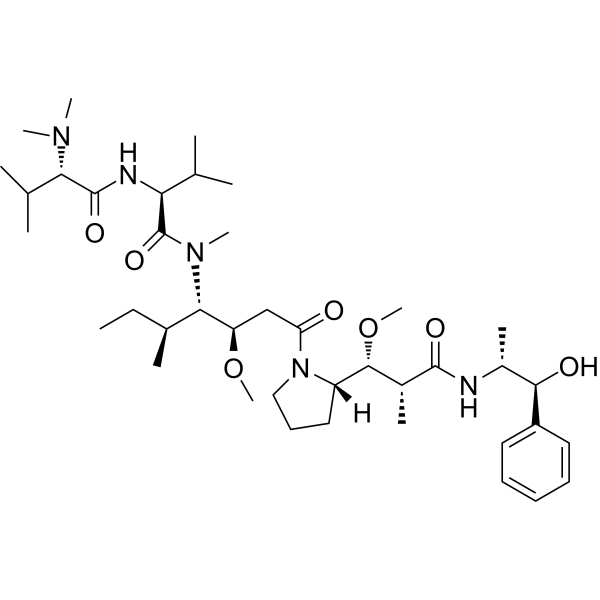
Auristatin E is a cytotoxic microtubule polymerization inhibitor with potent and selective antitumor activity. Auristatin E is a cytotoxin in antibody-drug conjugates (ADC). Auristatin E inhibits cell division by blocking the polymerisation of tubulin, promising for research in B-cell malignancies. Auristatin E, a synthetic analogue of the Dolastatin 10 (HY-15580), is linear peptides comprised of four amino acids .
|
-
-
- HY-126437C
-
|
|
Biochemical Assay Reagents
|
Others
|
|
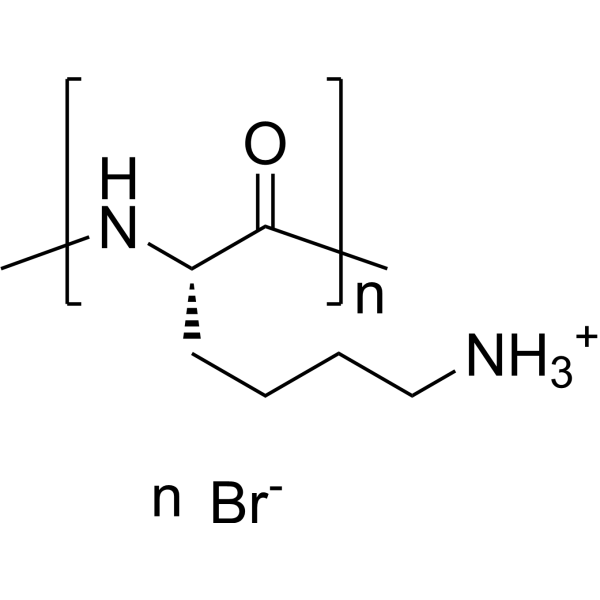
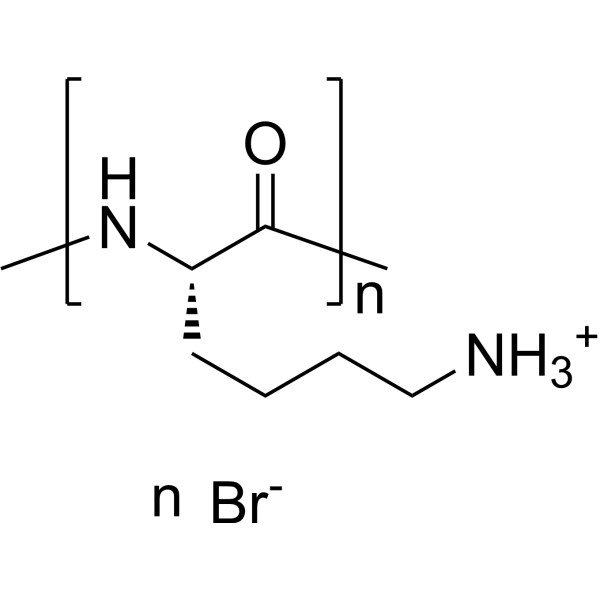
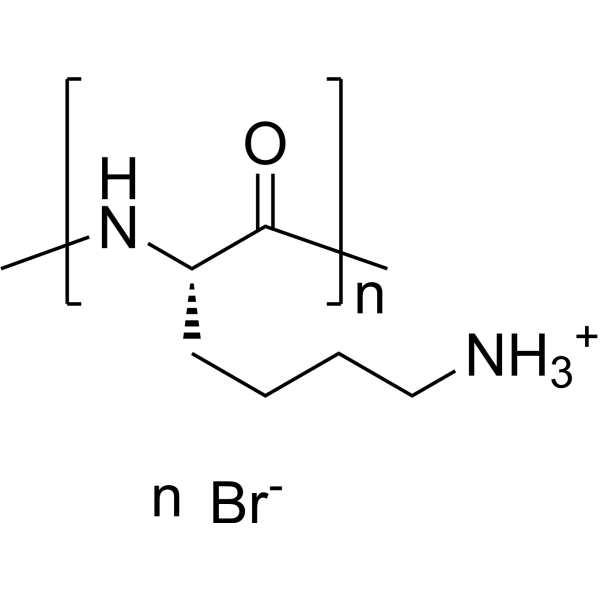
Poly-L-lysine (hydrobromide) (MW 150000-300000), a positively charged amino acid polymer, is a nonspecific attachment factor for cells. Poly-L-lysine (hydrobromide) (MW 150000-300000) has good biocompatibility. Poly-L-lysine (hydrobromide) (MW 150000-300000) is used to increase cell adhesion to solid substrates by enhancing electrostatic interaction between negatively charged ions of the cell membrane and the culture surface .
|
-
-
- HY-126437B
-
|
|
Biochemical Assay Reagents
|
Others
|
|
Poly-L-lysine (hydrobromide) (MW 70000-150000), a positively charged amino acid polymer, is a nonspecific attachment factor for cells. Poly-L-lysine (hydrobromide) (MW 70000-150000) has good biocompatibility. Poly-L-lysine (hydrobromide) (MW 70000-150000) is used to increase cell adhesion to solid substrates by enhancing electrostatic interaction between negatively charged ions of the cell membrane and the culture surface .
|
-
-
- HY-33046
-
|
(2R,3R)-BOC-dolaproine
|
Microtubule/Tubulin
Mitosis
|
Cancer
|
|
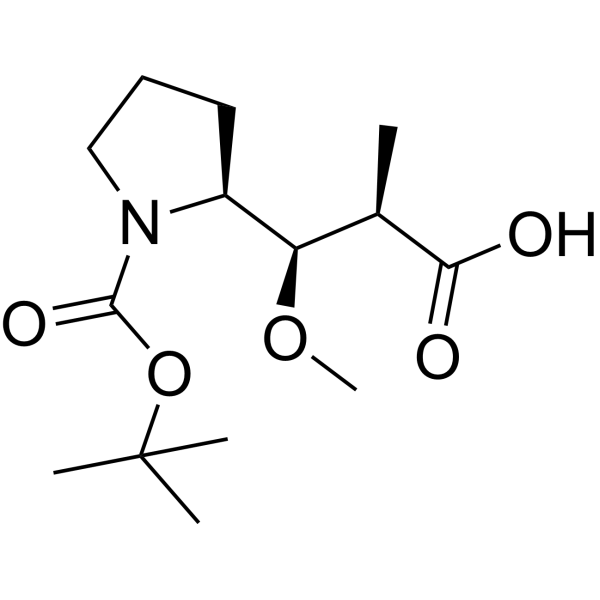
N-Boc-dolaproine ((2R,3R)-BOC-dolaproine) is the amino acid residue of the pentapeptide Dolastatin 10 (HY-15580). Dolastatin 10 inhibits tubulin polymerization and mitosis and has anticancer activity .
|
-
-
- HY-W002004
-
|
4-amino-2,2,6,6-tetramethylpiperidine-1-oxyl
|
Biochemical Assay Reagents
|
Inflammation/Immunology
|
|
4-Amino-TEMPO (4-Amino-2,2,6,6-tetramethylpiperidine-1-oxyl) is a stable nitroxide radical and N-nucleophile based on TEMPO. 4-Amino-TEMPO has superoxide dismutase-mimetic activity, can protect cells from oxidative damage, and has radioprotective effects. 4-Amino-TEMPO is widely used in fields such as biomedicine, materials science, and industrial production. 4-Amino-TEMPO can be used as a spin label to detect free radicals, an oxidation catalyst in industrial production, and an antioxidant stabilizer for polymers, among others .
|
-
-
- HY-126437E
-
|
|
Biochemical Assay Reagents
|
Others
|
|
Poly-L-lysine hydrobromide (with a molecular weight of 15,000 - 30,000) is an amino acid polymer with positive charge, and it serves as a non-specific attachment factor for cells. Poly-L-lysine hydrobromide (with a molecular weight of 15,000 - 30,000) can be used for gene delivery and the construction of nano-delivery systems .
|
-
-
- HY-126437H
-
|
|
Biochemical Assay Reagents
|
Others
|
|
Poly-L-lysine hydrobromide (MW 4000-15000) is a positively charged amino acid polymer that acts as a non-specific attachment factor for cells. Poly-L-lysine hydrobromide (MW 4000-15000) enhances the electrostatic interaction between the negative ions of the cell membrane and the surface of the culture medium, thereby promoting the adhesion of cells to solid substrates. Poly-L-lysine hydrobromide (MW 4000-15000) can be used for gene delivery .
|
-
-
- HY-126437J
-
|
PLL solution 0.01%, sterile-filtered, hydrobromide, MW 150000-300000, for cell culture
|
Biochemical Assay Reagents
|
Others
|
|
Poly-L-lysine solution (0.01%, sterile-filtered, MW 150000-300000), a positively charged amino acid polymer, is a nonspecific attachment factor for cells. Poly-L-lysine solution (0.01%, sterile-filtered, MW 150000-300000) has good biocompatibility. Poly-L-lysine solution (0.01%, sterile-filtered, MW 150000-300000) is used to increase cell adhesion to solid substrates by enhancing electrostatic interaction between negatively charged ions of the cell membrane and the culture surface .
|
-
-
- HY-W027592
-
|
|
Environmental Pollutants
MOFs
|
Others
|
|
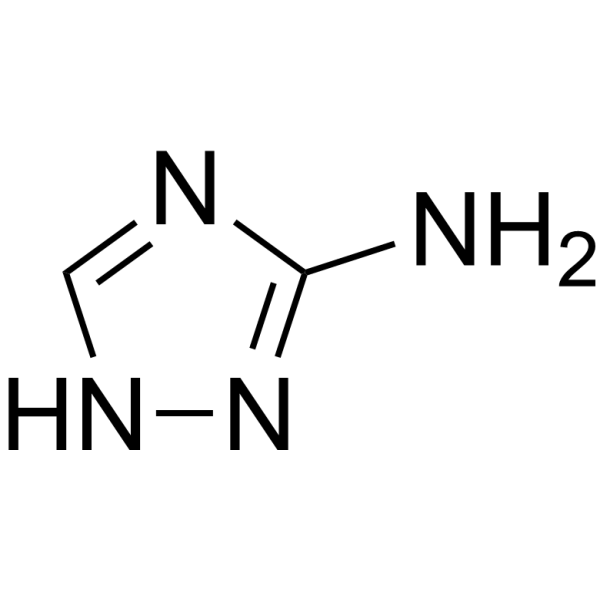
1H-1,2,4-Triazol-3-amine consists of a triazole ring system and an amino group attached to carbon atom 3. The compound has potential applications in various fields such as medicinal chemistry, agrochemicals and material science. In medicinal chemistry, 1H-1,2,4-Triazol-3-amine is used as a starting material for the synthesis of pharmaceutical compounds such as antifungal agents, anticancer agents, and enzyme inhibitors associated with cardiovascular disease. In agrochemicals, it can be used as a raw material for the synthesis of herbicides, fungicides and insecticides. Furthermore, 1H-1,2,4-Triazol-3-amine is used as a ligand in coordination chemistry and as a precursor for the production of new functional materials such as polymers and metal-organic frameworks.
|
-
-
- HY-126437D
-
|
|
Biochemical Assay Reagents
|
Others
|
|
Poly-L-lysine hydrobromide (MW 150000-300000), a positively charged amino acid polymer, is a nonspecific attachment factor for cells. Poly-L-lysine hydrobromide (MW 150000-300000) has good biocompatibility. Poly-L-lysine hydrobromide (MW 150000-300000) is used to increase cell adhesion to solid substrates by enhancing electrostatic interaction between negatively charged ions of the cell membrane and the culture surface .
|
-
-
- HY-149449
-
|
|
Amino Acid Derivatives
|
Cancer
|
|
Poly-L-γ-glutamic acid sodium is a macromolecular polymer formed by the linkage of glutamic acid residues via peptide bonds between γ-amino and carboxyl groups. Poly-L-γ-glutamic acid sodium plays an important role as a carrier material in compound delivery systems. Poly-L-γ-glutamic acid sodium can deliver Paclitaxel (HY-B0015) to colon cancer cells, reduce cell viability and inhibit the growth of colon cancer spheroids. Poly-L-γ-glutamic acid sodium can be used as a carrier material and in studies related to colon cancer in mice .
|
-
-
- HY-Y0286
-
|
Hartshorn salt, 99%
|
Environmental Pollutants
Biochemical Assay Reagents
|
Others
|
|
Ammonium carbonate (Ammonium carbonate), 99% is a solid amino compound that functions as a buffer, pH regulator, pore-forming agent, and electrocatalytic oxidation substrate. Ammonium carbonate, 99% is a GRAS-grade direct food additive with no restricted daily intake specified by FAO/WHO, and it shows no acute skin toxicity, clinical signs of toxicity, or effects on body weight in rats. Ammonium carbonate, 99% undergoes electrocatalytic oxidation in alkaline solutions with a Pt/C catalyst (carbonate adsorption interferes with activity). Ammonium carbonate, 99% can serve as a fuel for low-temperature polymer fuel cells and anion exchange membrane fuel cells (with performance superior to pure ammonia), and can also form pores in the carrier-free Pt cathode catalyst layer after low-temperature decomposition, thereby enhancing catalyst activity under low-humidity conditions and the performance of proton exchange membrane fuel cells .
|
-
-
- HY-140678
-
|
mPEG10000-NH2
|
PROTAC Linkers
|
Cancer
|
|
DBCO-PEG10000-Amine (DBCO-PEG10000-NH2) is a polyethylene glycol derivative containing dibenzocyclooctyne. DBCO-PEG-Amine is a universal, modular "bridge molecule": it forms stable covalent linkage with target materials (e.g., MSN or polymers) via the amino group at one end, while the DBCO group at the other end enables efficient, specific, and biocompatible click chemical conjugation with any azide-bearing biological entities (e.g., bacteria, cells) in subsequent steps .
|
-
-
- HY-W007729
-
|
|
Biochemical Assay Reagents
|
Others
|
|
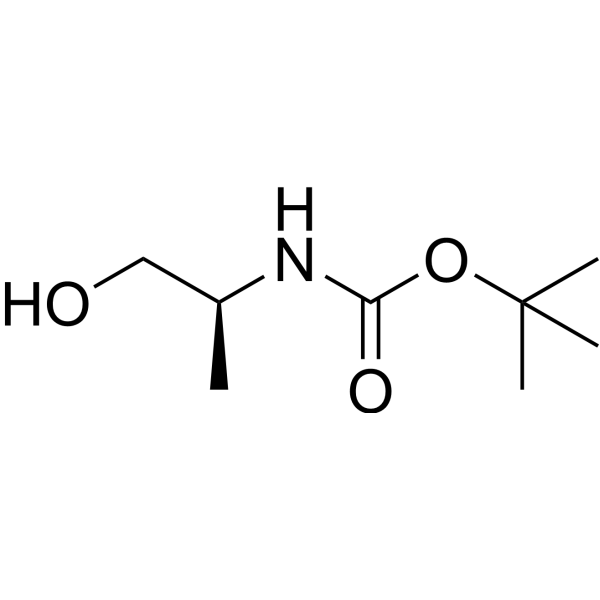
Boc-L-Alaninol is a Boc-protected chiral amino alcohol. Boc-L-Alaninol can be used in the synthesis of optically active bipyridine-containing polymers .
|
-
-
- HY-164165
-
|
|
Microtubule/Tubulin
Drug Derivative
|
Cancer
|
|
Paclitaxel-2′-succinate NHS ester is a paclitaxel derivative with a succinic acid linker, in which the carboxyl group is activated by the NHS ester. The NHS ester group is highly reactive toward amino or hydroxyl groups and can be used to conjugate with other molecules such as peptides, proteins, antibodies, enzymes or polymers. Paclitaxel-2′-succinate NHS ester can be used in the development of nanomedicines and in the study of cancer therapy .
|
-
-
- HY-Y0455
-
|
2-amino-6-picoline
|
Biochemical Assay Reagents
|
Others
|
|
6-Methyl-2-pyridinamine (2-Amino-6-picoline) is a metal coordination ligand. 6-Methyl-2-pyridinamine is promising for research of is promising for research of metal-organic frameworks (MOFs) and functional coordination polymers .
|
-
-
- HY-15582S
-
|
|
Isotope-Labeled Compounds
Microtubule/Tubulin
ADC Payload
|
Cancer
|
|
Auristatin E-d8 is the deuterium labeled Auristatin E (HY-15582). Auristatin E is a cytotoxic microtubule polymerization inhibitor with potent and selective antitumor activity. Auristatin E is a cytotoxin in antibody-drug conjugates (ADC). Auristatin E inhibits cell division by blocking the polymerisation of tubulin, promising for research in B-cell malignancies. Auristatin E, a synthetic analogue of the Dolastatin 10 (HY-15580), is linear peptides comprised of four amino acids .
|
-
-
- HY-174929A
-
|
DBCO-PEG5000-NH2
|
Biochemical Assay Reagents
|
Others
|
|
DBCO-PEG5000-Amine (DBCO-PEG5000-NH2) is a polyethylene glycol derivative containing dibenzocyclooctyne. DBCO-PEG-Amine is a universal, modular "bridge molecule": it forms stable covalent linkage with target materials (e.g., MSN or polymers) via the amino group at one end, while the DBCO group at the other end enables efficient, specific, and biocompatible click chemical conjugation with any azide-bearing biological entities (e.g., bacteria, cells) in subsequent steps .
|
-
-
- HY-42912A
-
|
|
Microtubule/Tubulin
Mitosis
|
Cancer
|
|
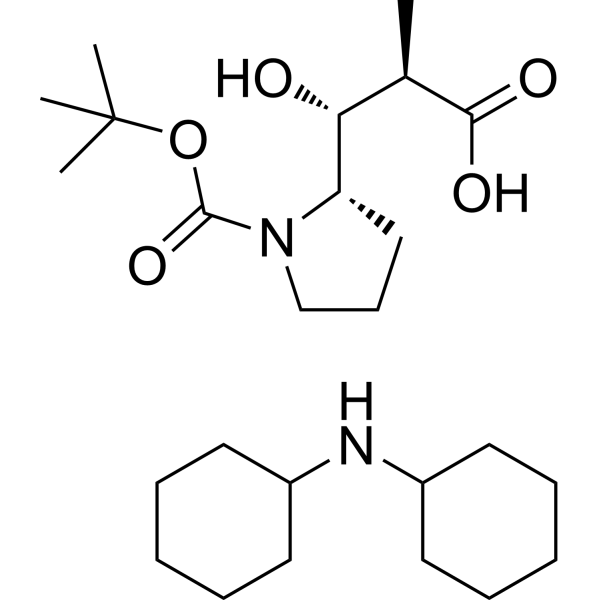
N-Boc-dolaproine-OH dicyclohexylamine is the amino acid residue of the pentapeptide Dolastatin 10 (HY-15580). Dolastatin 10 inhibits tubulin polymerization and mitosis and has anticancer activity .
|
-
-
- HY-33046A
-
|
(2R,3R)-BOC-dolaproine dicyclohexylamine
|
Microtubule/Tubulin
Mitosis
|
Cancer
|
|
N-Boc-dolaproine dicyclohexylamine is an amino acid residue of the pentapeptide Dolastatin 10 (HY-15580). Dolastatin 10 inhibits tubulin polymerization and mitosis and has anticancer activity. And contains dicyclohexylamine .
|
-
-
- HY-78932C
-
|
|
Microtubule/Tubulin
Mitosis
|
Cancer
|
|
(2S,3R)-Dap-NE hydrochloride is the amino acid residue of the pentapeptide Dolastatin 10 (HY-15580). Dolastatin 10 inhibits tubulin polymerization and mitosis and has anticancer activity .
|
-
-
- HY-W451406B
-
|
|
Drug Intermediate
Biochemical Assay Reagents
|
Metabolic Disease
|
|
NH2-PEG1000-NH2 is a double-ended amino polyethylene glycol with a number-average molecular weight of 1000, which serves as a synthetic raw material for adamantyl polyethylene glycol amine. NH2-PEG1000-NH2 can be used for the preparation of reduction-responsive liver-targeted polymeric micelles .
|
-
-
- HY-W002004S1
-
|
4-amino-2,2,6,6-tetramethylpiperidine-1-oxyl-d17
|
Isotope-Labeled Compounds
Biochemical Assay Reagents
|
Inflammation/Immunology
|
|
4-Amino-TEMPO-d17 (4-Amino-2,2,6,6-tetramethylpiperidine-1-oxyl-d17) is the deuterium labeled 4-Amino-TEMPO (HY-W002004). 4-Amino-TEMPO (4-Amino-2,2,6,6-tetramethylpiperidine-1-oxyl) is a stable nitroxide radical and N-nucleophile based on TEMPO. 4-Amino-TEMPO has superoxide dismutase-mimetic activity, can protect cells from oxidative damage, and has radioprotective effects. 4-Amino-TEMPO is widely used in fields such as biomedicine, materials science, and industrial production. 4-Amino-TEMPO can be used as a spin label to detect free radicals, an oxidation catalyst in industrial production, and an antioxidant stabilizer for polymers, among others .
|
-
-
- HY-174929
-
|
DBCO-PEG3400-NH2
|
Biochemical Assay Reagents
|
Others
|
|
DBCO-PEG3400-Amine (DBCO-PEG3400-NH2) is a polyethylene glycol derivative containing dibenzocyclooctyne. DBCO-PEG-Amine is a universal, modular "bridge molecule": it forms stable covalent linkage with target materials (e.g., MSN or polymers) via the amino group at one end, while the DBCO group at the other end enables efficient, specific, and biocompatible click chemical conjugation with any azide-bearing biological entities (e.g., bacteria, cells) in subsequent steps .
|
-
-
- HY-43304
-
|
|
Microtubule/Tubulin
Mitosis
|
Cancer
|
|
N-Boc-dolaproine-methyl is the amino acid residue of the pentapeptide Dolastatin 10 (HY-15580). Dolastatin 10 inhibits tubulin polymerization and mitosis and has anticancer activity .
|
-
-
- HY-42912
-
|
|
Microtubule/Tubulin
Mitosis
|
Cancer
|
|
N-Boc-dolaproine-OH ((+)-phenylethylamine) is the amino acid residue of the pentapeptide Dolastatin 10 (HY-15580). Dolastatin 10 inhibits tubulin polymerization and mitosis and has anticancer activity .
|
-
-
- HY-49053
-
|
|
Microtubule/Tubulin
Mitosis
|
Cancer
|
|
N-Boc-dolaproine-amide-Me-Phe is the amino acid residue of the pentapeptide Dolastatin 10 (HY-15580). Dolastatin 10 inhibits tubulin polymerization and mitosis and has anticancer activity .
|
-
-
- HY-78932D
-
|
|
Drug Derivative
Mitosis
|
Cancer
|
|
(2R,3R)-Dap-NE hydrochloride is the amino acid residue of the pentapeptide Dolastatin 10 (HY-15580). Dolastatin 10 inhibits tubulin polymerization and mitosis and has anticancer activity .
|
-
-
- HY-W002004S
-
|
4-amino-2,2,6,6-tetramethylpiperidine-1-oxyl-d17,15N
|
Isotope-Labeled Compounds
Biochemical Assay Reagents
|
Inflammation/Immunology
|
|
4-Amino-TEMPO-d17, 15N (4-Amino-2,2,6,6-tetramethylpiperidine-1-oxyl-d17, 15N) is the deuterium labeled 4-Amino-TEMPO-d17 (HY-W002004S1). 4-Amino-TEMPO (4-Amino-2,2,6,6-tetramethylpiperidine-1-oxyl) is a stable nitroxide radical and N-nucleophile based on TEMPO. 4-Amino-TEMPO has superoxide dismutase-mimetic activity, can protect cells from oxidative damage, and has radioprotective effects. 4-Amino-TEMPO is widely used in fields such as biomedicine, materials science, and industrial production. 4-Amino-TEMPO can be used as a spin label to detect free radicals, an oxidation catalyst in industrial production, and an antioxidant stabilizer for polymers, among others .
|
-
-
- HY-177679
-
|
|
Drug-Linker Conjugates for ADC
Topoisomerase
Microtubule/Tubulin
|
Cancer
|
|
N-(Amino-PEG4)-N-(PEG4-Val-Cit-PAB-MMAE)-N-(PEG4-Val-Cit-PAB-Exatecan) is a drug-linker conjugate for ADC (Drug-Linker Conjugate for ADC), consisting of a tubulin polymerization inhibitor MMAE (HY-15162) and a DNA topoisomerase I inhibitor Exatecan (HY-13631), and an ADC linker composition. N-(Amino-PEG4)-N-(PEG4-Val-Cit-PAB-MMAE)-N-(PEG4-Val-Cit-PAB-Exatecan) can be used for synthesis of ADCs and for cancer research.
|
-
-
- HY-W027592R
-
|
|
Biochemical Assay Reagents
Reference Standards
|
Others
|
|
1H-1,2,4-Triazol-3-amine (Standard) is the analytical standard of 1H-1,2,4-Triazol-3-amine. This product is intended for research and analytical applications. 1H-1,2,4-Triazol-3-amine consists of a triazole ring system and an amino group attached to carbon atom 3. The compound has potential applications in various fields such as medicinal chemistry, agrochemicals and material science. In medicinal chemistry, 1H-1,2,4-Triazol-3-amine is used as a starting material for the synthesis of pharmaceutical compounds such as antifungal agents, anticancer agents, and enzyme inhibitors associated with cardiovascular disease. In agrochemicals, it can be used as a raw material for the synthesis of herbicides, fungicides and insecticides. Furthermore, 1H-1,2,4-Triazol-3-amine is used as a ligand in coordination chemistry and as a precursor for the production of new functional materials such as polymers and metal-organic frameworks.
|
-
-
- HY-182662
-
|
|
Biochemical Assay Reagents
|
Others
|
|
Polymer blocking agent CA2000 is a polymer blocking agent composed of long PEG chains and terminal short amino groups. Polymer blocking agent CA2000 effectively reduces non-specific adsorption, significantly improving the accuracy and reliability of detection.
|
-
-
- HY-182662A
-
|
|
Biochemical Assay Reagents
|
Others
|
|
Polymer blocking agent CA4000 is a polymer blocking agent composed of long PEG chains and terminal short amino groups. Polymer blocking agent CA4000 effectively reduces non-specific adsorption, significantly improving the accuracy and reliability of detection.
|
-
-
- HY-W008583
-
|
DBDPA
|
Fluorescent Dye
Biochemical Assay Reagents
|
Others
|
|
Bis (4-tert-butylphenyl) amine (DBDPA) is a C4 alkyl-substituted diphenylamine-based amino antioxidant. Bis (4-tert-butylphenyl) amine serves as a polymer additive in car seats. Bis (4-tert-butylphenyl) amine acts as a synthetic precursor for donor-acceptor-donor (D-A-D) type π-conjugated fluorophores .
|
-
| Cat. No. |
Product Name |
Type |
-
- HY-W002004
-
|
4-amino-2,2,6,6-tetramethylpiperidine-1-oxyl
|
Biochemical Assay Reagents
|
|
4-Amino-TEMPO (4-Amino-2,2,6,6-tetramethylpiperidine-1-oxyl) is a stable nitroxide radical and N-nucleophile based on TEMPO. 4-Amino-TEMPO has superoxide dismutase-mimetic activity, can protect cells from oxidative damage, and has radioprotective effects. 4-Amino-TEMPO is widely used in fields such as biomedicine, materials science, and industrial production. 4-Amino-TEMPO can be used as a spin label to detect free radicals, an oxidation catalyst in industrial production, and an antioxidant stabilizer for polymers, among others .
|
-
- HY-126437E
-
|
|
Biochemical Assay Reagents
|
|
Poly-L-lysine hydrobromide (with a molecular weight of 15,000 - 30,000) is an amino acid polymer with positive charge, and it serves as a non-specific attachment factor for cells. Poly-L-lysine hydrobromide (with a molecular weight of 15,000 - 30,000) can be used for gene delivery and the construction of nano-delivery systems .
|
-
- HY-126437H
-
|
|
Biochemical Assay Reagents
|
|
Poly-L-lysine hydrobromide (MW 4000-15000) is a positively charged amino acid polymer that acts as a non-specific attachment factor for cells. Poly-L-lysine hydrobromide (MW 4000-15000) enhances the electrostatic interaction between the negative ions of the cell membrane and the surface of the culture medium, thereby promoting the adhesion of cells to solid substrates. Poly-L-lysine hydrobromide (MW 4000-15000) can be used for gene delivery .
|
-
- HY-126437J
-
|
PLL solution 0.01%, sterile-filtered, hydrobromide, MW 150000-300000, for cell culture
|
Biochemical Assay Reagents
|
|
Poly-L-lysine solution (0.01%, sterile-filtered, MW 150000-300000), a positively charged amino acid polymer, is a nonspecific attachment factor for cells. Poly-L-lysine solution (0.01%, sterile-filtered, MW 150000-300000) has good biocompatibility. Poly-L-lysine solution (0.01%, sterile-filtered, MW 150000-300000) is used to increase cell adhesion to solid substrates by enhancing electrostatic interaction between negatively charged ions of the cell membrane and the culture surface .
|
-
- HY-W027592
-
|
|
Biochemical Assay Reagents
|
|
1H-1,2,4-Triazol-3-amine consists of a triazole ring system and an amino group attached to carbon atom 3. The compound has potential applications in various fields such as medicinal chemistry, agrochemicals and material science. In medicinal chemistry, 1H-1,2,4-Triazol-3-amine is used as a starting material for the synthesis of pharmaceutical compounds such as antifungal agents, anticancer agents, and enzyme inhibitors associated with cardiovascular disease. In agrochemicals, it can be used as a raw material for the synthesis of herbicides, fungicides and insecticides. Furthermore, 1H-1,2,4-Triazol-3-amine is used as a ligand in coordination chemistry and as a precursor for the production of new functional materials such as polymers and metal-organic frameworks.
|
-
- HY-149449
-
|
|
Biochemical Assay Reagents
|
|
Poly-L-γ-glutamic acid sodium is a macromolecular polymer formed by the linkage of glutamic acid residues via peptide bonds between γ-amino and carboxyl groups. Poly-L-γ-glutamic acid sodium plays an important role as a carrier material in compound delivery systems. Poly-L-γ-glutamic acid sodium can deliver Paclitaxel (HY-B0015) to colon cancer cells, reduce cell viability and inhibit the growth of colon cancer spheroids. Poly-L-γ-glutamic acid sodium can be used as a carrier material and in studies related to colon cancer in mice .
|
-
- HY-Y0286
-
|
Hartshorn salt, 99%
|
Biochemical Assay Reagents
|
|
Ammonium carbonate (Ammonium carbonate), 99% is a solid amino compound that functions as a buffer, pH regulator, pore-forming agent, and electrocatalytic oxidation substrate. Ammonium carbonate, 99% is a GRAS-grade direct food additive with no restricted daily intake specified by FAO/WHO, and it shows no acute skin toxicity, clinical signs of toxicity, or effects on body weight in rats. Ammonium carbonate, 99% undergoes electrocatalytic oxidation in alkaline solutions with a Pt/C catalyst (carbonate adsorption interferes with activity). Ammonium carbonate, 99% can serve as a fuel for low-temperature polymer fuel cells and anion exchange membrane fuel cells (with performance superior to pure ammonia), and can also form pores in the carrier-free Pt cathode catalyst layer after low-temperature decomposition, thereby enhancing catalyst activity under low-humidity conditions and the performance of proton exchange membrane fuel cells .
|
-
- HY-140678
-
|
mPEG10000-NH2
|
Biochemical Assay Reagents
|
|
DBCO-PEG10000-Amine (DBCO-PEG10000-NH2) is a polyethylene glycol derivative containing dibenzocyclooctyne. DBCO-PEG-Amine is a universal, modular "bridge molecule": it forms stable covalent linkage with target materials (e.g., MSN or polymers) via the amino group at one end, while the DBCO group at the other end enables efficient, specific, and biocompatible click chemical conjugation with any azide-bearing biological entities (e.g., bacteria, cells) in subsequent steps .
|
-
- HY-W007729
-
|
|
Biochemical Assay Reagents
|
|
Boc-L-Alaninol is a Boc-protected chiral amino alcohol. Boc-L-Alaninol can be used in the synthesis of optically active bipyridine-containing polymers .
|
-
- HY-174929A
-
|
DBCO-PEG5000-NH2
|
Biochemical Assay Reagents
|
|
DBCO-PEG5000-Amine (DBCO-PEG5000-NH2) is a polyethylene glycol derivative containing dibenzocyclooctyne. DBCO-PEG-Amine is a universal, modular "bridge molecule": it forms stable covalent linkage with target materials (e.g., MSN or polymers) via the amino group at one end, while the DBCO group at the other end enables efficient, specific, and biocompatible click chemical conjugation with any azide-bearing biological entities (e.g., bacteria, cells) in subsequent steps .
|
-
- HY-174929
-
|
DBCO-PEG3400-NH2
|
Biochemical Assay Reagents
|
|
DBCO-PEG3400-Amine (DBCO-PEG3400-NH2) is a polyethylene glycol derivative containing dibenzocyclooctyne. DBCO-PEG-Amine is a universal, modular "bridge molecule": it forms stable covalent linkage with target materials (e.g., MSN or polymers) via the amino group at one end, while the DBCO group at the other end enables efficient, specific, and biocompatible click chemical conjugation with any azide-bearing biological entities (e.g., bacteria, cells) in subsequent steps .
|
-
- HY-W027592R
-
|
|
Biochemical Assay Reagents
|
|
1H-1,2,4-Triazol-3-amine (Standard) is the analytical standard of 1H-1,2,4-Triazol-3-amine. This product is intended for research and analytical applications. 1H-1,2,4-Triazol-3-amine consists of a triazole ring system and an amino group attached to carbon atom 3. The compound has potential applications in various fields such as medicinal chemistry, agrochemicals and material science. In medicinal chemistry, 1H-1,2,4-Triazol-3-amine is used as a starting material for the synthesis of pharmaceutical compounds such as antifungal agents, anticancer agents, and enzyme inhibitors associated with cardiovascular disease. In agrochemicals, it can be used as a raw material for the synthesis of herbicides, fungicides and insecticides. Furthermore, 1H-1,2,4-Triazol-3-amine is used as a ligand in coordination chemistry and as a precursor for the production of new functional materials such as polymers and metal-organic frameworks.
|
-
- HY-182662
-
|
|
Biochemical Assay Reagents
|
|
Polymer blocking agent CA2000 is a polymer blocking agent composed of long PEG chains and terminal short amino groups. Polymer blocking agent CA2000 effectively reduces non-specific adsorption, significantly improving the accuracy and reliability of detection.
|
-
- HY-182662A
-
|
|
Biochemical Assay Reagents
|
|
Polymer blocking agent CA4000 is a polymer blocking agent composed of long PEG chains and terminal short amino groups. Polymer blocking agent CA4000 effectively reduces non-specific adsorption, significantly improving the accuracy and reliability of detection.
|
| Cat. No. |
Product Name |
Target |
Research Area |
-
- HY-126437B
-
|
|
Biochemical Assay Reagents
|
Others
|
|
Poly-L-lysine (hydrobromide) (MW 70000-150000), a positively charged amino acid polymer, is a nonspecific attachment factor for cells. Poly-L-lysine (hydrobromide) (MW 70000-150000) has good biocompatibility. Poly-L-lysine (hydrobromide) (MW 70000-150000) is used to increase cell adhesion to solid substrates by enhancing electrostatic interaction between negatively charged ions of the cell membrane and the culture surface .
|
-
- HY-126437D
-
|
|
Biochemical Assay Reagents
|
Others
|
|
Poly-L-lysine hydrobromide (MW 150000-300000), a positively charged amino acid polymer, is a nonspecific attachment factor for cells. Poly-L-lysine hydrobromide (MW 150000-300000) has good biocompatibility. Poly-L-lysine hydrobromide (MW 150000-300000) is used to increase cell adhesion to solid substrates by enhancing electrostatic interaction between negatively charged ions of the cell membrane and the culture surface .
|
-
- HY-P11009
-
|
|
Peptides
|
Others
|
|
SA-21 is a 21-amino acid polymer peptide (Ac-RLIEDICLPRWGCLWEDD-NH2) that binds to ligands of urokinase-type plasminogen activator, Fab antibody fragments, and small proteins. SA-21 can be used to purify albumin (Ki=1.9 μM) .
|
| Cat. No. |
Product Name |
Chemical Structure |
-
- HY-15582S
-
|
|
|
Auristatin E-d8 is the deuterium labeled Auristatin E (HY-15582). Auristatin E is a cytotoxic microtubule polymerization inhibitor with potent and selective antitumor activity. Auristatin E is a cytotoxin in antibody-drug conjugates (ADC). Auristatin E inhibits cell division by blocking the polymerisation of tubulin, promising for research in B-cell malignancies. Auristatin E, a synthetic analogue of the Dolastatin 10 (HY-15580), is linear peptides comprised of four amino acids .
|
-
-
- HY-W002004S1
-
|
|
|
4-Amino-TEMPO-d17 (4-Amino-2,2,6,6-tetramethylpiperidine-1-oxyl-d17) is the deuterium labeled 4-Amino-TEMPO (HY-W002004). 4-Amino-TEMPO (4-Amino-2,2,6,6-tetramethylpiperidine-1-oxyl) is a stable nitroxide radical and N-nucleophile based on TEMPO. 4-Amino-TEMPO has superoxide dismutase-mimetic activity, can protect cells from oxidative damage, and has radioprotective effects. 4-Amino-TEMPO is widely used in fields such as biomedicine, materials science, and industrial production. 4-Amino-TEMPO can be used as a spin label to detect free radicals, an oxidation catalyst in industrial production, and an antioxidant stabilizer for polymers, among others .
|
-
-
- HY-W002004S
-
|
|
|
4-Amino-TEMPO-d17, 15N (4-Amino-2,2,6,6-tetramethylpiperidine-1-oxyl-d17, 15N) is the deuterium labeled 4-Amino-TEMPO-d17 (HY-W002004S1). 4-Amino-TEMPO (4-Amino-2,2,6,6-tetramethylpiperidine-1-oxyl) is a stable nitroxide radical and N-nucleophile based on TEMPO. 4-Amino-TEMPO has superoxide dismutase-mimetic activity, can protect cells from oxidative damage, and has radioprotective effects. 4-Amino-TEMPO is widely used in fields such as biomedicine, materials science, and industrial production. 4-Amino-TEMPO can be used as a spin label to detect free radicals, an oxidation catalyst in industrial production, and an antioxidant stabilizer for polymers, among others .
|
-
| Cat. No. |
Product Name |
|
Classification |
-
- HY-174929A
-
|
DBCO-PEG5000-NH2
|
|
DBCO
|
|
DBCO-PEG5000-Amine (DBCO-PEG5000-NH2) is a polyethylene glycol derivative containing dibenzocyclooctyne. DBCO-PEG-Amine is a universal, modular "bridge molecule": it forms stable covalent linkage with target materials (e.g., MSN or polymers) via the amino group at one end, while the DBCO group at the other end enables efficient, specific, and biocompatible click chemical conjugation with any azide-bearing biological entities (e.g., bacteria, cells) in subsequent steps .
|
-
- HY-174929
-
|
DBCO-PEG3400-NH2
|
|
DBCO
|
|
DBCO-PEG3400-Amine (DBCO-PEG3400-NH2) is a polyethylene glycol derivative containing dibenzocyclooctyne. DBCO-PEG-Amine is a universal, modular "bridge molecule": it forms stable covalent linkage with target materials (e.g., MSN or polymers) via the amino group at one end, while the DBCO group at the other end enables efficient, specific, and biocompatible click chemical conjugation with any azide-bearing biological entities (e.g., bacteria, cells) in subsequent steps .
|
Your information is safe with us. * Required Fields.
Inquiry Information
- Product Name:
- Cat. No.:
- Quantity:
- MCE Japan Authorized Agent:

