Search Result
Results for "
coupling reagent
" in MedChemExpress (MCE) Product Catalog:
13
Biochemical Assay Reagents
1
Isotope-Labeled Compounds
| Cat. No. |
Product Name |
Target |
Research Areas |
Chemical Structure |
-
- HY-Y1703
-
|
|
Biochemical Assay Reagents
|
Others
|
|
HATU is a third-generation uronium salt peptide coupling reagent. HATU increases the rate of peptide coupling reactions, activates amino acids, promotes peptide bond formation in both solution-phase and solid-phase synthesis, and also facilitates peptide assembly, fragment coupling, and linear peptide cyclization. HATU can promote the N-acylation of chitosan to generate amide-linked cationic derivatives with a controllable degree of substitution. HATU is commonly used in amine acylation reactions .
|
-
-
- HY-Z0275
-
|
|
Biochemical Assay Reagents
Bacterial
|
Infection
|
|
HOAT is a peptide bond-forming reagent. HOAT is utilized to affect formation of peptide bonds by coupling carboxylic acids with amines. HOAt is not mutagenic in the bacterial reverse mutation test .
|
-
-
- HY-W013151
-
|
|
Biochemical Assay Reagents
SARS-CoV
|
Others
|
|
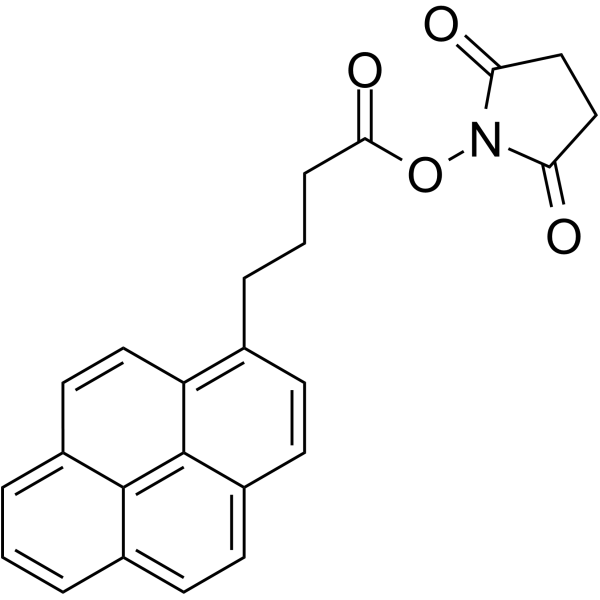
1-Pyrenebutyric acid N-hydroxysuccinimide ester (PANHS) is a linker and interface coupling agent that can be used to prepare electrochemical biosensors. 1-Pyrenebutyric acid N-hydroxysuccinimide ester immobilizes SARS-CoV-2 spike antibodies on graphene sheets. 1-Pyrenebutyric acid N-hydroxysuccinimide ester is often used as an activation reagent for carboxylic acids in organic chemistry or biochemistry .
|
-
-
- HY-79880
-
|
1,1'-Carbonyldiimidazole
|
MOFs
|
Others
|
|
N,N'-Carbonyldiimidazole (1,1'-Carbonyldiimidazole) is a highly reactive carboxylating reagent that can activate hydroxyl groups to form reactive carbonyl groups. N,N'-Carbonyldiimidazole can be used as a coupling agent and a peptide synthesis reagent .
|
-
-
- HY-Y1666
-
|
|
Biochemical Assay Reagents
|
Others
|
|
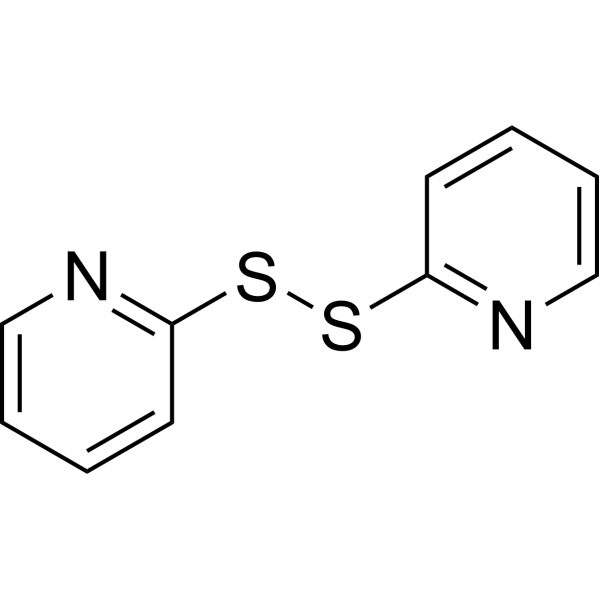
2,2′-Dipyridyl disulfide is a useful reagent for the determination of sulfhydryl groups. 2,2′-Dipyridyl disulfide is a common reagent in peptide chemistry, often used in oxidation–reduction condensations to form peptide bonds or in coupling reactions to form disulfide-linked heterodimers .
|
-
-
- HY-W111141
-
|
endo-9-Hydroxymethylbicyclo[6.1.0]non-4-yne
|
Biochemical Assay Reagents
|
Others
|
|
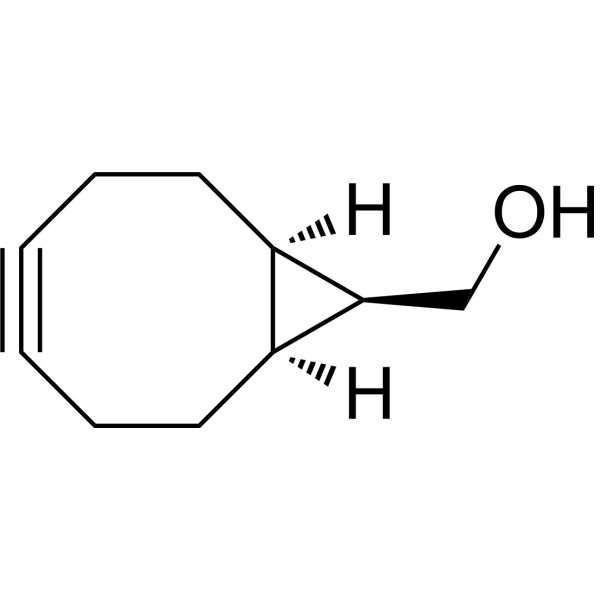
BCN-OH (endo-9-Hydroxymethylbicyclo[6.1.0]non-4-yne) is an alcohol functionalized cyclooctyne derivative. BCN-OH can act as a raw material for synthesizing other probes (such as BCN-TPP). BCN-OH is used to construct targeted probes by coupling with carboxyl-containing compounds (such as TPP-COOH). BCN-OH can be used as control reagent for BCN-TPP .
|
-
-
- HY-Y0912
-
|
N-HBTU
|
Biochemical Assay Reagents
|
Inflammation/Immunology
|
|
HBTU (N-HBTU) is a guanidinium-based peptide coupling reagent and immunological sensitizer. HBTU can be used in combination with bases such as DIPEA (HY-130142) to complete coupling reactions, with HOBt and TMU as by-products. HBTU is a standard reagent in automated solid-phase peptide synthesis, particularly for the Fmoc/tBu strategy, which effectively promotes coupling steps, but it is not suitable for sterically hindered amino acids or dipeptide derivatives. HBTU can induce rhinitis, dermatitis, bronchial asthma and severe allergic reactions. HBTU can be used to study the pathogenesis of allergic reactions, occupational rhinitis, allergic contact dermatitis and bronchial asthma .
|
-
-
- HY-W011556
-
|
TCFH
|
Drug Isomer
|
Cancer
|
|
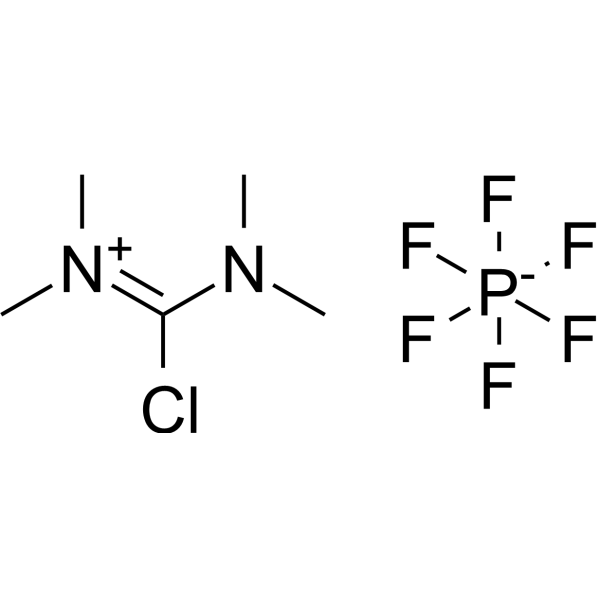
N,N,N',N'-Tetramethylchloroformamidinium hexafluorophosphate (TCFH) is a powerful coupling and derivatizing reagent for ester prodrug synthesis. N,N,N',N'-Tetramethylchloroformamidinium hexafluorophosphate can be used for antitumor drugs before medicine research .
|
-
-
- HY-147363
-
|
|
Drug-Linker Conjugates for ADC
|
Others
|
|
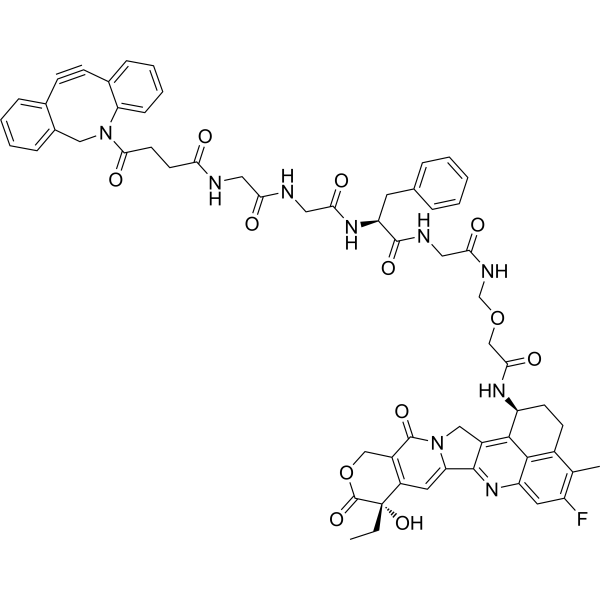
DIBAC-GGFG-NH2CH2-Dxd (compound LP4), a Camptothecin (HY-16560) derivative, is a linker-payload of protein-agent conjugates . Dxd (HY-13631D) can be used as a payload for the antibody-coupling drug ADC (DS-8201a).DIBAC-GGFG-NH2CH2-Dxd is a click chemistry reagent, it contains a DBCO group that can undergo strain-promoted alkyne-azide cycloaddition (SPAAC) with molecules containing Azide groups .
|
-
-
- HY-130086
-
|
|
ADC Linker
|
Cancer
|
|
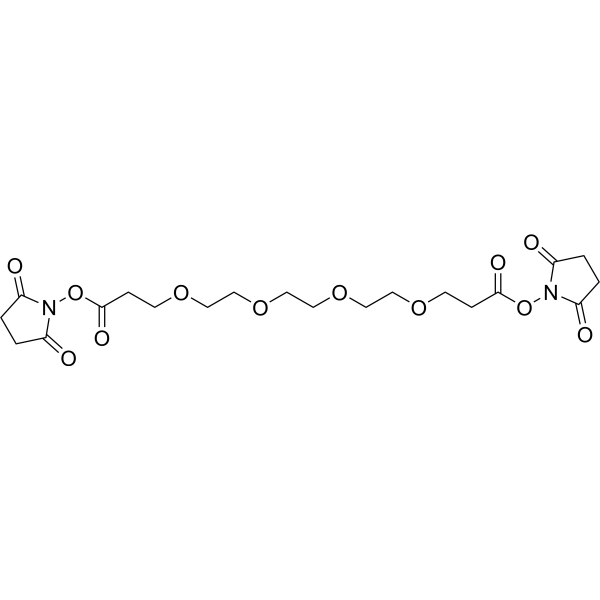
Bis-PEG4-NHS ester is a crosslinking reagent and amine-reactive modulator .Bis-PEG4-NHS ester reacts with primary amine groups on liposome surfaces via amide bond formation to covalently attach dibenzylcyclooctyne groups, with a hydrophilic PEG4 spacer reducing steric hindrance for subsequent click chemistry .Bis-PEG4-NHS ester enables site-specific antibody coupling to liposome surfaces via copper-free strain-promoted alkyne-azide cycloaddition click chemistry without disrupting liposome structure in minimal organic solvent volumes .Bis-PEG4-NHS ester undergoes hydrolysis during annealing to form -COOH groups that interact with PbI and FAI to enhance perovskite structural integrity, passivate defects, and modulate nucleation kinetics to regulate crystal growth .Bis-PEG4-NHS ester enhances device efficiency and long-term stability when used as an antisolvent additive for p-i-n perovskite solar cells .
|
-
-
- HY-D0177
-
|
Benzotriazole-1-yl-oxytripyrrolidinophosphonium hexafluorophosphate
|
Biochemical Assay Reagents
|
Others
|
|
(Benzotriazol-1-yloxy)tripyrrolidinophosphonium hexafluorophosphate (Benzotriazole-1-yl-oxytripyrrolidinophosphonium hexafluorophosphate) is a peptide coupling reagent and BOP analog. (Benzotriazol-1-yloxy)tripyrrolidinophosphonium hexafluorophosphate promotes the reaction of amino and carboxyl groups to form peptide bonds. (Benzotriazol-1-yloxy)tripyrrolidinophosphonium hexafluorophosphate can be used in the synthesis of peptide compounds .
|
-
-
- HY-D2171A
-
|
|
Fluorescent Dye
|
Others
|
|
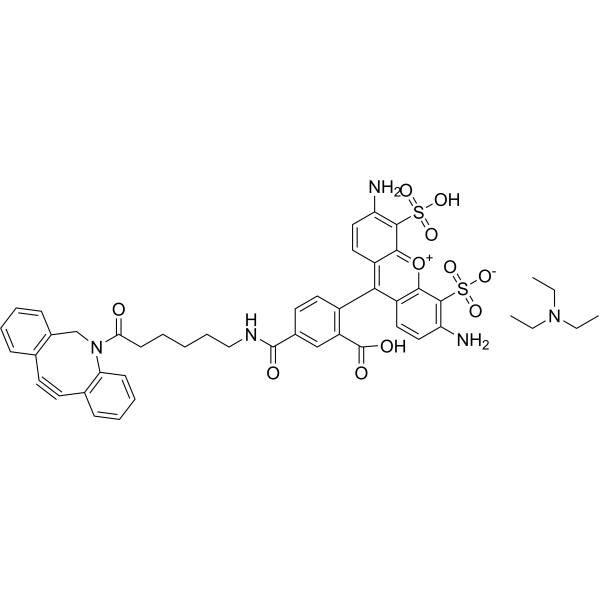
AF488 DBCO ditriethylamineis a fluorescent dye and also a click chemistry reagent that can label azide-containing biomolecules. AF488 DBCO ditriethylaminemediates the coupling reaction with azide-modified 2'-OMe RNA oligonucleotides. DBCO is a bioorthogonal partner of azides and enables covalent coupling without copper (Ex/Em = 470/520 nm) .
|
-
-
- HY-151817
-
|
|
Biochemical Assay Reagents
|
Others
|
|
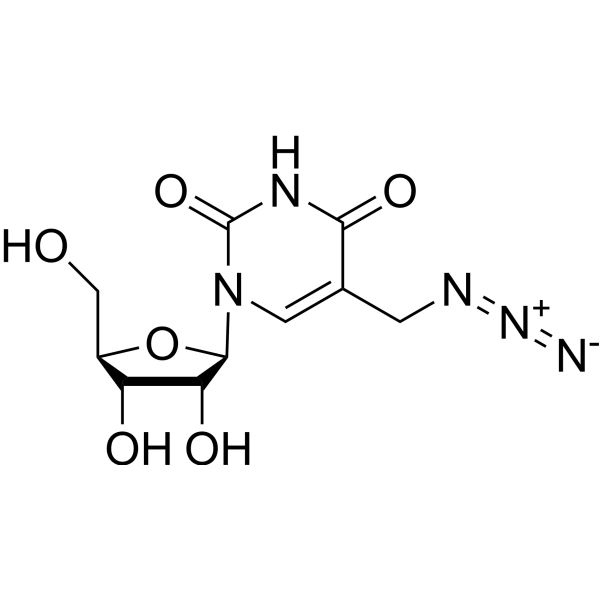
5-Azidomethyl-uridine is a click chemistry reagent containing an azide group. The azide function is widely used for coupling to alkyne-containing fragments via the renowned Click reaction.
|
-
-
- HY-147168
-
|
|
Biochemical Assay Reagents
|
Others
|
|
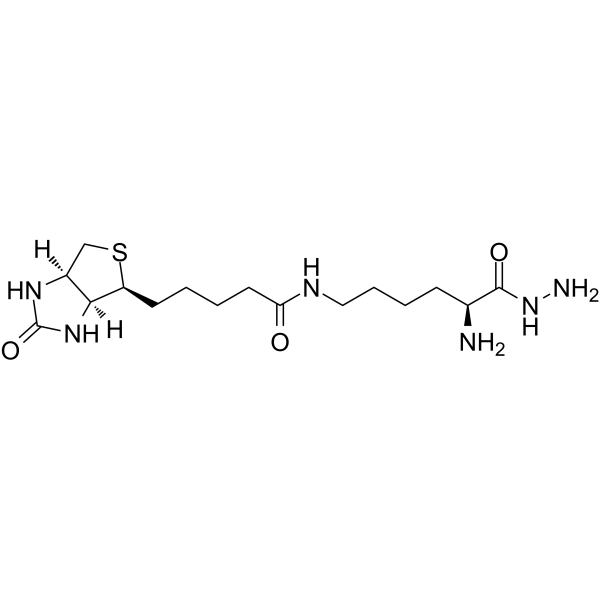
Biocytin hydrazide is a long-chain biotin-containing hydrazide, serving as a biotin-derived active coupling reagent, selective labeling agent and biotinylating reagent. Biocytin hydrazide targets aldehyde, carboxyl, amino and guanidino groups to biotinylate glycoconjugates, K99 lectin, peptides and proteins through its hydrazide moiety, and achieves nonradioactive detection of sialic acid- and galactose-containing glycoconjugates via the avidin–biotin system .
|
-
-
- HY-41121
-
|
Boc-Ala-OH
|
Amino Acid Derivatives
|
Cancer
|
|
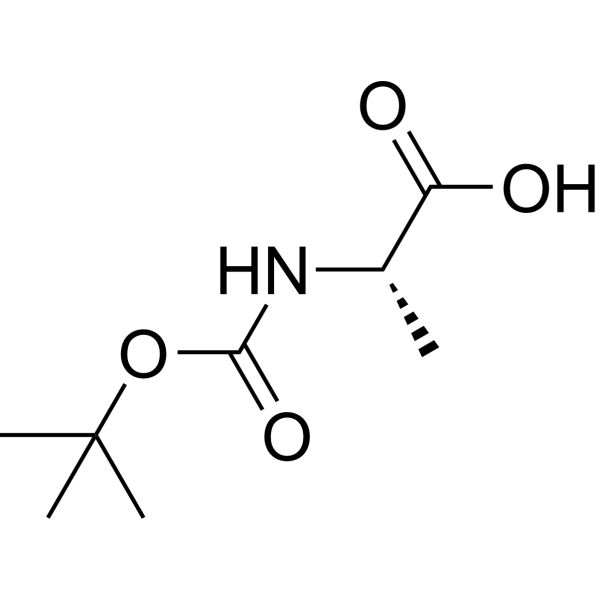
Boc-L-Ala-OH (Boc-Ala-OH) is a single N-protected amino acid ligand and a protected L-alanine derivative. Boc-L-Ala-OH promotes Pd (II)-catalyzed enantioselective C-H alkenylation and kinetic resolution. Boc-L-Ala-OH serves as a coupling reagent for the synthesis of liver-targeted glycogen phosphorylase inhibitors and P6A metabolites, and also acts as a negative control in synthesis studies of betulinic acid amino acid esters. Boc-L-Ala-OH is applicable to research on epidermoid squamous cell carcinoma .
|
-
-
- HY-Y0973
-
|
|
Biochemical Assay Reagents
Drug Intermediate
|
Others
|
|
BOP hexafluorophosphate is a phosphonium-type condensing agent. BOP hexafluorophosphate activates the carboxylic acid component to form a highly reactive O-benzotriazole ester (active ester) intermediate, which then reacts with the amino component to form an amide bond (peptide bond). BOP hexafluorophosphate is applicable to solid-phase polypeptide synthesis and nucleoside modification .
|
-
-
- HY-101532
-
|
β-CDN3; 6A-deoxy-6A-azido-β-cyclodextrin
|
Biochemical Assay Reagents
|
Others
|
|
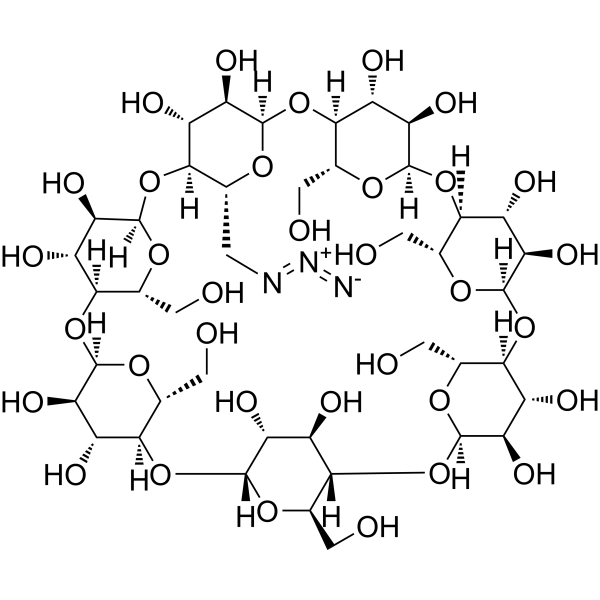
6A-Azido-6A-deoxy-β-cyclodextrin (β-CDN3) is a site-specifically modified β-cyclodextrin with a single azido group replacing the hydroxyl group at the C6 position. 6A-Azido-6A-deoxy-β-cyclodextrin forms a host-guest inclusion complex with Dexamethasone (HY-14648), localizing the drug within its hydrophobic cavity, which restricts the rotational mobility of the drug and places Dexamethasone in a less polar environment. 6A-Azido-6A-deoxy-β-cyclodextrin acts as a coupling agent to graft β-cyclodextrin onto thermosensitive nanogels via strain-promoted alkyne-azide cycloaddition (SPAAC). 6A-Azido-6A-deoxy-β-cyclodextrin also serves as a click chemistry reagent. It contains an azide group and undergoes copper-catalyzed azide-alkyne cycloaddition (CuAAc) with molecules bearing an alkyne group. It also undergoes strain-driven alkyne-azide cycloaddition (SPAAC) with molecules containing DBCO or BCN groups .
|
-
-
- HY-32951
-
|
|
Drug Intermediate
|
Others
|
|
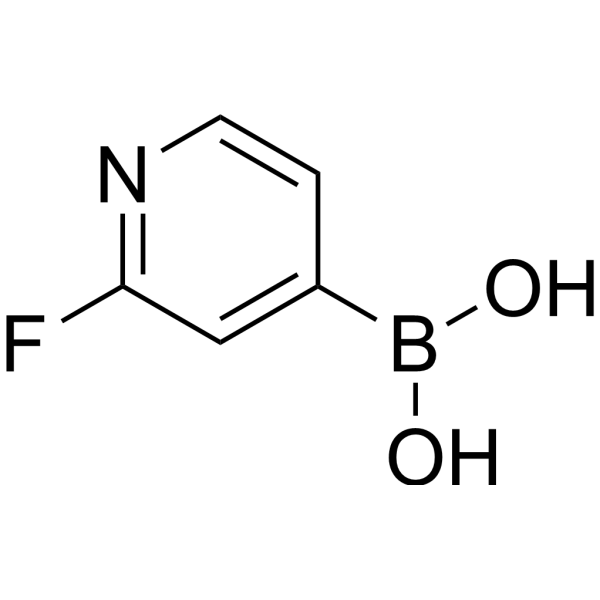
2-Fluoropyridine-4-boronic acid is a coupling reagent and chemical intermediate. 2-Fluoropyridine-4-boronic acid facilitates the synthesis of Rho kinase (ROCK) inhibitor Compound 37 .
|
-
-
- HY-W016618
-
|
Ethyl benzoylformate; Phenylglyoxylic acid ethyl ester
|
Drug Intermediate
Biochemical Assay Reagents
Carboxylesterase (CES)
|
Others
|
|
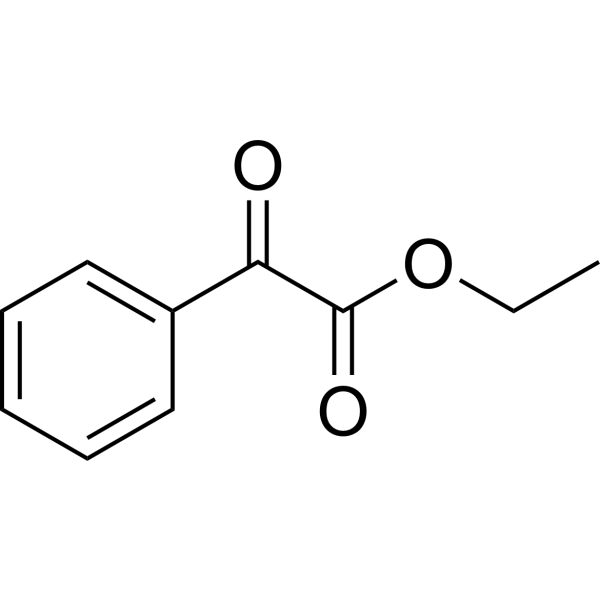
Ethyl phenylglyoxylate (Ethyl benzoylformate), the ethyl ester of phenylglyoxylic acid, is used as a synthetic reagent. Ethyl phenylglyoxylate is also a poor substrate but a potent inhibitor of chicken liver carboxylesterase. Additionally, Ethyl phenylglyoxylate exhibits photoreactivity, where its excited triplet carbonyl can initiate intermolecular hydrogen abstraction, radical coupling and cross-linking reactions .
|
-
-
- HY-W011412
-
|
|
Biochemical Assay Reagents
|
Others
|
|
TSTU is used as a coupling reagent in peptide chemistry. TSTU can convert carboxylic acids into the corresponding N-hydroxysuccinimidyl (NHS) esters. TSTU can be applied to the attachment of labels to peptides, proteins, etc .
|
-
-
- HY-D2171
-
|
|
Fluorescent Dye
|
Others
|
|
AF488 DBCO is a fluorescent dye and also a click chemistry reagent that can label azide-containing biomolecules. AF488 DBCO mediates the coupling reaction with azide-modified 2'-OMe RNA oligonucleotides. DBCO is a bioorthogonal partner of azides and enables covalent coupling without copper (Ex/Em = 470/520 nm) .
|
-
-
- HY-W002570
-
|
|
Biochemical Assay Reagents
|
Others
|
|
2-Naphthylboronic acid is a biochemical reagent that can be used as a biological material or organic compound for life science related research. 2-Naphthylboronic acid can undergo silylation reaction. 2-Naphthylboronic acid also readily undergo Suzuki-Miyaura cross-coupling .
|
-
-
- HY-W011618
-
|
|
Fluorescent Dye
|
Others
|
|
N-(9-Acridinyl)maleimide is a maleimide type fluorescent thiol reagent. N-(9-Acridinyl)maleimide shows no substantial fluorescence but its coupling products with thiol compounds exhibit strong blue fluorescence. N-(9-Acridinyl)maleimide is used for fluorometrical analysis of cysteine and glutathione .
|
-
-
- HY-Y0549
-
|
Diphenylmethane-α-carboxylic Acid
|
Biochemical Assay Reagents
|
Others
|
|
Diphenylacetic acid (Diphenylmethane-α-carboxylic Acid) is a biochemical reagent that can be used as a biological material or organic compound for life science related research. Diphenylacetic acid can be used as a reagent in the kinetic resolution of racemic 2-hydroxy-y-butyrolactones by asymmetric esterification in the presence of pivalic anhydride and chiral acyl-transfer catalyst. Diphenylacetic acid can act as a catalyst to synthesize 2-allyl-3-oxazolin-5-one derivatives via Rh-catalyzed coupling reaction of azlactones and alkynes followed by aza-Cope rearrangement .
|
-
-
- HY-75129
-
|
|
Biochemical Assay Reagents
|
Others
|
|
Pyridin-3-ylboronic acid is an organic compound. Pyridin-3-ylboronic acid is a key reagent in the Suzuki-Miyaura cross-coupling reaction. Pyridin-3-ylboronic acid is used in organic synthesis to construct oligopyridine compounds, and then as an α-helix mimetic to study protein-protein interactions .
|
-
-
- HY-D2529
-
|
|
Fluorescent Dye
|
Others
|
|
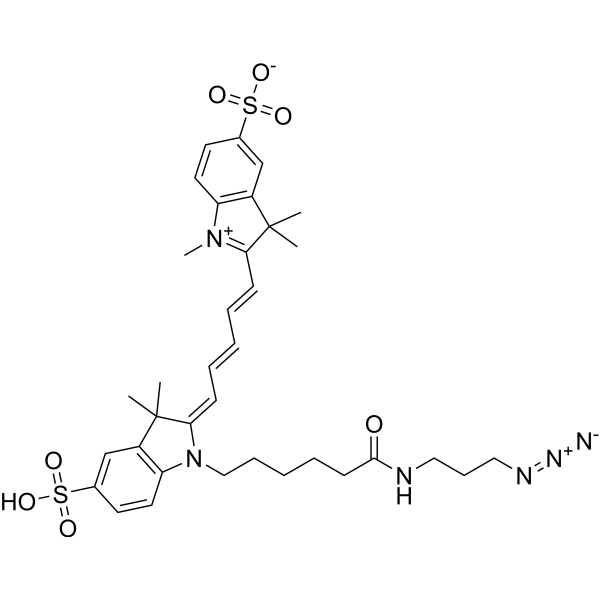
Cy5-PEG2000-SH is a fluorescent labeling reagent that combines Cy5 (HY-D0821) fluorescent dye, polyethylene glycol (PEG) and sulfhydryl (SH) derivatives, and is suitable for molecular coupling. SH is highly reactive and can react with a variety of functional groups (such as maleimide) to form stable thioether bonds.
|
-
-
- HY-D2448
-
|
|
Fluorescent Dye
|
Cancer
|
|
Cy3-PEG-Thiol (Cy3-PEG-SH) is a near infrared fluorescent labeling reagent that combines Cy3 fluorescent dye, polyethylene glycol (PEG) and sulfhydryl (SH) polyethylene glycol derivatives, and is suitable for molecular coupling. Cy3-PEG-Thiol is absorbed at 550nm and has high solubility and end-group substitution rate .
|
-
-
- HY-32746
-
|
|
Biochemical Assay Reagents
|
Others
|
|
5-Bromo-2-fluoropyridine is a biochemical reagent that can be used as a biological material or organic compound for life science related research. 5-Bromo-2-fluoropyridine easily reacts with amines to synthesize halogenated pyridine and pyrimidine. 5-Bromo-2-fluoropyridine can be used as a model substrate to explore their efficiency and selectivity through successive SNAr substitution reactions and transition-metal-catalyzed cross-coupling reaction without an intervening purification step .
|
-
-
- HY-151715
-
|
|
Biochemical Assay Reagents
|
Others
|
|
N3-D-Dap(Fmoc)-OH is a click chemistry reagent. N3-D-Dap(Fmoc)-OH can be used as a component for coupling by click reaction and as an orthogonally protected diaminocarboxylic acid derivative. N3-D-Dap(Fmoc)-OH contains an azide group and can undergo copper-catalyzed azide-alkyne cycloaddition (CuAAc) with molecules containing alkyne groups. N3-D-Dap(Fmoc)-OH can also undergo ring strain-promoted alkyne-azide cycloaddition (SPAAC) with molecules containing DBCO or BCN groups .
|
-
-
- HY-W013598
-
|
|
Biochemical Assay Reagents
|
Others
|
|
Sodium benzenesulfinate is a reagent used in organic synthesis to create other compounds, such as sulfones. Sodium benzenesulfinate undergoes rhodium-catalyzed desulfinative coupling with aldehydes to yield ketones .
|
-
-
- HY-P3430
-
|
|
Biochemical Assay Reagents
|
Cancer
|
|
JM3A is a highly specific peptoid reagent that targets newly appears cell surface vimentin (CSV) on tumor-transformed early lung cancer cells. JM3A can detect and stain CSV by coupling with fluorophores .
|
-
-
- HY-23926
-
|
|
Fluorescent Dye
|
Others
|
|
PYBG acts as a versatile precursor to be facilely conjugated with various fluorescent dyes through ‘Click chemistry’ and Sonogashira coupling reactions . PYBG is a click chemistry reagent, it contains an Alkyne group and can undergo copper-catalyzed azide-alkyne cycloaddition (CuAAc) with molecules containing Azide groups.
|
-
-
- HY-W002801
-
|
|
Biochemical Assay Reagents
|
Others
|
|
2-Benzyloxyphenylboronic acid is a biochemical reagent that can be used as a biological material or organic compound for life science related research. 2-Benzyloxyphenylboronic acid is also a substrate used in asymmetric Suzuki coupling reactions. 2-Benzyloxyphenylboronic acid can be utilized in the synthesis of other active compounds .
|
-
-
- HY-D2531
-
|
|
Fluorescent Dye
|
Others
|
|
Cy5-PEG5000-SH is a fluorescent labeling reagent that combines Cy5 (HY-D0821) fluorescent dye, polyethylene glycol (PEG) and sulfhydryl (SH) derivatives, and is suitable for molecular coupling. SH is highly reactive and can react with a variety of functional groups (such as maleimide) to form stable thioether bonds.
|
-
-
- HY-D2556
-
|
|
Fluorescent Dye
|
Others
|
|
Cy5.5-PEG1000-SH is a fluorescent labeling reagent that combines Cy5.5 (HY-D0924) fluorescent dye, polyethylene glycol (PEG) and sulfhydryl (SH) derivatives, and is suitable for molecular coupling. SH is highly reactive and can react with a variety of functional groups (such as maleimide) to form stable thioether bonds.
|
-
-
- HY-151637
-
|
|
Amino Acid Derivatives
|
Others
|
|
Fmoc-N-propargyl-MPBA is a propargyl-substituted MPBA linker derived from 4-hydroxy-3-methoxybenzaldehyde. Fmoc-N-propargyl-MPBA can be elongated using standard Fmoc-based solid phase chemistry and linked to supports by standard coupling procedures . Fmoc-N-propargyl-MPBA is a click chemistry reagent, it contains an Alkyne group and can undergo copper-catalyzed azide-alkyne cycloaddition (CuAAc) with molecules containing Azide groups.
|
-
-
- HY-79880R
-
|
1,1'-Carbonyldiimidazole (Standard)
|
Biochemical Assay Reagents
Reference Standards
|
Others
|
|
N,N'-Carbonyldiimidazole (Standard) (1,1'-Carbonyldiimidazole (Standard)) is the analytical standard of N,N'-Carbonyldiimidazole (HY-79880). This product is intended for research and analytical applications. N,N'-Carbonyldiimidazole (1,1'-Carbonyldiimidazole) is a highly reactive carboxylating reagent that can activate hydroxyl groups to form reactive carbonyl groups. N,N'-Carbonyldiimidazole can be used as a coupling agent and a peptide synthesis reagent .
|
-
-
- HY-D2532
-
|
|
Fluorescent Dye
|
Others
|
|
Cy5-PEG10000-SH is a fluorescent labeling reagent that combines Cy5 (HY-D0821) fluorescent dye, polyethylene glycol (PEG) and sulfhydryl (SH) derivatives, and is suitable for molecular coupling. SH is highly reactive and can react with a variety of functional groups (such as maleimide) to form stable thioether bonds.
|
-
-
- HY-D2589
-
|
|
Fluorescent Dye
|
Others
|
|
Cy7.5 PEG-SH is a fluorescent labeling reagent that combines CY7.5 (HY-D0926) fluorescent dye, polyethylene glycol (PEG) and sulfhydryl (SH) derivatives, and is suitable for molecular coupling. SH is highly reactive and can react with a variety of functional groups (such as maleimide) to form stable thioether bonds (Ex/Em = 770/820 nm).
|
-
-
- HY-D2510
-
|
|
Fluorescent Dye
|
Cancer
|
|
Cy3-PEG2000-SH (Cy3-PEG-Thiol) is a near infrared fluorescent labeling reagent that combines Cy3 fluorescent dye, polyethylene glycol (PEG) and sulfhydryl (SH) polyethylene glycol derivatives, and is suitable for molecular coupling. Cy3-PEG2000-SH is absorbed at 550nm and has high solubility and end-group substitution rate .
|
-
-
- HY-157921
-
|
20-(9-Mercaptononyl)-3,6,9,12,15,18-hexaoxaeicosane-1-amine, hydrochloride
|
Biochemical Assay Reagents
|
Others
|
|
Amino-EG6-undecanethiol hydrochloride is a biochemical assay reagent, and can be used as a linker through amide coupling .
|
-
-
- HY-P10162
-
|
|
Caspase
|
Cancer
|
|
Ac-DMQD-AMC is an inhibitor of caspase-3. Ac-DMQD-AMC is an aromatic amine using aminium-based coupling reagent HATU in the presence of 2,4,6-trimethylpyridine (TMP) .
|
-
-
- HY-120286
-
|
|
Drug Intermediate
|
Others
|
|
K-13 is a cyclic peptide compound synthesized by a specific organozinc reagent. Its synthesis process involves intermolecular and intramolecular Negishi cross-coupling reactions and is one of the shortest routes reported for the synthesis of such cyclic peptides.
|
-
-
- HY-W800846
-
|
|
Biochemical Assay Reagents
|
Others
|
|
Fmoc-Amido-Tri-(carboxyethoxymethyl)-methane is a multifunctional reagent containing three carboxylic acids and a primary amine that is Fmoc-protected. The carboxylic acids can react with primary amine groups to form stable amide bonds. The Fmoc protecting group can be removed using piperidine, freeing up the amine for a variety of uses such as coupling with carboxylic acids to form amide bonds.
|
-
-
- HY-D2509
-
|
|
Fluorescent Dye
|
Others
|
|
Cy3-PEG1000-SH is a fluorescent labeling reagent that combines Cy3 (HY-D0822) fluorescent dye, polyethylene glycol (PEG) and sulfhydryl (SH) derivatives, and is suitable for molecular coupling. SH is highly reactive and can react with a variety of functional groups (such as maleimide) to form stable thioether bonds .
|
-
-
- HY-D2513
-
|
|
Fluorescent Dye
|
Cancer
|
|
Cy3-PEG10000-SH (Cy3-PEG-Thiol) is a near infrared fluorescent labeling reagent that combines Cy3 fluorescent dye, polyethylene glycol (PEG) and sulfhydryl (SH) polyethylene glycol derivatives, and is suitable for molecular coupling. Cy3-PEG10000-SH is absorbed at 550nm and has high solubility and end-group substitution rate .
|
-
-
- HY-D2511
-
|
|
Fluorescent Dye
|
Cancer
|
|
Cy3-PEG3400-SH (Cy3-PEG-Thiol) is a near infrared fluorescent labeling reagent that combines Cy3 fluorescent dye, polyethylene glycol (PEG) and sulfhydryl (SH) polyethylene glycol derivatives, and is suitable for molecular coupling. Cy3-PEG3400-SH is absorbed at 550nm and has high solubility and end-group substitution rate .
|
-
-
- HY-W016618R
-
|
Ethyl benzoylformate (Standard); Phenylglyoxylic acid ethyl ester (Standard)
|
Drug Intermediate
Reference Standards
Biochemical Assay Reagents
Carboxylesterase (CES)
|
Others
|
|
Ethyl phenylglyoxylate (Ethyl benzoylformate) (Standard) is the analytical standard of Ethyl phenylglyoxylate (HY-W016618). This product is intended for research and analytical applications. Ethyl phenylglyoxylate (Ethyl benzoylformate), the ethyl ester of phenylglyoxylic acid, is used as a synthetic reagent. Ethyl phenylglyoxylate is also a poor substrate but a potent inhibitor of chicken liver carboxylesterase. Additionally, Ethyl phenylglyoxylate exhibits photoreactivity, where its excited triplet carbonyl can initiate intermolecular hydrogen abstraction, radical coupling and cross-linking reactions .
|
-
-
- HY-W701476
-
|
Ethyl benzoylformate-d5; Phenylglyoxylic acid ethyl ester-d5
|
Isotope-Labeled Compounds
Biochemical Assay Reagents
Drug Intermediate
Carboxylesterase (CES)
|
Others
|
|
Ethyl phenylglyoxylate-d5 (Ethyl benzoylformate-d5; Phenylglyoxylic acid ethyl ester-d5) is the deuterium labeled Ethyl phenylglyoxylate (HY-W016618). Ethyl phenylglyoxylate (Ethyl benzoylformate), the ethyl ester of phenylglyoxylic acid, is used as a synthetic reagent. Ethyl phenylglyoxylate is also a poor substrate but a potent inhibitor of chicken liver carboxylesterase. Additionally, Ethyl phenylglyoxylate exhibits photoreactivity, where its excited triplet carbonyl can initiate intermolecular hydrogen abstraction, radical coupling and cross-linking reactions .
|
-
-
- HY-D2747
-
|
|
Fluorescent Dye
|
Others
|
|
BP Fluor 405 acid is a water-soluble, blue-fluorescent dye that is often used in multi-color applications, including flow cytometry and super-resolution microscopy using STORM. Its excitation is ideally suited for the 407 nm spectral line of the krypton laser or the 408 nm violet laser diode. BP Fluor 405 conjugates are pH-insensitive from pH 4 to pH 10.
The carboxylic acid of BP Fluor 405 is a reagent of choice for the preparation of custom activated esters that often are not commercially available. Examples of such activated esters include sulfo-NHS, TFP (2,3,5,6-Tetrafluorophenol), and STP (4-Sulfo-2,3,5,6-Tetrafluorophenol, Sodium Salt). Another common application for the non-activated carboxylic acid is peptide modification during solid phase synthesis, which usually requires in-situ activation with peptide coupling regents, e.g. HATU. BP Fluor 405 acid is also often used for control experiments, and for calibration.
|
-
- HY-W800650
-
|
|
Biochemical Assay Reagents
|
Others
|
|
Aminooxy-PEG1-amine is a chemical reagent containing an aminooxy group and a primary amine. The aminooxy group is reactive with an aldehyde to form an oxime bond. If a reductant is used, it will form a hydroxylamine linkage. The amino group is reactive withactivated NHS esters, or carboxylic acid in the presence of coupling reagent EDC. Aminooxy compounds are very reactive and sensitive; they cannot be stored for long term.
|
-
- HY-D3049
-
|
|
Fluorescent Dye
|
Others
|
|
5(6)-carbonylated rhodamine 110 NHS ester is a reactive ester fluorescent reagent based on 5(6)-carbonylated rhodamine 110. NHS ester is a highly reactive ester capable of covalently coupling with primary amine groups in molecules such as proteins, peptides, amino sugars, and nucleic acids to form stable amide bonds (Ex/Em = 502/527 nm).
|
-
- HY-D2530
-
|
|
Fluorescent Dye
|
Others
|
|
Cy5-PEG3400-SH is a fluorescent labeling reagent that combines Cy5 (HY-D0821) fluorescent dye, polyethylene glycol (PEG) and sulfhydryl (SH) derivatives, and is suitable for molecular coupling. SH is highly reactive and can react with a variety of functional groups (such as maleimide) to form stable thioether bonds.
|
-
- HY-D3050
-
|
|
Fluorescent Dye
|
Others
|
|
5(6)-carbonylated rhodamine 110 X NHS ester is a reactive ester fluorescent reagent based on 5(6)-carbonylated rhodamine 110 X. NHS ester is a highly reactive ester capable of covalently coupling with primary amine groups in molecules such as proteins, peptides, amino sugars, and nucleic acids to form stable amide bonds (Ex/Em = 496/522 nm).
|
-
- HY-D3053
-
|
|
Fluorescent Dye
|
Others
|
|
5(6)-Rhodamine 6G NHS ester is a reactive ester fluorescent reagent based on Rhodamine 6G (HY-D0309). NHS ester is a highly reactive ester capable of covalently coupling with primary amine groups in molecules such as proteins, peptides, amino sugars, and nucleic acids to form stable amide bonds (Ex/Em = 526/547 nm).
|
-
- HY-D2512
-
|
|
Fluorescent Dye
|
Others
|
|
Cy3-PEG5000-SH is a fluorescent labeling reagent that combines Cy3 (HY-D0822) fluorescent dye, polyethylene glycol (PEG) and sulfhydryl (SH) derivatives, and is suitable for molecular coupling. SH is highly reactive and can react with a variety of functional groups (such as maleimide) to form stable thioether bonds .
|
-
- HY-D2557
-
|
|
Fluorescent Dye
|
Others
|
|
Cy5.5-PEG3400-SH is a fluorescent labeling reagent that combines Cy5.5 (HY-D0924) fluorescent dye, polyethylene glycol (PEG) and sulfhydryl (SH) derivatives, and is suitable for molecular coupling. SH is highly reactive and can react with a variety of functional groups (such as maleimide) to form stable thioether bonds.
|
-
- HY-D2559
-
|
|
Fluorescent Dye
|
Others
|
|
Cy5.5-PEG10000-SH is a fluorescent labeling reagent that combines Cy5.5 (HY-D0924) fluorescent dye, polyethylene glycol (PEG) and sulfhydryl (SH) derivatives, and is suitable for molecular coupling. SH is highly reactive and can react with a variety of functional groups (such as maleimide) to form stable thioether bonds.
|
-
- HY-D2558
-
|
|
Fluorescent Dye
|
Others
|
|
Cy5.5-PEG5000-SH is a fluorescent labeling reagent that combines Cy5.5 (HY-D0924) fluorescent dye, polyethylene glycol (PEG) and sulfhydryl (SH) derivatives, and is suitable for molecular coupling. SH is highly reactive and can react with a variety of functional groups (such as maleimide) to form stable thioether bonds.
|
-
| Cat. No. |
Product Name |
Type |
-
- HY-D2171A
-
|
|
Fluorescent Dyes
|
|
AF488 DBCO ditriethylamineis a fluorescent dye and also a click chemistry reagent that can label azide-containing biomolecules. AF488 DBCO ditriethylaminemediates the coupling reaction with azide-modified 2'-OMe RNA oligonucleotides. DBCO is a bioorthogonal partner of azides and enables covalent coupling without copper (Ex/Em = 470/520 nm) .
|
-
- HY-D2171
-
|
|
Fluorescent Dyes
|
|
AF488 DBCO is a fluorescent dye and also a click chemistry reagent that can label azide-containing biomolecules. AF488 DBCO mediates the coupling reaction with azide-modified 2'-OMe RNA oligonucleotides. DBCO is a bioorthogonal partner of azides and enables covalent coupling without copper (Ex/Em = 470/520 nm) .
|
-
- HY-W011618
-
|
|
Fluorescent Dyes
|
|
N-(9-Acridinyl)maleimide is a maleimide type fluorescent thiol reagent. N-(9-Acridinyl)maleimide shows no substantial fluorescence but its coupling products with thiol compounds exhibit strong blue fluorescence. N-(9-Acridinyl)maleimide is used for fluorometrical analysis of cysteine and glutathione .
|
-
- HY-D2529
-
|
|
Fluorescent Dyes
|
|
Cy5-PEG2000-SH is a fluorescent labeling reagent that combines Cy5 (HY-D0821) fluorescent dye, polyethylene glycol (PEG) and sulfhydryl (SH) derivatives, and is suitable for molecular coupling. SH is highly reactive and can react with a variety of functional groups (such as maleimide) to form stable thioether bonds.
|
-
- HY-D2448
-
|
|
Fluorescent Dyes
|
|
Cy3-PEG-Thiol (Cy3-PEG-SH) is a near infrared fluorescent labeling reagent that combines Cy3 fluorescent dye, polyethylene glycol (PEG) and sulfhydryl (SH) polyethylene glycol derivatives, and is suitable for molecular coupling. Cy3-PEG-Thiol is absorbed at 550nm and has high solubility and end-group substitution rate .
|
-
- HY-D2531
-
|
|
Fluorescent Dyes
|
|
Cy5-PEG5000-SH is a fluorescent labeling reagent that combines Cy5 (HY-D0821) fluorescent dye, polyethylene glycol (PEG) and sulfhydryl (SH) derivatives, and is suitable for molecular coupling. SH is highly reactive and can react with a variety of functional groups (such as maleimide) to form stable thioether bonds.
|
-
- HY-D2556
-
|
|
Fluorescent Dyes
|
|
Cy5.5-PEG1000-SH is a fluorescent labeling reagent that combines Cy5.5 (HY-D0924) fluorescent dye, polyethylene glycol (PEG) and sulfhydryl (SH) derivatives, and is suitable for molecular coupling. SH is highly reactive and can react with a variety of functional groups (such as maleimide) to form stable thioether bonds.
|
-
- HY-D2532
-
|
|
Fluorescent Dyes
|
|
Cy5-PEG10000-SH is a fluorescent labeling reagent that combines Cy5 (HY-D0821) fluorescent dye, polyethylene glycol (PEG) and sulfhydryl (SH) derivatives, and is suitable for molecular coupling. SH is highly reactive and can react with a variety of functional groups (such as maleimide) to form stable thioether bonds.
|
-
- HY-D2589
-
|
|
Fluorescent Dyes
|
|
Cy7.5 PEG-SH is a fluorescent labeling reagent that combines CY7.5 (HY-D0926) fluorescent dye, polyethylene glycol (PEG) and sulfhydryl (SH) derivatives, and is suitable for molecular coupling. SH is highly reactive and can react with a variety of functional groups (such as maleimide) to form stable thioether bonds (Ex/Em = 770/820 nm).
|
-
- HY-D2510
-
|
|
Fluorescent Dyes
|
|
Cy3-PEG2000-SH (Cy3-PEG-Thiol) is a near infrared fluorescent labeling reagent that combines Cy3 fluorescent dye, polyethylene glycol (PEG) and sulfhydryl (SH) polyethylene glycol derivatives, and is suitable for molecular coupling. Cy3-PEG2000-SH is absorbed at 550nm and has high solubility and end-group substitution rate .
|
-
- HY-D2509
-
|
|
Fluorescent Dyes
|
|
Cy3-PEG1000-SH is a fluorescent labeling reagent that combines Cy3 (HY-D0822) fluorescent dye, polyethylene glycol (PEG) and sulfhydryl (SH) derivatives, and is suitable for molecular coupling. SH is highly reactive and can react with a variety of functional groups (such as maleimide) to form stable thioether bonds .
|
-
- HY-D2513
-
|
|
Fluorescent Dyes
|
|
Cy3-PEG10000-SH (Cy3-PEG-Thiol) is a near infrared fluorescent labeling reagent that combines Cy3 fluorescent dye, polyethylene glycol (PEG) and sulfhydryl (SH) polyethylene glycol derivatives, and is suitable for molecular coupling. Cy3-PEG10000-SH is absorbed at 550nm and has high solubility and end-group substitution rate .
|
-
- HY-D2511
-
|
|
Fluorescent Dyes
|
|
Cy3-PEG3400-SH (Cy3-PEG-Thiol) is a near infrared fluorescent labeling reagent that combines Cy3 fluorescent dye, polyethylene glycol (PEG) and sulfhydryl (SH) polyethylene glycol derivatives, and is suitable for molecular coupling. Cy3-PEG3400-SH is absorbed at 550nm and has high solubility and end-group substitution rate .
|
-
- HY-D2747
-
|
|
Fluorescent Dyes
|
|
BP Fluor 405 acid is a water-soluble, blue-fluorescent dye that is often used in multi-color applications, including flow cytometry and super-resolution microscopy using STORM. Its excitation is ideally suited for the 407 nm spectral line of the krypton laser or the 408 nm violet laser diode. BP Fluor 405 conjugates are pH-insensitive from pH 4 to pH 10.
The carboxylic acid of BP Fluor 405 is a reagent of choice for the preparation of custom activated esters that often are not commercially available. Examples of such activated esters include sulfo-NHS, TFP (2,3,5,6-Tetrafluorophenol), and STP (4-Sulfo-2,3,5,6-Tetrafluorophenol, Sodium Salt). Another common application for the non-activated carboxylic acid is peptide modification during solid phase synthesis, which usually requires in-situ activation with peptide coupling regents, e.g. HATU. BP Fluor 405 acid is also often used for control experiments, and for calibration.
|
-
- HY-D3049
-
|
|
Fluorescent Dyes
|
|
5(6)-carbonylated rhodamine 110 NHS ester is a reactive ester fluorescent reagent based on 5(6)-carbonylated rhodamine 110. NHS ester is a highly reactive ester capable of covalently coupling with primary amine groups in molecules such as proteins, peptides, amino sugars, and nucleic acids to form stable amide bonds (Ex/Em = 502/527 nm).
|
-
- HY-D2530
-
|
|
Fluorescent Dyes
|
|
Cy5-PEG3400-SH is a fluorescent labeling reagent that combines Cy5 (HY-D0821) fluorescent dye, polyethylene glycol (PEG) and sulfhydryl (SH) derivatives, and is suitable for molecular coupling. SH is highly reactive and can react with a variety of functional groups (such as maleimide) to form stable thioether bonds.
|
-
- HY-D3050
-
|
|
Fluorescent Dyes
|
|
5(6)-carbonylated rhodamine 110 X NHS ester is a reactive ester fluorescent reagent based on 5(6)-carbonylated rhodamine 110 X. NHS ester is a highly reactive ester capable of covalently coupling with primary amine groups in molecules such as proteins, peptides, amino sugars, and nucleic acids to form stable amide bonds (Ex/Em = 496/522 nm).
|
-
- HY-D3053
-
|
|
Fluorescent Dyes
|
|
5(6)-Rhodamine 6G NHS ester is a reactive ester fluorescent reagent based on Rhodamine 6G (HY-D0309). NHS ester is a highly reactive ester capable of covalently coupling with primary amine groups in molecules such as proteins, peptides, amino sugars, and nucleic acids to form stable amide bonds (Ex/Em = 526/547 nm).
|
-
- HY-D2512
-
|
|
Fluorescent Dyes
|
|
Cy3-PEG5000-SH is a fluorescent labeling reagent that combines Cy3 (HY-D0822) fluorescent dye, polyethylene glycol (PEG) and sulfhydryl (SH) derivatives, and is suitable for molecular coupling. SH is highly reactive and can react with a variety of functional groups (such as maleimide) to form stable thioether bonds .
|
-
- HY-D2557
-
|
|
Fluorescent Dyes
|
|
Cy5.5-PEG3400-SH is a fluorescent labeling reagent that combines Cy5.5 (HY-D0924) fluorescent dye, polyethylene glycol (PEG) and sulfhydryl (SH) derivatives, and is suitable for molecular coupling. SH is highly reactive and can react with a variety of functional groups (such as maleimide) to form stable thioether bonds.
|
-
- HY-D2559
-
|
|
Fluorescent Dyes
|
|
Cy5.5-PEG10000-SH is a fluorescent labeling reagent that combines Cy5.5 (HY-D0924) fluorescent dye, polyethylene glycol (PEG) and sulfhydryl (SH) derivatives, and is suitable for molecular coupling. SH is highly reactive and can react with a variety of functional groups (such as maleimide) to form stable thioether bonds.
|
-
- HY-D2558
-
|
|
Fluorescent Dyes
|
|
Cy5.5-PEG5000-SH is a fluorescent labeling reagent that combines Cy5.5 (HY-D0924) fluorescent dye, polyethylene glycol (PEG) and sulfhydryl (SH) derivatives, and is suitable for molecular coupling. SH is highly reactive and can react with a variety of functional groups (such as maleimide) to form stable thioether bonds.
|
| Cat. No. |
Product Name |
Type |
-
- HY-W111141
-
|
endo-9-Hydroxymethylbicyclo[6.1.0]non-4-yne
|
Biochemical Assay Reagents
|
|
BCN-OH (endo-9-Hydroxymethylbicyclo[6.1.0]non-4-yne) is an alcohol functionalized cyclooctyne derivative. BCN-OH can act as a raw material for synthesizing other probes (such as BCN-TPP). BCN-OH is used to construct targeted probes by coupling with carboxyl-containing compounds (such as TPP-COOH). BCN-OH can be used as control reagent for BCN-TPP .
|
-
- HY-W011556
-
|
TCFH
|
Biochemical Assay Reagents
|
|
N,N,N',N'-Tetramethylchloroformamidinium hexafluorophosphate (TCFH) is a powerful coupling and derivatizing reagent for ester prodrug synthesis. N,N,N',N'-Tetramethylchloroformamidinium hexafluorophosphate can be used for antitumor drugs before medicine research .
|
-
- HY-D0177
-
|
Benzotriazole-1-yl-oxytripyrrolidinophosphonium hexafluorophosphate
|
Biochemical Assay Reagents
|
|
(Benzotriazol-1-yloxy)tripyrrolidinophosphonium hexafluorophosphate (Benzotriazole-1-yl-oxytripyrrolidinophosphonium hexafluorophosphate) is a peptide coupling reagent and BOP analog. (Benzotriazol-1-yloxy)tripyrrolidinophosphonium hexafluorophosphate promotes the reaction of amino and carboxyl groups to form peptide bonds. (Benzotriazol-1-yloxy)tripyrrolidinophosphonium hexafluorophosphate can be used in the synthesis of peptide compounds .
|
-
- HY-Y0973
-
|
|
Biochemical Assay Reagents
|
|
BOP hexafluorophosphate is a phosphonium-type condensing agent. BOP hexafluorophosphate activates the carboxylic acid component to form a highly reactive O-benzotriazole ester (active ester) intermediate, which then reacts with the amino component to form an amide bond (peptide bond). BOP hexafluorophosphate is applicable to solid-phase polypeptide synthesis and nucleoside modification .
|
-
- HY-32951
-
|
|
Biochemical Assay Reagents
|
|
2-Fluoropyridine-4-boronic acid is a coupling reagent and chemical intermediate. 2-Fluoropyridine-4-boronic acid facilitates the synthesis of Rho kinase (ROCK) inhibitor Compound 37 .
|
-
- HY-W011412
-
|
|
Biochemical Assay Reagents
|
|
TSTU is used as a coupling reagent in peptide chemistry. TSTU can convert carboxylic acids into the corresponding N-hydroxysuccinimidyl (NHS) esters. TSTU can be applied to the attachment of labels to peptides, proteins, etc .
|
-
- HY-W002570
-
|
|
Biochemical Assay Reagents
|
|
2-Naphthylboronic acid is a biochemical reagent that can be used as a biological material or organic compound for life science related research. 2-Naphthylboronic acid can undergo silylation reaction. 2-Naphthylboronic acid also readily undergo Suzuki-Miyaura cross-coupling .
|
-
- HY-Y0549
-
|
Diphenylmethane-α-carboxylic Acid
|
Biochemical Assay Reagents
|
|
Diphenylacetic acid (Diphenylmethane-α-carboxylic Acid) is a biochemical reagent that can be used as a biological material or organic compound for life science related research. Diphenylacetic acid can be used as a reagent in the kinetic resolution of racemic 2-hydroxy-y-butyrolactones by asymmetric esterification in the presence of pivalic anhydride and chiral acyl-transfer catalyst. Diphenylacetic acid can act as a catalyst to synthesize 2-allyl-3-oxazolin-5-one derivatives via Rh-catalyzed coupling reaction of azlactones and alkynes followed by aza-Cope rearrangement .
|
-
- HY-75129
-
|
|
Biochemical Assay Reagents
|
|
Pyridin-3-ylboronic acid is an organic compound. Pyridin-3-ylboronic acid is a key reagent in the Suzuki-Miyaura cross-coupling reaction. Pyridin-3-ylboronic acid is used in organic synthesis to construct oligopyridine compounds, and then as an α-helix mimetic to study protein-protein interactions .
|
-
- HY-32746
-
|
|
Biochemical Assay Reagents
|
|
5-Bromo-2-fluoropyridine is a biochemical reagent that can be used as a biological material or organic compound for life science related research. 5-Bromo-2-fluoropyridine easily reacts with amines to synthesize halogenated pyridine and pyrimidine. 5-Bromo-2-fluoropyridine can be used as a model substrate to explore their efficiency and selectivity through successive SNAr substitution reactions and transition-metal-catalyzed cross-coupling reaction without an intervening purification step .
|
-
- HY-W013598
-
|
|
Biochemical Assay Reagents
|
|
Sodium benzenesulfinate is a reagent used in organic synthesis to create other compounds, such as sulfones. Sodium benzenesulfinate undergoes rhodium-catalyzed desulfinative coupling with aldehydes to yield ketones .
|
-
- HY-W002801
-
|
|
Biochemical Assay Reagents
|
|
2-Benzyloxyphenylboronic acid is a biochemical reagent that can be used as a biological material or organic compound for life science related research. 2-Benzyloxyphenylboronic acid is also a substrate used in asymmetric Suzuki coupling reactions. 2-Benzyloxyphenylboronic acid can be utilized in the synthesis of other active compounds .
|
-
- HY-157921
-
|
20-(9-Mercaptononyl)-3,6,9,12,15,18-hexaoxaeicosane-1-amine, hydrochloride
|
Biochemical Assay Reagents
|
|
Amino-EG6-undecanethiol hydrochloride is a biochemical assay reagent, and can be used as a linker through amide coupling .
|
| Cat. No. |
Product Name |
Target |
Research Area |
-
- HY-41121
-
|
Boc-Ala-OH
|
Amino Acid Derivatives
|
Cancer
|
|
Boc-L-Ala-OH (Boc-Ala-OH) is a single N-protected amino acid ligand and a protected L-alanine derivative. Boc-L-Ala-OH promotes Pd (II)-catalyzed enantioselective C-H alkenylation and kinetic resolution. Boc-L-Ala-OH serves as a coupling reagent for the synthesis of liver-targeted glycogen phosphorylase inhibitors and P6A metabolites, and also acts as a negative control in synthesis studies of betulinic acid amino acid esters. Boc-L-Ala-OH is applicable to research on epidermoid squamous cell carcinoma .
|
-
- HY-P3430
-
|
|
Biochemical Assay Reagents
|
Cancer
|
|
JM3A is a highly specific peptoid reagent that targets newly appears cell surface vimentin (CSV) on tumor-transformed early lung cancer cells. JM3A can detect and stain CSV by coupling with fluorophores .
|
-
- HY-P10162
-
|
|
Caspase
|
Cancer
|
|
Ac-DMQD-AMC is an inhibitor of caspase-3. Ac-DMQD-AMC is an aromatic amine using aminium-based coupling reagent HATU in the presence of 2,4,6-trimethylpyridine (TMP) .
|
| Cat. No. |
Product Name |
Category |
Target |
Chemical Structure |
| Cat. No. |
Product Name |
Chemical Structure |
-
- HY-W701476
-
|
|
|
Ethyl phenylglyoxylate-d5 (Ethyl benzoylformate-d5; Phenylglyoxylic acid ethyl ester-d5) is the deuterium labeled Ethyl phenylglyoxylate (HY-W016618). Ethyl phenylglyoxylate (Ethyl benzoylformate), the ethyl ester of phenylglyoxylic acid, is used as a synthetic reagent. Ethyl phenylglyoxylate is also a poor substrate but a potent inhibitor of chicken liver carboxylesterase. Additionally, Ethyl phenylglyoxylate exhibits photoreactivity, where its excited triplet carbonyl can initiate intermolecular hydrogen abstraction, radical coupling and cross-linking reactions .
|
-
| Cat. No. |
Product Name |
|
Classification |
-
- HY-147363
-
|
|
|
DBCO
ADC Synthesis
|
|
DIBAC-GGFG-NH2CH2-Dxd (compound LP4), a Camptothecin (HY-16560) derivative, is a linker-payload of protein-agent conjugates . Dxd (HY-13631D) can be used as a payload for the antibody-coupling drug ADC (DS-8201a).DIBAC-GGFG-NH2CH2-Dxd is a click chemistry reagent, it contains a DBCO group that can undergo strain-promoted alkyne-azide cycloaddition (SPAAC) with molecules containing Azide groups .
|
-
- HY-D2171A
-
|
|
|
DBCO
|
|
AF488 DBCO ditriethylamineis a fluorescent dye and also a click chemistry reagent that can label azide-containing biomolecules. AF488 DBCO ditriethylaminemediates the coupling reaction with azide-modified 2'-OMe RNA oligonucleotides. DBCO is a bioorthogonal partner of azides and enables covalent coupling without copper (Ex/Em = 470/520 nm) .
|
-
- HY-151817
-
|
|
|
Azide
|
|
5-Azidomethyl-uridine is a click chemistry reagent containing an azide group. The azide function is widely used for coupling to alkyne-containing fragments via the renowned Click reaction.
|
-
- HY-101532
-
|
β-CDN3; 6A-deoxy-6A-azido-β-cyclodextrin
|
|
Azide
|
|
6A-Azido-6A-deoxy-β-cyclodextrin (β-CDN3) is a site-specifically modified β-cyclodextrin with a single azido group replacing the hydroxyl group at the C6 position. 6A-Azido-6A-deoxy-β-cyclodextrin forms a host-guest inclusion complex with Dexamethasone (HY-14648), localizing the drug within its hydrophobic cavity, which restricts the rotational mobility of the drug and places Dexamethasone in a less polar environment. 6A-Azido-6A-deoxy-β-cyclodextrin acts as a coupling agent to graft β-cyclodextrin onto thermosensitive nanogels via strain-promoted alkyne-azide cycloaddition (SPAAC). 6A-Azido-6A-deoxy-β-cyclodextrin also serves as a click chemistry reagent. It contains an azide group and undergoes copper-catalyzed azide-alkyne cycloaddition (CuAAc) with molecules bearing an alkyne group. It also undergoes strain-driven alkyne-azide cycloaddition (SPAAC) with molecules containing DBCO or BCN groups .
|
-
- HY-D2171
-
|
|
|
DBCO
|
|
AF488 DBCO is a fluorescent dye and also a click chemistry reagent that can label azide-containing biomolecules. AF488 DBCO mediates the coupling reaction with azide-modified 2'-OMe RNA oligonucleotides. DBCO is a bioorthogonal partner of azides and enables covalent coupling without copper (Ex/Em = 470/520 nm) .
|
-
- HY-151715
-
|
|
|
Azide
|
|
N3-D-Dap(Fmoc)-OH is a click chemistry reagent. N3-D-Dap(Fmoc)-OH can be used as a component for coupling by click reaction and as an orthogonally protected diaminocarboxylic acid derivative. N3-D-Dap(Fmoc)-OH contains an azide group and can undergo copper-catalyzed azide-alkyne cycloaddition (CuAAc) with molecules containing alkyne groups. N3-D-Dap(Fmoc)-OH can also undergo ring strain-promoted alkyne-azide cycloaddition (SPAAC) with molecules containing DBCO or BCN groups .
|
-
- HY-23926
-
|
|
|
Alkynes
|
|
PYBG acts as a versatile precursor to be facilely conjugated with various fluorescent dyes through ‘Click chemistry’ and Sonogashira coupling reactions . PYBG is a click chemistry reagent, it contains an Alkyne group and can undergo copper-catalyzed azide-alkyne cycloaddition (CuAAc) with molecules containing Azide groups.
|
-
- HY-151637
-
|
|
|
Alkynes
|
|
Fmoc-N-propargyl-MPBA is a propargyl-substituted MPBA linker derived from 4-hydroxy-3-methoxybenzaldehyde. Fmoc-N-propargyl-MPBA can be elongated using standard Fmoc-based solid phase chemistry and linked to supports by standard coupling procedures . Fmoc-N-propargyl-MPBA is a click chemistry reagent, it contains an Alkyne group and can undergo copper-catalyzed azide-alkyne cycloaddition (CuAAc) with molecules containing Azide groups.
|
| Cat. No. |
Product Name |
|
Classification |
-
- HY-151817
-
|
|
|
Nucleoside Analogs
Uridine
|
|
5-Azidomethyl-uridine is a click chemistry reagent containing an azide group. The azide function is widely used for coupling to alkyne-containing fragments via the renowned Click reaction.
|
Your information is safe with us. * Required Fields.
Inquiry Information
- Product Name:
- Cat. No.:
- Quantity:
- MCE Japan Authorized Agent:

