1. Search Result
Search Result
Results for "

factor B

" in MedChemExpress (MCE) Product Catalog:

245

Inhibitors & Agonists

3

Screening Libraries

1

Fluorescent Dye

3

Biochemical Assay Reagents

20

Peptides

23

Inhibitory Antibodies

54

Natural
Products

190

Recombinant Proteins

14

Isotope-Labeled Compounds

172

Antibodies

22

Oligonucleotides

1

GMP Molecules

Cat. No. Product Name Target Research Areas Chemical Structure
  • HY-127105
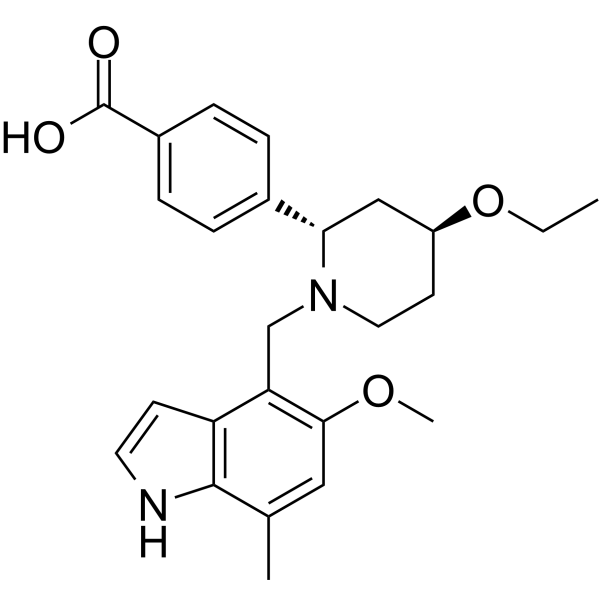
    Iptacopan
    10+ Cited Publications

    LNP023

    Complement System Metabolic Disease Inflammation/Immunology
    Iptacopan (LNP023) is an effective and orally-active highly selective factor B inhibitor with an IC50 value of 10 nM and KD of 7.9 nM. Iptacopan exerts a proximal effect in the complement cascade reaction, preventing the destruction (hemolysis) of red blood cells in PNH and the damage of renal cells in IgAN and C3G. Iptacopan can be used for the study of complement-mediated diseases, particularly paroxysmal nocturnal hemoglobinuria (PNH), primary immunoglobulin A nephropathy (IgAN), and complement 3 glomerulopathy (C3G) .
    Iptacopan
  • HY-B0441
    Tobramycin
    Maximum Cited Publications
    16 Publications Verification

    Nebramycin factor 6; Deoxykanamycin B

    Bacterial Antibiotic Infection Cancer
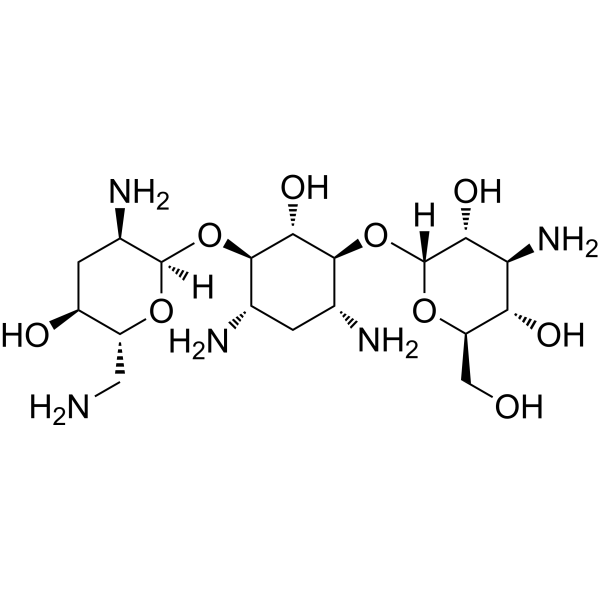
    Tobramycin (Nebramycin Factor 6) is a parenterally administered, broad spectrum aminoglycoside antibiotic that is widely used in the treatment of moderate to severe bacterial infections due to sensitive organisms .Tobramycin can be used to pneumonia research caused by Pseudomonas aeruginosa .
    Tobramycin
  • HY-N0784
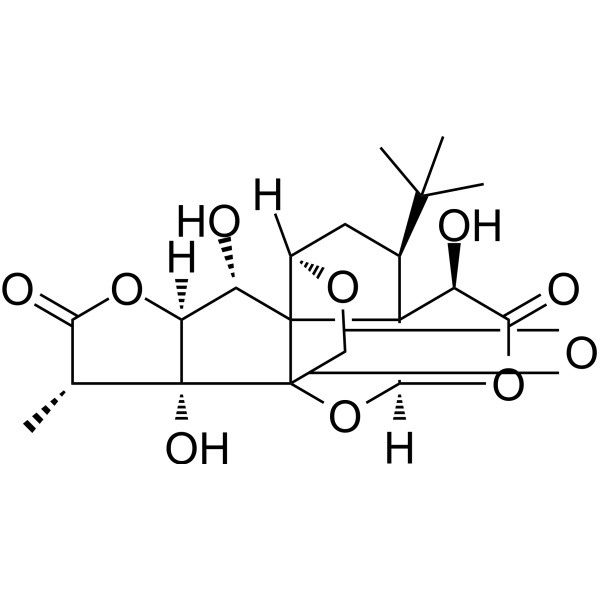
    Ginkgolide B
    10+ Cited Publications

    BN-52021

    Platelet-activating Factor Receptor (PAFR) Apoptosis Cardiovascular Disease Neurological Disease Inflammation/Immunology Cancer
    Ginkgolide B (BN-52021), a terpene lactone, is a potent platelet activating factor antagonist. Ginkgolide B protects endothelial cells via the activation of PXR from injuries induced by xeno- and endobiotics. Ginkgolide B can pass through the brain-blood barrier. Ginkgolide B has anti-oxidant, anti-inflammatory, anti-tumor, and anti-apoptotic activity. Ginkgolide B has marked neuroprotective effects against ischemia-induced impairments .
    Ginkgolide B
  • HY-126307
    Urolithin B
    5+ Cited Publications

    NF-κB JNK ERK Akt AMPK Endogenous Metabolite Inflammation/Immunology
    Urolithin B is one of Ellagitannins' slow microbial products, and has anti-inflammatory and anti-inflammatory effects. Urolithin B suppresses NF-κB activity. Urolithin B suppresses JNK, ERK and Akt's oxidation, and increases AMPK's oxidation. Urolithin B is also a quantitative change factor for bone and skin quality .
    Urolithin B
  • HY-127105A
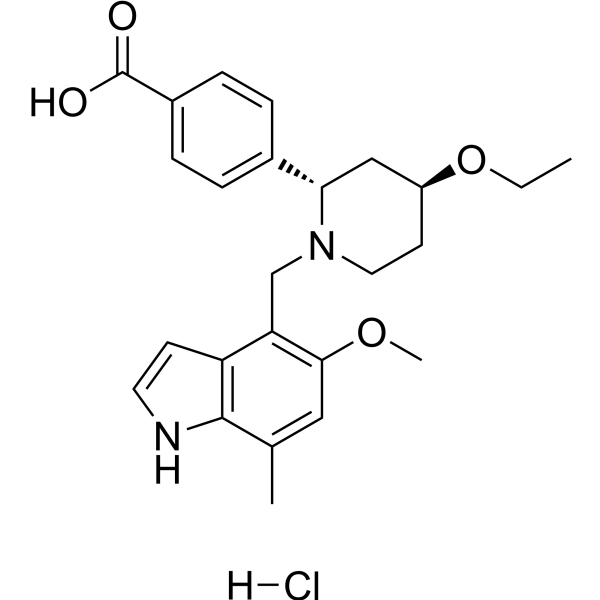
    Iptacopan hydrochloride
    10+ Cited Publications

    LNP023 hydrochloride

    Complement System Metabolic Disease Inflammation/Immunology
    Iptacopan (LNP023) hydrochloride is an effective and orally-active highly selective factor B inhibitor with an IC50 value of 10 nM and KD of 7.9 nM. Iptacopan hydrochloride exerts a proximal effect in the complement cascade reaction, preventing the destruction (hemolysis) of red blood cells in PNH and the damage of renal cells in IgAN and C3G. Iptacopan hydrochloride can be used for the study of complement-mediated diseases, particularly paroxysmal nocturnal hemoglobinuria (PNH), primary immunoglobulin A nephropathy (IgAN), and complement 3 glomerulopathy (C3G) .
    Iptacopan hydrochloride
  • HY-100540
    Golgicide A
    10+ Cited Publications

    GCA

    Enterovirus Infection Cancer
    Golgicide A (GCA) is a potent, highly specific, and reversible inhibitor of the cis-Golgi ADP-ribosylation factor guanine nucleotide exchange factors (ArfGEF) GBF1 . Golgicide A drastically reduced replication of coxsackievirus B3 (CVB3) and other human enterovirus species .
    Golgicide A
  • HY-N0366
    Sennoside B
    3 Publications Verification

    PDGFR Inflammation/Immunology
    Sennoside B is a potent and orally active platelet-derived growth factor (PDGF) inhibitor. Sennoside B inhibits cell proliferation and the expression of phosphorylation of PDGFR-β, STAT-5, AKT and ERK induced by PDGF-BB. Sennoside B shows gastroprotective activities. Sennoside B has the potential for the research of gastritis .
    Sennoside B
  • HY-125021
    2BAct
    3 Publications Verification

    Eukaryotic Initiation Factor (eIF) Neurological Disease
    2BAct is a highly selective, orally active, and CNS-penetrant eIF2B (eukaryotic initiation factor 2B) activator with an EC50 of 33 nM. 2BAct prevents neurological defects caused by a chronic integrated stress response. 2BAct displays improved solubility and pharmacokinetics relative to eIF2B activator ISRIB trans-isomer (HY-12495) .
    2BAct
  • HY-P3503

    BMN 111

    FGFR Others
    Vosoritide (BMN 111) is a modified recombinant CNP (C-type natriuretic peptide) analogue, binds to NPR-B (natriuretic peptide receptor type B) and reduces the activity of FGFR3 (fibroblast growth factor receptor 3). Vosoritide can be used in achondroplasia and dwarfism research .
    Vosoritide
  • HY-NP004

    CVF

    Complement System Inflammation/Immunology
    Cobra Venom Factor (CVF) is a selective activator targeting complement components C3, C5, and factor B in the complement system. After binding to factor B, Cobra Venom Factor is cleaved by factor D, forming a stable C3/C5 convertase resistant to regulatory proteins H and I. This continuously hydrolyzes C3 and C5, depleting serum complement while inducing neutrophil migration, vascular leakage, and increased TNF-α levels. Cobra Venom Factor can be used to deplete complement and mimic complement activation-related pathological states, and is applied in animal models of complement-mediated diseases such as acute respiratory distress syndrome (ARDS), sepsis, and shock. Cobra Venom Factor can be isolated from the venom of cobras (e.g., Naja atra, Naja melanoleuca, Naja kaouthia, etc.) .
    Cobra Venom Factor
  • HY-B0167S
    Salicylic acid-d6
    1 Publications Verification

    2-Hydroxybenzoic acid-d6

    Isotope-Labeled Compounds COX Autophagy Mitophagy Apoptosis Inflammation/Immunology Cancer
    Salicylic acid-d6 is a deuterium labeled Salicylic acid (HY-B0167). Salicylic acid inhibits cyclo-oxygenase-2 (COX-2) activity independently of transcription factor (NF-κB) activation .
    Salicylic acid-d6
  • HY-B0441A
    Tobramycin sulfate
    Maximum Cited Publications
    16 Publications Verification

    Nebramycin factor 6 sulfate; Deoxykanamycin B sulfate

    Bacterial Antibiotic Infection
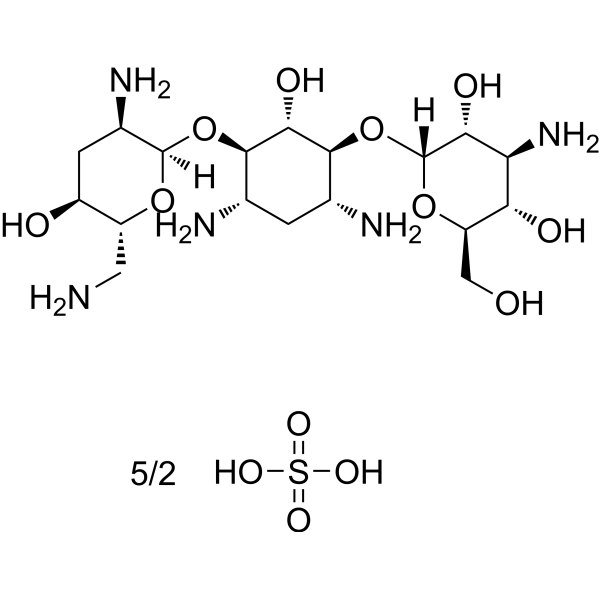
    Tobramycin (Nebramycin Factor 6) sulfate is a parenterally administered, broad spectrum aminoglycoside antibiotic that is widely used in the treatment of moderate to severe bacterial infections due to sensitive organisms. Tobramycin sulfate can be used to pneumonia research caused by Pseudomonas aeruginosa .
    Tobramycin sulfate
  • HY-P3206

    Thymulin; Thymic factor

    ERK Neurological Disease Inflammation/Immunology Endocrinology
    Serum thymic factor (Thymulin) is a zinc-dependent immunomodulatory peptide hormone, which can be produced by the thymic epithelial cells. Serum thymic factor stimulates the release of hormones from the pituitary gland, exhibits hypophysiotropic activity. Serum thymic factor protects rats from Cephaloridine (HY-B2072)-induced nephrotoxicity by inhibiting ERK activation. Serum thymic factor exhibits anti-diabetic, anti-inflammatory and analgesic effects. Serum thymic factor can be used in research about endocrine, reproductive, neurodegenerative and inflammatory diseases .
    Serum thymic factor
  • HY-P99010

    FGFR Cancer
    Bemarituzumab is a humanized IgG1 monoclonal antibody against FGFR2b (a FGF receptor). Bemarituzumab blocks fibroblast growth factors from binding and activating FGFR2b. Bemarituzumab has antitumor activity against gastric and breast cancer .
    Bemarituzumab
  • HY-P99618

    IBI-315; BH2950

    EGFR PD-1/PD-L1 Cancer
    Fidasimtamab is a bispecific antibody targeting human epidermal growth factor receptor 2 (Her2) and programmed death protein 1 (PD-1), with a Ka of 3.55e-10 M for human Her2 and a Ka of 1.17e-9 M for human PD-1. Fidasimtamab cross-links Her2-positive tumor cells with PD-1-positive T cells to form immune synapses, blocks PD-1-ligand interactions, preserves antibody-dependent cellular cytotoxicity, induces gasdermin B (GSDMB)-mediated pyroptosis, and activates T cells. Fidasimtamab is applicable to relevant research on Her2-positive gastric cancer .
    Fidasimtamab
  • HY-E70541B

    Biochemical Assay Reagents Cardiovascular Disease
    Canine Factor IX is a functional coagulation factor. Canine Factor IX shortens whole blood clotting time and activated partial thromboplastin time, and restores coagulation function. After intramuscular administration via rAAV vector in hemophilia B dogs, Canine Factor IX maintains a sustained circulating level for at least 1 year, partially corrects the hemophilia B phenotype in a dose-dependent manner, and its plasma expression persists for more than 17 months. Canine Factor IX is applicable to relevant research on hemophilia B .
    Canine Factor IX
  • HY-122700

    Complement System Inflammation/Immunology
    Factor D inhibitor 6 is a potent, highly selective and orally active factor D (FD) inhibitor with an IC50 of 30 nM and a Kd of 6 nM. Factor D inhibitor 6 is inactive against factor B, lassical and lectin complement-pathway activation, and a broad assay panel of receptors, ion channels, kinases and proteases .
    Factor D inhibitor 6
  • HY-111492
    DIM-C-pPhOCH3
    1 Publications Verification

    Nuclear Hormone Receptor 4A/NR4A Cancer
    DIM-C-pPhOCH3 is a Nur77 agonist. Nerve growth factor-induced Bα (NGFI-Bα, Nur77) is an orphan nuclear receptor.
    DIM-C-pPhOCH3
  • HY-141881

    PROTACs Apoptosis SF3B1 Cancer
    PROTAC-O4I2 is a PROTAC targets splicing factor 3B1 (SF3B1). PROTAC-O4I2 induces FLAG-SF3B1 degradation with an IC50 value of 0.244 μM in K562 cells. PROTAC-O4I2 also induces cellular apoptosis in K562 WT cells .
    PROTAC-O4I2
  • HY-110154

    Histone Demethylase Cancer
    NSC636819 is a competitive and selective inhibitor of KDM4A/KDM4B. KDM4A/KDM4B are potential progression factors for prostate cancer. NSC636819 has the potential for the research of cancer diseases, especially prostate cancer .
    NSC636819
  • HY-112648

    STAT Others
    Stafib-2 is a potent and selctive inhibitor of the transcription factor STAT5b, with an IC50 of 82 nM and 1.7 μM for STAT5b and STAT5a, respectively. Stafib-2 exhibits poor cell permeability .
    Stafib-2
  • HY-111547

    HIF/HIF Prolyl-Hydroxylase Cancer
    M1001 is a weak hypoxia-inducible factor-2α (HIF-2α) agonist. M1001 can bind to the HIF-2α PAS-B domain, with a Kd of 667 nM. M1001 can be used in chronic kidney disease research .
    M1001
  • HY-N7688

    NO Synthase COX NF-κB CXCR Interleukin Related Indoleamine 2,3-Dioxygenase (IDO) Cardiovascular Disease Inflammation/Immunology Endocrinology
    Regaloside B is a phenylpropane. Regaloside B can be isolated from Lilium longiflorum. Regaloside B can inhibit the expression of VCAM-1, iNOS, and COX-2, with a p-p65/p-65 ratio. Regaloside B inhibits the mRNA of various chemokines and angiogenic factors (CXCL9, CXCL10, IL8, IDO). Regaloside B has anti-inflammatory activity. Regaloside B can be used for osteogenic differentiation research .
    Regaloside B
  • HY-P99563

    LY 3090106

    TNF Receptor Interleukin Related Inflammation/Immunology
    Tibulizumab (LY 3090106) is a tetravalent bispecific monoclonal antibody targeting B-cell activating factor (BAFF) and IL-17A with Kd values of 60 pM and 14 pM, respectively. Tibulizumab can be used for autoimmune disease research .
    Tibulizumab
  • HY-148370A

    IONIS-FB-LRx sodium; RG6299 sodium; ISIS 696844 sodium

    Complement System Others
    Sefaxersen sodium is a specific antisense oligonucleotide (ASO) targeting complement factor B (CFB). Sefaxersen sodium effectively reduces circulating levels of CFB, and can be used for geographic atrophy (GA) research .
    Sefaxersen sodium
  • HY-148370

    IONIS-FB-LRx; RG6299; ISIS 696844

    Complement System Others
    Sefaxersen (IONIS-FB-LRx) is a specific antisense oligonucleotide (ASO) targeting complement factor B (CFB). Sefaxersen effectively reduces circulating levels of CFB. Sefaxersen can be used for geographic atrophy (GA) research .
    Sefaxersen
  • HY-P3206A

    Thymulin acetate; Thymic factor acetate

    ERK Neurological Disease Inflammation/Immunology Endocrinology
    Serum thymic factor acetate (Thymulin acetate) is the acetate salt form of Serum thymic factor (HY-P3206). Serum thymic factor acetate is a zinc-dependent immunomodulatory peptide hormone, which can be produced by the thymic epithelial cells. Serum thymic factor acetate stimulates the release of hormones from the pituitary gland, exhibits hypophysiotropic activity. Serum thymic factor acetate protects rats from Cephaloridine (HY-B2072)-induced nephrotoxicity by inhibiting ERK activation. Serum thymic factor acetate exhibits anti-diabetic, anti-inflammatory and analgesic effects. Serum thymic factor acetate can be used in research about endocrine, reproductive, neurodegenerative and inflammatory diseases .
    Serum thymic factor acetate
  • HY-111053

    Phospholipase Cancer
    P11 is a selective inhibitor of platelet-activating factor acetylhydrolases (PAFAHs) 1b2 and 1b3 that impairs cancer cell survival. P11 exhibits IC50 values of ~40 and 900 nM for PAFAH1b2 and 1b3, respectively .
    P11
  • HY-P99298

    RG 7417; TNX 234; Anti-CFD Recombinant Antibody

    Complement System Inflammation/Immunology
    Lampalizumab (RG 7417) is a humanised monoclonal antibody targeting complement Factor D in the alternative complement pathway. Lampalizumab binds an exosite and sterically blocks Factor B access to the active site. Lampalizumab can be used for age-related macular degeneration (AMD) research .
    Lampalizumab
  • HY-153480A
    ARC19499 sodium
    1 Publications Verification

    BAX499 sodium

    Factor Xa Factor VIIa Tissue Factor Pathway Inhibitor (TFPI) Others
    ARC19499 sodium is an aptamer that inhibits tissue factor pathway inhibitor (TFPI) , thereby enabling clot initiation and propagation via the extrinsic pathway. The core aptamer binds tightly and specifically to TFPI. ARC19499 sodium blocks TFPI inhibition of both factor Xa and the TF/factor VIIa complex. ARC19499 sodium corrects thrombin generation in hemophilia A and B plasma and restores clotting in FVIII-neutralized whole blood.
    ARC19499 sodium
  • HY-N12566

    Others Neurological Disease
    Erinacin B is a active product that can be extracts from the mycelia of Hericium erinaceum. Erinacin B shows potent stimulating activity of nerve growth factor (NGF)-synthesis .
    Erinacin B
  • HY-160047

    PDGFR Cancer
    AX102 sodium is a 34 bp length nucleotide aptamer modified at the 5' end with a 40 kDa polyethylene glycol moiety. AX102 selectively binds platelet-derived growth factor B (PDGF-B) and causes tumor vessel regression .
    AX102 sodium
  • HY-N0784R

    BN-52021 (Standard)

    Reference Standards Platelet-activating Factor Receptor (PAFR) Apoptosis Cardiovascular Disease Neurological Disease Inflammation/Immunology Cancer
    Ginkgolide B (Standard) is the analytical standard of Ginkgolide B. This product is intended for research and analytical applications. Ginkgolide B (BN-52021), a terpene lactone, is a potent platelet activating factor antagonist. Ginkgolide B protects endothelial cells via the activation of PXR from injuries induced by xeno- and endobiotics. Ginkgolide B can pass through the brain-blood barrier. Ginkgolide B has anti-oxidant, anti-inflammatory, anti-tumor, and anti-apoptotic activity. Ginkgolide B has marked neuroprotective effects against ischemia-induced impairments .
    Ginkgolide B (Standard)
  • HY-177388

    Complement System Inflammation/Immunology
    Factor B-IN-6 is an orally active Factor B inhibitor. Factor B-IN-6 exhibits significant inhibitory activity against activation of the human serum serotonin pathway. Factor B-IN-6 can improve the severity of renal lesions and renal function, and reduce urinary protein in animal models. Factor B-IN-6 is useful for kidney disease research .
    Factor B-IN-6
  • HY-177611

    Complement System Inflammation/Immunology
    Agazisiran, a siRNA,is a complement factor B synthesis reducer.
    Agazisiran
  • HY-153480

    BAX499

    Factor Xa Factor VIIa Tissue Factor Pathway Inhibitor (TFPI) Others
    ARC19499 is an aptamer that inhibits tissue factor pathway inhibitor (TFPI) , thereby enabling clot initiation and propagation via the extrinsic pathway. The core aptamer binds tightly and specifically to TFPI. ARC19499 blocks TFPI inhibition of both factor Xa and the TF/factor VIIa complex. ARC19499 corrects thrombin generation in hemophilia A and B plasma and restores clotting in FVIII-neutralized whole blood.
    ARC19499
  • HY-18711

    Metatinib free base; c-Met inhibitor 2 free base

    c-Met/HGFR VEGFR Cancer
    SCR-1481B1 free base, also known as Metatinib free base, is a small molecule receptor kinase inhibitor that targets both c-MET and vascular endothelial growth factor receptor 2 (VEGFR2) .
    SCR-1481B1 free base
  • HY-117359

    PAI-1 Apoptosis Cancer
    UCD38B hydrochloride is a cell permeant, competitive enzymatic uPA inhibitor with an IC50 value of 7 μM. UCD38B hydrochloride targets intracellular uPA causing mistrafficking of uPA into perinuclear mitochondria, reducing the mitochondrial membrane potential, and followed by the release of apoptotic inducible factor (AIF). UCD38B hydrochloride induces apoptosis .
    UCD38B hydrochloride
  • HY-N10313

    Bcl-2 Family Keap1-Nrf2 Apoptosis Cancer
    Dehydrobruceine B, a quassinoid, can be isolated from Brucea javanica. Dehydrobruceine B shows a synergistic effect with Cisplatin (HY-17394) to induce apoptosis via mitochondrial method. Dehydrobruceine B increases apoptosis-inducing factor (AIF) and Bax expression and suppresses Keap1-Nrf2 .
    Dehydrobruceine B
  • HY-N3938

    Others Neurological Disease
    Gelsemiol is the main active ingredient in Verbena littoralis H. B. K.. Gelsemiol enhanced nerve growth factor (NGF) -induced axonal elongation in PC12D cells .
    Gelsemiol
  • HY-P99465

    BAY 1093884

    Thrombin Tissue Factor Pathway Inhibitor (TFPI) Cardiovascular Disease
    Befovacimab (BAY 1093884) is a fully human monoclonal IgG2 antibody able to bind to tissue factor pathway inhibitor (TFPI). Befovacimab can be used for haemophilia A/B research .
    Befovacimab
  • HY-N4171

    Apoptosis Inflammation/Immunology
    Dihydrocucurbitacin B, a triterpene isolated from Cayaponia tayuya roots, inhibits nuclear factor of activated T cells (NFAT), induces cell cycle arrested in the G0 phase, and inhibits delayed type hypersensitivity .
    Dihydrocucurbitacin B
  • HY-136556

    Complement System Inflammation/Immunology
    Factor B-IN-1 is a Factor B inhibitor extracted from patent WO2013164802A1, Example 24 .
    Factor B-IN-1
  • HY-N8118

    Others Others
    Euphorbia factor L7b is an isolathyrolditerpene compound .
    Euphorbia factor L7b
  • HY-178284

    Complement System Inflammation/Immunology
    Factor B-IN-7 (Compound (I)) is a selective Factor B inhibitor. Factor B-IN-7 inhibits Factor B-C3b interaction to suppress complement hyperactivation. Factor B-IN-7 is promising for research of paroxysmal nocturnal hemoglobinuria (PNH), C3 glomerulopathy, and age-related macular degeneration (AMD) associated with complement-mediated diseases .
    Factor B-IN-7
  • HY-200854

    LNP023 hydrochloride hydrate

    Complement System Metabolic Disease Inflammation/Immunology
    Iptacopan (LNP023) hydrochloride hydrate is an effective and orally-active highly selective factor B inhibitor with an IC50 value of 10 nM and KD of 7.9 nM. Iptacopan hydrochloride hydrate exerts a proximal effect in the complement cascade reaction, preventing the destruction (hemolysis) of red blood cells in PNH and the damage of renal cells in IgAN and C3G. Iptacopan hydrochloride hydrate can be used for the study of complement-mediated diseases, particularly paroxysmal nocturnal hemoglobinuria (PNH), primary immunoglobulin A nephropathy (IgAN), and complement 3 glomerulopathy (C3G) .
    Iptacopan hydrochloride hydrate
  • HY-B0441R

    Nebramycin factor 6 (Standard); Deoxykanamycin B (Standard)

    Reference Standards Bacterial Antibiotic Infection Cancer
    Tobramycin (Standard) is the analytical standard of Tobramycin. This product is intended for research and analytical applications. Tobramycin (Nebramycin Factor 6) is a parenterally administered, broad spectrum aminoglycoside antibiotic that is widely used in the treatment of moderate to severe bacterial infections due to sensitive organisms .Tobramycin can be used to pneumonia research caused by Pseudomonas aeruginosa .
    Tobramycin (Standard)
  • HY-N10009

    NF-κB TNF Receptor COX ERK p38 MAPK Sirtuin Inflammation/Immunology
    Cudraflavone B is a prenylated flavonoid with anti-inflammatory and anti-tumor properties. Cudraflavone B is also a dual inhibitor of COX-1 and COX-2. Cudraflavone B blocks the translocation of nuclear factor κB (NF-κB) from the cytoplasm to the nucleus in macrophages. Thus, Cudraflavone B inhibits tumor necrosis factor α (TNFα) gene expression and secretion. Cudraflavone B also triggers the mitochondrial apoptotic pathway, activates NF-κB, the MAPK p38, and ERK, and induced the expression of SIRT1. Thus Cudraflavone B inhibits the growth of human oral squamous cell carcinoma cells .
    Cudraflavone B
  • HY-129973

    NSC-12971; 4-Chlorophenylurea

    Factor Xa Others
    4-Chlorophenylurea is metabolite of diflubenzuron (HY-B1973). 4-Chlorophenylurea can be used to form factor Xa inhibitors .
    4-Chlorophenylurea
  • HY-162599

    TNF Receptor Infection Cancer
    Spirohypertone B is a potent Tumor necrosis factor-α (TNF-α) inhibitor. Spirohypertone B protects L929 cells from death induced by co-incubation with TNF-α and Actinomycin D (HY-17559) .
    Spirohypertone B

Inquiry Online

Your information is safe with us. * Required Fields.

Salutation


Country or Region *

Applicant Name *


Organization Name *

Department *


Email Address *


Product Name *

Cat. No.


Requested quantity *

Phone Number *


Remarks

Inquiry Online

Inquiry Information

Product Name:
Cat. No.:
Quantity:
MCE Japan Authorized Agent:

