100 Results for "

hepatomas

" in MedChemExpress (MCE) Product Catalog:
Products (100)

100 Results for "hepatomas" in MCE Product Catalog:

149
149 Publications Verification
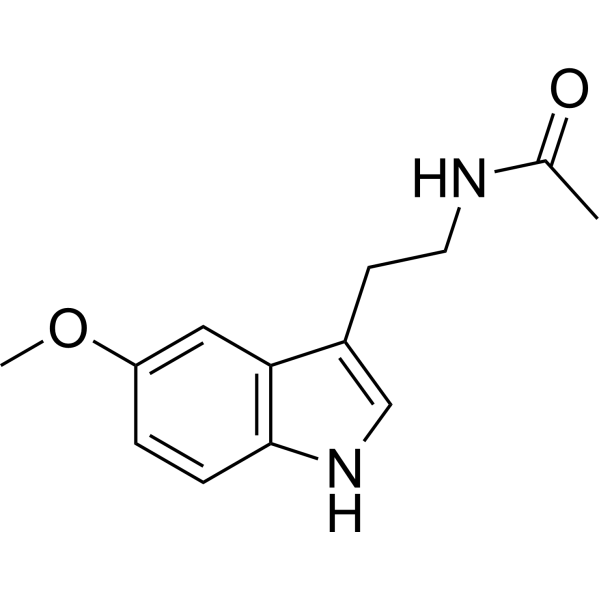
Cat. No.: HY-B0075
CAS No.: 73-31-4
Synonyms: N-Acetyl-5-methoxytryptamine
Melatonin is a hormone made by the pineal gland that can activate melatonin receptor and inhibit PANoptosis. Melatonin plays a role in sleep and possesses important antioxidative and anti-inflammatory properties . Melatonin is a novel selective ATF-6 inhibitor and induces human hepatoma cell apoptosis through COX-2 downregulation . Melatonin attenuates palmitic acid-induced (HY-N0830) mouse granulosa cells apoptosis via endoplasmic reticulum stress .
loading...
    loading...
19
19 Cited Publications
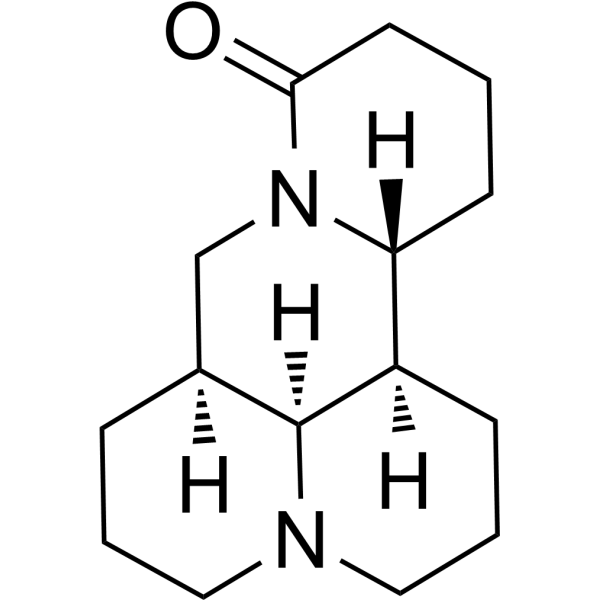
Cat. No.: HY-N0164
CAS No.: 519-02-8
Synonyms: Matridin-15-one; Vegard; α-Matrine
Matrine (Matridin-15-one) is an alkaloid found in plants from the Sophora genus that can act as a kappa opioid receptor and u-receptor agonist. Matrine has a variety of pharmacological effects, including anti-cancer, anti-oxidative stress, anti-inflammation and anti-apoptosis effects. Matrine is potential in the research of disease like human non-small cell lung cancer, hepatoma, papillary thyroid cancer and acute kidney injury (AKI) .
loading...
    loading...
14
14 Cited Publications
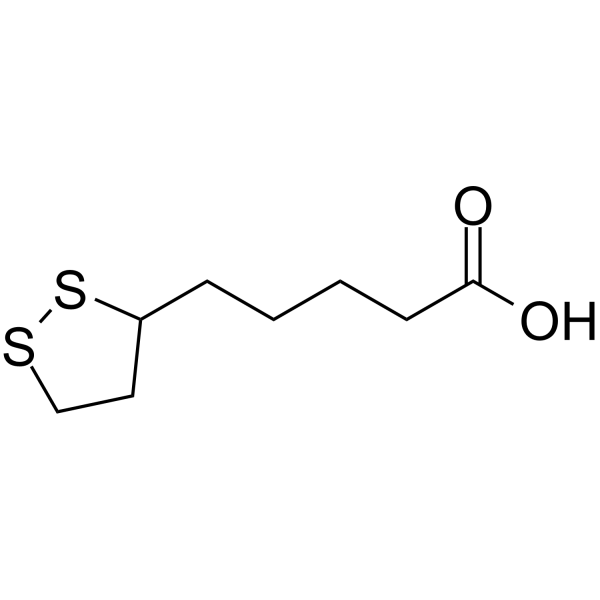
Cat. No.: HY-N0492
CAS No.: 1077-28-7
Synonyms: Thioctic acid; (±)-α-Lipoic acid; DL-α-Lipoic acid
α-Lipoic Acid (Thioctic acid) is an antioxidant, which is an essential cofactor of mitochondrial enzyme complexes. α-Lipoic Acid inhibits NF-κB-dependent HIV-1 LTR activation . α-Lipoic Acid induces endoplasmic reticulum (ER) stress-mediated apoptosis in hepatoma cells . α-Lipoic Acid can be used with CPUL1 (HY-151802) to construct the self-assembled nanoaggregate CPUL1-LA NA, which has improved antitumor efficacy than CPUL1 .
loading...
    loading...
14
14 Cited Publications
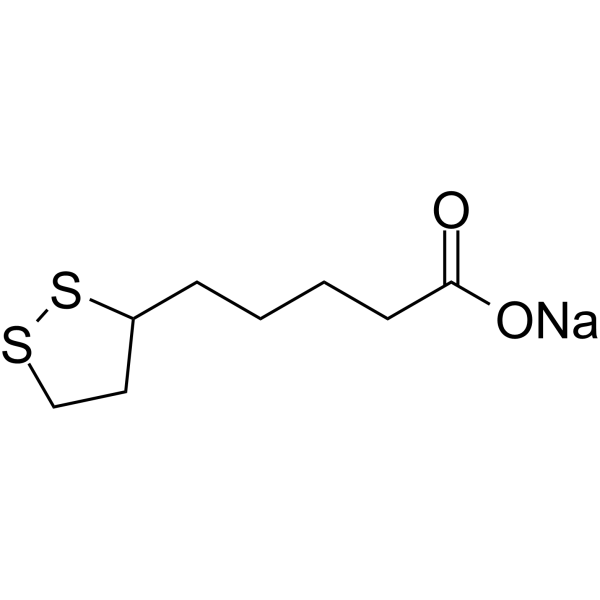
Cat. No.: HY-N0492A
CAS No.: 2319-84-8
Synonyms: Thioctic acid sodium; (±)-α-Lipoic acid sodium; DL-α-Lipoic acid sodium
α-Lipoic Acid (Thioctic acid) sodium is an antioxidant, which is an essential cofactor of mitochondrial enzyme complexes. α-Lipoic Acid sodium inhibits NF-κB-dependent HIV-1 LTR activation . α-Lipoic Acid sodium induces endoplasmic reticulum (ER) stress-mediated apoptosis in hepatoma cells . α-Lipoic Acid sodium can be used with CPUL1 (HY-151802) to construct the self-assembled nanoaggregate CPUL1-LA NA, which has improved antitumor efficacy than CPUL1 .
loading...
    loading...
6
6 Cited Publications
Cat. No.: HY-100313A
CAS No.: 182959-33-7
Purity:  98.23%
Research Areas:  

Infection Metabolic Disease

YM-53601, a squalene synthase inhibitor, reduces plasma cholesterol and triglyceride levels in vivo . YM-53601 inhibits squalene synthase derived from human hepatoma cells with an IC50 of 79 nM. Lipid-lowering agent . YM-53601 is also an inhibitor of farnesyl-diphosphate farnesyltransferase 1 (FDFT1) enzyme activity and abrogates HCV propagation .
loading...
    loading...
4
4 Cited Publications
Cat. No.: HY-N0774
CAS No.: 486-21-5
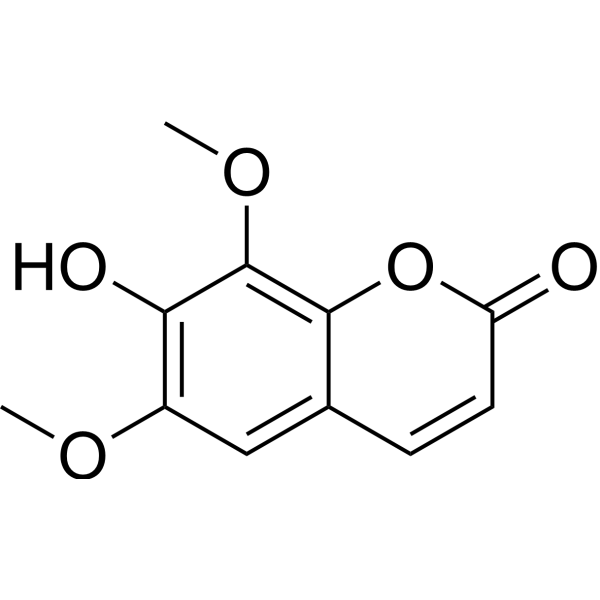
Isofraxidin, a coumarin component from Acanthopanax senticosus, inhibits MMP-7 expression and cell invasion of human hepatoma cells. Isofraxidin inhibits the phosphorylation of ERK1/2 in hepatoma cells . Isofraxidin attenuates the expression of iNOS and COX-2, Isofraxidinalso inhibits TLR4/myeloid differentiation protein-2 (MD-2) complex formation .
loading...
    loading...
4
4 Cited Publications
Cat. No.: HY-116522
CAS No.: 1798310-55-0
Purity:  98.29%
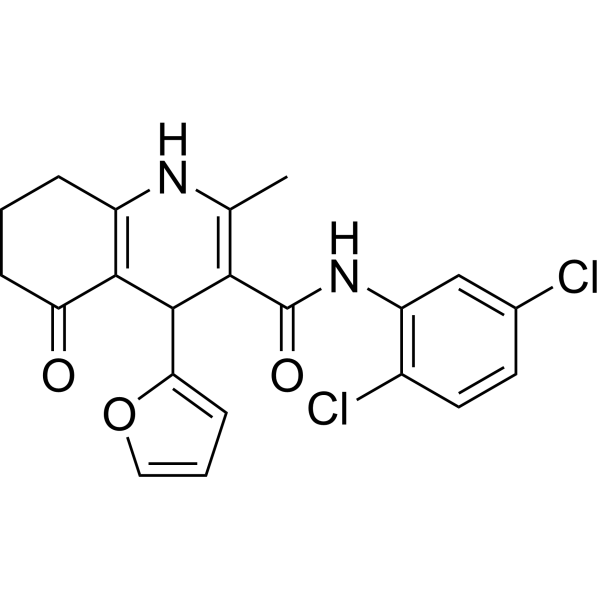
AR420626 is a selective agonist of free fatty acid receptor 3 (FFAR3) (IC50=117 nM). AR420626 has anti-inflammatory, anticancer and antidiabetic activities. AR420626 improves neurogenic diarrhea by inhibiting nAChR mediated neural pathways. AR420626 inhibits the growth of HepG2 xenografts and inhibits the proliferation of hepatoma cells by inducing apoptosis. AR420626 also suppresses allergic asthma and eczema and has the ability to activate GPR41 to increase Ca 2+ signal-mediated glucose uptake and improve diabetes .
loading...
    loading...
4
4 Cited Publications
Cat. No.: HY-P72782
Purity:  ≥ 95%, as determined by reducing SDS-PAGE.
Synonyms: CXCL12; Intercrine Reduced In hepatomas; Prev. SDF1; SDF-1b; Prev. SDF1A; TLSF-A; Prev. SDF1B; TLSF-B; PBSF; IRH; Stromal Cell-Derived Factor 1; C-X-C Motif Chemokine 12; SCYB12; HSDF-1; TPAR1; SDF-1; Pre-B Cell Growth-Stimulating Factor; TLSF; Chemokine
Species:  
Mouse
Source:  
E. coli
loading...
    loading...
3
3 Cited Publications
Cat. No.: HY-P70469
Purity:  ≥ 95%, as determined by reducing SDS-PAGE.
Synonyms: CXCL12; Intercrine Reduced In hepatomas; Prev. SDF1; SDF-1b; Prev. SDF1A; TLSF-A; Prev. SDF1B; TLSF-B; PBSF; IRH; Stromal Cell-Derived Factor 1; C-X-C Motif Chemokine 12; SCYB12; HSDF-1; TPAR1; SDF-1; Pre-B Cell Growth-Stimulating Factor; TLSF; Chemokine
Species:  
Human
Source:  
E. coli
loading...
    loading...
2
2 Cited Publications
Cat. No.: HY-N0095
CAS No.: 19685-09-7
Synonyms: 10-HCPT; 10-Hydroxycamptothecin
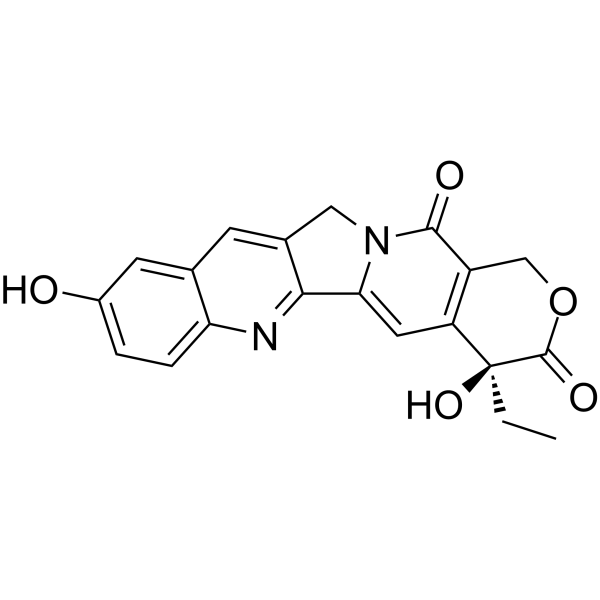
(S)-10-Hydroxycamptothecin (10-HCPT;10-Hydroxycamptothecin) is a DNA topoisomerase I inhibitor of isolated from the Chinese plant Camptotheca accuminata. (S)-10-Hydroxycamptothecin exhibits a remarkable apoptosis-inducing effect. (S)-10-Hydroxycamptothecin has the potential for hepatoma, gastric carcinoma, colon cancer and leukaemia treatment .
loading...
    loading...
2
2 Cited Publications
Cat. No.: HY-100028
CAS No.: 211364-06-6
Purity:  98.39%
Target:  

HBV DNA/RNA Synthesis

Research Areas:  

Infection Cancer

AT-130, a phenylpropenamide derivative, is a potent hepatitis B virus (HBV) replication non-nucleoside inhibitor. AT-130 inhibits the viral DNA synthesis with an EC50 of 0.13 μM. AT-130 inhibits both wt and mutant HBVs. AT-130 has anti-HBV activity in hepatoma cells .
loading...
    loading...
2
2 Cited Publications
Cat. No.: HY-P7286
Purity:  ≥ 95%, as determined by reducing SDS-PAGE.
Synonyms: CXCL12; Intercrine Reduced In hepatomas; Prev. SDF1; SDF-1b; Prev. SDF1A; TLSF-A; Prev. SDF1B; TLSF-B; PBSF; IRH; Stromal Cell-Derived Factor 1; C-X-C Motif Chemokine 12; SCYB12; HSDF-1; TPAR1; SDF-1; Pre-B Cell Growth-Stimulating Factor; TLSF; Chemokine
Species:  
Rat
Source:  
E. coli
loading...
    loading...
2
2 Cited Publications
Cat. No.: HY-P7287
Purity:  ≥ 95%, as determined by reducing SDS-PAGE.
Synonyms: CXCL12; Intercrine Reduced In hepatomas; Prev. SDF1; SDF-1b; Prev. SDF1A; TLSF-A; Prev. SDF1B; TLSF-B; PBSF; IRH; Stromal Cell-Derived Factor 1; C-X-C Motif Chemokine 12; SCYB12; HSDF-1; TPAR1; SDF-1; Pre-B Cell Growth-Stimulating Factor; TLSF; Chemokine
Species:  
Human
Source:  
E. coli
loading...
    loading...
2
2 Cited Publications
Cat. No.: HY-P7285
Purity:  ≥ 95%, as determined by reducing SDS-PAGE.
Synonyms: CXCL12; Intercrine Reduced In hepatomas; Prev. SDF1; SDF-1b; Prev. SDF1A; TLSF-A; Prev. SDF1B; TLSF-B; PBSF; IRH; Stromal Cell-Derived Factor 1; C-X-C Motif Chemokine 12; SCYB12; HSDF-1; TPAR1; SDF-1; Pre-B Cell Growth-Stimulating Factor; TLSF; Chemokine (C-X-C Motif) Ligand 12; HIRH; C-X-C Motif Chemokine Ligand 12; SDF-1a
Species:  
Mouse
Source:  
E. coli
loading...
    loading...
1
1 Cited Publications
Cat. No.: HY-N0492S
CAS No.: 1189471-66-6
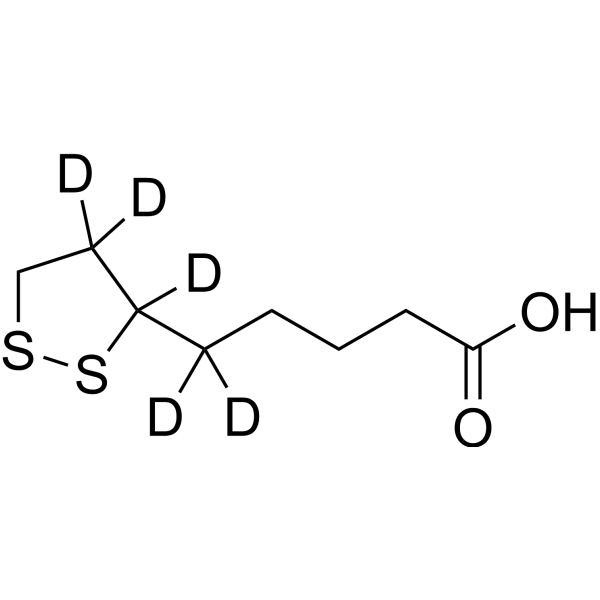
Synonyms: Thioctic acid-d5; (±)-α-Lipoic acid-d5; DL-α-Lipoic acid-d5
α-Lipoic Acid-d5 is the deuterium labeled α-Lipoic Acid. α-Lipoic Acid is an antioxidant, which is an essential cofactor of mitochondrial enzyme complexes. α-Lipoic Acid inhibits NF-κB-dependent HIV-1 LTR activation . α-Lipoic Acid induces endoplasmic reticulum (ER) stress-mediated apoptosis in hepatoma cells .
loading...
    loading...
1
1 Cited Publications
Cat. No.: HY-21191
CAS No.: 375-73-5
Synonyms: PFBS
Perfluorobutanesulfonic acid (PFBS) is a short-chain perfluoroalkyl substance and the main replacement for perfluorooctanesulfonic acid. Perfluorobutanesulfonic acid induces fat accumulation in human HepG2 hepatoma cells. Perfluorobutanesulfonic acid promotes lipid accumulation by activating PPARγ pathway and triggering oxidative stress, endoplasmic reticulum stress and calcium dyshomeostasis. Perfluorobutanesulfonic acid impairs reproduction and causes developmental disorders in offspring of Caenorhabditis elegans. Perfluorobutanesulfonic acid disrupts pancreatic organogenesis and lipid homeostasis in zebrafish embryos. Perfluorobutanesulfonic acid can be used in environmental toxicology, lipid metabolism and developmental toxicity studies .
loading...
    loading...
1
1 Cited Publications
Cat. No.: HY-P700219AF
Purity:  ≥ 95%, as determined by reducing SDS-PAGE.
Synonyms: CXCL12; Intercrine Reduced In hepatomas; Prev. SDF1; SDF-1b; Prev. SDF1A; TLSF-A; Prev. SDF1B; TLSF-B; PBSF; IRH; Stromal Cell-Derived Factor 1; C-X-C Motif Chemokine 12; SCYB12; HSDF-1; TPAR1; SDF-1; Pre-B Cell Growth-Stimulating Factor; TLSF; Chemokine
Species:  
Mouse
Source:  
E. coli
loading...
    loading...
Cat. No.: HY-113449
CAS No.: 727-81-1
Purity:  ≥99.0%
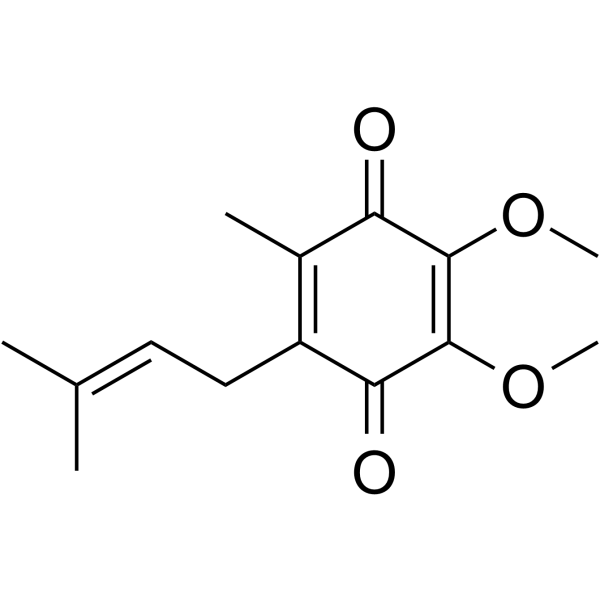
Ubiquinone-1 is an intermediate in the synthesis of Coenzyme Q. Ubiquinone-1 can be reduced by NADPH oxidase, hepatoma cells, Ascorbic acid (HY-B0166) .
loading...
    loading...
Cat. No.: HY-118122
CAS No.: 69123-98-4
Purity:  99.91%
Synonyms: FIAU; DRG-0098; NSC 678514
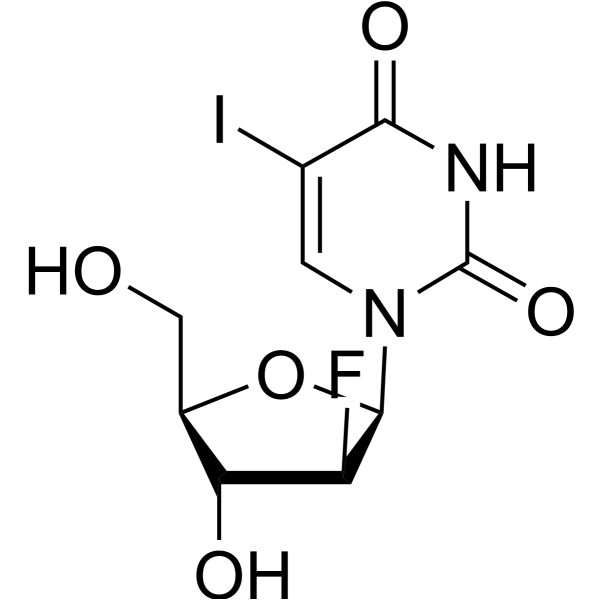
Fialuridine (FIAU), a nucleoside analog, is a HSV-1 and HSV-2 inhibitor with Kis of 0.14 μM and 0.95 μM, respectively. Fialuridine shows anti-orthopoxvirus and anti-hepatitis B virus (HBV) activities. Fialuridine inhibits duck HBV DNA replication with IC50 values of 0.075 μM and 156 μM in human hepatoma cells and in chicken liver cells, respectively .
loading...
    loading...
Cat. No.: HY-B0766
CAS No.: 118159-48-1
Synonyms: SY801
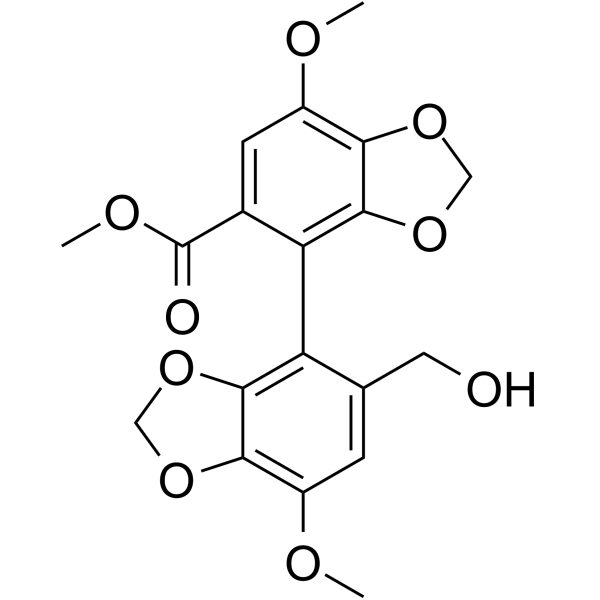
Bicyclol (SY801) is an orally active derivative of the traditional Chinese medicine Schisandra chinensis, which has antiviral, anti-inflammatory, immunomodulatory, antioxidant, anti-steatosis, anti-fibrotic and anti-tumor activities. Bicyclol regulates the expression of heat shock proteins and plays an anti-apoptosis role in hepatocytes. Bicyclol reduces the activation of NF-κB and the levels of inflammatory factors in hepatocytes infected with hepatitis C virus (HCV) by inhibiting the activation of the ROS-MAPK-NF-κB pathway, and prevents ferroptosis in acute liver injury. Bicyclol can change the expression of Mdr-1, GSH/GST and Bcl-2, increase the intracellular concentration of anticancer drugs, and sensitize drug-resistant cells to anticancer drugs. Bicyclol inhibits the proliferation of human malignant hepatoma cells by regulating the PI3K/AKT pathway and the Ras/Raf/MEK/ERK pathway. Bicyclol can be used in the study of chronic hepatitis, acute liver injury, nonalcoholic fatty liver disease, liver fibrosis and hepatocellular carcinoma .
loading...
    loading...

