1. Search Result
Search Result
Results for "

hydroxyproline

" in MedChemExpress (MCE) Product Catalog:

35

Inhibitors & Agonists

1

Screening Libraries

3

Biochemical Assay Reagents

18

Peptides

7

Natural
Products

3

Isotope-Labeled Compounds

1

Click Chemistry

Cat. No. Product Name Target Research Areas Chemical Structure
  • HY-17365
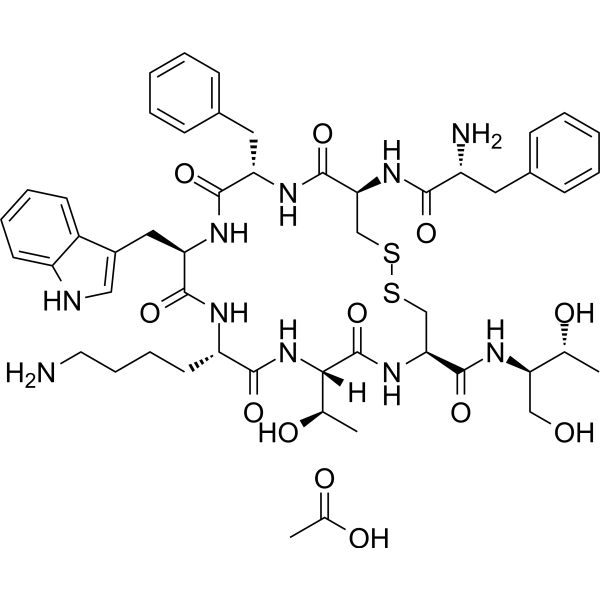
    Octreotide acetate
    15+ Cited Publications

    SMS 201-995 acetate

    Somatostatin Receptor Cardiovascular Disease Inflammation/Immunology Endocrinology Cancer
    Octreotide acetate, a long-acting synthetic analog of native somatostatin, inhibits growth hormone, glucagon, and insulin more potently.
    Octreotide acetate
  • HY-40135
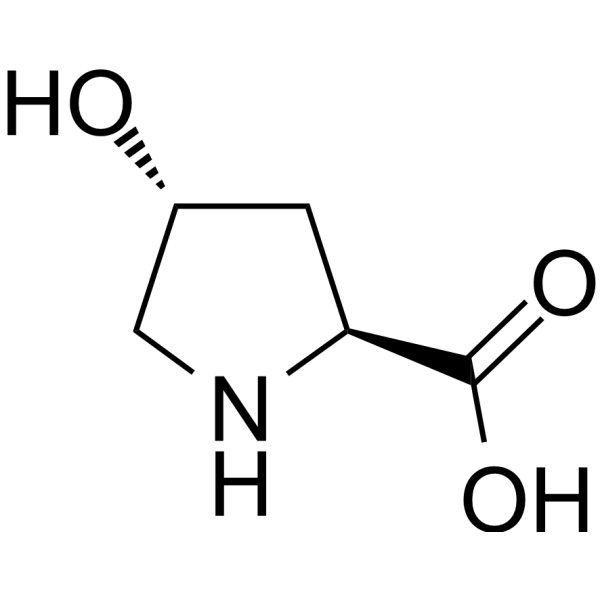
    L-Hydroxyproline
    2 Publications Verification

    (2S,4R)-4-Hydroxypyrrolidine-2-carboxylic acid

    Endogenous Metabolite Others
    L-Hydroxyproline, one of the hydroxyproline (Hyp) isomers, is a useful chiral building block in the production of many pharmaceuticals.
    L-Hydroxyproline
  • HY-17490
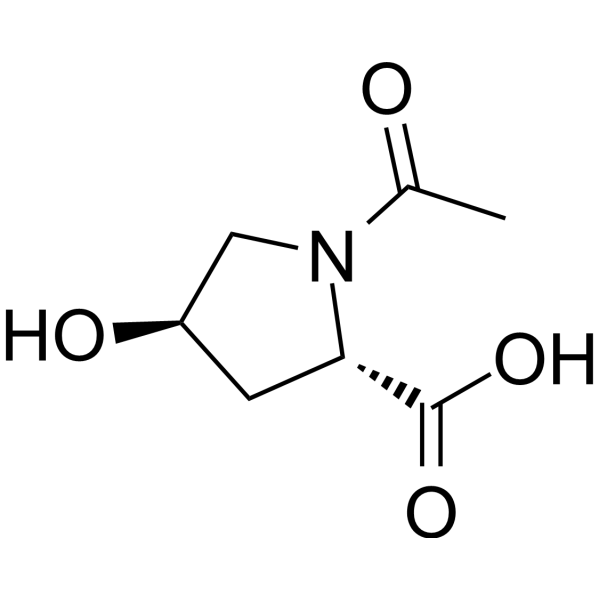
    Oxaceprol
    1 Publications Verification

    N-Acetyl-L-hydroxyproline

    Amino Acid Derivatives Inflammation/Immunology
    Oxaceprol (N-Acetyl-L-hydroxyproline), an orally active derivative of L-proline, possesses distinct anti-inflammatory activity. Oxaceprol is usually used for the research of osteoarthritis and rheumatoid arthritis .
    Oxaceprol
  • HY-125586

    DNA/RNA Synthesis ADC Payload Cancer
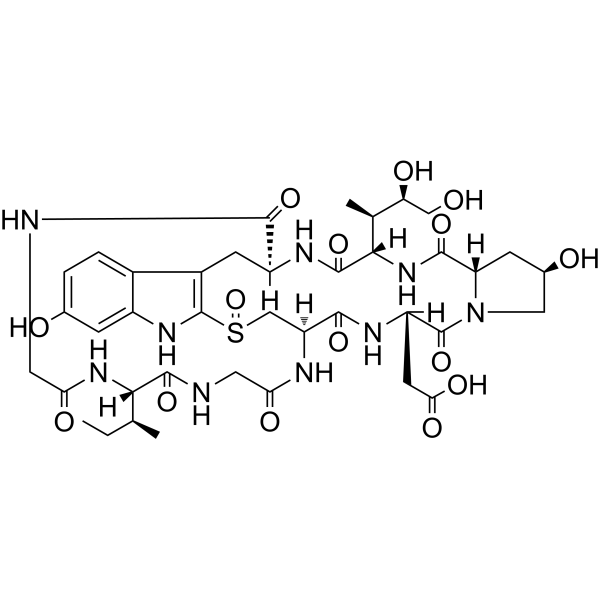
    β-Amanitin is a cyclic peptide toxin in the poisonous Amanita phalloides mushroom. β-Amanitin inhibits inhibits eukaryotic RNA polymerase II and III. β-Amanitin inhibits protein synthesis. β-Amanitin can be used as a cytotoxic component of antibody-drug conjugates (ADCs) .
    β-Amanitin
  • HY-40135S

    Isotope-Labeled Compounds Endogenous Metabolite Others
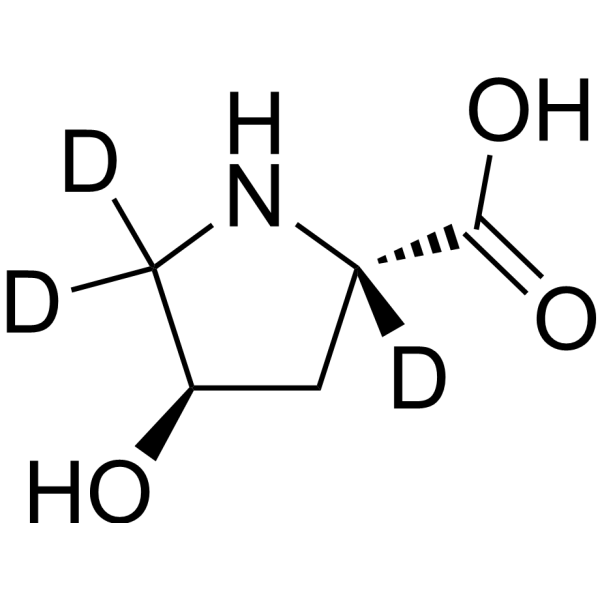
    L-Hydroxyproline-d3 is the deuterium labeled L-Hydroxyproline. L-Hydroxyproline, one of the hydroxyproline (Hyp) isomers, is a useful chiral building block in the production of many pharmaceuticals.
    L-Hydroxyproline-d3
  • HY-W337672

    Prolylhydroxyproline; Pro-Hyp

    Biochemical Assay Reagents Others
    H-Pro-Hyp-OH is a collagen peptide composed of proline (Pro) and hydroxyproline (Hyp). H-Pro-Hyp-OH can be used in research on slowing down facial aging .
    H-Pro-Hyp-OH
  • HY-W129161

    Amino Acid Derivatives Metabolic Disease
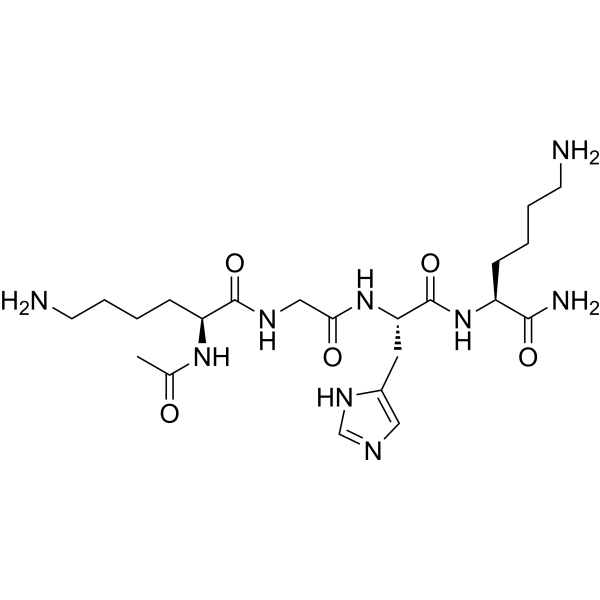
    Acetyl tetrapeptide-3 is a synthetic peptide. Acetyl tetrapeptide-3 enhances the adhesion of hair follicles to the scalp but also promotes the development of new hair follicles. Acetyl tetrapeptide-3 stimulates the synthesis of collagen III in hair follicles. Acetyl tetrapeptide-3 combined with Biochanin A (HY-14595) and ginseng extracts, can stimulate dermal papilla extracellular matrix (ECM) proteins by increasing hydroxyproline, Collagen Type 3, and laminin, yielding a significant improvement in hair follicle size and hair anchoring .
    Acetyl tetrapeptide-3
  • HY-142035
    N-Propargylglycine
    1 Publications Verification

    Mitochondrial Metabolism Neurological Disease Metabolic Disease Inflammation/Immunology Cancer
    N-Propargylglycine is a brain-penetrant and orally active PRODH inhibitor. N-Propargylglycine covalently modifies enzyme-bound FAD and active site lysine, causing enzyme structural distortion, protein decay, and irreversible inhibition of proline and 4-hydroxyproline catabolism. N-Propargylglycine induces UPRmt, upregulates mitochondrial chaperones and YME1L1, enhances mitochondrial proteostasis, blocks astrocytic L-proline consumption, and abolishes L-proline’s ATP-maintaining and viability-protective effects. N-Propargylglycine stimulates neural processes, increases brain proline, hydroxyproline, and sarcosine levels, partially normalizes Huntington’s disease whole brain transcriptomes. N-Propargylglycine reduces hyperoxaluria, prevents calcium oxalate stone formation, reduces kidney tubular damage, and restores weight and survival in Grhpr knockout mice. N-Propargylglycine can be used for the research of breast cancer, neurodegenerative disorders, Huntington’s disease, and primary hyperoxaluria type 2 .
    N-Propargylglycine
  • HY-34666

    Biochemical Assay Reagents Amino Acid Derivatives Others
    (4S)-4-Hydroxy-D-proline is a D-proline derivative and aglycon core for synthesis of cell wall O-glycans of the green alga Chlamydomonas reinhardtii .
    (4S)-4-Hydroxy-D-proline
  • HY-W654232

    (2S,4R)-4-Hydroxypyrrolidine-2-carboxylic acid-d4

    Isotope-Labeled Compounds Endogenous Metabolite Others
    L-Hydroxyproline-d4 is deuterium labeled L-Hydroxyproline. L-Hydroxyproline, one of the hydroxyproline (Hyp) isomers, is a useful chiral building block in the production of many pharmaceuticals .
    L-Hydroxyproline-d4
  • HY-P10447

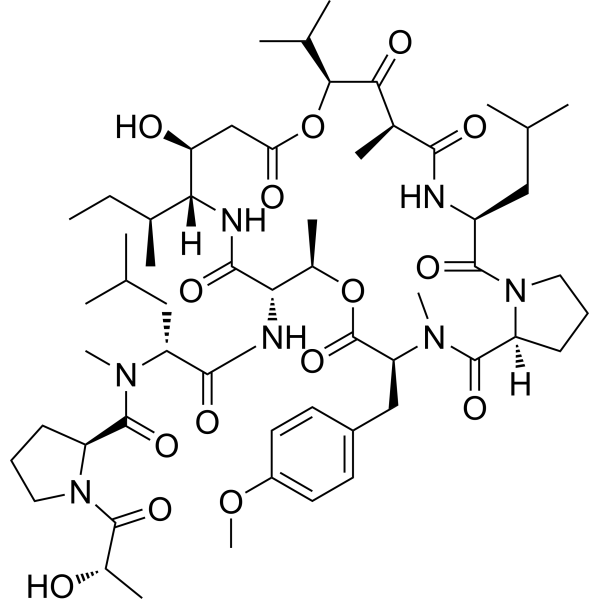
    Fengycin IX; SNA-60-367-3

    Phospholipase Infection
    Plipastatin A1 is a lipopeptide with phospholipase A2 inhibitory activity. Plipastatin A1 inhibits conidial germination of Botrytis cinerea in vitro and reduces the incidence of gray mold on tomato leaves. Plipastatin A1 is applicable to research related to gray mold .
    Plipastatin A1
  • HY-40135R

    (2S,4R)-4-Hydroxypyrrolidine-2-carboxylic acid (Standard)

    Reference Standards Endogenous Metabolite Others
    L-Hydroxyproline (Standard) is the analytical standard of L-Hydroxyproline. This product is intended for research and analytical applications. L-Hydroxyproline, one of the hydroxyproline (Hyp) isomers, is a useful chiral building block in the production of many pharmaceuticals.
    L-Hydroxyproline (Standard)
  • HY-W008205

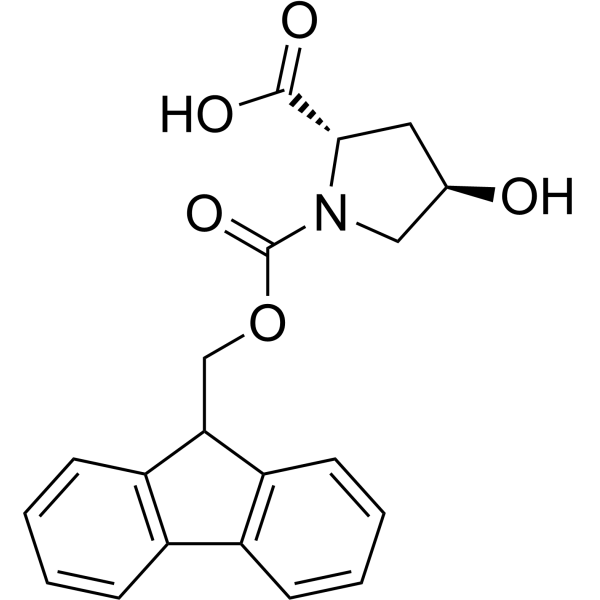
    Fmoc-L-hydroxyproline

    Biochemical Assay Reagents Others
    Fmoc-Hyp-OH is a biochemical reagent that can be used as a biological material or organic compound for life science related research.
    Fmoc-Hyp-OH
  • HY-148231

    DNA/RNA Synthesis ADC Payload Cancer
    Dideoxy-amanitin (compound 2), an α-Amanitin (HY-19610) derivative, is a potent and selective RNA polymerase II allosteric inhibitor with an IC50 value of 74.2 nM .
    Dideoxy-amanitin
  • HY-P4550

    Endogenous Metabolite Metabolic Disease
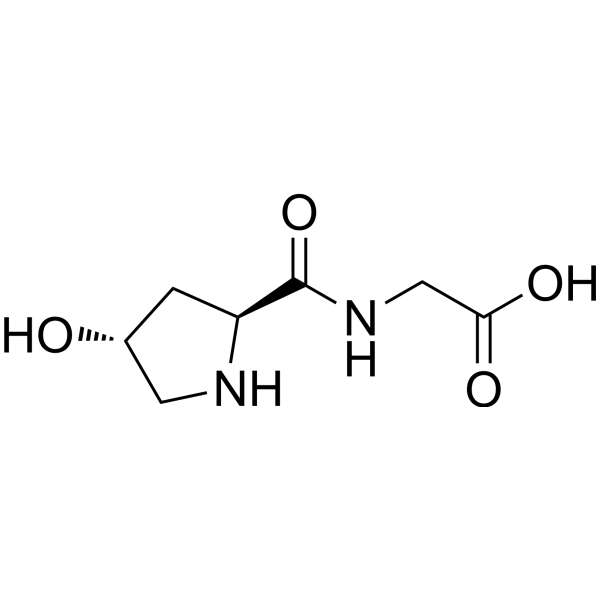
    H-Hyp-Gly-OH is a dipeptide containing hydroxyproline and glycine. H-Hyp-Gly-OH promotes the growth of mouse primary fibroblasts on collagen gel. H-Hyp-Gly-OH has potential applications in improving skin by ingesting hydrolyzed collagen. H-Hyp-Gly-OH can be used for metabolic research .
    H-Hyp-Gly-OH
  • HY-P2874

    Aminopeptidase Others
    Prolidase is a metallo-dependent hydrolase. Prolidase is a metal-dependent peptidase specialized in the cleavage of dipeptides containing proline or hydroxyproline on their C-termini .
    Prolidase
  • HY-W343900

    DL-hydroxyproline

    Amino Acid Derivatives Metabolic Disease
    Hydroxyproline (DL-Hydroxyproline) is a non-essential amino acid and one of the main components of collagen tissue. Hydroxyproline can be used in research on endocrine and metabolic diseases, as well as genetic diseases and malformations. Hydroxyproline can also serve as a biomarker .
    Hydroxyproline
  • HY-157512

    Ligands for E3 Ligase Cancer
    SJF-0661 is a variant of the von Hippel-Lindau (VHL) protein ligand with no targeted degradation ability and can be used as a control reagent for the VHL ubiquitin ligase ligand. SJF-0661 is a variant obtained by inverting the stereocenter of the key hydroxyproline group in the VHL ligand .
    SJF-0661
  • HY-P3100

    Parasite Infection
    Orfamide A is a major metabolite of insecticidal biosurfactant in Pseudomonas sp. F6 and has aphidicidal activity. Orfamide A can be used for aphid control in organic agriculture. Orfamide A exhibits dose-dependent mortality against aphids with an LC50 value of 34.5 μg/mL .
    Orfamide A
  • HY-158104

    ATF6 Others
    LPPM-8 is a ligand of Med25 and an inhibitor of Med25 protein-protein interactions (PPIs). LPPM-8 engages Med25 through interaction with the H2 face of its Activator Interaction Domain and stabilizes full-length protein in the cellular proteome. LPPM-8 is an orthosteric inhibitor of H2-binding transcriptional activators (such as ATF6a). LPPM-8 can be used for studying Med25 and Mediator complex biology .
    LPPM-8
  • HY-W928283

    Biochemical Assay Reagents
    L-Hydroxyproline 7-amido-4-methylcoumarin hydrochloride is a fluorescent substrate with biological activity for enzyme activity detection. L-Hydroxyproline 7-amido-4-methylcoumarin hydrochloride is often used in biochemical research to detect reactions associated with specific enzymes. L-Hydroxyproline 7-amido-4-methylcoumarin hydrochloride helps scientists monitor the progress of reactions through its fluorescent properties. L-Hydroxyproline 7-amido-4-methylcoumarin hydrochloride has important application value in compound development and basic biological research.
    L-Hydroxyproline 7-amido-4-methylcoumarin hydrochloride
  • HY-17490S

    N-Acetyl-L-hydroxyproline-d3

    Isotope-Labeled Compounds Amino Acid Derivatives Inflammation/Immunology
    Oxaceprol-d3 (N-Acetyl-L-hydroxyproline-d3) is deuterium labeled Oxaceprol. Oxaceprol (N-Acetyl-L-hydroxyproline), an orally active derivative of L-proline, possesses distinct anti-inflammatory activity. Oxaceprol is usually used for the research of osteoarthritis and rheumatoid arthritis .
    Oxaceprol-d3
  • HY-17490R

    N-Acetyl-L-hydroxyproline (Standard)

    Amino Acid Derivatives Reference Standards Inflammation/Immunology
    Oxaceprol (Standard) is the analytical standard of Oxaceprol. This product is intended for research and analytical applications. Oxaceprol (N-Acetyl-L-hydroxyproline), an orally active derivative of L-proline, possesses distinct anti-inflammatory activity. Oxaceprol is usually used for the research of osteoarthritis and rheumatoid arthritis .
    Oxaceprol (Standard)
  • HY-106417

    SA 3443

    Phosphatase Aminotransferases (Transaminases) Metabolic Disease
    Limazocic (SA 3443) is an orally active hepatoprotective agent. Limazocic can inhibit increases in serum transaminase, alkaline phosphatase activity and hepatic lipids, hydroxyproline content induced by CCl4. Limazocic can decrease the degree of hepatic necrosis, fibrosis and steatosis. Limazocic can be used for the research of chronic liver injuries .
    Limazocic
  • HY-W354556

    Glycosidase Inflammation/Immunology
    3-Hydroxyproline is a non-glycosyl microbial α-glucosidase inhibitor. 3-Hydroxyproline is used in the research of diabetes (type 2 diabetes/non-insulin-dependent diabetes mellitus) .
    3-Hydroxyproline
  • HY-167643

    Drug Metabolite Metabolic Disease Inflammation/Immunology
    Hydroxy tipelukast (Compound MN-002), the metabolite of Compound MN-001, is an orally active phenoxyalkylcarboxylic acid. Hydroxy tipelukast inhibits liver steatosis, lobular inflammation, hepatic ballooning, and hepatic scarring, and reduces liver hydroxyproline levels. Hydroxy tipelukast is promising for research of non-alcoholic fatty liver disease (NAFLD) and non-alcoholic steatohepatitis (NASH) .
    Hydroxy tipelukast
  • HY-149205

    PI3K ERK Inflammation/Immunology
    CXJ-2 is a cyclic peptide, and exhibits moderate affinity toward elastin derived peptides (EDPs). CXJ-2 exhibits potent activities to inhibit the PI3K/ERK pathway and decrease hepatic stellate cell proliferation and migration. CXJ-2 possesses potent antifibrotic efficacy .
    CXJ-2
  • HY-129937

    PROTACs Epigenetic Reader Domain Cancer
    (S)-GNE-987 (compound 4), the GNE-987 (a chimeric BET degrader) hydroxy-proline epimer, abrogates binding to von Hippel-Lindau and does not degrade BRD4 protein. (S)-GNE-987 binds to the BRD4 BD1(IC50=4 nM) and BD2 (3.9 nM) bromodomains and can be used to design PROTAC-Antibody Conjugate (PAC) .
    (S)-GNE-987
  • HY-78162

    ASCT Cancer
    cis-L-3-Hydroxyproline is an Alanine-Serine-Cysteine transporter 2 (ASCT2, SLC1A5) substrate that can induces inwardly-directed anion current, and forms key interactions with ASCT2 binding site residues including Asn471.cis-L-3-Hydroxyproline can be used for the research of melanoma .
    cis-3-Hydroxyproline
  • HY-P11626

    Collagen Metabolic Disease
    Cyclo(Ala-Hyp) is an orally effective collagen-derived hydroxyproline-containing cyclic dipeptide that can be isolated from the culture supernatant of Lactobacillus plantarum. Cyclo(Ala-Hyp) has an AUC0-6h of 2.350 μg/mL·h, significantly higher than traditional collagen oligopeptides. Cyclo(Ala-Hyp) can be used in research related to liver and kidney function protection, skin care, and joint health.
    Cyclo(Ala-Hyp)
  • HY-122570

    E1/E2/E3 Enzyme Others
    VHL Ligand 38 (Compound 1) is a competitive E3 ubiquitin-protein ligase VHL inhibitor with IC50s of 4.1 and 7.0 μM in 1% and 10% DMSO, respectively. VHL Ligand 38 contains a hydroxyproline residue and an isoxazolylacetamide fragment. VHL Ligand 38 significantly inhibits the binding of a fluorescent peptide derived from HIF1α (FAM-DEALA-Hyp-YIPD) (HY-P5908F) to VHL .
    VHL Ligand 38
  • HY-P11783

    Fungal Infection
    Surfactin C2 is a lipopeptide produced by Bacillus subtilis A18 with antifungal activity. Surfactin C2 acts against Heterobasidion annosum and Heterobasidion parviporum. Surfactin C2 exerts its activity mainly through membrane‑active effects to disrupt fungal cell structures and inhibit mycelial growth. Surfactin C2 can be used for the research of butt rot and root rot of conifers .
    Surfactin C2
  • HY-P2209

    Daechuine S27; N-Demethylamphibine H

    Parasite Phosphodiesterase (PDE) Infection
    Nummularine B (Daechuine S27; N-Demethylamphibine H) is an anti-parasite agent. Nummularine B inhibits calmodulin-dependent phosphodiesterase activity with an IC50 of 16.8 μM. Nummularine B inhibits the growth of Plasmodium and Leishmania donovani in vitro. Nummularine B inhibits the calmodulin-dependent activity of actomyosin Ca 2+-ATPase. Nummularine B is applicable to research related to malaria and visceral leishmaniasis .
    Nummularine B
  • HY-180556

    mTOR PI3K Inflammation/Immunology
    PI3K/mTOR-IN-20 is a selective dual PI3K/mTOR inhibitor. PI3K/mTOR-IN-20 demonstrates nanomolar antiproliferative effects with IC50s of 0.380 and 0.090 μM for MRC-5 and Mlg2908 cells. PI3K/mTOR-IN-20 reduces Ashcroft scores, hydroxyproline content, collagen deposition, and downregulates fibrosis-related proteins, while restoring lung architecture in a Bleomycin-induced pulmonary fibrosis model. PI3K/mTOR-IN-20 shows a favorable safety profile with steady weight recovery and no distinct liver or kidney toxicity. PI3K/mTOR-IN-20 can be used for fetal lung fibroblasts research .
    PI3K/mTOR-IN-20
  • HY-P4948

    Biochemical Assay Reagents Others
    Coumarin-phalloidin is a kind of phalloidin labeled with Coumarin (HY-N0709). Coumarin-phalloidin is a new type of actin probe that can be used for triple immunofluorescence microscopic observation of the cell skeleton .
    Coumarin-Phalloidin

Inquiry Online

Your information is safe with us. * Required Fields.

Salutation


Country or Region *

Applicant Name *


Organization Name *

Department *


Email Address *


Product Name *

Cat. No.


Requested quantity *

Phone Number *


Remarks

Inquiry Online

Inquiry Information

Product Name:
Cat. No.:
Quantity:
MCE Japan Authorized Agent:

