

49 Results for "

leukemia stem cells

" in MedChemExpress (MCE) Product Catalog:
Products (49)

49 Results for "leukemia stem cells" in MCE Product Catalog:

77
77 Publications Verification
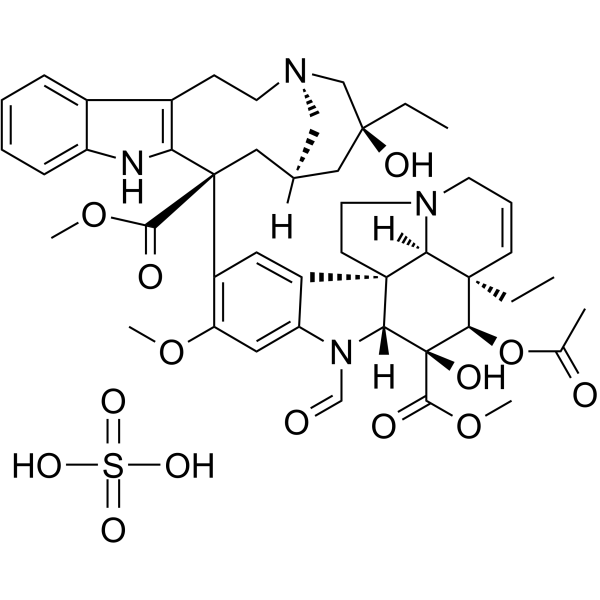
Cat. No.: HY-N0488
CAS No.: 2068-78-2
Synonyms: Leurocristine sulfate; NSC-67574 sulfate; 22-Oxovincaleukoblastine sulfate
Vincristine (Leurocristine; NSC-67574; 22-Oxovincaleukoblastine) sulfate is a microtubule inhibitor that disrupts microtubule polymerization by binding to β-tubulin (with a Ki of 85 nM in bovine), arrests the cell cycle and induces apoptosis. Vincristine sulfate inhibits cell replication, tumor blood flow and the proliferation of various cancer cells, while triggering effects such as oxidative stress, inflammation, calcium overload, epithelial-mesenchymal transition and peripheral neuropathic pain. Vincristine sulfate upregulates the expression of various transporters and nuclear receptors, and enriches gastric cancer stem-like cells. Vincristine sulfate is used in research related to various tumors including acute lymphoblastic leukemia, lymphoma, melanoma, gastric cancer, solid tumors and sarcomas .
loading...
    loading...
77
77 Publications Verification
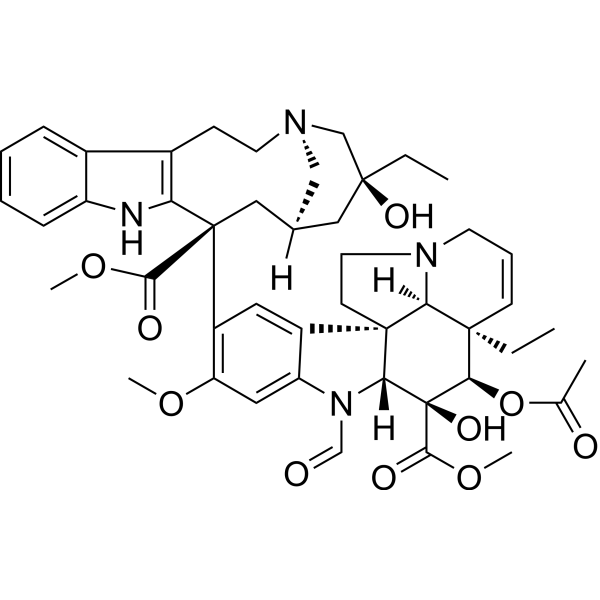
Cat. No.: HY-N0488A
CAS No.: 57-22-7
Synonyms: Leurocristine; NSC-67574; 22-Oxovincaleukoblastine
Vincristine (Leurocristine; NSC-67574; 22-Oxovincaleukoblastine) is a microtubule inhibitor that disrupts microtubule polymerization by binding to β-tubulin (with a Ki of 85 nM in bovine), arrests the cell cycle and induces apoptosis. Vincristine inhibits cell replication, tumor blood flow and the proliferation of various cancer cells, while triggering effects such as oxidative stress, inflammation, calcium overload, epithelial-mesenchymal transition and peripheral neuropathic pain. Vincristine upregulates the expression of various transporters and nuclear receptors, and enriches gastric cancer stem-like cells. Vincristine is used in research related to various tumors including acute lymphoblastic leukemia, lymphoma, melanoma, gastric cancer, solid tumors and sarcomas .
loading...
    loading...
7
7 Cited Publications
Cat. No.: HY-112904
CAS No.: 2375193-43-2
Purity:  99.08%
Target:  

p62 Autophagy

Research Areas:  

Cancer

XRK3F2 is a p62 (sequestosome-1) ZZ domain inhibitor that has specificity for the p62-ZZ domain over other p62 signaling domains. XRK3F2 blocks TNFα effects and upregulation in bone marrow stromal cells, and induces multiple myeloma cell apoptosis. XRK3F2 can be used for the research of multiple myeloma bone disease, acute myeloid leukemia, and multiple myeloma .
loading...
    loading...
6
6 Cited Publications
Cat. No.: HY-B1165
CAS No.: 41354-29-4
Cyproheptadine hydrochloride sesquihydrate acts as a p38 MAP kinase activator, CHK2 activator, histamine H1 receptor inhibitor and serotonin receptor inhibitor. Cyproheptadine hydrochloride sesquihydrate mediates cell cycle arrest via G1 phase arrest, G1/S transition arrest, G0/G1 phase arrest, reduced expression of cyclins D1/D2/D3, upregulated expression of HBP1, p16, p21, p27, and decreased phosphorylation of retinoblastoma protein. Cyproheptadine hydrochloride sesquihydrate induces Apoptosis by increasing PARP and cleaved PARP, as well as activating the mitochondrial caspase pathway. Cyproheptadine hydrochloride sesquihydrate inhibits tumor growth with extremely low toxicity to normal cells. Cyproheptadine hydrochloride sesquihydrate can be used in research related to hepatocellular carcinoma, multiple myeloma and acute myeloid leukemia .
loading...
    loading...
2
2 Cited Publications
Cat. No.: HY-108420
CAS No.: 6314-70-1
Purity:  98.10%
Target:  

CDK

Research Areas:  

Cancer

INK4C-IN-2 is a p18 INK4C inhibitor. NK4C-IN-2 promotes hematopoietic stem cells (HSCs) division by inhibiting INK4C and activating CDK4/6, with an ED50 of 5.21 nM. INK4C-IN-2 shows no cytotoxic to normal 32D cells, HSCs, leukemia cell lines and myeloma cell lines .
loading...
    loading...
1
1 Cited Publications
Cat. No.: HY-P99014
CAS No.: 1864871-20-4
Synonyms: ARGX-110

Research Areas:  

Inflammation/Immunology Cancer

Cusatuzumab (ARGX-110) is a selective competitive blocker targeting CD70 (with an equilibrium dissociation constant of 17 pM for binding to human CD70). Cusatuzumab also possesses enhanced antibody-dependent cell-mediated cytotoxicity (ADCC) activity. It is a humanized IgG1 monoclonal antibody, artificially synthesized through humanization and genetic engineering modifications (CH2 region mutation to enhance effector function). Cusatuzumab has a dual mechanism of action: firstly, it competitively blocks the interaction between CD70 and CD27, inhibiting the CD27-NF-κB signaling pathway, reducing regulatory T cell (Treg) activation and tumor cell proliferation; secondly, by enhancing binding to FcγRIIIa, it mediates ADCC and antibody-dependent cellular phagocytosis (ADCP), directly lysing CD70-positive tumor cells. Cusatuzumab can efficiently eliminate leukemia stem cells (LSCs), induce tumor cell differentiation and apoptosis, restore immune surveillance, and target CD70-positive tumors. Cusatuzumab is used in the study of acute myeloid leukemia (AML) .
loading...
    loading...
1
1 Cited Publications
Cat. No.: HY-18948
CAS No.: 1816331-63-1
Research Areas:  

Cancer

GSK321 is a potent, selective mutant IDH1 inhibitor with IC50 values of 2.9, 3.8, 4.6 and 46 nM for R132G, R132C, R132H and WT IDH1, respectively, and >100-fold selectivity over IDH2. GSK321 induces decrease in intracellular α-Hydroxyglutaric acid (2-HG) (HY-113038B), abrogation of the myeloid differentiation block and induction of granulocytic differentiation at the level of leukemic blasts and more immature stem-like cells. GSK321can be used for research of acute myeloid leukemia (AML) and other cancers .
loading...
    loading...
1
1 Cited Publications
Cat. No.: HY-120427
CAS No.: 154212-56-3
Purity:  98.82%
Synonyms: NSC 658586
Target:  

CCR CXCR HIV HSV

Research Areas:  

Infection Inflammation/Immunology

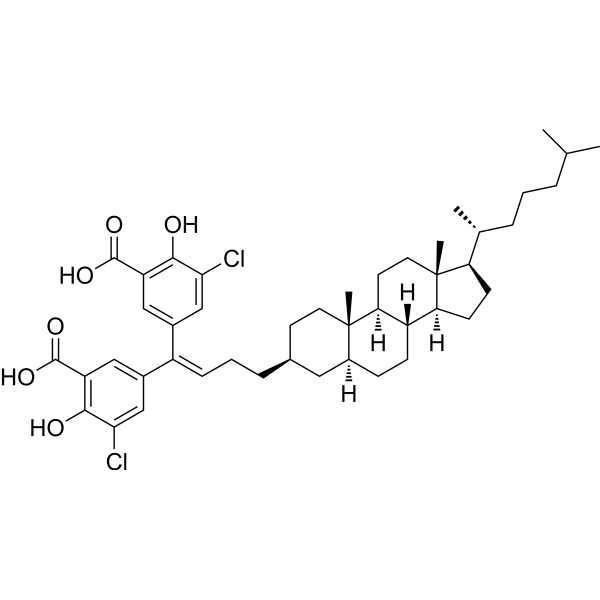
Cosalane (NSC 658586) is a CCR7 (IC50 = 2.43 μM) and CXCR2 antagonist (IC50 = 0.66 μM). Cosalane is an inhibitor of HIV replication with a wide range of activity against HIV-1 isolates, HIV-2, Rauscher murine leukemia virus, HSV-1, HSV-2 and human cytomegalovirus. Cosalane inhibits both attachment of gp120 to CD4. Cosalane inhibits human and murine CCR7 in response to both CCL19 and CCL21 agonists. Cosalane can be studied in research for HIV or attenuating acute graft-versus-host disease (aGVHD) in allogeneic hematopoietic stem cell transplantation (HSCT) .
loading...
    loading...
1
1 Cited Publications
Cat. No.: HY-P3443
Synonyms: PNA
Peanut agglutinin (PNA) is a carbohydrate-recognition protein that binds competitively and irreversibly to cell-surface β-D-Gal (1-3)-GalNAc, and this binding can be inhibited by D-galactose and asialofetuin. Peanut agglutinin recognizes exposed glycoepitopes and reflects the glycosylation status of cells. Peanut agglutinin can label glycoconjugates at neuromuscular junctions to safely visualize synaptic structures. Peanut agglutinin can be used to synthesize dyes to distinguish between normal and tumor tissues. Peanut agglutinin provides support for research on leukemia, Burkitt's tumors, and cutaneous squamous lesions .
loading...
    loading...
Cat. No.: HY-P99488
CAS No.: 2574591-89-0
Synonyms: JSP-191; AMG-191

Target:  

c-Kit

Research Areas:  

Inflammation/Immunology Cancer

Briquilimab (JSP-191 or AMG-191) is a humanized IgG1 monoclonal antibody that binds human CD117 (c-Kit). Briquilimab blocks the interaction between CD117 receptor and stem cell factor on various CD117 expressing tissues. Briquilimab can lead to inhibition of SCF/c-Kit signaling and MC apoptosis. Briquilimab is a non-toxic approach to target and deplete HSC, enabling blood and immune reconstitution with minimal toxicity with the other agents being used for transient immune suppression to prevent immunologic rejection. Briquilimab can be used in various disease research such as severe combined immunodeficiency (SCID), myelodyplastic syndromes (MDS), acute myeloid leukemia (AML), chronic spontaneous urticarial (CSU), chronic inducible urticarial (CIndU) and asthema .
loading...
    loading...
Cat. No.: HY-N1255
CAS No.: 6451-73-6
Synonyms: (-)-Scoulerine; Discretamine
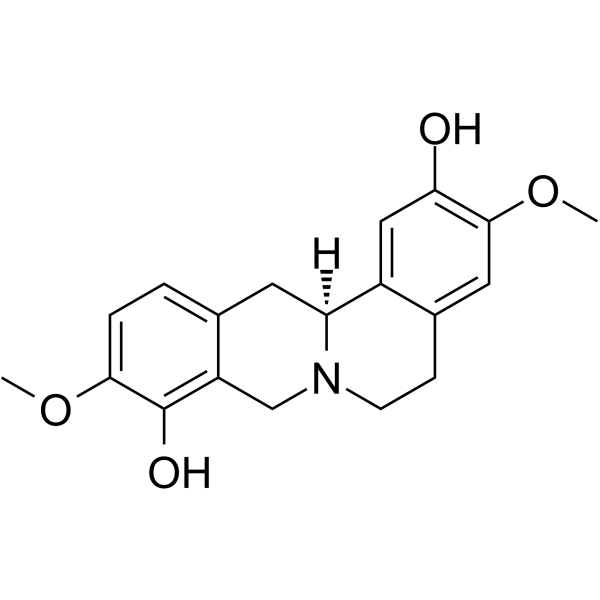
Scoulerine ((-)-Scoulerine; Discretamine) hydrochloride is a multi-target inhibitor with anti-tumor and antioxidant activities. Scoulerine mainly targets the PI3K/Akt/mTOR signaling axis and α1D-adrenergic receptor, disrupts microtubule structure, and induces cell cycle arrest and apoptosis. Scoulerine effectively inhibits mitochondrial dehydrogenase activity, targets GABA receptors and BACE1, and suppresses the proliferation, migration, invasion, epithelial-mesenchymal transition and stem cell properties of cancer cells. Scoulerine also exhibits multiple pharmacological activities including anti-Plasmodium falciparum, antibacterial, antiemetic and antitussive effects, and regulates endoplasmic reticulum stress and mitochondrial function (modulates Bax, Bcl-2 and cytochrome c). Scoulerine is applicable to research related to leukemia, ovarian cancer, and colorectal cancer .
loading...
    loading...
Cat. No.: HY-12854
CAS No.: 868169-64-6
Purity:  99.43%
Synonyms: GRN163L
Target:  

Telomerase Apoptosis

Research Areas:  

Cardiovascular Disease Cancer

Imetelstat (GRN163L) is a 13-mer oligonucleotide and competitive Telomerase inhibitor. Imetelstat binds with high affinity to the template region of the RNA component of human telomerase. Imetelstat induces Apoptosis. Imetelstat is capable of selectively eliminating myelofibrosis hematopoietic stem cells. Imetelstat leads to the loss of a cancer cell's ability to maintain telomere length, resulting in the inhibition of cell proliferation .
loading...
    loading...
Cat. No.: HY-153775
CAS No.: 278806-03-4
Purity:  99.85%
Research Areas:  

Cancer

UC-764864 is a selective UBE2N inhibitor. UC-764864 covalently binds UBE2N catalytic Cys87, blocks ubiquitin-UBE2N thioester formation and polyubiquitin chain synthesis. UC-764864 blocks ubiquitination of innate immune- and inflammatory-related substrates, and induces cell apoptosis. UC-764864 can be used for the research of acute myeloid leukemia .
loading...
    loading...
Cat. No.: HY-N2732
CAS No.: 68097-13-2
Synonyms: 6-Prenyl-4',5,7-trihydroxyflavone; 6-C-Prenylapigenin
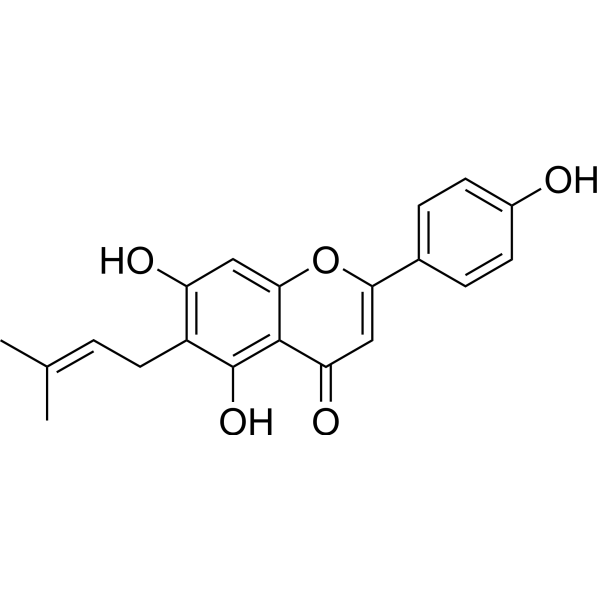
6-Prenylapigenin (6-Prenyl-4',5,7-trihydroxyflavone; 6-C-Prenylapigenin) is a prenylated flavonoid that exists in the stems and leaves of Maclura pomifera. 6-Prenylapigenin exhibits cytotoxicity against cancer cells such as leukemia cells and solid tumor cells .
loading...
    loading...
Cat. No.: HY-177578
NN3201 is a c-Kit-targeting antibody-drug conjugate (ADC) with high affinity (KD = 0.19 pM). NN3201 is composed of 4-(3-Tosyl-2-(tosylmethyl)propanoyl)benzoic acid-glu(PEG24-Me)-val-cit-NH-benzyloxyformic acid-MMAE (HY-178219) and an anti-c-Kit human monoclonal antibody NN2101 (HY-P991293). NN3201 rapidly internalizes and inhibits stem cell factor (SCF)-driven signaling, thereby delivering its payload to induce cell cycle arrest and apoptosis. NN3201 exhibits no Fc-mediated effector functions antibody-dependent cell-mediated cytotoxicity (ADCC)/complement-dependent cytotoxicity (CDC) due to reduced FcγR binding. NN3201 exhibits significant c-Kit-dependent anti-tumor efficacies in various tumor models. NN3201 can be used in small cell lung cancer (SCLC) and gastrointestinal stromal tumor (GIST) and acute myeloid leukemia (AML) research [1][2].
loading...
    loading...
Cat. No.: HY-P991381
Synonyms: PPMX-T003; TSP-A18
JST‑TfR09 (PPMX‑T003) is a human monoclonal antibody (mAb) targeting transferrin receptor 1 (TfR1/CD71). JST‑TfR09 blocks the binding of transferrin to TfR1, inhibits TfR1 internalization, and suppresses cellular iron uptake. JST‑TfR09 triggers ferritin degradation via activating the autolysosomal system, promotes ROS production and lipid peroxidation, and ultimately induces ferroptosis. JST‑TfR09 exhibits cytotoxicity toward human erythroblasts differentiated from hematopoietic stem cells. JST-TfR09 can be used in leukemia research. Recommended isotype control: Human IgG1 lambda, Isotype Control (HY-P99992) .
loading...
    loading...
Cat. No.: HY-128888B
CAS No.: 1816272-18-0
Purity:  98.62%
Research Areas:  

Cancer

(S,R)-GSK321 is the (S,R)-enantiomer of GSK321 (HY-18948). GSK321 is a potent, selective mutant IDH1 inhibitor with IC50 values of 2.9, 3.8, 4.6 and 46 nM for R132G, R132C, R132H and WT IDH1, respectively, and >100-fold selectivity over IDH2. GSK321 induces decrease in intracellular 2-HG, abrogation of the myeloid differentiation block and induction of granulocytic differentiation at the level of leukemic blasts and more immature stem-like cells. GSK321can be used for research of acute myeloid leukemia (AML) and other cancers .
loading...
    loading...
Cat. No.: HY-149819
CAS No.: 2944087-54-9
Purity:  99.60%
Target:  

HDAC CDK

Research Areas:  

Cancer

CDK/HDAC-IN-3 is an orally active HDACs/CDKs dual inhibitor. CDK/HDAC-IN-3 has potent and selective inhibition of CDK9, CDK12, CDK13, HDAC1, HDAC2 and HDAC3 with IC50 values of 98.32 nM, 98.85 nM, 100 nM, 62.12 nM, 93.28nM and 82.87 nM. CDK/HDAC-IN-3 can be used for the acute myeloid leukemia (AML) .
loading...
    loading...
Cat. No.: HY-175164
Target:  

Apoptosis c-Myc

Research Areas:  

Cancer

SVC112 is a translation elongation inhibitor that prevents the cyclic dissociation of EF2 from the ribosome, thereby inhibiting the elongation step of translation. SVC112 shows activity in growth inhibition among cancer cell lines of various origins (acute myeloid leukemia (AML), multiple myeloma (Myeloma), colorectal cancer (CRC), and head and neck squamous cell carcinoma (HNSCC)). SVC112 preferentially impedes ribosomal processing of mRNAs, and decreaseds CSC-related proteins including Myc and Sox2. SVC112 induces apoptosis in hematologic cancer cell lines, while phosphorylation of c-Myc correlates with sensitivity to SVC112 in colorectal cancer cell lines. SVC112 inactivates HNSCC stem cells in vitro and prevents the regrowth of HNSCC tumor xenografts in mice. SVC112 can be used for the study of HNSCC .
loading...
    loading...
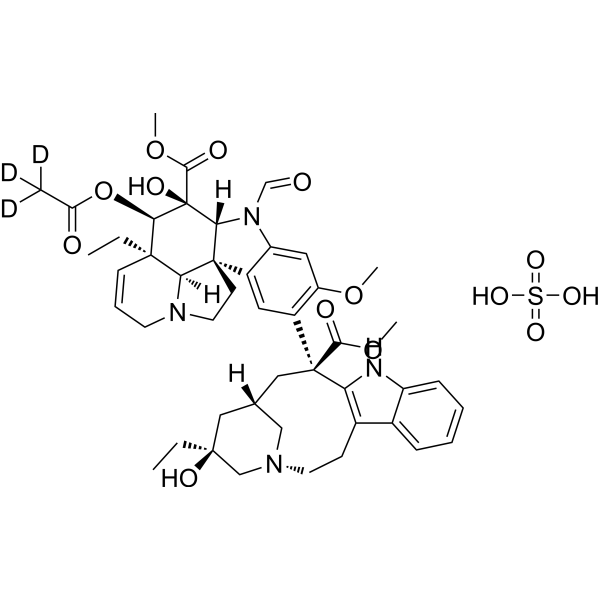
Cat. No.: HY-N0488S
CAS No.: 1246817-10-6
Synonyms: Leurocristine-d3 sulfate; NSC-67574-d3 sulfate; 22-Oxovincaleukoblastine-d3 sulfate
Vincristine-d3 sulfate is the deuterium labeled Vincristine sulfate. Vincristine sulfate (Leurocristine; NSC-67574; 22-Oxovincaleukoblastine) is a microtubule inhibitor that disrupts microtubule polymerization by binding to β-tubulin (with a Ki of 85 nM in bovine), arrests the cell cycle and induces apoptosis. Vincristine sulfate inhibits cell replication, tumor blood flow and the proliferation of various cancer cells, while triggering effects such as oxidative stress, inflammation, calcium overload, epithelial-mesenchymal transition and peripheral neuropathic pain. Vincristine sulfate upregulates the expression of various transporters and nuclear receptors, and enriches gastric cancer stem-like cells. Vincristine sulfate is used in research related to various tumors including acute lymphoblastic leukemia, lymphoma, melanoma, gastric cancer, solid tumors and sarcomas .
loading...
    loading...

