1. Search Result
Search Result
Results for "

memory,

" in MedChemExpress (MCE) Product Catalog:

410

Inhibitors & Agonists

1

Screening Libraries

1

Fluorescent Dyes

5

Biochemical Assay Reagents

35

Peptides

16

Inhibitory Antibodies

61

Natural
Products

12

Isotope-Labeled Compounds

3

Click Chemistry

11

Oligonucleotides

2

GMP Molecules

Cat. No. Product Name Target Research Areas Chemical Structure
  • HY-110004

    Arachidonyl-2-chloroethylamide

    Cannabinoid Receptor Others
    ACEA (short for arachidonyl-2'-chloroacetamide) is a synthetic organic compound that acts as an agonist of the cannabinoid receptor CB1. It is a chemical that affects the endocannabinoid system in the body, which regulates various physiological processes such as appetite, pain perception, mood, and memory .
    ACEA
  • HY-B0193
    Prazosin
    15+ Cited Publications

    Adrenergic Receptor Cardiovascular Disease Endocrinology
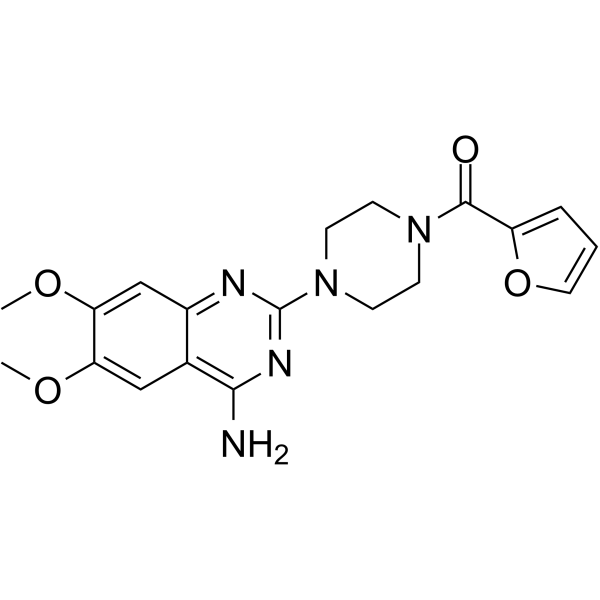
    Prazosin is an α-adrenergic receptor antagonist. Prazosin can reduce inflammation, relieve anxiety, alleviate panic, prevent memory decline, and modulate the pain-relieving effects of opioids. Prazosin can be used in the study of hypertension and Alzheimer’s disease .
    Prazosin
  • HY-N6608
    Physostigmine
    2 Publications Verification

    Eserine

    Cholinesterase (ChE) Neurological Disease
    Physostigmine (Eserine) is a reversible acetylcholinesterase (AChE) inhibitor. Physostigmine can crosses the blood-brain barrier and stimulates central cholinergic neurotransmission. Physostigmine can reverse memory deficits in transgenic mice with Alzheimer's disease. Physostigmine is also an antidote for anticholinergic poisoning .
    Physostigmine
  • HY-N0691
    Schisandrin
    3 Publications Verification

    Schizandrin; Schizandrol; Schizandrol-A

    Autophagy Inflammation/Immunology Cancer
    Schisandrin (Schizandrin), a dibenzocyclooctadiene lignan, is isolated from the fruit of Schisandra chinensis Baill. Schisandrin exhibits antioxidant, hepatoprotective, anti-cancer and anti-inflammatory activities. Schisandrin also can reverses memory impairment in rats .
    Schisandrin
  • HY-N2189
    Swertisin
    2 Publications Verification

    Adenosine Receptor HBV SGLT Infection Neurological Disease Inflammation/Immunology
    Swertisin is an oral adenosine A1 receptor antagonist and an SGLT2 inhibitor. Swertisin has anti-diabetic, antioxidant properties, inhibits HBV, and improves cognitive and memory impairments in mice .
    Swertisin
  • HY-B0106A

    UCB 6474

    Drug Derivative Neurological Disease
    Etiracetam is a racetam-class nootropic agent. Etiracetam enhances learning and memory in both normal and amnesic rats. Etiracetam can be used in studies related to memory retrieval disorders and amnesic diseases such as Alzheimer's disease .
    Etiracetam
  • HY-17555

    Centrophenoxine hydrochloride

    nAChR iGluR Neurological Disease
    Meclofenoxate (Centrophenoxine) hydrochloride is an ester synthesized from DMAE and pCPA, capable of crossing the blood-brain barrier, and can stimulate memory and enhance cognition .
    Meclofenoxate hydrochloride
  • HY-D0873

    EPPS

    Amyloid-β Neurological Disease
    HEPPS (EPPS) is a buffering agent with the useful pH range from 7.3 ~ 8.7. HEPPS reduces -aggregate-induced memory deficits and rescues cognitive deficits in mice. EPPS is orally active and penetrates the blood-brain barrier .
    HEPPS
  • HY-101528

    iGluR Neurological Disease
    IDRA 21 is a positive and orally active modulator of the AMPA receptor. IDRA 21 facilitates excitatory neurotransmission via GluR1/2 receptors. IDRA 21 has the potential for the research of cognitive/memory disorders, including those associated with aging .
    IDRA 21
  • HY-17553
    Coluracetam
    3 Publications Verification

    MKC-231

    iGluR Neurological Disease
    Coluracetam (MKC-231) is an orally taken choline uptake enhancer. Coluracetam can improve the reduced acetylcholine levels in the hippocampus of rats and mice, enhancing learning difficulties, memory deficits, and cognitive impairments. Coluracetam induces a lower degree of hepatic venous hyperglycemia .
    Coluracetam
  • HY-N0307

    Bcl-2 Family NF-κB DNA/RNA Synthesis Apoptosis Cardiovascular Disease Neurological Disease
    Ciwujianoside B is an orally active, blood-brain barrier penetrable radioprotective agent and memory enhancer. Ciwujianoside B reduces radiation-induced DNA damage, cell cycle arrest and apoptosis, downregulates NF-κB and the Bax/Bcl-2 ratio, and enhances the proliferative capacity of bone marrow cells. Ciwujianoside B enhances object recognition memory in normal mice and induces dendritic extension in primary cultured cortical neurons. Ciwujianoside B can be used in studies related to hematopoietic system radiation injury and memory enhancement .
    Ciwujianoside B
  • HY-151518

    Aminopeptidase Neurological Disease
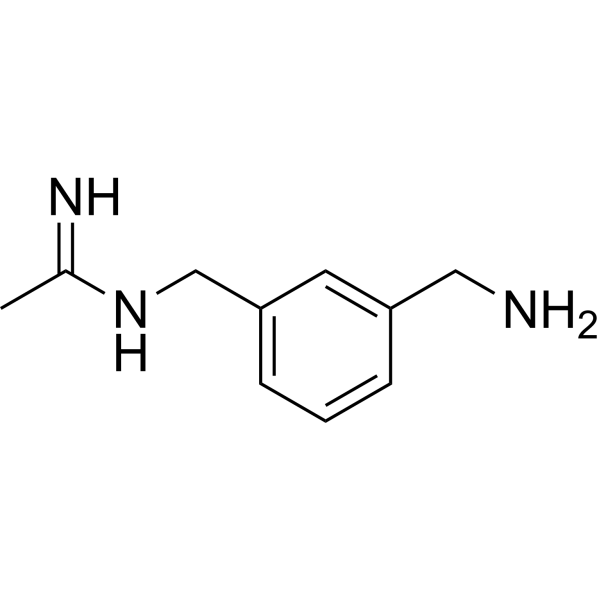
    Aminopeptidase-IN-1 is an insulin-regulated aminopeptidase (IRAP) inhibitor with an Ki value of 7.7 μM. Aminopeptidase-IN-1 can be used for the research of memory impairments .
    Aminopeptidase-IN-1
  • HY-W041892
    Dimethyl itaconate
    1 Publications Verification

    Reactive Oxygen Species (ROS) Infection Neurological Disease Inflammation/Immunology
    Dimethyl itaconate induces innate immune memory (trained immunity), and exhibits immunomodulatory property. Dimethyl itaconate inhibits the activation of microglia, reduces the neuroinflammation and synaptic structural damage. Dimethyl itaconate regulates the composition of intestinal flora .
    Dimethyl itaconate
  • HY-P3585

    TNF Receptor Neurological Disease Inflammation/Immunology
    Epobis, a dendrimeric peptide, is a recombinant form of erythropoietin. Epobis is a potent erythropoietin receptor agonist. Epobis promotes neuritogenesis in primary motoneurons. Epobis decrease TNF release and crosses the blood-brain barrier. Epobis has anti-inflammatory and memory enhancing properties .
    Epobis
  • HY-15114
    S 17092
    1 Publications Verification

    S 17092-1

    Prolyl Endopeptidase (PREP) Apoptosis Neurological Disease
    S 17092 (S 17092-1) is an orally active cerebral prolyl-endopeptidase (PEP) inhibitor with an IC50 of 1.2 nM. S 17092 inhibits cell apoptosis. S 17092 mechanism of action is to inhibit the activity of PEP, slowing down the degradation of neuroactive peptides and thus enhancing memory function. S 17092 can be used for the research of memory impairment and cognitive disorders associated with cerebral aging .
    S 17092
  • HY-176438

    Tau Protein Neurological Disease
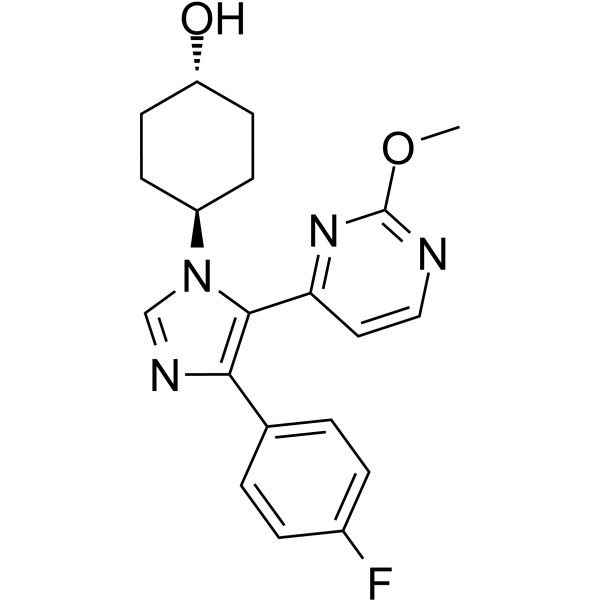
    DDL-357 is a potent secreted clusterin enhancer. DDL-357 reduces phospho-tau in brain and improves memory in the murine 3xTg-AD model .
    DDL-357
  • HY-N4134

    NO Synthase Inflammation/Immunology
    Ciwujianoside C3, an orally active and brain penetrated compound, is isolated the leaves of Acanthopanax henryi Harms. Ciwujianoside C3 has anti-inflammatory effect and can reinforces object recognition memory .
    Ciwujianoside C3
  • HY-108583

    5-(4-Phenylbutoxy)psoralen

    Potassium Channel Inflammation/Immunology
    Psora-4 is a potent and selective inhibitor of Kv1.3 (voltage-gated potassium channels) with an EC50 of 3 nM . Psora-4 has immunosuppressive activity and inhibits proliferation of human and rat myelin-specific effector memory T cells in vitro .
    Psora-4
  • HY-N0459
    3,5-O-Dicaffeoylquinic acid
    1 Publications Verification

    Others Neurological Disease
    3,5-O-Dicaffeoylquinic acid reverses Trimethyltin-induced learning and memory deficits .
    3,5-O-Dicaffeoylquinic acid
  • HY-I0020

    (-)-Narwedine; Narwedin

    Cholinesterase (ChE) Neurological Disease
    Galanthaminone (Narwedin) is a competitive and reversible cholinesterase (AChE) inhibitor; is used for the treatment of mild to moderate Alzheimer's disease and various other memory impairments.
    Galanthaminone
  • HY-129824

    Endogenous Metabolite Neurological Disease
    3-Methyl orsellinic acid is the fungal metabolite. 3-Methyl orsellinic acid can be used for synthesis of tripodalsporormielones AeC, and exhibits potential in researches related to memory and cognition .
    3-Methyl orsellinic acid
  • HY-P1437

    Neuropeptide Y Receptor Neurological Disease
    Neuropeptide S (mouse) is a bioactive peptide. Neuropeptide S (mouse), as a neurotransmitter/neuromodulator of 20 amino acids, can be used for the research of arousal, anxiety, locomotion, feeding behaviors, memory and agent addiction .
    Neuropeptide S (mouse)
  • HY-P2497
    Exendin (5-39)
    1 Publications Verification

    GCGR Neurological Disease
    Exendin (5-39) is a potent glucagon-like peptide 1 (GLP-1) receptor antagonist. Exendin (5-39) improves memory impairment in β-amyloid protein-treated rats .
    Exendin (5-39)
  • HY-142066

    PKA ERK iGluR Neurological Disease
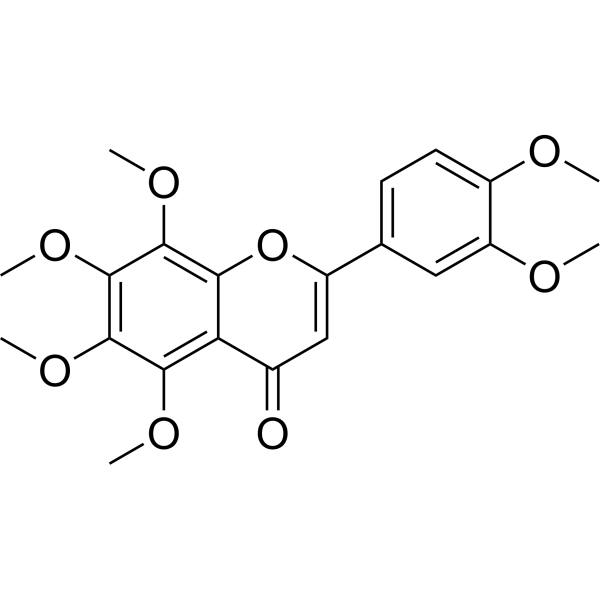
    4′-Demethylnobiletin is a bioactive metabolite that activates the PKA/ERK/CREB signaling pathway, enhances CRE-mediated transcription in hippocampal neurons, and reverses memory impairment associated with NMDA receptor antagonism by stimulating ERK signaling .
    4′-Demethylnobiletin
  • HY-W415004

    Cholinesterase (ChE) Neurological Disease
    ACHE-IN-38 (Compound mol-8) inhibits the metabolic breakdown of the neurotransmitter acetylcholine (ACh) by the enzyme acetylcholinesterase (AChE) and hence alleviates memory deficits in patients with Alzheimer’s Disease by potentiating cholinergic transmission .
    ACHE-IN-38
  • HY-P99945

    ABBV-368

    Orexin Receptor (OX Receptor) Inflammation/Immunology Cancer
    Revdofilimab (ABBV-368) is a human IgG1 agonist monoclonal antibody against OX40. Among them, OX40 is a member of the TNF receptor superfamily expressed on activated and memory T cell subsets and T regulatory cells .
    Revdofilimab
  • HY-W014941

    Histamine Receptor Neurological Disease
    (R)-(-)-α-Methylhistamine dihydrochloride is a potent, selective and brain-penetrant agonist of H3 histamine receptor, with a Kd of 50.3 nM . (R)-(-)-α-Methylhistamine dihydrochloride can enhance memory retention, attenuates memory impairment in rats .
    (R)-(-)-α-Methylhistamine dihydrochloride
  • HY-101260

    Orexin Receptor (OX Receptor) Neurological Disease
    DORA-22 is an orally active dual orexinergic receptor antagonist, and improves the sleep disruption and memory impairment. DORA-22 can be used for study of insomnia .
    DORA-22
  • HY-129980

    PKC Neurological Disease
    NPC-15437 dihydrochloride is a selective, penetrable and reversible protein kinase C (PKC) inhibitor, with an IC50 of 19 μM. NPC-15437 dihydrochloride interferes with mechanisms underlying memory consolidation .
    NPC-15437 dihydrochloride
  • HY-135525

    Dopamine Receptor Adrenergic Receptor Neurological Disease Inflammation/Immunology
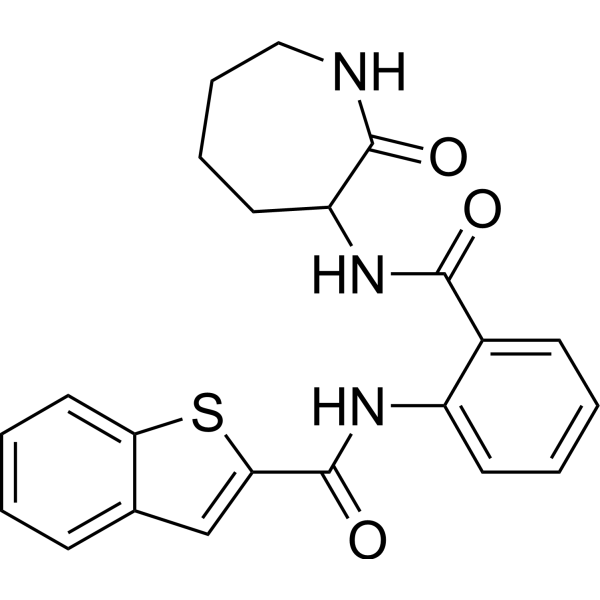
    Agroclavine acts as an agonist of the D1-dopamine receptor and α1-adrenergic receptor. Agroclavine enhances the sensitivity of the brain to magnetic fields; it impairs spatial memory without affecting hippocampal long-term potentiation (LTP). Agroclavine exerts bidirectional regulatory effects on immune activity: it enhances NK cell activity with low toxicity under normal conditions, while it inhibits NK cell activity and exhibits significant cardiac and hepatic toxicity under stress conditions. Agroclavine can be used for research on neuroelectrophysiology, learning and memory, and immunoregulation .
    Agroclavine
  • HY-13976A

    Drug Derivative Neurological Disease
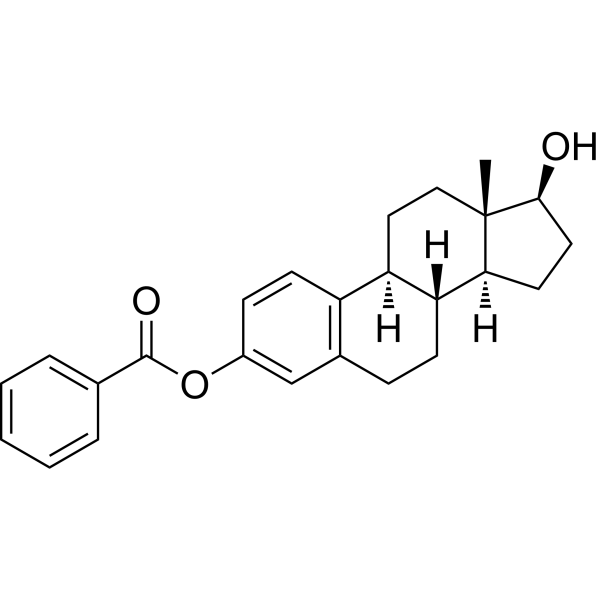
    PRL-8-53 is an orally active, blood-brain barrier-permeable benzoate derivative with potent spasmolytic activity and central nervous system regulatory activity. PRL-8-53 acts on dopamine, serotonin and cholinergic-related targets, enhances dopamine activity, partially inhibits serotonin function and elicits cholinergic responses, thereby maintaining neurotransmitter balance in the central nervous system. PRL-8-53 improves learning ability, short-term memory and long-term memory in animals. PRL-8-53 can be used in central nervous system-related research .
    PRL-8-53
  • HY-128174

    Beta-CCM; Ro 22-7497

    GABA Receptor Neurological Disease
    β-CCM is a benzodiazepine receptor inverse agonist with anxiogenic and proconvulsant effects. β-CCM enhances emotional reactivity and reduces vulnerability to interference in spatial working memory tasks. β-CCM can be used for research on anxiety-related disorders .
    β-CCM
  • HY-100999

    Histamine Receptor Neurological Disease
    (R)-(-)-α-Methylhistamine dihydrobromide is a potent, selective and brain-penetrant agonist of H3 histamine receptor, with a Kd of 50.3 nM . (R)-(-)-α-Methylhistamine dihydrobromide can enhance memory retention, attenuates memory impairment in rats .
    (R)-(-)-α-Methylhistamine dihydrobromide
  • HY-Z8890

    Cholinesterase (ChE) Neurological Disease
    Norneostigmine is a potent inhibitor of AChE that can penetrate the blood-brain barrier. Norneostigmine can achieve a 50% inhibition rate of mouse brain AChE after 10 min treatment, which is close to the inhibitory effect of tetrahydroaminoacridine (57% at 10 min). Norneostigmine can be used to study memory disorders related to Alzheimer's disease and other memory disorders .
    Norneostigmine
  • HY-11053

    nAChR Neurological Disease
    S 24795 is a partial agonist of α7 nAChR and improves mnemonic function in aged mice for the research of aging-related memory disturbances .
    S 24795
  • HY-101363

    Piperonylic acid piperidide

    iGluR Neurological Disease
    1-BCP (Piperonylic acid piperidide) is a centrally active agent that modulates AMPA receptor gated currents. 1-BCP is a memory-enhancing agent .
    1-BCP
  • HY-148331

    Prolyl Endopeptidase (PREP) Neurological Disease
    Z-Thioprolyl-Thioproline is a bovine brain prolyl endopeptidase (PEP) inhibitor (IC50=16 µM; Ki=37 µM). Z-Thioprolyl-Thioproline is used in the study of neurological disorders such as memory disorders and cognitive disorders .
    Z-Thioprolyl-Thioproline
  • HY-153416

    Amyloid-β Neurological Disease
    QR-0217 is a potent Aβ1-40 aggregation inhibitor with an IC50 value of 7.5 µM. QR-0217 inhibits α-synuclein aggregation. QR-0217 reduces memory impairments caused by Aβ neurotoxicity .
    QR-0217
  • HY-W780130

    Mitochondrial Metabolism GSK-3 Inflammation/Immunology
    SkQR1 hydroxide is a mitochondrial targeted antioxidant. SkQR1 hydroxide can inhibit glycogen synthase kinase 3β (GSK3β) in the brain. SkQR1 hydroxide has a significant memory promoting effect. SkQR1 hydroxide can be used for research related to brain memory .
    SkQR1 hydroxide
  • HY-119602

    CI-911

    Drug Derivative Neurological Disease
    Rolziracetam is a nootropic agent of the racetam family and improves short-term memory in rats and monkeys .
    Rolziracetam
  • HY-W097570
    Sulfamonomethoxine sodium
    1 Publications Verification

    Antibiotic Bacterial Infection Neurological Disease
    Sulfamonomethoxine sodium is an orally active broad-spectrum synthetic sulfonamide antibiotic that inhibits dihydropteroate synthetase. Sulfamonomethoxine sodium increases blood glucose levels, induces anxiety-related activities and impairs spatial learning and memory. Sulfamonomethoxine sodium can be used for the research of anxiety, spatial memory impairment, colisepticemia, salmonellosis, and staphylococcus infection .
    Sulfamonomethoxine sodium
  • HY-17555A

    Centrophenoxine

    nAChR iGluR Neurological Disease
    Meclofenoxate (Centrophenoxine) is an ester synthesized from DMAE and pCPA, which has the activity of stimulating memory and improving cognition .
    Meclofenoxate
  • HY-118642

    Cholinesterase (ChE) Reactive Oxygen Species (ROS) Cardiovascular Disease Neurological Disease
    D-Ribose-L-cysteine ​​is an orally active cysteine ​​analog. D-Ribose-L-cysteine ​​improves cellular antioxidant capacity by enhancing intracellular glutathione (GSH) biosynthesis. In addition, D-Ribose-L-cysteine ​​has a memory-enhancing effect and can reverse Scopolamine (HY-N0296)-induced memory impairment by inhibiting oxidative stress and acetylcholinesterase (AChE) activity. D-Ribose-L-cysteine ​​can be used in the study of neurodegenerative and cardiovascular diseases .
    D-Ribose-L-cysteine
  • HY-N3204

    Apoptosis Neurological Disease
    Neoechinulin A is an isoprenyl indole alkaloid that exhibits scavenging, neurotrophic factor-like, and anti-apoptotic activities. Neoechinulin A induces memory improvements and antidepressant-like effects in mice .
    Neoechinulin A
  • HY-P2712

    Chemerin148–156, mouse

    Chemerin Receptor Cardiovascular Disease Neurological Disease Inflammation/Immunology
    Chemerin-9, mouse (Chemerin148-156, mouse) is a C-terminal nonapeptide of chemerin. Chemerin-9, mouse is a ligand for ChemR23 (EC50 = 42 nM). Chemerin-9, mouse reduces basal lipolysis in primary mouse white adipocytes(IC50 = 3.3 nM). Chemerin-9, mouse enhances memory and relieves Aβ1-42-induced memory impairment in AD mice. Chemerin-9, mouse also inhibits atherogenesis .
    Chemerin-9, mouse
  • HY-123272

    5-HT Receptor Neurological Disease
    E6801 is a 5-HT6 receptor agonist that improves recognition memory by jointly modulating cholinergic and glutamatergic neurotransmission. E6801 can be used in studies of dementia, depression, obesity, epilepsy, etc .
    E6801
  • HY-14559

    5-HT Receptor Neurological Disease
    PRX-07034 hydrochloride is a highly selective and potent 5-HT6 receptor antagonist with a Ki= 4-8 nM and an IC50 of 19 nM. PRX-07034 can be used for the research of enhancing working memory and cognitive flexibility .
    PRX-07034 hydrochloride
  • HY-P991535

    Amyloid-β Neurological Disease
    PMN310 is a monoclonal antibody targeting amyloid-β oligomers (AβO). PMN310 prevents AβO-induced memory loss and reduces synaptic loss and inflammation in vivo. PMN310 is potentially useful in Alzheimer's disease research .
    PMN310
  • HY-113616

    mAChR MARCKS Neurological Disease
    VU0364572 is a selective allosteric agonist of the M1 muscarinic receptor with an EC50 of 0.11 μM. VU0364572 has neuroprotective potential for preventing memory impairments and reducing neuropathology in Alzheimer’s Disease. VU0364572 is orally active and is CNS penetrant .
    VU0364572
  • HY-135456

    5-HT Receptor Neurological Disease
    Ro4368554 is a brain-penetrant and selective 5-HT6 antagonist that reverses memory deficits induced by scopolamine and tryptophan depletion. Ro4368554 can be utilized in research related to memory deficits .
    Ro4368554

Inquiry Online

Your information is safe with us. * Required Fields.

Salutation


Country or Region *

Applicant Name *


Organization Name *

Department *


Email Address *


Product Name *

Cat. No.


Requested quantity *

Phone Number *


Remarks

Inquiry Online

Inquiry Information

Product Name:
Cat. No.:
Quantity:
MCE Japan Authorized Agent:

