1. Search Result
Search Result
Results for "

reactivity

" in MedChemExpress (MCE) Product Catalog:

1600

Inhibitors & Agonists

18

Screening Libraries

209

Fluorescent Dyes

203

Biochemical Assay Reagents

61

Peptides

1

MCE Kits

16

Inhibitory Antibodies

271

Natural
Products

81

Isotope-Labeled Compounds

63

Click Chemistry

41

Oligonucleotides

5

GMP Molecules

Cat. No. Product Name Target Research Areas Chemical Structure
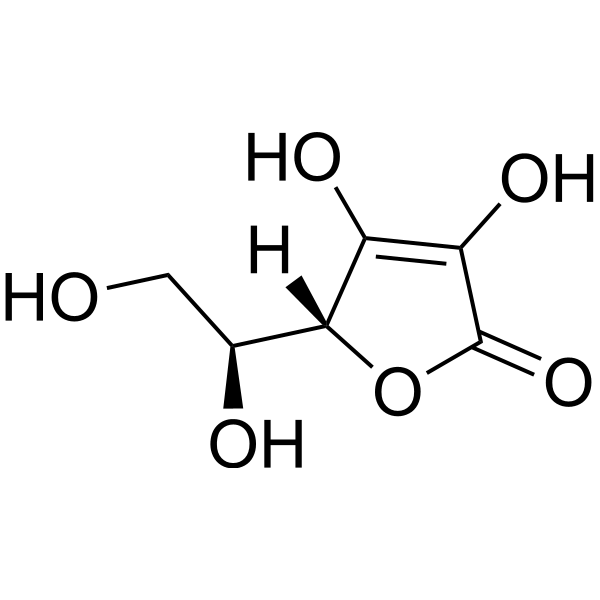
  • HY-B0166
    L-Ascorbic acid
    75+ Cited Publications

    L-Ascorbate; Vitamin C

    Environmental Pollutants Endogenous Metabolite Calcium Channel Reactive Oxygen Species (ROS) Apoptosis Neurological Disease Metabolic Disease Cancer
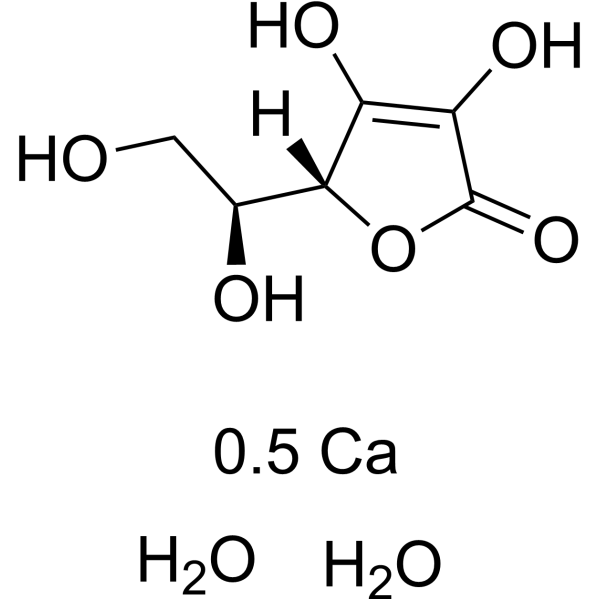
    L-Ascorbic acid (L-Ascorbate), an electron donor, is an endogenous antioxidant agent. L-Ascorbic acid inhibits selectively Cav3.2 channels with an IC50 of 6.5 μM. L-Ascorbic acid is also a collagen deposition enhancer and an elastogenesis inhibitor . L-Ascorbic acid exhibits anti-cancer effects through the generation of reactive oxygen species (ROS) and selective damage to cancer cells .
    L-Ascorbic acid
  • HY-D0819
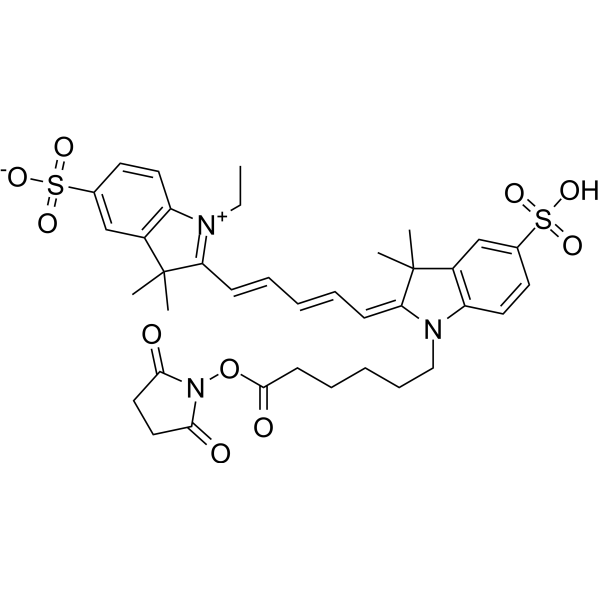
    CY5-SE
    35+ Cited Publications

    Cy5 NHS Ester; Sulfo-Cyanine5 Succinimidyl Ester

    Fluorescent Dye Others
    Cy5-SE (Cy5 NHS Ester) is a reactive dye for the labeling of amino-groups in peptides, proteins, and oligonucleotides. This dye requires small amount of organic co-solvent (such as DMF or DMSO) to be used in labeling reaction. This reagent is ideal for very cost-efficient labeling of soluble proteins, as well as all kinds of peptides and oligonucleotides. This reagent also works well in organic solvents for small molecule labeling. Excitation (nm):649, Emission (nm): 670.
    CY5-SE
  • HY-B0739
    Citicoline
    4 Publications Verification

    Cytidine diphosphate-choline; CDP-Choline; Cytidine 5'-diphosphocholine

    Apoptosis Endogenous Metabolite Reactive Oxygen Species (ROS) Caspase Neurological Disease Cancer
    Citicoline is an endogenous intermediate in the synthesis of phosphatidylcholine which is a component of cell membranes. Citicoline inhibits reactive oxygen species (ROS) and apoptosis. Citicoline can be used for neurological disease and hearing loss study .
    Citicoline
  • HY-108537
    L 012 sodium salt
    2 Publications Verification

    Reactive Oxygen Species (ROS) Inflammation/Immunology
    L 012 sodium salt is a luminal-based chemiluminescent probe. L 012 sodium salt can detect NADPH oxidase (Nox)-derived superoxide and nitrogen species (reactive oxygen species (ROS) and reactive nitrogen species (RNS)) .
    L 012 sodium salt
  • HY-135849
    Catalase, Aspergillus niger
    4 Publications Verification

    Reactive Oxygen Species (ROS) Cancer
    Catalase, Aspergillus niger is a key enzyme in the metabolism of H2O2 and reactive oxygen species (ROS), and its expression and localization is markedly altered in tumors . Free oxygen radical scavenger.
    Catalase, Aspergillus niger
  • HY-126793

    DCFH2-DA

    Fluorescent Dye Reactive Oxygen Species (ROS) Others
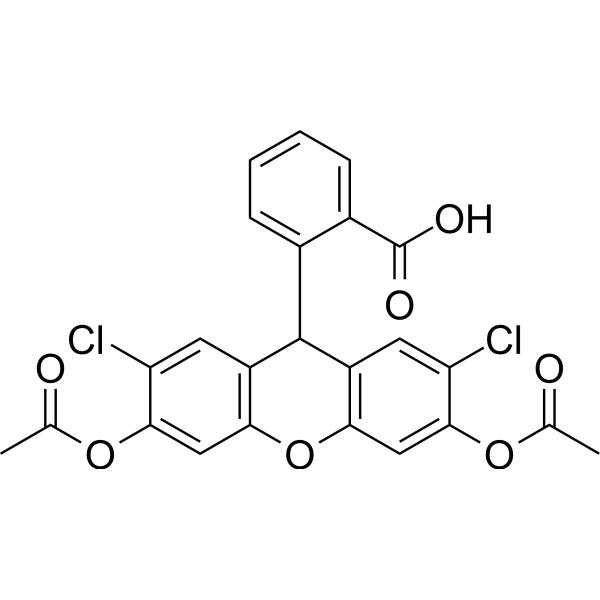
    2′,7′-Dichlorofluorescein diacetate (DCFH2-DA) is a cell-permeable fluorescent probe. 2′,7′-Dichlorofluorescein diacetate can be used to detect the generation of reactive oxygen intermediates and for assessing the overall oxidative stress in toxicological phenomenon .
    2′,7′-Dichlorofluorescein diacetate
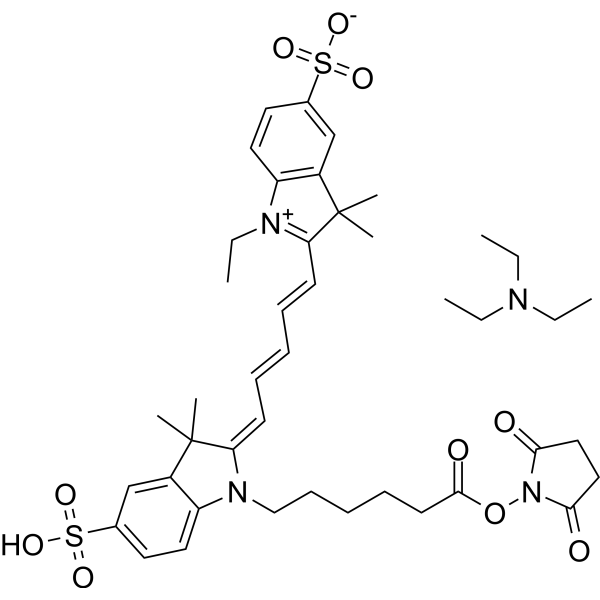
  • HY-D0819A
    CY5-SE triethylamine salt
    35+ Cited Publications

    Cy5 NHS Ester triethylamine salt; Sulfo-Cyanine5 Succinimidyl Ester triethylamine salt

    Fluorescent Dye Others
    Cy5-SE (Cy5 NHS Ester) triethylamine salt is a reactive dye for the labeling of amino-groups in peptides, proteins, and oligonucleotides. Cy5-SE triethylamine salt is ideal for very cost-efficient labeling of soluble proteins, as well as all kinds of peptides and oligonucleotides Ex=649 nm; Em=670 nm) .
    CY5-SE triethylamine salt
  • HY-B0166R
    L-Ascorbic acid (Standard)
    2 Publications Verification

    L-Ascorbate (Standard); Vitamin C (Standard)

    Reference Standards Reactive Oxygen Species (ROS) Calcium Channel Apoptosis Endogenous Metabolite Neurological Disease Metabolic Disease Cancer
    L-Ascorbic acid (Standard) is the analytical standard of L-Ascorbic acid. This product is intended for research and analytical applications. L-Ascorbic acid (L-Ascorbate), an electron donor, is an endogenous antioxidant agent. L-Ascorbic acid inhibits selectively Cav3.2 channels with an IC50 of 6.5 μM. L-Ascorbic acid is also a collagen deposition enhancer and an elastogenesis inhibitor . L-Ascorbic acid exhibits anti-cancer effects through the generation of reactive oxygen species (ROS) and selective damage to cancer cells .
    L-Ascorbic acid (Standard)
  • HY-W040143

    Reactive Oxygen Species (ROS) Fluorescent Dye Inflammation/Immunology
    2',7'-Dichlorofluorescein is an important fluorescent product in the detection of oxidative stress and can be used to measure reactive oxygen species (ROS) (Ex=503 nm and Em=523 nm) .
    2',7'-Dichlorofluorescein
  • HY-Y0481

    Stannous chloride, 98%; Tin(II) chloride, anhydrous, 98%; Anhydrous stannous chloride, 98%

    Biochemical Assay Reagents Reactive Oxygen Species (ROS) Others
    Anhydrous stannous chloride, 98% (Tin(II) chloride, anhydrous, 98%) is a biochemical reagent with genotoxicity, mutagenicity, mitotic recombinogenicity, and reactive oxygen species-inducing activity .
    Tin(II) chloride, 98%
  • HY-135136

    Biochemical Assay Reagents Fluorescent Dye Others
    Aldehyde reactive probe TFA is an aldehyde reactive probe. Aldehyde reactive probe TFA specifically labels the AP site in DNA with biotin residues. Aldehyde reactive probe TFA can detect RNA oxidation-induced debasement sites. Aldehyde reactive probe TFA can be used to quantify AP sites or detect other aldehyde-containing DNA damage and RNA oxidation-induced debasement sites .
    Aldehyde reactive probe TFA
  • HY-B0739A
    Citicoline sodium
    4 Publications Verification

    Cytidine diphosphate-choline sodium; CDP-Choline sodium; Cytidine 5'-diphosphocholine sodium

    Endogenous Metabolite Apoptosis Reactive Oxygen Species (ROS) Caspase Neurological Disease Cancer
    Citicoline sodium is an endogenous intermediate in the synthesis of phosphatidylcholine which is a component of cell membranes. Citicoline sodium inhibits reactive oxygen species (ROS) and apoptosis. Citicoline sodium can be used for neurological disease and hearing loss study .
    Citicoline sodium
  • HY-111278
    Pyocyanin
    2 Publications Verification

    Pyocyanine; Sanazin; Sanasin

    Reactive Oxygen Species (ROS) Bacterial Drug Metabolite Endogenous Metabolite Infection Inflammation/Immunology
    Pyocyanin (Pyocyanine) is a toxic, quorum sensing (QS) controlled metabolite produced by Pseudomonas aeruginosa. Pyocyanin is a REDOX active compound that promotes the production of reactive oxygen species (ROS). Pyocyanin has antibacterial and anti-inflammatory activity .
    Pyocyanin
  • HY-W019724

    Drug Intermediate Reactive Oxygen Species (ROS) Neurological Disease Metabolic Disease Cancer
    2,2-Dihydroxyacetic acid is an endogenous metabolite, which is the monohydrate of Glyoxylic Acid. 2,2-Dihydroxyacetic acid may participate in the microbial glyoxylate cycle, induce an increase in reactive oxygen species, promote cell differentiation, and modify proteins to form advanced glycation end products (AGEs) (HY-NP165). 2,2-Dihydroxyacetic acid is associated with metabolic diseases such as primary hyperoxaluria .
    2,2-Dihydroxyacetic acid
  • HY-169798

    Fluorescent Dye VSV Infection
    1,9-Dimethylmethylene blue is a photosensitizer, virus inactivator and hemoglobin oxidant derived from methylene blue. When activated, 1,9-Dimethylmethylene blue generates reactive oxygen species including singlet oxygen, and acts as a metachromatic dye. When activated in monomeric or dimeric form, 1,9-Dimethylmethylene blue induces photoinactivation of R17 phage and vesicular stomatitis virus and oxidizes hemoglobin via non-singlet oxygen reactive oxygen species or singlet oxygen-mediated pathways, respectively. The monomeric form, with higher nucleic acid affinity, achieves virus inactivation under specific conditions without forming methemoglobin. 1,9-Dimethylmethylene blue binds to substances such as glycosaminoglycans to produce color changes. Although it is susceptible to interference from non-glycosaminoglycan components in urine, it is still applicable to spectrophotometric analysis for glycosaminoglycan quantification. With these unique photochemical and binding properties, 1,9-Dimethylmethylene blue is widely used in studies of viral infections and related biochemical analyses .
    1,9-Dimethylmethylene blue
  • HY-B0831
    Buprofezin
    2 Publications Verification

    Environmental Pollutants Reactive Oxygen Species (ROS) Oxidative Phosphorylation Others
    Buprofezin is a broad-spectrum insecticide and chitin synthesis inhibitor that targets developmental stage coleopteran pests.Buprofezin promotes the conversion of energy metabolism from the aerobic tricarboxylic acid (TCA) cycle and oxidative phosphorylation to anaerobic glycolysis. Buprofezin also promotes the production of reactive oxygen species (ROS) by inhibiting cytochrome c oxidase .
    Buprofezin
  • HY-121134
    Decylubiquinone
    1 Publications Verification

    Reactive Oxygen Species (ROS) Neurological Disease Cancer
    Decylubiquinone is an analog of ubiquinone (coenzyme Q10). Decylubiquinone blocks reactive oxygen species (ROS) production in response to glutathione depletion and inhibits activation of the mitochondrial permeability transition .
    Decylubiquinone
  • HY-10081
    GS-6201
    1 Publications Verification

    CVT-6883

    Adenosine Receptor Inflammation/Immunology
    GS-6201 (CVT-6883) is a selective adenosine A2B receptor antagonist. GS-6201 displays high affinity and selectivity for the human adenosine A2B receptors (Ki=22 nM) . GS-6201 reduces caspase-1 activity in the heart, and attenuates cardiac remodeling after acute myocardial infarction (AMI) in the mouse . GS-62013 attenuates the airway reactivity induced by NECA, AMP, or allergen in sensitized mice .
    GS-6201
  • HY-128888

    Isocitrate Dehydrogenase (IDH) Cancer
    (R,R)-GSK321 is a wild-type isocitrate dehydrogenase 1 (WT IDH1) inhibitor with an IC50 value of 120 nM. (R,R)-GSK321 as a mutant R132H IDH1 inhibitor, is an isomer of GSK321 with some wild-type cross reactivity .
    (R,R)-GSK321
  • HY-137541

    NTCB

    Biochemical Assay Reagents Others
    2-Nitro-5-thiocyanatobenzoic acid (NTCB) is a highly reactive reagent that transfers its cyano group rapidly to a nucleophilic thiolate. 2-Nitro-5-thiocyanatobenzoic acid has been proposed as a reagent for converting thiol groups in proteins into their S-cyano derivatives .
    2-Nitro-5-thiocyanatobenzoic acid
  • HY-109654

    Reactive Oxygen Species (ROS) Metabolic Disease
    Ensulizole is a sulfonated UV absorber and can intense UVB and partial UVA absorption. Ensulizole can damage the DNA through the generation of reactive oxygen species (ROS) upon UV or sunlight irradiation .
    Ensulizole
  • HY-W075770

    Nickel monoxide

    Environmental Pollutants Apoptosis Reactive Oxygen Species (ROS) Caspase TGF-beta/Smad p38 MAPK Akt PI3K Infection Metabolic Disease Cancer
    Nickel(II) oxide (nickel monoxide) is a chemical warfare agent that can enter the body through the respiratory tract and other routes, distributing to organs such as the lungs and testes. The nanoparticle form of nickel(II) oxide (NiO NPs) exhibits antibacterial, anti-leishmanial, anti-diabetic, and anti-cancer activities. NiO NPs can be activated by ultraviolet and visible light, generating reactive oxygen species (ROS). Nickel(II) oxide induces oxidative stress by generating reactive oxygen species, activating the TGF-β1-mediated MAPK and PI3K/AKT pathways, disrupting the MMPs/TIMPs balance, and upregulating the expression of inflammatory factors (IL-1β, IL-6) and apoptosis-related molecules (Bax, caspase-3, p53), while inhibiting the activity of the anti-apoptotic molecule Bcl-2. Nickel(II) oxide induces cytotoxicity, promotes fibrosis, triggers inflammatory responses, and causes apoptosis. Nickel(II) oxide can be applied in research on the safety assessment of nanomaterials, such as in the context of pulmonary fibrosis and reproductive system toxicity .
    Nickel(II) oxide
  • HY-126195

    ML-090

    NADPH Oxidase Neurological Disease
    Fluoflavine (ML-090) is a selective NOX1 inhibitor and reactive oxygen species inhibitor. Fluoflavine reduces reactive oxygen species production, NOX1-mediated downstream signaling events, and oxygen-glucose deprivation-induced retinal ganglion cell death. Fluoflavine inhibits NADPH oxidase activity and pathological retinal neovascularization induced by oxygen-induced retinopathy in the retinas of ischemic mice. Fluoflavine can be used in studies related to retinal ischemia-reperfusion injury and proliferative retinopathy .
    Fluoflavine
  • HY-N4180
    Pennogenin 3-O-beta-chacotrioside
    1 Publications Verification

    Autophagy Atg8/LC3 Reactive Oxygen Species (ROS) Apoptosis Cancer
    Pennogenin 3-O-beta-chacotrioside is an autophagy (autophagy) inducer. Pennogenin 3-O-beta-chacotrioside exhibits strong binding affinity for the pro-apoptotic proteins CYTC, AIF1 and BAX. Pennogenin 3-O-beta-chacotrioside triggers reactive oxygen species-induced autophagy in cancer cells. Pennogenin 3-O-beta-chacotrioside can be used in studies related to colorectal cancer .
    Pennogenin 3-O-beta-chacotrioside
  • HY-138616

    2'-Deoxyguanosine-5'-triphosphate

    DNA/RNA Synthesis Nucleoside Antimetabolite/Analog Inflammation/Immunology
    dGTP (2'-Deoxyguanosine-5'-triphosphate) is one of the precursors for DNA synthesis, and serves as a direct substrate for DNA replication and repair. dGTP is prone to oxidative damage; under the action of reactive oxygen species and other factors, dGTP is oxidized to form 8-oxo-dGTP .
    dGTP
  • HY-B0166S8

    L-Ascorbate-1; Vitamin C-13C6-1

    Isotope-Labeled Compounds Endogenous Metabolite Reactive Oxygen Species (ROS) Calcium Channel Apoptosis Cancer
    L-Ascorbic acid- 13C6-1 (L-Ascorbate-1; Vitamin C- 13C6-1) is a 13C labeled L-Ascorbic acid (HY-B0166) . L-Ascorbic acid (L-Ascorbate), an electron donor, is an endogenous antioxidant agent. L-Ascorbic acid inhibits selectively Cav3.2 channels with an IC50 of 6.5 μM. L-Ascorbic acid is also a collagen deposition enhancer and an elastogenesis inhibitor . L-Ascorbic acid exhibits anti-cancer effects through the generation of reactive oxygen species (ROS) and selective damage to cancer cells .
    L-Ascorbic acid-13C6-1
  • HY-N7152

    Apoptosis Cancer
    6-Dehydrogingerdione sensitizes human hepatoblastoma Hep G2 cells to TRAIL-induced apoptosis via reactive oxygen species-mediated increase of DR5 .
    6-Dehydrogingerdione
  • HY-153591

    Reactive Oxygen Species (ROS) Infection Neurological Disease Inflammation/Immunology Cancer
    ROS-IN-1 is a mitochondrial ROS inhibitor. ROS-IN-1 can reduce oxidative stress or inhibit reactive oxygen species (ROS) production .
    ROS-IN-1
  • HY-164165

    Microtubule/Tubulin Drug Derivative Cancer
    Paclitaxel-2′-succinate NHS ester is a paclitaxel derivative with a succinic acid linker, in which the carboxyl group is activated by the NHS ester. The NHS ester group is highly reactive toward amino or hydroxyl groups and can be used to conjugate with other molecules such as peptides, proteins, antibodies, enzymes or polymers. Paclitaxel-2′-succinate NHS ester can be used in the development of nanomedicines and in the study of cancer therapy .
    Paclitaxel-2′-succinate NHS ester
  • HY-W755033

    Biochemical Assay Reagents Radionuclide-Drug Conjugates (RDCs) Others
    NH2-PEG4-DOTA is a bifunctional DOTA chelator with one carboxyl group modified by NH2-PEG4, possessing both a metal-binding domain and a chemically reactive functional group. NH2-PEG4-DOTA can be used for time-resolved fluorescence assays .
    NH2-PEG4-DOTA
  • HY-DY1063

    Fluorescent Dye Others
    Cy5-SE (Cy5 NHS Ester) (solution) is a reactive dye for the labeling of amino-groups in peptides, proteins, and oligonucleotides. This dye requires small amount of organic co-solvent (such as DMF or DMSO) to be used in labeling reaction. This reagent is ideal for very cost-efficient labeling of soluble proteins, as well as all kinds of peptides and oligonucleotides. This reagent also works well in organic solvents for small molecule labeling. Excitation (nm) :649, Emission (nm) : 670.
    Solvent and concentration: DMSO: 10 mM
    CY5-SE (solution)
  • HY-145307
    DATPT
    1 Publications Verification

    Bacterial Infection Inflammation/Immunology
    DATPT is a 12WLVSKF17 peptide-mimetic molecule. DATPT blocks the SNX9-p47phox interaction in the endosome and suppresses reactive oxygen species and inflammatory cytokine production. DATPT with anti-inflammatory and antibacterial functions has the potential for the research of sepsis .
    DATPT
  • HY-128431

    Reactive Oxygen Species (ROS) Neurological Disease Metabolic Disease
    Arochlor 1254 is a polychlorinated biphenyl (PCB) mixture with biphenyl and 54% chlorine. Aroclor 1254 reduced cell viability and induced overproduction of intracellular reactive oxygen species in a dose-dependent manner. Arochlor 1254 exposure reduces calcium homeostasis, osteoblast differentiation and bone formation .
    Arochlor 1254
  • HY-W004850

    Endogenous Metabolite Reactive Oxygen Species (ROS) Neurological Disease Metabolic Disease
    Aminoacetone hydrochloride is an α-aminoketone and also a catabolite of threonine and glycine. When accumulated under pathological conditions, Aminoacetone hydrochloride participates in oxidative damage and protein dysfunction via the production of reactive oxygen species (ROS) and methylglyoxal, and it is associated with phenotypes such as diabetes, mitochondrial damage and sleep disorders .
    Aminoacetone hydrochloride
  • HY-W117986

    Amyloid-β Reactive Oxygen Species (ROS) Caspase Neurological Disease
    Aβ aggregation-IN-1 (Compound 1b) is a β-amyloid aggregation inhibitor/depolymerizer, with IC50 values of 3.92 μM and 7.19 μM, respectively. Aβ aggregation-IN-1 inhibits the activation of preformed β-amyloid fibrils, reactive oxygen species (ROS) and Caspase-3. Aβ aggregation-IN-1 can be used in research related to Alzheimer's disease .
    Aβ aggregation-IN-1
  • HY-141569

    Toll-like Receptor (TLR) Inflammation/Immunology
    Ganglioside GD1a modulates toxic and inflammatory effects of E. coli lipopolysaccharide by preventing TLR4 translocation into lipid rafts. Ganglioside GD1a significantly reduces the effect of LPS on the decrease of cell survival and on stimulation of reactive oxygen species production .
    Ganglioside GD1a
  • HY-B0739AR

    Cytidine diphosphate-choline sodium (Standard); CDP-Choline sodium (Standard); Cytidine 5'-diphosphocholine sodium (Standard)

    Reference Standards Endogenous Metabolite Apoptosis Reactive Oxygen Species (ROS) Caspase Neurological Disease Cancer
    Citicoline sodium (Standard) is the analytical standard of Citicoline sodium. This product is intended for research and analytical applications. Citicoline sodium is an endogenous intermediate in the synthesis of phosphatidylcholine which is a component of cell membranes. Citicoline sodium inhibits reactive oxygen species (ROS) and apoptosis. Citicoline sodium can be used for neurological disease and hearing loss study.
    Citicoline sodium (Standard)
  • HY-W748509

    Caspase Apoptosis Cancer
    Pipernonaline is a piperine derivative with antiprostate cancer activity. Pipernonaline inhibits the proliferation of androgen-dependent/independent LNCaP/PC-3 prostate cells. Pipernonaline activates caspase-3 and promotes procaspase-3/PARP cleavage. Pipernonaline also mediates reactive oxygen species (ROS) production, increased intracellular Ca(2+), and mitochondrial membrane depolarization .
    Pipernonaline
  • HY-172086

    TrxR Apoptosis Reactive Oxygen Species (ROS) Cancer
    TrxR-IN-7 is a thioredoxin reductase (TrxR) inhibitor with an IC50 of 3.5 μM. TrxR-IN-7 induces reactive oxygen species (ROS) generation and apoptosis in tumor cells. TrxR-IN-7 can be used for the research of liver cancer and breast cancer .
    TrxR-IN-7
  • HY-146350

    TrxR Reactive Oxygen Species (ROS) Apoptosis Cancer
    TrxR-IN-4 is a thioredoxin reductase (TrxR) inhibitor with a rat IC50 of 0.37 μM. TrxR-IN-4 inhibits TrxR activity, elevates reactive oxygen species (ROS) and induces apoptosis. TrxR-IN-4 mediates endoplasmic reticulum stress and induces mitochondrial dysfunction. TrxR-IN-4 can be used for the research of hepatocellular carcinoma .
    TrxR-IN-4
  • HY-132972

    TrxR Reactive Oxygen Species (ROS) Autophagy Atg8/LC3 Beclin1 p62 Cancer
    TrxR-IN-2 is a thioredoxin reductase (TrxR) inhibitor. TrxR-IN-2 increases reactive oxidative species (ROS) levels and decreases mitochondrial transmembrane potential levels. TrxR-IN-2 triggers DNA damage via H2AX regulation, and induces autophagy via LC3, beclin-1, and p62 regulation. TrxR-IN-2 can be used for the research of drug-resistant hepatocellular carcinoma[1].
    TrxR-IN-2
  • HY-N3027
    Soyasaponin Aa
    1 Publications Verification

    PPAR Reactive Oxygen Species (ROS) Metabolic Disease
    Soyasaponin Aa is a soyasaponin that can be found in soy. Soyasaponin Aa suppresses PPARγ transcriptional activity, reduces PPARγ and C/EBPα expression, inhibits adipocyte differentiation and lipid accumulation, and reduces adipogenic marker gene expression. Soyasaponin Aa reduces hydrogen peroxide-induced reactive oxygen species (ROS) production and malondialdehyde levels. Soyasaponin Aa exhibits cellular antioxidant activity. Soyasaponin Aa can be used for the research of obesity .
    Soyasaponin Aa
  • HY-116920

    Reactive Oxygen Species (ROS) Microtubule/Tubulin Cancer
    Alyssin, found in Cruciferous Vegetables, exerts anticancer activity in HepG2 by increasing intracellular reactive oxygen species and tubulin depolymerization .
    Alyssin
  • HY-DY1058

    Fluorescent Dye Reactive Oxygen Species (ROS) Others
    2′,7′-Dichlorofluorescein diacetate (DCFH2-DA) (solution) is a cell-permeable fluorescent probe. 2′,7′-Dichlorofluorescein diacetate can be used to detect the generation of reactive oxygen intermediates and for assessing the overall oxidative stress in toxicological phenomenon .
    Solvent and concentration: DMSO: 10 mM
    The 1 mL volume is defined as the base specification. All larger sizes correspond to incremental volumes of this base.
    2′,7′-Dichlorofluorescein diacetate (solution)
  • HY-D1886

    Fluorescent Dye Others
    Vari Fluor 647 SE is a fluorescent dye, SE stands for "succinimidyl ester". Vari Fluor 647 SE belongs to the Vari Fluor family of labeling reagents used in cell and molecular biology research. Vari Fluor 647 SE can react with an amino group to form a covalent bond, thereby introducing Vari Fluor 647 dye into the target molecule or cell. Vari Fluor 647 SE is a reactive dye that produces a fluorescent signal after binding to a target molecule or cell.
    Vari Fluor 647 SE
  • HY-N3562

    Reactive Oxygen Species (ROS) Neurological Disease
    Cedrin is a natural flavonoid that can be found in Cedrus deodara. Cedrin protects PC12 cells against neurotoxicity induced by Aβ1-42. Cedrin can reduce reactive oxygen species overproduction, increase the activity of superoxide dismutase and decrease malondialdehyde content .
    Cedrin
  • HY-B0166GL

    L-Ascorbate (GMP Like); Vitamin C (GMP Like)

    Reactive Oxygen Species (ROS) Apoptosis Calcium Channel Endogenous Metabolite Neurological Disease Metabolic Disease Cancer
    L-Ascorbic acid (GMP Like) is the GMP Like class L-Ascorbic acid (HY-B0166). L-Ascorbic acid (L-Ascorbate, Vitamin C), an electron donor, is an endogenous antioxidant agent. L-Ascorbic acid inhibits selectively Cav3.2 channels with an IC50 of 6.5 μM. L-Ascorbic acid is also a collagen deposition enhancer and an elastogenesis inhibitor . L-Ascorbic acid exhibits anti-cancer effects through the generation of reactive oxygen species (ROS) and selective damage to cancer cells .
    L-Ascorbic acid (GMP Like)
  • HY-122921
    5-Galloylquinic acid
    1 Publications Verification

    Reactive Oxygen Species (ROS) Cancer
    5-Galloylquinic acid, an main scavenger of the reactive oxygen species (ROS) in green tea .
    5-Galloylquinic acid
  • HY-N10083

    Reactive Oxygen Species (ROS) Sirtuin Cancer
    Selaginellin is an inhibitor of Reactive Oxygen Species and an activator of SIRT1. Selaginellin protects endothelial cells against homocysteine-induced senescence by inhibitng reactive oxygen species and upregulating SIRT1 gene expression .
    Selaginellin
  • HY-162365

    HSP Apoptosis Autophagy Cancer
    JD-02 is a novel Hsp90 inhibitor. JD-02 can induce autophagy and apoptosis. JD-02 increses the level of reactive oxygen species .
    JD-02

Inquiry Online

Your information is safe with us. * Required Fields.

Salutation


Country or Region *

Applicant Name *


Organization Name *

Department *


Email Address *


Product Name *

Cat. No.


Requested quantity *

Phone Number *


Remarks

Inquiry Online

Inquiry Information

Product Name:
Cat. No.:
Quantity:
MCE Japan Authorized Agent:

