1. Search Result
Search Result
Results for "

self-aggregation

" in MedChemExpress (MCE) Product Catalog:

19

Inhibitors & Agonists

2

Natural
Products

2

Click Chemistry

Cat. No. Product Name Target Research Areas Chemical Structure
  • HY-N0373
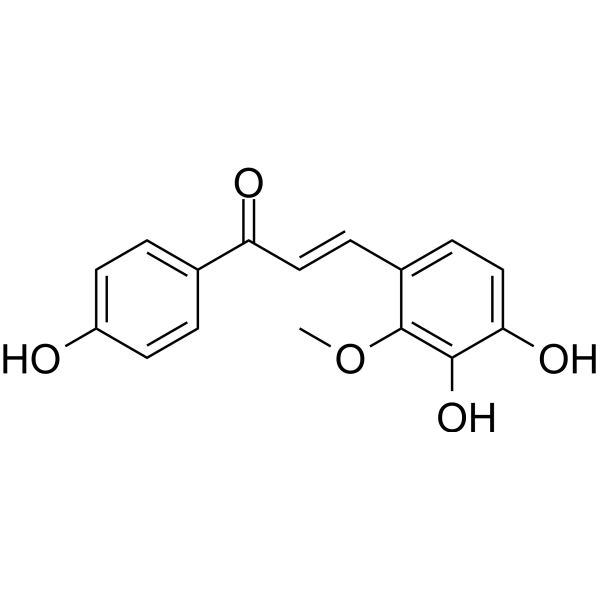
    Licochalcone B
    10+ Cited Publications

    Amyloid-β Apoptosis NOD-like Receptor (NLR) Neurological Disease
    Licochalcone B is an extract from the root of Glycyrrhiza uralensis. Licochalcone B inhibits amyloid β (42) self-aggregation (IC50=2.16 μM) and disaggregate pre-formed Aβ42 fibrils, reduce metal-induced Aβ42 aggregation through chelating metal ionsLicochalcone B inhibits phosphorylation of NF-κB p65 in LPS signaling pathway. Licochalcone B inhibits growth and induces apoptosis of NSCLC cells. Licochalcone B specifically inhibits the NLRP3 inflammasome by disrupting NEK7‐NLRP3 interaction .
    Licochalcone B
  • HY-179496

    GSK-3 Cholinesterase (ChE) Amyloid-β Neurological Disease
    ChE/GSK-3β-IN-1 (compound 18o) is a potent dual ChE/GSK-3β inhibitor. ChE/GSK-3β-IN-1 exhibits dual inhibition of AChE (IC50 = 1.7 μM), butyrylcholinesterase (BChE) (IC50 = 5.3 μM), and GSK-3β (IC50 = 5.7 μM). ChE/GSK-3β-IN-1 inhibits Aβ1-42 self-aggregation. ChE/GSK-3β-IN-1 can be used for Alzheimer’s disease (AD) research .
    ChE/GSK-3β-IN-1
  • HY-179167

    Cholinesterase (ChE) Monoamine Oxidase Neurological Disease
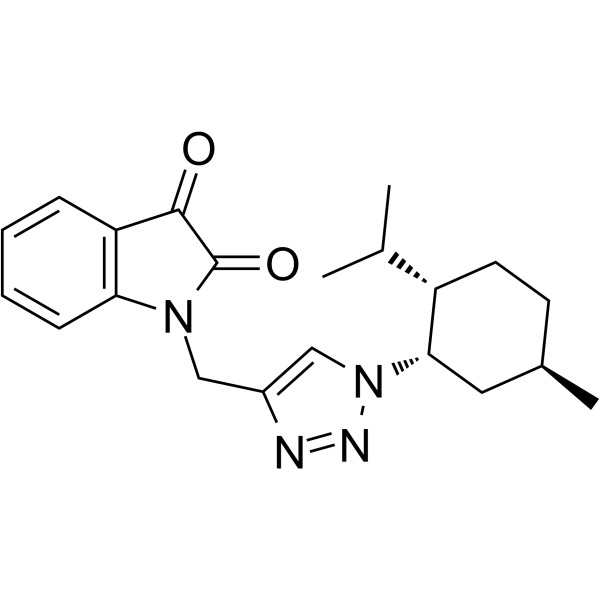
    K2V-9 is an AChE and MAO-B inhibitor with IC50 values of 1.72 μM and 0.950 μM against AChE and MAO-B, respectively. K2V-9 inhibits amyloid β self-aggregation and reduces ROS. K2V-9 has neuroprotective effects .
    K2V-9
  • HY-146678

    HDAC Amyloid-β Cholinesterase (ChE) Neurological Disease
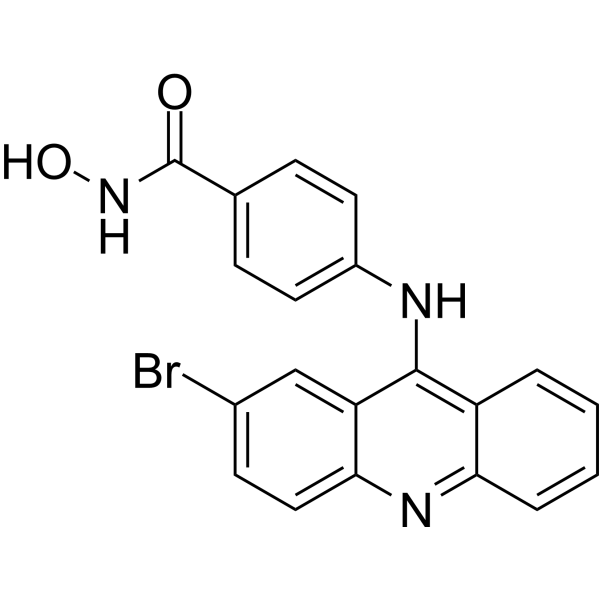
    HDAC6-IN-5 (compound 11b) is a potent and BBB-penetrated HDAC6 inhibitor, with an IC50 of 0.025 μM. HDAC6-IN-5 exhibits strong inhibitory activity against 1-42 self-aggregation and AChE, with IC50 values of 3.0 and 0.72 μM. HDAC6-IN-5 can enhance neurite outgrowth without significant neurotoxicity .
    HDAC6-IN-5
  • HY-146679

    HDAC Amyloid-β Cholinesterase (ChE) Neurological Disease
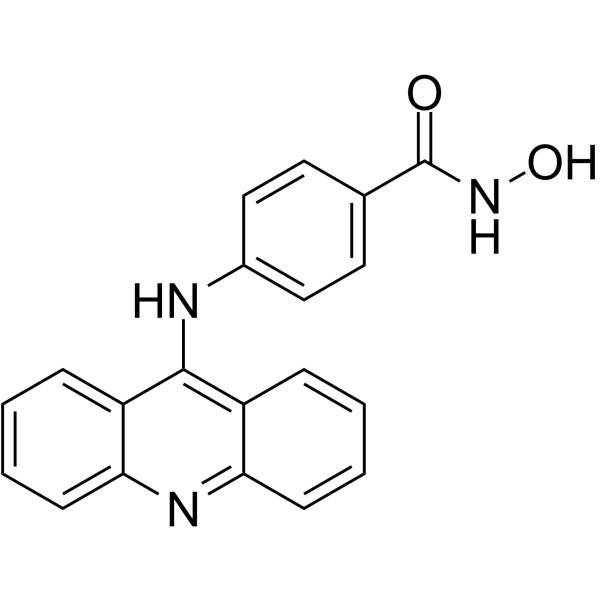
    HDAC6-IN-6 (compound 6a) is a potent and BBB-penetrated HDAC6 inhibitor, with an IC50 of 0.025 μM. HDAC6-IN-6 exhibits strong inhibitory activity against 1-42 self-aggregation and AChE, with IC50 values of 3.0 and 0.72 μM. HDAC6-IN-6 can enhance neurite outgrowth without significant neurotoxicity .
    HDAC6-IN-6
  • HY-178454

    Monoamine Oxidase Amyloid-β Mitochondrial Metabolism Apoptosis Reactive Oxygen Species (ROS) COX NF-κB Neurological Disease
    Multitarget AD-IN-3 is a brain-penetrant neuroprotective agent. Multitarget AD-IN-3 can selectively inhibit MAO-B with an IC50 of 4.42 μM and a SI of 18.12. Multitarget AD-IN-3 can eliminate ROS. Multitarget AD-IN-3 Multitarget AD-IN-3 can inhibit 1-42 self-aggregation and can reverse Aβ1-42-induced mitochondrial membrane depolarization and inhibit apoptosis. Multitarget AD-IN-3 can be used for the research of neurological disease, such as Alzheimer’s disease .
    Multitarget AD-IN-3
  • HY-178356

    Cholinesterase (ChE) nAChR Interleukin Related TNF Receptor Neurological Disease Inflammation/Immunology
    BChE-IN-44 is a potent, brain-penetrant, highly selective BChE inhibitor [equine BChE IC50 = 18.00 pM, human BChE IC50 = 1.50 nM]. BChE-IN-44 shows neuroprotective effects against the Aβ1-42-induced injury model and inhibitory effects on Aβ1-42 self-aggregation. BChE-IN-44 reduces the levels of inflammatory factors (NO, IL-6, and TNF-α) in Lipopolysaccharides (HY-D1056)-induced BV2 cells. BChE-IN-44 can significantly ameliorate Scopolamine (HY-N0296)-induced cognition impairment. BChE-IN-44 exhibits capacity in the regulation of BChE and acetylcholine levels in the mouse hippocampus. BChE-IN-44 can be used for the study of Alzheimer’s disease (AD) .
    BChE-IN-44
  • HY-155366

    Cholinesterase (ChE) GSK-3 Neurological Disease
    hAChE-IN-6 (compound 51) is a brain penetrant AChE inhibitor with an IC50 of 0.16 μM. hAChE-IN-6 also inhibits hBuChE and GSK3β with IC50 values of 0.69 μM and 0.26 μM, respectively. hAChE-IN-6 inhibits tau protein and Aβ1-42 self-aggregation, and can be used for Alzheimer's disease (AD) research .
    hAChE-IN-6
  • HY-155365

    Cholinesterase (ChE) GSK-3 Amyloid-β Neurological Disease
    hAChE-IN-5 (compound 49) is a potent hAChE and hBuChE inhibitor with IC50 values of 0.17 μM and 0.17 μM, respectively. hAChE-IN-5 shows potent GSK3β inhibition with an IC50 value of 0.21 μM. hAChE-IN-5 is used as tau protein aggregation and Aβ1-42 self-aggregation inhibitor. hAChE-IN-5 can bind virtually with the PAS affecting Aβ aggregation, thus preventing Aβ-dependent neurotoxicity. hAChE-IN-5 can penetrate BBB and has the potential for multi-targeted anti-Alzheimer's agents research .
    hAChE-IN-5
  • HY-146251

    Cholinesterase (ChE) Amyloid-β Neurological Disease
    BuChE-IN-6 (compound 1b) is a potent and selective BuChE (butyrylcholinesterase) inhibitor, with IC50 values of 0.46 and 0.51 μM for eqBuChE and hBuChE, respectively. BuChE-IN-6 also inhibits 42 self-aggregation .
    BuChE-IN-6
  • HY-157296

    Cholinesterase (ChE) Neurological Disease
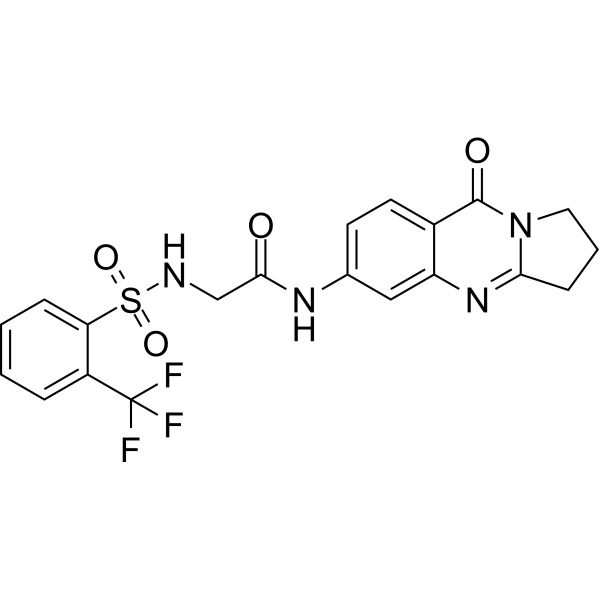
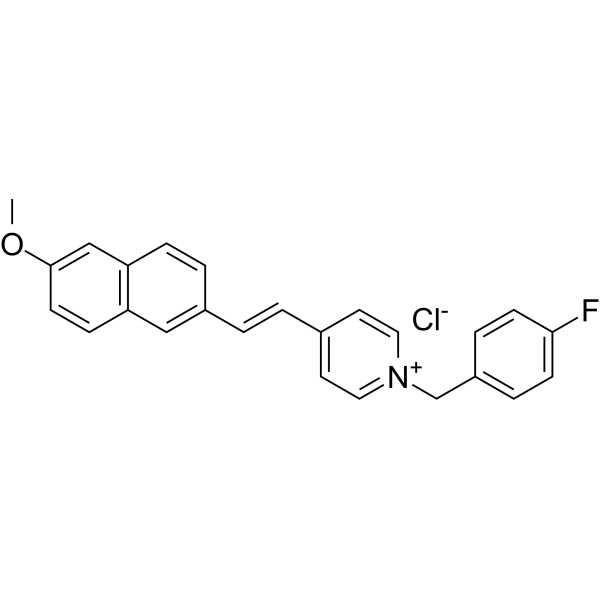
    AChE-IN-47 (compound g17) is a AChE inhibitor with the IC50 of 0.24 μM. AChE-IN-47 inhibits amyloid β peptides self-aggregation. AChE-IN-47 displays neuroprotective effects and effectively suppresses the intracellular accumulation of reactive oxygen species .
    AChE-IN-47
  • HY-144327

    Amyloid-β Neurological Disease
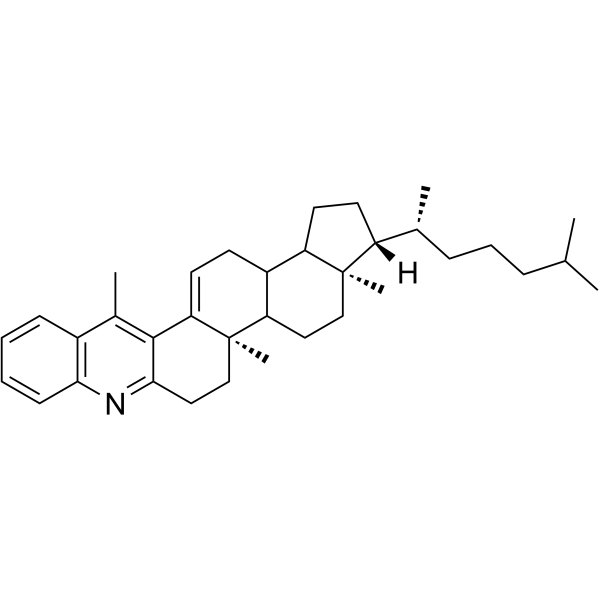
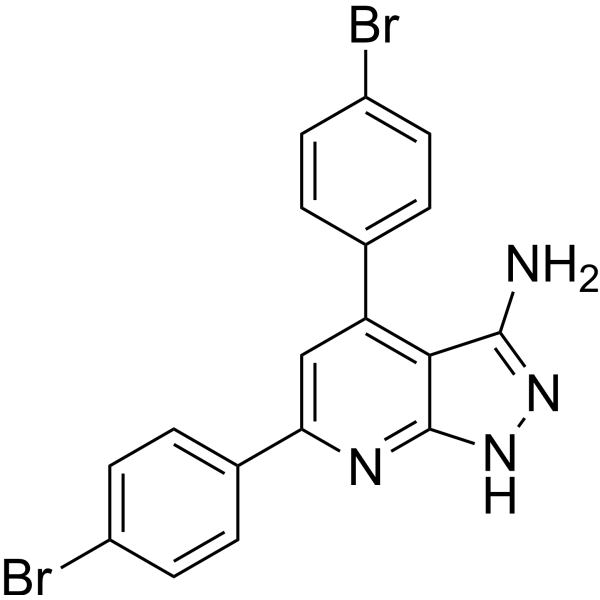
    Aβ-IN-2 is a Aβ1-42 aggregation inhibitor. Aβ-IN-2 inhibits Aβ1-42 self-aggregation in vitro by delaying the exponential growth phase or reduces the quantity of fibrils in the steady state. Aβ-IN-2 can be used for the research of conformational disorders .
    Aβ-IN-2
  • HY-144326

    Amyloid-β Neurological Disease
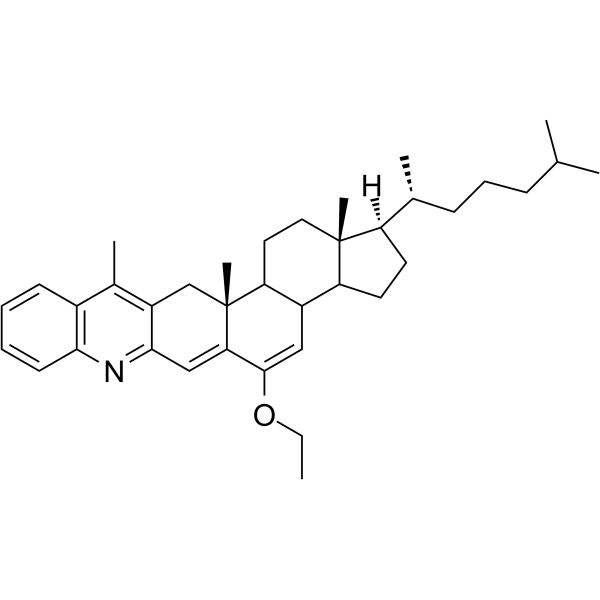
    Aβ-IN-1 is a Aβ1-42 aggregation inhibitor. Aβ-IN-1 inhibits Aβ1-42 self-aggregation in vitro by delaying the exponential growth phase or reduces the quantity of fibrils in the steady state. Aβ-IN-1 can be used for the research of conformational disorders .
    Aβ-IN-1
  • HY-172782

    Cholinesterase (ChE) Amyloid-β Interleukin Related Reactive Oxygen Species (ROS) NOD-like Receptor (NLR) Neurological Disease Inflammation/Immunology
    BuChE-IN-20 is a selective butyrylcholinesterase (hBuChE) inhibitor (IC50 = 0.13 μM) with BBB permeability. BuChE-IN-20 is a L-Tryptophan derivative. BuChE-IN-20 possesses neuroprotective properties by inhibiting the production of nitric oxide (NO) and lowering the levels of ROS. BuChE-IN-20 is proficient in inhibiting the self-aggregation of amyloid-beta (Aβ) peptides. BuChE-IN-20 can be used in research for Alzheimer’s disease .
    BuChE-IN-20
  • HY-149300

    Cholinesterase (ChE) Neurological Disease
    SB-1436 is an Cholinesterase (ChE) inhibitor, inhibits acetylcholinesterase (AChE), butyrylcholinesterase (BChE) and recombinant human acetylcholinesterase (rHuAChE) with IC50s of 0.176, 0.37 and 0.08 μM, respectively. SB-1436 inhibits AChE and BChE in a non-competitive manner with Kis of 0.046 and 0.115 μM, respectively. SB-1436 significantly stops the self-aggregation of Aβ, and can be used for neurological disease research .
    SB-1436
  • HY-149211

    Cholinesterase (ChE) Beta-secretase Amyloid-β Neurological Disease
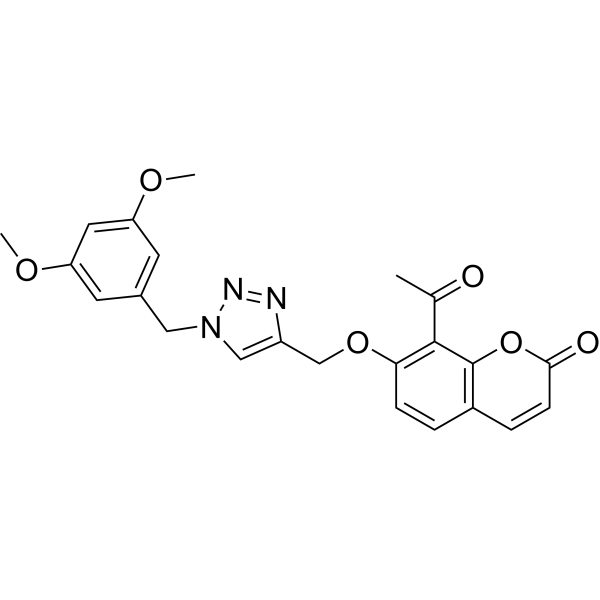
    AChE/BChE-IN-12 (compound 10b), a 3,5-dimethoxy analogue, is a potent AChE, BChE, and β-secretase-1 (BACE-1) inhibitor, with IC50 values of 2.57, 3.26, and 10.65 μM, respectively. AChE/BChE-IN-12 crosses the blood-brain barrier via passive diffusion and inhibits the self-aggregation of amyloid-β monomers. AChE/BChE-IN-12 can be used for Alzheimer’s disease (AD) research .
    AChE/BChE-IN-12
  • HY-163746

    Cholinesterase (ChE) Neurological Disease
    BuChE-IN-11 (Compound 3b-1) is an selective BuChE inhibitor with an IC50 of 0.44 μM for hBuChE. BuChE-IN-11 has high blood-brain barrier permeability and exhibits strong antioxidant activity due to its free radical scavenging properties. BuChE-IN-11 interacts with the choline binding site, acetyl binding site, and peripheral anionic site, exhibiting submicromolar BuChE inhibitory activity and preventing β-amyloid (Aβ) self-aggregation. BuChE-IN-11 holds promise for research in the field of Alzheimer's disease .
    BuChE-IN-11
  • HY-N0373R

    Reference Standards Amyloid-β Apoptosis NOD-like Receptor (NLR) Neurological Disease
    Licochalcone B (Standard) is the analytical standard of Licochalcone B. This product is intended for research and analytical applications. Licochalcone B is an extract from the root of Glycyrrhiza uralensis. Licochalcone B inhibits amyloid β (42) self-aggregation (IC50=2.16 μM) and disaggregate pre-formed Aβ42 fibrils, reduce metal-induced Aβ42 aggregation through chelating metal ionsLicochalcone B inhibits phosphorylation of NF-κB p65 in LPS signaling pathway. Licochalcone B inhibits growth and induces apoptosis of NSCLC cells. Licochalcone B specifically inhibits the NLRP3 inflammasome by disrupting NEK7‐NLRP3 interaction .
    Licochalcone B (Standard)
  • HY-180114

    Cholinesterase (ChE) Monoamine Oxidase Amyloid-β Reactive Oxygen Species (ROS) Neurological Disease
    NSS-18 is a potent and reversible inhibitor of AChE and MAO-B, with IC50 values of 1.53 and 1.51 μM respectively. NSS-18 can inhibit the self-aggregation of . NSS-18 inhibits the intracellular generation of ROS induced by Aβ. NSS-18 shows a moderate neuroprotective effect against 6-OHDA (HY-B1081)-induced neurotoxicity. NSS-18 can form chelates with metal ions such as Cu²⁺, Fe³⁺, and Zn²⁺, with the strongest chelation being with Cu²⁺. NSS-18 can be used for the study of Alzheimer's disease .
    NSS-18

Inquiry Online

Your information is safe with us. * Required Fields.

Salutation


Country or Region *

Applicant Name *


Organization Name *

Department *


Email Address *


Product Name *

Cat. No.


Requested quantity *

Phone Number *


Remarks

Inquiry Online

Inquiry Information

Product Name:
Cat. No.:
Quantity:
MCE Japan Authorized Agent:

