
1. Search Result
Search Result
Results for "

shock

" in MedChemExpress (MCE) Product Catalog:

282

Inhibitors & Agonists

1

Screening Libraries

9

Fluorescent Dye

6

Biochemical Assay Reagents

35

Peptides

2

Inhibitory Antibodies

34

Natural
Products

38

Recombinant Proteins

6

Isotope-Labeled Compounds

56

Antibodies

1

Oligonucleotides

Targets Recommended:
Cat. No. Product Name Target Research Areas Chemical Structure
  • HY-19356
    Rocaglamide
    25+ Cited Publications

    Roc-A

    NF-κB HSP Eukaryotic Initiation Factor (eIF) Inflammation/Immunology Cancer
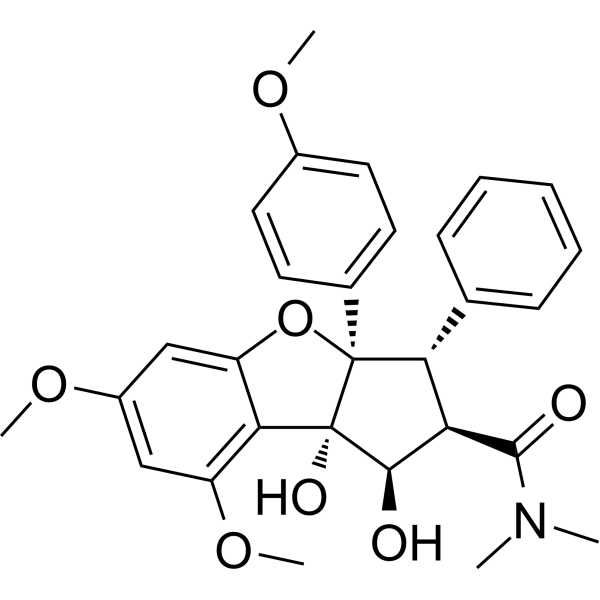
    Rocaglamide (Roc-A) is isolated from the genus Aglaia and can be used for coughs, injuries, asthma and inflammatory skin diseases. Rocaglamide is a potent inhibitor of NF-κB activation in T-cells. Rocaglamide is a potent and selective heat shock factor 1 (HSF1) activation inhibitor with an IC50 of ~50 nM. Rocaglamide inhibits the function of the translation initiation factor eIF4A. Rocaglamide also has anticancer properties in leukemia .
    Rocaglamide
  • HY-100872
    KRIBB11
    15+ Cited Publications

    HSP Apoptosis Cancer
    KRIBB11 is an inhibitor of Heat shock factor 1 (HSF1), with IC50 of 1.2 μM.
    KRIBB11
  • HY-W014102
    L-Alanyl-L-glutamine
    1 Publications Verification

    Endogenous Metabolite Metabolic Disease Inflammation/Immunology
    L-Alanyl-L-glutamine, a glutamine dipeptide, is benefit for the antioxidant system, attenuating inflammation, and may modulate the heat shock protein (HSP) response in catabolic situations .
    L-Alanyl-L-glutamine
  • HY-18734A
    Carboxy-PTIO potassium
    5+ Cited Publications

    NO Synthase Cardiovascular Disease Metabolic Disease Inflammation/Immunology
    Carboxy-PTIO potassium is a potent nitric oxide (NO) scavenger that can make a quick reaction with NO to produce NO2. Carboxy-PTIO potassium can prevent hypotension and endotoxic shock through the direct scavenging action against NO in lipopolysaccharide-stimulated rat model .
    Carboxy-PTIO potassium
  • HY-18669
    ML346
    5+ Cited Publications

    HSP Cancer
    ML346 is an activator of Hsp70 expression and HSF-1 activity, with an EC50 of 4.6 μM for Hsp70. ML346 restores protein folding in conformational disease models, without significant cytotoxicity or lack of specificity. ML346 induces specific increases in genes and protein effectors of the heat shock response (HSR), including chaperones such as Hsp70, Hsp40, and Hsp27 .
    ML346
  • HY-100110
    KNK437
    5+ Cited Publications

    Heat shock Protein Inhibitor I

    HSP Cancer
    KNK437 is a HSP inhibitor, and inhibits the induction of HSP105, HSP70, and HSP40.
    KNK437
  • HY-N0584

    6-Hydroxyhyoscyamine

    mAChR Neurological Disease Cancer
    Anisodamine (6-Hydroxyhyoscyamine), a belladonna alkaloid, is a non-subtype-selective muscarinic, and also a nicotinic cholinoceptor antagonist. Anisodamine employs in traditional Chinese medicine for many ailments, mainly to improve the microcirculation in states of shock, and also in organophosphate poisoning .
    Anisodamine
  • HY-B0779
    Teprenone
    5 Publications Verification

    Geranylgeranylacetone

    HSP Neurological Disease Cancer
    Teprenone is an anti-ulcer agent, and works as an inducer of heat shock proteins (HSPs).
    Teprenone
  • HY-162457

    DNA/RNA Synthesis Infection
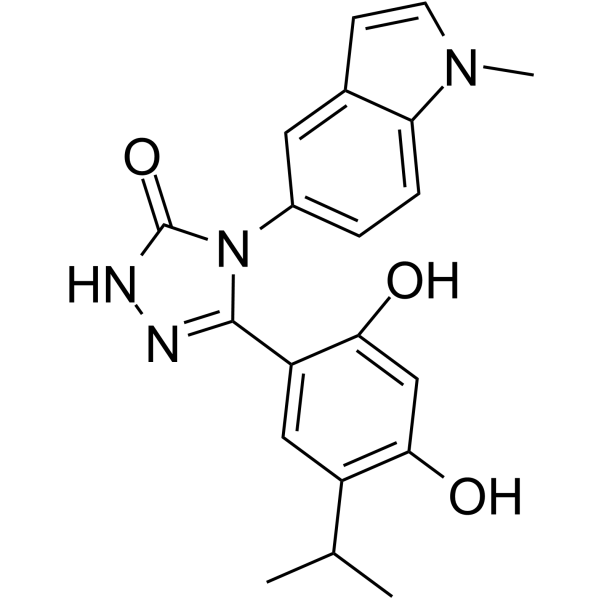
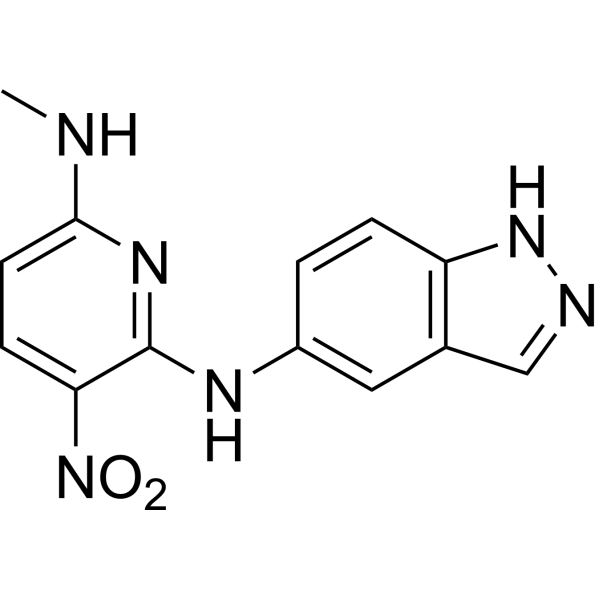
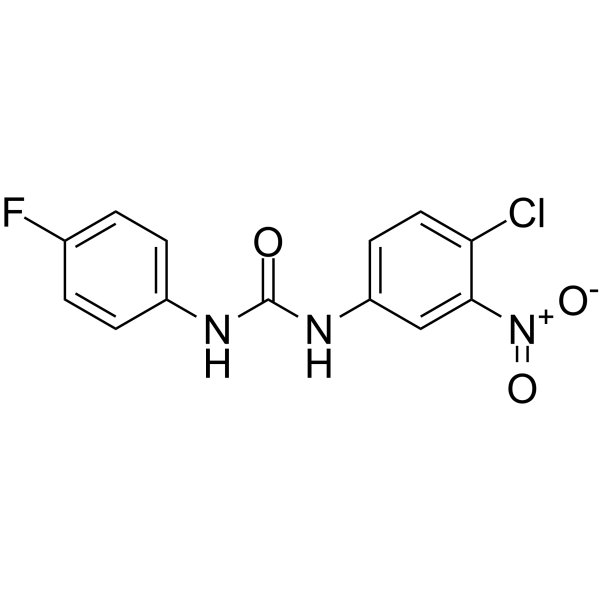
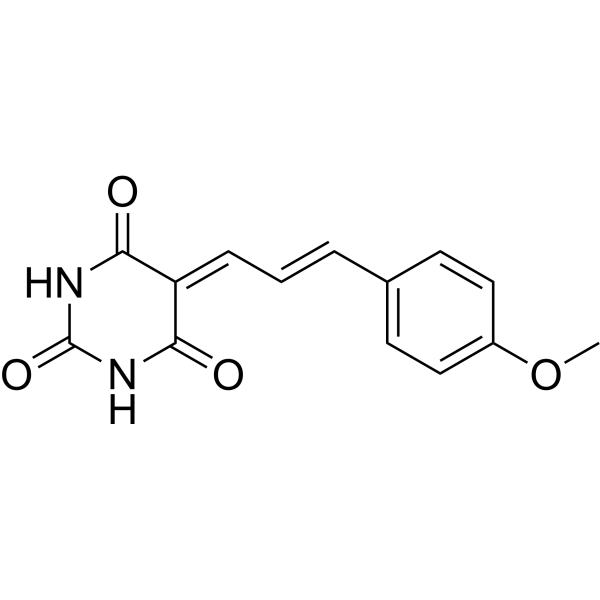
    Mn007 is a potent inhibitor of bovine pancreatic DNase I, with the IC50 of 45 μM, by forming molecular aggregation. Mn007 shows suppression of S. pyogenes growth in human whole blood .
    Mn007
  • HY-101712
    TRC051384
    5+ Cited Publications

    HSP Neurological Disease
    TRC051384 is a potent inducer of heat shock protein 70 (HSP70). TRC051384 exhibits protective effects against neuronal trauma via inhibition of necroptosis. TRC051384 can be used for the research of ischemic stroke .
    TRC051384
  • HY-W003969

    Ascensil; 2-Amino-4-methylpyridine

    NO Synthase Inflammation/Immunology
    Aminopicoline (Ascensil) is a potent and non-selective inhibitor of nitric oxide synthase (NOS) isoenzymes (iNOS, nNOS, eNOS). Aminopicoline competes with arginine at the substrate-binding site of nitric oxide synthase, reduces cellular nitric oxide production, inhibits the elevation of plasma nitrate, increases mean arterial pressure at high doses, and also serves as a basis for radiolabeled ligands to localize nitric oxide synthase binding sites. Aminopicoline can be used in the research of diseases associated with septic shock, joint inflammation, intestinal inflammation, and CNS inflammation .
    Aminopicoline
  • HY-105239

    FE 202158

    Vasopressin Receptor Cardiovascular Disease
    Selepressin (FE 202158) is a selective vasopressin V1A receptor agonist. Selepressin is a potent vasopressor. Selepressin can be used in the research of septic shock .
    Selepressin
  • HY-145927
    NXP800
    3 Publications Verification

    CCT361814

    HSP Cancer
    NXP800 (CCT361814) is a potent and orally active heat shock factor 1 (HSF1) pathway inhibitor. NXP800 has the potential for cancer research .
    NXP800
  • HY-101026
    CCT251236
    4 Publications Verification

    HSP Cancer
    CCT251236 is an orally available pirin ligand from a heat shock transcription factor 1 (hsf1) phenotypic screen with an IC50 of 19 nM for inhibition of HSF1-mediated HSP72 induction.
    CCT251236
  • HY-125974
    HM03
    4 Publications Verification

    HSP Cancer
    HM03 is a potent and selective HSPA5 (Heat shock 70kDa protein 5, also known as Bip, Grp78) inhibitor. HM03 has anticancer activity .
    HM03
  • HY-P2460

    Bacterial Fungal Interleukin Related TNF Receptor Infection Inflammation/Immunology
    SMAP‑29 is a cathelicidin antimicrobial peptide with LPS‑binding and anti‑inflammatory properties. SMAP‑29 exerts broad‑spectrum antimicrobial activity against bacteria, fungi and multidrug‑resistant isolates. SMAP‑29 kills pathogens by permeabilizing bacterial membranes, inducing depolarization and cell lysis, and also inhibits inflammatory cytokines while reducing lethality in septic shock and pneumonia models. SMAP-29 can be used for research on bacterial infections, drug-resistant infections, septic shock .
    SMAP-29
  • HY-B1425

    Environmental Pollutants Reactive Oxygen Species (ROS) HSP Cancer
    Ethoxyquin is an antioxidant which has been used in animal feed for many years and also an inhibitor of heat shock protein 90 (Hsp90).
    Ethoxyquin
  • HY-135042
    CAY10614
    1 Publications Verification

    Toll-like Receptor (TLR) Neurological Disease
    CAY10614 is a potent TLR4 antagonist. CAY10614 inhibits the lipid A-induced activation of TLR4, with an IC50 of 1.675 μM. CAY10614 can improve survival of mice in lethal endotoxin shock model .
    CAY10614
  • HY-N2815

    Acetylursolic acid; 3-Acetylursolic acid

    Parasite HSP Infection Cancer
    Ursolic acid acetate (Acetylursolic acid) is a triterpenoid compound and an inhibitor of Plasmodium falciparum heat shock protein 90 (PfHsp90) with a KD of 8.16 μM. Ursolic acid acetate is cytotoxic to KB cells, with an IC50 value of 8.4 μM. Ursolic acid acetate can be used in tumor and antimalarial research .
    Ursolic acid acetate
  • HY-79457
    S-Methylisothiourea sulfate
    1 Publications Verification

    NO Synthase HSV Infection Inflammation/Immunology
    S-Methylisothiourea sulfate is a potent, selective and competitive inhibitor of inducible nitric oxide synthase (iNOS). S-Methylisothiourea sulfate exerts beneficial effects in rodent models of septic shock .
    S-Methylisothiourea sulfate
  • HY-107599

    JNK Apoptosis Neurological Disease
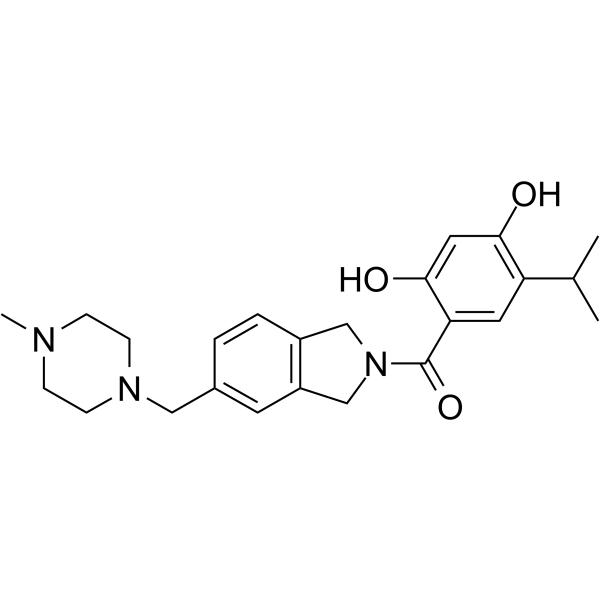
    AEG3482 is a potent antiapoptotic compound that inhibits Jun kinase (JNK) activity through induced expression of heat shock protein 70 (HSP70). AEG3482 directly binds HSP90, thereby facilitating HSF1-dependent expression of HSP70 and HSP25 .
    AEG3482
  • HY-U00398

    HSP Cardiovascular Disease
    Bimoclomol is a heat shock protein (HSP) coinducer, used for treatment of cardiovascular diseases.
    Bimoclomol
  • HY-142117

    Calcium Channel Chloride Channel Others
    Adenophostin A is an IP3 receptor (inositol 1,4,5-trisphosphate receptors) modulator and Ca 2+ releaser, with an IC50 of 1.3 nM, an EC50 of 1.4 nM, and a Ki of 0.18 nM in rats, and an IC50 of 0.95 nM in humans. Adenophostin A activates IP3 receptors, stimulates Ca 2+ release from intracellular stores and microsomes, inhibits the binding of [ 3H]IP3 to plasma membrane receptors, and activates chloride channels. Adenophostin A resists phosphorylation and dephosphorylation by IP3 metabolic enzymes to maintain its activity, and increases cytoplasmic [Ca 2+] levels via calcium mobilization from the endoplasmic reticulum of vascular smooth muscle cells. Adenophostin A is applicable to research related to hemorrhagic shock .
    Adenophostin A
  • HY-133961

    Cholesteryl glucoside

    HSP Metabolic Disease
    Cholesterol β-D-glucoside (Cholesteryl glucoside) is a heat shock transcription factor 1 (HSF1) activator. Cholesterol β-D-glucoside induces HSP70 in fibroblast cells .
    Cholesterol β-D-glucoside
  • HY-107928B

    Biochemical Assay Reagents Others Inflammation/Immunology Cancer
    Iron-dextran (Fe 35-40% w/w) is an iron supplement (Fe 35-40% w/w). Iron-dextran can cause severe immune reactions, including anaphylactic shock. Iron-dextran can be used in studies of iron deficiency anemia .
    Iron–Dextran(Fe 35-40% w/w)
  • HY-106690

    Centhaquine; PMZ-2010

    Adrenergic Receptor Cardiovascular Disease Inflammation/Immunology
    Centhaquine (Centhaquin; PMZ-2010) is a novel agent has the potential for treatment of haemorrhagic shock. Centhaquine (Centhaquin; PMZ-2010) can augment cardiac output, reduce systemic vascular resistance in haemorrhagic models .
    Centhaquin
  • HY-108486

    Bacterial Antibiotic Infection
    Herbimycin A, an ansamycin antibiotic, acts as a Src family kinase inhibitor. Herbimycin A binds to the SH domain and inhibits the activity of p60 v-src and p210 BCR-ABL Herbimycin A inhibits Hsp90 and impairs recovery from heat shock. Herbimycin A exhibits antiangiogenic activity in endothelial cells in vitro.
    Herbimycin A
  • HY-13479

    HSP Cancer
    EC144 is a potent and selective inhibitor of heat shock protein 90 (Hsp90) with an IC50 of 1.1 nM. EC144 inhibits tumor growth and causes partial tumor regressions. EC144 has the potential for the research of cancer diseases . EC144 is a click chemistry reagent, it contains an Alkyne group and can undergo copper-catalyzed azide-alkyne cycloaddition (CuAAc) with molecules containing Azide groups.
    EC144
  • HY-105239A

    FE 202158 acetate

    Vasopressin Receptor Cardiovascular Disease
    Selepressin (FE 202158) acetate is a selective vasopressin V1A receptor agonist. Selepressin acetate is a potent vasopressin. Selepressin acetate can be used in the study of septic shock.
    Selepressin acetate
  • HY-12622
    HSP70-IN-1
    1 Publications Verification

    HSP Cancer
    HSP70-IN-1 is a heat shock protein (HSP) inhibitor; inhibits the growth of Kasumi-1 cells with an IC50 of 2.3 μM.
    HSP70-IN-1
  • HY-P3068

    Adrenocorticotropic hormone (1-16)

    Melanocortin Receptor Cardiovascular Disease
    ACTH (1-16) (human) (Adrenocorticotropic hormone (1-16)) is an ACTH fragment. ACTH (1-16) (human) improves cardiovascular function and survival in experimental hemorrhagic shock .
    ACTH (1-16) (human)
  • HY-156374

    NOD-like Receptor (NLR) Pyroptosis Inflammation/Immunology
    D359-0396 is an orally active NLRP3 inflammasome inhibitor. D359-0396 inhibits pyroptosis and IL-1β release in macrophages. D359-0396 also inhibits the oligomerization of NLRP3, ASC and the cleavage of GSDMD. D359-0396 alleviates EAE, and also improves survival after septic shock in mice .
    D359-0396
  • HY-149891

    HSP Cancer
    HSP90-IN-23 (Comp 12-1) is an inhibitor of heat shock protein 90(HSP90) with an IC50 of 9 nM. HSP90-IN-23 induces apoptosis of tumor cells and arrests the tumor cell cycle in G0/G1 phase. HSP90-IN-23 can be used for cancer research .
    HSP90-IN-23
  • HY-108295

    CXB-722

    GABA Receptor Neurological Disease
    Pivagabine (CXB 722) is a hydrophobic 4-aminobutyric acid derivative with neuromodulatory activity. Pivagabine penetrates the blood-brain barrier in rats. Pivagabine antagonizes the effects of foot shock on both GABAA receptor function and corticotropin-releasing factor (CRF) concentrations in rat brain .
    Pivagabine
  • HY-P99891
    Rovelizumab
    1 Publications Verification

    Hu23F2G

    Integrin Cardiovascular Disease
    Rovelizumab is a humanized monoclonal leukointegrin antibody. Rovelizumab is a monoclonal antibody directed against the CD11/CD18 cell adhesion proteins. Rovelizumab can be used for research of multiple sclerosis (MS), hemorrhagic shock, myocardial infarction (MI) and stroke .
    Rovelizumab
  • HY-P1208

    Melanocortin Receptor Inflammation/Immunology
    PG-931, an analog of SHU 9119 (HY-P0227), is a potent melanocortin 4 (MC4) receptor (IC50=0.58 nM) agonist and is more selective than for the hMC3R (IC50=55 nM) or the hMC5R (IC50=2.4 nM). PG-931 can reverse haemorrhagic shock and prevent multiple organ damage in vivo .
    PG-931
  • HY-B0779R

    Geranylgeranylacetone (Standard)

    Reference Standards HSP Neurological Disease Cancer
    Teprenone (Standard) is the analytical standard of Teprenone. This product is intended for research and analytical applications. Teprenone is an anti-ulcer agent, and works as an inducer of heat shock proteins (HSPs).
    Teprenone (Standard)
  • HY-132995

    Drug Metabolite Others
    DP-1, a degradation product of SDC-TRAP-0063, is a fragment of Ganetespib. Ganetespib is a heat shock protein 90 (HSP90) inhibitor with anti-tumor activity .
    DP-1
  • HY-N8435

    TNF Receptor COX NO Synthase PGE synthase Infection Inflammation/Immunology
    Desoxo-narchinol A is an orally active and potent anti-inflammatory agent. Desoxo-narchinol A can be isolated from the roots and rhizomes of Nardostachys jatamansi. Desoxo-narchinol A can be used for septic shock and inflammatory diseases research .
    Desoxo-narchinol A
  • HY-W107935

    HSP Cancer
    Hsp90-IN-37 (Z-2) is a heat shock protein 90 (Hsp90) inhibitor that inhibits Hsp90 enzymatic activity by 69%. Hsp90-IN-37 has antitumor activity .
    Hsp90-IN-37
  • HY-P4984

    Biochemical Assay Reagents Inflammation/Immunology Cancer
    Toxic Shock Syndrome Toxin-1 (TSST-1) (58-78) is a T cell proliferation activator. Toxic Shock Syndrome Toxin-1 (TSST-1) (58-78) promotes the in vitro proliferation of human peripheral blood mononuclear cells (PBMC) in a dose-dependent manner. Toxic Shock Syndrome Toxin-1 (TSST-1) (58-78) can be used in research on inflammatory and immunity, as well as cancer .
    Toxic Shock Syndrome Toxin-1 (TSST-1) (58-78)
  • HY-W016704

    Gentisic acid sodium

    Drug Derivative Cardiovascular Disease
    2,5-Dihydroxybenzoic acid (sodium) (Gentisic acid (sodium)) is a phenolic compound. 2,5-Dihydroxybenzoic acid (sodium) restores mean arterial pressure and reduces blood lactate concentration in animal models of sepsis and septic shock. 2,5-Dihydroxybenzoic acid (sodium) can be used in the study of septic shock related diseases .
    2,5-Dihydroxybenzoic acid sodium
  • HY-163035

    TNF Receptor IFNAR Inflammation/Immunology
    EM-163 is a summative BB-Loop analog. EM-163 can alleviate inflammation and prevent death from toxic shock by targeting the TIR domain of MyD88. EM-163 can be used in the study of SEB poisoning (SEB: Staphylococcal enterotoxin B) .
    EM-163
  • HY-18734

    NO Synthase Cardiovascular Disease Metabolic Disease Inflammation/Immunology
    Carboxy-PTIO is a potent nitric oxide (NO) scavenger that can make a quick reaction with NO to produce NO2. Carboxy-PTIO can prevent hypotension and endotoxic shock through the direct scavenging action against NO in lipopolysaccharide-stimulated rat model .
    Carboxy-PTIO
  • HY-P5640

    Bacterial Parasite Infection
    Tritrpticin is a porcine-derived antimicrobial peptide with properties such as membrane disruption and hemolysis. Tritrpticin disrupts the cell membranes of bacteria, fungi and Jurkat T cell leukemia cells and induces their death. Tritrpticin also enhances the efficacy of Metronidazole (HY-B0318) against *Trichomonas vaginalis*, reduces plasma endotoxin and inflammatory cytokine levels, restricts bacterial growth in blood and visceral tissues, decreases the mortality rate of septic shock in rats and enhances the therapeutic effect of ertapenem. Tritrpticin exhibits selective cytotoxicity against Jurkat T cell leukemia cells, while showing low toxicity to normal peripheral blood mononuclear cells and red blood cells, and can serve as a template for antimicrobial peptide design. Tritrpticin can be applied to research related to bacterial infections, fungal infections, trichomoniasis, septic shock and leukemia .
    Tritrpticin
  • HY-101230

    Opioid Receptor Neurological Disease
    ICI 174864 is a selective and brain-penetrant δ-opioid receptor antagonist with Ke values of 22.0 nM to 30.6 nM at δ-opioid receptor in mouse vas deferens. ICI 174864 selectively blocks biological effects mediated by the δ-opioid receptor agonist DPDPE (HY-P1334) after central administration. ICI 174864 reverses hypotension in rats with endotoxic shock and inhibits acetic acid-induced writhing in mice. ICI 174864 can be used for the research of opioid receptor subtypes, endotoxic hypotension and analgesic pathways .
    ICI 174864
  • HY-144867

    HSP Cancer
    CCT245232 is a potent inhibitor of heat shock factor 1 (HSF1). HSF1 is the master regulator of the heat shock response, in which multiple genes are induced in response to temperature increase and other stresses. CCT245232 has the potential for the research of proliferative diseases, such as cancer (extracted from patent WO2015049535A1) .
    CCT245232
  • HY-115447

    Histamine Receptor Neurological Disease
    Clobenpropit is a potent histamine H3-receptor antagonist. Clobenpropit decreases dopamine release and increases histamine levels in the hypothalamus. Clobenpropit shows antipsychotic-like activities. Clobenpropit causes a resuscitating effect in rats subjected to the hemorrhagic shock .
    Clobenpropit
  • HY-145559

    KU-596

    HSP Metabolic Disease
    Cemdomespib (KU-596) is a highly bioavailable second-generation Hsp90 modulator. Cemdomespib has shown efficacy in improving sensory deficits in models of diabetic peripheral neuropathy. Cemdomespib induces Hsp70 levels and manifest neuroprotective activity through induction of the heat shock response .
    Cemdomespib
  • HY-P3434A
    Ac-FEID-CMK TFA
    2 Publications Verification

    Pyroptosis Inflammation/Immunology
    Ac-FEID-CMK TFA is a potent zebrafish-specific GSDMEb-derived peptide inhibitor. Ac-FEID-CMK TFA can attenuate the mortality and kidney injury during septic shock. Ac-FEID-CMK TFA inhibits pyroptosis and attenuates septic AKI (acute kidney injury) in vivo. Ac-FEID-CMK TFA can suppress the caspy2-mediated noncanonical inflammasome pathway .
    Ac-FEID-CMK TFA

Inquiry Online

Your information is safe with us. * Required Fields.

Salutation


Country or Region *

Applicant Name *


Organization Name *

Department *


Email Address *


Product Name *

Cat. No.


Requested quantity *

Phone Number *


Remarks

Inquiry Online

Inquiry Information

Product Name:
Cat. No.:
Quantity:
MCE Japan Authorized Agent:

