202 Results for "

sodium channel modulator

" in MedChemExpress (MCE) Product Catalog:
Products (202)

202 Results for "sodium channel modulator" in MCE Product Catalog:

197
197 Publications Verification
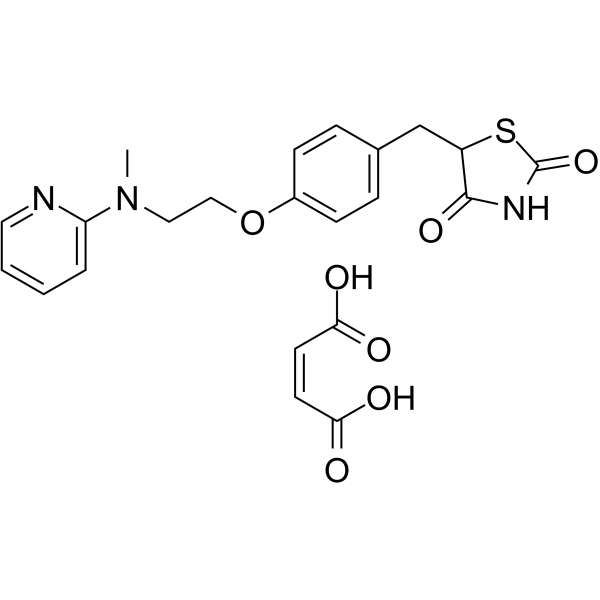
Cat. No.: HY-14600
CAS No.: 155141-29-0
Purity:  99.73%
Synonyms: BRL 49653C
Rosiglitazone maleate (BRL 49653C) is a potent and selective activator of PPARγ, with EC50s of 30 nM, 100 nM and 60 nM for PPARγ1, PPARγ2, and PPARγ, respectively, and a Kd of appr 40 nM for PPARγ; Rosiglitazone maleate is also an modulator of TRP channels, inhibits TRP melastatin 2 (TRPM2), TRPM3 and activates TRP canonical 5 (TRPC5).
loading...
    loading...
25
25 Cited Publications
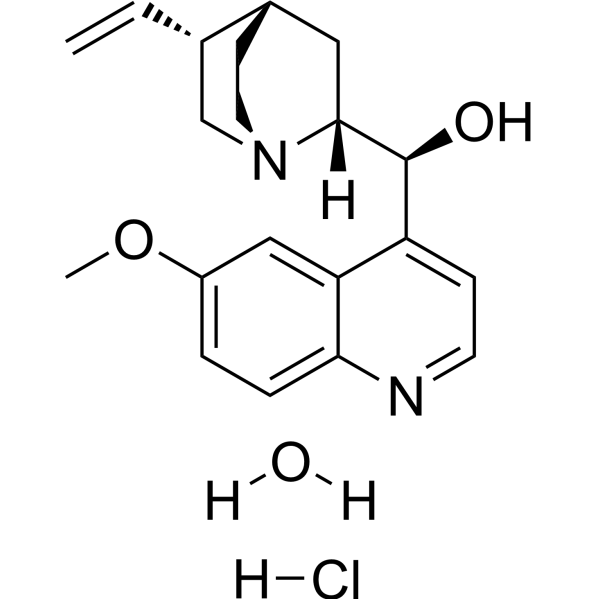
Cat. No.: HY-B1302
CAS No.: 6151-40-2
Quinidine hydrochloride monohydrate is an orally active antiarrhythmic agent. Quinidine hydrochloride monohydrate reduces the expression level of P-gp, inhibits P-gp-mediated efflux, increases the intracellular accumulation of P-gp substrates, induces PARP cleavage and Caspase-3 activation, and elevates the proportion of Apoptotic cells at the sub-G1 phase. Quinidine hydrochloride monohydrate exerts sustained block and open-channel block effects on IK(f). Quinidine hydrochloride monohydrate alters the urinary metabolic ratio of Amphetamine, modulates the Pentylenetetrazol-induced seizure threshold, and regulates the anticonvulsant effect of Dextromethorphan. Quinidine hydrochloride monohydrate can be used in studies related to uterine sarcoma and seizures .
loading...
    loading...
24
24 Cited Publications
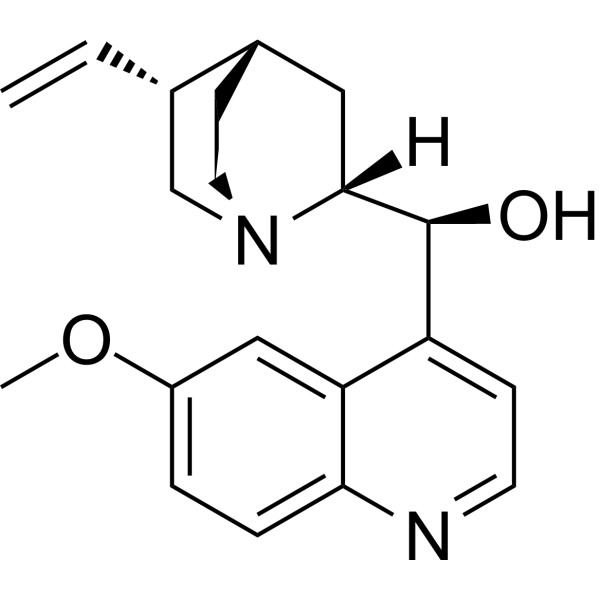
Cat. No.: HY-B1751
CAS No.: 56-54-2
Quinidine (15% dihydroquinidine) is an orally active antiarrhythmic agent. Quinidine (15% dihydroquinidine) reduces the expression level of P-gp, inhibits P-gp-mediated efflux, increases the intracellular accumulation of P-gp substrates, induces PARP cleavage and Caspase-3 activation, and elevates the proportion of Apoptotic cells at the sub-G1 phase. Quinidine (15% dihydroquinidine) exerts sustained block and open-channel block effects on IK(f). Quinidine (15% dihydroquinidine) alters the urinary metabolic ratio of Amphetamine, modulates the Pentylenetetrazol-induced seizure threshold, and regulates the anticonvulsant effect of Dextromethorphan. Quinidine (15% dihydroquinidine) can be used in studies related to uterine sarcoma and seizures .
loading...
    loading...
11
11 Cited Publications
Cat. No.: HY-B1588
CAS No.: 5697-56-3
Carbenoxolone is a blood-brain barrier-permeable Pannexin1 inhibitor, gap junction (Gap junction) blocker, and β-amyloid 42 inhibitor. Carbenoxolone modulates voltage-gated currents of wild-type and mutant Panx1, and inhibits stimulus-activated Panx1 channel function. Carbenoxolone interacts with stable residues of β-amyloid 42 peptides, fibrils and oligomers, thereby inhibiting their aggregation. Carbenoxolone alleviates liver fibrosis. Carbenoxolone exerts neuroprotective and nootropic effects. Carbenoxolone can be used in studies related to Alzheimer's disease and liver fibrosis .
loading...
    loading...
9
9 Cited Publications
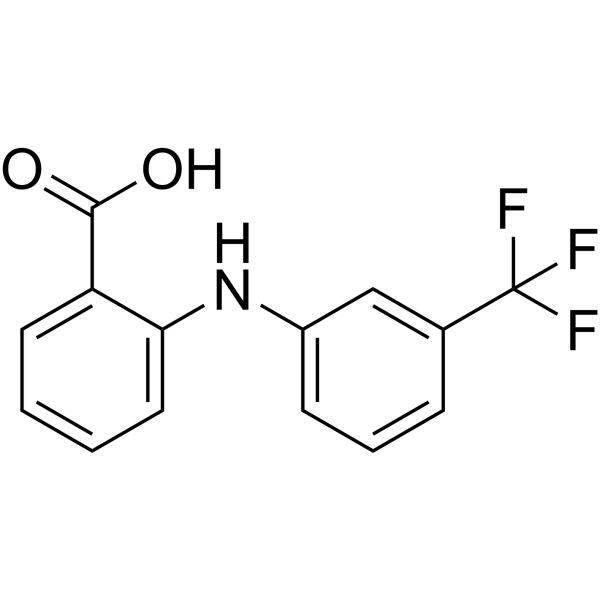
Cat. No.: HY-B1221
CAS No.: 530-78-9
Flufenamic acid is a non-steroidal anti-inflammatory agent, inhibits cyclooxygenase (COX), activates AMPK, and also modulates ion channels, blocking chloride channels and L-type Ca 2+ channels, modulating non-selective cation channels (NSC), activating K + channels. Flufenamic acid binds to the central pocket of TEAD2 YBD and inhibits both TEAD function and TEAD-YAP-dependent processes, such as cell migration and proliferation.
loading...
    loading...
9
9 Cited Publications
Cat. No.: HY-103315
CAS No.: 68099-86-5
Purity:  99.98%
Synonyms: CERM 1978; Org 5730 hydrochloride
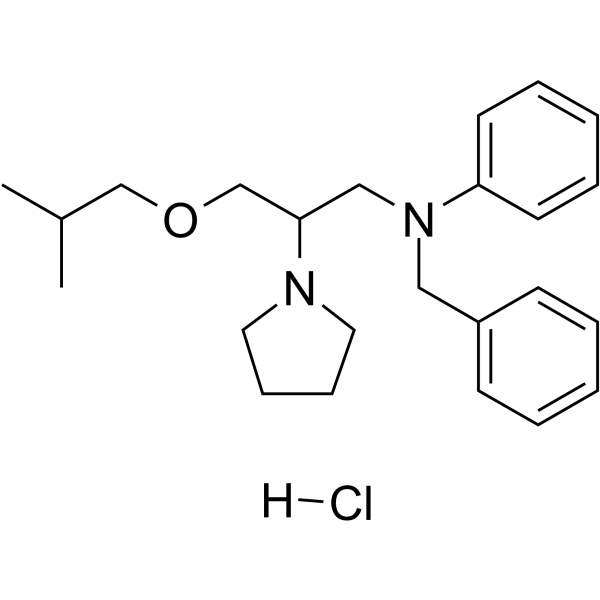
Bepridil hydrochloride (CERM 1978; Org 5730 hydrochloride) is an orally active non-selective calcium channel antagonist with multi-ion channel blocking activity. Bepridil hydrochloride modulates Calmodulin, the 20S proteasome, T-type/L-type calcium channels, cardiac sodium channels, multiple potassium channels, γ-secretase, β-secretase, and mitoKATP/sarcKATP channels. Bepridil hydrochloride acts as a hydroxyl radical scavenger, regulates mitochondrial and intracellular calcium handling, and exerts antiarrhythmic, antianginal, and cardioprotective effects. Bepridil hydrochloride alters amyloid precursor protein processing, reduces β-amyloid and thalamic calcium levels, restores seladin-1/DHCR24 expression, and improves sensorimotor recovery after cerebral ischemia. Bepridil hydrochloride also exhibits potent inhibitory effects on SARS-CoV-2 replication. Bepridil hydrochloride is used in studies related to stable angina, arrhythmias, cerebral ischemia, Alzheimer's disease, and SARS-CoV-2 infection .
loading...
    loading...
9
9 Cited Publications
Cat. No.: HY-16952
CAS No.: 64706-54-3
Synonyms: CERM 1978 free base; Org 5730
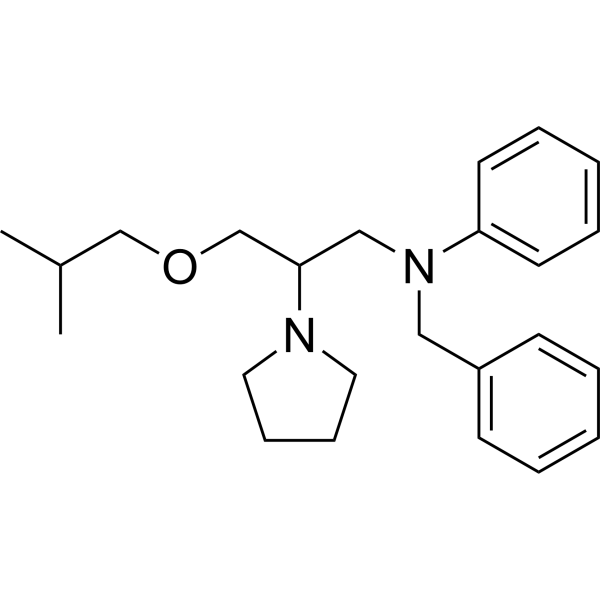
Bepridil (CERM 1978 (free base); Org 5730) is an orally active non-selective calcium channel antagonist with multi-ion channel blocking activity. Bepridil modulates Calmodulin, the 20S proteasome, T-type/L-type calcium channels, cardiac sodium channels, multiple potassium channels, γ-secretase, β-secretase, and mitoKATP/sarcKATP channels. Bepridil acts as a hydroxyl radical scavenger, regulates mitochondrial and intracellular calcium handling, and exerts antiarrhythmic, antianginal, and cardioprotective effects. Bepridil alters amyloid precursor protein processing, reduces β-amyloid and thalamic calcium levels, restores seladin-1/DHCR24 expression, and improves sensorimotor recovery after cerebral ischemia. Bepridil also exhibits potent inhibitory effects on SARS-CoV-2 replication. Bepridil is used in studies related to stable angina, arrhythmias, cerebral ischemia, Alzheimer's disease, and SARS-CoV-2 infection .
loading...
    loading...
9
9 Cited Publications
Cat. No.: HY-16952A
CAS No.: 74764-40-2
Synonyms: CERM 1978 hydrate; Org 5730 hydrochloride hydrate
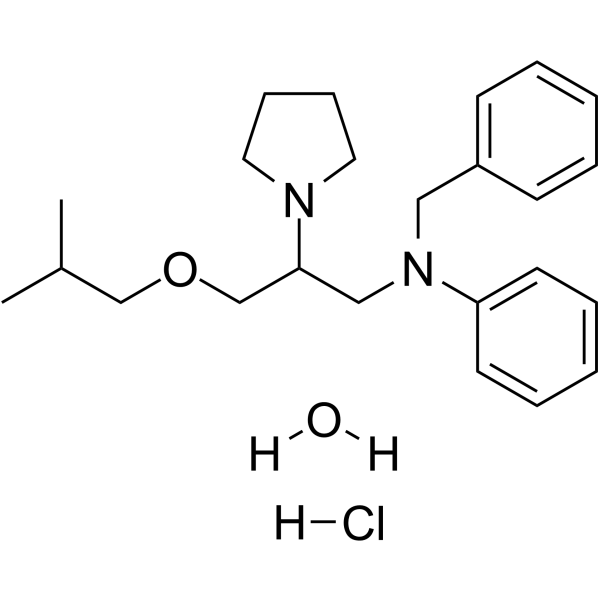
Bepridil hydrochloride hydrate (CERM 1978 hydrate; Org 5730 hydrochloride hydrate) is an orally active non-selective calcium channel antagonist with multi-ion channel blocking activity. Bepridil hydrochloride hydrate modulates Calmodulin, the 20S proteasome, T-type/L-type calcium channels, cardiac sodium channels, multiple potassium channels, γ-secretase, β-secretase, and mitoKATP/sarcKATP channels. Bepridil hydrochloride hydrate acts as a hydroxyl radical scavenger, regulates mitochondrial and intracellular calcium handling, and exerts antiarrhythmic, antianginal, and cardioprotective effects. Bepridil hydrochloride hydrate alters amyloid precursor protein processing, reduces β-amyloid and thalamic calcium levels, restores seladin-1/DHCR24 expression, and improves sensorimotor recovery after cerebral ischemia. Bepridil hydrochloride hydrate also exhibits potent inhibitory effects on SARS-CoV-2 replication. Bepridil hydrochloride hydrate is used in studies related to stable angina, arrhythmias, cerebral ischemia, Alzheimer's disease, and SARS-CoV-2 infection .
loading...
    loading...
7
7 Cited Publications
Cat. No.: HY-110082
CAS No.: 130-89-2
Quinine hydrochloride is an alkaloid extracted from cinchona bark and exhibits oral activity, acting as a potassium channel inhibitor. Quinine hydrochloride modulates the tolerance of red blood cells and presents dose-dependent toxicity and embryonic effects. Quinine hydrochloride is a typical hemolysin that directly lyses red blood cells, with cellular components of red blood cell membranes as its action targets. Quinine hydrochloride disrupts red blood cell membranes and induces hemolysis at high concentrations, while merely weakening the anti-hemolytic capacity of red blood cells at low concentrations. Quinine hydrochloride continuously reduces red blood cell tolerance after in vivo administration, and high doses can also alter blood cell counts. Quinine hydrochloride can be applied to researches related to red blood cell hemolysis, cancer and malaria .
loading...
    loading...
6
6 Cited Publications
Cat. No.: HY-101422
CAS No.: 1380341-99-0
Purity:  99.93%
Target:  

Potassium Channel

Research Areas:  

Inflammation/Immunology

GAL-021 is a potent BKCa-channel blocker. GAL-021 inhibits KCa1.1 in GH3 cells. GAL-021 is a novel breathing control modulator that is based on selective modification of the almitrine pharmacophore. GAL-021 increases minute ventilation in rats and non-human primates .
loading...
    loading...
5
5 Cited Publications
Cat. No.: HY-B1752
CAS No.: 80373-22-4
Synonyms: LY 171555; (-)-LY 141865
Quinpirole (LY 171555; (-)-LY 141865) is a D2/D3 dopamine receptor agonist and a CaV1.3 calcium channel modulator. Quinpirole normalizes dendritic spine density in dopamine-depleted striatum, upregulates the protein expression of BCL2 and GluR2, downregulates the protein expression of BAX, and delays the onset of seizures. Quinpirole enhances learning and memory, inhibits neuronal apoptosis (apoptosis), and induces anxiety-like, stereotyped, and compulsive behaviors. Quinpirole disrupts prepulse inhibition in rhesus monkeys, enhances the activity of paraventricular thalamic neurons to promote recovery from Isoflurane anesthesia, and alters the composition of the gut microbiota in rats. Quinpirole can be used in research related to dyskinesia, pain, epilepsy, and neurological disorders including anxiety disorder, obsessive-compulsive disorder, and schizophrenia .
loading...
    loading...
4
4 Cited Publications
Cat. No.: HY-B1494
CAS No.: 17617-45-7
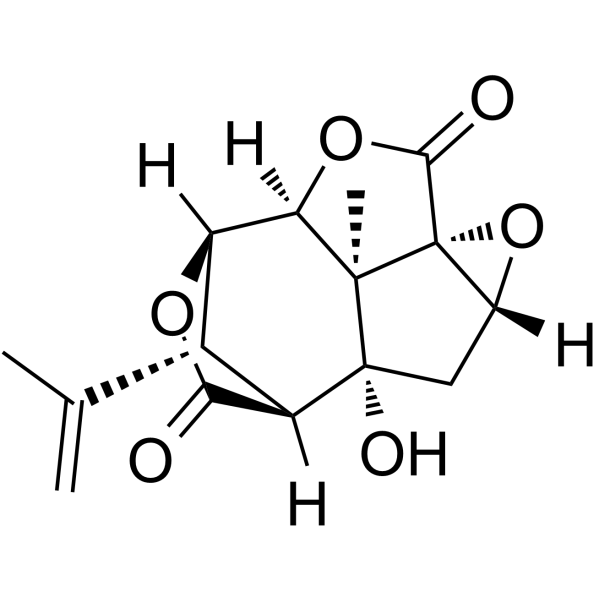
Picrotoxinin, a potent convulsant, is a chloride channel blocker. Picrotoxinin is a noncompetitive GABAA receptor antagonist, which negatively modulates the action of GABA on GABAA receptors. Picrotoxinin inhibits α1β2γ2L GABAA receptor with an IC50 of 1.15 μM .
loading...
    loading...
3
3 Cited Publications
Cat. No.: HY-W004260
CAS No.: 506-30-9
Synonyms: Eicosanoic acid
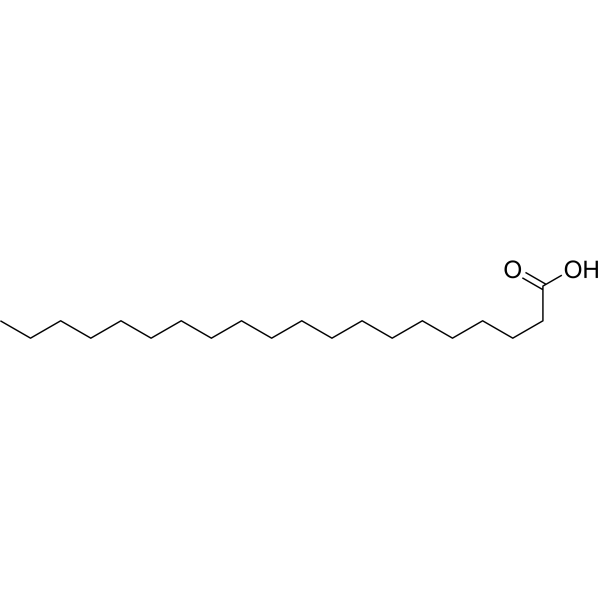
Arachidic acid is an orally bioavailable membrane fluidity modulator and receptor/ion channel effector. Arachidic acid does not activate arachidonic acid-sensitive K + channels in rat midbrain and hypothalamic neurons. Arachidic acid alleviates age-related spatial cognitive impairment. Arachidic acid is applicable for research related to age-related spatial cognitive impairment .
loading...
    loading...
3
3 Cited Publications
Cat. No.: HY-B1462
CAS No.: 95-25-0
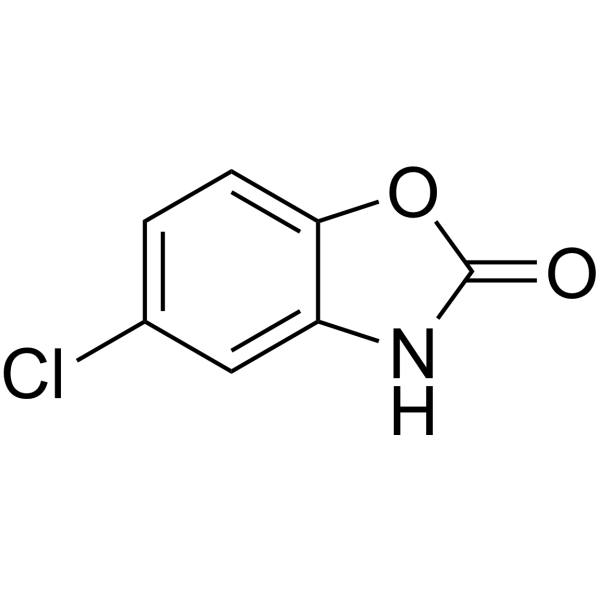
Chlorzoxazone is a SK-type potassium channel activator. Chlorzoxazone modulates FOXO3 phosphorylation and Aβ. Chlorzoxazone enhances immunosuppression, attenuates vasoconstriction, attenuates cognitive deficits, and improves experimental autoimmune encephalomyelitis .
loading...
    loading...
3
3 Cited Publications
Cat. No.: HY-116330A
CAS No.: 238074-03-8
Purity:  99.52%
Synonyms: Hyperforin DCHA
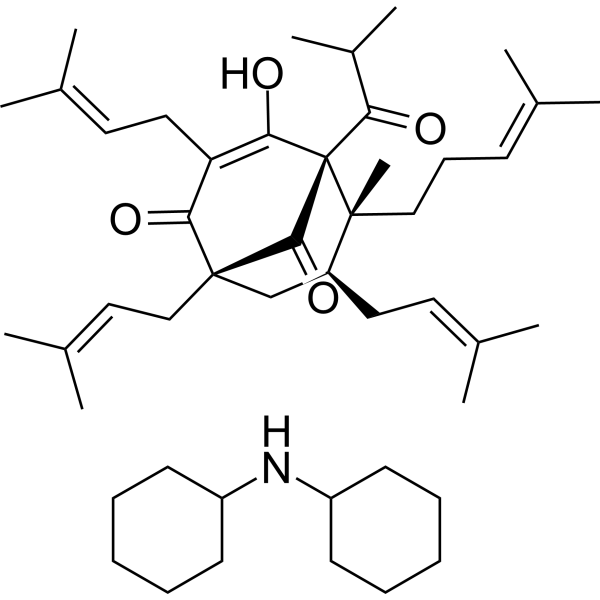
Hyperforin dicyclohexylammonium salt (Hyperforin DCHA) is a transient receptor canonical 6 (TRPC6) channels activator. Hyperforin dicyclohexylammonium salt modulates Ca 2+ levels by activating Ca 2+-conducting non-selective canonical TRPC6 channels. Hyperforin dicyclohexylammonium salt also shows diverse pharmacological activities including anti-depression, anti-tumor, anti-dementia, anti-diabetes. Hyperforin dicyclohexylammonium salt modulates γδ T cells to secret IL-17α, improves Imiquimod (HY-B0180)-induced psoriasis-like mice model .
loading...
    loading...
3
3 Cited Publications
Cat. No.: HY-P10234A
Target:  

Sodium Channel

Research Areas:  

Neurological Disease

Poneratoxin acetate is the acetate salt form of Poneratoxin (HY-P10234). Poneratoxin acetate is the modulator for voltage-gated sodium channel (NaV, EC50 for NaV1.6 and NaV1.7 is 97 nM and 2.3 µM), that lowers the voltage threshold for activation and inhibits the inactivation of channels, enhances the excitability of neurons, and leads to the transmission of pain signals .
loading...
    loading...
2
2 Cited Publications
Cat. No.: HY-109160
CAS No.: 2167246-24-2
Purity:  99.27%
Synonyms: CAD-1883
Target:  

Potassium Channel

Research Areas:  

Neurological Disease

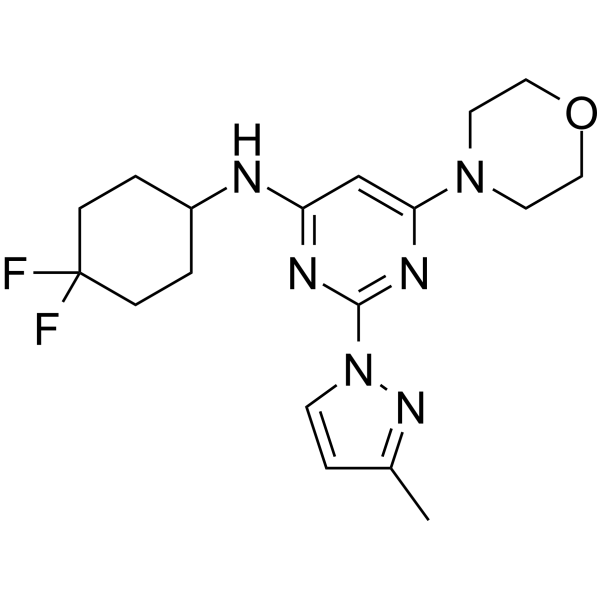
Rimtuzalcap (CAD-1883) is a first-in-class selective positive allosteric modulator of small-conductance calcium-activated potassium channels (SK channels). Rimtuzalcap can be used for the research of movement disorders including essential tremor (ET) and spinocerebellar ataxia (SCA) .
loading...
    loading...
2
2 Cited Publications
Cat. No.: HY-B0347
CAS No.: 103890-78-4
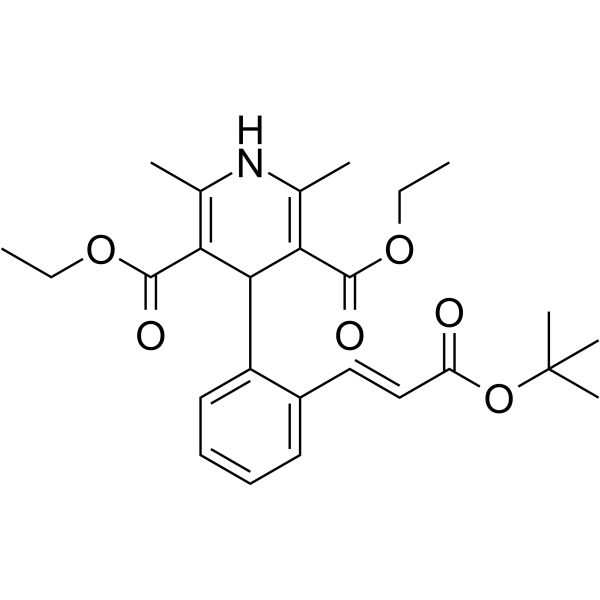
Lacidipine is an orally active and highly selective L-type calcium channel blocker that acts on smooth muscle calcium channels, primarily dilates peripheral arteries, reduces peripheral resistance, and has long-lasting anti-hypertensive activity. Lacidipine protects HKCs from apoptosis induced by ATP depletion and recovery by modulating the caspase-3 pathway. Lacidipine can be used in studies of hypertension, atherosclerosis and acute kidney injury (AKI) .
loading...
    loading...
2
2 Cited Publications
Cat. No.: HY-134494
CAS No.: 2375070-79-2
Purity:  99.90%
Target:  

GPR68

Research Areas:  

Neurological Disease

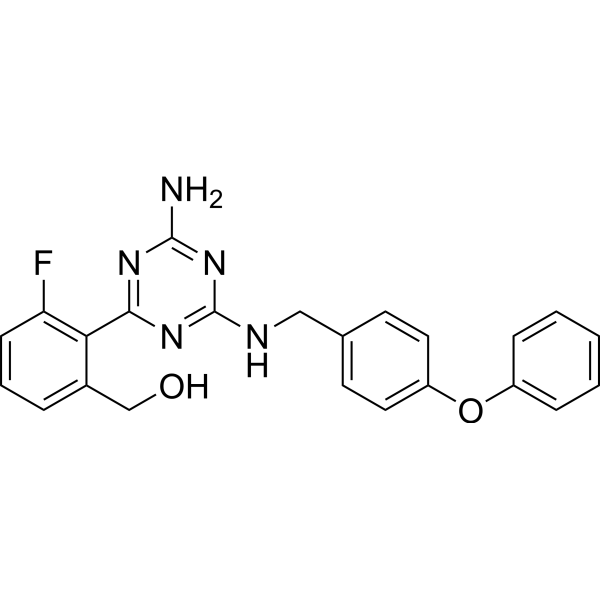
MS48107 is a potent and selective positive allosteric modulator of G protein-coupled receptor 68 (GPR68). MS48107 is selective for GPR68 over the closely related proton GPCRs, neurotransmitter transporters, and hERG ion channels. MS48107 can readily cross the blood-brain barrier (BBB) in mice .
loading...
    loading...
2
2 Cited Publications
Cat. No.: HY-P1075
CAS No.: 261969-05-5
Target:  

Calcium Channel

Research Areas:  

Neurological Disease Cancer

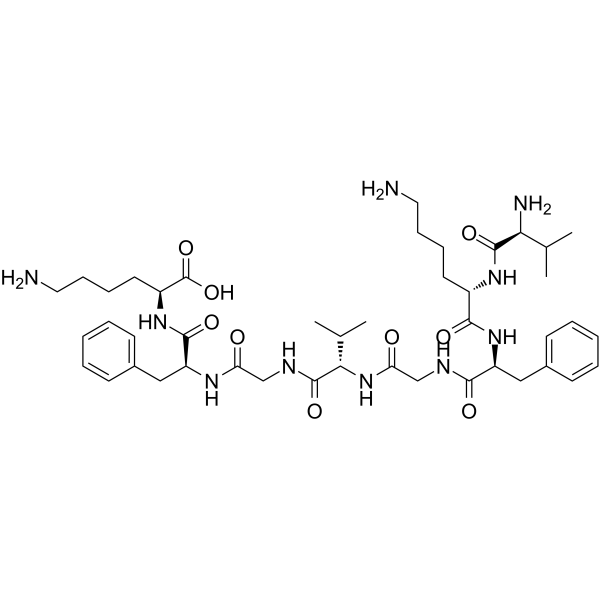
CALP3, a Ca 2+-like peptide, is a potent Ca 2+ channel blocker that activates EF hand motifs of Ca 2+-binding proteins. CALP3 can functionally mimic increased [Ca 2+]i by modulating the activity of Calmodulin (CaM), Ca 2+ channels and pumps. CALP3 has the potential in controlling apoptosis in diseases such as AIDS or neuronal loss due to ischemia .
loading...
    loading...

