551 Results for "

urinary

" in MedChemExpress (MCE) Product Catalog:
Products (551)

551 Results for "urinary" in MCE Product Catalog:

37
37 Cited Publications
Cat. No.: HY-16566
CAS No.: 59-01-8
Synonyms: Kanamycin A
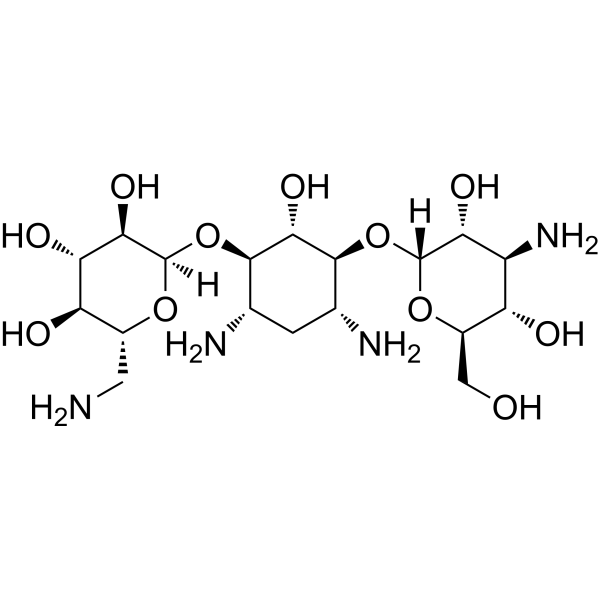
Kanamycin (Kanamycin A) is an antibacterial agent. Kanamycin blocks Kir4.1 channels. Kanamycin inhibits bacterial mRNA translation and exerts bactericidal effects against Gram-positive, Gram-negative, and acid-resistant microorganisms. Kanamycin produces ROS and superoxide and induces caspase-3-mediated apoptosis. Kanamycin inhibits biofilms and reduces persister bacteria, and reduces Mycobacterium tuberculosis within macrophages. Kanamycin can be used in research on bacterial infections, urinary tract infections, tuberculosis, and Staphylococcus aureus-induced peritonitis .
loading...
    loading...
37
37 Cited Publications
Cat. No.: HY-16566A
CAS No.: 25389-94-0
Synonyms: Kanamycin A sulfate
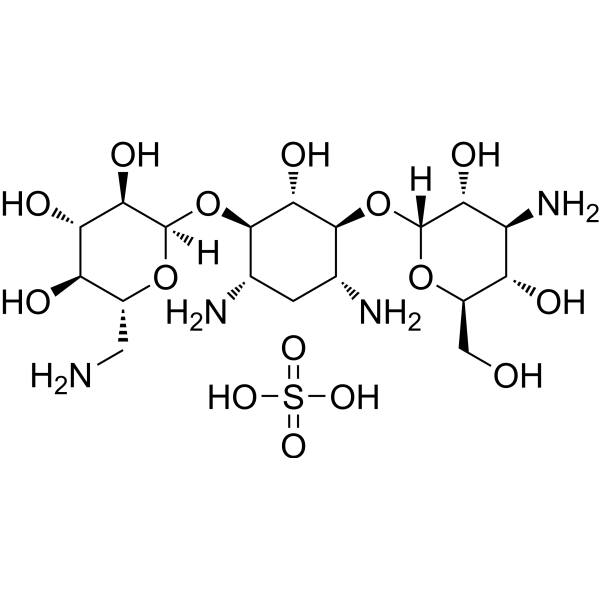
Kanamycin sulfate (Kanamycin A sulfate) is an antibacterial agent. Kanamycin sulfate blocks Kir4.1 channels. Kanamycin sulfate inhibits bacterial mRNA translation and exerts bactericidal effects against Gram-positive, Gram-negative, and acid-resistant microorganisms. Kanamycin sulfate produces ROS and superoxide and induces caspase-3-mediated apoptosis. Kanamycin sulfate inhibits biofilms and reduces persister bacteria, and reduces Mycobacterium tuberculosis within macrophages. Kanamycin sulfate can be used in research on bacterial infections, urinary tract infections, tuberculosis, and Staphylococcus aureus-induced peritonitis .
loading...
    loading...
33
33 Cited Publications
Cat. No.: HY-14865
CAS No.: 389139-89-3
Purity:  99.85%
Synonyms: PTK 0796; Amadacycline
Target:  

Bacterial Antibiotic

Research Areas:  

Infection

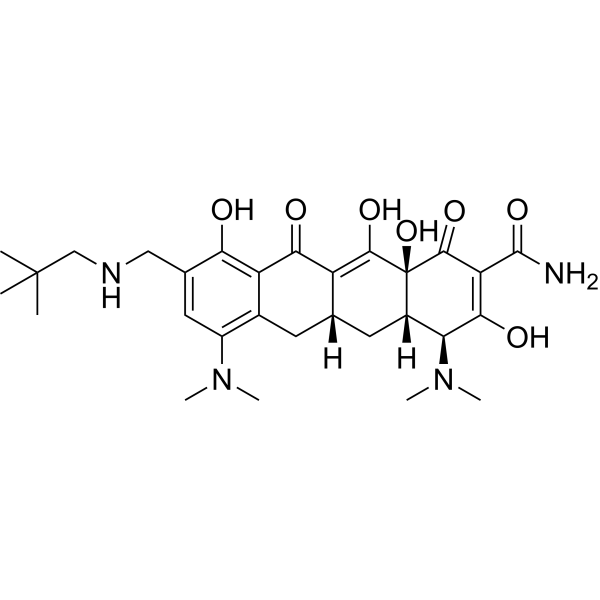
Omadacycline (PTK 0796), a first-in-class orally active aminomethylcycline antibacterial, is a member of the tetracycline class of antibiotics. Omadacycline acts through the inhibition of bacterial protein synthesis by binding to the 30S ribosomal subunit. Omadacycline possesses broad-spectrum antibacterial activity against aerobic and anaerobic Gram-positive and Gram-negative bacteria, as well as atypical bacteria. Omadacycline can be used for the research of acute bacterial skin and skin-structure infections, community-acquired pneumonia, and urinary tract infections .
loading...
    loading...
33
33 Cited Publications
Cat. No.: HY-14865B
CAS No.: 1075240-43-5
Purity:  99.37%
Synonyms: PTK 0796 tosylate; Amadacycline tosylate
Target:  

Bacterial Antibiotic

Research Areas:  

Infection

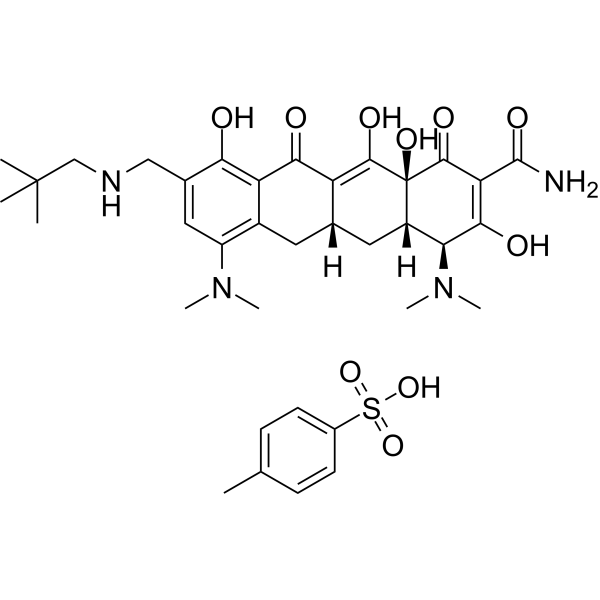
Omadacycline (PTK 0796) tosylate, a first-in-class orally active aminomethylcycline antibacterial, is a member of the tetracycline class of antibiotics. Omadacycline tosylate acts through the inhibition of bacterial protein synthesis by binding to the 30S ribosomal subunit. Omadacycline tosylate possesses broad-spectrum antibacterial activity against aerobic and anaerobic Gram-positive and Gram-negative bacteria, as well as atypical bacteria. Omadacycline tosylate can be used for the research of acute bacterial skin and skin-structure infections, community-acquired pneumonia, and urinary tract infections .
loading...
    loading...
33
33 Cited Publications
Cat. No.: HY-14865C
CAS No.: 1196800-39-1
Purity:  99.47%
Synonyms: PTK0796 hydrochloride; Amadacycline hydrochloride
Target:  

Bacterial Antibiotic

Research Areas:  

Infection

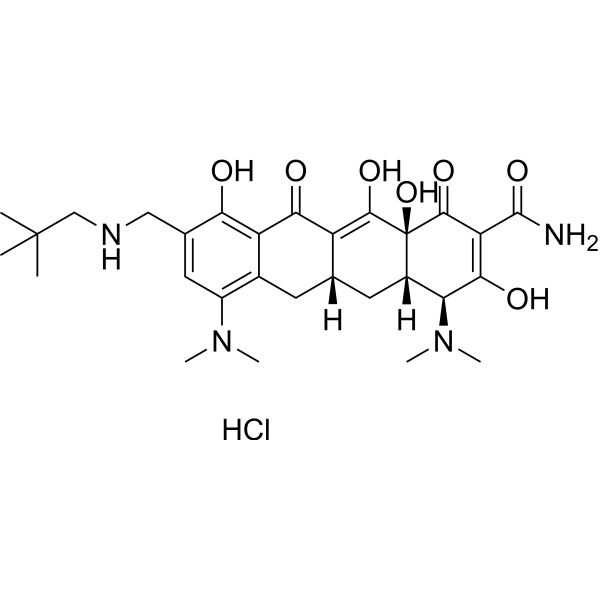
Omadacycline (PTK 0796) hydrochloride, a first-in-class orally active aminomethylcycline antibacterial, is a member of the tetracycline class of antibiotics. Omadacycline hydrochloride acts through the inhibition of bacterial protein synthesis by binding to the 30S ribosomal subunit. Omadacycline hydrochloride possesses broad-spectrum antibacterial activity against aerobic and anaerobic Gram-positive and Gram-negative bacteria, as well as atypical bacteria. Omadacycline hydrochloride can be used for the research of acute bacterial skin and skin-structure infections, community-acquired pneumonia, and urinary tract infections .
loading...
    loading...
28
28 Cited Publications
Cat. No.: HY-116771
CAS No.: 183720-02-7
Purity:  99.37%
Target:  

Adrenergic Receptor

Research Areas:  

Metabolic Disease

CL316243 free acid is a highly potent selective β3-adrenoceptor agonist with a EC50 of 3 nM, but is an extremely poor to β1/2- receptors. CL316243 free acid is a effective stimulant of adipocyte lipolysis and increases brown adipose tissue thermogenesis and metabolic rate. CL316243 free acid has the potential for the treatment obesity, diabetes and urge urinary incontinence .
loading...
    loading...
28
28 Cited Publications
Cat. No.: HY-116771A
CAS No.: 138908-40-4
Purity:  99.98%
Target:  

Adrenergic Receptor

Research Areas:  

Metabolic Disease

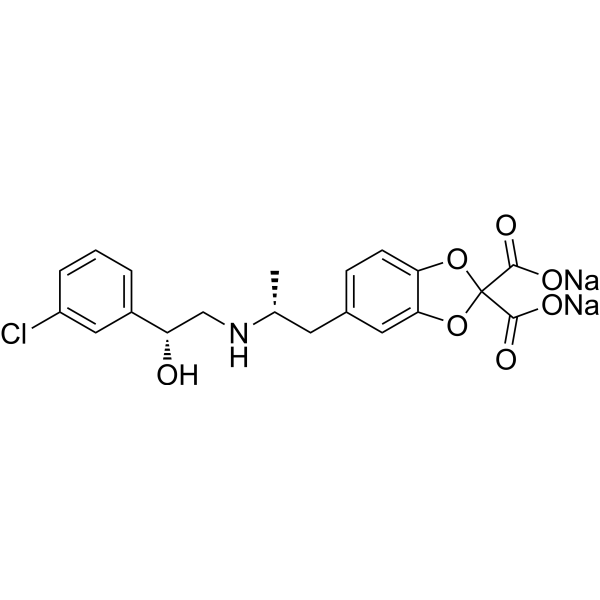
CL316243 is a highly potent selective β3-adrenoceptor agonist with a EC50 of 3 nM, but is an extremely poor to β1/2- receptors .CL316243 is a effective stimulant of adipocyte lipolysis and increases brown adipose tissue thermogenesis and metabolic rate . CL316243 has the potential for the treatment obesity, diabetes and urge urinary incontinence .
loading...
    loading...
27
27 Cited Publications
Cat. No.: HY-W718156
CAS No.: 64013-70-3
Synonyms: Kanamycin A disulfate
Kanamycin disulfate (Kanamycin A disulfate) is an antibacterial agent. Kanamycin disulfate blocks Kir4.1 channels. Kanamycin disulfate inhibits bacterial mRNA translation and exerts bactericidal effects against Gram-positive, Gram-negative, and acid-resistant microorganisms. Kanamycin disulfate produces ROS and superoxide and induces caspase-3-mediated apoptosis. Kanamycin disulfate inhibits biofilms and reduces persister bacteria, and reduces Mycobacterium tuberculosis within macrophages. Kanamycin disulfate can be used in research on bacterial infections, urinary tract infections, tuberculosis, and Staphylococcus aureus-induced peritonitis .
loading...
    loading...
26
26 Cited Publications
Cat. No.: HY-B0322
CAS No.: 723-46-6
Synonyms: Ro 4-2130
Target:  

Antibiotic Bacterial

Research Areas:  

Infection Cancer

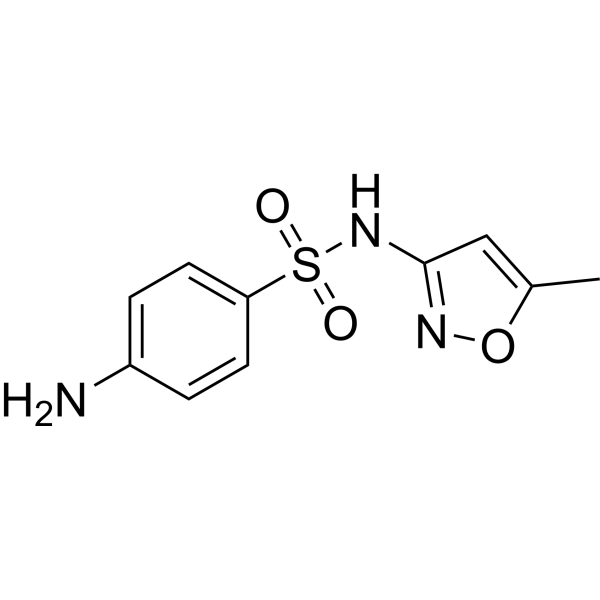
Sulfamethoxazole (Ro 4-2130) is a sulfonamide antibiotic with a widespread antibacterial activity. Sulfamethoxazole inhibits bacterial folate metabolism by competing with 4-Aminobenzoic acid (HY-B1008) (PABA) to act on dihydropteroate synthetase and dihydropteroate reductase. Sulfamethoxazole can be used for the study of urinary tract infections (UTIs), prostatitis, and bronchitis .
loading...
    loading...
26
26 Cited Publications
Cat. No.: HY-B0322A
CAS No.: 4563-84-2
Synonyms: Ro 4-2130 sodium
Target:  

Antibiotic Bacterial

Research Areas:  

Infection

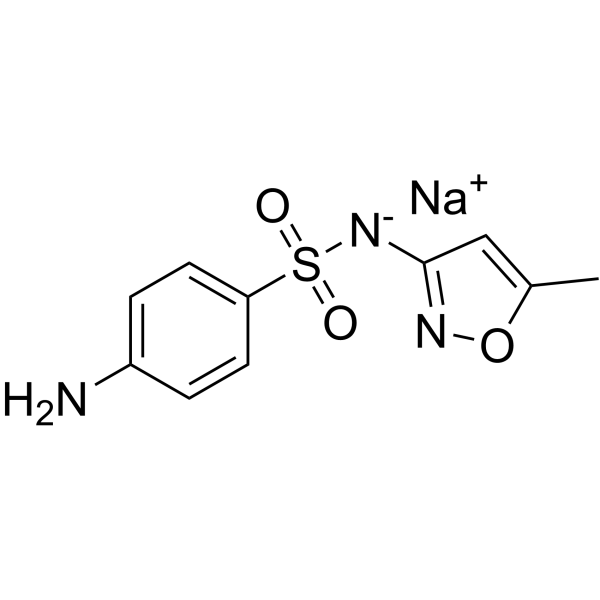
Sulfamethoxazole (Ro 4-2130) sodium is a sulfonamide antibiotic with a widespread antibacterial activity. Sulfamethoxazole sodium inhibits bacterial folate metabolism by competing with 4-Aminobenzoic acid (HY-B1008) (PABA) to act on dihydropteroate synthetase and dihydropteroate reductase. Sulfamethoxazole sodium can be used for the study of urinary tract infections (UTIs), prostatitis, and bronchitis .
loading...
    loading...
25
25 Cited Publications
Cat. No.: HY-B1751
CAS No.: 56-54-2
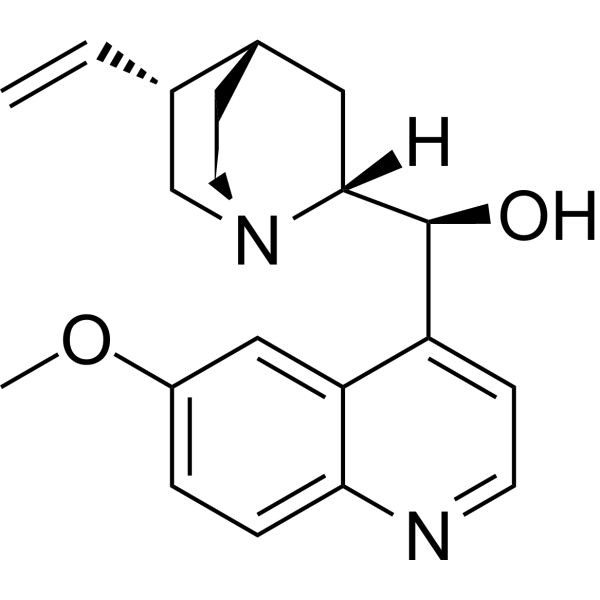
Quinidine (15% dihydroquinidine) is an orally active antiarrhythmic agent. Quinidine (15% dihydroquinidine) reduces the expression level of P-gp, inhibits P-gp-mediated efflux, increases the intracellular accumulation of P-gp substrates, induces PARP cleavage and Caspase-3 activation, and elevates the proportion of Apoptotic cells at the sub-G1 phase. Quinidine (15% dihydroquinidine) exerts sustained block and open-channel block effects on IK(f). Quinidine (15% dihydroquinidine) alters the urinary metabolic ratio of Amphetamine, modulates the Pentylenetetrazol-induced seizure threshold, and regulates the anticonvulsant effect of Dextromethorphan. Quinidine (15% dihydroquinidine) can be used in studies related to uterine sarcoma and seizures .
loading...
    loading...
24
24 Cited Publications
Cat. No.: HY-B0322B
CAS No.: 723-46-6
Synonyms: Ro 4-2130 1000 µg/mL in methanol
Target:  

Antibiotic Bacterial

Research Areas:  

Infection

Sulfamethoxazole (Ro 4-2130) 1000 μg/mL in methanol is a sulfonamide antibiotic with a widespread antibacterial activity. Sulfamethoxazole 1000 μg/mL in methanol inhibits bacterial folate metabolism by competing with 4-Aminobenzoic acid (HY-B1008) (PABA) to act on dihydropteroate synthetase and dihydropteroate reductase. Sulfamethoxazole 1000 μg/mL in methanol can be used for the study of urinary tract infections (UTIs), prostatitis, and bronchitis .
loading...
    loading...
14
14 Cited Publications
Cat. No.: HY-B0510
CAS No.: 738-70-5
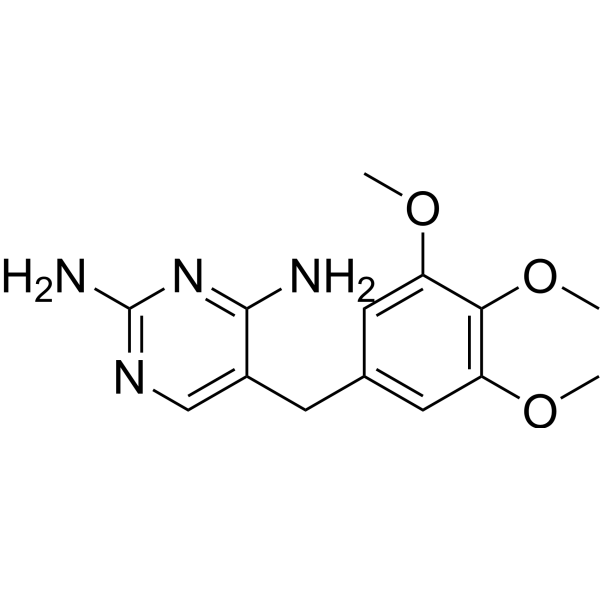
Trimethoprim is a bacteriostatic antibiotic and an orally active dihydrofolate reductase inhibitor. Trimethoprim is active against a wide range of Gram-positive and Gram-negative aerobic bacteria. Trimethoprim has the potential for the research of urinary tract infections, Shigellosis and Pneumocystis pneumonia. Trimethoprim can inhibit infection of Influenza A virus in chick embryo when combinated with zinc .
loading...
    loading...
14
14 Cited Publications
Cat. No.: HY-B0510B
CAS No.: 60834-30-2
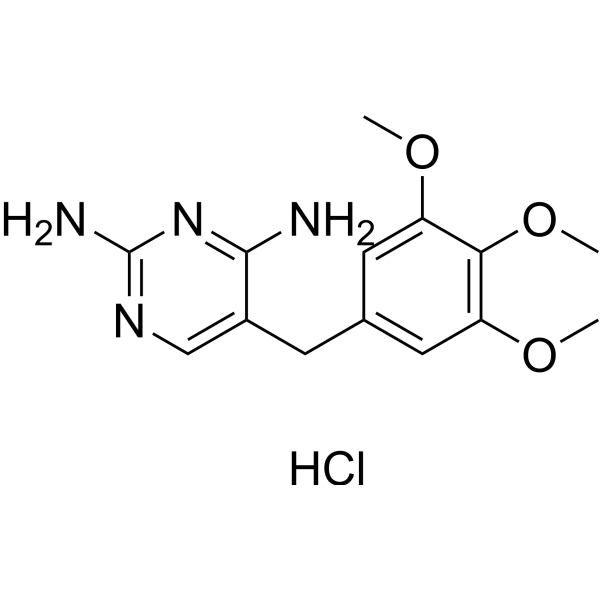
Trimethoprim hydrochloride is a bacteriostatic antibiotic and an orally active dihydrofolate reductase inhibitor. Trimethoprim hydrochloride is active against a wide range of Gram-positive and Gram-negative aerobic bacteria. Trimethoprim hydrochloride has the potential for the research of urinary tract infections, Shigellosis and Pneumocystis pneumonia. Trimethoprim hydrochloride can inhibit infection of Influenza A virus in chick embryo when combinated with zinc .
loading...
    loading...
14
14 Cited Publications
Cat. No.: HY-B0510C
CAS No.: 23256-42-0
Research Areas:  

Infection Cancer

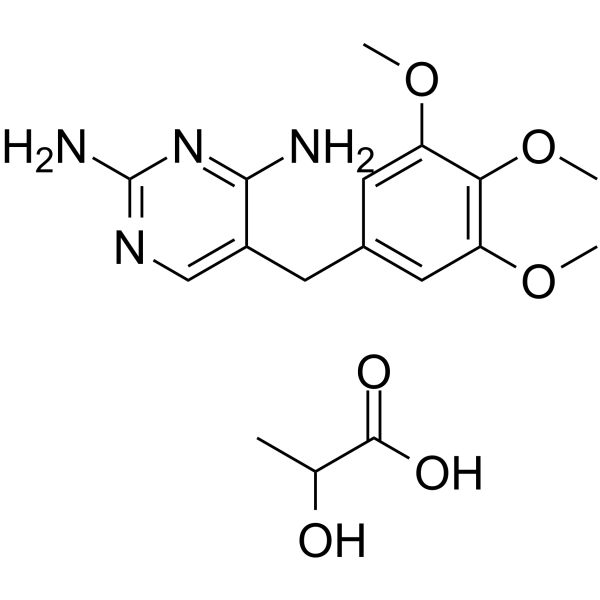
Trimethoprim lactate is a bacteriostatic antibiotic and an orally active dihydrofolate reductase inhibitor. Trimethoprim lactate is active against a wide range of Gram-positive and Gram-negative aerobic bacteria. Trimethoprim lactate has the potential for the research of urinary tract infections, Shigellosis and Pneumocystis pneumonia. Trimethoprim lactate can inhibit infection of Influenza A virus in chick embryo when combinated with zinc .
loading...
    loading...
14
14 Cited Publications
Cat. No.: HY-B0331
CAS No.: 75847-73-3
Synonyms: MK-421
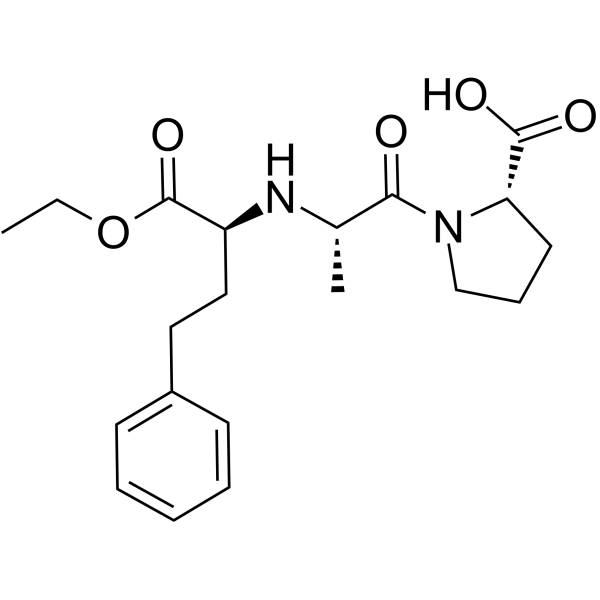
Enalapril (MK-421) is an orally active angiotensin-converting enzyme inhibitor. Enalapril blocks the conversion of angiotensin I to angiotensin II, regulates the renin-angiotensin system, reduces preload and afterload, and decreases plasma angiotensin II levels. Enalapril inhibits apoptosis, reduces nitric oxide metabolite levels, stabilizes endothelial cells, enhances endothelial antioxidant defense, scavenges reactive oxygen species (ROS), and alleviates neuronal damage. Enalapril attenuates glutathione depletion, protein/lipid oxidation, tissue damage, and type III collagen immunolabeling in organs of diabetic rats. Enalapril reduces systolic blood pressure and urinary albumin excretion, and delays the progression of diabetic cardiac/renal injury. Enalapril is used in research related to asymptomatic left ventricular dysfunction, congestive heart failure, Alzheimer's disease, diabetes mellitus, acute myocardial infarction, atrial fibrillation, hypertension, cerebral ischemia, chronic heart failure, and single-ventricle physiology .
loading...
    loading...
14
14 Cited Publications
Cat. No.: HY-B0331A
CAS No.: 76095-16-4
Synonyms: MK-421 maleate
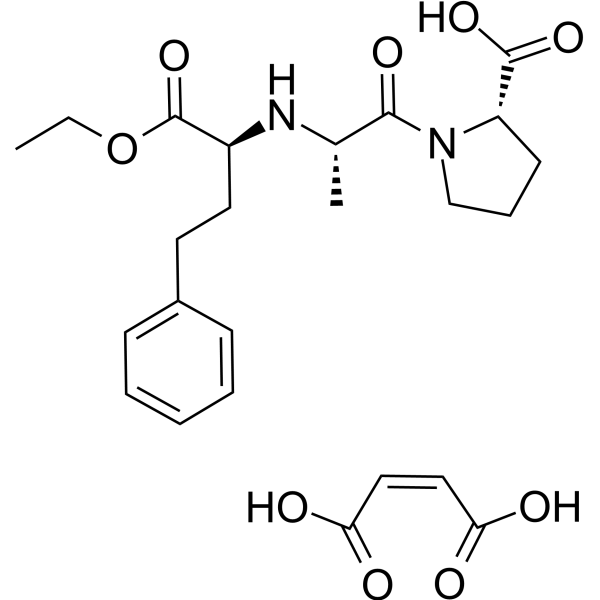
Enalapril maleate (MK-421 maleate) is an orally active angiotensin-converting enzyme inhibitor. Enalapril maleate blocks the conversion of angiotensin I to angiotensin II, regulates the renin-angiotensin system, reduces preload and afterload, and decreases plasma angiotensin II levels. Enalapril maleate inhibits apoptosis, reduces nitric oxide metabolite levels, stabilizes endothelial cells, enhances endothelial antioxidant defense, scavenges reactive oxygen species (ROS), and alleviates neuronal damage. Enalapril maleate attenuates glutathione depletion, protein/lipid oxidation, tissue damage, and type III collagen immunolabeling in organs of diabetic rats. Enalapril maleate reduces systolic blood pressure and urinary albumin excretion, and delays the progression of diabetic cardiac/renal injury. Enalapril maleate is used in research related to asymptomatic left ventricular dysfunction, congestive heart failure, Alzheimer's disease, diabetes mellitus, acute myocardial infarction, atrial fibrillation, hypertension, cerebral ischemia, chronic heart failure, and single-ventricle physiology .
loading...
    loading...
13
13 Cited Publications
Cat. No.: HY-A0090A
CAS No.: 54-87-5
Target:  

Antibiotic Bacterial

Research Areas:  

Infection

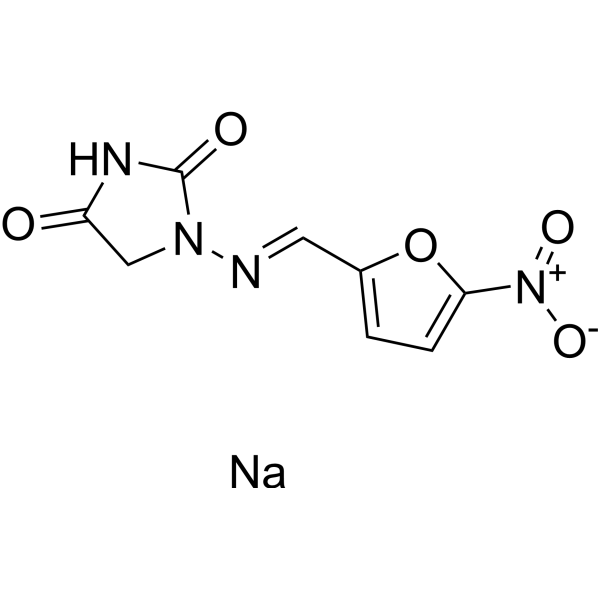
Nitrofurantoin sodium is a potent and orally active antibacterial agent. Nitrofurantoin sodium acts as an antibiotic. Nitrofurantoin sodium can be used for the study of urinary tract infections (UTIs), including cystitis and kidney infections .
loading...
    loading...
13
13 Cited Publications
Cat. No.: HY-A0090
CAS No.: 67-20-9
Target:  

Bacterial Antibiotic

Research Areas:  

Infection

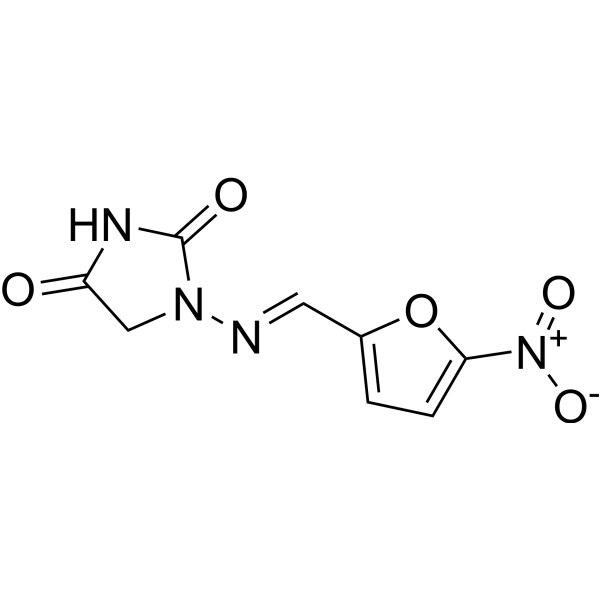
Nitrofurantoin is a potent and orally active broad-spectrum beta-lactamase antimicrobial agent. Nitrofurantoin acts as an antibiotic and can be used for the study of urinary tract infections (UTIs), including cystitis and kidney infections .
loading...
    loading...
13
13 Cited Publications
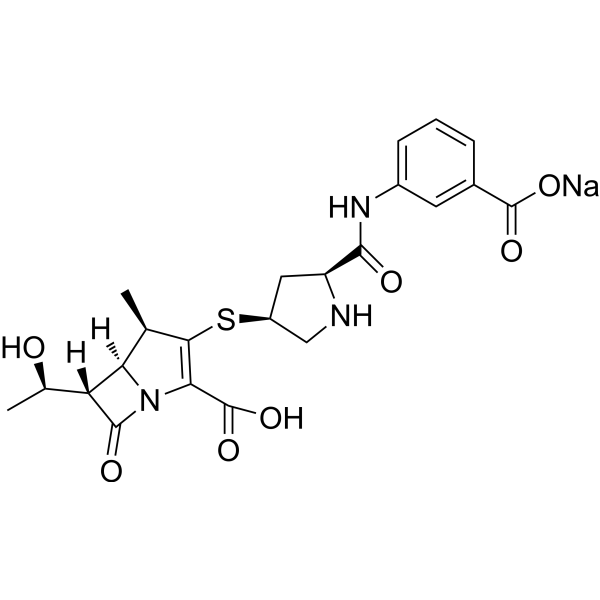
Cat. No.: HY-13625
CAS No.: 153773-82-1
Synonyms: L-749345; MK-826
Target:  

Bacterial Antibiotic

Research Areas:  

Infection Cancer

Ertapenem sodium (L-749345) is a broad spectrum and long acting β-lactam antibiotic. Ertapenem sodium has a broad-spectrum anti-anaerobic activity against a variety of anaerobes with a mode MIC of 0.12 μg/mL. Ertapenem sodium can be used for the research of severe infections caused by bacteria in the skin, lungs, stomach, pelvis, and urinary tract .
loading...
    loading...

