



Sennidin B

Based on 1 Customer Validation
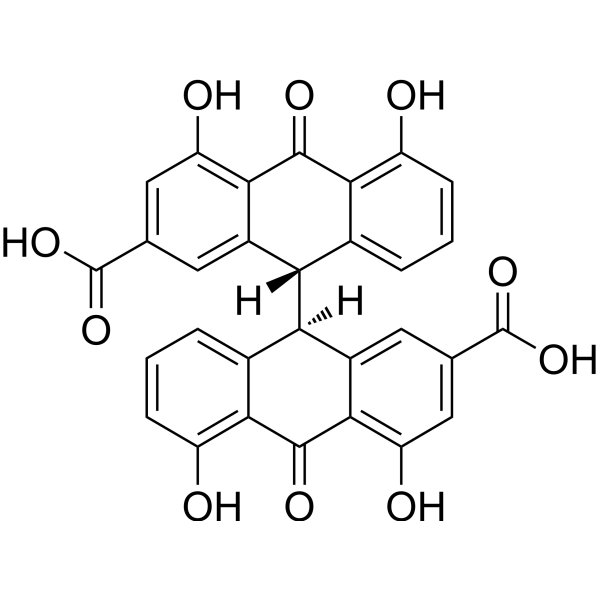
Sennidin B is an anthraquinone compound isolated from Cassia angustifolia. Sennidin B is a DPP-4 inhibitor with an IC50 of 39.39 μM. Sennidin B is an insect chitinase inhibitor with a Ki of 80 nM against OfChi-h. Sennidin B competitively inhibits chitinase activity by forming π-π stacking interactions with key tryptophan residues in the active site through a folded conformation. Sennidin B activates PI3K/Akt to promote glucose uptake in adipocytes. Sennidin B can be used for the development of biopesticides and research on type 2 diabetes and metabolism-related signaling pathways.
For research use only. We do not sell to patients.
- Purity : 99.25%
- CAS No.: 517-44-2
- Formula: C30H18O10
- Molecular Weight:538.46
-
Storage:
4°C, protect from light
* The compound is unstable in solutions, freshly prepared is recommended.

To place orders, for customer services and technical support, please contact: MedChemExpress USA
Tel: 609-228-6898 E-mail: [email protected] [email protected]


-
 Biological Activity
-
Chemical Information
-
Solvent & Solubility
- Protocols
- Purity & Documentation
- References
-
 Help & FAQs


-
HY-N0105
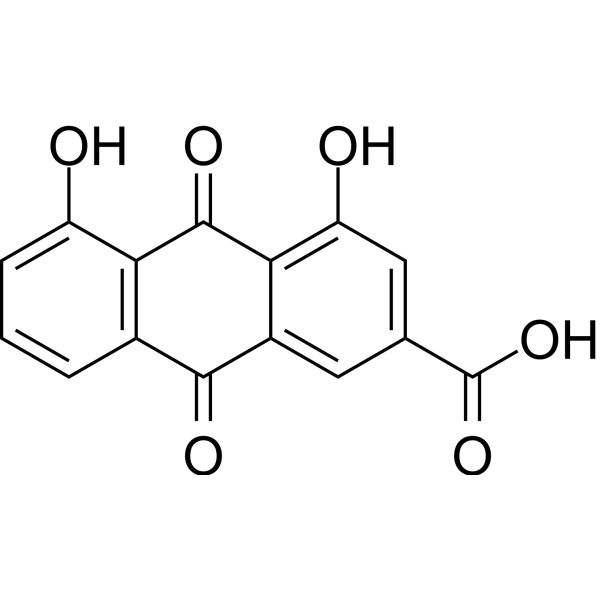
RheinAntioxidant -
HY-N0453
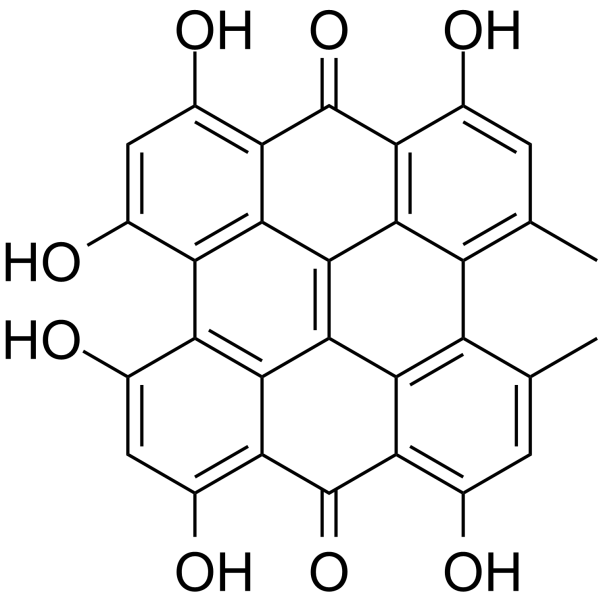
HypericinPKC Inhibitor -
HY-N0189
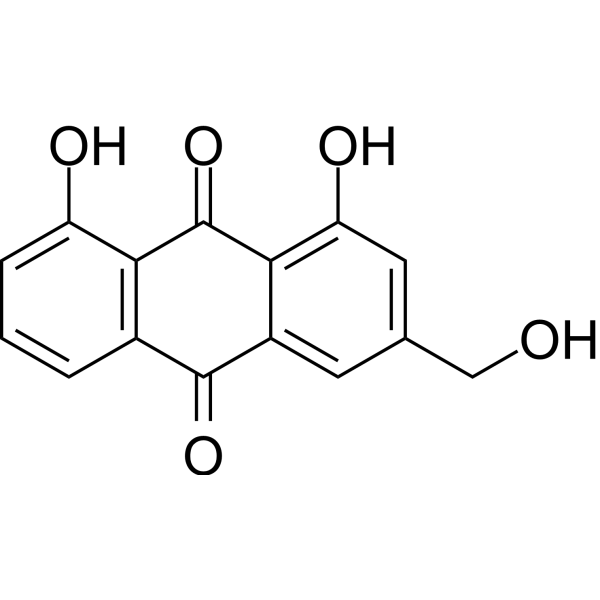
Aloe emodinmTORC2 Inhibitor -
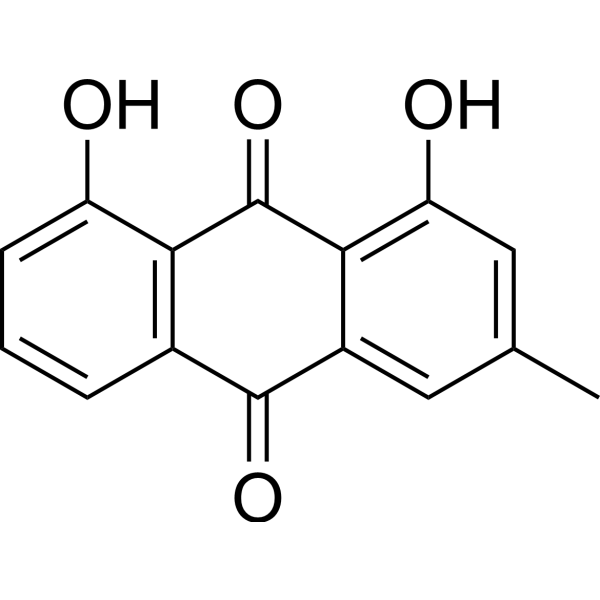
HY-13595
ChrysophanolEGFR Inhibitor -
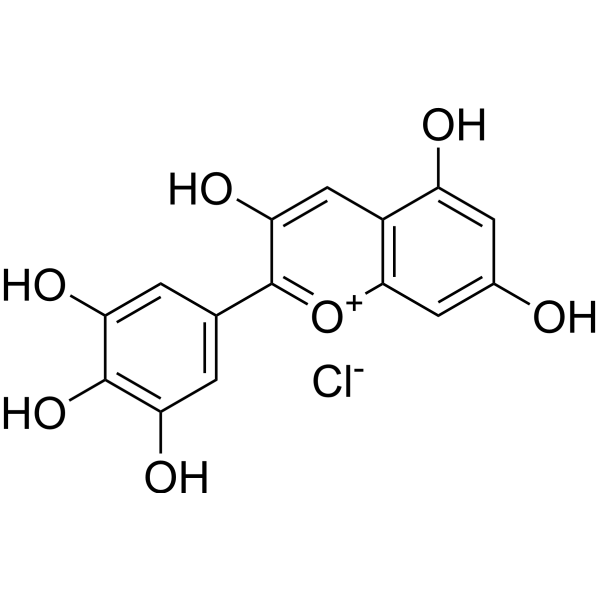
HY-N2409
Delphinidin chlorideAnthocyanidin -
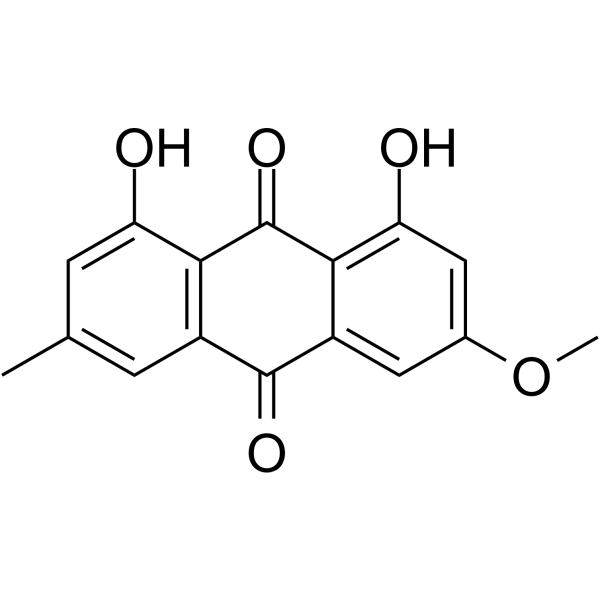
HY-N0108
PhyscionAnthraquinone -
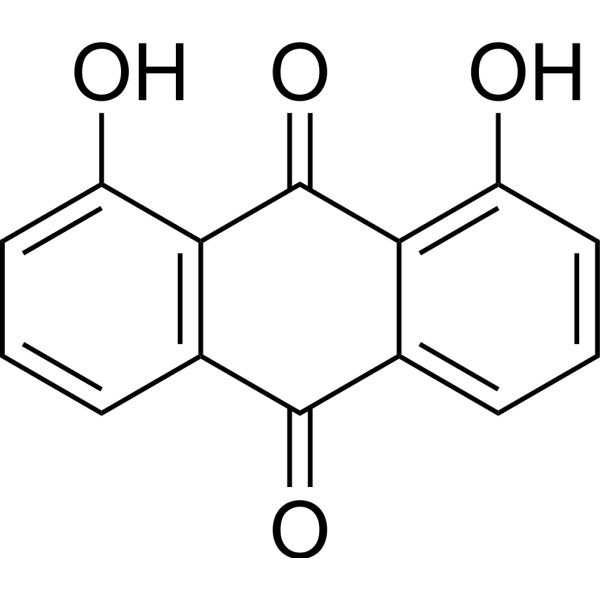
HY-B0923
DanthronAMPK Activator -
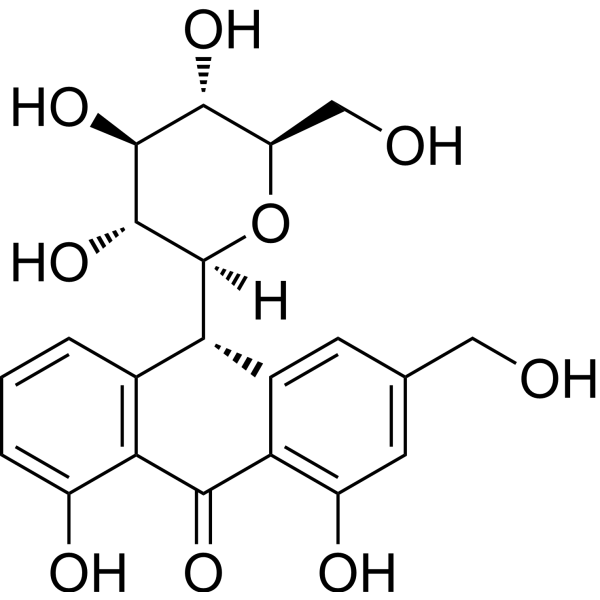
HY-N0123
Aloin-AAnticancer Agent -
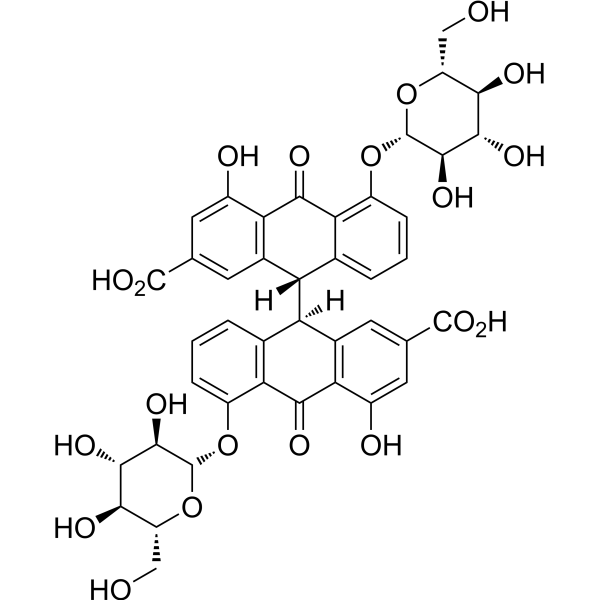
HY-N0366
Sennoside BPDGFR Inhibitor -
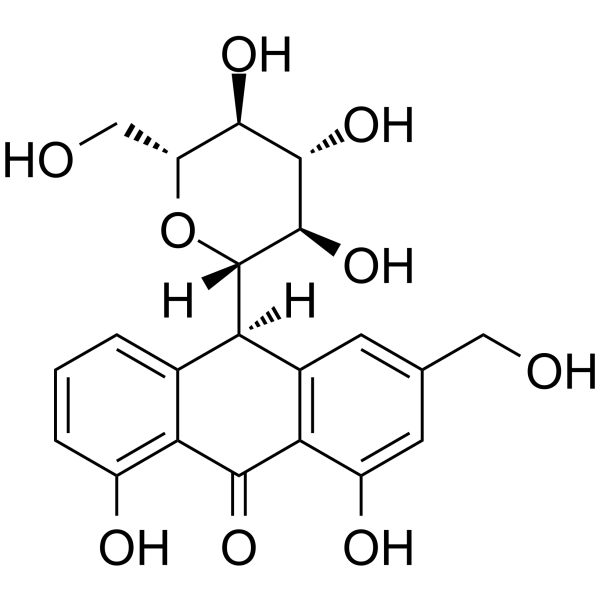
HY-N0886
Aloin BSARS-CoV-2 PLpro Inhibitor -
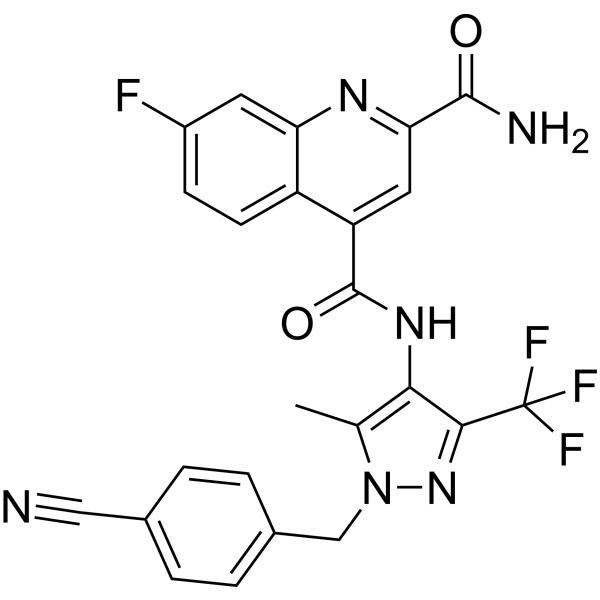
HY-100017
BAY-876GLUT1 Inhibitor -

HY-N6935R
Sennidin B (Standard)Reference Standard
All Endogenous Metabolite Isoforms
More

Biological Activity
Description
|
DPP-4 39.39 μM (IC50) |
OfChi-h 80 nM (Ki) |
In Vitro
Sennidin B (300 μM; 30 min) stimulates glucose incorporation in rat adipocytes, although its potency is lower than that of Sennidin A[1].
Sennidin B is a potent competitive multi-target inhibitor of Ostrinia furnacalis chitinolytic enzymes (OfChtI, OfChtII, OfChi-h, and OfHex1), with the strongest inhibitory potency against OfChi-h (Ki = 80 nM)[4].
Sennidin B inhibits DPP-4 enzyme activity in a concentration-dependent manner in cell-free in vitro assays, with an IC50 of 39.39 μM[2].
Sennidin B (1000 nM; 2 h) binds to DPP-4 and enhances its thermal stability in Caco-2 cells[2].
Sennidin B (0.1-1000 nM; 4 days) downregulates DPP-4 mRNA expression in Caco-2 cells, but has no effect at high concentrations, and inhibits DPP-4 protein expression in a concentration-dependent manner[2].
MedChemExpress (MCE) has not independently confirmed the accuracy of these methods. They are for reference only. Further protocols information, click here.
-
Cell Line:Caco-2
-
Concentration:0.1, 1, 10, 100, 1000 nM
-
Incubation Time:4 days
-
Result:Significantly decreased DPP-4 mRNA expression only at 1 nM compared with the control group, whereas no consistent dose-dependent decrease was observed at higher concentrations.
-
Cell Line:Caco-2
-
Concentration:0.1, 1, 10, 100, 1000 nM
-
Incubation Time:4 days
-
Result:Showed an overall decreasing trend in DPP-4 protein expression with increasing concentrations.
In Vivo
MedChemExpress (MCE) has not independently confirmed the accuracy of these methods. They are for reference only.
-
Animal Model:Ostrinia furnacalis (day-1 fifth-instar larvae)[4]
-
Dosage:1 mM, 5 mM
-
Administration:p.o.; ad libitum; 2, 4, 6, 8, 10 days
-
Result:Achieved 50% mortality at 1 mM.
Achieved 100% mortality at 5 mM.
Suppressed larval growth at 1 mM, with surviving larvae developing to the fourth instar but weight remaining stagnant, comparable to that of the third instar.


Chemical Information
-
CAS No. 517-44-2
-
Appearance Solid
-
Molecular Weight 538.46
-
Formula C30H18O10
-
Color Yellow to brown
-
SMILES
O=C1C2=C(O)C=C(C(O)=O)C=C2[C@@]([C@]3([H])C4=CC(C(O)=O)=CC(O)=C4C(C5=C(O)C=CC=C35)=O)([H])C6=CC=CC(O)=C16
-
Structure Classification
-
Initial Source
-
Shipping
Room temperature in continental US; may vary elsewhere.
-
Storage
4°C, protect from light
* The compound is unstable in solutions, freshly prepared is recommended.


Solvent & Solubility
In Vitro:
DMSO : 50 mg/mL (92.86 mM; Need ultrasonic; Hygroscopic DMSO has a significant impact on the solubility of product, please use newly opened DMSO)
Please refer to the solubility information to select the appropriate solvent. The compound is unstable in solutions, freshly prepared is recommended.
Please refer to the solubility information to select the appropriate solvent. The compound is unstable in solutions, freshly prepared is recommended.
Concentration (start) × Volume (start) = Concentration (final) × Volume (final)

Protocols
-
Cell Cytotoxicity Assay
Cytotoxicity assays are usually based on the assessment of cell membrane damage, which can also be indirectly detected by measuring cell viability. Detection methods include MTT assay, CKK-8 assay, LDH assay and ATP assay, etc.
-
Large-size fat particle sorting
Large-size fat particle sorting is widely used to isolate cells up to 200 μm in diameter. Single-cell flow sorting will allow greater insight into adipocyte heterogeneity by identifying gene expression, protein composition, and metabolic signatures at the single-cell level.
-
Research Protocol for Metabolic Diseases
AMP-activated protein kinase, AMPK, is a conserved cellular energy sensor that responds to reduced cellular energy status and coordinates metabolism by increasing ATP-generating catabolic pathways while suppressing ATP-consuming anabolic processes. In metabolic disease research, the AMPK pathway is experimentally relevant because it regulates hepatic lipid synthesis, fatty acid oxidation, glucose production, skeletal-muscle glucose disposal, mTORC1-linked biosynthesis, autophagy, mitochondrial homeostasis, and whole-body energy balance. The central pathway logic is that energy stress, metformin, exercise-like stimulation, or direct AMPK activators increase AMPKα Thr172 phosphorylation and downstream substrate phosphorylation, including ACC and RAPTOR. Phosphorylation of ACC suppresses lipogenesis and supports fatty acid oxidation, whereas phosphorylation of RAPTOR suppresses mTORC1 signaling and links cellular energy status to growth and protein synthesis control. The pathway is linked


Purity & Documentation
-
Data Sheet (299 KB)
-
SDS (393 KB)
- English - EN (393 KB)
- Français - FR (393 KB)
- Deutsch - DE (393 KB)
- Norwegian - NO (393 KB)
- Español - ES (393 KB)
- Swedish - SV (393 KB)
- Italian - IT (393 KB)
- Korean - KR (393 KB)
- Portuguese - PT (393 KB)
-
Handling Instructions (2659 KB)
References


Complete Stock Solution Preparation Table
Please refer to the solubility information to select the appropriate solvent. The compound is unstable in solutions, freshly prepared is recommended.
| Optional Solvent | Concentration Solvent Mass | 1 mg | 5 mg | 10 mg | 25 mg |
|---|---|---|---|---|---|
| DMSO | 1 mM | 1.8571 mL | 9.2857 mL | 18.5715 mL | 46.4287 mL |
| 5 mM | 0.3714 mL | 1.8571 mL | 3.7143 mL | 9.2857 mL | |
| 10 mM | 0.1857 mL | 0.9286 mL | 1.8571 mL | 4.6429 mL | |
| 15 mM | 0.1238 mL | 0.6190 mL | 1.2381 mL | 3.0952 mL | |
| 20 mM | 0.0929 mL | 0.4643 mL | 0.9286 mL | 2.3214 mL | |
| 25 mM | 0.0743 mL | 0.3714 mL | 0.7429 mL | 1.8571 mL | |
| 30 mM | 0.0619 mL | 0.3095 mL | 0.6190 mL | 1.5476 mL | |
| 40 mM | 0.0464 mL | 0.2321 mL | 0.4643 mL | 1.1607 mL | |
| 50 mM | 0.0371 mL | 0.1857 mL | 0.3714 mL | 0.9286 mL | |
| 60 mM | 0.0310 mL | 0.1548 mL | 0.3095 mL | 0.7738 mL | |
| 80 mM | 0.0232 mL | 0.1161 mL | 0.2321 mL | 0.5804 mL |


Sennidin B Related Classifications
HY-N6935 Related Classifications
 Powered by Bioz