



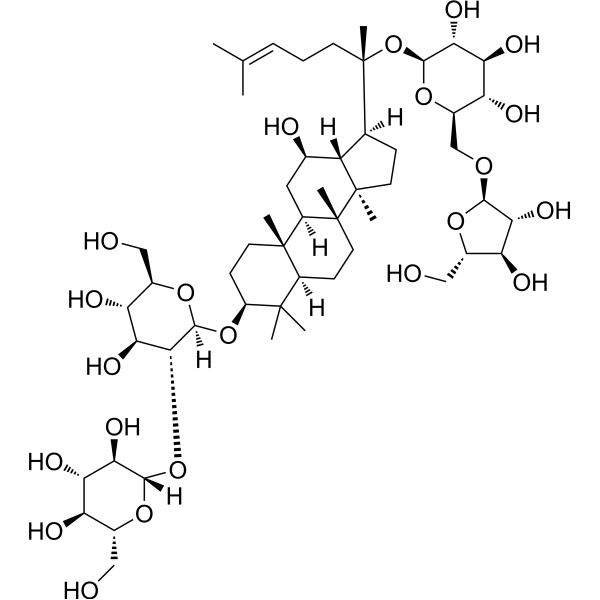
Ginsenoside Rc

Based on 1 Customer Validation
Ginsenoside Rc, one of major Ginsenosides from Panax ginseng, enhances GABA receptorA (GABAA)-mediated ion channel currents (IGABA). Ginsenoside Rc inhibits the expression of TNF-α and IL-1β.
For research use only. We do not sell to patients.
- Purity : 98.0%
- CAS No.: 11021-14-0
- Formula: C53H90O22
- Molecular Weight:1079.27
-
Storage:Powder -20°C, 3 years , 4°C, 2 years ; In solvent -80°C, 2 years , -20°C, 1 year

To place orders, for customer services and technical support, please contact: MedChemExpress USA
Tel: 609-228-6898 E-mail: [email protected] [email protected]


-
 Biological Activity
-
Chemical Information
-
Solvent & Solubility
- Protocols
- Purity & Documentation
- References
-
 Help & FAQs


-
HY-N0045
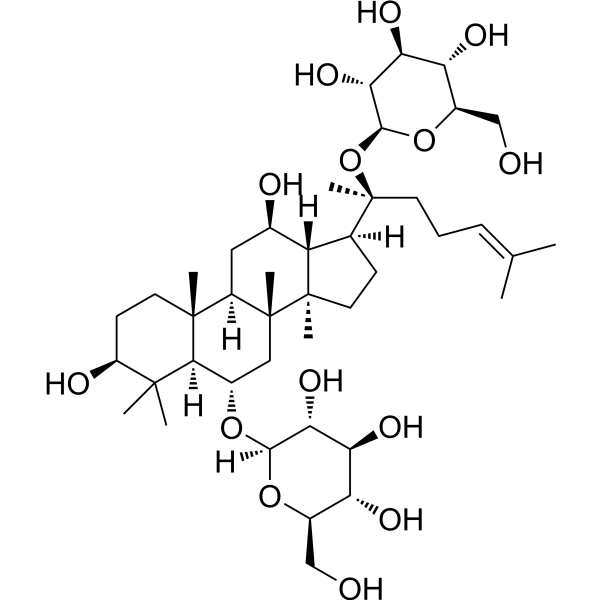
Ginsenoside Rg1Apoptosis Inducer -
HY-N0039
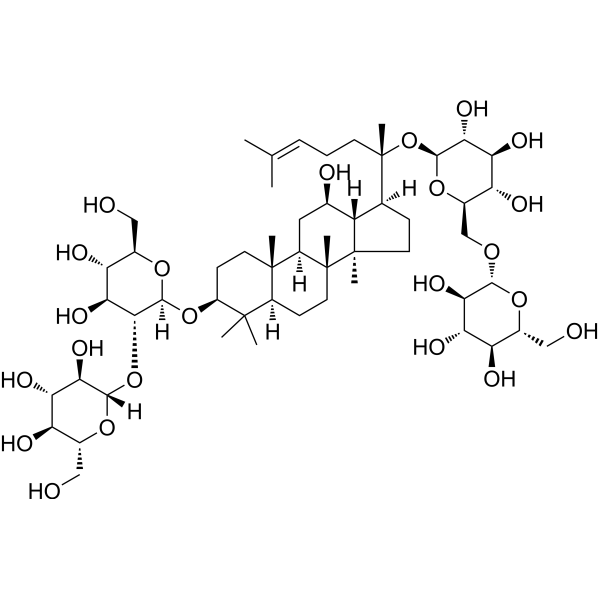
Ginsenoside Rb1Autophagy Inducer -
HY-N0040
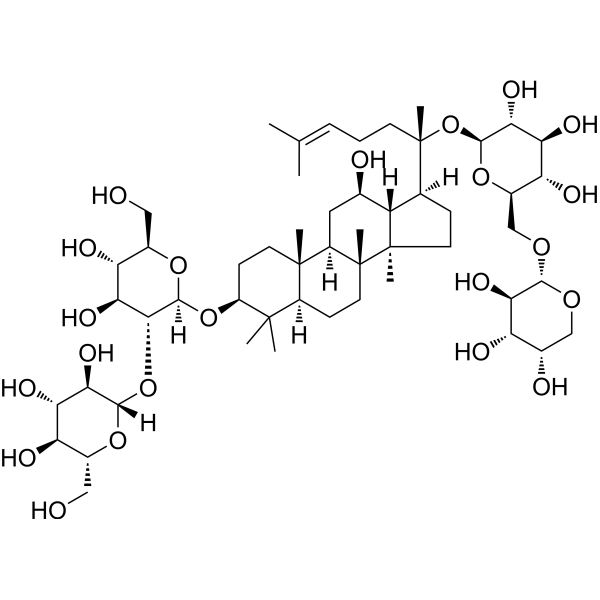
Ginsenoside Rb2Influenza Virus Inhibitor -
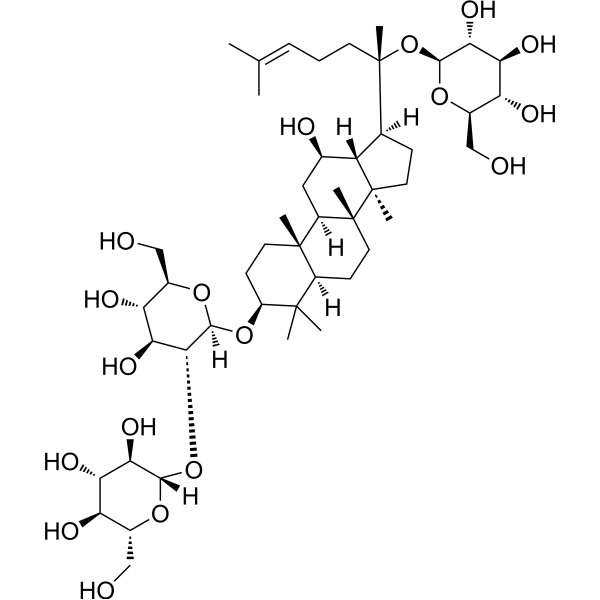
HY-N0043
Ginsenoside RdCytochrome P450 Inhibitor -
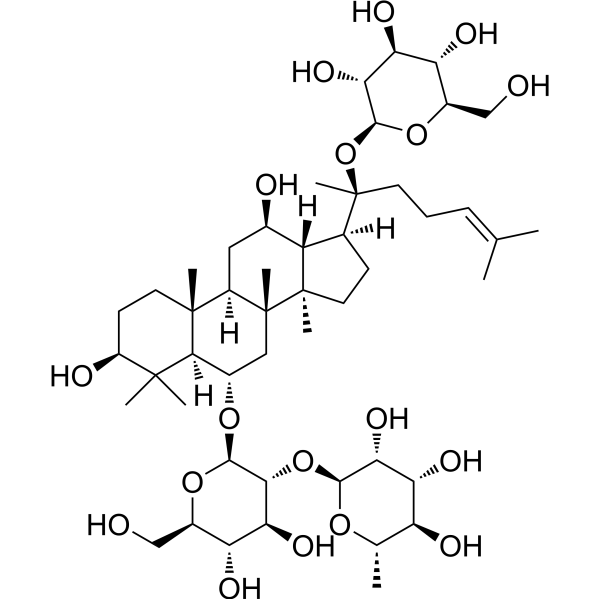
HY-N0044
Ginsenoside ReEndogenous Metabolite -
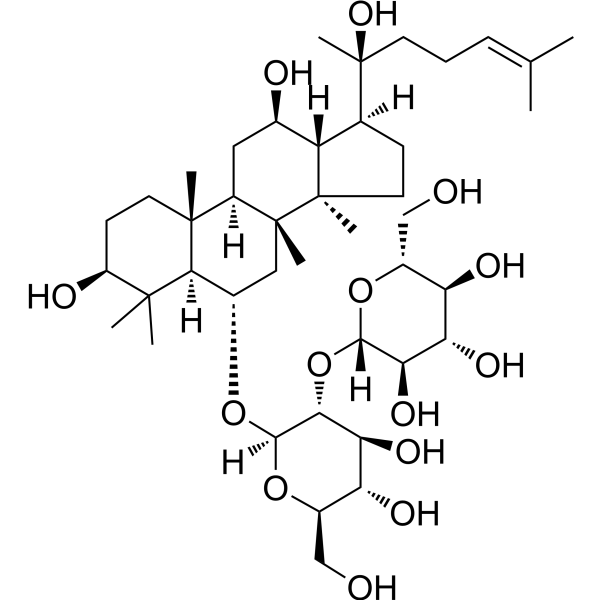
HY-N0601
Ginsenoside RfCalcium Channel Inhibitor -
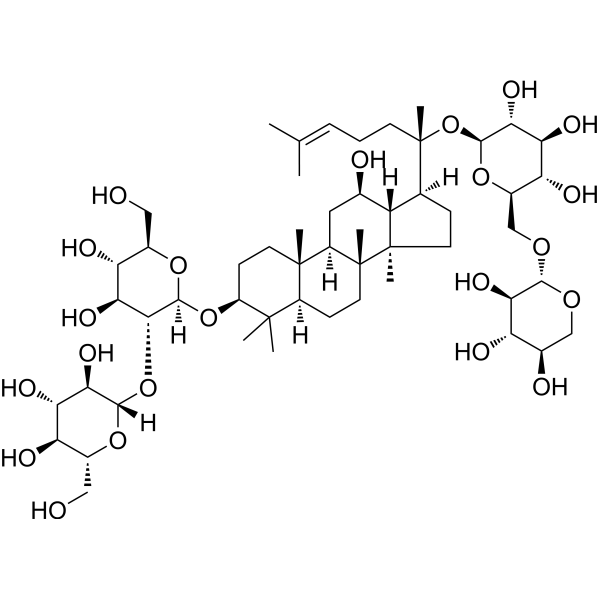
HY-N0041
Ginsenoside Rb3COX Inhibitor -
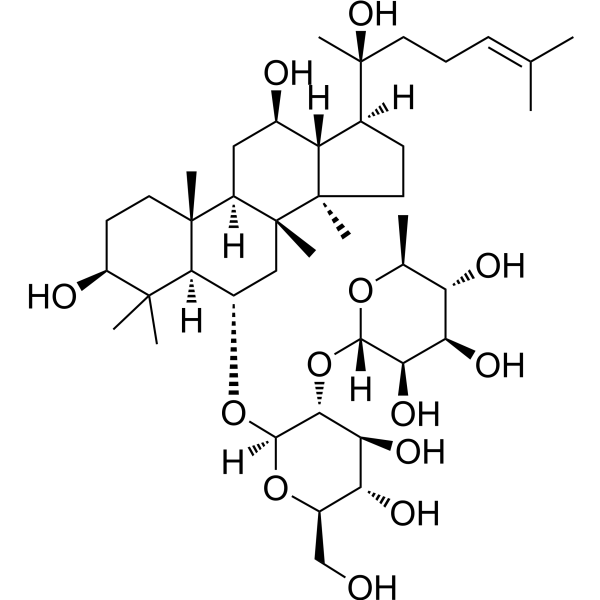
HY-N0602
Ginsenoside Rg2NF-κB Inhibitor -
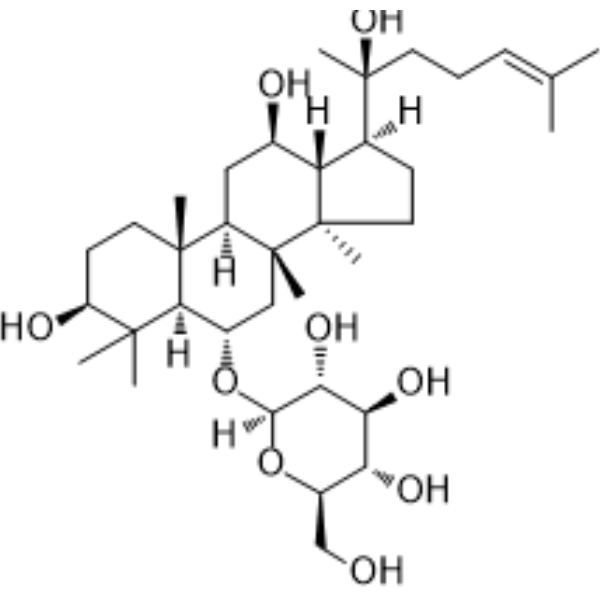
HY-N0604
Ginsenoside Rh1Endogenous Metabolite -
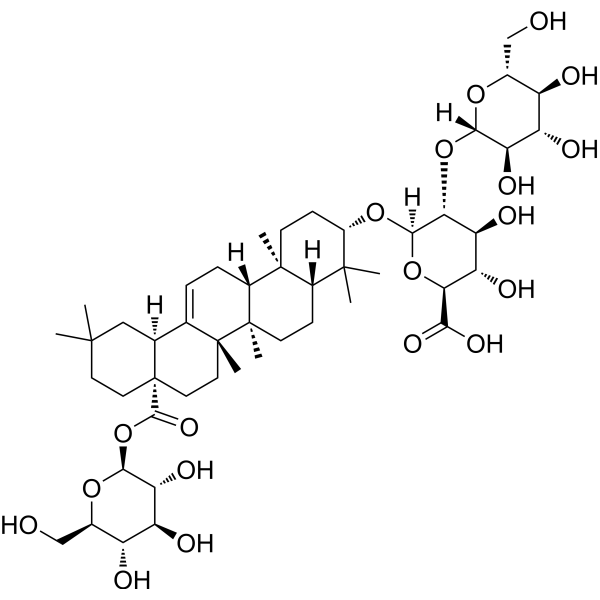
HY-N0607
Ginsenoside RoCalcium Channel Antagonist -
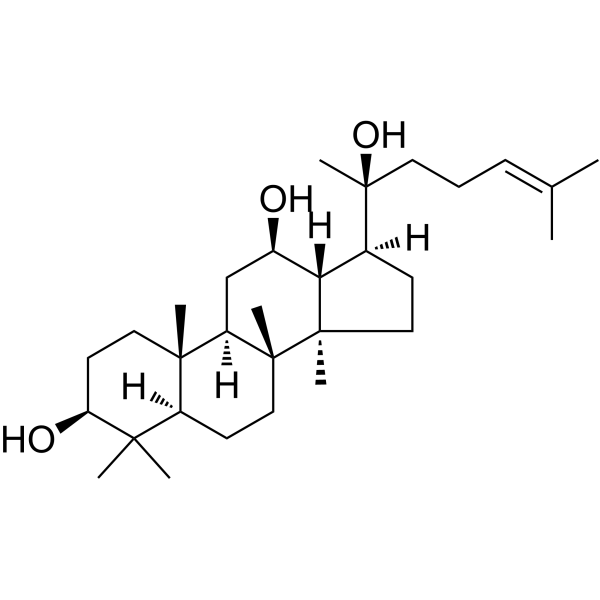
HY-N0797
(20S)-ProtopanaxadiolAkt activity inhibitor -
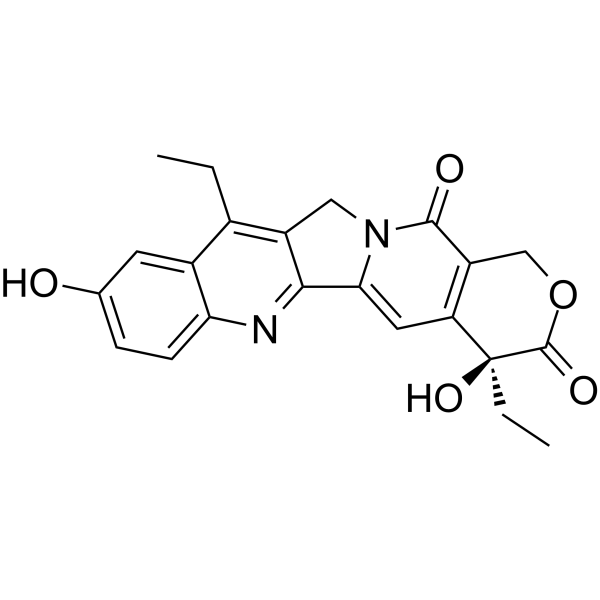
HY-13704
SN-38Topoisomerase I Inhibitor


Biological Activity
Description
IC50 & Target
[2]|
IL-1β |
Cellular Effect
|
Cell Line

|
Type | Value | Description | References |
|---|---|---|---|---|
| Oocyte | EC50 |
53.2 μM
Compound: ginsenoside Rc
|
Allosteric modulation at GABA A receptor alpha-1-beta-2-gamma-2S expressed in Xenopus oocytes assessed as enhancement of GABA-induced chloride current
Allosteric modulation at GABA A receptor alpha-1-beta-2-gamma-2S expressed in Xenopus oocytes assessed as enhancement of GABA-induced chloride current
|
[PMID: 20210326] |
In Vitro
Ginsenoside Rc, one of major Ginsenosides from Panax ginseng, enhances γ-aminobutyric acid (GABA) receptorA (GABAA)-mediated ion channel currents. Ginsenoside Rc enhances GABA-mediated ion currents in oocytes expressing the GABAA receptor[1]. Ginsenoside Rc significantly inhibits the expression of macrophage-derived cytokines, such as TNF-α and IL-1β. Ginsenoside Rc also markedly suppresses the activation of TANK-binding kinase 1/IκB kinase ε/interferon regulatory factor-3 and p38/ATF-2 signaling in activated RAW264.7 macrophages, human synovial cells, and HEK293 cells. Ginsenoside Rc exerts its anti-inflammatory actions by suppressing TANK-binding kinase 1/IκB kinase ε/interferon regulatory factor-3 and p38/ATF-2 signaling. Ginsenoside Rc suppresses the nuclear translocation of phospho-ATF-2 and phospho-FRA-1, whereas the translocation of p65 at its peak time points (30 and 60 min) is not decreased by Ginsenoside Rc treatment. Ginsenoside Rc regulates the expression of the proinflammatory cytokine TNF-α, which is produced by macrophages, by suppressing AP-1 activation[2].
MedChemExpress (MCE) has not independently confirmed the accuracy of these methods. They are for reference only. Further protocols information, click here.


Chemical Information
-
CAS No. 11021-14-0
-
Appearance Solid
-
Molecular Weight 1079.27
-
Formula C53H90O22
-
Color White to yellow
-
SMILES
C[C@](CC/C=C(C)/C)([C@]1([H])[C@]([C@H](O)C[C@@]2([H])[C@@]3(C)CC[C@]4([H])[C@]2(C)CC[C@H](O[C@]5([H])O[C@H](CO)[C@@H](O)[C@H](O)[C@H]5O[C@]6([H])O[C@H](CO)[C@@H](O)[C@H](O)[C@H]6O)C4(C)C)([H])[C@@]3(C)CC1)O[C@@H]7O[C@H](CO[C@@H]8O[C@@H](CO)[C@H](O)[C@H]8O)[C@@H](O)[C@H](O)[C@H]7O
-
Synonyms
Panaxoside Rc
-
Structure Classification
-
Initial Source
-
Shipping
Room temperature in continental US; may vary elsewhere.
-
Storage
Powder -20°C 3 years 4°C 2 years In solvent -80°C 2 years -20°C 1 year


Solvent & Solubility
In Vitro:
DMSO : 100 mg/mL (92.66 mM; Need ultrasonic; Hygroscopic DMSO has a significant impact on the solubility of product, please use newly opened DMSO)
H2O : 50 mg/mL (46.33 mM; Need ultrasonic)
Please refer to the solubility information to select the appropriate solvent. Once prepared, please aliquot and store the solution to prevent product inactivation from repeated freeze-thaw cycles.
Storage method and period of stock solution: -80°C, 2 years; -20°C, 1 year. When stored at -80°C, please use it within 2 years. When stored at -20°C, please use it within 1 year.
* Note: If you choose water as the stock solution, please dilute it to the working solution, then filter and sterilize it with a 0.22 μm filter before use.
Please refer to the solubility information to select the appropriate solvent. Once prepared, please aliquot and store the solution to prevent product inactivation from repeated freeze-thaw cycles.
Storage method and period of stock solution: -80°C, 2 years; -20°C, 1 year. When stored at -80°C, please use it within 2 years. When stored at -20°C, please use it within 1 year.
* Note: If you choose water as the stock solution, please dilute it to the working solution, then filter and sterilize it with a 0.22 μm filter before use.
Concentration (start) × Volume (start) = Concentration (final) × Volume (final)
In Vivo:
Select the appropriate dissolution method based on your experimental animal and administration route.
- For the following dissolution methods, please ensure to first prepare a clear stock solution using an In Vitro approach and then sequentially add co-solvents:
- To ensure reliable experimental results, the clarified stock solution can be appropriately stored based on storage conditions. As for the working solution for In Vivo experiments, it is recommended to prepare freshly and use it on the same day.
- The percentages shown for the solvents indicate their volumetric ratio in the final prepared solution. If precipitation or phase separation occurs during preparation, heat and/or sonication can be used to aid dissolution.
Add each solvent one by one: 10% DMSO 40% PEG300 5% Tween-80 45% Saline
Solubility: 2.5 mg/mL (2.32 mM); Clear solution; Need ultrasonic
This protocol yields a clear solution of 2.5 mg/mL.
Taking 1 mL working solution as an example, add 100 μL DMSO stock solution (25.0 mg/mL) to 400 μL PEG300, and mix evenly; then add 50 μL Tween-80 and mix evenly; then add 450 μL Saline to adjust the volume to 1 mL.
Preparation of Saline: Dissolve 0.9 g sodium chloride in ddH₂O and dilute to 100 mL to obtain a clear Saline solution.
Add each solvent one by one: 10% DMSO 90% (20% SBE-β-CD in Saline)
Solubility: 2.5 mg/mL (2.32 mM); Clear solution; Need ultrasonic
This protocol yields a clear solution of 2.5 mg/mL.
Taking 1 mL working solution as an example, add 100 μL DMSO stock solution (25.0 mg/mL) to 900 μL 20% SBE-β-CD in Saline, and mix evenly.
Preparation of 20% SBE-β-CD in Saline (4°C, storage for one week): 2 g SBE-β-CD powder is dissolved in 10 mL Saline, completely dissolve until clear.
For the following dissolution methods, please prepare the working solution directly:
It is recommended to prepare fresh solutions and use them promptly within a short period of time.
The percentages shown for the solvents indicate their volumetric ratio in the final prepared solution. If precipitation or phase separation occurs during preparation, heat and/or sonication can be used to aid dissolution.
Add each solvent one by one: PBS
Solubility: 33.33 mg/mL (30.88 mM); Clear solution; Need ultrasonic
In Vivo Dissolution Calculator
Please enter the basic information of animal experiments:
-
-
-
-
Recommended: Prepare an additional quantity of animals to account for potential losses during experiments.
Working solution concentration: 0.22 mg/mL
This product has good water solubility, please refer to the measured solubility data in water/PBS/Saline for details.

Protocols
-
RNA extraction experimental
By lysing cells, releasing RNA, and removing impurities such as proteins and DNA, high-purity RNA products are finally obtained. The commonly used traditional method is the guanidine isothiocyanate/phenol/chloroform method (Trizol), which is suitable for a variety of animal materials including animal tissues, microorganisms, cultured cells, etc., and most plant materials.
-
Two-electrode voltage clamp in Xenopus oocytes
Two-electrode voltage clamp measures whole-oocyte membrane current from Xenopus oocytes expressing exogenous ion channels, receptors, or transporters; one intracellular microelectrode senses membrane voltage, and the second injects current so the amplifier can hold the membrane at command voltages while recording the compensating current as the functional readout. The method is suited to Xenopus oocytes because their large size supports microinjection and intracellular electrode impalement, but the large membrane area can limit voltage-clamp speed and accuracy, especially for large or fast currents.
-
Pyroptosis Solutions
Pyroptosis is a lytic inflammatory cell-death pathway executed by gasdermin pores, most classically through inflammasome-mediated activation of caspase-1, cleavage of gasdermin D, membrane pore formation, LDH release, and secretion of IL-1β and IL-18. The canonical pathway is commonly modeled by priming cells with an inflammatory signal such as LPS to induce pro-IL-1β and inflammasome components, followed by an activation signal such as ATP or nigericin to activate NLRP3, ASC speck formation, caspase-1 cleavage, GSDMD cleavage, cytokine release, and pyroptotic membrane rupture. The non-canonical pathway is triggered when cytosolic LPS activates mouse caspase-11 or human caspase-4/5, leading to GSDMD cleavage and pyroptosis, and this can secondarily activate NLRP3-dependent IL-1β release. Pyroptosis is linked to inflammatory injury, infection, cancer, liver disease, ocular disease, placental inflammation, and other disease phenotypes, but unresolved questions include which gasdermin fam


Purity & Documentation
-
Data Sheet (284 KB)
-
SDS (392 KB)
- English - EN (392 KB)
- Français - FR (392 KB)
- Deutsch - DE (392 KB)
- Norwegian - NO (392 KB)
- Español - ES (392 KB)
- Swedish - SV (392 KB)
- Italian - IT (392 KB)
- Korean - KR (392 KB)
- Portuguese - PT (392 KB)
-
Handling Instructions (2659 KB)
References
[1]. Lee BH, et al. Effects of Ginsenoside Metabolites on GABAA Receptor-Mediated Ion Currents. J Ginseng Res. 2012 Jan;36(1):55-60. [Content Brief]
[2]. Yu T, et al. Ginsenoside Rc from Panax ginseng exerts anti-inflammatory activity by targeting TANK-bindingkinase 1/interferon regulatory factor-3 and p38/ATF-2. J Ginseng Res. 2017 Apr;41(2):127-133. [Content Brief]


Complete Stock Solution Preparation Table
Please refer to the solubility information to select the appropriate solvent. Once prepared, please aliquot and store the solution to prevent product inactivation from repeated freeze-thaw cycles.
Storage method and period of stock solution: -80°C, 2 years; -20°C, 1 year. When stored at -80°C, please use it within 2 years. When stored at -20°C, please use it within 1 year.
| Optional Solvent | Concentration Solvent Mass | 1 mg | 5 mg | 10 mg | 25 mg |
|---|---|---|---|---|---|
| H2O / DMSO | 1 mM | 0.9266 mL | 4.6328 mL | 9.2655 mL | 23.1638 mL |
| 5 mM | 0.1853 mL | 0.9266 mL | 1.8531 mL | 4.6328 mL | |
| 10 mM | 0.0927 mL | 0.4633 mL | 0.9266 mL | 2.3164 mL | |
| 15 mM | 0.0618 mL | 0.3089 mL | 0.6177 mL | 1.5443 mL | |
| 20 mM | 0.0463 mL | 0.2316 mL | 0.4633 mL | 1.1582 mL | |
| 25 mM | 0.0371 mL | 0.1853 mL | 0.3706 mL | 0.9266 mL | |
| 30 mM | 0.0309 mL | 0.1544 mL | 0.3089 mL | 0.7721 mL | |
| 40 mM | 0.0232 mL | 0.1158 mL | 0.2316 mL | 0.5791 mL | |
| DMSO | 50 mM | 0.0185 mL | 0.0927 mL | 0.1853 mL | 0.4633 mL |
| 60 mM | 0.0154 mL | 0.0772 mL | 0.1544 mL | 0.3861 mL | |
| 80 mM | 0.0116 mL | 0.0579 mL | 0.1158 mL | 0.2895 mL |
* Note: If you choose water as the stock solution, please dilute it to the working solution, then filter and sterilize it with a 0.22 μm filter before use.


Ginsenoside Rc Related Classifications
HY-N0042 Related Classifications
 Powered by Bioz