



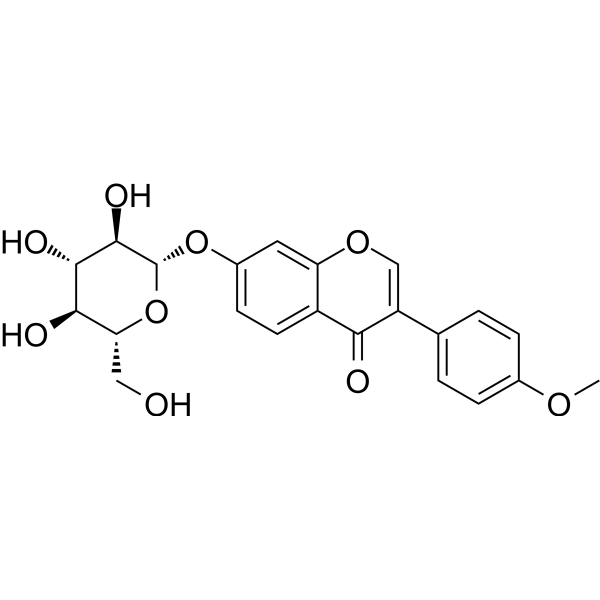
Ononin
Based on 11 publication(s) in Google Scholar
Ononin is an orally active isoflavone. Ononin inhibits the ERK/JNK/p38 and PI3K/Akt/mTOR pathways. Ononin regulates Apoptosis. Ononin has anti-tumor effects on laryngeal cancer and lung cancer. Ononin has neuroprotective effects. Ononin alleviates endoplasmic reticulum stress and diabetic nephropathy.
For research use only. We do not sell to patients.
- Purity : 99.97%
- CAS No.: 486-62-4
- Formula: C22H22O9
- Molecular Weight:430.40
-
Storage:Powder -20°C, 3 years , 4°C, 2 years ; In solvent -80°C, 2 years , -20°C, 1 year

To place orders, for customer services and technical support, please contact: MedChemExpress USA
Tel: 609-228-6898 E-mail: [email protected] [email protected]


-
 Biological Activity
-
Chemical Information
-
Solvent & Solubility
- Protocols
- Purity & Documentation
- References
-
 Help & FAQs


-
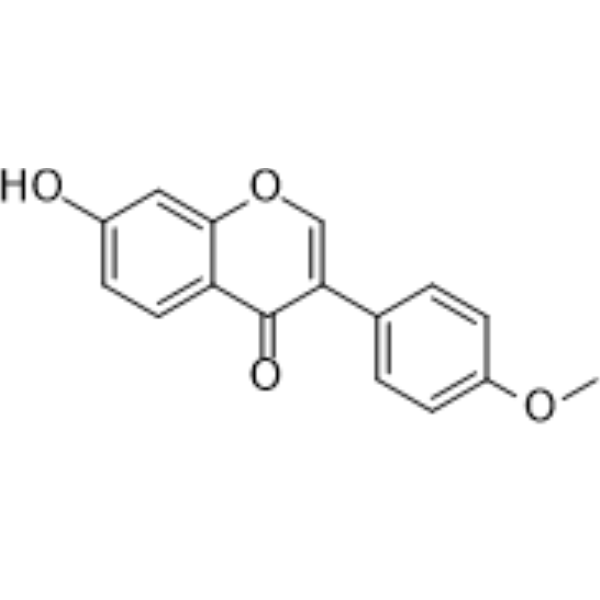
HY-N0183
FormononetinFGFR2 Inhibitor -
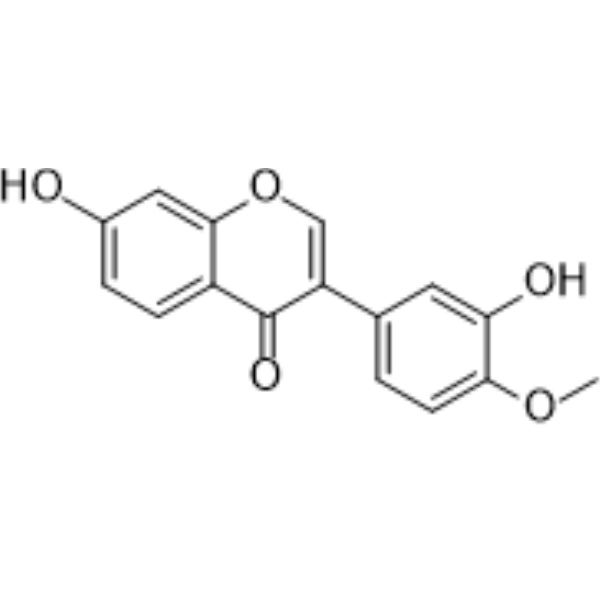
HY-N0519
CalycosinPhytoestrogen -
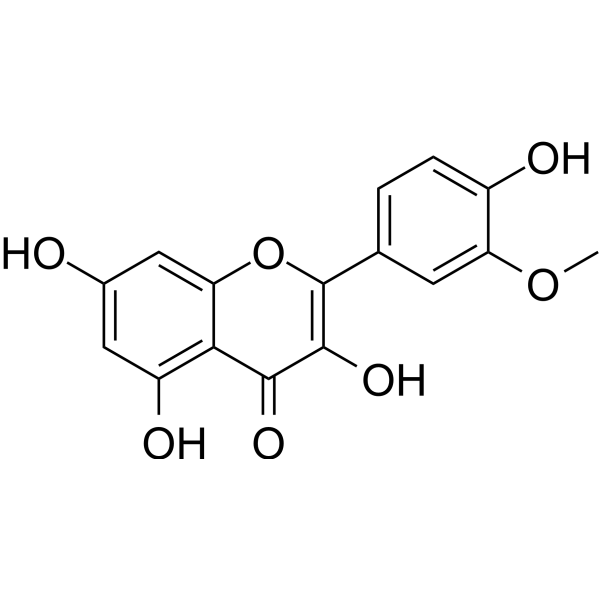
HY-N0776
IsorhamnetinEndogenous Metabolite -
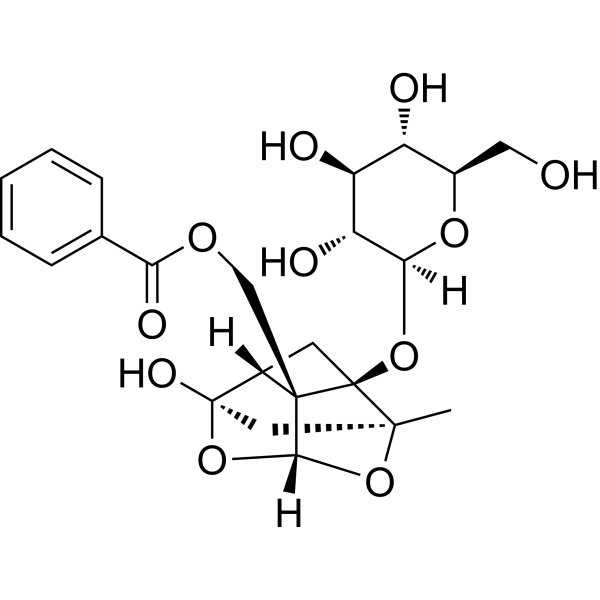
HY-N0293
PaeoniflorinHSP Activator -
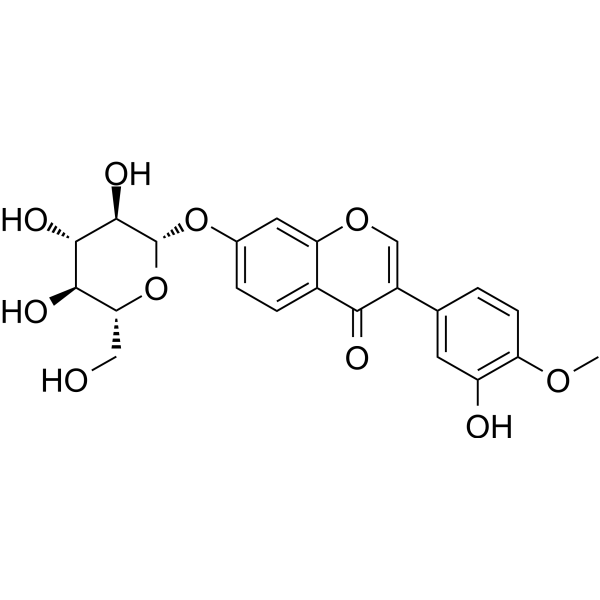
HY-N0520
Calycosin-7-O-β-D-glucosideBioactive Isoflavone -
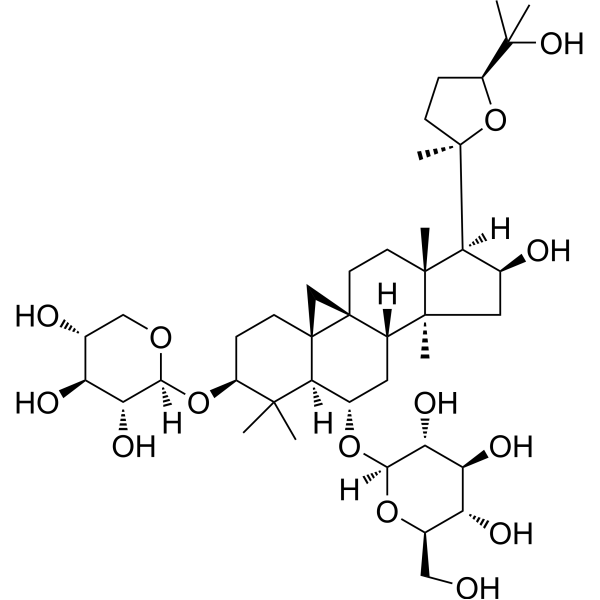
HY-N0431
Astragaloside IVMMP Inhibitor -
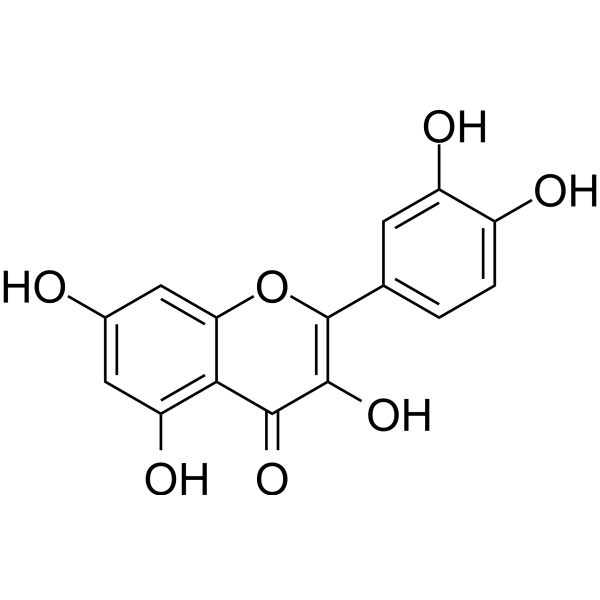
HY-18085
QuercetinFlavonoid Antioxidant -
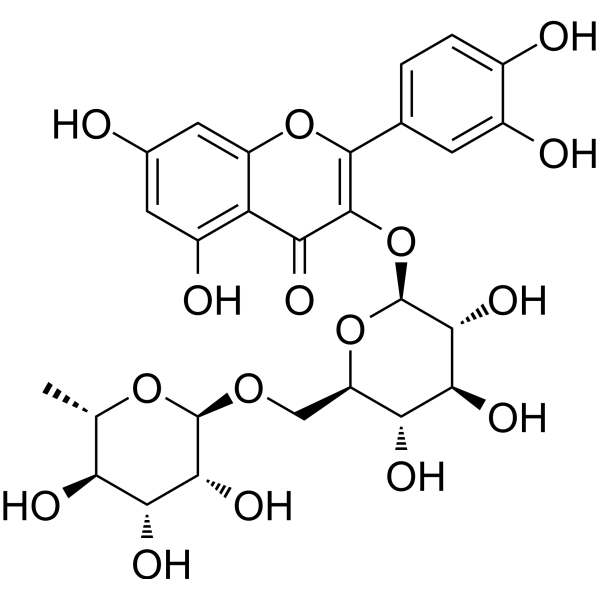
HY-N0148
RutinCBR1 Inhibitor -
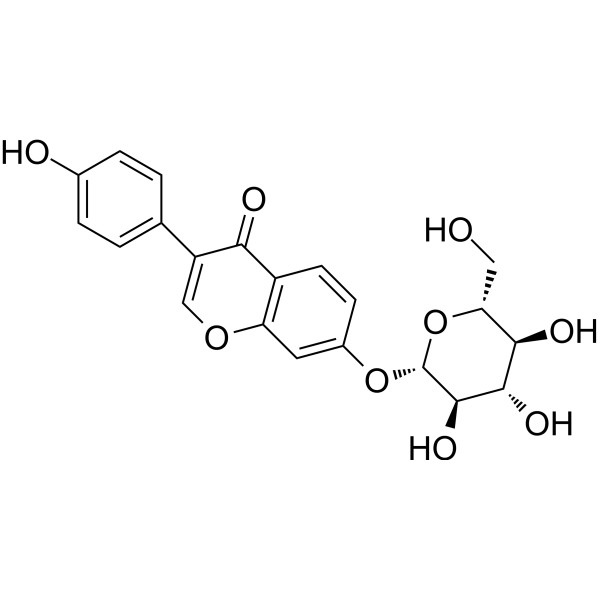
HY-N0018
DaidzinReverse Transcriptase Inhibitor -
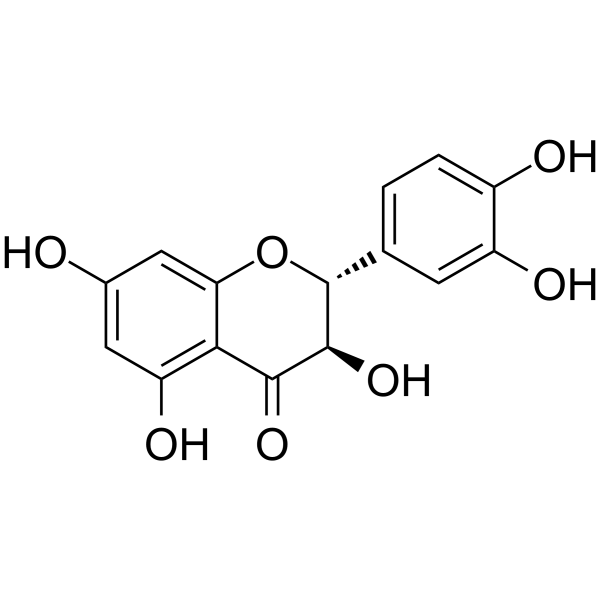
HY-N0136
TaxifolinAntifibrotic Agent -
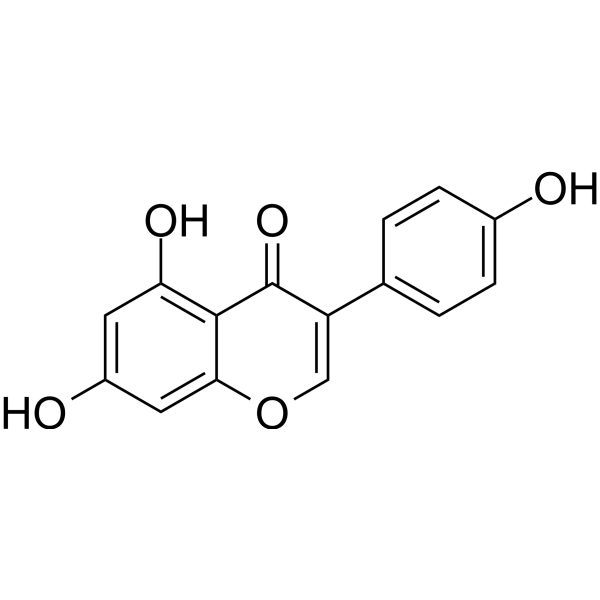
HY-14596
GenisteinAutophagy Inducer -
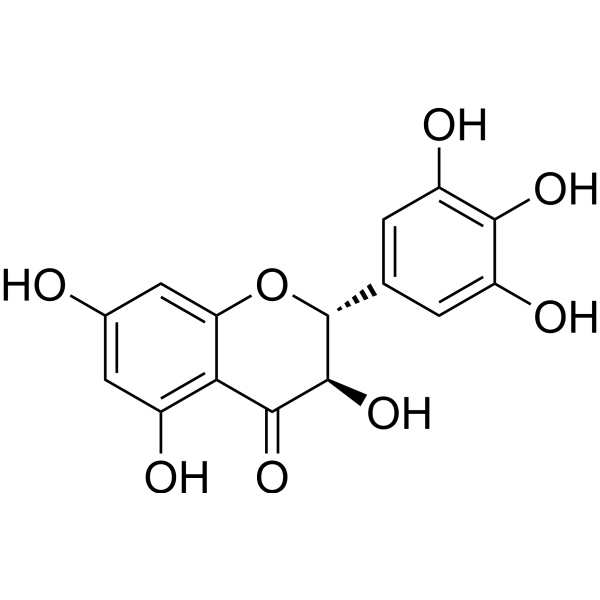
HY-N0112
DihydromyricetinAutophagy Inducer
Publications Citing Use of MedChemExpress (MCE) Ononin
More- Acta Pharm Sin B. 2021 Jan;11(1):143-155. [Abstract]
- Food Chem. 2025 Dec 30:497:146992. [Abstract]
- Food Chem. 2025 Oct 15:489:144992. [Abstract]
- Chin Med. 2026 Jan 12;21(1):29. [Abstract]
- BMC Complement Med Ther. 2022 Jan 27;22(1):25. [Abstract]
- Naunyn Schmiedebergs Arch Pharmacol. 2025 Jul 8. [Abstract]
- J Biochem Mol Toxicol. 2026 Apr;40(4):e70804. [Abstract]
- Toxicol Appl Pharmacol. 2022 Oct 1:452:116179. [Abstract]
- PLoS One. 2024 Oct 31;19(10):e0310293. [Abstract]
- Exp Ther Med. 2021 Nov;22(5):1307. [Abstract]
- Research Square Preprint. 2021 Aug.
 Customer Validation & Images

-
Cell Proliferation/Viability Assay
-
WB
-
IF
-
Histological Imaging/Staining
-
Cell Proliferation/Viability Assay


Biological Activity
Description
Cellular Effect
|
Cell Line

|
Type | Value | Description | References |
|---|---|---|---|---|
| HepG2 | IC50 |
40.8 μM
Compound: 9
|
Anticancer activity against human HepG2 cells assessed as cell viability after 48 hrs by MTT assay
Anticancer activity against human HepG2 cells assessed as cell viability after 48 hrs by MTT assay
|
[PMID: 24974349] |
In Vitro
Ononin (10-100 μM, 24 h) shows anticancer activity against laryngeal cancer Hep-2 cells via the inhibition of ERK/JNK/p38 signaling pathway[1].
Ononin (6.25-100 μM, 48 h) shows anticancer activity against human HepG2 cells, with IC50 of 40.8 μM[2].
Ononin (3-10 μM) exerts antitumor effects against lung cancer cells A549 and HCC827 by regulating apoptosis through inhibiting the PI3K/Akt/mTOR pathway[3].
MedChemExpress (MCE) has not independently confirmed the accuracy of these methods. They are for reference only.
In Vivo
Ononin (10-50 mg/kg, p.o., once a day for 60 days) mitigates Streptozotocin (HY-13753)-induced diabetic nephropathy in rats via alleviating oxidative stress and inflammatory markers[5].
Ononin (30-60 mg/kg/day, gavage, 8 weeks) alleviates endoplasmic reticulum stress in Doxorubicin (HY-15142A)-induced cardiotoxicity in rats by activating SIRT3[6].
MedChemExpress (MCE) has not independently confirmed the accuracy of these methods. They are for reference only.


Chemical Information
-
CAS No. 486-62-4
-
Appearance Solid
-
Molecular Weight 430.40
-
Formula C22H22O9
-
Color White to off-white
-
SMILES
O[C@H]([C@@H](O)[C@H](O)[C@@H](CO)O1)[C@@H]1OC2=CC=C(C(C(C3=CC=C(OC)C=C3)=CO4)=O)C4=C2
-
Synonyms
Ononoside; Formononetin 7-O-β-D-glucopyranoside
-
Structure Classification
-
Shipping
Room temperature in continental US; may vary elsewhere.
-
Storage
Powder -20°C 3 years 4°C 2 years In solvent -80°C 2 years -20°C 1 year


Publications (11)
-
Journal Impact Factor
-
Most Recent
-
Acta Pharm Sin B
Chrysin serves as a novel inhibitor of DGK α/FAK interaction to suppress the malignancy of esophageal squamous cell carcinoma (ESCC). [Abstract]2021 Jan;11(1):143-155. PMID: 33532186 -
Food Chem
Effects of sun drying combined with baking processes on the flavor quality of Chongqing Tuocha raw tea. [Abstract]2025 Dec 30:497:146992. PMID: 41285060 -
Food Chem
Flavonoid-mediated metabolic underpinning quality variation in red bud-sport pear mutants. [Abstract]2025 Oct 15:489:144992. PMID: 40466530 -
Chin Med
Therapeutic potential of Sheng-Xian-Tang in doxorubicin-induced chronic heart failure by regulation of phenylalanine metabolism disruption. [Abstract]2026 Jan 12;21(1):29. PMID: 41527105 -
BMC Complement Med Ther
Ononin ameliorates inflammation and cartilage degradation in rat chondrocytes with IL-1β-induced osteoarthritis by downregulating the MAPK and NF-κB pathways. [Abstract]2022 Jan 27;22(1):25. PMID: 35086536
Ononin purchased from MedChemExpress. Usage Cited in: BMC Complement Med Ther. 2022 Jan 27;22(1):25. [Abstract]
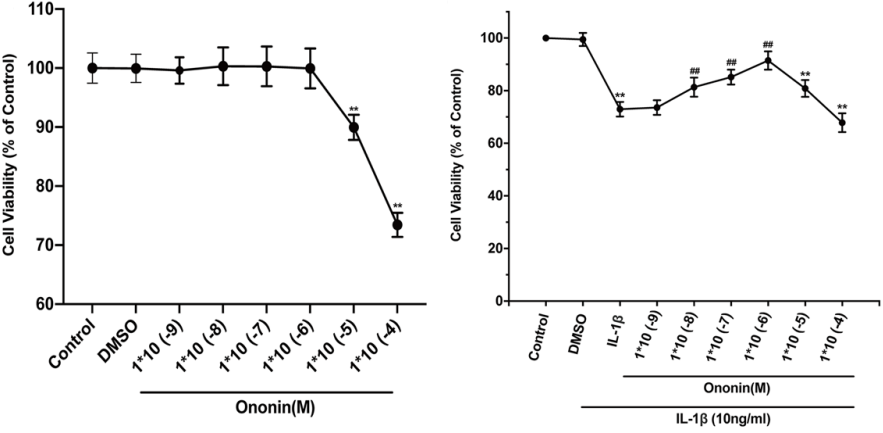
Rat chondrocytes were intervened on Ononin (1 nM to 100 μM) only or with IL-1β (10 ng/mL) for 24 h and cell viability was detected by CCK-8 kit.
Ononin purchased from MedChemExpress. Usage Cited in: BMC Complement Med Ther. 2022 Jan 27;22(1):25. [Abstract]
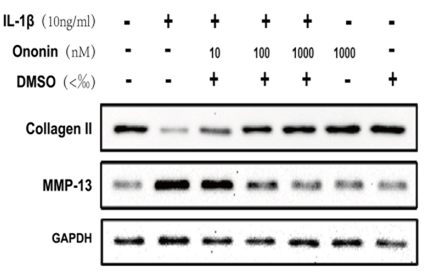
Expression levels of Collagen II and MMP-13 were detected by Western Blot. The samples derive from the same experiment and that different gels were processed in parallel. The results showed that IL-1β noticeably inhibited the expression of Collagen II and upregulated the expression of MMP-13. However, 10, 100, and 1000 nM Ononin (24 h) effectively reversed the degradation of Collagen II and the overexpression of MMP-13. Furthermore, Ononin ameliorated IL-1β-induced adverse effects on Collagen II and MMP-13 protein expression in a concentration-dependent manner.
Ononin purchased from MedChemExpress. Usage Cited in: BMC Complement Med Ther. 2022 Jan 27;22(1):25. [Abstract]
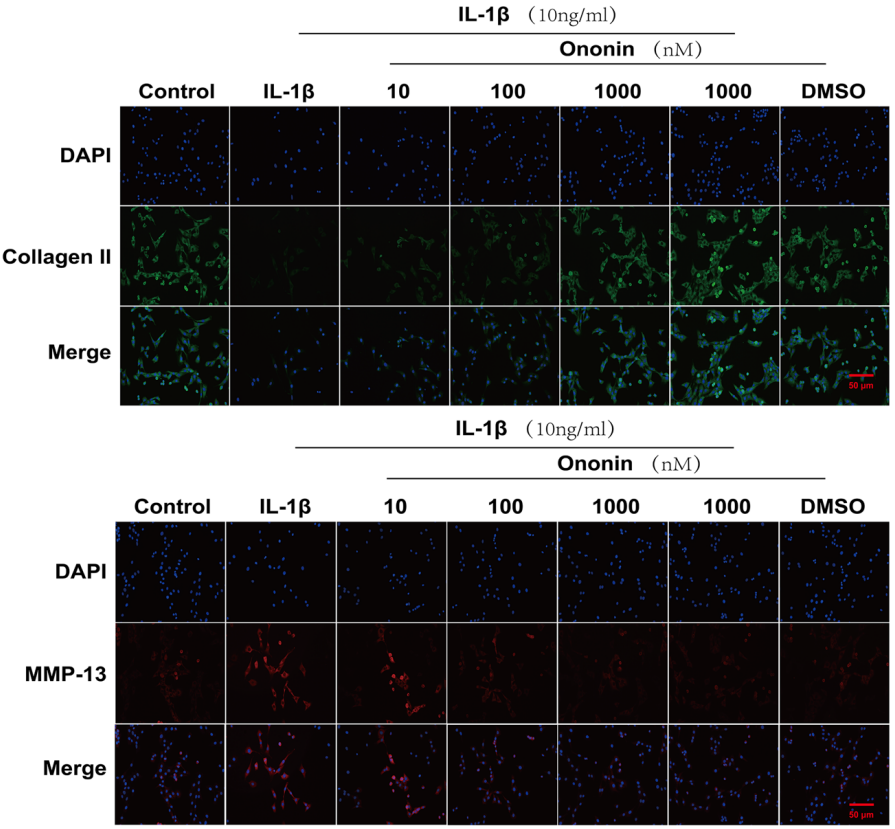
Immunofluorescence staining of Collagen II protein (green), MMP-13 protein (red) and nucleus (blue) was labelled with DAPI and photographed by fluorescence microscope (20×) (scale bar: 50 μm). The results showed that Ononin (1000 nM; 24 h) decreased the expression of MMP-13 by approximately 2.9 times and Collagen II was restored to 90% compared with those in the IL-1β group, showing the ability to repair cartilage damage.
-
Naunyn Schmiedebergs Arch Pharmacol
Ononin induces ferroptosis in colorectal cancer cells via the PI3K/AKT/Nrf2 pathway to enhance anti-cancer immunotherapy. [Abstract]2025 Jul 8. PMID: 40627200 -
J Biochem Mol Toxicol
Ononin Inhibits the Growth and Metastasis of Hepatocellular Carcinoma by Suppressing MMP-2 and MMP-9 via PI3K/AKT/mTOR Signaling. [Abstract]2026 Apr;40(4):e70804. PMID: 41878835 -
Toxicol Appl Pharmacol
Ononin alleviates endoplasmic reticulum stress in doxorubicin-induced cardiotoxicity by activating SIRT3. [Abstract]2022 Oct 1:452:116179. PMID: 35914558
Ononin purchased from MedChemExpress. Usage Cited in: Toxicol Appl Pharmacol. 2022 Oct 1:452:116179. [Abstract]
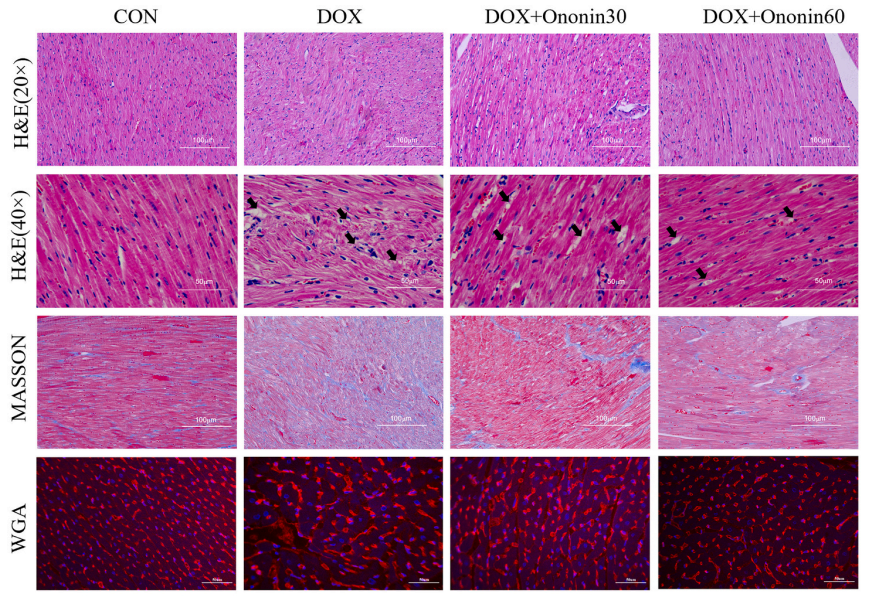
Ononin (30-60 mg/kg; oral gavage; once daily for 8 weeks) prevented Doxorubicin (DOX)-induced cardiac tissue damage in rats.
Ononin purchased from MedChemExpress. Usage Cited in: Toxicol Appl Pharmacol. 2022 Oct 1:452:116179. [Abstract]
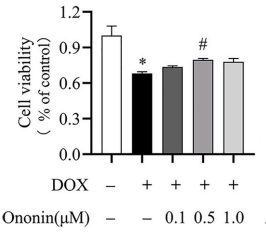
CCK-8 assay data of H9C2 cells exposed to different concentrations of DOX and Ononin for 24 h. The results showed that 0.5 μM Ononin prevented the Doxorubicin (DOX)-induced reduction in cell viability.
Ononin purchased from MedChemExpress. Usage Cited in: Toxicol Appl Pharmacol. 2022 Oct 1:452:116179. [Abstract]
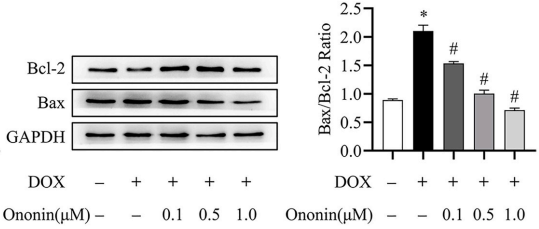
Ononin (0.1-1 μM; 24 h) pre-treatment prevented the Doxorubicin (DOX)-stimulated increase in the Bax/Bcl-2 ratio in H9C2 cells.
-
PLoS One
Ononin delays the development of osteoarthritis by down-regulating MAPK and NF-κB pathways in rat models. [Abstract]2024 Oct 31;19(10):e0310293. PMID: 39480787 -
Exp Ther Med
Ononin alleviates H2O2-induced cardiomyocyte apoptosis and improves cardiac function by activating the AMPK/mTOR/autophagy pathway. [Abstract]2021 Nov;22(5):1307. PMID: 34584565 -


Solvent & Solubility
In Vitro:
DMSO : 100 mg/mL (232.34 mM; Need ultrasonic; Hygroscopic DMSO has a significant impact on the solubility of product, please use newly opened DMSO)
Please refer to the solubility information to select the appropriate solvent. Once prepared, please aliquot and store the solution to prevent product inactivation from repeated freeze-thaw cycles.
Storage method and period of stock solution: -80°C, 2 years; -20°C, 1 year. When stored at -80°C, please use it within 2 years. When stored at -20°C, please use it within 1 year.
Please refer to the solubility information to select the appropriate solvent. Once prepared, please aliquot and store the solution to prevent product inactivation from repeated freeze-thaw cycles.
Storage method and period of stock solution: -80°C, 2 years; -20°C, 1 year. When stored at -80°C, please use it within 2 years. When stored at -20°C, please use it within 1 year.
Concentration (start) × Volume (start) = Concentration (final) × Volume (final)
In Vivo:
Select the appropriate dissolution method based on your experimental animal and administration route.
- For the following dissolution methods, please ensure to first prepare a clear stock solution using an In Vitro approach and then sequentially add co-solvents:
- To ensure reliable experimental results, the clarified stock solution can be appropriately stored based on storage conditions. As for the working solution for In Vivo experiments, it is recommended to prepare freshly and use it on the same day.
- The percentages shown for the solvents indicate their volumetric ratio in the final prepared solution. If precipitation or phase separation occurs during preparation, heat and/or sonication can be used to aid dissolution.
Add each solvent one by one: 10% DMSO 40% PEG300 5% Tween-80 45% Saline
Solubility: ≥ 2.08 mg/mL (4.83 mM); Clear solution
This protocol yields a clear solution of ≥ 2.08 mg/mL (saturation unknown).
Taking 1 mL working solution as an example, add 100 μL DMSO stock solution (20.8 mg/mL) to 400 μL PEG300, and mix evenly; then add 50 μL Tween-80 and mix evenly; then add 450 μL Saline to adjust the volume to 1 mL.
Preparation of Saline: Dissolve 0.9 g sodium chloride in ddH₂O and dilute to 100 mL to obtain a clear Saline solution.
Add each solvent one by one: 10% DMSO 90% (20% SBE-β-CD in Saline)
Solubility: ≥ 2.08 mg/mL (4.83 mM); Clear solution
This protocol yields a clear solution of ≥ 2.08 mg/mL (saturation unknown).
Taking 1 mL working solution as an example, add 100 μL DMSO stock solution (20.8 mg/mL) to 900 μL 20% SBE-β-CD in Saline, and mix evenly.
Preparation of 20% SBE-β-CD in Saline (4°C, storage for one week): 2 g SBE-β-CD powder is dissolved in 10 mL Saline, completely dissolve until clear.
In Vivo Dissolution Calculator
Please enter the basic information of animal experiments:
-
-
-
-
Recommended: Prepare an additional quantity of animals to account for potential losses during experiments.
Please enter your animal formula composition:
-
%DMSO +
Recommended: Keep the proportion of DMSO in working solution below 2% if your animal is weak.
-
%+
-
+%Tween-80 + +
-
%Saline +
The co-solvents required include: DMSO, . All of co-solvents are available by MedChemExpress (MCE). , Tween 80. All of co-solvents are available by MedChemExpress (MCE).
Working solution concentration: 0.22 mg/mL
Method for preparing stock solution: mg drug dissolved in μL DMSO. Stock solution concentration: mg/mL.
1. Take μL DMSO stock solution;
2. Add μL .
μL , mix evenly;
3. Then add μL Tween 80, mix evenly;
4. Then add μL
Please ensure that the stock solution in the first step is dissolved to a clear state, and add co-solvents in sequence. You can use ultrasonic heating (ultrasonic cleaner, recommended frequency 20-40 kHz), vortexing, etc. to assist dissolution.


Purity & Documentation
-
Data Sheet (275 KB)
-
SDS (396 KB)
- English - EN (396 KB)
- Français - FR (396 KB)
- Deutsch - DE (396 KB)
- Norwegian - NO (396 KB)
- Español - ES (396 KB)
- Swedish - SV (396 KB)
- Italian - IT (396 KB)
- Korean - KR (396 KB)
- Portuguese - PT (396 KB)
-
Handling Instructions (2659 KB)
References
[1]. Ye B, et al. Ononin Shows Anticancer Activity Against Laryngeal Cancer via the Inhibition of ERK/JNK/p38 Signaling Pathway. Front Oncol. 2022 Jul 14;12:939646. [Content Brief]
[2]. Chen L, et al. Prediction of anti-tumor chemical probes of a traditional Chinese medicine formula by HPLC fingerprinting combined with molecular docking. Eur J Med Chem. 2014 Aug 18;83:294-306. [Content Brief]
[3]. Gong G, et al. Antitumor Effects of Ononin by Modulation of Apoptosis in Non-Small-Cell Lung Cancer through Inhibiting PI3K/Akt/mTOR Pathway. Oxid Med Cell Longev. 2022 Dec 27;2022:5122448. [Content Brief]
[4]. Chen X, et al. Neuroprotective effects of ononin against the aluminium chloride-induced Alzheimer's disease in rats. Saudi J Biol Sci. 2021 Aug;28(8):4232-4239. [Content Brief]
[6]. Zhang H, et al. Ononin alleviates endoplasmic reticulum stress in doxorubicin-induced cardiotoxicity by activating SIRT3. Toxicol Appl Pharmacol. 2022 Oct 1;452:116179. [Content Brief]


Complete Stock Solution Preparation Table
Please refer to the solubility information to select the appropriate solvent. Once prepared, please aliquot and store the solution to prevent product inactivation from repeated freeze-thaw cycles.
Storage method and period of stock solution: -80°C, 2 years; -20°C, 1 year. When stored at -80°C, please use it within 2 years. When stored at -20°C, please use it within 1 year.
| Optional Solvent | Concentration Solvent Mass | 1 mg | 5 mg | 10 mg | 25 mg |
|---|---|---|---|---|---|
| DMSO | 1 mM | 2.3234 mL | 11.6171 mL | 23.2342 mL | 58.0855 mL |
| 5 mM | 0.4647 mL | 2.3234 mL | 4.6468 mL | 11.6171 mL | |
| 10 mM | 0.2323 mL | 1.1617 mL | 2.3234 mL | 5.8086 mL | |
| 15 mM | 0.1549 mL | 0.7745 mL | 1.5489 mL | 3.8724 mL | |
| 20 mM | 0.1162 mL | 0.5809 mL | 1.1617 mL | 2.9043 mL | |
| 25 mM | 0.0929 mL | 0.4647 mL | 0.9294 mL | 2.3234 mL | |
| 30 mM | 0.0774 mL | 0.3872 mL | 0.7745 mL | 1.9362 mL | |
| 40 mM | 0.0581 mL | 0.2904 mL | 0.5809 mL | 1.4521 mL | |
| 50 mM | 0.0465 mL | 0.2323 mL | 0.4647 mL | 1.1617 mL | |
| 60 mM | 0.0387 mL | 0.1936 mL | 0.3872 mL | 0.9681 mL | |
| 80 mM | 0.0290 mL | 0.1452 mL | 0.2904 mL | 0.7261 mL | |
| 100 mM | 0.0232 mL | 0.1162 mL | 0.2323 mL | 0.5809 mL |


Ononin Related Classifications
HY-N0270 Related Classifications
 Powered by Bioz