



Cancer Immunotherapy
Cancer immunotherapy (CIT) is a type of biological therapy, aiming to improve anti-tumor immune responses with fewer off-target effects than chemotherapy. Several types of immunotherapy include: oncolytic virus therapies, cancer vaccines, cytokine therapies, adoptive cell transfer (ACT), and immune checkpoint inhibitors (ICIs). In particular, ICIs and ACT have obtained immense clinical response, but their efficacy varies from person to person. Immune cells can be harnessed to eliminate tumor cells, such as T cells, B cells, NK cells, and myeloid cells. T cells have potent tumor-killing capability, therefore, a plethora of cancer immunotherapy research have focused on inducing T-cell-mediated anti-tumor responses. CTLA-4 and PD-1 are found on the cell surface of T cells as co-inhibitory receptors. The breakthrough in cancer immunotherapy results from the identification and subsequent targeting of checkpoint mechanisms in T cells with monoclonal antibodies against CTLA-4 and programmed death-ligand 1/programmed death-1 (PD-L1/PD-1).
Several types of cancers (e.g., melanoma, mismatch repair-deficient cancers, bladder cancer, and non-small cell lung cancer) have achieved significant clinical responses in T-cell checkpoint blockade therapies. However, single-mode immunotherapy faces challenges such as low immune response, low tumor infiltration, and complex immunosuppressive tumor microenvironment. Recently, combined therapies based on tumor immunity have received extensive attention in the research of enhancing tumor cells immunogenicity and inhibiting their growth. For example, anti CTLA-4 and PD-1, immune checkpoint blockade (ICB) combined with chemotherapy, anti-angiogenic drugs and kinase inhibitors.
-
Tazobactam-15N,d2
 0 ImagesCat. No.: HY-B1418S2Synonyms: CL-298741-15N,d2; YTR-830H-15N,d2
Tazobactam-15N,d2 (CL-298741-15N,d2) is 15N and deuterium labeled Tazobactam. Tazobactam (CL-298741) is a potent β-lactamases inhibitor and penicillin antibiotic. Tazobactam has antibacterial activity. Tazobactam can be used for pneumonia research.
-
Chloro(triphenylphosphine) [2-(2'-amino-1,1'-biphenyl)]palladium(II)
![Chloro(triphenylphosphine) [2-(2'-amino-1,1'-biphenyl)]palladium(II)](https://file.medchemexpress.com/product_pic/hy-w583350.gif "Click to View Chloro(triphenylphosphine) [2-(2'-amino-1,1'-biphenyl)]palladium(II) Product Detail") 0 ImagesCat. No.: HY-W583350CAS No.: 847616-84-6
0 ImagesCat. No.: HY-W583350CAS No.: 847616-84-6Chloro(triphenylphosphine)[2-(2'-amino-1,1'-biphenyl)]palladium(II) (Compound 4C) is a metal palladium (II) complex. Chloro(triphenylphosphine)[2-(2'-amino-1,1'-biphenyl)]palladium(II) exhibits potent anti-proliferative activity against cells such as MDA-MB-231 and HCT116, significantly inducing apoptosis. Chloro(triphenylphosphine)[2-(2'-amino-1,1'-biphenyl)]palladium(II) does not directly damage DNA or cause significant cell cycle arrest. Chloro(triphenylphosphine)[2-(2'-amino-1,1'-biphenyl)]palladium(II) can be used in studies on Cisplatin (HY-17394) resistance.
-
Atiprimod hydrochloride
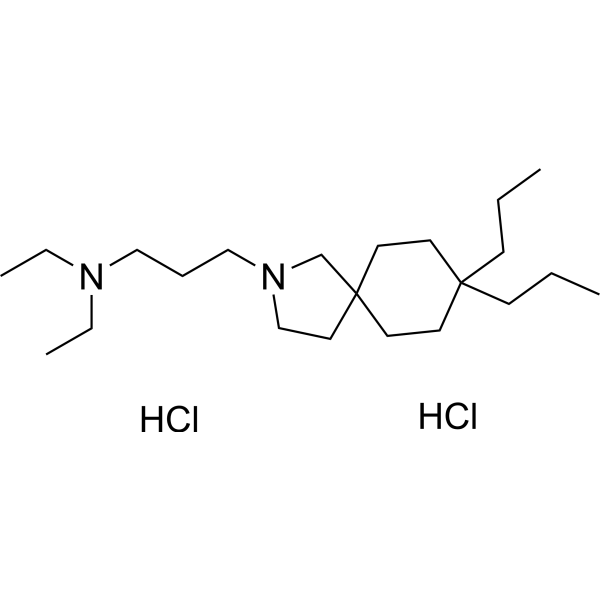 0 ImagesCat. No.: HY-110102CAS No.: 130065-61-1Synonyms: Azaspirane hydrochloride; SKF 106615-12 hydrochloride; SKF 106615
Atiprimod (Azaspirane) hydrochloride is a STAT3 inhibitor with antitumor, anti-inflammatory, and anti-angiogenic activities. Atiprimod blocks the signaling pathways of IL-6 and VEGF by inhibiting the phosphorylation of signal transducer and activator of STAT3. Atiprimod blocks the JAK-STAT signaling pathway by inhibiting the phosphorylation of JAK2 and JAK3. Atiprimod also inhibits cell proliferation, induces cell cycle arrest, and induces autophagy and apoptosis. Atiprimod triggers persistent ER stress-mediated apoptosis in breast cancer cells by activating the PERK/eIF2α/ATF4/CHOP axis and inhibiting the nuclear translocation of STAT3/NF-κB. Atiprimod shows great anti-tumor activities in tumor xenograft mouse models. Atiprimod can be used for the study of pituitary adenoma, breast cancer, multiple myeloma and acute myeloid leukemia (AML).
-
NF-κB-IN-22
 0 ImagesCat. No.: HY-184964CAS No.: 3041997-77-4
NF-κB-IN-22 is an inhibitor targeting IKKβ, IκBα and NF-κB p65. NF-κB-IN-22 selectively inhibits the proliferation, migration and invasion of various cancer cells, arrests the cell cycle, and suppresses tumor growth in vivo, while exhibiting low toxicity to normal cells. NF-κB-IN-22 induces DNA damage, ROS production and apoptosis through endoplasmic reticulum stress and mitochondrial apoptotic pathways. NF-κB-IN-22 inhibits the phosphorylation of IKKβ, IκBα and NF-κB p65, blocks the NF-κB signaling pathway, and suppresses the nuclear translocation of NF-κB p65. NF-κB-IN-22 reverses the resistance to cisplatin (HY-17394). NF-κB-IN-22 can be used in research related to lung cancer, gastric cancer and liver cancer.
-
Collismycin B
 0 ImagesCat. No.: HY-N14422CAS No.: 158792-25-7
Collismycin B is a potent dexamethasone-glucocorticoid receptor inhibitor with an IC50 value of 10 µM. Collismycin B shows antimicrobial activity. Collismycin B shows cytotoxicity.
-
Benfluron hydrochloride
 0 ImagesCat. No.: HY-106419ACAS No.: 80427-58-3Synonyms: Benflurone hydrochloride
Benfluron hydrochloride is an Apoptosis inducer and inhibitor of the HIV-1 Rev-RRE complex, with an IC50 of 5.0 μM against the HIV-1 Rev-RRE complex. Benfluron hydrochloride induces p53 activation, and triggers phosphorylation of Chk1 at serine 345, Chk2 at threonine 68, as well as ERK1/2 at threonine 202 and tyrosine 204. Benfluron hydrochloride activates Caspase 8, Caspase 9 and Caspase 3/7, inhibits HIV-1 viral transcription, and acts as a substrate for 11β-HSD 1 and cytosolic carbonyl reductase. Benfluron hydrochloride can be used in research related to leukemia and HIV-1 infection.
-
Anti-HLA-A2 Antibody (BB7.2)
 0 ImagesCat. No.: HY-P991787
-
MPT0B098
 0 ImagesCat. No.: HY-124595CAS No.: 1254363-89-7
MPT0B098 is a microtubule inhibitor with a Ki of 0.8 μM and an IC50 of 0.8 μM. MPT0B098 inhibits tubulin polymerization, blocks HuR nuclear-cytoplasmic translocation to decrease HIF-1α mRNA stability, suppresses HIF-1α, TGF-β/Smad, JAK2/STAT3 and FAK/actin cytoskeleton signaling pathways, upregulates SOCS3 to reinforce the inhibition of JAK2/STAT3 cascade, and induces apoptosis. MPT0B098 can be used for research on multiple malignancies including head and neck squamous cell carcinoma and human non-small cell lung cancer.
-
Chloroquinoxaline sulfonamide (Standard)
 0 Images
Chloroquinoxaline sulfonamide (Standard) is the analytical standard of Chloroquinoxaline sulfonamide. This product is intended for research and analytical applications. Chloroquinoxaline sulfonamide (Chloroquinoxaline), a structural analogue of sulfaquinoxaline, is a topoisomerase II alpha/beta poison. Chloroquinoxaline sulfonamide is used to control coccidiosis in poultry, rabbit, sheep, and cattle. Antitumor activity.
-
CD28-IN-3
 0 ImagesCat. No.: HY-181507CAS No.: 850550-70-8
CD28-IN-3 is a CD28 inhibitor with an IC50 of 7.80 μM and a Kd of 52.45 μM. CD28-IN-3 selectively blocks the CD28-B7 interaction, thereby inhibiting CD28-mediated costimulation. CD28-IN-3 suppresses the production of proinflammatory cytokines IFN-γ, IL-2 and TNF-α. CD28-IN-3 can be used in the research of checkpoint-resistant cancers.
-
Resatorvid (Standard)
 0 ImagesCat. No.: HY-11109RCAS No.: 243984-11-4Synonyms: TAK-242 (Standard); CLI-095 (Standard)
Resatorvid (Standard) is the analytical standard of Resatorvid (HY-11109). This product is intended for research and analytical applications. Resatorvid (TAK-242) is a selective Toll-like receptor 4 (TLR4) inhibitor. Resatorvid inhibits NO, TNF-α and IL-6 production with IC50s of 1.8 nM, 1.9 nM and 1.3 nM, respectively. Resatorvid downregulates expression of TLR4 downstream signaling molecules MyD88 and TRIF. Resatorvid inhibits autophagy and plays pivotal role in various inflammatory diseases.
-
PD 113270
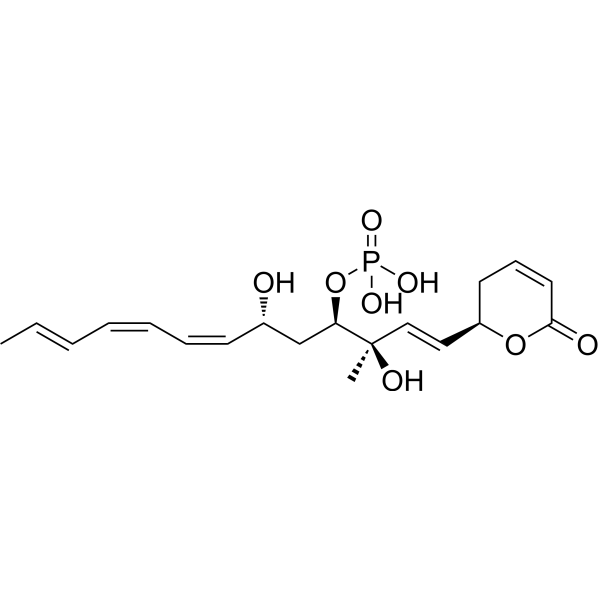 0 ImagesCat. No.: HY-111222CAS No.: 87860-37-5Synonyms: CL 1565-B
PD 113270 (CL 1565-B) is an antitumor agent. PD 113270 exhibits inhibitory effects to yeasts.
-
HDAC-IN-82
 0 ImagesCat. No.: HY-169922
HDAC-IN-82 (Compound 18b) is a histone deacetylase (HDAC) inhibitor with selective antiplasmodial and anticancer activity. HDAC-IN-82 shows potent antiproliferative activity and caspase 3/7 activation in cancer cells. HDAC-IN-82 causes hyperacetylation of histone H3 and α-tubulin.
-
N-Acetyl-D-glucosamine-d3
 0 ImagesCat. No.: HY-A0132S14CAS No.: 77369-11-0Synonyms: N-Acetyl-2-amino-2-deoxy-D-glucose-d3
N-Acetyl-D-glucosamine-d3 (N-Acetyl-2-amino-2-deoxy-D-glucose-d3) is deuterium labeled N-Acetyl-D-glucosamine. N-Acetyl-D-Glucosamine (N-Acetyl-2-amino-2-deoxy-D-glucose), the D isomer of N-acetylglucosamine, is an orally active monosaccharide derivative of glucose with anti-tumor and anti-inflammation properties. N-Acetyl-D-Glucosamine is also a bacterial metabolite, which is found in Escherichia coli. N-Acetyl-D-Glucosamine can induce yeast-mycelial conversion in Candida albicans. N-Acetyl-D-Glucosamine also enhances healing of cartilaginous injuries in rabbits.
-
11β-HSD2-IN-1
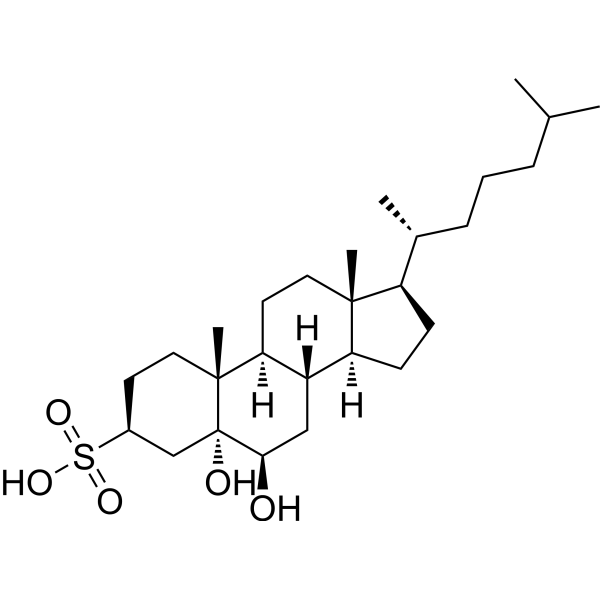 0 ImagesCat. No.: HY-157161
11β-HSD2-IN-1 (compound CDSN) is a potent inhibitor of 11β-HSD2, inhibiting the metabolism of Cholestane-3β,5α,6β-triol (CT) in cells by 11β-HSD2 into the tumor promoter, carcinosterone. 11β-HSD2-IN-1 inhibits testosterone biosynthesis, thereby inhibiting MCF-7 cell proliferation. 11β-HSD2-IN-1 has immune activity and antiviral infection effects.
-
G3130
 0 ImagesCat. No.: HY-111300CAS No.: 848952-37-4
G3130 is a reversible HSP90 inhibitor with a Kd value of 280 nM for the N-terminal ATP-binding domain of purified human Hsp90α. G3130 binds to the adenine site via a multi-hydrogen bond network. G3130 induces the degradation of Hsp90 client protein Her-2 in breast cancer cells. G3130 activates Hsp70 promoter-driven luciferase expression in 293T cells. G3130 can be used in breast cancer-related research.
-
Plerixafor (Standard)
 0 ImagesSynonyms: AMD 3100 (Standard); JM3100 (Standard); SID791 (Standard)
Plerixafor (Standard) is the analytical standard of Plerixafor. This product is intended for research and analytical applications. Plerixafor (AMD 3100) is a selective CXCR4 antagonist with an IC50 of 44 nM. Plerixafor, an immunostimulant and a hematopoietic stem cell (HSC) mobilizer, is an allosteric agonist of CXCR7. Plerixafor inhibits HIV-1 and HIV-2 replication with an EC50 of 1-10 nM.
-
ADC Control Human IgG1-vcMMAE (DAR8)
 0 ImagesCat. No.: HY-185830
ADC Control Human IgG1-vcMMAE (DAR8) is an antibody-drug conjugate (ADCs), serving as an isotype control for ADC human IgG1-vcMMAE, and inhibits tubulin polymerization. The antibody moiety of ADC Control Human IgG1-vcMMAE (DAR8) is Human IgG1 kappa, Isotype Control (HY-P99001), while the cytotoxic payload and linker moiety are VcMMAE (HY-15575). ADC Control Human IgG1-vcMMAE can be used in cancer-related research.
-
GTCpFE
 0 ImagesCat. No.: HY-164480CAS No.: 1588866-45-8
GTCpFE inhibits IKKα/β in the NF-κB pathway with anti-inflammatory activities and blocks p65 nuclear entry, which consists of Dimethyl fumarate (DMF) (HY-17363) linked to Aspirin (ASA) (HY-14654). GTCpFE exhibits selective anti-cancer stem-like cell (CSC) activity by reducing mammosphere growth and the CD44+ CD24- immunophenotype. GTCpFE inhibits breast cancer stem cells, an important NFκB- and PGE2-dependent phenotype in aggressive cancers.
-
Monorden E
 0 ImagesCat. No.: HY-N14881CAS No.: 616899-79-7
Monorden E has the effect of arresting the cell cycle of Jurket cells in G1 and G2/M phases. Monorden E has anti-Aspergillus niger activity.



