



Apoptosis
Apoptosis
Apoptosis is a distinctive form of cell death exhibiting specific morphological and biochemical characteristics, including cell membrane blebbing, chromatin condensation, genomic DNA fragmentation, and exposure of specific phagocytosis signaling molecules on the cell surface. Cells undergoing apoptosis differ from those dying through necrosis. Necrotic cells are usually recognized by the immune system as a danger signal and, thus, resulting in inflammation; in contrast, apoptotic death is quiet and orderly.
There are two major pathways of apoptotic cell death induction: The intrinsic pathway, also called the Bcl-2-regulated or mitochondrial pathway, is activated by various developmental cues or cytotoxic insults, such as viral infection, DNA damage and growth-factor deprivation, and is strictly controlled by the BCL-2 family of proteins. The extrinsic or death-receptor pathway is triggered by ligation of death receptors (members of the tumor necrosis factor (TNF) receptor family, such as Fas or TNF receptor-1 (TNFR1)) that contain an intracellular death domain, which can recruit and activate caspase-8 through the adaptor protein Fas-associated death domain (FADD; also known as MORT1) at the cell surface. This recruitment causes subsequent activation of downstream (effector) caspases, such as caspase-3, -6 or -7, without any involvement of the BCL-2 family.
Studies suggest that alterations in cell survival contribute to the pathogenesis of a number of human diseases, including cancer, viral infections, autoimmune diseases, neurodegenerative disorders, and AIDS (acquired immunodeficiency syndrome). Treatments designed to specifically alter the apoptotic threshold may have the potential to change the natural progression of some of these diseases.
All Product Categories
-
Apoptosis Inhibitors
(904)
View all products
-
Apoptosis Agonists
(7)
View all products
-
Apoptosis Antagonists
(9)
View all products
-
Apoptosis Activators
(363)
View all products
-
Apoptosis Modulators
(60)
View all products
-
Apoptosis Inducers
(7944)
View all products
-
Apoptosis Degrader
(1)
View all products
-
Apoptosis Controls
(33)
View all products
-
Apoptosis Related Products (9888)
Related Products (9888)

-
Antibodies (120)
-
STAT3-IN-38
 0 ImagesCat. No.: HY-169797CAS No.: 3033049-16-7STAT3-IN-38 (Compound 4m) is an inhibitor of STAT3 (KD of rhSTAT3: 45.33 µM). STAT3-IN-38 binds to the SH2 domain of STAT3 protein and suppresses the STAT3’s phosphorylation at site pTyr705 as well as its downstream genes (Survivin and Mcl-1). STAT3-IN-38 could block cell-cycle and induce Apoptosis in colorectal cancer cells.
-
Paroxetine mesylate
 0 ImagesCat. No.: HY-B0773CAS No.: 217797-14-3Synonyms: BRL29060 mesylateParoxetine (BRL29060) mesylate is an orally active and selective serotonin reuptake inhibitor (SSRI) and apoptosis inducer with blood-brain barrier permeability. Paroxetine mesylate inhibits nitric oxide synthase and CYP2D6, induces desensitization of 5-HT1A/1B/1D autoreceptors, downregulates 5-HT2 receptors, and promotes the production of inflammatory cytokines. Paroxetine mesylate is a weak norepinephrine (NE) uptake inhibitor and possesses antitumor activity. Paroxetine mesylate is widely used in research concerning depression, obsessive-compulsive disorder, panic disorder, social phobia, generalized anxiety disorder, post-traumatic stress disorder, premenstrual dysphoric disorder, hot flashes, and related conditions.
-
RMC-8839
 0 ImagesCat. No.: HY-184892CAS No.: 2953305-55-8RMC-8839 is an orally active selective RAS (ON) G13C inhibitor with a Ki value of 28.3 nM. RMC-8839 disrupts the interaction between KRASG13C and RAF1 (RBD). RMC-8839 inhibits RAS-MAPK pathway signaling by reducing DUSP6 mRNA levels and pERK levels. RMC-8839 induces cytotoxicity, apoptosis (apoptosis) and antiproliferative effects in KRASG13C-mutated cells. RMC-8839 induces tumor stasis or regression in mice. RMC-8839 can be used in research related to non-small cell lung cancer.
-
Kusunokinin
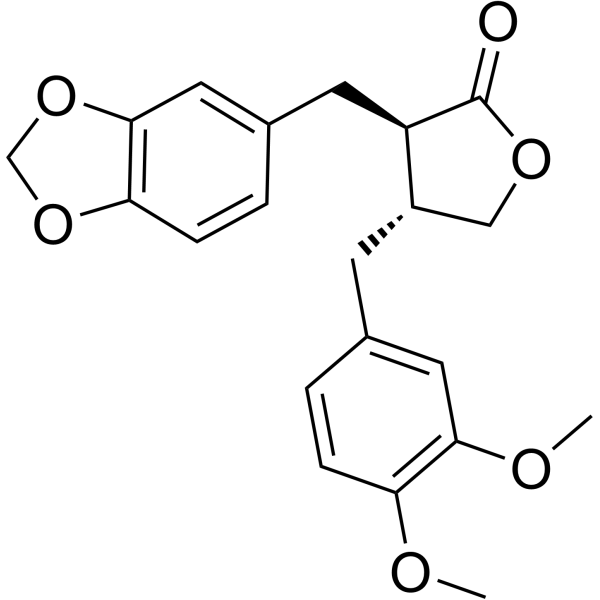 0 ImagesCat. No.: HY-N10798CAS No.: 58311-20-9Synonyms: (-)-KusunokininKusunokinin ((-)-Kusunokinin) is a nature product that could be isolated form P. nigrum. Kusunokinin has anticancer activity. Kusunokinin arrests cell cycle at G2/M phase and induce apoptosis.
-
MT-44
 0 ImagesCat. No.: HY-178431CAS No.: 2966790-70-3MT-44 is a highly selective and potent mTOR inhibitor with an IC50 of 49.4 nM. MT-44 can inhibit cancer cells proliferation, migration and invasion. MT-44 can induce cells apoptosis and ROS production and cause G2/M phase arrest. MT-44 can activate the cGAS/STING pathway. MT-44 can be used for the research of cancer, such as triple-negative breast cancer.
-
KLA peptide
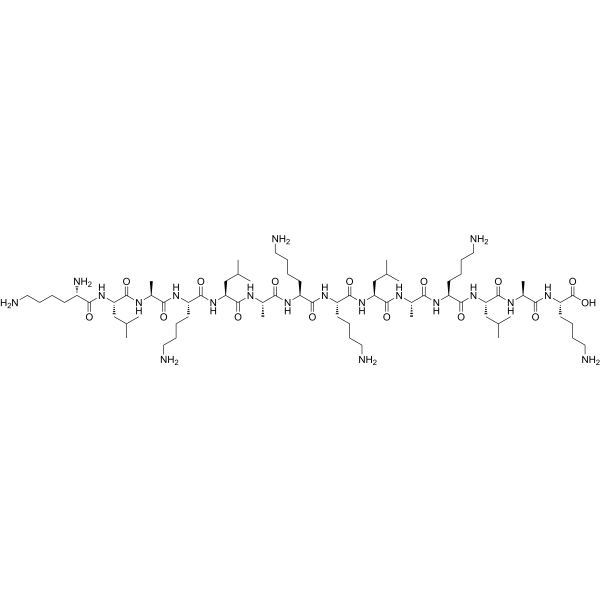 0 ImagesCat. No.: HY-P5345CAS No.: 184240-26-4KLA peptide is a naturally occurring Antibiotic peptide that is nontoxic outside of cells but is toxic when it enters into the interior of targeted cells. KLA peptide can induce cell Apoptosis by disrupting mitochondrial membranes and activating Caspase. MG1-KLA, formed by the coupling of KLA peptide with MG1, can selectively induce apoptosis in pro-inflammatory microglia. KLA peptide can be used for the research of liver fibrosis. KLA peptide can be used for the research of neonatal hypoxic-ischemic encephalopathy.
-
Tubulin polymerization-IN-61
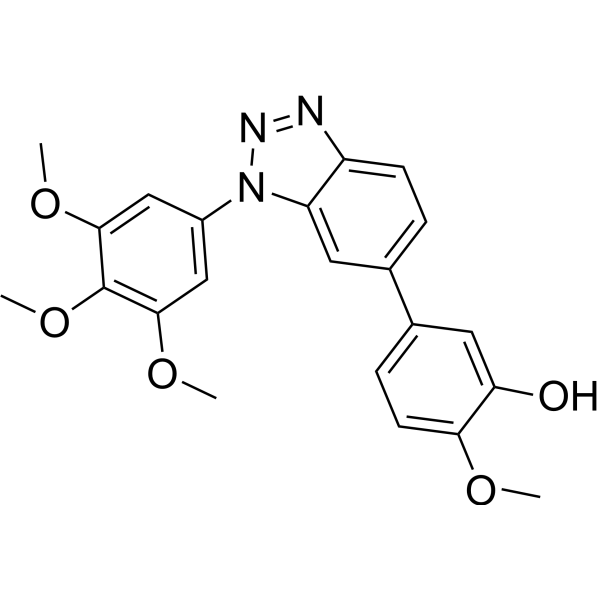 0 ImagesCat. No.: HY-161338CAS No.: 2758114-60-0Tubulin polymerization-IN-61 (Compound 9a) is a tubulin polymerization inhibitor. Tubulin polymerization-IN-61 destroys the microtubule skeleton, blocks the cell cycle in G2/M phase, induces Apoptosis, and inhibits cancer cell migration and colony formation. Tubulin polymerization-IN-61 shows antitumor activity in vivo against 4T1 xenograft model.

-
Zoniporide mesylate
 0 ImagesCat. No.: HY-105064ACAS No.: 249296-45-5Synonyms: CP-597396 mesylateZoniporide mesylate (CP-597396 mesylate) is a selective Na+/H+ exchanger subtype 1 (NHE1) inhibitor with cardioprotective activity, with IC50 values of 67 nM and 73 nM against rat NHE1. Zoniporide mesylate reduces intracellular Na+ and Ca2+ overload, preserves mitochondrial integrity, activates pro-survival ERK1/2 and STAT3 signaling pathways, reduces necrosis and apoptosis, and decreases neutrophil aggregation. Zoniporide mesylate is applicable to research related to myocardial ischemia-reperfusion injury and heart graft ischemia-reperfusion injury.
-
Cr-ACP1
 0 ImagesCat. No.: HY-P11173CAS No.: 2493968-50-4Cr-ACP1 is an anti-cancerous peptide. Cr-ACP1 binds to DNA, inducing cell cycle arrest in the G0-G1 phase, leading to the initiation of Apoptosis mechanisms. Cr-ACP1 exhibits anticancer effects against colon cancer and epidermoid carcinoma.
-
KHS101
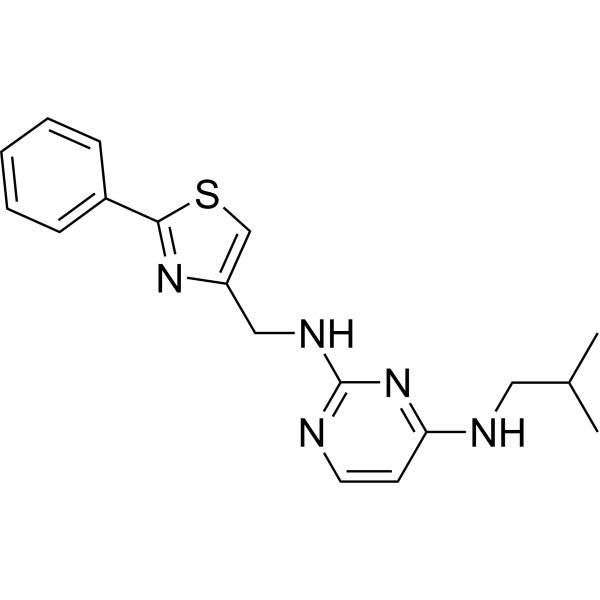 0 ImagesCat. No.: HY-10996CAS No.: 1262770-73-9KHS101 is a blood-brain barrier-penetrant anticancer agent that primarily functions by inhibiting HSPD1 (IC50 = 14.4 μM) and TACC3 across different cellular backgrounds. KHS101 promotes the aggregation of HSPD1 with client proteins, destabilizes TACC3, and reduces the levels of TACC3, Aurora A and PLK1. KHS101 induces autophagy, apoptosis, cell cycle exit and neuronal differentiation; it suppresses cancer cell growth, motility, EMT and stemness; it also impairs mitochondrial bioenergetics and glycolysis in glioblastoma cells. KHS101 can be used in research related to glioblastoma multiforme and breast cancer.
-
Icaritin (Standard)
 0 ImagesSynonyms: Anhydroicaritin (Standard)Icaritin (Standard) is the analytical standard of Icaritin. This product is intended for research and analytical applications. Icaritin (Anhydroicaritin) is a prenylflavonoid derivative from Epimedium brevicornuMaxim. and potently inhibits proliferation of K562 cells (IC50 of 8 μM) and primary CML cells (IC50 of 13.4 μM for CML-CP and 18 μM for CML-BC). Icaritin can regulate MAPK/ERK/JNK and JAK2/STAT3 /AKT signalings, also enhances osteogenesis[3.
-
Cedrol (Standard)
 0 ImagesSynonyms: (+)-Cedrol (Standard); α-Cedrol (Standard)Cedrol (Standard) is the analytical standard of Cedrol. This product is intended for research and analytical applications. Cedrol is a potent competitive inhibitor of cytochrome P-450(CYP) enzyme. Cedrol plays an anticancer role by inducing cell cycle arrest and Caspase-dependent apoptosis. Cedrol acts as a neutrophil agonist that can desensitize cells to subsequent stimulation of N-formyl peptides. Cedrol prevents neuropathic pain caused by chronic contractile injury by inhibiting oxidative stress and inflammation. In addition, Cedrol has antibacterial, hair loss prevention and anti-anxiety properties.
-
SHP2 protein degrader-3
 0 ImagesCat. No.: HY-175204SHP2 protein degrader-3 is a SHP2 AUTAC degrader. SHP2 protein degrader-3 shows dose-dependent SHP2 degradation ability (DC50 = 3.22 μM) and anti-tumor activity (IC50 = 5.59 μM) in HeLa cells. SHP2 protein degrader-3 induces degradation through the LC3-mediated autophagy pathway, which can be inhibited by lysosome inhibitors. SHP2 protein degrader-3 induces apoptosis in various cancer cells (HeLa cells, HepG2 cells, LoVo cells, Huh-7 cells) (SHP2 Ligand : (HY-100388); LC3 Ligand: (HY-10542); Linker : (HY-128834)).
-
Bcl-2-IN-23
 0 ImagesCat. No.: HY-176219Bcl-2-IN-23 (compound 5) is a selective inhibitor targeting Bcl-2. The IC50 of Bcl-2-IN-23 in HTB-140, HeLa and SW620 cells is 25.7-33.7 μM. Bcl-2-IN-23 can non-covalently competitively bind to Bcl-2 protein, significantly reduce its expression, and induce late apoptosis and necroptosis of cancer cells. Bcl-2-IN-23 enhances the sensitivity of cancer cells to apoptosis and reduces the release of IL-6 inflammatory factors by disrupting the Bcl-2-mediated mitochondrial apoptosis inhibition pathway. Bcl-2-IN-23 can be used for anti-apoptosis research of malignant tumors such as melanoma, cervical cancer, and colorectal cancer.
-
06:0 PE
 0 ImagesCat. No.: HY-W040293CAS No.: 96893-06-0Synonyms: PE(6:0/6:0); 1,2-Dihexanoyl-sn-glycero-3-phosphoethanolamine06:0 PE (PE(6:0/6:0)) is a water-soluble phospholipid characterized by its short acyl chains, exhibiting notable antitumor activity and the ability to inhibit tumor progression in vivo, alongside antiproliferative and proapoptotic effects, while serving as a precursor for phosphatidylcholine and phosphatidylethanolamine.
-
PP-60
 0 ImagesCat. No.: HY-P11624PP-60 is an apoptosis inducer. PP-60 inhibits the proliferation of cancer cells and induces cancer cell apoptosis. PP-60 exerts anti-tumor effects in nude mouse liver tumor models. PP-60 is applicable to research related to cancers such as liver cancer, lung cancer, and prostate cancer.
-
Thalidomide-piperazine-(R)-C-pyrrolidine-C-boc
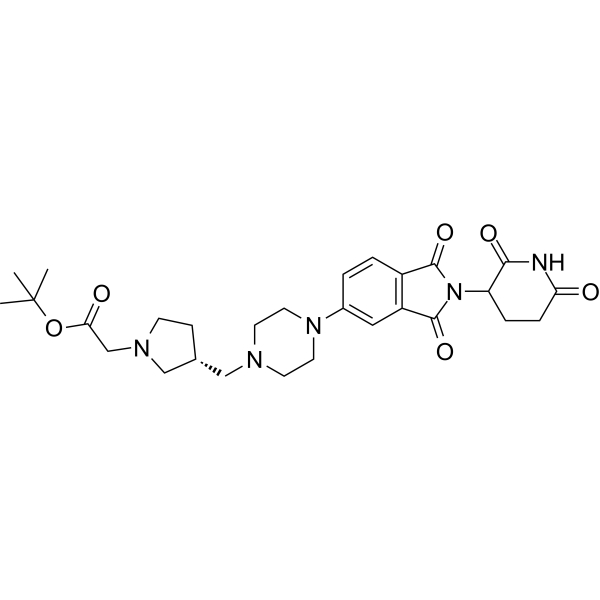 0 ImagesCat. No.: HY-161193Thalidomide-piperazine-(R)-C-pyrrolidine-C-boc is a conjugate of E3 ligase ligand and linker, consisting of Thalidomide (HY-14658) and the corresponding Linker. Thalidomide-piperazine-(R)-C-pyrrolidine-C-boc can serve as a Cereblon ligand to recruit CRBN protein and serve as a key intermediate for the synthesis of complete PROTAC molecules.
-
TBHQ-d12
 0 ImagesCat. No.: HY-100489SSynonyms: tert-Butylhydroquinone-d12TBHQ-d12 (tert-Butylhydroquinone-d12) is the deuterium labeled TBHQ (HY-100489). TBHQ (tert-Butylhydroquinone) is a widely used Nrf2 activator, protects against Doxorubicin (DOX)-induced cardiotoxicity through activation of Nrf2. TBHQ (tert-Butylhydroquinone) is also an ERK activator; rescues Dehydrocorydaline (DHC)-induced cell proliferation inhibitionin melanoma[2].
-
(R)-Methotrexate-d3
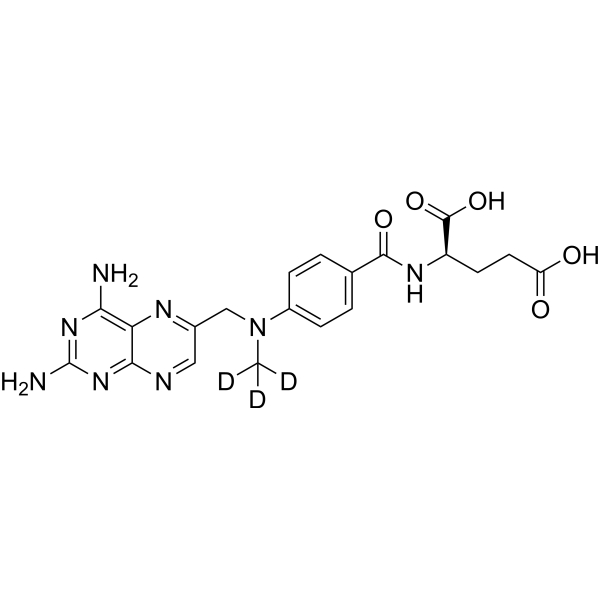 0 ImagesCat. No.: HY-14519CSCAS No.: 2470329-38-3(R)-Methotrexate-d3 is the deuterium labeled (R)-Methotrexate.




