



Apoptosis Inhibitor
-
Dihydrocapsaicin-d3
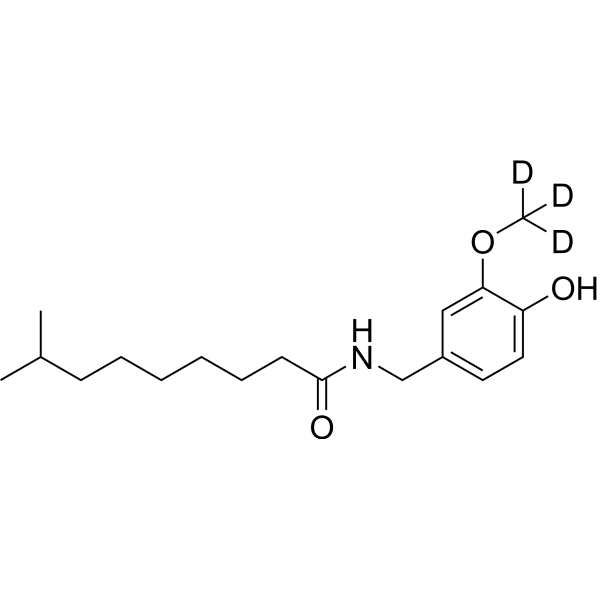 0 ImagesCat. No.: HY-N0361SCAS No.: 1330261-21-6
Dihydrocapsaicin-d3 is the deuterium labeled Dihydrocapsaicin (HY-N0361). Dihydrocapsaicin, a capsaicin, is a potent and selective TRPV1 (transient receptor potential vanilloid channel 1) agonist. Dihydrocapsaicin reduces AIF, Bax, and Caspase-3 expressions, and increased Bcl-2, Bcl-xL and p-Akt levels. Dihydrocapsaicin enhances the hypothermia-induced neuroprotection following ischemic stroke via PI3K/Akt regulation in rat.
-
Boc-AEVD-CHO TFA
 0 ImagesCat. No.: HY-P5834A
Boc-AEVD-CHO TFA is a Caspase 8 inhibitor. Boc-AEVD-CHO TFA significantly increases the frequencies of Nocodazole (HY-13520) or methyl methane sulfonate (MMS) induced micronuclei (MN) and micronucleated binucleates (MNCB) in PBMC by inhibiting cell apoptosis. Boc-AEVD-CHO TFA can be used for immune and inflammatory diseases research.
-
Cloridarol
 0 Images
Cloridarol is a human islet amyloid peptide (hIAPP) inhibitor that prevents its abnormal misfolding and aggregation. Cloridarol can increase cell viability, inhibit apoptosis, and protect islet β-cells from hIAPP-induced cell toxicity. Cloridarol can be used for the research of type 2 diabetes (T2D).
-
Ac-LEHD-CHO
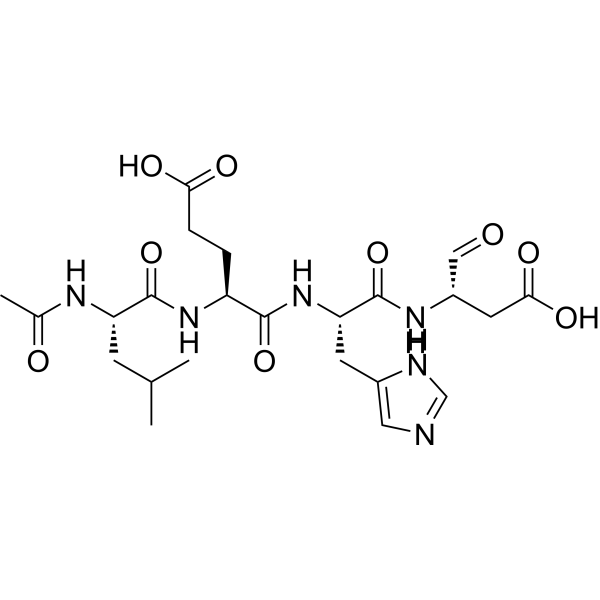 0 ImagesCat. No.: HY-P10241CAS No.: 319494-38-7
Ac-LEHD-CHO is an inhibitor for caspase 8/9. Ac-LEHD-CHO prevents GalN/TNF-α-induced hepatotoxicity and hepatocyte apoptosis.
-
Tauroursodeoxycholate-d4-1
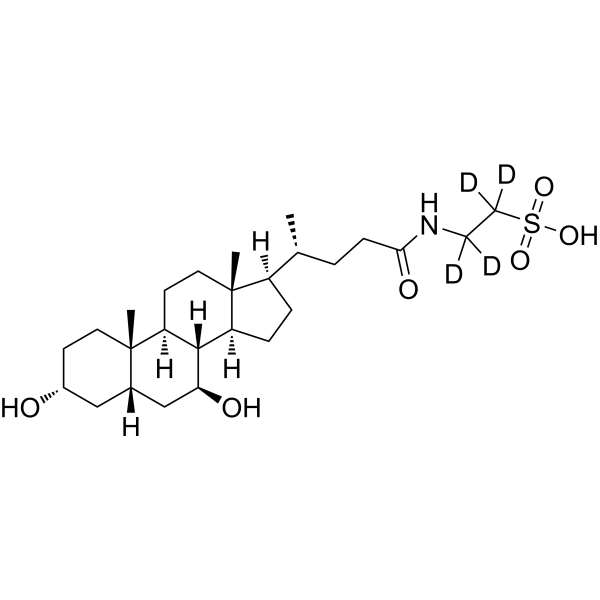 0 ImagesCat. No.: HY-19696S2CAS No.: 2573035-17-1Synonyms: Tauroursodeoxycholic acid-d4-1; TUDCA-d4-1; UR 906-d4-1
Tauroursodeoxycholate-d4-1 is the deuterium labeled Tauroursodeoxycholate. Tauroursodeoxycholate (Tauroursodeoxycholic acid) is an endoplasmic reticulum (ER) stress inhibitor. Tauroursodeoxycholate significantly reduces expression of apoptosis molecules, such as caspase-3 and caspase-12. Tauroursodeoxycholate also inhibits ERK.
-
Porphyra 334
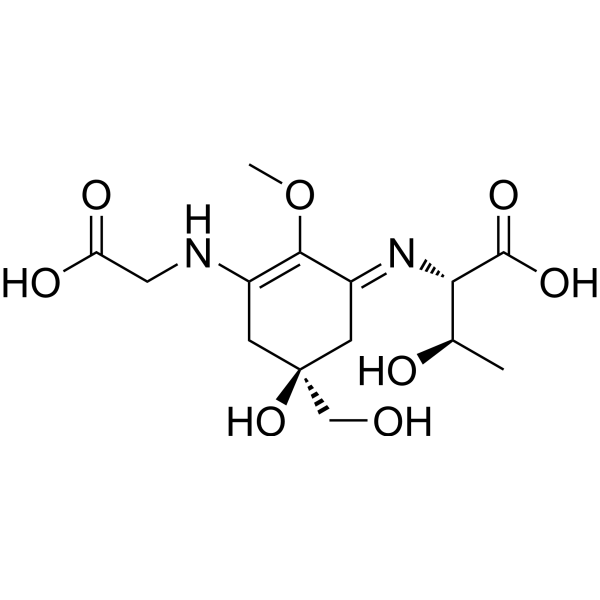 0 Images
Porphyra 334 is a carnosine-like amino acid and a natural photoprotective agent and antioxidant. Porphyra-334 exerts its photoprotective effects by scavenging ROS, inhibiting the expression and activity of MMP-1/8, and promoting the synthesis of collagen and elastin. Porphyra 334 effectively inhibits linoleic acid oxidation induced by alkyl radicals (AAPH) and singlet oxygen. Porphyra 334 has anti-obesity potential by inhibiting the expression of PPARγ2 and C/EBPα. Porphyra 334 protects cells against UV-induced DNA damage and apoptosis by inhibiting the activation of caspase-3.
-
Nargenicin A1
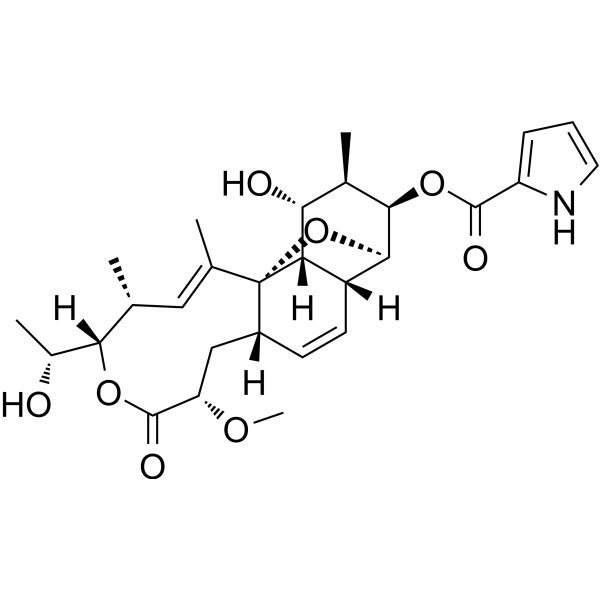 0 ImagesCat. No.: HY-123121CAS No.: 70695-02-2
Nargenicin A1 is an antibiotic agent against various Gram-positive bacteria. Nargenicin A1 shows anti-inflammatory activity. Nargenicin A1 protects HINAE cells against Tacrolimus (HY-13756)-induced DNA damage and apoptosis. Nargenicin A1 can also be used for the research of acute myeloid leukemia.
-
EGFR-IN-173
 0 ImagesCat. No.: HY-175864
EGFR-IN-173 is an orally active, pan-mutant EGFR tyrosine kinase inhibitor that targets EGFR 19del, L858R/T790M and C797S triple-mutations, potently inhibiting EGFR19del/T790M/C797S with an IC50 of 1.19 nM while showing over 100-fold selectivity for mutant over wild-type EGFR (IC50 = 19.362 μM against WT). EGFR-IN-173 significantly inhibits cell migration, induces apoptosis in non-small cell lung cancer (NSCLC) cells. EGFR-IN-173 inhibits EGFR phosphorylation and suppresses the downstream pathways (MAPK/ERK, AKT, STAT3). EGFR-IN-173 exhibits antitumor efficacy in NSCLC and Ba/F3 xenograft models. EGFR-IN-173 can be used for NSCLC research.
-
Top1-IN-2
 0 ImagesCat. No.: HY-159935
Top1-IN-2 (Compound 1a) is a topoisomerase 1 (Top1) inhibitor. Top1-IN-2 inhibits P-gp resistant tumor cells growth and induces cell apoptosis.
-
Geranylgeranyl pyrophosphate
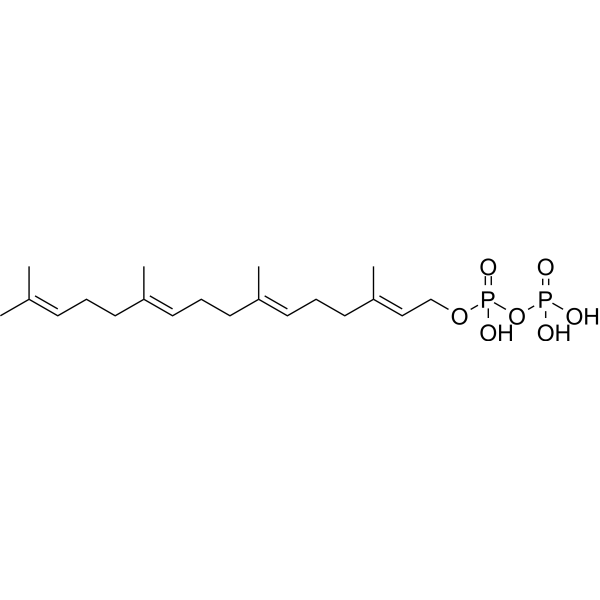 0 Images
Geranylgeranyl pyrophosphate is a type of isoprenoid metabolic intermediate, mainly synthesized through the mevalonate pathway. Geranylgeranyl pyrophosphate is a key precursor in various biological synthesis processes, especially as a necessary substrate for post-translational modification of proteins - geranylgeranyl phosphorylation. Geranylgeranyl pyrophosphate regulates various cellular processes and disease progression through protein geranylgeranyl phosphorylation, such as activating the YAP signaling pathway, promoting cell proliferation and inhibiting apoptosis; promoting IL-2 production and STAT5 phosphorylation; and influencing metabolic homeostasis and cancer, etc.
-
Icosabutate (Standard)
 0 ImagesCat. No.: HY-121212RCAS No.: 1253909-57-7
Desmethyl Sibutramine (hydrochloride) (Standard) is the analytical standard of Desmethyl Sibutramine (hydrochloride). This product is intended for research and analytical applications. Icosabutate is an orally active engineered fatty acid and a dual FFAR1/FFAR4 (GPR40/GPR120) agonist with EC50 values of 10 μM and 15.5 μM, respectively. Icosabutate acts as a partial agonist of PPAR-α, with an EC50 of 208 nM. Icosabutate inhibits the arachidonic acid cascade and exhibits antioxidant and anti-apoptotic activities. Icosabutate can be used in the research of nonalcoholic steatohepatitis, metabolic dysfunction-associated steatohepatitis, and atherosclerosis.
-
Nrf2 activator-21
 0 ImagesCat. No.: HY-175548CAS No.: 1912404-14-8
Nrf2 activator-21 is a Nrf2 activator with dual antioxidant and neuroprotective properties. Nrf2 activator-21 binds to Keap1 Kelch domain and disrupts Keap1-Nrf2 interactions and activate antioxidant defense mechanisms. Nrf2 activator-21 reduces apoptosis and decreases caspase-3 activity in the hippocampal neurons. Nrf2 activator-21 targets cerebral ischemia/reperfusion injury (CIRI) via Nrf2 pathway activation. Nrf2 activator-21 improves neurological function, alleviates anxiety-like behavior, enhances memory in rats with 2-vessel occlusion (2VO)-induced CIRI. Nrf2 activator-21 can be used for the study of cerebral ischemia/reperfusion injury.
-
Antioxidant agent-5
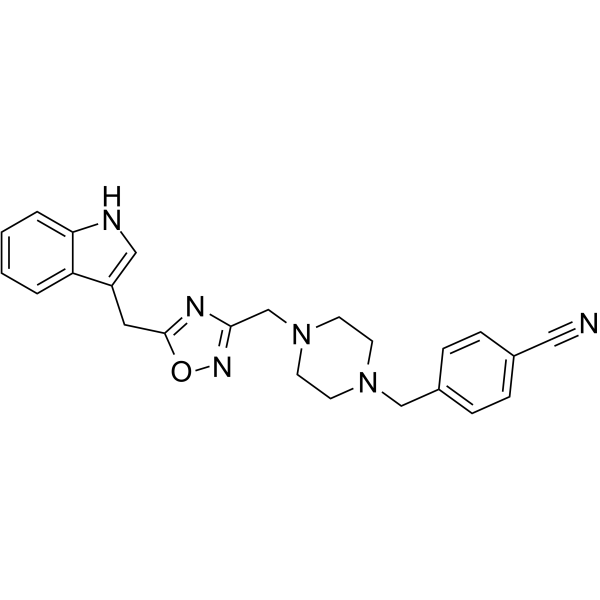 0 ImagesCat. No.: HY-143243CAS No.: 2684291-60-7
Antioxidant agent-5 (compound D-6) is a potent antioxidant agent. Antioxidant agent-5 can inhibit oxLDL (oxidized low-density lipoprotein)-induced apoptosis and the expression of ICAM-1 and VCAM-1 in VECs. Antioxidant agent-5 suppresses oxLDL-induced increase of ROS level and nuclear translocation of NF-κB. Antioxidant agent-5 protects against oxLDL-induced endothelial injury by activating Nrf2/HO-1 anti-oxidation pathway.
-
Zoledronate disodium
 0 ImagesCat. No.: HY-13777CCAS No.: 131654-46-1Synonyms: CGP 42446 disodium; CGP42446A disodium; ZOL 446 disodium
Zoledronate (CGP 42446) disodium is a potent bisphosphonate that effectively inhibits osteoclastogenesis, reducing bone turnover and stabilizing the bone matrix. Zoledronate disodium has demonstrated notable effectiveness in managing Paget's disease of bone by suppressing metabolic activity and alleviating bone pain. Zoledronate disodium is being investigated in the ongoing ZiPP trial for its potential to prevent disease progression in patients with Paget's disease. Zoledronate disodium also exhibits diverse anti-tumor effects in osteosarcoma, further highlighting its multifunctional therapeutic applications.
-
TMPO
 0 ImagesSynonyms: 3,3,5,5-Tetramethyl-1-pyrroline 1-oxide
TMPO (3,3,5,5-Tetramethyl-1-pyrroline 1-oxide) is a spin trap targeting free radicals. TMPO is capable of scavenging superoxide, hydroxyl radicals and inhibits thymocyte apoptosis with EC50 values of 19.1 mM (MPS-induced) to 30.7 mM (Etoposide-induced) for inhibiting DNA fragmentation. TMPO reacts with intracellular free radicals to form stable nitroxide radical products, reducing oxidative stress (e.g., decreasing peroxide levels, maintaining glutathione content) and blocking oxidative events in the apoptotic pathway. TMPO is promising for research of apoptosis in immune cells like thymocytes.
-
GK563
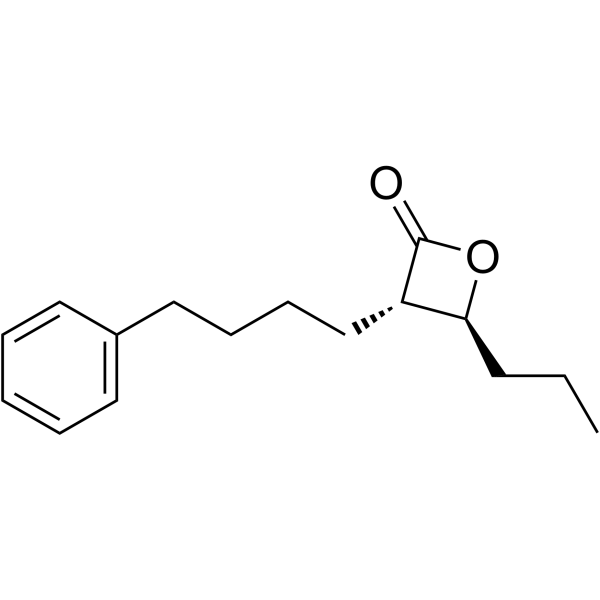 0 ImagesCat. No.: HY-138990CAS No.: 2351820-19-2
GK563 is a selective Ca2+-independent phospholipase A2 (GVIA iPLA2) inhibitor with an IC50 value of 1 nM. GK563 is 22000 times more active against GVIA iPLA2 than GIVA cPLA2. GK563 reduces β-cell apoptosis induced by proinflammatory cytokines, raising the possibility that it can be beneficial in countering autoimmune diseases, such as type 1 diabetes.
-
iMAC2
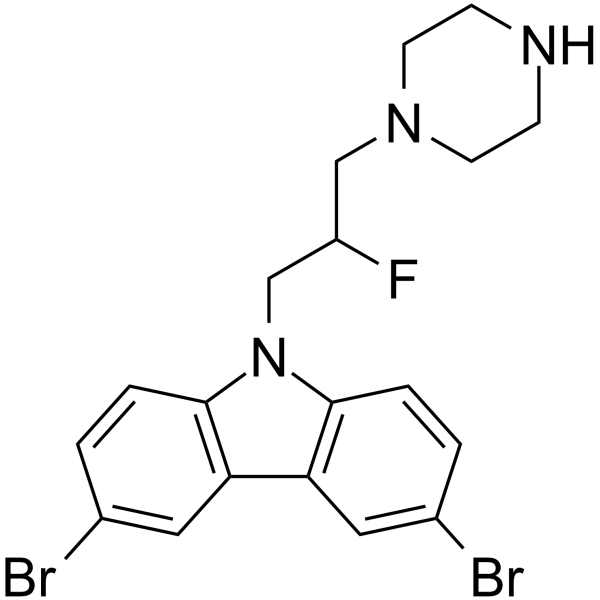 0 ImagesCat. No.: HY-103272CAS No.: 335166-36-4
iMAC2 is a potent MAC inhibitor with an IC50 of 28 nM and an LD50 of 15000 nM. iMAC2 shows anti-apoptotic effect. iMAC2 blocks cytochrome c release.
-
α-D-Glucosyl hesperidin
 0 ImagesCat. No.: HY-N18905CAS No.: 161713-86-6
α-D-Glucosyl hesperidin is an orally effective structural modification derivative of Hesperidin (HY-15337) with anti-apoptotic (apoptosis) and antioxidant activities. α-D-Glucosyl hesperidin upregulates the expression of the Bcl-2 gene, while downregulating the expressions of the Bax and caspase-3 genes. α-D-Glucosyl hesperidin increases total antioxidant capacity, SOD and catalase levels, and decreases malondialdehyde and glutathione levels. α-D-Glucosyl hesperidin improves sperm motility, viability and plasma membrane function, while restoring reproductive organ weight and seminiferous tubule structure. α-D-Glucosyl hesperidin increases fertility index and exerts a synergistic protective effect with Proanthocyanidins (HY-N0794) in male rats with testicular ischemia-reperfusion injury. α-D-Glucosyl hesperidin can be used in the research of testicular ischemia-reperfusion injury.
-
Higenamine-d4-1 hydrochloride
 0 ImagesCat. No.: HY-N2037AS1Synonyms: Norcoclaurine-d4-1 hydrochloride; Demethyl-Coclaurine-d4-1 hydrochloride
Higenamine-d4-1 (Norcoclaurine-d4-1) hydrochloride is deuterium labeled Higenamine (hydrochloride). Higenamine hydrochloride is a selective LSD1 inhibitor (IC50=1.47 μM) that can be isolated from aconite. Higenamine hydrochloride has anti-inflammatory and antibacterial activity. Higenamine (Norcoclaurine) can attenuate IL-1β-induced Apoptosis through ROS-mediated PI3K/Akt signaling pathway. Higenamine hydrochloride protects brain cells from oxygen deprivation. Higenamine can promote bone formation in osteoporosis through the SMAD2/3 pathway. Higenamine hydrochloride can be used to study cancer, inflammation, cardiorenal syndrome and other diseases.
-
Rutin hydrate (Standard)
 0 ImagesCat. No.: HY-N0148ARCAS No.: 207671-50-9Synonyms: Rutoside hydrate (Standard); Quercetin 3-O-rutinoside hydrate (Standard)
Rutin (hydrate) (Standard) is the analytical standard of Rutin (hydrate). This product is intended for research and analytical applications. Rutin (Rutoside) hydrate is a flavonoid found in many plants and shows a wide range of biological activities including anti-inflammatory, antidiabetic, antioxidant, neuroprotective, nephroprotective, hepatoprotective and reducing Aβ oligomer activities. Rutin hydrate can cross the blood brain barrier. Rutin hydrate attenuates vancomycin-induced renal tubular cell apoptosis via suppression of apoptosis, mitochondrial dysfunction, and oxidative stress.



