



Autophagy
Autophagy is a conserved cellular degradation and recycling process in the lysosome. In mammalian cells, there are three primary types of autophagy: microautophagy, macroautophagy, and chaperone-mediated autophagy (CMA). Microphagy captures cargoes by means of invaginations or protrusions of the lysosomal membrane directly, CMA uses chaperones to identify cargo proteins and then unfolds and transfers them into the lysosomal, while macroautophagy sequesters cargo by autophagosomes-de novo synthesized of double-membrane vesicles-and subsequently transport it to the lysosome.
Macroautophagy is the best studied and it occurs at a low level constitutively and can also be further induced under stress conditions, such as nutrient or energy starvation with a salient feature of autophagy protein degradation. Stress-induced macrophagy plays an important role in protein catabolism with another key protein degradation pathway, the ubiquitin–proteasome system (UPS).
As the study progressed, autophagy gains its importance under basal, nutrient-rich conditions, and is now recognized as a critical housekeeping pathway in catabolism of diverse cellular constituents, such as protein aggregates (aggrephagy), lipid droplets (lipophagy), iron complex (Ferritinophagy) and carbohydrate. Except for macromolecules, autophagy can also target several organelles and structures, such as mitochondria (mitophagy), peroxisome (pexophagy), endoplasmic reticulum (reticulophagy or ER-phagy), ribosome (ribophagy), spermatozoon-inherited organelles following fertilization (allophagy), secretory granules within pancreatic cells (zymophagy) and intracellular pathogens (xenophagy).
Autophagy and its dysfunction are associated with a variety of human pathologies, including ageing, cancer, neurodegenerative disease, heart disease and metabolic diseases, such as diabetes. Plenty of drugs and natural products are involved in autophagy modulation through multiple signaling pathways. Small molecules that can regulate autophagy seem to have great potential to intervene such diseases in animal models or clinical courses.
All Product Categories
-
Autophagy Inhibitors
(488)
View all products
-
Autophagy Agonists
(6)
View all products
-
Autophagy Activators
(124)
View all products
-
Autophagy Modulators
(59)
View all products
-
Autophagy Chemicals
(2)
View all products
-
Autophagy Inducers
(2220)
View all products
-
Autophagy Controls
(5)
View all products
-
Autophagy Ligand
(1)
View all products
-
Autophagy Related Products (3441)
Related Products (3441)

-
Antibodies (31)
-
Autophagy Signaling Pathway
-
Atiprimod dimaleate
 0 ImagesCat. No.: HY-13559ACAS No.: 183063-72-1Synonyms: Azaspirane dimaleate; SKF 106615-12 dimaleate; SKF 106615A12 dimaleateAtiprimod (Azaspirane) (dimaleate) is a STAT3 inhibitor with antitumor, anti-inflammatory, and anti-angiogenic activities. Atiprimod blocks the signaling pathways of IL-6 and VEGF by inhibiting the phosphorylation of signal transducer and activator of STAT3. Atiprimod blocks the JAK-STAT signaling pathway by inhibiting the phosphorylation of JAK2 and JAK3. Atiprimod also inhibits cell proliferation, induces cell cycle arrest, and induces autophagy and apoptosis. Atiprimod triggers persistent ER stress-mediated apoptosis in breast cancer cells by activating the PERK/eIF2α/ATF4/CHOP axis and inhibiting the nuclear translocation of STAT3/NF-κB. Atiprimod shows great anti-tumor activities in tumor xenograft mouse models. Atiprimod can be used for the study of pituitary adenoma, breast cancer, multiple myeloma and acute myeloid leukemia (AML).
-
NSC 109555
 0 ImagesCat. No.: HY-123597CAS No.: 15427-93-7Synonyms: DDUG; NCI C04808NSC 109555 is an ATP-competitive inhibitor of checkpoint kinase 2 (Chk2; IC50=200 nM in a cell-free kinase assay). It is selective for Chk2 over Chk1 and 16 kinases in a panel but does inhibit Brk, c-Met, IGFR, and LCK with IC50 values of 210, 6,000, 7,400, and 7,100 nM, respectively. NSC 109555 inhibits Chk2 autophosphorylation and phosphorylation of the Chk2 substrate histone H1 in vitro (IC50=240 nM). It inhibits the growth of, and induces autophagy in, L1210 leukemia cells in vitro.2 NSC 109555 (1,250 nM) potentiates gemcitabine-induced cytotoxicity in MIA PaCa-2, CFPAC-1, PANC-1, and BxPC-3 pancreatic cancer cells, as well as reduces gemcitabine-induced increases in Chk2 phosphorylation and enhances gemcitabine-induced production of reactive oxygen species (ROS) in MIA PaCa-2 cells.
-
Phenformin-d5 hydrochloride
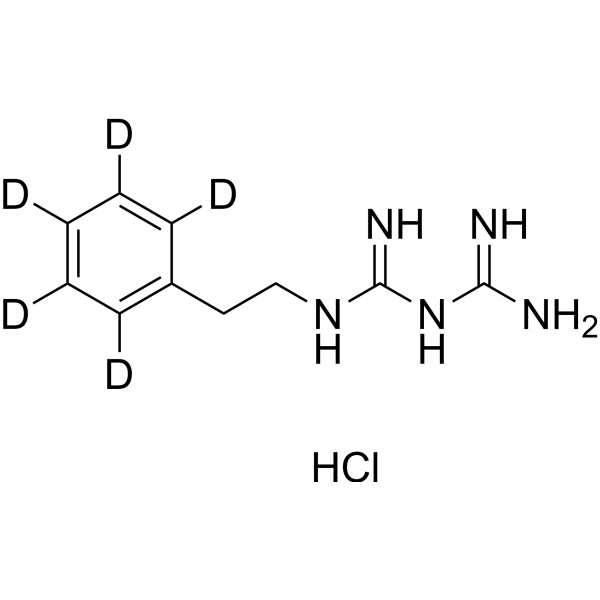 0 ImagesCat. No.: HY-16397ASSynonyms: Phenethylbiguanide-d5 hydrochloridePhenformin-d5 (Phenethylbiguanide-d5) hydrochloride is the deuterium labeled Phenformin hydrochloride. Phenformin hydrochloride is an orally active biguanide hypoglycemic agent. Phenformin hydrochloride inhibits mitochondrial respiratory chain complex I, leading to an increased AMP/ATP ratio, activation of AMPK, and subsequent inhibition of the mTOR pathway, thereby suppressing cell proliferation, inducing apoptosis and autophagy. Phenformin hydrochloride inhibits cancer stem cells (CSCs) and possesses potent antitumor potential.
-
Phytic acid hexalithium
 0 ImagesCat. No.: HY-181448Synonyms: Inositol hexaphosphate hexalithium; SNF472 hexalithiumPhytic acid (Inositol hexaphosphate hexalithium) hexalithium is an orally active compound. Phytic acid hexalithium can be derived from the seeds of legumes. Phytic acid is a [PO4]3- storage depot and precursor for other inositol phosphates and pyrophosphates. Phytic acid hexalithium attenuates Aβ oligomers and upregulates Autophagy protein. Phytic acid hexalithium can be used in cardiovascular disease, metabolic disease, nervous system disease and cancer research.
-
ATI-1
 0 ImagesCat. No.: HY-183257CAS No.: 1242983-93-2ATI-1 is an autophagy initiation inhibitor. ATI-1 targets valosin-containing protein (VCP/p97, disrupts its interaction with UFL1, impairs UFMylation homeostasis associated with VCP, promotes polyubiquitination and degradation of Beclin1, and blocks the formation of early autophagosomes. ATI-1 induces synergistic death of autophagy-dependent malignant tumor cells under nutrient deprivation conditions, accompanied by decreased mitochondrial membrane potential, reduced ROS levels and lysosomal stress. ATI-1 exhibits anti-tumor efficacy in a pancreatic adenocarcinoma xenograft mouse model. ATI-1 can be used for the research of pancreatic adenocarcinoma and lung cancer.
-
Chloramphenicol/BSA
 0 ImagesCat. No.: HY-161586Chloramphenicol/BSA is the antigen-adjuvant conjugate formed by the coupling of Chloramphenicol (HY-B0239) with Bovine Serum Albumin (BSA). By conjugating the antigen with a protein adjuvant, the production of antigen-specific antibodies in vaccine models can be enhanced. The conjugate does not affect protein folding or disrupt major epitopes, and it can enhance cross-presentation and the generation of antigen-specific T cells.
-
Thalidomide-azetidine-pyrrolidine-C-piperidine-C2-OH
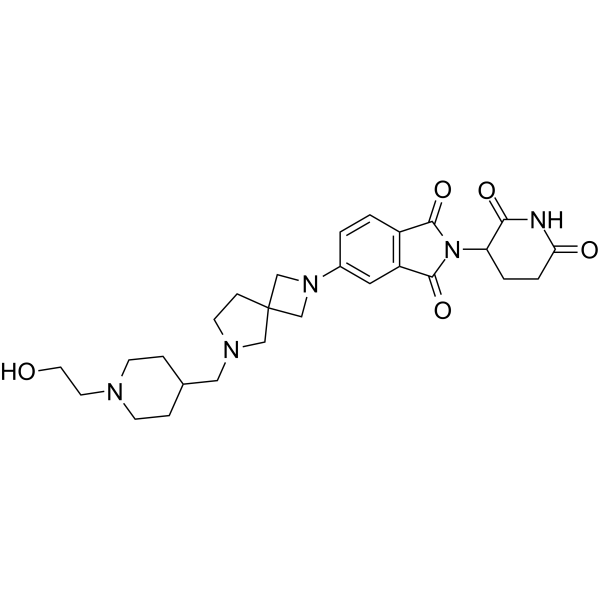 0 ImagesCat. No.: HY-161199Thalidomide-azetidine-pyrrolidine-C-piperidine-C2-OH is a conjugate of E3 ligase ligand and linker, consisting of Thalidomide (HY-14658) and the corresponding Linker. Thalidomide-azetidine-pyrrolidine-C-piperidine-C2-OH can serve as Cereblon ligand to recruit CRBN protein and serve as a key intermediate for the synthesis of complete PROTAC molecules.
-
Jujuboside B (Standard)
 0 ImagesCat. No.: HY-N0660RCAS No.: 55466-05-2Jujuboside B (Standard) is the analytical standard of Jujuboside B. This product is intended for research and analytical applications. Jujuboside B is a bioactive saponin component isolated from Ziziphi Spinosae Semen (sour jujube seed), with oral efficacy and blood-brain barrier permeability. Jujuboside B induces acute leukemia cell death and drives necroptosis apoptosis by activating the RIPK1/RIPK3/MLKL pathway. Jujuboside B upregulates the expression of NOXA, PARP and caspase-3, activates AMPK, inhibits the proliferation of breast cancer cells, and induces cell apoptosis and autophagy. Jujuboside B inhibits angiogenesis and tumor growth by blocking the VEGFR-2 signaling pathway. Jujuboside B alleviates liver injury in mice by regulating the Nrf2-STING signaling pathway. Jujuboside B alleviates liver injury by regulating anti-inflammatory responses and downregulating the expression of 11β-HSD2. Jujuboside B induces ferroptosis and overcomes radioresistance in non-small cell lung cancer via the PPARγ-ATF3-Gpx4 signaling pathway. Jujuboside B exerts inhibitory effects on platelet aggregation. Jujuboside B inhibits febrile seizures by suppressing the activity of AMPA receptors. Jujuboside B reverses chronic unpredictable mild stress-promoted tumor progression by blocking the PI3K/Akt and MAPK/ERK pathways and dephosphorylating CREB signaling. Jujuboside B is applicable to related studies on acute leukemia, breast cancer, PM2.5-induced lung injury, hepatotoxicity, liver injury, colorectal cancer, non-small cell lung cancer, thromboembolic diseases, cardiovascular diseases associated with high platelet aggregation, febrile seizures, and depressive-like phenotypes.
-
Antitumor agent-82
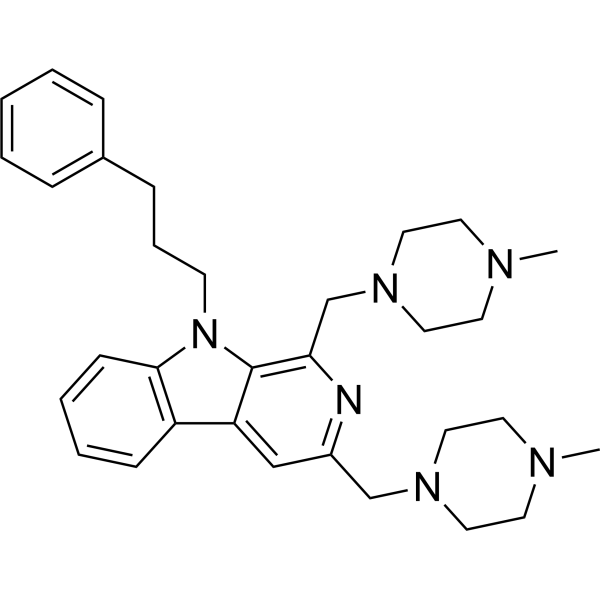 0 ImagesCat. No.: HY-151914CAS No.: 3037605-45-8Antitumor agent-82 (compound 6g) is a potent anti-tumor agent. Antitumor agent-82 shows anti-proliferative activity. Antitumor agent-82 induces cell Autophagy by the ATG5/ATG7 signaling pathway.
-
DHODH-IN-33
 0 ImagesCat. No.: HY-179531CAS No.: 3026839-88-0DHODH-IN-33 is a selective dihydroorotate dehydrogenase (DHODH) inhibitor with potent activity against A549 (IC50 = 5.22 μM) and 5637 (IC50 = 3.03 μM). DHODH-IN-33 induces autophagy-dependent ferroptosis (mitochondrial dysfunction, lipid peroxidation, and ROS accumulation) with no notable toxicity in vivo. DHODH-IN-33 exerts anti-cancer effect by promoting the autophagy-dependent degradation of DHODH. DHODH-IN-33 can be used for non-small cell lung cancer and bladder cancer.
-
Pitavastatin-d4-1 sodium
 0 ImagesCat. No.: HY-B0144AS3Purity: 99.22%Synonyms: NK-104-d4-1 sodiumPitavastatin-d4-1 (NK-104-d4-1) sodium is the deuterium labeled Pitavastatin sodium (HY-B0144B). Pitavastatin (NK-104) is a potent hydroxymethylglutaryl-CoA (HMG-CoA) reductase inhibitor. Pitavastatin inhibits cholesterol synthesis from acetic acid with an IC50 of 5.8 nM in HepG2 cells. Pitavastatin is an efficient hepatocyte low-density lipoprotein-cholesterol (LDL-C) receptor inducer. Pitavastatin also possesses anti-atherosclerotic, anti-asthmatic, anti-osteoarthritis, antineoplastic, neuroprotective, hepatoprotective and reno-protective effects.
-
HDAC1-IN-8
 0 ImagesCat. No.: HY-168477CAS No.: 3066143-73-2HDAC1-IN-8 (compound 5c) is a potent and selective HDAC1 inhibitor with IC50 values of 11.94, 22.95, >500 µM for HDAC1, HDAC6, HDAC8, respectively. HDAC1-IN-8 shows antiproliferative activity. HDAC1-IN-8 induces cell cycle arrest at G1 and G2/M. HDAC1-IN-8 induces autophagy. HDAC1-IN-8 shows anticancer activity and has the potential for the research of lung cancer.
-
NA-Ir
 0 ImagesCat. No.: HY-162944CAS No.: 3031762-97-4NA-Ir is a Ferroptosis inducer. NA-Ir targets mitochondrial DNA (mtDNA) and activates the cGAS-STING pathway to induce ferritinophagy (Autophagy), while also generating reactive oxygen species (ROS) through photodynamic therapy (PDT), depleting glutathione (GSH), and downregulating glutathione peroxidase 4 (GPX4), thereby triggering lipid peroxidation and Ferroptosis. NA-Ir exhibits higher anticancer activity under light exposure and selectively inhibits cancer cells with high H2S levels.
-
CXCR2-IN-3
 0 ImagesCat. No.: HY-179387CXCR2-IN-3 is a CXCR2 inhibitor with an IC50 of 11.37 μM. CXCR2-IN-3 mediates CXCR2-Ca2+ signalling inhibition halted autophagic flux, subsequently facilitating ROS-mediated apoptotic cell death. CXCR2-IN-3 suppresses the CXCR2-NLRP3 canonical pathway, suppressing pre-tumorigenic markers. CXCR2-IN-3 causes autophagy-dependent cell death in polyploid giant cancer cells (PGCCs). CXCR2-IN-3 can be used for the research of oral squamous cell carcinoma (OSCC).
-
Zoledronic acid-15N2,13C2
 0 ImagesCat. No.: HY-W777154CAS No.: 1189694-79-8Synonyms: CGP 42446-15N2,13C2; CGP42446A-15N2,13C2; ZOL 446-15N2,13C2Zoledronic acid-15N2,13C2 (CGP 42446-15N2,13C2) is the 13C- and 15N-labeled Zoledronic Acid (HY-13777). Zoledronic Acid (Zoledronate) is a third-generation bisphosphonate (BP), with potent anti-resorptive activity. Zoledronic Acid inhibits the differentiation and apoptosis of osteoclasts. Zoledronic Acid also has anti-cancer effects.
-
Thalidomide-azetidine-C-PIP-C-boc
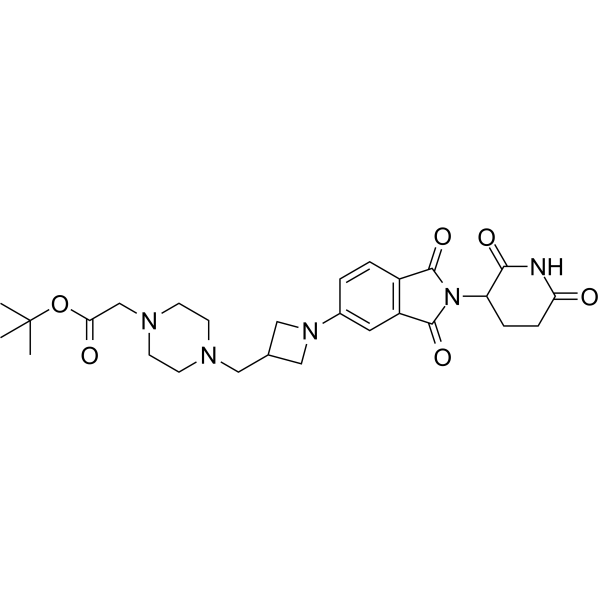 0 ImagesCat. No.: HY-161210CAS No.: 2589699-87-4Thalidomide-azetidine-C-PIP-C-boc is a conjugate of E3 ligase ligand and linker, consisting of Thalidomide (HY-14658) and the corresponding Linker. Thalidomide-azetidine-C-PIP-C-boc can serve as a Cereblon ligand to recruit CRBN protein and serve as a key intermediate for the synthesis of complete PROTAC molecules.
-
Lamotrigine-13C3
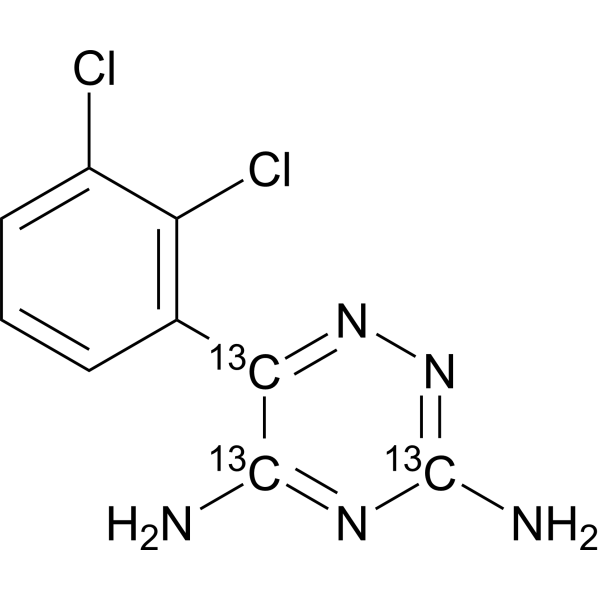 0 ImagesCat. No.: HY-B0495S4CAS No.: 1188265-38-4Synonyms: LTG-13C3; BW430C-13C3Lamotrigine-13C3 is the 13C-labeled Lamotrigine. Lamotrigine (BW430C) is a potent and orally active anticonvulsant or antiepileptic agent. Lamotrigine selectively blocks voltage-gated Na+ channels, stabilizing presynaptic neuronal membranes and inhibiting glutamate release. Lamotrigine can be used for the research of epilepsy, focal seizure, et al.
-
Daunorubicin-13C,d3 TFA
 0 ImagesCat. No.: HY-13062ASSynonyms: Daunomycin-13C,d3 TFA); RP 13057-13C,d3 TFA; Rubidomycin-13C,d3 TFADaunorubicin-13C,d3 TFA (Daunomycin-13C,d3 TFA) is the deuterium and 13C-labeled Daunorubicin TFA. Daunorubicin (Daunomycin) is a topoisomerase II inhibitor with potent anti-tumor activity. Daunorubicin inhibits DNA and RNA synthesis. Daunorubicin is a cytotoxin that inhibits cancer cell viability and induces apoptosis and necrosis. Daunorubicin is also an anthracycline antibiotic. Daunorubicin can be used in the research of infection and variety of cancers, including leukemia, non-Hodgkin lymphomas, Ewing's sarcoma, Wilms' tumor.




