



CaMK II
CaMKII is a Ca2+/calmodulin-dependent serine/threonine kinase that converts intracellular calcium signals into phosphorylation-dependent cellular responses[1]. In excitatory synapses, CaMKII is central to synaptic plasticity, learning, and memory, where it phosphorylates synaptic proteins that regulate receptor trafficking, localization, activity, actin dynamics, translation, and transcription[1]. Mechanistically, Ca2+/calmodulin binding activates the regulatory domain, and CaMKII tools now support studies across cell types and cellular functions[2]. In disease-relevant models, CaMKIIδ expression increases in human heart failure, and CaMKII inhibition acutely improves contractility by reducing sarcoplasmic-reticulum Ca2+ leak and increasing Ca2+ load[3]. Compared with related isoforms, CaMKIIα and CaMKIIβ are largely brain-specific, whereas CaMKIIγ and CaMKIIδ show broader tissue expression[4]. The α and β isoforms mediate synaptic functions underlying learning, memory, and cognition, but CaMKIIβ has high-affinity F-actin binding that distinguishes it from CaMKIIα[4]. Structural comparison of α, β, γ, and δ isoforms documented shared holoenzyme architecture with measurable enzymatic differences among gene products[5]. For experimental applications, KN-93 inhibits CaMKII activity by binding Ca2+/calmodulin, supporting its use as a mechanistic inhibitor with target-engagement considerations[6].
References:
- [1]. Yasuda R, et al. CaMKII: a central molecular organizer of synaptic plasticity, learning and memory. Nat Rev Neurosci. 2022 Nov;23(11):666-682. [Content Brief]
- [2]. Brown CN, et al. Studying CaMKII: Tools and standards. Cell Rep. 2024 Apr 23;43(4):113982. [Content Brief]
- [3]. Sossalla S, et al. Inhibition of elevated Ca2+/calmodulin-dependent protein kinase II improves contractility in human failing myocardium. Circ Res. 2010 Oct 29;107(9):1150-61. [Content Brief]
- [4]. Cook SG, et al. Analysis of the CaMKIIα and β splice-variant distribution among brain regions reveals isoform-specific differences in holoenzyme formation. Sci Rep. 2018 Apr 3;8(1):5448. [Content Brief]
- [5]. Gaertner TR, et al. Comparative analyses of the three-dimensional structures and enzymatic properties of alpha, beta, gamma and delta isoforms of Ca2+-calmodulin-dependent protein kinase II. J Biol Chem. 2004 Mar 26;279(13):12484-94. [Content Brief]
- [6]. Wong MH, et al. The KN-93 Molecule Inhibits Calcium/Calmodulin-Dependent Protein Kinase II (CaMKII) Activity by Binding to Ca2+/CaM. J Mol Biol. 2019 Mar 29;431(7):1440-1459. [Content Brief]
-
CaMK II Related Products (45)
Related Products (45)

-
Antibodies (1)
-
Syntide 2 TFA
 0 ImagesCat. No.: HY-P0271APurity: 99.70%Syntide 2 (TFA), a Ca2+- and calmodulin (CaM)-dependent protein kinase II (CaMKII) substrate peptide, selectively inhibits the gibberellin (GA) response, leaving constitutive and abscisic acid-regulated events unaffected.
-
Cucurbitacin IIa
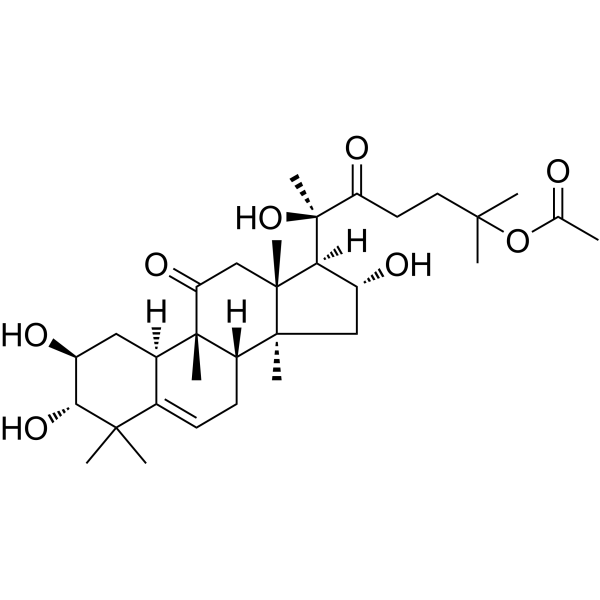 0 ImagesSynonyms: Hemslecin ACucurbitacin IIa (Hemslecin A) is an orally active, blood-brain barrier-permeable EGFR inhibitor with an IC50 of 1.455 nM against human EGFR. Cucurbitacin IIa induces caspase-3-dependent apoptosis, downregulates survivin expression, enhances autophagy levels, disrupts the actin cytoskeleton via actin aggregation, arrests the cell cycle at the G2/M phase, and exerts anti-inflammatory activity by inhibiting the EGFR-MAPK signaling pathway. Cucurbitacin IIa can be used in the research of inflammation-related diseases, depression, and cancers such as non-small cell lung cancer.
-
(E)-KN-93 phosphate
 0 Images(E)-KN-93 phosphate is a Ca2+/calmodulin-dependent protein kinase II (CaMKII) inhibitor with IC50 values of 9 μM and 3 μM against CaMKIIδMonomer and CaMKIIδDodecamer, respectively. (E)-KN-93 phosphate can be used in research on epilepsy, depression, and arrhythmias..
-
CaMKIIδ-IN-1 hydrochloride
 0 ImagesCat. No.: HY-171932APurity: 98.95%CaMKIIδ-IN-1 (Compound 15e) hydrochloride is a pyrimidine-based inhibitor of CaMKIIδ with an IC50 of 12 nM.
-
Glycyl H-1152 hydrochloride
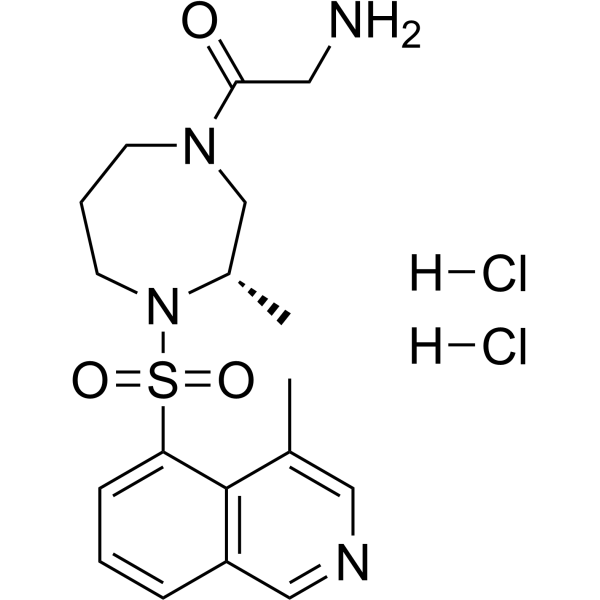 0 ImagesGlycyl H-1152 hydrochloride (compound 18) is a glycyl derivative of Rho-kinase inhibitors H-1152 dihydrochloride. Glycyl H-1152 hydrochloride inhibits ROCKII, Aurora A, CAMKII and PKG, with IC50s of 0.0118, 2.35, 2.57 and 3.26 μM respectively. Glycyl H-1152 hydrochloride has higher selective than H-1152 hydrochloride.
-
TAT-CN21 (scrambled)
 0 ImagesCat. No.: HY-P10638APurity: 99.71%
-
Syntide 2
 0 ImagesCat. No.: HY-P0271CAS No.: 108334-68-5Syntide 2, a Ca2+- and calmodulin (CaM)-dependent protein kinase II (CaMKII) substrate peptide, selectively inhibits the gibberellin (GA) response, leaving constitutive and abscisic acid-regulated events unaffected.
-
Bacoside A
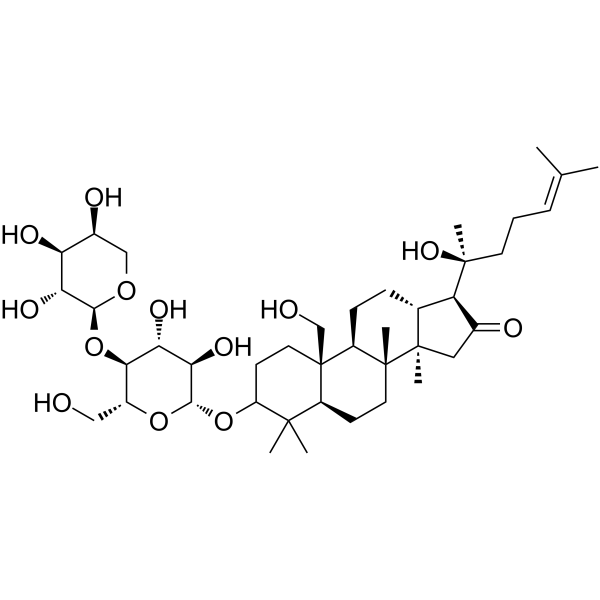 0 ImagesCat. No.: HY-N1989CAS No.: 11028-00-5Bacoside A is an orally active, blood-brain barrier-permeable triterpenoid saponin that modulates the activities of ATPases, AChE, CaMK2A and iNOS. Derived from Bacopa monniera. Bacoside A exerts significant antioxidant, anti-inflammatory and anti-apoptotic effects by maintaining ion balance, scavenging reactive oxygen species, stabilizing cell membranes, and regulating the expression of NF-κB and apoptosis-related proteins. Bacoside A counteracts morphine-induced reductions in Na+/K+-ATPase, Ca2+-ATPase and Mg2+-ATPase activities, increases mitochondrial membrane potential, and decreases intracellular reactive oxygen species levels. Bacoside A specifically binds to calcium/calmodulin-dependent protein kinase IIA to trigger endoplasmic reticulum calcium release. Bacoside A exhibits non-apoptotic cytotoxicity against glioblastoma cells while protecting normal nerve cells from stress-induced damage. Bacoside A is applicable to the research of Parkinson's disease and glioblastoma multiforme.

-
MRS2768 tetrasodium salt
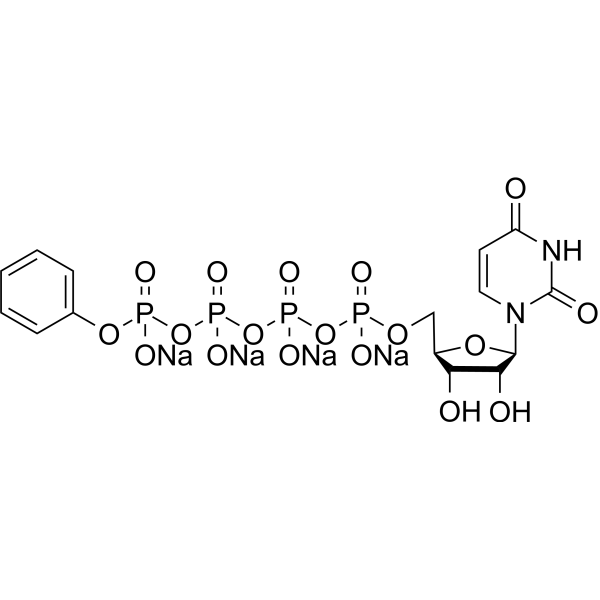 0 ImagesMRS2768 tetrasodium salt is a potent, selective, and metabolically stable P2Y2 receptor agonist with an EC50 of 1.89 μM for the human P2Y2 receptor. MRS2768 tetrasodium salt activates Gq/PLC/PKC signaling, leading to downstream phosphorylation of Akt, eNOS, and ERK, with effects varying by cell type. MRS2768 tetrasodium salt inhibits ENaC via Gq/PKC/Src/Akt to promote natriuresis and lower blood pressure in the kidney. MRS2768 tetrasodium salt activates eNOS to increase NO secretion in endothelial cells. MRS2768 tetrasodium salt drives proliferation via PI3K/Akt in fibroblasts and cancer cells. MRS2768 tetrasodium salt exerts anti-apoptotic effects through PKC/Src/Akt in cardiomyocytes. MRS2768 tetrasodium salt can be applied to investigate P2Y2-dependent pathological processes, including acute kidney injury, chronic kidney disease and renal fibrosis, DOCA-salt induced hypertension, myocardial infarction, pulmonary arterial hypertension, pancreatic cancer, cardiac fibrosis, dry eye disease, as well as shear stress-mediated vascular remodeling and atherosclerosis.
-
8-Br-ADPR disodium
 0 ImagesCat. No.: HY-134261ASynonyms: 8-Bromoadenosine-5'-O-diphosphoribose disodium8-Br-ADPR disodium (8-Bromoadenosine-5'-O-diphosphoribose) is a TRPM2 inhibitor and ADPR signaling pathway antagonist. 8-Br-ADPR disodium inhibits glucagon-mediated nuclear calcium signaling and downstream CaMKII/CREB phosphorylation by blocking ADPR-induced TRPM2 activation. 8-Br-ADPR disodium significantly reduces gluconeogenic gene expression and blood glucose levels in diabetic models. 8-Br-ADPR disodium effectively blocks ADPR-mediated calcium signal transduction in NK cells, inhibits immune synapse formation, granzyme B release and cytolytic activity against melanoma cells. 8-Br-ADPR disodium is widely used in studies related to diseases such as diabetes, melanoma and lymphoma.
-
Autocamtide-2-related inhibitory peptide
 0 ImagesCat. No.: HY-P0214CAS No.: 167114-91-2Autocamtide-2-related inhibitory peptide is a highly specific and potent inhibitor of CaMKII with an IC50 of 40 nM.

-
Junicedric acid
 0 ImagesCat. No.: HY-W720917CAS No.: 41787-69-3Junicedric acid is a diterpenoid compound that can be isolated from the resin of the Araucaria araucana tree. Junicedric acid exerts neuroprotective activity by increasing intracellular calcium levels in hippocampal neurons, activating PKC and calcium/calmodulin-dependent protein kinase (CaMKII), and preventing Amyloid-β oligomer-induced synaptic protein loss, apoptosis, and long-term potentiation (LTP) inhibition. Junicedric acid can be used in the study of the pathological mechanisms of neurodegenerative diseases such as Alzheimer's disease.
-
MRS2768
 0 ImagesCat. No.: HY-108649CAS No.: 1047980-83-5MRS2768 is a potent, selective, and metabolically stable P2Y2 receptor agonist with an EC50 of 1.89 μM for the human P2Y2 receptor. MRS2768 activates Gq/PLC/PKC signaling, leading to downstream phosphorylation of Akt, eNOS, and ERK, with effects varying by cell type. MRS2768 inhibits ENaC via Gq/PKC/Src/Akt to promote natriuresis and lower blood pressure in the kidney. MRS2768 activates eNOS to increase NO secretion in endothelial cells. MRS2768 drives proliferation via PI3K/Akt in fibroblasts and cancer cells. MRS2768 exerts anti-apoptotic effects through PKC/Src/Akt in cardiomyocytes. MRS2768 can be applied to investigate P2Y2-dependent pathological processes, including acute kidney injury, chronic kidney disease and renal fibrosis, DOCA-salt induced hypertension, myocardial infarction, pulmonary arterial hypertension, pancreatic cancer, cardiac fibrosis, dry eye disease, as well as shear stress-mediated vascular remodeling and atherosclerosis.
-
Calmodulin-Dependent Protein Kinase II (290-309)
 0 ImagesCat. No.: HY-P1479CAS No.: 115044-69-4
-
Autocamtide-3
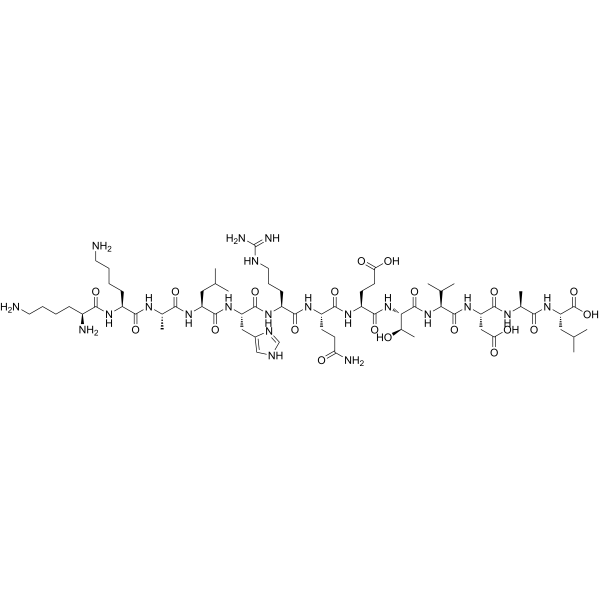 0 ImagesCat. No.: HY-P3811CAS No.: 142828-10-2
-
8-Br-ADPR
 0 ImagesCat. No.: HY-134261CAS No.: 59259-77-7Synonyms: 8-Bromoadenosine-5'-O-diphosphoribose8-Br-ADPR (8-Bromoadenosine-5'-O-diphosphoribose) is a TRPM2 inhibitor and ADPR signaling pathway antagonist. 8-Br-ADPR inhibits glucagon-mediated nuclear calcium signaling and downstream CaMKII/CREB phosphorylation by blocking ADPR-induced TRPM2 activation. 8-Br-ADPR significantly reduces gluconeogenic gene expression and blood glucose levels in diabetic models. 8-Br-ADPR effectively blocks ADPR-mediated calcium signal transduction in NK cells, inhibits immune synapse formation, granzyme B release and cytolytic activity against melanoma cells. 8-Br-ADPR is widely used in studies related to diseases such as diabetes, melanoma and lymphoma.




