



Cathepsin
Cathepsins are protease enzymes, categorized into multiple families. Cathepsins can be serine protease, cysteine protease, or aspartyl protease. There are about 15 classes of cathepsins in humans (Cathepsin A, B, C, D, E, F, G, H, K, L, O, S, V, W, and Z). Cathepsins are active in the low pH milieu of lysosomes and are versatile in their functions. Like other enzymes, they are vital for the normal physiological functions such as digestion, blood coagulation, bone resorption, ion channel activity, innate immunity, complement activation, apoptosis, vesicular trafficking, autophagy, angiogenesis, proliferation, and metastasis, among scores of others.
Numerous pathologies have been attributed to the dysregulated cathepsins, some of which include arthritis, periodontitis, pancreatitis, macular degeneration, muscular dystrophy, atherosclerosis, obesity, stroke, Alzheimer's disease, schizophrenia, tuberculosis, and Ebola.
Cathepsin Isoform Specific Products
All Product Categories
-
Cathepsin Inhibitors
(219)
View all products
-
Cathepsin Antagonist
(1)
View all products
-
Cathepsin Activators
(7)
View all products
-
Cathepsin Inducers
(3)
View all products
-
Cathepsin Degrader
(1)
View all products
-
Cathepsin Control
(1)
View all products
-
Cathepsin Substrates
(22)
View all products
-
Cathepsin Ligand
(1)
View all products
-
Cathepsin Proteins
(35)
View all products
-
Cathepsin B Proteins
(5)
View all products
-
Cathepsin C Proteins
(4)
View all products
-
Cathepsin D Proteins
(5)
View all products
-
Cathepsin E Proteins
(3)
View all products
-
Cathepsin K Proteins
(1)
View all products
-
Cathepsin L1 Proteins
(4)
View all products
-
Cathepsin S Proteins
(2)
View all products
-
Cathepsin Related Products (302)
Related Products (302)

-
Recombinant Proteins (35)
-
Antibodies (6)
-
Cathepsin Isoform Comparison
-
Cathepsin S, human
 0 ImagesCat. No.: HY-E70226CAS No.: 71965-46-3Synonyms: CTSSHuman Cathepsin S (CTSS) is a cysteine protease with elastinolytic activity. Human Cathepsin S is inhibited by cysteine protease inhibitors such as E-64 (HY-15282) and cystatin C. Human Cathepsin S cleaves substrates including elastin, TGF-β1, Myelin basic protein (HY-P1821), PAR2, SIRT1, collagen 18A1, FKN, and MHC-II invariant chain fragments, thereby driving processes such as elastic matrix degradation, TGF-β1 signaling, demyelination, PAR2-mediated calcium mobilization, NF-κB activation, hepatic fibrosis, immune homeostasis regulation, and antigen presentation. Human Cathepsin S can be used in the research of cardiovascular diseases, chronic kidney diseases, autoimmune diseases, tumors, Alzheimer's disease, and obesity.
-
AEP-IN-2
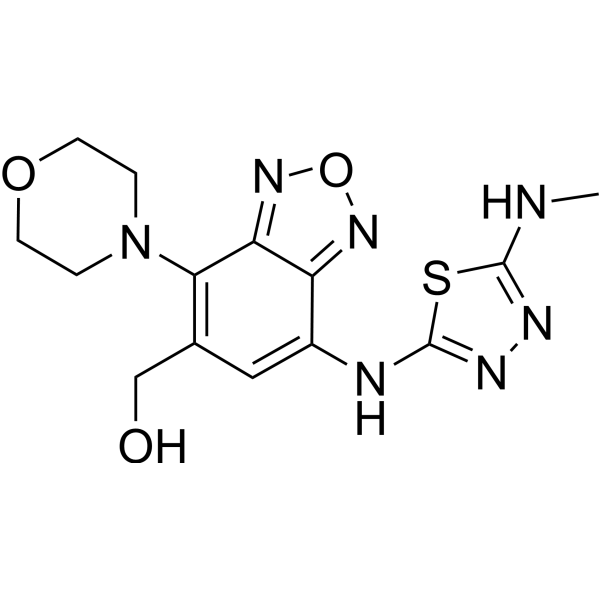 0 ImagesAEP-IN-2 is an asparagine endopeptidase (AEP) inhibitor via block AEP cleavage of APP and Tau. AEP-IN-2 has oral activity and decreases Aβ40 and Aβ42 and p-Tau levels .
-
Z-FG-NHO-BzOME
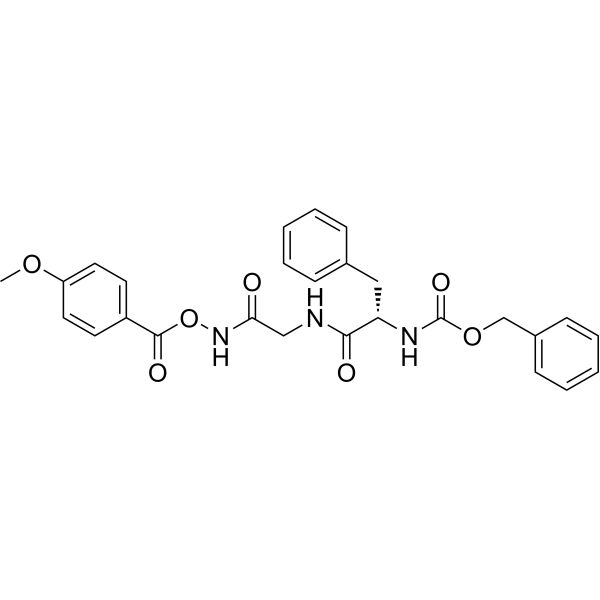 0 ImagesZ-FG-NHO-BzOME is a cysteine protease inhibitor that selectively inhibits cathepsin B, cathepsin L, cathepsin S, and papain.
-
Poly-L-glutamic acid sodium salt (MW 15000)
 0 ImagesCat. No.: HY-W596474CCAS No.: 26247-79-0Poly-L-glutamic acid sodium salt (MW 15000) is a synthetic polypeptide with biocompatibility, biodegradability and non-immunogenicity. Poly-L-glutamic acid sodium salt is an ideal tumor-targeting polymer carrier. Poly-L-glutamic acid sodium salt can be hydrolyzed by cathepsin B during metabolic decomposition.
-
L-Arginine p-nitroanilide dihydrochloride, 98%
 0 ImagesSynonyms: H-Arg-pNA 2HCl, 98%L-Arginine p-nitroanilide dihydrochloride, 98% (H-Arg-pNA 2HCl, 98%) is a chromogenic substrate for cathepsin H. L-Arginine p-nitroanilide dihydrochloride, 98% can be hydrolyzed to produce a chromogenic product detectable by photometry, which is used to measure the activities of cathepsin H and aminopeptidases.
-
Leupeptin Ac-LL hydrochloride
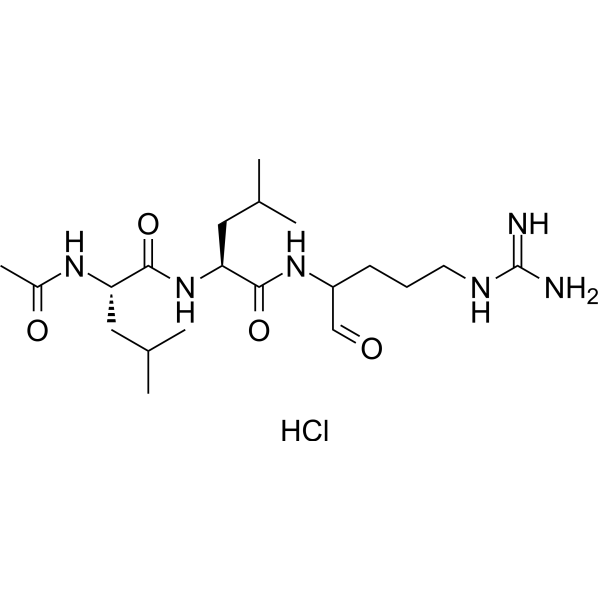 0 ImagesCat. No.: HY-18234CCAS No.: 24125-16-4Leupeptin Ac-LL hydrochloride is a broad-spectrum protease inhibitor. By inhibiting the activation of the PTEN/PI3K/Akt/NF-κB/ERK1/2/p38 signaling pathway, Leupeptin Ac-LL hydrochloride significantly reduces LPS-induced NO and ROS production, mitochondrial membrane potential hyperpolarization, phagocytic activity, pro-inflammatory cytokine release, and M1 polarization in mouse peritoneal macrophages, and reverses autophagic flux impairment. It also decreases Concanavalin A (HY-P2149)-induced proliferation index of mouse splenic lymphocytes and the Th1/IL-10 and Th2/IL-10 cytokine ratios, thereby modulating innate and adaptive immune responses. Leupeptin Ac-LL hydrochloride inhibits blood coagulation and tumorigenesis in mouse skin. Leupeptin Ac-LL hydrochloride can be used in research on chronic inflammatory diseases and skin tumorigenesis.
-
Val-Cit-PABC-DOX
 0 ImagesCat. No.: HY-160774CAS No.: 1022094-34-3Val-Cit-PABC-DOX is an ε-poly-L-lysine-based drug conjugate, serving as a drug-linker conjugate for ADC. It is formed by conjugating Doxorubicin (HY-15142), an inhibitor of DNA topoisomerase I and topoisomerase II, with Val-Cit-PABC. Val-Cit-PABC-DOX relies on the self-cleavable PABC spacer to enable Cathepsin B-mediated linker cleavage and release of free Doxorubicin (HY-15142A). Val-Cit-PABC-DOX can be used in cancer-related research.
-
Cathepsin Inhibitor 2
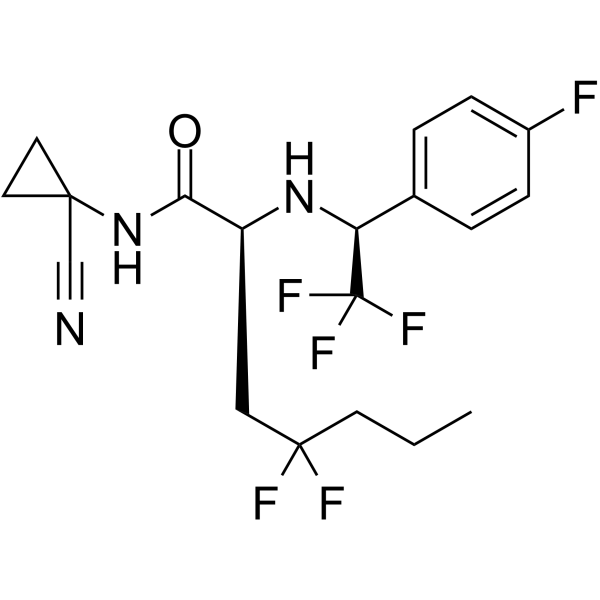 0 ImagesCathepsin Inhibitor 2 is a potent Cathepsin S inhibitor extracted from patent WO2009123623A1, has a Ki of <20 nM.
-
Y1693
 0 ImagesY1693 is an orally active RANKL inhibitor with a Kd of 5.03 μM for hRANKL. Y1693 inhibits the activation of the downstream c-fos/NFATc1 signaling pathway by blocking its interaction with RANK. Y1693 significantly inhibits RANKL-induced osteoclast differentiation, F-actin ring formation and bone resorptive activity, while downregulating the mRNA and protein expressions of TRAP, cathepsin K, c-fos and NFATc1. Y1693 shows no obvious cytotoxicity to bone marrow-derived macrophages and osteoclast precursor cells, and exhibits favorable ADME properties. Y1693 improves ovariectomy-induced osteoporosis in mice and reverses ligation-induced periodontal alveolar bone loss. Y1693 is applicable to research related to osteoporosis and periodontal diseases.
-
Papain (1.5-10 units/mg)
 0 ImagesPapain (1.5-10 units/mg) is a cysteine protease of the peptidase C1 family. Papain (1.5-10 units/mg) enhances red cell agglutination by anti-D and anti-A, and increases red cell sensitivity to K cell-mediated lysis in ADCC assays. Papain (1.5-10 units/mg) can induce pulmonary emphysema. Papain (1.5-10 units/mg) can be used for the researches of Rh haemolytic disease of the newborn and pulmonary emphysema.
-
Z-Arg-Arg-pNA
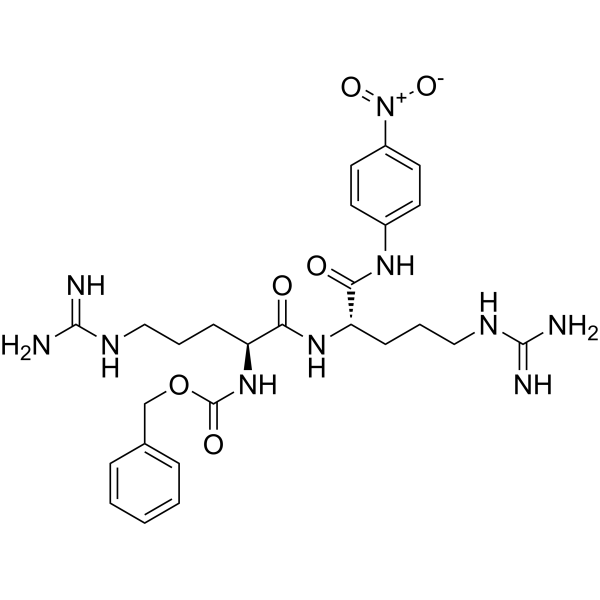 0 ImagesZ-Arg-Arg-pNA is a substrate for cathepsin B and can be used to detect this enzyme activity.
-
AEP-IN-3
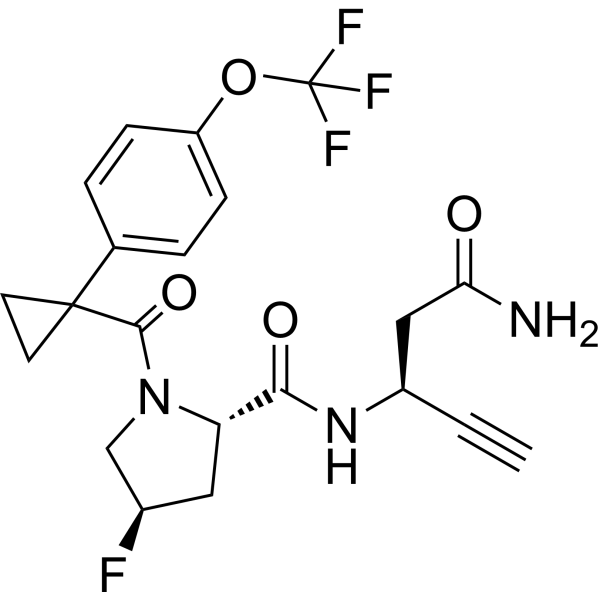 0 ImagesAEP-IN-3 (compound 18) is an orally active, potent and brain penetrant asparagine endopeptidase (AEP) inhibitor, with an IC50 of 7.8 ± 0.9 nM. AEP-IN-3 can be used for Alzheimer’s Disease (AD) research.
-
Cathepsin L/S-IN-1
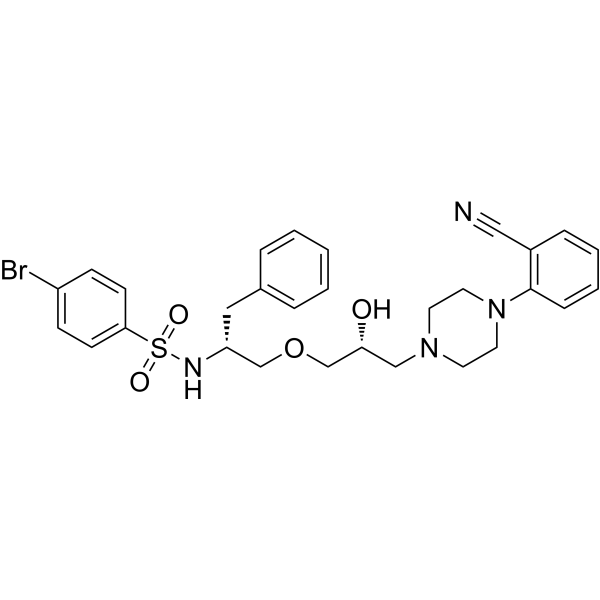 0 ImagesCathepsin L/S-IN-1 is a dual inhibitor of Cathepsin L and Cathepsin S with IC50s of 4.10 μM and 1.79 μM, respectively. Cathepsin L/S-IN-1 shows a significant antimetastatic and invasive effects on pancreatic cancer BxPC-3 and PANC-1 cells.
-
Atg4B-IN-2
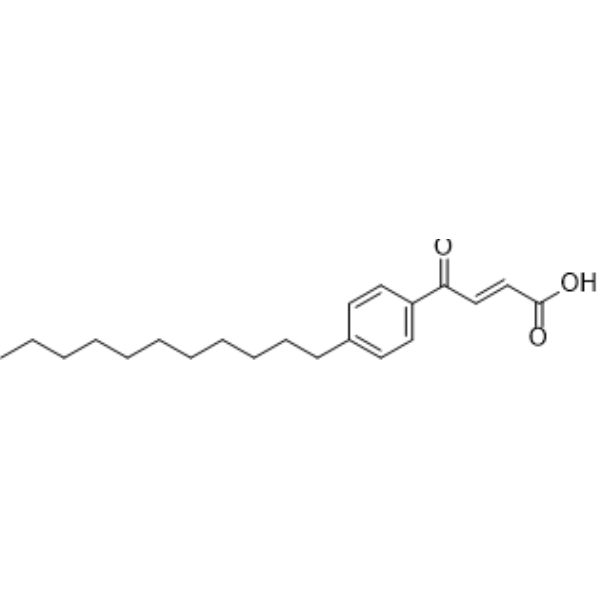 0 ImagesAtg4B-IN-2 is a potent competitive Atg4B inhibitor with Ki value of 3.1 μM, also possesses declining PLA2 inhibitory potency, IC50s of 11 μM and 3.5 μM for Atg4B and PLA2, respectively. Atg4B-IN-2 enhances the anticancer activity of anti-castration-resistant prostate cancer agents via autophagy inhibition.
-
ONO-5334
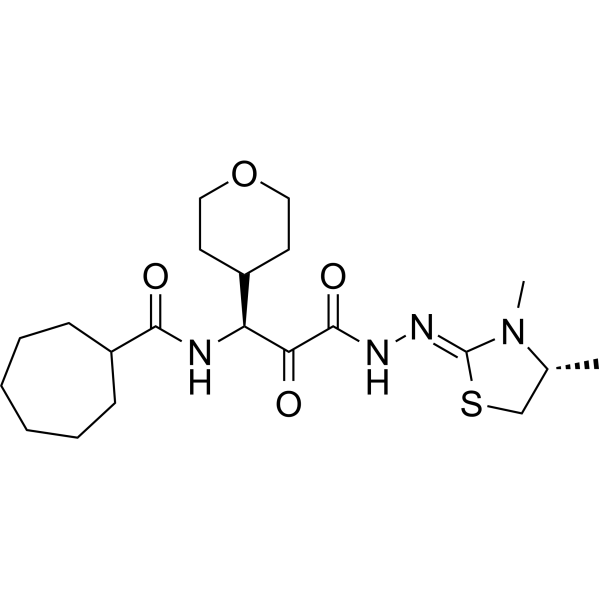 0 ImagesONO-5334 is a potent, selective and orally active cathepsin K inhibitor with Ki values of 0.10 nM, 0.049 nM and 0.85 nM for human, rabbit and rat cathepsin K, respectively. ONO 5334 is an effective antiviral compound against SAR-COV-2 virus activity with an EC50 value of 500 nM. ONO-5334 has the potential for the study of osteoporosis and COVID-19 disease.
-
Cathepsin L-IN-3 TFA
 0 ImagesCat. No.: HY-P10118APurity: 98.18%Cathepsin L-IN-3 (Compound cat L inh. 7) TFA is selective a noncovalent cathepsin L inhibitor with a Ki of 4.3 nM.
-
Poly-L-glutamic acid sodium salt (MW 60000)
 0 ImagesCat. No.: HY-W596474HCAS No.: 26247-79-0Poly-L-glutamic acid sodium salt (MW 60000) is a synthetic polypeptide with biocompatibility, biodegradability and non-immunogenicity. Poly-L-glutamic acid sodium salt is an ideal tumor-targeting polymer carrier. Poly-L-glutamic acid sodium salt can be hydrolyzed by cathepsin B during metabolic decomposition.

-
Poly-L-glutamic acid sodium salt (MW 7500)
 0 ImagesCat. No.: HY-W596474BCAS No.: 26247-79-0Poly-L-glutamic acid sodium salt (MW 7500) is a synthetic polypeptide with biocompatibility, biodegradability and non-immunogenicity. Poly-L-glutamic acid sodium salt is an ideal tumor-targeting polymer carrier. Poly-L-glutamic acid sodium salt can be hydrolyzed by cathepsin B during metabolic decomposition.
-
Kgp-IN-1 hydrochloride
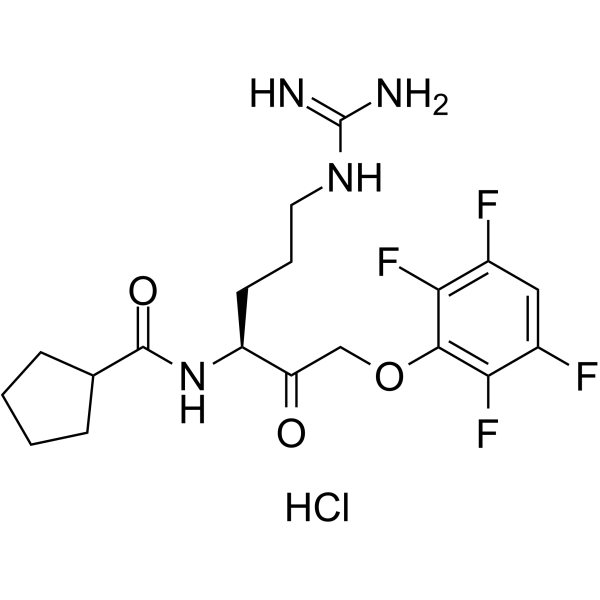 0 ImagesCat. No.: HY-128523ACAS No.: 2097865-47-7Kgp-IN-1 hydrochloride is an arginine-specific gingipain (Rgp) inhibitor extracted from patent WO2017201322A1, compound 13-R.




