



NF-κB
Nuclear factor-κB; Nuclear factor-kappaB
NF-κB (Nuclear factor kappa-light-chain-enhancer of activated B cells) is a protein complex that controls transcription of DNA. NF-κB is found in almost all animal cell types and is involved in cellular responses to stimuli such as stress, cytokines, free radicals, ultraviolet irradiation, oxidized LDL, and bacterial or viral antigens. NF-κB plays a key role in regulating the immune response to infection. Incorrect regulation of NF-κB has been linked to cancer, inflammatory, and autoimmune diseases, septic shock, viral infection, and improper immune development. NF-κB has also been implicated in processes of synaptic plasticity and memory. There are five proteins in the mammalian NF-κB family: NF-κB1, NF-κB2, RelA, RelB, c-Rel.
NF-κB Isoform Specific Products
All Product Categories
-
NF-κB Inhibitors
(1636)
View all products
-
NF-κB Agonists
(6)
View all products
-
NF-κB Antagonist
(1)
View all products
-
NF-κB Activators
(146)
View all products
-
NF-κB Modulators
(34)
View all products
-
NF-κB Inducers
(3)
View all products
-
NF-κB Degraders
(4)
View all products
-
NF-κB Controls
(7)
View all products
-
NF-κB Ligands
(2)
View all products
-
NF-κB Related Products (1973)
Related Products (1973)

-
Antibodies (32)
-
NF-κB Signaling Pathway
-
NF-κB Isoform Comparison
-
Pyrrolidinedithiocarbamate ammonium (Standard)
 0 ImagesPyrrolidinedithiocarbamate ammonium (Standard) is the analytical standard of Pyrrolidinedithiocarbamate ammonium (HY-18738). This product is intended for research and analytical applications. Pyrrolidinedithiocarbamate ammonium (Ammonium pyrrolidinedithiocarbamate) is a selective and blood-brain barrier (BBB) permeable NF-κB inhibitor.
-
Sulfuretin (Standard)
 0 ImagesSulfuretin inhibits the inflammatory response by suppressing the NF-κB pathway. Sulfuretin can be used for the research of allergic airway inflammation. Sulfuretin reduces oxidative stress, platelet aggregation, and mutagenesis. Sulfuretin is a competitive and potent inhibitor of monophenolase and diphenolase activities with the IC50 of 13.64 μM.
-
Hecubine
 0 ImagesCat. No.: HY-N9164CAS No.: 62874-52-6Hecubine is a monoterpene indole alkaloid found in Ervatamia ocinalis. Hecubine activates TREM2 expression, reduces LPS (HY-D1056)-stimulated inammatory cytokines (TNF-α、IL-6、IL-1β) overexpression, as well as suppresses the levels of TLR4-, MyD88-, MAPK/PI3K/AKT- and NF-κB-related proteins. Hecubin also exhibits antioxidative effect, reduces ROS production and activates of the Nrf2/HO-1 pathway. Hecubine rescues LPS-induced behavioral deficits in zebrash larvae. Hecubine can be used for the research of neural inflammation-associated central nervous system diseases.
-
N-Oxide Lidocaine-d10
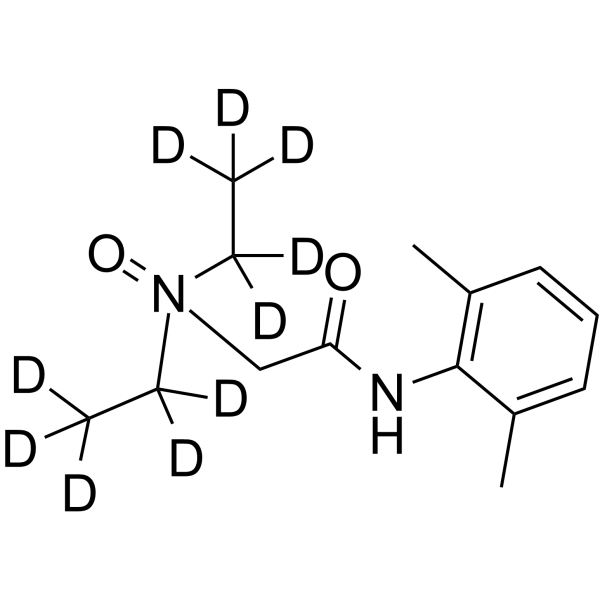 0 ImagesCat. No.: HY-B0185SCAS No.: 851528-10-4N-Oxide Lidocaine-d10 is the deuterium labeled Lidocaine. Lidocaine (Lignocaine) inhibits sodium channels involving complex voltage and using dependence. Lidocaine decreases growth, migration and invasion of gastric carcinoma cells via up-regulating miR-145 expression and further inactivation of MEK/ERK and NF-κB signaling pathways. Lidocaine is an amide derivative and has potential for the research of ventricular arrhythmia.
-
Ceftiofur (Standard)
 0 ImagesCeftiofur (Standard) is the analytical standard of Ceftiofur (HY-N7102). This product is intended for research and analytical applications. Ceftiofur is a cell wall synthesis inhibitor that targets bacterial penicillin-binding proteins (PBPs) and has anti-inflammatory effects in endotoxemia. Ceftiofur exerts bactericidal effects by inhibiting the synthesis of bacterial cell wall peptidoglycan, leading to bacterial cell lysis. Ceftiofur also inhibits the activation of NF-κB and MAPKs, thereby reducing the secretion of pro-inflammatory cytokines such as TNF-α, IL-1β, and IL-6.
-
Flurbiprofen axetil (Standard)
 0 ImagesCat. No.: HY-101481RCAS No.: 91503-79-6Flurbiprofen axetil (Standard) is the analytical standard of Flurbiprofen axetil. This product is intended for research and analytical applications. Flurbiprofen axetil is a non-selective COX inhibitor and a nonsteroidal anti-inflammatory agent with anti-inflammatory and analgesic effects. Flurbiprofen axetil inhibits basal-like breast cancer metastasis by inhibiting the MEK/ERK signaling pathway. Flurbiprofen axetil can promote neuroprotection after focal cerebral ischemia in rats by partially activating PPAR-γ. Flurbiprofen axetil alleviates cerebral ischemia/reperfusion injury by reducing inflammation in a transient global cerebral ischemia/reperfusion rat model. Flurbiprofen axetil can alleviate inflammatory responses and cognitive function in a mild cognitive impairment (MCI) SD rat model through the AMPKα/NF-κB signaling pathway.
-
Specnuezhenide (Standard)
 0 ImagesCat. No.: HY-N0665RCAS No.: 39011-92-2Synonyms: (8E)-Nuezhenide (Standard)Specnuezhenide (Standard) is the analytical standard of Specnuezhenide. This product is intended for research and analytical applications. Specnuezhenide ((8E)-Nuezhenide) is isolated from the fruits of?Ligustrum lucidum. Specnuezhenide ((8E)-Nuezhenide) can inhibit IL-1β-induced inflammation in chondrocytes via inhibition of NF-κB and wnt/β-catenin signaling. Specnuezhenide ((8E)-Nuezhenide) exerts anti-inflammatory effects in a rat model of osteoarthritis (OA).
-
(±)-Evodiamine (Standard)
 0 Images(±)-Evodiamine Standard is the analytical standard of (±)-Evodiamine (HY-N0114A). This product is intended for research and analytical applications. (±)-Evodiamine is an orally active indoloquinazoline alkaloid composed of equal amounts of enantiomers, with (+)-Evodiamine exerting the primary biological functions. (±)-Evodiamine is a Top1 inhibitor and a TRPV1 receptor agonist. (±)-Evodiamine induces cell cycle arrest and apoptosis by inhibiting Top1 and disrupting Tubulin polymerization, suppresses oncogenic signaling pathways such as NF-κB and Akt, and specifically agonizes TRPV1 receptors to regulate neuropeptide release and energy metabolism. (±)-Evodiamine is used in research on traumatic brain injury, obesity, cancer, neuropathy, dry eye disease, and colitis.
-
Engeletin (Standard)
 0 ImagesEngeletin (Standard) is the analytical standard of Engeletin. This product is intended for research and analytical applications. Engeletin is a flavanonol glycoside isolated from Smilax glabra Roxb. , inhibits NF-κB signaling-pathway activation, and possesses anti-inflammatory, analgesic, diuresis, detumescence, and antibiosis effects.

-
H-Val-Tyr-OH (Standard)
 0 ImagesSynonyms: Val-Tyr (Standard)H-Val-Tyr-OH is an endogenous metabolite.
-
RANKL-IN-2
 0 ImagesCat. No.: HY-181079CAS No.: 2667022-87-7RANKL-IN-2 is an orally active RANKL inhibitor with Kd values of 3.21 μM and 4.625 μM in the SPR and MST assays, respectively. RANKL-IN-2 binds to RANKL to interfere with RANKL-RANK interaction. RANKL-IN-2 suppresses osteoclastogenesis by inhibiting ROS, MAPK and NF-κB pathways. RANKL-IN-2 inhibits osteoclastogenesis via inhibition of RANKL-induced osteoclast formation, bone resorption, and osteoclast-specific gene and protein expressions in vitro.RANKL-IN-2 prevents bone loss in ovariectomized osteoporosis mice.RANKL-IN-2 can be used for the research of osteoporosis.
-
Anti-inflammatory agent-123
 0 ImagesCat. No.: HY-189310Anti-inflammatory agent-123 is an anti-inflammatory agent. Anti-inflammatory agent-123 inhibits NF-κB signaling pathway activation and the secretion of pro-inflammatory cytokines (TNF-α, IL-1β, IL-6). Anti-inflammatory agent-123 inhibits NO production. Anti-inflammatory agent-123 can be used for inflammation research.
-
Ceftiofur-d3 sodium
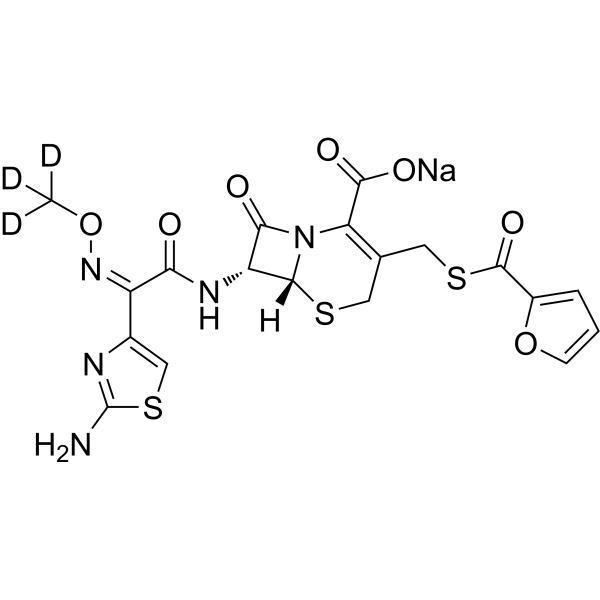 0 ImagesCat. No.: HY-B0898SCeftiofur-d3 sodium is deuterium labeled Ceftiofur sodium (HY-B0898). Ceftiofur sodium is a cell wall synthesis inhibitor that targets bacterial penicillin-binding proteins (PBPs) and has anti-inflammatory effects in endotoxemia. Ceftiofur sodium exerts bactericidal effects by inhibiting the synthesis of bacterial cell wall peptidoglycan, leading to bacterial cell lysis. Ceftiofur sodium also inhibits the activation of NF-κB and MAPKs, thereby reducing the secretion of pro-inflammatory cytokines such as TNF-α, IL-1β, and IL-6.
-
β-Carboline-1-carboxylic acid
 0 ImagesCat. No.: HY-29268CAS No.: 26052-96-0β-Carboline 1-carboxylic acid is a β-carboline alkaloid with anti-inflammatory, antifibrotic, antitumor and antibacterial activities. β-Carboline 1-carboxylic acid is the cAMP phosphodiesterase (IC50: 96 µM) and indoleamine 2, 3-dioxygenase (IDO) inhibitor. β-Carboline 1-carboxylic acid is cytotoxic to tumor cells. β-Carboline 1-carboxylic acid inhibits inflammation through the NF-κb/p65 pathway and can reverse epithelial-mesenchymal transition (EMT). In addition, β-Carboline 1-carboxylic acid has strong inhibitory activity against S. aureus (IC50: 47.70 μg/mL) and E. coli (IC50: 19.17 μg/mL).
-
3,3-Dimethyl-1-butanol (Standard)
 0 ImagesCat. No.: HY-W012977RCAS No.: 624-95-3Synonyms: DMB (Standard); Neohexanol (Standard)3,3-Dimethyl-1-butanol (Standard) is the analytical standard of 3,3-Dimethyl-1-butanol (HY-W012977). This product is intended for research and analytical applications. 3,3-Dimethyl-1-butanol (DMB) is an orally active inhibitor of trimethylamine (TMA) and trimethylamine N-oxide (TMAO). 3,3-Dimethyl-1-butanol inhibits the signaling pathway of p65 NF-κB and TGF-β1/Smad3. 3,3-Dimethyl-1-butanol has potential applications in cardiovascular disease (CVD).
-
Pratol
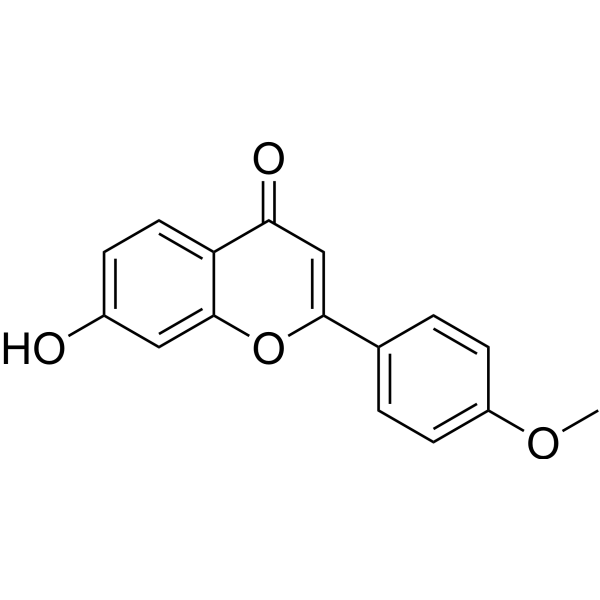 0 ImagesPratol (7-Hydroxy-4'-methoxyflavone) is an NF-κB inhibitor. Pratol also inhibits NO, PGE2, TNF-α, IL-1β, and IL-6 production. Pratol increases the phosphorylation of p38 MAPK, JNK, and ERK, decreases AKT phosphorylation, and upregulates MITF, tyrosinase, TRP-1, and TRP-2 through a PKA-dependent signaling pathway. Pratol reduces iNOS and COX-2 protein expression, inhibits p65 phosphorylation, and protects IκBα from degradation, thereby inhibiting NF-κB nuclear translocation. Pratol can be used in research on hypopigmentary disorders, inflammatory diseases, cervical cancer, and colon cancer.
-
Tropisetron-d5
 0 ImagesCat. No.: HY-B0072SCAS No.: 1220284-86-5Synonyms: SDZ-ICS-930-d5 free baseTropisetron-d5 (SDZ-ICS-930-d5 (free base)) is deuterium labeled Tropisetron. Tropisetron (SDZ-ICS-930 free base) is an orally active anti-inflammatory and antiemetic agent. Tropisetron is 5-HT3R antagonists with a Ki of 5.3 nM. Tropisetron is also a partial agonist of α7 nicotinic receptor (α7 nAChR) with an EC50 of 1.3 μM. In addition, Tropisetron has antitumor and neuroprotective effects.
-
5-O-Methylvisammioside (Standard)
 0 ImagesCat. No.: HY-N0442RCAS No.: 84272-85-5Synonyms: 4'-O-β-D-Glucosyl-5-O-methylvisamminol (Standard)5-O-Methylvisammioside (4'-O-β-D-Glucosyl-5-O-methylvisamminol) (Standard) is the analytical standard of 5-O-Methylvisammioside. This product is intended for research and analytical applications. 5-O-Methylvisammioside is an orally active natural chromone glycoside and multiple biological activities. 5-O-Methylvisammioside inhibits ferroptosis by activating the Nrf2/HO-1 signaling axis. 5-O-Methylvisammioside alleviates intestinal barrier damage by inhibiting the ROS/NF-κB/NLRP3 pathway. 5-O-Methylvisammioside exerts a protective effect against acute liver injury by reducing ALT/AST, decreasing inflammatory infiltration, and inhibiting IκB-α phosphorylation and NF-κB nuclear translocation. 5-O-Methylvisammioside blocks the HMGB1/RAGE/MEK/ERK signaling axis to exert anti-tumor and anti-angiogenic effects. 5-O-Methylvisammioside improves depression-like behaviors by inhibiting Src kinase and the NF-κB pathway.
-
Cranberry Extract
 0 ImagesCat. No.: HY-N13200Cranberry Extract is the extract of Cranberry, with content of 25% -50% Proanthocyanidins. Cranberry Extract exhibits anti-virus and antimicrbiol activity. Cranberry Extract suppresses fungal growth and biofilm formation. Cranberry Extract reduces NF-κB p65 phosphorylation, and PI3K/AKT signaling; increases caspase-8/9 activity to induce apoptosis, modulates oxidative stress, inflammation, and lipid profiles. Cranberry Extract exerts antiproliferative effects and induces cell cycle arrest. Cranberry Extract can be used for the research of infection and cancers.




