



NF-κB Activator
-
Cathepsin S, human
 0 ImagesCat. No.: HY-E70226CAS No.: 71965-46-3Synonyms: CTSS
Human Cathepsin S (CTSS) is a cysteine protease with elastinolytic activity. Human Cathepsin S is inhibited by cysteine protease inhibitors such as E-64 (HY-15282) and cystatin C. Human Cathepsin S cleaves substrates including elastin, TGF-β1, Myelin basic protein (HY-P1821), PAR2, SIRT1, collagen 18A1, FKN, and MHC-II invariant chain fragments, thereby driving processes such as elastic matrix degradation, TGF-β1 signaling, demyelination, PAR2-mediated calcium mobilization, NF-κB activation, hepatic fibrosis, immune homeostasis regulation, and antigen presentation. Human Cathepsin S can be used in the research of cardiovascular diseases, chronic kidney diseases, autoimmune diseases, tumors, Alzheimer's disease, and obesity.
-
RP-182
 0 Images
RP-182 is a synthetic immunomodulatory peptide that exerts anti-tumor effects by targeting the mannose receptor CD206 (Kd = 8 μM) on the surface of tumor-associated macrophages (TAMs). RP-182 induces a conformational switch of the CD206 receptor, which activates NF-κB signaling and phagocytosis in CD206high TAMs. RP-182 has dual function: activation of canonical NF-κB signaling, triggering TNFα secretion and autocrine activation of the TNF receptor 1 (TNFR1), leading to activation of caspase 8, apoptosis, and cell death. RP-182 is used in pancreatic cancer and melanoma research.
-
diABZI-4
 0 Images
diABZI-4 is a STING activator and broad-spectrum antiviral agent with immunostimulatory activity. diABZI-4 triggers the TBK1-IRF3 and NF-κB signaling cascades by inducing STING oligomerization, thereby promoting the production of type I/III interferons and various proinflammatory cytokines. diABZI-4 exhibits broad-spectrum antiviral activity and effectively inhibits the replication of influenza A virus, SARS-CoV-2, herpes simplex virus, and other viruses. diABZI-4 also activates lymphocytes and macrophages to provide significant pre- and post-exposure protection in viral disease models. diABZI-4 can be used to study COVID-19, respiratory viral infections, and related immunopathological mechanisms.
-
Tris(2-chloroethyl)phosphate-d12
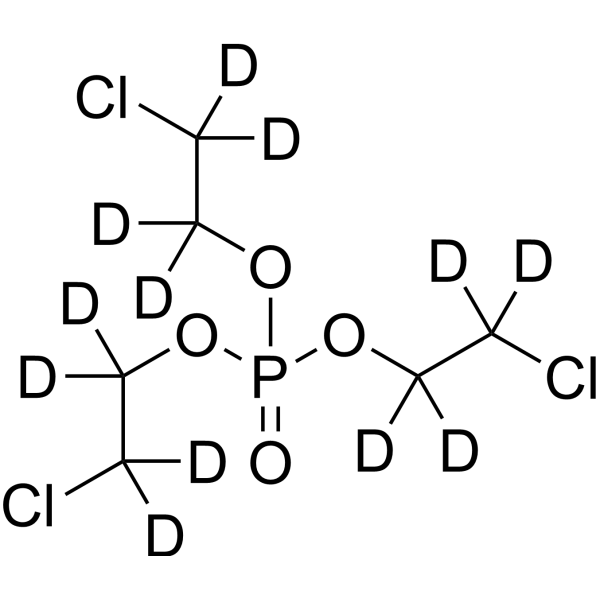 0 ImagesSynonyms: TCEP-d12
Tris(2-chloroethyl)phosphate-d12 is the deuterium labeled Tris(β-chloroethyl) phosphate. Tris(2-chloroethyl) phosphate is a widely used organic phosphorus flame retardant, mainly used as a plasticizer. Tris(2-chloroethyl) phosphate has orally active hepatotoxicity, inducing an increase in reactive oxygen species (ROS) and calcium ions (Ca²⁺) influx, a decrease in mitochondrial membrane potential (△Ψm), and causing DNA damage and cell apoptosis. Tris(2-chloroethyl) phosphate directly binds to FXR, inducing obesity and the formation of fatty liver in mice. Chloroethyl) phosphate activates the TLR4/NF-κB pathway, triggering liver inflammation.

-
L07-2
 0 Images
L07-2 is a TLR7/8 agonist. L07-2 is a linker-toxin building block that can be used to synthesize immunostimulatory antibody conjugates (ISACs) for cancer research. L07-2 can be used to studies related to tumors such as non-small cell lung cancer.
-
SMU-L11
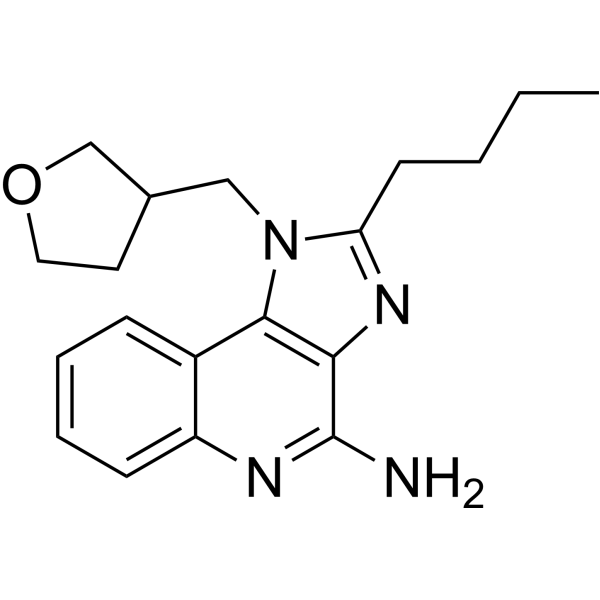 0 Images
SMU-L11 is a specific TLR7 agonist (EC50=0.024 μM), which recruits MyD88 adapter protein and activates downstream NF-κB and MAPK signaling pathways. In murine models, SMU-L11 significantly enhances immune cell activation and promotes the proliferation of CD4+ T and CD8+ T cells, thereby directly killing tumor cells and inhibiting tumor growth. SMU-L11 can be used for cancer research, and also has the potential for studying immune system diseases.
-
Pam2Cys
 0 ImagesSynonyms: Dipalmitoyl-S-glyceryl-cysteine; S-[2,3-Bis(palmitoyloxy)propyl]cysteine
Pam2Cys (Dipalmitoyl-S-glyceryl-cysteine; S-[2,3-Bis(palmitoyloxy)propyl]cysteine) is a TLR2 agonist and immunostimulant. Pam2Cys binds to TLR2 to activate dendritic cells and trigger the TLR2-dependent NF-κB signaling pathway. Pam2Cys also induces dendritic cell maturation by upregulating the expression of cell surface MHC II molecules. Pam2Cys activates innate immune signaling pathways, drives pro-inflammatory and antimicrobial responses, enhances the expression of macrophage activation markers, increases phagocytic activity, induces the release of IL-12 and pro-inflammatory cytokines, and polarizes macrophages into a pro-inflammatory, antimicrobial phenotype without interfering with IL-10-induced macrophage polarization. Pam2Cys also serves as the lipid moiety in synthetic lipopeptide vaccines and possesses self-adjuvant properties. Pam2Cys enhances the immunogenicity of conjugated peptide segments and induces cellular and humoral immune responses. However, it does not activate CD4 T cells in mouse splenocyte cultures when used alone. Pam2Cys activates pulmonary TLR2 signaling pathways, triggers innate immune responses, recruits neutrophils and macrophages, induces the secretion of various cytokines, alleviates symptoms and damages associated with influenza A virus infection in mice without impairing adaptive immunity. Pam2Cys can be used in studies related to tuberculosis and influenza A virus infection.
-
trans-Isoferulic acid
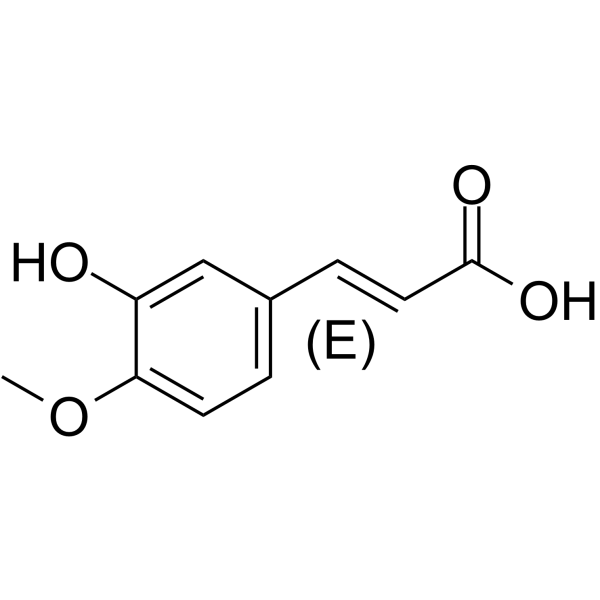 0 ImagesSynonyms: trans-3-Hydroxy-4-methoxycinnamic acid
trans-Isoferulic acid (trans-3-Hydroxy-4-methoxycinnamic acid) is an aromatic acid that exhibits anti-inflammatory activity. trans-Isoferulic acid dephosphorylates PI3K/Akt, suppresses LPS (HY-D1056)-induced NF-κB activation, enhances Nrf2 activity, downregulates iNOS and COX-2 expression, induces HO-1 expression, inhibits NO and PGE2 production, and scavenges hydroperoxyl radical. trans-Isoferulic acid can be used for research of inflammatiory diseases.
-
SDMA (Standard)
 0 ImagesCat. No.: HY-101410RCAS No.: 30344-00-4Synonyms: Symmetric dimethylarginine (Standard); NG,NG'-Dimethyl-L-arginine (Standard)
SDMA (Standard) is the analytical standard of SDMA. This product is intended for research and analytical applications. SDMA (Symmetric dimethylarginine) is an endogenous inhibitor of nitric oxide (NO) synthase activity. SDMA, a novel kidney biomarker, permits earlier diagnosis of kidney disease than traditional creatinine testing.
-
BI-1910
 0 ImagesCat. No.: HY-P991402Purity: 98.24%
BI-1910 is an agonistic human IgG2 monoclonal antibody targeting TNFR2, which selectively binds to human TNFR2 without inhibiting TNF-α binding. As an endogenous agonist, BI-1910 activates TNFR2 and mediates the activation of the NF-κB signaling pathway. Its agonistic activity is independent of FcγR or cross-linking; it can directly costimulate T cells and NK cells, induce T cell proliferation, and activate tumor-specific CD8+ T cells. BI-1910 exhibits antitumor activity in vivo, and shows an additive antitumor effect when combined with anti-PD-1 (HY-P9902). It can be used in research related to advanced/metastatic non-small cell lung cancer and hepatocellular carcinoma. Recommended isotype control: Human IgG2 lambda, Isotype Control (HY-P991206).
-
Pellitorine
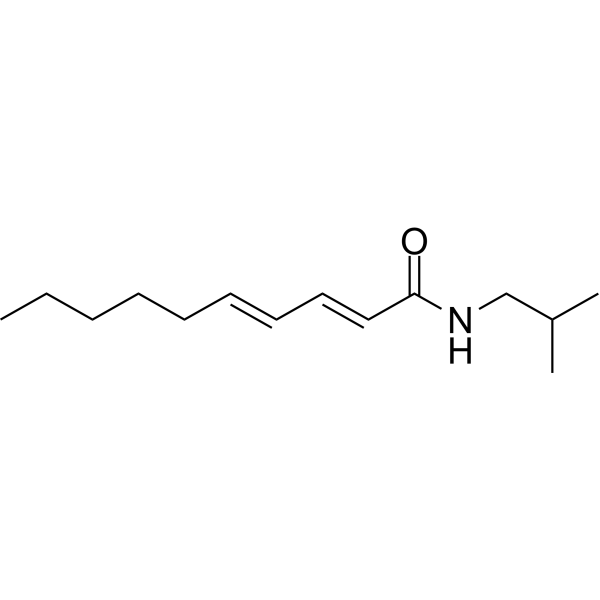 0 Images
Pellitorine is a bioactive natural amide compound. Pellitorine can competitively antagonize the activation of TRPV1 by Capsaicin (HY-10448), thereby reducing pain signal transmission. Pellitorine improves cognitive dysfunction by upregulating the BDNF-ERK1/2-CREB and Nrf2-HO-1 pathways. Pellitorine exerts anti-inflammatory and anti-sepsis effects by inhibiting the release of high mobility group protein B1 (HMGB1) and the expression of RAGE/TLR4. Pellitorine exerts its antithrombotic effect by prolonging the clotting time, inhibiting the activity of clotting factors and thrombin. Pellitorine inhibits lipid peroxidation and resists ferroptosis by upregulating GPX4 and DHODH. Pellitorine kills Aedes aegypti mosquito larvae by inhibiting V-type H⁺-ATPase and aquaporin 4 (AaAQP4). Pellitorine exhibits anti-cancer activity (e.g., leukemia and breast cancer) and has inhibitory effects on certain bacteria.
-
Chitosan oligosaccharide (MW 2000)
 0 ImagesCat. No.: HY-112108DSynonyms: COS (MW 2000)
Chitosan oligosaccharide (MW 2000) is a natural oligomer derived from chitosan, with a molecular weight of 2000 Da. Chitosan oligosaccharide (MW 2000∼3000 Da) activates the P53, MAPK and NF-κB signaling pathways. As an ideal immunopotentiator, chitosan oligosaccharide is mainly used as a feed additive in aquaculture.
-
Benzanthrone
 0 Images
Benzanthrone is an immunotoxic, pro-inflammatory Photosensitizer. Benzanthrone upregulates iNOS, COX-2 and inflammatory cytokines; activates ERK1/2, p38, JNK, AP-1 and NF-κB; inhibits Nrf2; and induces oxidative stress and DNA damage. Upon radiation exposure, Benzanthrone generates singlet oxygen and superoxide anion radicals, induces photohemolysis and lipid peroxidation, and alters the levels of skin xenobiotic enzymes. Benzanthrone exhibits differential genotoxicity in different cell lines. Benzanthrone possesses skin tumor-initiating and promoting activities. Benzanthrone can be used in skin tumor-related studies.
-
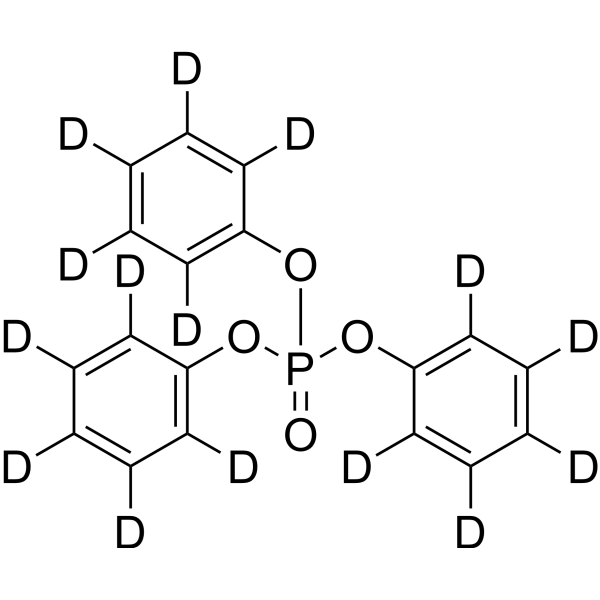
Triphenyl phosphate-d15
 0 ImagesSynonyms: Celluflex TPP-d15; DHPF 005-d15; Disflamol TP-d15; Disflamoll TP-d15; NSC 57868-d15; Phenyl phosphate ((PhO)3PO)-d15; Phoscon FR 903N-d15
Triphenyl phosphate-d15 is the deuterium labeled Triphenyl phosphate. Triphenyl phosphate is an orally active, blood-brain barrier-permeable aryl organophosphate flame retardant and endocrine disruptor. Triphenyl phosphate disrupts mitochondrial dynamic balance through oxidative stress, induces excessive mitophagy and apoptosis, and ultimately leads to myocardial fibrosis. In the brain, Triphenyl phosphate activates the NF-κB inflammatory pathway by disrupting the gut microbiota, alters tryptophan metabolism and elevates neurotoxins, thereby inducing anxiety- and depression-like behaviors. In the skeletal and reproductive systems, Triphenyl phosphate inhibits osteoblast differentiation and induces germ cell apoptosis by suppressing the MAPK/ERK pathway and activating the JNK signal, respectively. In adipose and placental tissues, Triphenyl phosphate promotes lipid accumulation by activating the PI3K/AKT-PPARγ axis, and disrupts placental metabolism via the MAOA/ROS/NF-κB cascade, impairing neurodevelopment of offspring.
-
RP-182 acetate
 0 ImagesCat. No.: HY-P11108APurity: 98.78%
RP-182 acetate is a synthetic immunomodulatory peptide that exerts anti-tumor effects by targeting the mannose receptor CD206 (Kd = 8 μM) on the surface of tumor-associated macrophages (TAMs). RP-182 acetate induces a conformational switch of the CD206 receptor, which activates NF-κB signaling and phagocytosis in CD206high TAMs. RP-182 acetate has dual function: activation of canonical NF-κB signaling, triggering TNFα secretion and autocrine activation of the TNF receptor 1 (TNFR1), leading to activation of caspase 8, apoptosis, and cell death. RP-182 acetate is used in pancreatic cancer and melanoma research.
-
Flagellin from S. typhimurium
 0 ImagesCat. No.: HY-NP134
Flagellin from S. typhimurium is a potent TLR5 agonist. Flagellin from S. typhimurium activates immune cells and inhibits the activity of melanoma cells. Flagellin from S. typhimurium activates the NF-κB pathway dependent on the TLR5/MyD88/TRAF6 signaling axis in cells. Flagellin from S. typhimurium induces a proinflammatory response in the primary chicken hepatocyte-nonparenchymal cell co-culture system by promoting IL-8 production, inhibiting IL-10 production, and increasing the IFN-γ/IL-10 ratio. Flagellin from S. typhimurium can be used for research on melanoma and inflammatory diseases.
-
1Z105
 0 Images
1Z105 is an orally active TLR4/MD2 agonist, immunostimulant and vaccine adjuvant. 1Z105 activates NF-κB via the MyD88/TRIF pathway in a CD14-independent manner, with EC50 values of 0.63 µM and 0.77 µM for inducing IL-6 and IL-12 in mBMDCs, respectively. 1Z105 promotes dendritic cell maturation, antigen uptake and cross-presentation; when used alone, it induces Th2-IgG1, while combined with the TLR7 agonist 1V270, it synergistically induces balanced Th1/Th2 responses and provides low-reactogenic protection against homologous, heterologous and heterosubtypic influenza. 1Z105 prevents LPS (HY-D1056A1)- and galactosamine-induced liver injury as well as autoantibody-driven arthritis in mice. 1Z105 can be used in studies related to influenza virus infection, inflammation, and LPS/galactosamine-induced liver injury.



