



PD-1/PD-L1
PD-1/Programmed death-ligand 1
Programmed death-1 (PD-1) is a cell surface receptor that functions as a T cell checkpoint and plays a central role in regulating T cell exhaustion. PD-1 is activated by the engagement of its ligands PDL-1 or PDL-2. PD-1 receptor delivers inhibitory checkpoint signals to activated T cells upon binding to its ligands PD-L1 and PD-L2 expressed on antigen-presenting cells and cancer cells, resulting in suppression of T-cell effector function and tumor immune evasion. Inhibiting the programmed cell death-1 (PD-1)/programmed cell death-ligand 1 (PD-L1) pathway is an attractive strategy for tumor immunotherapy.
PD-1 is expressed on activated T cells, B cells, monocytes, dendritic cells (DCs), regulatory T cells (Tregs), and natural killer T cells (NKT). It is a member of a family of immunoglobulin domain (Ig) co-receptors that modify the outcome of activation of the T cell receptor by an antigen-presenting cell (APC) or infected target cell. PD-L1 is widely and constitutively expressed on both hematopoietic and nonhematopoietic cells; e.g., naive T and B cells, vascular endothelial cells, and pancreatic islet cells, whereas PD-L2 is exclusively and inducibly expressed on professional APCs.
All Product Categories
-
PD-1/PD-L1 Inhibitors
(349)
View all products
-
PD-1/PD-L1 Agonists
(5)
View all products
-
PD-1/PD-L1 Antagonists
(11)
View all products
-
PD-1/PD-L1 Activators
(16)
View all products
-
PD-1/PD-L1 Modulators
(7)
View all products
-
PD-1/PD-L1 Inducers
(3)
View all products
-
PD-1/PD-L1 Degraders
(13)
View all products
-
PD-1/PD-L1 Control
(1)
View all products
-
PD-1/PD-L1 Substrates
(2)
View all products
-
PD-1/PD-L1 Ligands
(7)
View all products
-
PD-1/PD-L1 Related Products (464)
Related Products (464)

-
Antibodies (8)
-
Polθ-IN-11
 0 ImagesCat. No.: HY-183748CAS No.: 3082173-75-6Polθ-IN-11 is an orally active DNA polymerase θ (Polθ) ATPase inhibitor with an IC50 of 4.3 nM against human targets. Polθ-IN-11 activates the cGAS-STING pathway. Polθ-IN-11 upregulates the expression of PD-L1 in HR-deficient cancer cells. Polθ-IN-11 acts synergistically with PARP inhibition in HR-deficient cancer cells and in vivo xenograft models. Polθ-IN-11 can be used in studies related to HR-deficient cancers.
-
IMM25011
 0 ImagesCat. No.: HY-P992385IMM25011 is an Anti-CD274/PD-L1/B7-H1 antibody.
-
PD-1/PD-L1 antagonist 1
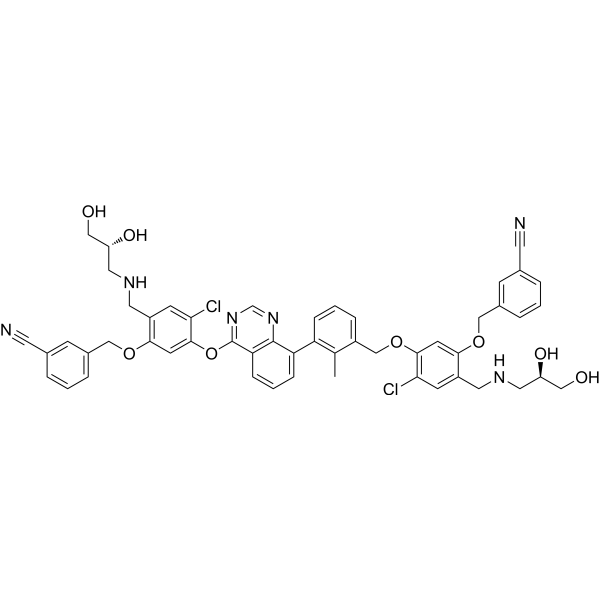 0 ImagesCat. No.: HY-158052PD-1/PD-L1 antagonist 1 (Compound A5) is an antagonist for programmed cell death-1 (PD-1) and programmed cell death ligand-1 (PD-L1) interaction, with an IC50 of 23.78 nM.
-
PD-1/PD-L1-IN-22
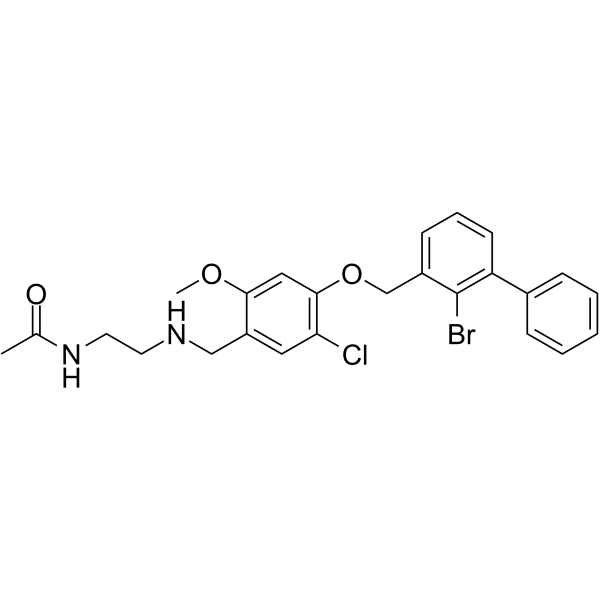 0 ImagesCat. No.: HY-145773CAS No.: 2159063-12-2PD-1/PD-L1-IN-22 (Example 2) is a small-molecule inhibitor of the PD-1/PD-L1 protein-protein interaction. PD-1/PD-L1-IN-22 blocks PD-1/PD-L1 with the IC50 of 0.732 μM. PD-1/PD-L1-IN-22 can be used for the research of cancers, infectious diseases and autoimmune diseases.
-
RC98
 0 ImagesCat. No.: HY-P992448RC98 is a monoclonal antibody targeting programmed cell death ligand 1 (PD-L1) and acts as a selective PD-L1 inhibitor. RC98 binds specifically to human and cynomolgus monkey PD-L1. RC98 blocks the interaction between PD-L1 and its receptor PD-1 to reverse T-cell inactivation mediated by PD-1/PD-L1 signaling. RC98 enhances the cytotoxic T-lymphocyte-mediated anti-tumor immune response against PD-L1-expressing tumor cells. RC98 can be used for the research of tumor immunity and solid tumors.
-
PD-1/PD-L1-IN-18
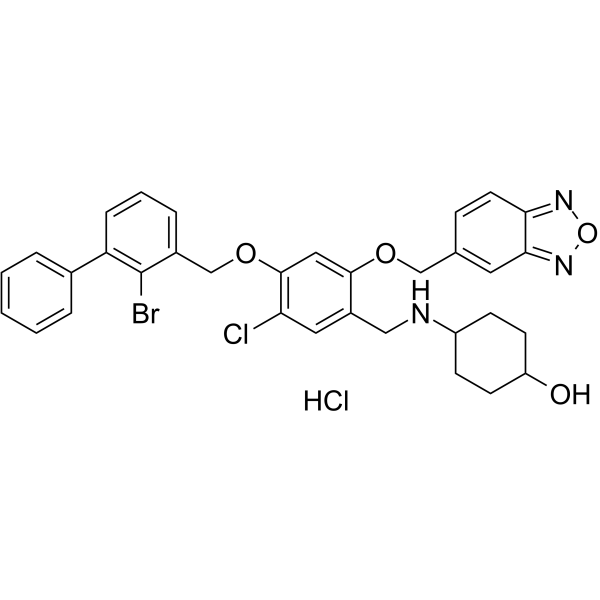 0 ImagesCat. No.: HY-145768CAS No.: 2648851-27-6PD-1/PD-L1-IN-18 (Compound L31) is a small-molecule inhibitor of the PD-1/PD-L1 protein-protein interaction. PD-1/PD-L1-IN-18 blocks PD-1/PD-L1 with the IC50 of 1.054 μM. Antitumor Activity.
-
DPAP
 0 ImagesCat. No.: HY-182899DPAP is a p-ERK1/2 inhibitor with an IC50 of 7.85 μM against p-ERK1/2. DPAP inhibits the expression of p-MEK1/2 and disrupts the Ras-ERK signaling pathway. DPAP inhibits the expression of COX-2 in nerve cells. DPAP damages DNA and mitochondria, induces Apoptosis via the mitochondrial pathway, and upregulates PD-L1. DPAP inhibits melanoma metastasis and angiogenesis, and inactivates spinal microglia and astrocytes. DPAP exhibits anti-melanoma activity and can be combined with anti-PD-1 monoclonal antibodies to modify anti-tumor effects. DPAP is applicable for the research of melanoma.
-
YDH-704
 0 ImagesCat. No.: HY-187370YDH-704 is a PAK1/HDAC10 inhibitor, with IC50 values of 0.05 μM and 0.02 μM against human targets, respectively. YDH-704 blocks PAK1-mediated oncogenic signaling pathways, inhibits the proliferation and migration of tumor cells, suppresses the epigenetic regulatory function of HDAC10, downregulates PD-L1 expression, and regulates polyamine metabolism. YDH-704 reduces MDSC/Treg infiltration, enhances the infiltration and activation of CD8+ T cells, and inhibits tumor growth and lung metastasis. YDH-704 can be used for research on triple-negative breast cancer.

-
Atz-L5
 0 ImagesCat. No.: HY-181830Atz-L5 is a PD-L1 PTAC (PSMA-targeted chimera) degrader (DC50: 18 pM in PC3-PIP cells; 2 pM in LNCaP cells) and LYTAC. Atz-L5 promotes lysosomal degradation of PD-L1 in PSMA-positive prostate cancer cells. Atz-L5 is applicable to the research of prostate cancer.
-
BMS-1001
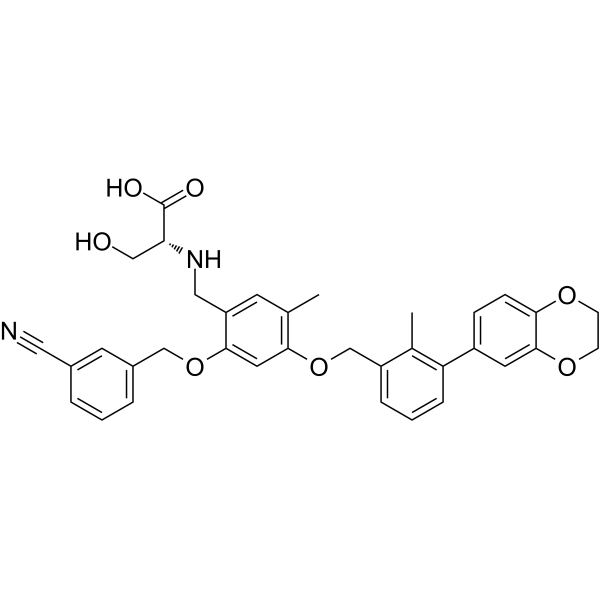 0 ImagesCat. No.: HY-120647CAS No.: 2113650-03-4BMS-1001 is an orally active human PD-L1/PD-1 immune checkpoint inhibitor. BMS-1001 exhibits low-toxicity in cells. The IC50 value of BMS-1001 in a homogeneous time-resolved fluorescence (HTRF) binding assay is 2.25 nM.
-
PD-L1-IN-8
 0 ImagesCat. No.: HY-179447CAS No.: 3104751-99-4
-
PD-1/PD-L1-IN-25
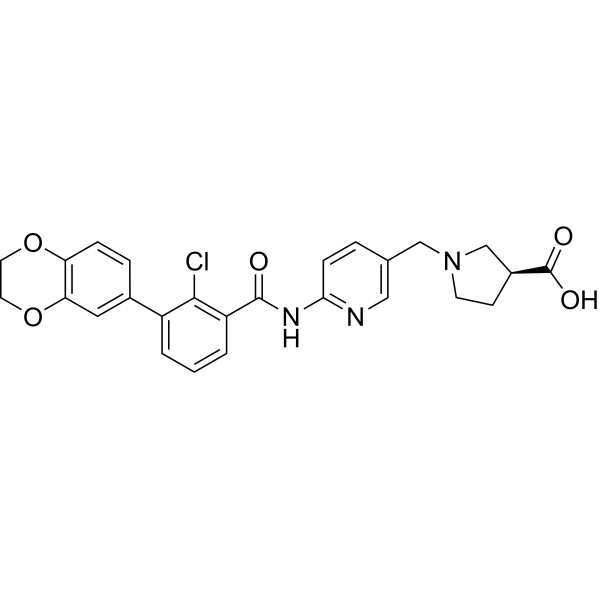 0 ImagesCat. No.: HY-143305CAS No.: 2768759-52-8PD-1/PD-L1-IN-25 (compound D2) is an inhibitor of PD-1/PD-L1 interaction with an IC50 value of 16.17 nM. PD-1/PD-L1-IN-25 activates the antitumor immunity of T cells efficiently in PBMCs. PD-1/PD-L1-IN-25 can be used for the research of cancer.
-
N-(8-Carboxyoctanoyl)-deacetyl BMS-202
 0 ImagesCat. No.: HY-182980N-(8-Carboxyoctanoyl)-deacetyl BMS-202 is a target protein ligand-linker conjugate. N-(8-Carboxyoctanoyl)-deacetyl BMS-202 contains the target protein PD-1/PD-L1 ligand and a PROTAC linker. N-(8-Carboxyoctanoyl)-deacetyl BMS-202 can be used for the synthesis of PROTAC PD-L1 Degrader-3 (HY-182959).
-
PD-L1/CD-73-IN-1
 0 ImagesCat. No.: HY-161677CAS No.: 3048634-84-7
-
15N-Labeled Tislelizumab
 0 ImagesCat. No.: HY-P99052S15N-Labeled Tislelizumab is the 15N-labeled Tislelizumab (HY-P99052). Tislelizumab is a monoclonal antibody that specifically binds to programmed cell death receptor 1 (PD-1), blocking its interaction with programmed death ligand 1 (PD-L1) and programmed death ligand 2 (PD-L2). Tislelizumab can reactivate immune cells such as T lymphocytes and enhance anti-tumor activity. Tislelizumab can be used for the research of a variety of tumors including typical Hodgkin's lymphoma, urothelial carcinoma, non-small cell lung cancer and hepatocellular carcinoma.
-
OSE-279
 0 ImagesCat. No.: HY-P992434OSE-279 is a high-affinity humanized monoclonal bivalent antibody targeting PD-1, the recommended isotype control is HY-P99003. OSE-279 blocks PD-1 ligand binding, inhibits PDL1-induced SHP1 phosphorylation, restores T cell activation, and promotes reactivation of primary T cell effector functions. OSE-279 binds hFcRn receptor, predicts long half-life, induces CD4 and CD8 T cell proliferation, and promotes interleukin 2 and interferon gamma secretion. OSE-279 can be used for the research of advanced malignancies, colon cancer, hepatocarcinoma, mesothelioma.
-
dPDL1-4
 0 ImagesCat. No.: HY-174468dPDL1-4 is a potent and selective eHSPTAC eHSP90 PD-L1 degrader with DC50s of 7.77 μM and 6.52 μM in HeLa and B16F10 cells. dPDL1-4 bridges eHSP90 with the target protein, inducing lysosomal degradation. dPDL1-4 can degrade PD-L1 significantly and inhibits tumor growth. dPDL1-4 can be used for the study of cervical cancer and melanoma. ((Pink: eHSP90 ligand (HY-174476); Blue: PD-L1 ligand (HY-116274); Black: Linker (HY-W021787); HSP ligand + linker: HY-174799)).
-
PCC16 chloride
 0 ImagesCat. No.: HY-169232PCC16 chloride is a dual PROTAC degrader targeting DHHC3 and PD-L1, with a DC50 of 0.103 μM for PD-L1 degradation. PCC16 chloride induces DHHC3 degradation via the ubiquitin-proteasome pathway by recruiting the CRBN E3 ubiquitin ligase (E3 ubiquitin ligase). By targeting DHHC3-which is essential for PD-L1 palmitoylation and membrane stability-PCC16 chloride reduces PD-L1 levels, decreases PD-L1 membrane retention time, and impairs its immunosuppressive function. PCC16 chloride enhances anti-tumor immunity by disrupting PD-L1-mediated immunosuppression. PCC16 chloride can be used in the research of immune checkpoint blockade-resistant cancers.
-
PD-1/PD-L1-IN-15
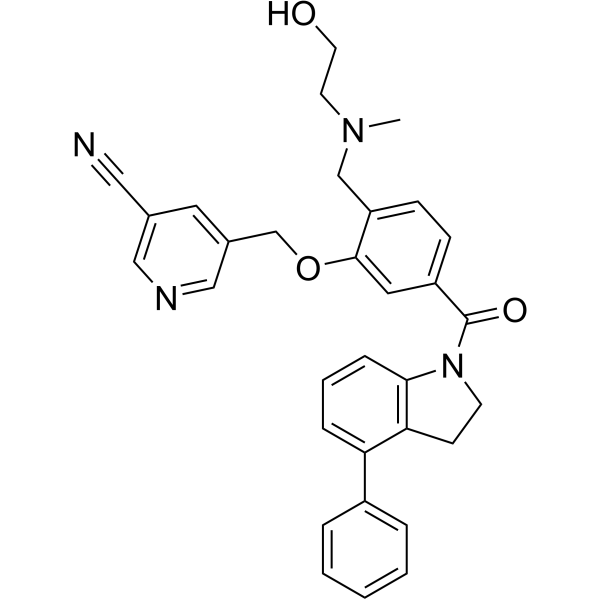 0 ImagesCat. No.: HY-144442CAS No.: 3033262-72-2




