



TGF-beta/Smad Inhibitor
-
Dalbergioidin
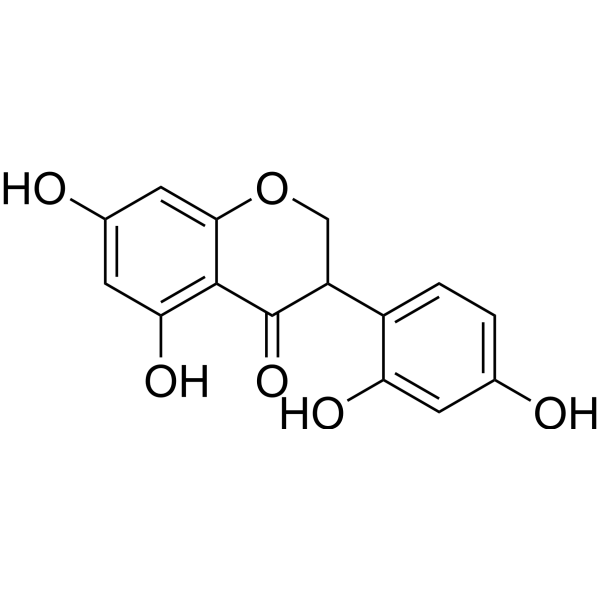 0 ImagesCat. No.: HY-N3674CAS No.: 30368-42-4
Dalbergioidin, a well-known anthocyanin, ameliorates doxorubicin-induced renal fibrosis by suppressing the TGF-β signal pathway. Dalbergioidin exhibits tyrosinase inhibitory activity with an IC50 of 20 mM.
-
GED 0507-34-Levo
 0 ImagesCat. No.: HY-W109107CAS No.: 921195-93-9
-
(14S,15R)-14-Deoxyoxacyclododecindione
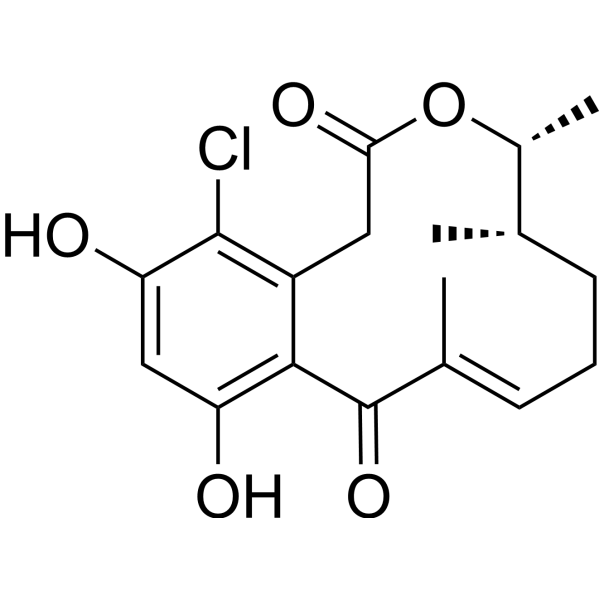 0 ImagesCat. No.: HY-162404CAS No.: 1899061-36-9
(14S,15R)-14-Deoxyoxacyclododecindione (Compound 3) acts as an inhibitor of TGF-β-dependent Smad2/3 and IL-4-dependent STAT6, with IC50 values of 90 nM and 20 nM, respectively. (14S,15R)-14-deoxyoxacyclododecindione is a potent IL-4 inhibitor with an IC50
value of 20 nM. (14S,15R)-14-Deoxyoxacyclododecindione is applicable to the research of chronic inflammation and fibrotic diseases.
-
TGFβ1-IN-4
 0 ImagesCat. No.: HY-P11609
TGFβ1-IN-4 is a TGF-β1 inhibitor. TGFβ1-IN-4 inhibits myofibroblast activation and epithelial-mesenchymal transition in vitro. TGFβ1-IN-4 alleviates renal fibrosis in a mouse model of renal fibrosis. TGFβ1-IN-4 can be used for research on fibrotic diseases such as renal fibrosis.
-
VDR agonist 4
 0 ImagesCat. No.: HY-178328CAS No.: 3136765-61-9
VDR agonist 4 is an orally active potent VDR agonist. VDR agonist 4 exerts VDR-dependent antifibrotic activity by regulating multiple fibrosis-related genes to suppress α-SMA and collagen I production, thereby inhibiting hepatic stellate cell (HSC) activation. VDR agonist 4 improves CCl4 (HY-RS16594)-induced hepatic fibrosis in mice. VDR agonist 4 can be used for liver fibrosis research.
-
IKVAVC acetate
 0 ImagesCat. No.: HY-P11753APurity: 98.02%
IKVAVC acetate is a derivative peptide of IKVAV with an artificially added cysteine (Cys) at its C-terminus. IKVAVC acetate retains all the biological activities of the original IKVAV, mainly acting as a neural adhesion/differentiation signaling peptide, and is equipped with an engineered linker arm that enables covalent conjugation to molecular materials. IKVAV inhibits the migration and activation of fibroblasts, downregulates the TGF-β1 signaling pathway and endoplasmic reticulum stress, and promotes nerve repair. IKVAV regulates the phenotype of macrophages, shifting them from the pro-inflammatory M1 type to the pro-reparative M2 type.
-
IKVAVC
 0 ImagesCat. No.: HY-P11753CAS No.: 1187540-64-2
IKVAVC is a derivative peptide of IKVAV with an artificially added cysteine (Cys) at its C-terminus. IKVAVC retains all the biological activities of the original IKVAV, mainly acting as a neural adhesion/differentiation signaling peptide, and is equipped with an engineered linker arm that enables covalent conjugation to molecular materials. IKVAV inhibits the migration and activation of fibroblasts, downregulates the TGF-β1 signaling pathway and endoplasmic reticulum stress, and promotes nerve repair. IKVAV regulates the phenotype of macrophages, shifting them from the pro-inflammatory M1 type to the pro-reparative M2 type.
-
Colchicine derivative-1
 0 ImagesCat. No.: HY-182795
Colchicine derivative-1 is a colchicine derivative. Colchicine derivative-1 exhibits cytotoxicity against various cells. Colchicine derivative-1 arrests cancer cells at the G2/M phase of the cell cycle. Colchicine derivative-1 increases the levels of MMP-2, MMP-8, MMP-9, IL-2, IL-6, IL-17A, IL-22, IL-4, and IL-5 in the blood, inhibits the gene expression of hepatic fibrinogen α, β, γ and TGF-β1, and alleviates hepatic fibrosis symptoms in mice. Colchicine derivative-1 has antifibrotic activity and can be used in studies related to hepatic fibrosis.
-
Isoviolanthin (Standard)
 0 ImagesCat. No.: HY-N6896RCAS No.: 40788-84-9
Isoviolanthin (Standard) is the analytical standard of Isoviolanthin (HY-N6896). This product is intended for research and analytical applications. Isoviolanthin is a flavonoid glycoside. Isoviolanthin can be extracted from Dendrobium officinale. Isoviolanthin has a strong affinity for binding to KDM6B, CHAC2, ESCO2, and IPO4. Isoviolanthin decreases MMP-2 and MMP-9. Isoviolanthin inhibits TGF-β/Smad and PI3K/Akt/mTOR signaling pathways. Isoviolanthin increases Fhl3 expression. Isoviolanthin has cytoprotective effects. Isoviolanthin has anticancer activity against hepatocellular carcinoma.
-
LSD1-IN-34
 0 ImagesCat. No.: HY-162729CAS No.: 3048029-74-6
LSD1-IN-34 (Compound 7d) is the orally active inhibitor for Lysine-specific demethylase (LSD) and monoamine oxidase (MAO), with IC50 of 4.51 and 18.46 nM, for LSD1 and MAO A. LSD1-IN-34 inhibits the Ang II-induced neonatal rat myocardial fibroblasts (NRCFs) activation, without significant toxicity (20 μM). LSD1-IN-34 inhibits TGFβ/Smad signaling pathway, and ameliorates heart failure in mice. LSD1-IN-34 exhibits good pharmacokinetic characteristics in rats.
-
Ammonium chloride, meets analytical specification of Ph. Eur. BP USP FCC
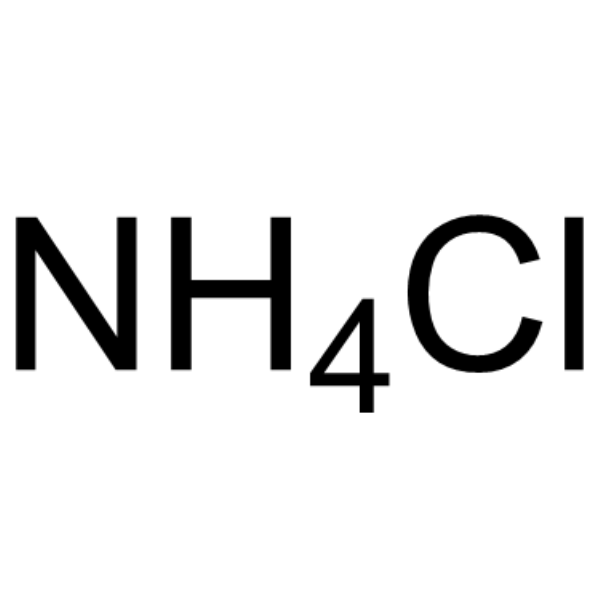 0 ImagesCat. No.: HY-Y1269HCAS No.: 12125-02-9Synonyms: Salmiac, meets analytical specification of Ph. Eur. BP USP FCC
Ammonium chloride, meets analytical specification of Ph. Eur. BP USP FCC (Salmiac, meets analytical specification of Ph. Eur. BP USP FCC) is an inhibitor of Slc26a4 and SMAD2. Ammonium chloride, meets analytical specification of Ph. Eur. BP USP FCC reduces the protein expression level of Slc26a4 in lung tissue, and attenuates ozone-induced increases in proinflammatory cytokines, inflammatory cells, pulmonary resistance, goblet cell hyperplasia, peribronchial inflammation and thiocyanate levels in mouse tissues and bronchoalveolar lavage fluid. Ammonium chloride, meets analytical specification of Ph. Eur. BP USP FCC decreases the level of phosphorylated SMAD2, inhibits autophagy by reducing autophagy-related proteins, and enhances Cisplatin (HY-17394)-induced cancer cell apoptosis and DNA double-strand breaks. Ammonium chloride, meets analytical specification of Ph. Eur. BP USP FCC also inhibits the TCA cycle, reduces ATP production, increases glucose utilization, regulates the levels of lactic acid, glutamic acid and ATP, and induces morphological degeneration of neuroblastoma cells. Ammonium chloride, meets analytical specification of Ph. Eur. BP USP FCC can be used in studies related to ozone-induced airway injury, hepatocellular carcinoma, human cervical cancer, hepatic encephalopathy, Reye syndrome, epilepsy and neurodegenerative diseases.
-
TGF-β/Smad-IN-3
 0 ImagesCat. No.: HY-179042CAS No.: 3100351-69-4
TGF-β/Smad-IN-3 (Compound 4w) is an effective TGF-β/Smad inhibitor. TGF-β/Smad-IN-3 exerts anti-pulmonary fibrosis activity by simultaneously inhibiting the TGF-β/Smad and MAPK signaling pathways. TGF-β/Smad-IN-3 significantly inhibits collagen deposition induced by TGF-β1, with its IC50 value being 3.21 μM. TGF-β/Smad-IN-3 has an IC₅₀ of 46.77 nM for the autocrine motility factor (ATX). TGF-β/Smad-IN-3 significantly reduces the expression levels of α-SMA, COL1A1 and FN in TGF-β1-induced CCC-HPF-1 cells, and effectively inhibited TGF-β1-induced cell migration. TGF-β/Smad-IN-3 can be used for the study of pulmonary fibrosis.
-
Oxoglaucine
 0 Images
Oxoglaucine (O-Methylatheroline) is a natural product with multiple activities including autophagy activation, anti-inflammation, antibacterial activity, and immunoregulation. Oxoglaucine inhibits the TRPV5/calmodulin/CAMK-II pathway, suppresses TGFβ-induced Smad2 phosphorylation by upregulating Smad7, blocks Ca2+ influx, activates autophagy, alleviates apoptosis and inflammation, inhibits ROS production and the expression of fibrosis markers in hepatocytes, and regulates immune cell populations and responses. Oxoglaucine protects against infections caused by Candida albicans and Klebsiella pneumoniae, and exerts effects on adjuvant-induced arthritis. Oxoglaucine can be used in studies related to arthritis, liver fibrosis, bacterial infections, and fungal infections.
-
PXS 25
 0 ImagesCat. No.: HY-181430CAS No.: 798546-78-8
PXS 25 is a cation-independent mannose 6-phosphate receptor (CI-M6PR) inhibitor that inhibits CI-M6PR-mediated activation of latent TGF-β1. PXS 25 inhibits conversion of high glucose-induced latent TGF-β1 to active TGF-β1 in proximal tubule cells under normoxic conditions. PXS 25 suppresses high glucose-induced fibronectin, collagen IV production, and phosphorylated Smad 2 in proximal tubule cells under normoxic conditions. PXS 25 has antifibrotic properties in skin fibroblasts. PXS 25 can be used for the research of diabetic nephropathy.
-
Anti-Candida auris β-1, 3 glucans Antibody (2G8)
 0 ImagesCat. No.: HY-P992076
Anti-Candida auris β-1,3-glucans Antibody (2G8) is an antibody targeting Candida auris β-1,3-glucans, and also acts as an inhibitor of AChE and TGF-β receptor 2. Anti-Candida auris β-1,3-glucans Antibody (2G8) also targets fungal cell wall components, effectively inhibits fungal growth and interferes with capsule formation, thereby significantly reducing the fungal load in mouse tissues. Anti-Candida auris β-1,3-glucans Antibody (2G8) not only blocks TGF-β receptor binding to inhibit the Smad signaling pathway, reduces fibroblast activation and collagen deposition, but also induces epithelial differentiation of tumor cells and reduces pancreatic tumor metastasis. Anti-Candida auris β-1,3-glucans Antibody (2G8) specifically binds to the conserved N-linked glycoepitope on AChE to inhibit its activity without interfering with BChE, and can be used in studies of cryptococcosis and related tumor mechanisms.The isotype control is Human IgG1 kappa, Isotype Control (HY-P99001).
-
Oxymatrine (Standard)
 0 Images
Oxymatrine (Standard) is the analytical standard of Oxymatrine. This product is intended for research and analytical applications. Oxymatrine, an alkaloid from Sophora flavescens Alt. with anti-inflammatory, antifibrosis, and antitumor effects, inhibits the iNOS expression and TGF-β/Smad pathway. Oxymatrine inhibits bocavirus minute virus of canines (MVC) replication, reduces viral gene expression and decreases apoptosis induced by viral infection.
-
Kirenol (Standard)
 0 Images
Kirenol (Standard) is the analytical standard of Kirenol (HY-N0559). This product is intended for research and analytical applications. Kirenol is a diterpenoid compound, an orally active apoptosis inducer and signaling pathway regulator, with a Kd value of 5.47 μM against the target CK2. Kirenol promotes the cleavage of Bid into tBid, regulates the protein levels/phosphorylation of Bax, Bcl-2, p53 and p21, and induces caspase-independent apoptosis, S-phase cell cycle arrest, ROS accumulation and cytotoxicity in cancer cells. Kirenol activates the CK2/AKT and AMPK-mTOR-ULK1 pathways, inhibits the signaling of NF-κB, TGF-β/Smads and NLRP3 inflammasome, and regulates the GSK3β, BMP and Wnt/β-catenin pathways. Kirenol induces autophagy, mitophagy and osteoblast differentiation, promotes mitochondrial fusion, and exerts antioxidant, anti-inflammatory, antifibrotic, renoprotective, cardioprotective, neuroprotective and analgesic effects. Kirenol is applicable to research related to chronic myeloid leukemia, ischemic stroke, diabetic nephropathy, heart failure, acute lung injury and osteoporosis.
-
TGF-β/Smad-IN-2
 0 ImagesCat. No.: HY-175662
TGF-β/Smad-IN-2 is an orally active TGF-β/Smad inhibitor. TGF-β/Smad-IN-2 inhibits TGF-β-induced fibroblast-to-myofibroblast differentiation and collagen deposition, with an IC50 value of 102 μM for collagen reduction in LL29 cells. TGF-β/Smad-IN-2 exerts its effects through modulation of the SMAD3/SMAD7 signaling pathway. TGF-β/Smad-IN-2 reduces lung index in pulmonary fibrosis mice. TGF-β/Smad-IN-2 can be used for the study of pulmonary fibrosis.
-
Peptide CYP9
 0 ImagesCat. No.: HY-P11914CAS No.: 3124554-07-7
Peptide CYP9 is a head-to-tail cyclic peptide derived from Antimicrobial peptide YD (HY-P11913). Peptide CYP9 inhibits the activation of the TGF-β/Smad signaling pathway, including the phosphorylation of Smad2/3. Peptide CYP9 inhibits the activation of the MAPK signaling pathway, including the phosphorylation of ERK and p38. Peptide CYP9 inhibits epithelial-mesenchymal transition. Peptide CYP9 inhibits extracellular matrix synthesis. Peptide CYP9 can be used for the research of pulmonary fibrosis.



