



Toll-like Receptor (TLR)
Toll-like receptors (TLRs) are a class of proteins that play a key role in the innate immune system. They are single, membrane-spanning, non-catalytic receptors usually expressed in sentinel cells such as macrophages and dendritic cells, that recognize structurally conserved molecules derived from microbes. Once these microbes have breached physical barriers such as the skin or intestinal tract mucosa, they are recognized by TLRs, which activate immune cell responses. The TLRs include TLR1, TLR2, TLR3, TLR4, TLR5, TLR6, TLR7, TLR8, TLR9, TLR10, TLR11, TLR12, and TLR13. Toll-Like Receptors (TLRs) play a critical role in the early innate immune response to invading pathogens by sensing microorganism and are involved in sensing endogenous danger signals. TLRs are evolutionarily conserved receptors are homologues of the Drosophila Toll protein, discovered to be important for defense against microbial infection. TLRs recognize highly conserved structural motifs known as pathogen-associated microbial patterns (PAMPs), which are exclusively expressed by microbial pathogens.
Toll-like Receptor (TLR) Isoform Specific Products
All Product Categories
-
Toll-like Receptor (TLR) Inhibitors
(299)
View all products
-
Toll-like Receptor (TLR) Agonists
(254)
View all products
-
Toll-like Receptor (TLR) Antagonists
(53)
View all products
-
Toll-like Receptor (TLR) Activators
(45)
View all products
-
Toll-like Receptor (TLR) Modulators
(7)
View all products
-
Toll-like Receptor (TLR) Chemicals
(2)
View all products
-
Toll-like Receptor (TLR) Inducers
(3)
View all products
-
Toll-like Receptor (TLR) Controls
(6)
View all products
-
Toll-like Receptor (TLR) Substrate
(1)
View all products
-
Toll-like Receptor (TLR) Ligands
(5)
View all products
-
TLR2/CD282 Proteins
(3)
View all products
-
TLR3/CD283 Proteins
(4)
View all products
-
TLR4/CD284 Proteins
(2)
View all products
-
Toll-like Receptor Proteins
(8)
View all products
-
Toll-like Receptor (TLR) Related Products (757)
Related Products (757)

-
Recombinant Proteins (9)
-
Antibodies (10)
-
Toll-like Receptor (TLR) Isoform Comparison
-
GSK2245035 maleate
 0 ImagesCat. No.: HY-118250ACAS No.: 1325212-97-2GSK2245035 maleate is a highly potent and selective intranasal Toll-Like receptor 7 (TLR7) agonist with preferential Type-1 interferon (IFN)-stimulating properties. GSK2245035 maleate has pEC50s of 9.3 and 6.5 for IFNα and TFNα. GSK2245035 maleate effectively suppresses allergen-induced Th2 cytokine production in human peripheral blood cell cultures. GSK2245035 maleate is used for asthma.
-
IAV-IN-5
 0 ImagesCat. No.: HY-183313CAS No.: 3038861-11-6IAV-IN-5 is an orally active inhibitor of influenza A virus (IAV). IAV-IN-5 inhibits viral replication, blocks virus-induced apoptosis, oxidative stress and cytokine storm, and regulates host immune signaling pathways. IAV-IN-5 reduces viral load and inflammatory cytokine levels in lung tissues of IAV-infected mouse models, alleviates body weight loss and pulmonary pathological damage. IAV-IN-5 can be used in studies related to influenza A virus infection.

-
PAI-1
 0 ImagesPAI-1 is a serine protease inhibitor (SERPIN). PAI-1 binds to and irreversibly inhibits uPA, tPA and furin; it also interacts with vitronectin, α1-acid glycoprotein, CRT, TLR4, proteasome α-3 subunit, uPAR, LRP1, Integrin αvβ3 and thrombin. PAI-1 regulates fibrinolysis, extracellular matrix turnover, cell migration, angiogenesis, inflammatory response and tissue remodeling; it mediates epithelial-mesenchymal transition (EMT)/endothelial-mesenchymal transition (EndMT), apoptosis and thrombus stabilization. PAI-1 can be used in research related to sepsis, acute lung injury, cardiovascular diseases, tissue fibrosis, diabetic nephropathy, obstructive nephropathy and non-insulin-dependent diabetes mellitus.
-
Desethyl chloroquine-d5
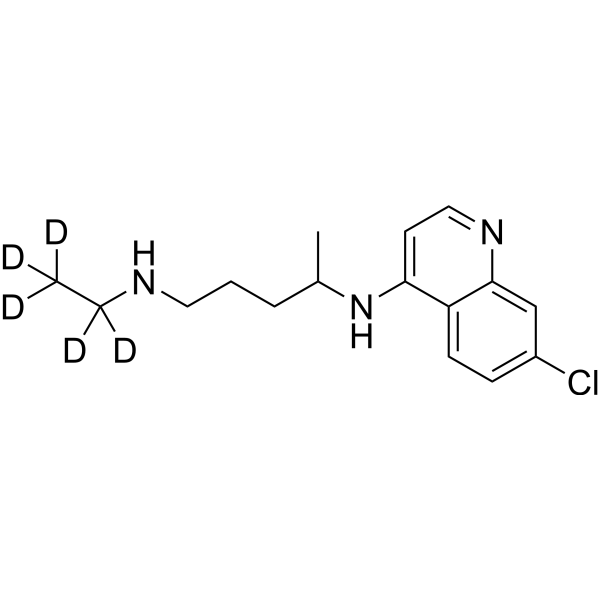 0 ImagesCat. No.: HY-135811S1CAS No.: 1261392-69-1Desethyl chloroquine-d5 is deuterium labeled Desethyl chloroquine. Desethyl chloroquine is a major desethyl metabolite of Chloroquine. Chloroquine diphosphate is an inhibitor of autophagy and toll-like receptors (TLRs). Desethyl chloroquine possesses antiplasmodic activity.
-
KBD4466
 0 ImagesCat. No.: HY-176553CAS No.: 3023713-87-0KBD4466 is an orally active potent TLR7 and TLR8 inhibitor with IC50s of 0.9 nM and 2.8 nM, respectively. KBD4466 inhibits the expression of inflammatory cytokines IL-6 and IFN-α. KBD4466 improves disease progression and survival in the BXSB/MpJ mouse model of Systemic Lupus Erythematosus (SLE). KBD4466 can be used in the study of autoimmune diseases.
-
ABB071
 0 ImagesCat. No.: HY-P991956ABB071 is a humanized anti-CD180 monoclonal antibody. ABB071 can down-regulate the highly expressed TLR7 and IRF5 genes in systemic lupus erythematosus and induce the expression of PNPT1 and DNASE1L3 genes. ABB071 can inhibit the expression of genes related to the type I interferon pathway as well as interferon-stimulated genes (ISGs). ABB071 has anti-inflammatory activity and can reduce the levels of inflammatory cytokines. ABB071 can be used for research on systemic lupus erythematosus and psoriasis.
-
Famotidine (GMP)
 0 ImagesCat. No.: HY-B0377GCAS No.: 76824-35-6Synonyms: MK-208 (GMP)Famotidine GMP (MK-208 GMP) is Famotidine (HY-B0377) produced in GMP guideline. Famotidine is an orally active and highly selective histamine H2 receptor antagonist. It inhibits gastric acid secretion by blocking the Gs signaling pathway, and regulates intracellular cAMP and ERK pathways. Famotidine inhibits TLR3-mediated inflammatory pathways, and reduces the expression of various inflammatory mediators and interferon-related genes. Famotidine scavenges DPPH and nitric oxide free radicals, alleviates oxidative stress damage in gastric tissue, inhibits proMMP-9, improves vascular endothelial permeability, and restores the normal physiological functions of neutrophils and eosinophils. Famotidine crosses intestinal epithelial cells via facilitated diffusion and passive diffusion, blocks paracellular cation transport, and increases intestinal transepithelial electrical resistance. Famotidine reduces serum levels of transaminases and alkaline phosphatase, exerts analgesic effects and gastric protective effects simultaneously. Famotidine can be used in studies related to COVID-19, liver injury and acute gastric ulcer.
-
Bazlitoran
 0 ImagesCat. No.: HY-177617CAS No.: 1378549-07-5Synonyms: IMO-8400Bazlitoran (IMO-8400) is an oligonucleotide-based TLR7/8/9 antagonist. Bazlitoran blocks the activation of Toll-like receptors 7, 8, and 9. Bazlitoran inhibits cytokine responses mediated by Toll-like receptors 7, 8, and 9. Bazlitoran is associated with injection site reactions. Bazlitoran improves moderate-to-severe plaque psoriasis.
-
TLR2 antagonist-1
 0 ImagesCat. No.: HY-175533TLR2 antagonist-1 is a selective Toll-like receptor 2 (TLR2) antagonist. TLR2 antagonist-1 can effectively inhibit excessive TLR2 activation (IC50 = 11.41 μM) and the production of inflammatory factors. TLR2 antagonist-1 has metabolic stability with a half-life (T1/2) of 16.67 min in mouse liver microsomes. TLR2 antagonist-1 can be used for the researches of inflammation, immunology, and neurological disease.

-
HS105
 0 ImagesCat. No.: HY-159753HS105 is a vaccine adjuvant and a key component in vaccines. Adjuvants can be divided into immunostimulants and delivery systems. Adjuvants can not only enhance the intensity and durability of immune responses, but also affect the type of immune responses. On the one hand, immunostimulants promote the production of antigen signals and co-stimulatory signals by targeting Toll-like receptors (TLRs) and other pattern recognition receptors (PRRs), leading to the maturation and activation of antigen presenting cells (APCs), thereby enhancing adaptive immune responses; on the other hand, delivery systems are carrier materials that promote antigen delivery by prolonging the bioavailability of loaded antigens and targeting antigens to lymph nodes or APCs. Several common adjuvants include: saponins, TLRs agonists, polysaccharides, nanoparticles, cytokines, and mucosal adjuvants.
-
Litenimod
 0 ImagesCat. No.: HY-177642CAS No.: 852313-25-8Synonyms: Li28Litenimod is potent type B agonist of toll Like receptor 9 (TLR9), triggering both innate and adaptive immune response.
-
BuChE-IN-23
 0 ImagesCat. No.: HY-183352CAS No.: 3067571-93-8BuChE-IN-23 is an orally active, blood-brain barrier permeable butyrylcholinesterase (eqBuChE) inhibitor with an IC50 of 15.59 μM and a Ki of 29.33 μM. BuChE-IN-23 exhibits an IC50 of 38.65 μM against hBuChE and shows selectivity for butyrylcholinesterase over acetylcholinesterase. BuChE-IN-23 inhibits LPS (HY-D1056)-induced nitric oxide production, attenuates hippocampal glial cell activation and neuroinflammation, suppresses the TLR4/p38 MAPK signaling pathway, and regulates the IL-1β/C3-mediated microglia-astrocyte inflammatory axis. BuChE-IN-23 can be used for the research of Alzheimer's disease.
-
TLR7 agonist 20
 0 ImagesCat. No.: HY-158694CAS No.: 3029695-00-6TLR7 agonist 20 is a selective Toll-like receptor 7 (TLR7) agonist with an EC50 of 0.22 μM. TLR7 agonist 20, as an immunostimulant and vaccine adjuvant, enhances the production of anti-spike protein antibodies, increases IgG2b and IgG2c levels, and thereby drives Th1-type immune responses in mice. TLR7 agonist 20 can be used in studies related to non-inflammatory potent vaccine adjuvants.
-
HS103
 0 ImagesCat. No.: HY-159752HS103 is an immune-enhancing adjuvant for vaccine research, serving as an important auxiliary component in vaccine systems. HS103 interacts with specific pattern recognition receptors via Toll-like receptor-related mechanisms, activates innate immune signaling pathways, and promotes a stronger immune response of the body to vaccine antigens, thereby helping to improve the immunogenicity and immune efficacy of vaccines. HS103 is suitable for research and experimental studies related to poultry vaccines.
-
TLR7-IN-1
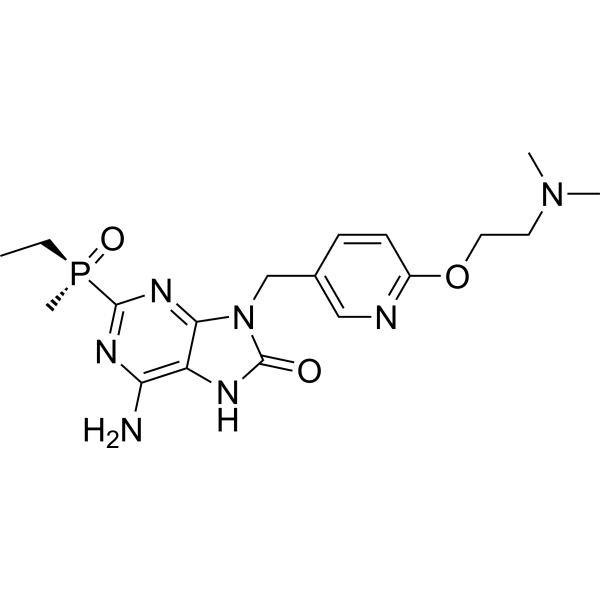 0 ImagesCat. No.: HY-163398CAS No.: 3026308-79-9TLR7-IN-1 (Compound 16-A) is a TLR7 agonist with an EC50 of 0.001 μM. TLR7-IN-1 is applicable to cancer-related research.
-
Anti-Influenza agent 12
 0 ImagesCat. No.: HY-189215CAS No.: 3087067-85-1Anti-Influenza agent 12 is an orally active inhibitor of influenza A virus infection. Anti-Influenza agent 12 inhibits RIG-I-mediated innate immune signaling and TLR3-mediated signaling pathways. Anti-Influenza agent 12 inhibits NF-κB phosphorylation and downregulates the expression levels of IRF3, ASC, iNOS, IL-4, IL-6, and IFN-α inflammatory genes. Anti-Influenza agent 12 inhibits viral nucleoprotein (NP) and matrix protein 2 (M2) mRNA transcription and protein synthesis. Anti-Influenza agent 12 inhibits virus-induced apoptosis, reduces ROS and NO production, and maintains mitochondrial membrane potential. Anti-Influenza agent 12 exhibits broad-spectrum activity against H1N1 and H3N2 subtypes, reduces viral load, and alleviates lung tissue damage. Anti-Influenza agent 12 can be used for research on influenza A virus infection.
-
TLR7 agonist 28
 0 ImagesCat. No.: HY-170899CAS No.: 1801518-98-8TLR7 agonist 28 (compound 3) is a potent TLR7 agonist. TLR7 agonist 28 can conjugat to antitumor monoclonal antibodies (mAbs) for cancer immunotherapy.
-
Monophosphoryl Lipid A-12 triethylamine
 0 ImagesCat. No.: HY-159670BSynonyms: MPLA-12 triethylamineMonophosphoryl Lipid A-12 (triethylamine) is a toll-like receptor 4 agonist. Monophosphoryl Lipid A-12 (triethylamine) can be used for the research of immunization and vaccine.




