



Reactive Oxygen Species (ROS)
Reactive oxygen species (ROS), such as superoxide anion (O2-), hydrogen peroxide (H2O2), and hydroxyl radical (HO•), consist of radical and non-radical oxygen species formed by the partial reduction of oxygen. Cellular ROS are generated endogenously during mitochondrial oxidative metabolism as well as in cellular response to xenobiotics, cytokines, and bacterial invasion.
ROS also activates MAPK pathways by the direct inhibition of MAPK phosphatases. Through PTEN, the PI3K pathway is subject to reversible redox regulation by ROS generated by growth factor stimulation. The activation of autophagy may be a cellular defense mechanism in response to ROS.
All Product Categories
-
Reactive Oxygen Species (ROS) Inhibitors
(1091)
View all products
-
Reactive Oxygen Species (ROS) Agonists
(37)
View all products
-
Reactive Oxygen Species (ROS) Antagonists
(2)
View all products
-
Reactive Oxygen Species (ROS) Activators
(525)
View all products
-
Reactive Oxygen Species (ROS) Modulators
(22)
View all products
-
Reactive Oxygen Species (ROS) MDM2 Inhibitor
(1)
View all products
-
Reactive Oxygen Species (ROS) Inducers
(645)
View all products
-
Reactive Oxygen Species (ROS) Controls
(5)
View all products
-
Reactive Oxygen Species (ROS) Substrates
(3)
View all products
-
Reactive Oxygen Species (ROS) Related Products (2859)
Related Products (2859)

-
Antibodies (8)
-
Buprofezin (Standard)
 0 ImagesCat. No.: HY-B0831RCAS No.: 69327-76-0Buprofezin (Standard) is the analytical standard of Buprofezin. This product is intended for research and analytical applications. Buprofezin is a broad-spectrum insecticide and chitin synthesis inhibitor that targets developmental stage coleopteran pests.Buprofezin promotes the conversion of energy metabolism from the aerobic tricarboxylic acid (TCA) cycle and oxidative phosphorylation to anaerobic glycolysis. Buprofezin also promotes the production of reactive oxygen species (ROS) by inhibiting cytochrome c oxidase.
-
Lixisenatide (Leu-13C6,15N) TFA
 0 ImagesCat. No.: HY-P0119SLixisenatide (Leu-13C6,15N) TFA is the 13C- and 15N-labeled Lixisenatide (HY-P0119). Lixisenatide is a glucagon-like peptide-1 (GLP-1) receptor agonist. Lixisenatide inhibits the inflammatory response through down regulation of pro-inflammatory cytokines, and suppresses of the Akt-MEK1/2 signaling pathway. Lixisenatide can inhibit oxidative stress, mitochondrial dysfunction and apoptosis. Lixisenatide can be used for the researches of inflammation, metabolic disease, neurological disease and cardiovascular disease, such as rheumatoid arthritis, diabetes, Alzheimer's disease and atherosclerosis.
-
Anisodine hydrobromide
 0 ImagesCat. No.: HY-127022ACAS No.: 76822-34-9Synonyms: Daturamine hydrobromide; α-Hydroxyscopolamine hydrobromideAnisodine (Daturamine) hydrobromide is a neuroprotective compound that reduces exacerbated M1, M2, M4, and M5 receptor expression in brain tissues under hypoxia/reoxygenation conditions. Anisodine hydrobromide inhibits calcium ion influx and reactive oxygen species (ROS)levels. Anisodine hydrobromide leads to decreased aspartate levels during hypoxia.
-
Amisulbrom (Standard)
 0 ImagesCat. No.: HY-121214RCAS No.: 348635-87-0Amisulbrom (Standard) is the analytical standard of Amisulbrom (HY-121214). Amisulbrom is a fungicide. Amisulbrom can inhibit the cytochrome-bc1 complex of the mitochondrial electron and induce mitochondrial dysfunction. Amisulbrom can induce cell apoptosis, ROS production and cause G2/M phase arrest. Amisulbrom shows cardiovascular toxicity to zebrafish. Amisulbrom can be used for the researches of infection and cardiovascular disease.
-
Antibacterial agent 325
 0 ImagesCat. No.: HY-181677Antibacterial agent 325 is an antibacterial agent. Antibacterial agent 325 exerts potent broad-spectrum antibacterial activity and shows bactericidal activity. Antibacterial agent induces membrane depolarization, disrupts the membrane integrity, increasess ROS production and lipid peroxidation levels. Antibacterial agent 325 inhibits the metabolic activity and Lactate Dehydrogenase (LDH) activity. Antibacterial agent 325 exhibits low drug resistance development in bacteria, low hemolysis and cytotoxicity. Antibacterial agent 325 can be used for the research of bacterial infection.
-
3'-Hydroxypuerarin (Standard)
 0 ImagesCat. No.: HY-N1980RCAS No.: 117060-54-53'-Hydroxypuerarin (Standard) is the analytical standard of 3'-Hydroxypuerarin. This product is intended for research and analytical applications. 3'-Hydroxypuerarin is an isoflavone isolated from the roots of Pueraria lobata (Willd.) Ohwi. 3'-Hydroxypuerarin is a antioxidant, which shows marked ONOO(-), NO?, total ROS scavenging activities.
-
ALR2-IN-9
 0 ImagesCat. No.: HY-175862CAS No.: 2135481-84-2ALR2-IN-9 is a potent ALR2 inhibitor (IC50 = 21.8 nM) with excellent antioxidant activity (EC50 for DPPH radical scavenging = 2.8 μM). ALR2-IN-9 interacts directly with Reactive Oxygen Species (ROS)/Reactive Nitrogen Species (RNS) and interrupts the free radical chain reactions, and as an endogenous enzymatic antioxidant regulator, which regulates enzyme functions of CAT and SOD. ALR2-IN-9 regulates PI3K/Akt/Nrf2 pathway to attenuate hyperglycemia-mediated mitochondrial superoxide overproduction in vitro, and ameliorates CuSO4- and H2O2-induced oxidative stress in vivo. ALR2-IN-9 prolongs lifespan of C. elegans via the regulation of stress response genes such as PMK-1. ALR2-IN-9 is a promising anti-aging drug candidate. ALR2-IN-9 can be used for diabetic complication research.
-
Actinoside E
 0 ImagesCat. No.: HY-N17833CAS No.: 1340600-30-7Synonyms: Kaempferol 3-O-2,4'''-acetylrhamninosideActinoside E (Kaempferol 3-O-2,4'''-acetylrhamninoside) is a flavonoid triglycoside with antioxidant activity. Actinoside E scavenges DPPH, superoxide anion and hydroxyl radicals, and inhibits lipid peroxidation in mouse liver homogenate. Actinoside E can be used in studies related to myocardial ischemia.
-
Americanin A
 0 ImagesCat. No.: HY-N18301CAS No.: 69506-79-2Americanin A is a Neolignan. Americanin A can be isolated from the seeds of Phytolacca americana. Americanin A activates ATM and ATR, initiating the subsequent signal transduction cascades that include Chk1, Chk2, and tumor suppressor p53. Americanin A targets selectively Skp2 for degradation and thereby stabilizes p27. Americanin A suppresses the activity of Cyclin B1 and its partner cdc2 to prevent entry into Mitosis. Americanin A induces Apoptosis by producing excessive ROS. Americanin A has anti-cancer activity against colorectal cancer.
-
Brevifolincarboxylic acid (Standard)
 0 ImagesCat. No.: HY-N4095RCAS No.: 18490-95-4Brevifolincarboxylic acid (Standard) is the analytical standard of Brevifolincarboxylic acid (HY-N4095). This product is intended for research and analytical applications. Brevifolincarboxylic acid is a phenolic compound. Brevifolincarboxylic acid can be isolated from Duchesnea chrysantha. Brevifolincarboxylic acid inhibits α-glucosidase with an IC50 value of 323.46 μM. Brevifolincarboxylic acid has an inhibitory effect on the aryl hydrocarbon receptor (AhR). Brevifolincarbacid scavenges ROS. Brevifolincarbacid restores the glucose uptake activity of myotubes. Brevifolincarboxylic acid has antitumor activity against lung and gastric cancer. Brevifolincarbacid can be used in the study of diabetes and inflammatory diseases.
-
Centrolobol
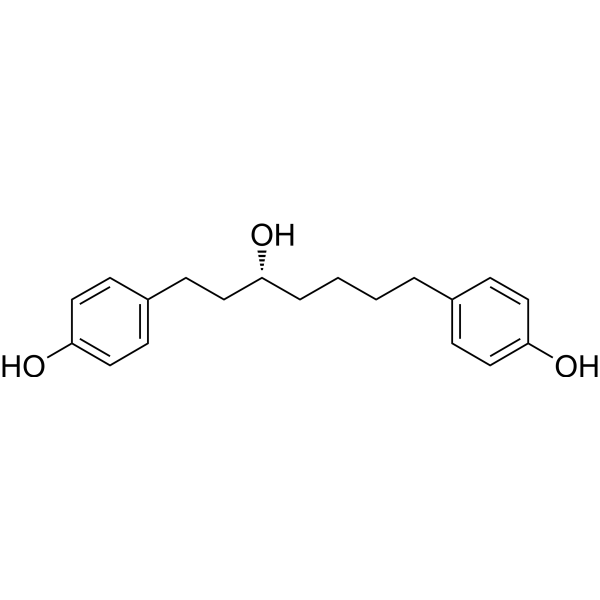 0 ImagesCat. No.: HY-N3564CAS No.: 30359-01-4Centrolobol is a diarylheptane compound with antioxidant and anti-inflammatory properties, which exists in the fermented stems of Alnus sibirica. Centrolobol scavenges DPPH free radicals and inhibits the production of NO in LPS-stimulated immune cells. Centrolobol can be used in studies related to anti-inflammation and antioxidation.
-
Lexibulin (Standard)
 0 ImagesCat. No.: HY-10498RCAS No.: 917111-44-5Synonyms: CYT-997 (Standard)Lexibulin (Standard) is the analytical standard of Lexibulin. This product is intended for research and analytical applications. Lexibulin (CYT-997) is a potent and orally active tubulin polymerisation inhibitor with IC50s of 10-100 nM in cancer cell lines; with potent cytotoxic and vascular disrupting activity in vitro and in vivo. Lexibulin induces cell apoptosis and induces mitochondrial ROS generation in GC cells.
-
Neohesperidin dihydrochalcone (Standard)
 0 ImagesSynonyms: Neohesperidin DC (Standard); NHDC (Standard)Neohesperidin dihydrochalcone (Standard) is the analytical standard of Neohesperidin dihydrochalcone. This product is intended for research and analytical applications. Neohesperidin dihydrochalcone is a synthetic glycoside chalcone, is added to various foods and beverages as a low caloric artificial sweetener.
-
3′-Hydroxytectorigenin-7-O-β-D-xylosyl-(1→6)-β-D-glucopyranoside
 0 ImagesCat. No.: HY-N13707CAS No.: 2408020-53-93′-Hydroxytectorigenin-7-O-β-D-xylosyl-(1→6)-β-D-glucopyranoside is an antioxidant that can be found in Pueraria montana var. lobata. It exhibits DPPH radical scavenging activity, with an IC50 value of 42 μg/mL.
-
3-O-Methyltolcapone (Standard)
 0 ImagesCat. No.: HY-100642RCAS No.: 134612-80-9Synonyms: Ro 40-7591 (Standard)3-O-Methyltolcapone (Standard) (Ro 40-7591 (Standard)) is the analytical standard of 3-O-Methyltolcapone (HY-174062). 3-O-Methyltolcapone (Ro 40-7591) is a metabolite of Tolcapone (HY-17406). Tolcapone (Ro 40-7592) is a selective, potent and orally active COMT inhibitor with an IC50of 773 nM. Tolcapone can inhibits α-syn and Aβ42 oligomerization and fibrillogenesis. Tolcapone can cause oxidative stress and induce cancer cells apoptosis and ROS production. Tolcapone can be used for the researches of cancer and neurological disease, such as Parkinson disease and neuroblastoma.
-
Bifenazate (Standard)
 0 ImagesBifenazate (Standard) is the analytical standard of Bifenazate. This product is intended for research and analytical applications. Bifenazate is a carbazate acaricide that control 100% of mites at a concentration of 25 ppm. Bifenazate is a positive allosteric modulator of GABA receptor. Bifenazate is the inhibitor for the mitochondrial electron transport chain complex III.
-
α-Vitamin E-d11
 0 ImagesCat. No.: HY-N0683S6CAS No.: 2874378-75-1Synonyms: (+)-α-Tocopherol-d11; D-α-Tocopherol-d11α-Vitamin E-d11 ((+)-α-Tocopherol-d11) is the deuterium labeled α-Vitamin E (HY-N0683). α-Vitamin E ((+)-α-Tocopherol), a naturally occurring vitamin E form, is a potent antioxidant.
-
Antibacterial agent 306
 0 ImagesCat. No.: HY-180151Antibacterial agent 306 (Compound 8c), a lactate dehydrogenase inhibitor, is a highly effective antibacterial agent, especially effective against Gram-positive bacteria. Antibacterial agent 306 exhibits MIC against Staphylococcus aureus of as low as 1 μg/mL. Antibacterial agent 306 can not only damage membrane integrity and block the replication of DNA by intercalation, but also make reactive oxygen species (ROS) burst. Antibacterial agent 306 can be used for research on anti-multi-drug resistant bacteria.
-
Homoeriodictyol (Standard)
 0 ImagesHomoeriodictyol (Standard) is the analytical standard of Homoeriodictyol (HY-N8210). This product is intended for research and analytical applications. Homoeriodictyol is an orally active, bitter-tasting flavanone that can penetrate the blood-brain barrier. Homoeriodictyol enhances synaptic-related protein expression through NCOA4-mediated ferritin autophagy. Homoeriodictyol improves memory impairment in mice by inhibiting the NLRP3 inflammasome. Homoeriodictyol protects human endothelial cells from oxidative damage by activating Nrf2 and inhibiting mitochondrial dysfunction. Homoeriodictyol enhances ROS activity and induces apoptosis, exhibiting anticancer effects. Homoeriodictyol inhibits the survival and migration of androgen-resistant prostate cancer cells in vitro. Homoeriodictyol exerts antinociceptive activity in mice in vivo.
-
Pipoxolan
 0 ImagesCat. No.: HY-105854ACAS No.: 23744-24-3Pipoxolan is an orally active smooth muscle relaxant, anti-inflammatory agent and anticancer agent. Pipoxolan modulates PI3K/AKT signaling pathways, and reduces the levels of Ras/MEK/p-ERK, MMP-2 and MMP-9. Pipoxolan inhibits pro-inflammatory transcription factor pathways, activates Nrf2/HO-1, and suppresses the production of pro-inflammatory mediators. Pipoxolan induces ROS generation, endogenous mitochondrial Apoptosis, and G0/G1 cell cycle arrest. Pipoxolan reduces cerebral infarction size and inhibits intimal hyperplasia. Pipoxolan can be used in research related to cerebral ischemia, intimal hyperplasia, oral squamous cell carcinoma, leukemia and lung cancer.




