



KTC1101

Based on 1 Customer Validation
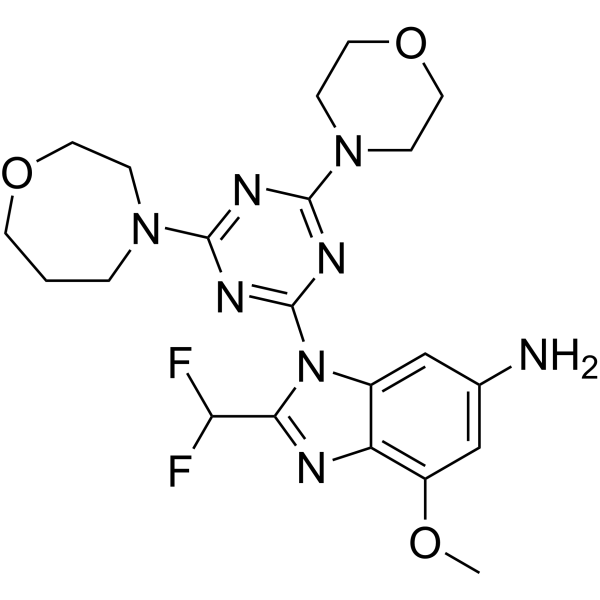
KTC1101 is an orally active pan-PI3K inhibitor. KTC1101 can inhibit the PI3K signaling pathway, reduce downstream AKT and mTOR phosphorylation, and reduces the expression of Ki67. The anti-tumor effect of KTC1101 has a dual mechanism of action: directly inhibiting tumor cell growth and dynamically enhancing immune response.
Nur für Forschungszwecke. Wir verkaufen nicht an Patienten.
- Reinheit : 98.09%
- CAS. Nr.: 2764833-47-6
- Formel: C21H26F2N8O3
- Molecular Weight:476.48
-
Speicherung:Powder -20°C, 3 years , 4°C, 2 years ; In solvent -80°C, 6 months , -20°C, 1 month

To place orders, for customer services and technical support, please contact: MedChemExpress USA
Tel: 609-228-6898 E-mail: [email protected] [email protected]


-
 Biologische Aktivität
-
Chemical Information
-
Lösungsmittel & Löslichkeit
- Protokoll
- Reinheit & Dokumentation
- Verweise
-
 Help & FAQs


-
HY-70063
BuparlisibPI3K Inhibitor -
HY-50847
ZSTK474Autophagy Inducer -
HY-50673
DactolisibPI3K/mTOR Inhibitor -
HY-162143
SKI-349SPHK1/2/MDA Inhibitor -

HY-106591A
4-Vinylcyclohexene dioxideMetabolite -
HY-15177
PF-04691502PI3K/mTOR Inhibitor -
HY-124719
hSMG-1 inhibitor 11jhSMG-1 Inhibitor -
HY-13334A
BGT226Autophagy Inducer -
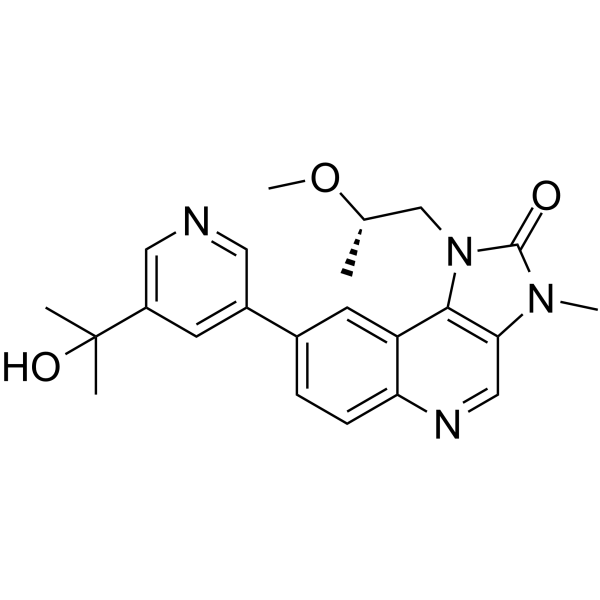
HY-12513
Samotolisib -
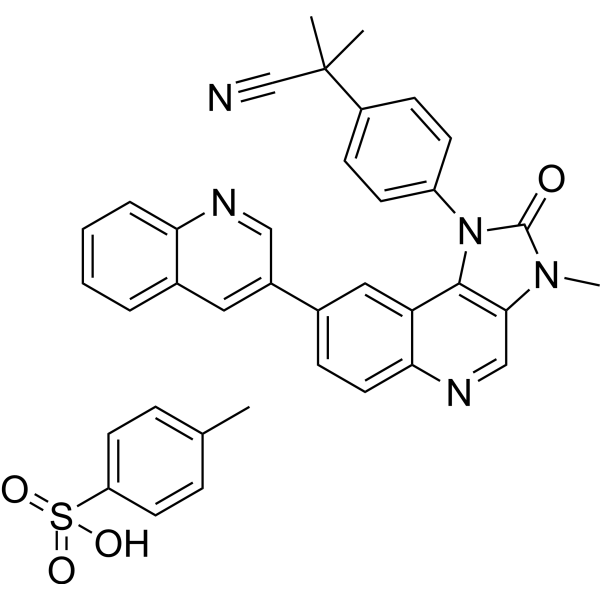
HY-15174
Dactolisib TosylateAutophagy Inducer -
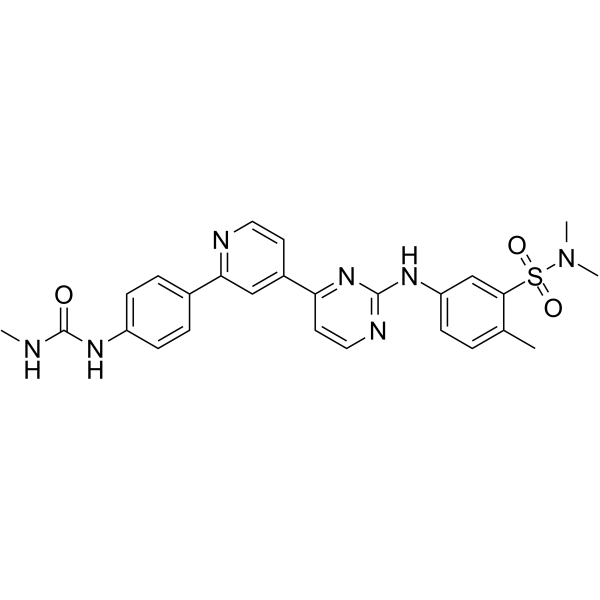
HY-124760
hSMG-1 inhibitor 11ehSMG-1 Inhibitor -
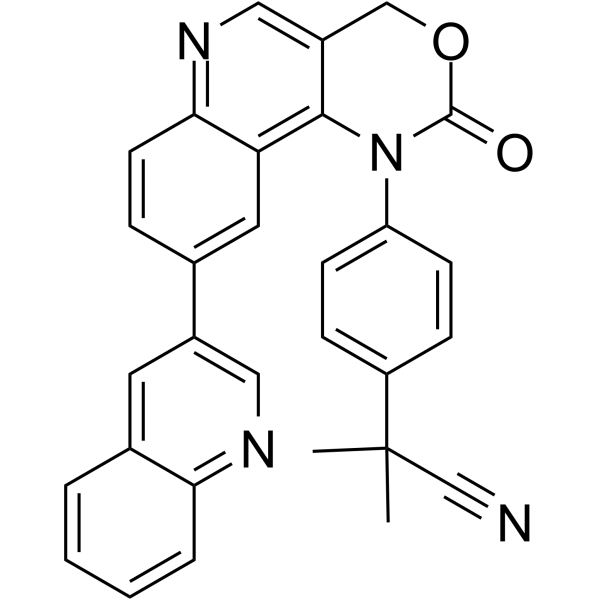
HY-15521
ETP-46464mTOR/ATR Inhibitor


Biologische Aktivität
Beschreibung
IC50 & Target
|
Ki67 |
PI3Kα 3.72 nM (IC50) |
PI3Kβ 36.29 nM (IC50) |
PI3Kδ 1.22 nM (IC50) |
PI3Kγ 17.09 nM (IC50) |
PI3K |
In Vitro
KTC1101 (0.1-50000 nM, 48 h) can dose-dependently induce cell cycle stagnation in G1 phase in all tested cell lines (PC3, TMD8, HSC2, HSC4, and CAL33 cells). KTC1101 has anti-proliferative activity, with the IC50 ranging from 20 nM to 130 nM, but has no significant promotion of apoptosis[1].
KTC1101 (0.1-1000 nM, 1 h) exhibits significant inhibitory activity against all PI3K isoforms in the Adapta kinase assay. The IC50 values of KTC1101 for PI3Kα, PI3Kβ, PI3Kδ and PI3Kγ are 3.72 nM, 36.29 nM, 1.22 nM and 17.09 nM respectively[1].
KTC1101 (0-125 nM, 48 h) effectively inhibits the PI3K signaling pathway in WB experiments, reduces the phosphorylation of PI3K downstream effectors AKT and mTOR[1].
MedChemExpress (MCE) has not independently confirmed the accuracy of these methods. They are for reference only.
-
Cell Line:39 human tumor cell lines, PC3, TMD8, HSC2, HSC4, CAL33 cells, etc.
-
Concentration:0.1, 1, 10, 100, 1000, 25000, 50000 nM
-
Incubation Time:48 h
-
Result:Exhibited an average GI50 value of 23.4 nM across all cell lines tested, significantly lower than ZSTK474 (HY-50847) (320 nM) and Copanlisib (HY-15346) (134 nM).
-
Cell Line:PC3 cells, TMD8 cells
-
Concentration:0, 5, 25, 125 nM
-
Incubation Time:48 h
-
Result:Showed better inhibitory performance in TMD8 cells compared with ZSTK474 (HY-50847) and Copanlisib (HY-15346).
In Vivo
Pharmacokinetic Analysis in tumor xenograft mouse model[1]
| Route | Dose (mg/kg) | t1/2 (h) | Tmax (h) | Cmax (μg/mL) | AUC0-t (μg/mL*h) | Vz/F> (L/kg) | CLz/F (L/h/kg) |
| p.o. | 100 | 7.19 | 0.67 | 1.66 | 9.33 | 117.96 | 10.71 |