



Monepantel
Based on 2 publication(s) in Google Scholar
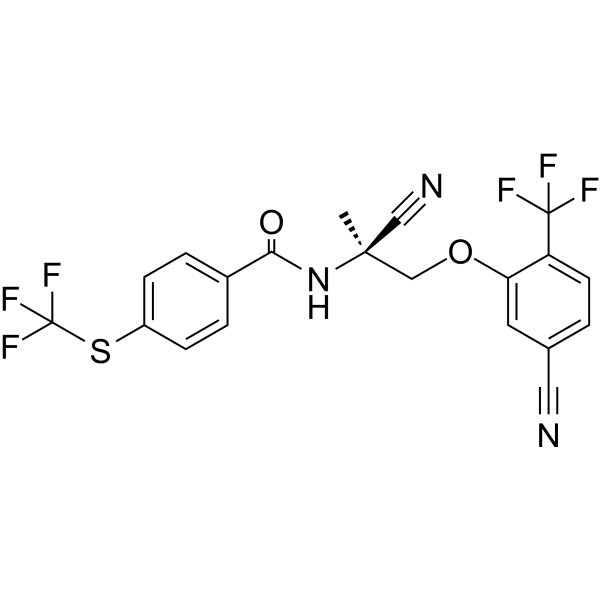
Monepantel (AAD1566, NUZ-001), an antiparasitic agent, is an orally active mTOR inhibitor. Monepantel triggers autophagy through the deactivation of mTOR/p70S6K signalling pathway. Monepantel is a positive allosteric modulator of a nematode-specific clade of nAChR subunits. Monepantel can be used for the study of amyotrophic lateral sclerosis (ALS) and ovarian cancer.
For research use only. We do not sell to patients.
- Purity : 99.98%
- CAS No.: 887148-69-8
- Formula: C20H13F6N3O2S
- Molecular Weight:473.39
-
Storage:Powder -20°C, 3 years , 4°C, 2 years ; In solvent -80°C, 2 years , -20°C, 1 year

To place orders, for customer services and technical support, please contact: MedChemExpress USA
Tel: 609-228-6898 E-mail: [email protected] [email protected]


-
 Biological Activity
-
Chemical Information
-
Solvent & Solubility
- Protocols
- Purity & Documentation
- References
-
 Help & FAQs


-
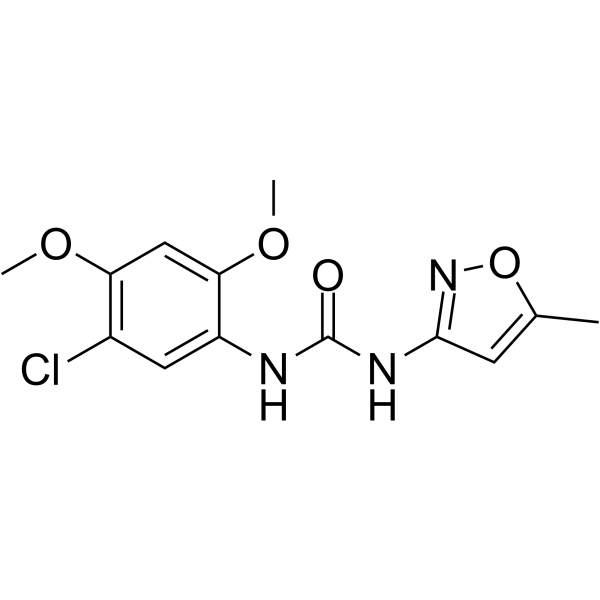
HY-12152
PNU-120596α7 nAChR PMA -

HY-14774R
Monepantel (Standard)nAChR Agonist -
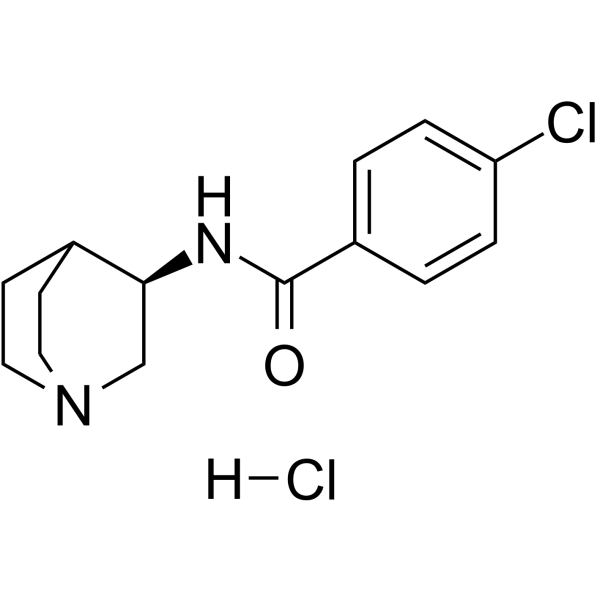
HY-12560A
PNU-282987α7 nAChR Agonist/5-HT3 antagonist -
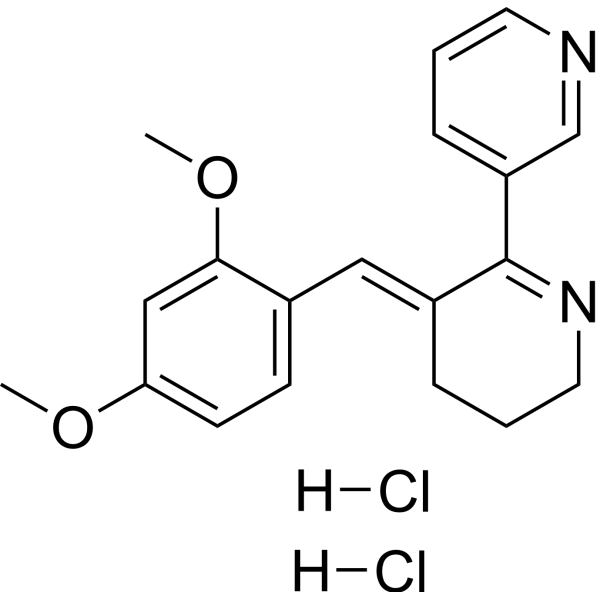
HY-14564A
GTS-21 dihydrochlorideα7-nAChR Agonist -
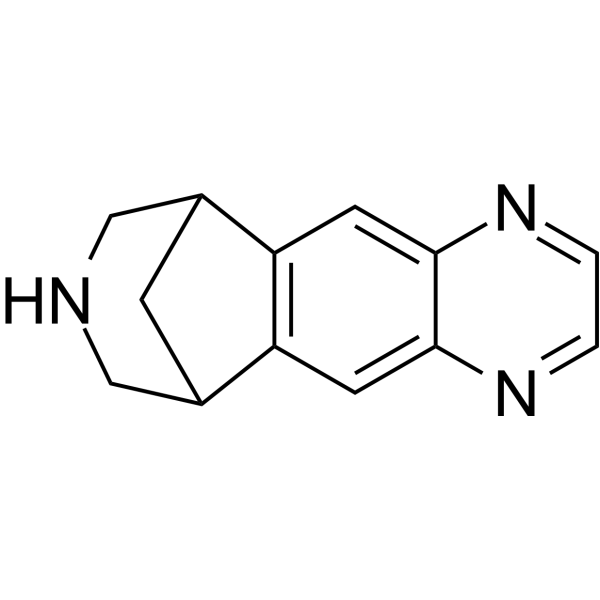
HY-10019
Vareniclineα4β2 nAChR Agonist -
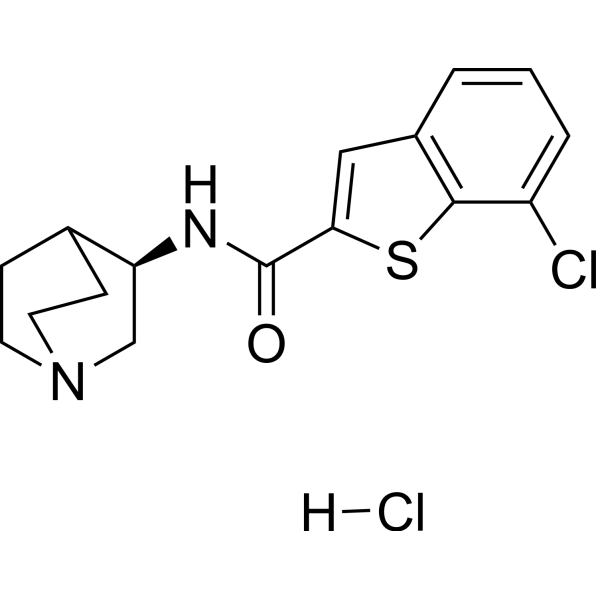
HY-15430A
Encenicline hydrochloridenAChR Agonist -
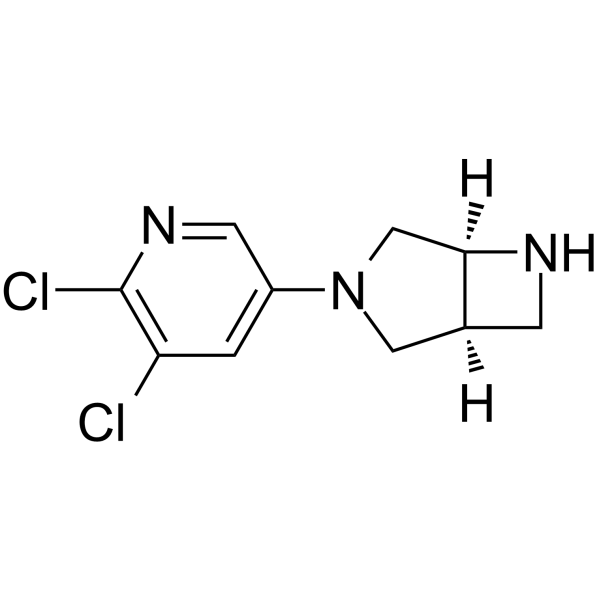
HY-14824
SofiniclinnAChR Agonist -
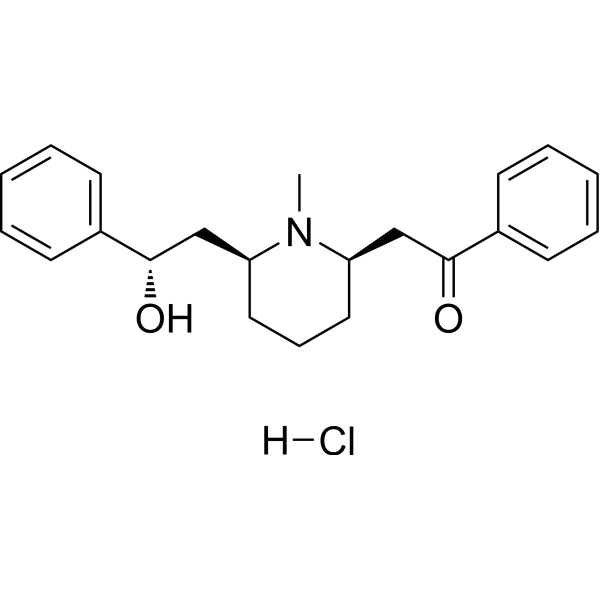
HY-B0979
Lobeline hydrochlorideNicotinic Receptor Agonist -
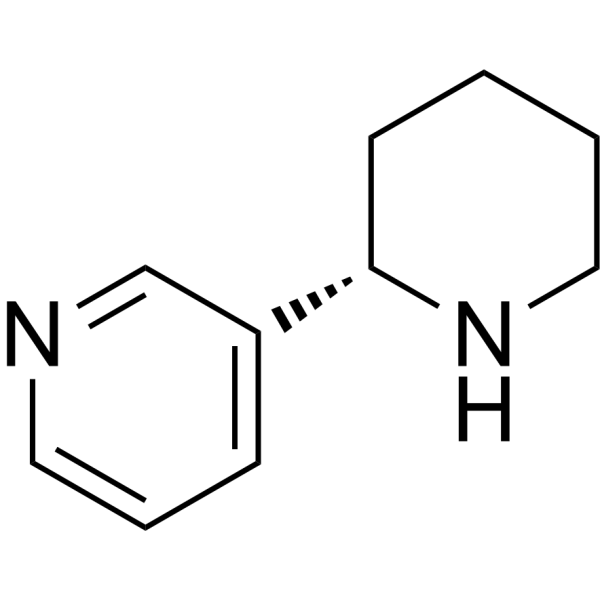
HY-B1532
AnabasineBioactive Alkaloid -
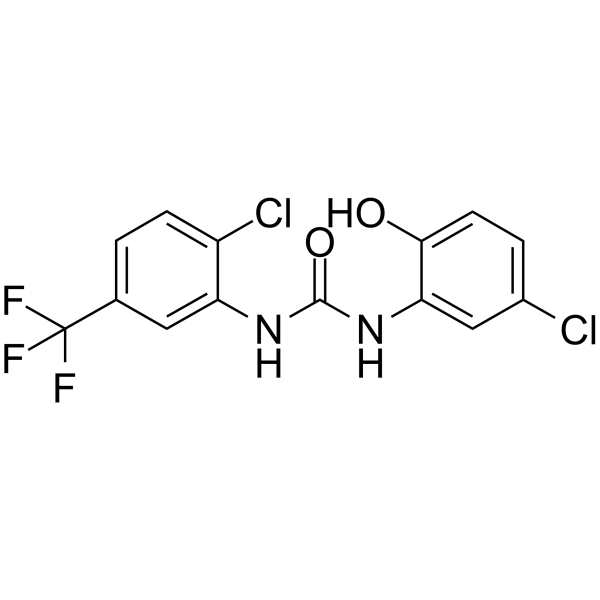
HY-12151
NS 1738nAChR Agonist -
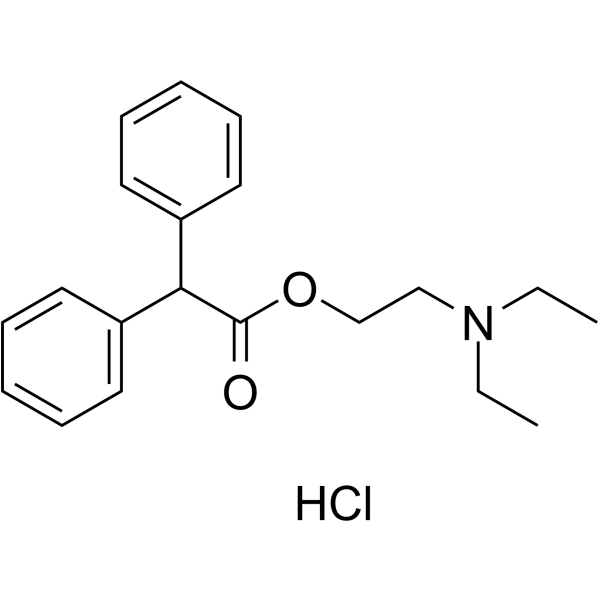
HY-B0379A
Adiphenine hydrochloridenAChR Inhibitor -
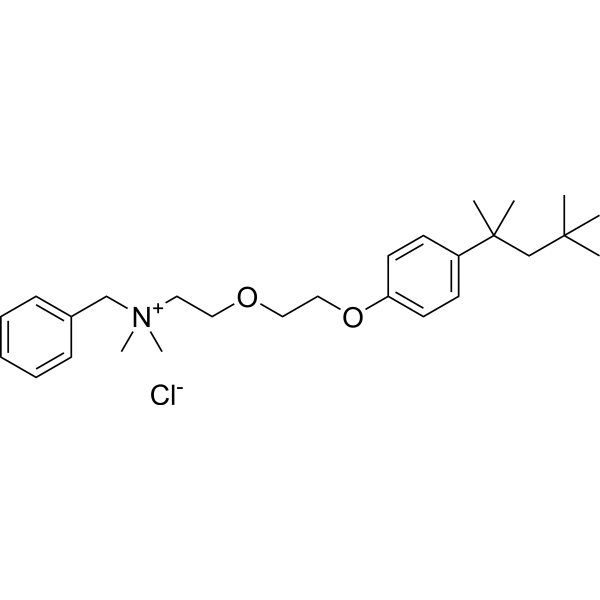
HY-B0942
Benzethonium chlorideMicrobiocidal Agent
Publications Citing Use of MedChemExpress (MCE) Monepantel
MoreAll Parasite Isoforms
More

Biological Activity
Description
Cellular Effect
|
Cell Line

|
Type | Value | Description | References |
|---|---|---|---|---|
| MCF-10A | IC50 |
26.9 μM
Compound: Monepantel
|
Cytotoxicity against human MCF-10A cells assessed as inhibition of cell viability measured after 48 hrs by DAPI staining based analysis
Cytotoxicity against human MCF-10A cells assessed as inhibition of cell viability measured after 48 hrs by DAPI staining based analysis
|
[PMID: 32018095] |
In Vitro
The metallocenyl analogues of monepantel shows nematocidal activity[1]. Monepantel (25 μM) induces accumulation of acidic vacuoles. Ovarian cancer cell lines are highly sensitive to Monepantel with IC50 values of 7.2±0.2 μM (OVCAR-3) and 10.5±0.4 μM (A2780). Monepantel (0, 10 and 25 μM) induces autophagosome formation in these cancer cell lines. Monepantel (0, 10 and 25 μM) exhibits a markedly reduced level of punctate staining indicating the suppression of phosphorylated mTOR at Ser2448. Monepantel also decreases the expression of phosphorylated Raptor at Ser792, which is one of the mTORC1 coMonepantelex members[2]. Monepantel (250 μg/mL) leads multiple ABC transporter genes higher transcription in both worm isolates. Larvae exposed to monepantel at 250 μg/mL shows an increased efflux of rhodamine-123 and a proportion of the larval population shows an ability to subsequently tolerate higher concentrations of IVM in migration assays[3].
MedChemExpress (MCE) has not independently confirmed the accuracy of these methods. They are for reference only.
In Vivo
MedChemExpress (MCE) has not independently confirmed the accuracy of these methods. They are for reference only.
Clinical Trial
| NCT Number | Sponsor | Condition | Start Date |
Phase
|
|---|---|---|---|---|
| NCT01329991 | 2011-05 | PHASE1 |


Chemical Information
-
CAS No. 887148-69-8
-
Appearance Solid
-
Molecular Weight 473.39
-
Formula C20H13F6N3O2S
-
Color White to off-white
-
SMILES
O=C(N[C@@](C)(C#N)COC1=CC(C#N)=CC=C1C(F)(F)F)C2=CC=C(SC(F)(F)F)C=C2
-
Synonyms
AAD1566; NUZ-001
-
Shipping
Room temperature in continental US; may vary elsewhere.
-
Storage
Powder -20°C 3 years 4°C 2 years In solvent -80°C 2 years -20°C 1 year


Publications (2)


Solvent & Solubility
In Vitro:
DMSO : ≥ 100 mg/mL (211.24 mM; Hygroscopic DMSO has a significant impact on the solubility of product, please use newly opened DMSO)
* "≥" means soluble, but saturation unknown.
Please refer to the solubility information to select the appropriate solvent. Once prepared, please aliquot and store the solution to prevent product inactivation from repeated freeze-thaw cycles.
Storage method and period of stock solution: -80°C, 2 years; -20°C, 1 year. When stored at -80°C, please use it within 2 years. When stored at -20°C, please use it within 1 year.
Please refer to the solubility information to select the appropriate solvent. Once prepared, please aliquot and store the solution to prevent product inactivation from repeated freeze-thaw cycles.
Storage method and period of stock solution: -80°C, 2 years; -20°C, 1 year. When stored at -80°C, please use it within 2 years. When stored at -20°C, please use it within 1 year.
Concentration (start) × Volume (start) = Concentration (final) × Volume (final)
In Vivo:
Select the appropriate dissolution method based on your experimental animal and administration route.
- For the following dissolution methods, please ensure to first prepare a clear stock solution using an In Vitro approach and then sequentially add co-solvents:
- To ensure reliable experimental results, the clarified stock solution can be appropriately stored based on storage conditions. As for the working solution for In Vivo experiments, it is recommended to prepare freshly and use it on the same day.
- The percentages shown for the solvents indicate their volumetric ratio in the final prepared solution. If precipitation or phase separation occurs during preparation, heat and/or sonication can be used to aid dissolution.
Add each solvent one by one: 10% DMSO 40% PEG300 5% Tween-80 45% Saline
Solubility: 2.5 mg/mL (5.28 mM); Suspended solution; Need ultrasonic
This protocol yields a suspended solution of 2.5 mg/mL. Suspended solution can be used for oral and intraperitoneal injection.
Taking 1 mL working solution as an example, add 100 μL DMSO stock solution (25.0 mg/mL) to 400 μL PEG300, and mix evenly; then add 50 μL Tween-80 and mix evenly; then add 450 μL Saline to adjust the volume to 1 mL.
Preparation of Saline: Dissolve 0.9 g sodium chloride in ddH₂O and dilute to 100 mL to obtain a clear Saline solution.
In Vivo Dissolution Calculator
Please enter the basic information of animal experiments:
-
-
-
-
Recommended: Prepare an additional quantity of animals to account for potential losses during experiments.
Please enter your animal formula composition:
-
%DMSO +
Recommended: Keep the proportion of DMSO in working solution below 2% if your animal is weak.
-
%+
-
+%Tween-80 + +
-
%Saline +
The co-solvents required include: DMSO, . All of co-solvents are available by MedChemExpress (MCE). , Tween 80. All of co-solvents are available by MedChemExpress (MCE).
Working solution concentration: 0.22 mg/mL
Method for preparing stock solution: mg drug dissolved in μL DMSO. Stock solution concentration: mg/mL.
1. Take μL DMSO stock solution;
2. Add μL .
μL , mix evenly;
3. Then add μL Tween 80, mix evenly;
4. Then add μL
Please ensure that the stock solution in the first step is dissolved to a clear state, and add co-solvents in sequence. You can use ultrasonic heating (ultrasonic cleaner, recommended frequency 20-40 kHz), vortexing, etc. to assist dissolution.


Purity & Documentation
-
Data Sheet (277 KB)
-
SDS (254 KB)
- English - EN (254 KB)
- Français - FR (254 KB)
- Deutsch - DE (254 KB)
- Norwegian - NO (254 KB)
- Español - ES (254 KB)
- Swedish - SV (254 KB)
- Italian - IT (254 KB)
- Korean - KR (254 KB)
- Portuguese - PT (254 KB)
-
Handling Instructions (2659 KB)
References
[1]. Hess J, et al. Assessment of the nematocidal activity of metallocenyl analogues of monepantel. Dalton Trans. 2016 Nov 28;45(44):17662-17671 [Content Brief]
[2]. Bahrami F, et al. Monepantel induces autophagy in human ovarian cancer cells through disruption of the mTOR/p70S6K signalling pathway. Am J Cancer Res. 2014 Sep 6;4(5):558-71. [Content Brief]
[3]. Raza A, et al. Increased expression of ATP binding cassette transporter genes following exposure of Haemonchus contortus larvae to a high concentration of monepantel in vitro. Parasit Vectors. 2016 Sep 29;9(1):522. [Content Brief]
[4]. Stuchlikova, et al. Monepantel induces hepatic cytochromes p450 in sheep in vitro and in vivo. Chem Biol Interact. 2015 Feb 5;227:63-8. [Content Brief]


Complete Stock Solution Preparation Table
Please refer to the solubility information to select the appropriate solvent. Once prepared, please aliquot and store the solution to prevent product inactivation from repeated freeze-thaw cycles.
Storage method and period of stock solution: -80°C, 2 years; -20°C, 1 year. When stored at -80°C, please use it within 2 years. When stored at -20°C, please use it within 1 year.
| Optional Solvent | Concentration Solvent Mass | 1 mg | 5 mg | 10 mg | 25 mg |
|---|---|---|---|---|---|
| DMSO | 1 mM | 2.1124 mL | 10.5621 mL | 21.1242 mL | 52.8106 mL |
| 5 mM | 0.4225 mL | 2.1124 mL | 4.2248 mL | 10.5621 mL | |
| 10 mM | 0.2112 mL | 1.0562 mL | 2.1124 mL | 5.2811 mL | |
| 15 mM | 0.1408 mL | 0.7041 mL | 1.4083 mL | 3.5207 mL | |
| 20 mM | 0.1056 mL | 0.5281 mL | 1.0562 mL | 2.6405 mL | |
| 25 mM | 0.0845 mL | 0.4225 mL | 0.8450 mL | 2.1124 mL | |
| 30 mM | 0.0704 mL | 0.3521 mL | 0.7041 mL | 1.7604 mL | |
| 40 mM | 0.0528 mL | 0.2641 mL | 0.5281 mL | 1.3203 mL | |
| 50 mM | 0.0422 mL | 0.2112 mL | 0.4225 mL | 1.0562 mL | |
| 60 mM | 0.0352 mL | 0.1760 mL | 0.3521 mL | 0.8802 mL | |
| 80 mM | 0.0264 mL | 0.1320 mL | 0.2641 mL | 0.6601 mL | |
| 100 mM | 0.0211 mL | 0.1056 mL | 0.2112 mL | 0.5281 mL |


Monepantel Related Classifications
HY-14774 Related Classifications
 Powered by Bioz